What Is Written Does Not Wash

What Is Written Does Not Wash

What’s the weirdest coincidence you’ve ever experienced?

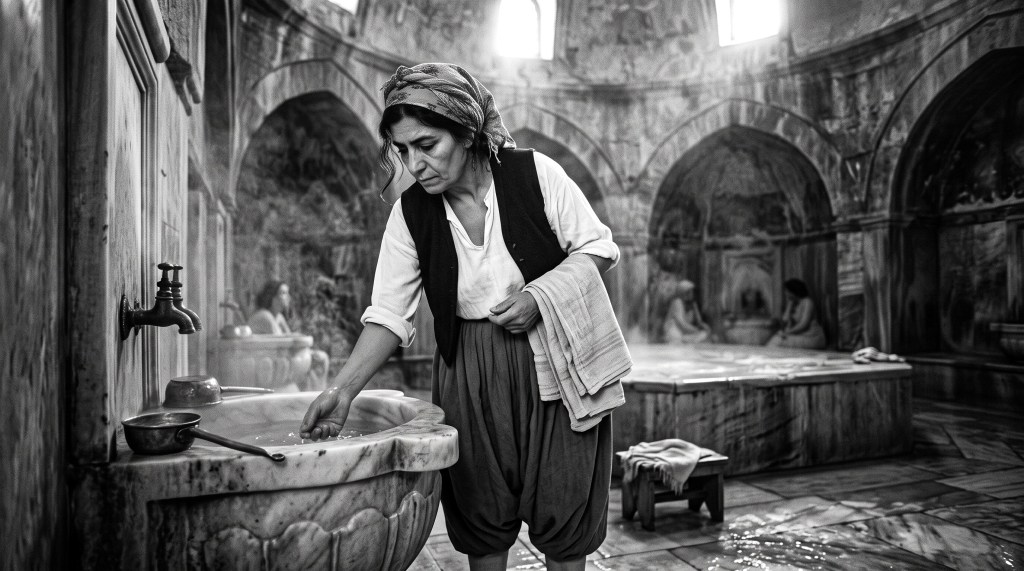
Constantinople, 1786. In a women’s hamam near the Süleymaniye Mosque, a matron has stood for thirty years, watching, listening, staying. She knows which door swings inward and which bruise is three days old. She knows which women need oil and which need only a safe room and an afternoon’s silence.

Then, one spring afternoon, a young girl hums a melody the matron last heard twenty-two years ago, note for note, from the lips of a woman long dead. No one ever taught it to her. It was simply always there.

What is written on a soul does not wash off.

Read the original post.

Bob Lynn | © 2026 Vox Meditantis. All rights reserved.

3 responses to “What Is Written Does Not Wash”

  1. KikiFikar avatar

    What is written on a soul does not wash off.

    Love this line. Such truth.

    One of my little known passions is skin care/self care. Any city we visit I try and find an old apothecary style shop with old remedies. I was thinking of wandering through these types of shops as I read along.

    This creation is fantastic Bob. Loved it. ❤️

    Liked by 2 people

    1. Bob Lynn avatar

      Karen, hanım. You are kind, and I accept kindness the way I accept a clean towel folded properly: with gratitude and without excessive fuss.

      The line about what is written. Yes. I did not compose it as a line. I said it because it is the case, and I have had thirty years of watching women carry things through my doorway that no amount of steam or scrubbing will lift, and then watching them set those same things down, slowly, over many Thursdays, until the carrying becomes lighter without the thing itself becoming smaller. So. It is true. I am glad it found a place in you. I will not pretend otherwise.

      Now. You tell me you seek out old apothecary shops in every city. You wander through them. You browse.

      I will say this plainly, Karen, because I have been plain for thirty years and see no reason to stop: I approve of the instinct. And I warn you about what you will find behind the counter.

      A genuine apothecary smells of the work. Not of perfume laid over perfume to make you think you are in a garden. It smells of the thing itself. Dried chamomile smells of dried chamomile. Ground black seed smells of nothing so much as a warm, slightly bitter truth. Rosewater, if it is honest, smells of the rose it came from and not of seven other flowers the seller wished you to believe were also in the bottle. You put your nose to the jar. If it smells like the label is trying to sell you something, you set it down and you leave.

      The woman near the spice market, I have mentioned her before. She is the pattern. Beautiful bottles. Compelling names. A price that suggests the ingredients were harvested from a garden that exists only in the seller’s account ledger. You will find her sisters in every city, Karen. They have relocated, changed their headscarves, learned new words. But the hand is the same hand, reaching into your purse while calling it healing.

      You want to know what I look for. I will tell you, because you asked with your heart open and I do not waste an open heart.

      Look for the hands of the person behind the counter. If the hands are stained, if the nails carry the residue of the work, if the fingertips are rough from grinding and the knuckles are chapped from handling tinctures in cold weather – that person makes the thing. If the hands are clean and soft and the person points at a shelf of identical bottles sealed with wax and ribbon, you are in a shop, not an apothecary. There is a difference. A shop sells you what it has. An apothecary makes you what you need.

      I will tell you something I have not told many people, because it is not a secret, exactly, but it is a quiet thing, and I keep quiet things in the place where I keep the good linen.

      The woman who ran this hamam before me – the one who pressed the nazar into my hand, the one who was generally right about everything – she kept a shelf above the furnace that was not the herb shelf. It was higher, darker, and she did not label it the way I label mine. She told me, the first winter I was here: those are for the women who will not tell you what they need. You will know by the face. You will not know by the asking. And she was right. There are women who will sit on the göbek taşı and say “I am well, I am well”, and their skin will say otherwise. The colour around the eyes. The dryness at the inner elbow that no amount of public washing addresses. The way a woman holds her own wrists, as though checking whether she is still entirely inside herself.

      For those women, the old matron made a preparation I still make, four times a year, when the season turns and I have the afternoon to myself. I will give it to you, Karen, because you are a woman who loves this work and I do not begrudge knowledge to a woman who loves it.

      Cold-pressed olive oil, the honest kind, not the pale stuff they sell to tourists in pretty tins. Warm it gently. Not hot. Warm, the way you would warm milk for a child who is crying in the night. Into it, a very small quantity of dried chamomile, crushed between your fingers first, not ground, crushed, so the oils release slowly. And three drops – no more, Karen, three – of rosewater that you have verified with your own nose. You stir it once, clockwise, and you do not stir it again. You let it sit for one full day in a covered bowl, in a dark place, not near a window. Then you strain it through clean muslin.

      What you have is not remarkable. That is the point. It will not transform the skin. It will not reverse the years. It will ease. It will soften the places that have gone rough from weather or worry or the simple friction of living in a body that must meet the world every day. You press it into the skin with the flat of your palm, slowly, without urgency, and you do not rush, and you do not expect it to do what it cannot do, and you let it do what it can.

      That is the whole philosophy. I have said it before and I will say it again: you do not run it. You stay in it. You stay in the warm oil and the slow pressing of the palm and the quiet of your own hands on your own skin, and you outlast what passes through.

      The apothecary shops, Karen. Go. Go to all of them. Put your nose in the jars. Ask the person behind the counter to show you the back of the shop, where the grinding happens, where the drying happens. If they will not, you have your answer. If they will, and you see the work, and the work is slow, and the hands are stained, and the smell is the smell of the thing itself – then you sit. You ask. You listen. And if they give you something honest, you thank them, and you do not haggle, because honest work at an honest price is not a negotiation.

      And if you find a shop that is all ribbon and wax and no grinding, you walk out, and you do not look back, and you tell no one, because their business is their own affair, and God settles those accounts at His own pace.

      Inşallah.

      Now. I must go. The girl has put the kese cloths on the right bench again. I can see them from here. I can see them from everywhere. I will be back in a moment, or I will not, and the linen will be where it ought to be, or it will not, and this is the arrangement.

      You are welcome here, Karen, on any day the steam is good. I will save you a place on the left bench. The left. I will not say it again.

      Come on a Thursday. In the quiet hour. I will put the rosewater in your basin, and I will not tell you why, and you will not need to know, and that will be the whole of it.

      Maşallah to you for loving this work. Go. Wander. Put your nose in the jars.

      I will be here. I am always here.

      Liked by 1 person

      1. KikiFikar avatar

        I’m in awe.

        Thank you for knowing exactly what I need and creating the true ingredients and words to heal me (and all of us). Your creations are a gift!!

        Liked by 1 person

Leave a comment