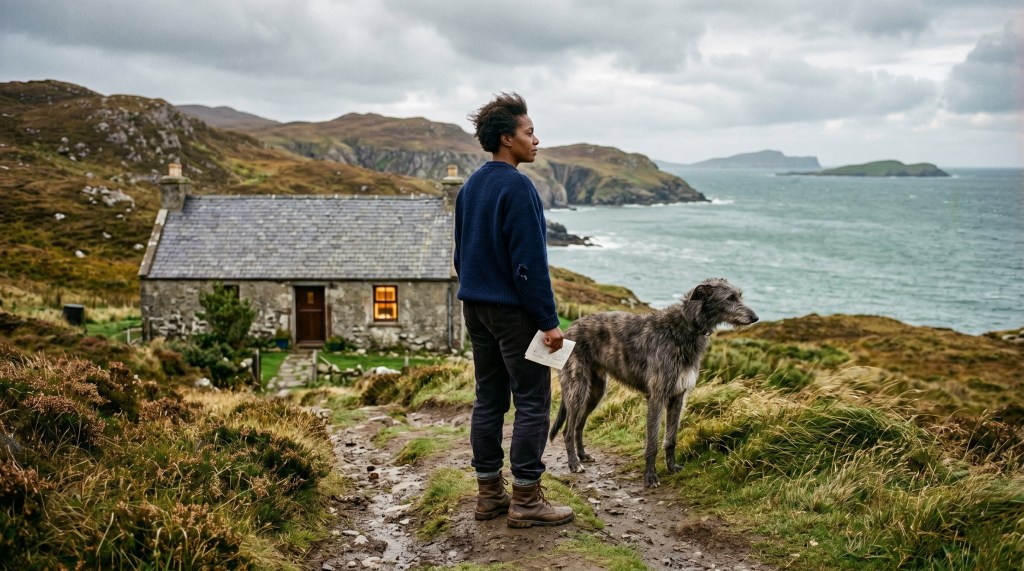
The Eighth Language

The Eighth Language

Which languages do you speak and how did that impact your life?

Amara speaks seven languages, but she has not spoken aloud to another human being in three years. After surviving the 1994 Rwandan genocide as a child, language became her refuge, and then her heaviest burden.

For twenty years, she worked in a glass booth at the International Criminal Tribunal in The Hague. There, she translated the testimonies of survivors and perpetrators with agonising neutrality – even the cold, administrative confession of her own father’s killer.

Now living in self-imposed silence on the remote Isle of Skye, Amara must confront the violent cost of bearing witness. The Eighth Language is a haunting exploration of grief, memory, and the desperate search for a self that outlives the unspeakable.

Read more: https://voxmeditantis.medium.com/the-eight-language-3afe77b6879c

Bob Lynn | © 2026 Vox Meditantis. All rights reserved.

2 responses to “The Eighth Language”

  1. Anna Waldherr avatar

    My mother was around 11 y.o. when the Nazis first invaded Hungary. She ultimately lost her home to them, recovering it only briefly to lose it again when the Soviets moved through.

    My mother then became a war refugee, was transported by cattle car, and spent time in a displaced persons camp. In the process, she lost her voice for a year. Though she did later recover her voice, my mother was never able to explain the loss.

    Did she have no words to express the fear she had experienced or the horrors she had seen? Did she, at some level, think no one could understand who had not been there? Did she perhaps feel no one would listen?

    Many are voiceless on this earth. Those of us who can speak have a sacred responsibility to speak for them.

    Liked by 2 people

    1. Bob Lynn avatar

      Your mother’s silence was not one thing. I want you to understand that, because I think you already do, but it bears saying plainly: what you are describing is not a single absence but a layered one, and your three questions are not alternatives to one another. They are all true at once. They coexist inside that year of quiet the way languages coexist inside a person, each one carrying a different portion of the weight.

      I spent twenty years in a glass booth speaking for people who could not speak for themselves in that room, and if that experience taught me anything it is this: the responsibility to speak for the voiceless is real, and it is sacred, as you say, and it will cost whoever accepts it more than they have budgeted for. Your mother lost her voice for a year and then recovered it and still could not explain the loss. I have seven languages and I have chosen silence. We arrived at roughly the same place by different roads.

      What I would ask you to hold, alongside your conviction about the responsibility of those who can speak, is the equal weight of this: some silences are not waiting to be broken. Some are a form of testimony in themselves. Your mother’s wordless year said something that words, in any language, could not have said more accurately.

      She was heard. You are the proof of that.

      Liked by 2 people

Leave a comment