-
 Continue reading →: Chains That Keep Us
A sixty-three-year-old recluse finds himself running communications in a Syrian aid camp. Amongst refugees, solar panels, and makeshift networks, he confronts what he once fled: human connection. The chains he thought would trap him might be what keeps him whole.
-
 Continue reading →: The Envelope and the Present
An envelope arrives. Catherine must choose: museum pilot starts Thursday, clinic hours shift, Québec pauses. Rajesh swaps; Maggie presses; David texts. Presence becomes a calendar. Quiet courage, soup or music – and a letter waits by the keys till morning.
-
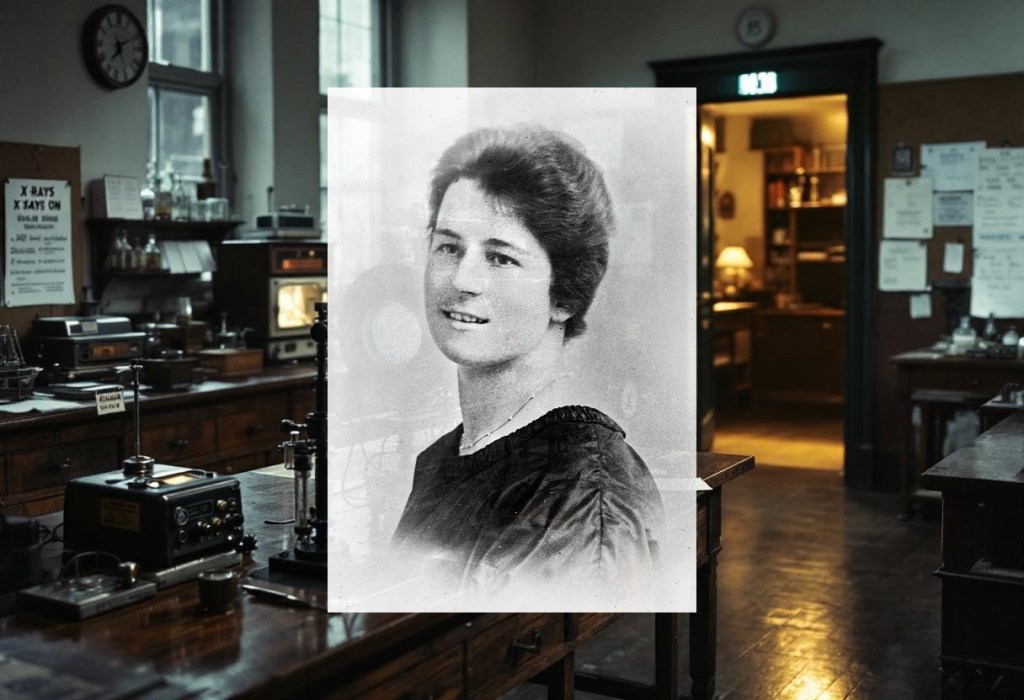 Continue reading →: Dorothy Maud Wrinch: The Mathematician Who Saw Proteins Dance
The mathematician whose “wrong” theory catalysed a right one. She proposed the cyclol structure for proteins. While the model was ultimately rejected, her stubborn advocacy sparked the research that proved her core insight – the importance of hydrophobic interactions – correct. Her story is a conversation on scientific stubbornness, gender…
-
 Continue reading →: The Closed Chamber
On All Saints’ Day 1792, an unmarried scholar reflects on legacy and loss in her borrowed refuge. As terrible news of French massacres reaches London, she confronts what will remain when she’s gone, and whether her life’s work has mattered.
-
 Continue reading →: The Hinge of Arrival
On Hallowe’en by the harbour, Catherine traces fascination to not fireworks but thresholds – river landings, blurred names, small mercies – while a conservator’s text, a neighbour’s wave and two solemn skeletons tilt the night toward ordinary courage and tomorrow’s quieter arrivals at dockside.
-
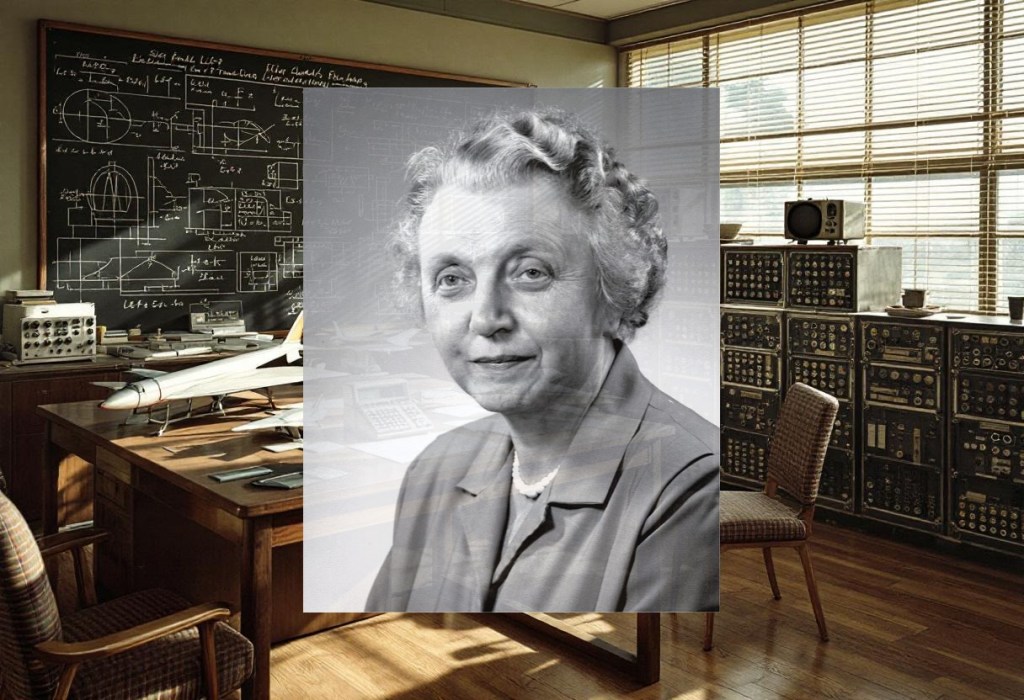 Continue reading →: Irmgard Flügge-Lotz: The Mathematician Who Bent the Rules
Irmgard Flügge-Lotz solved what Prandtl couldn’t. She taught as a lecturer for twelve years. She invented discontinuous control theory. Yet Germany forgot her, and Stanford almost did too. In a candid conversation, the aerospace engineer confronts her overlooked legacy, wartime choices, and the price of genius constrained by institutional barriers.
-
 Continue reading →: All Hallows’ Watch
A lighthouse keeper’s young daughter keeps vigil on All Hallows’ Eve, 1802, her stomach empty and mind troubled. As darkness closes in and provisions dwindle, she tends the flame that guards passing ships from the rocks, fearing it will fail.
-
 Continue reading →: Let It Be Enough
New Corinth’s dusk finds Catherine weighing small acts that hold a day together: tea left waiting, a shell warmed by sun, rooms where staying matters more than solving. Ordinary courage, practised; intimacy without spectacle. She learns to let attention suffice.
-
 Continue reading →: Angelina Fanny Hesse: The Woman Who Brought Agar from the Kitchen to the Laboratory
Angelina Fanny Hesse reveals how childhood memories of Indonesian pudding solved bacteriology’s greatest problem in 1881. The unpaid laboratory technician whose kitchen knowledge enabled Koch’s tuberculosis discovery discusses erasure, colonial knowledge networks, and why agar revolutionised science whilst she remained invisible.
-
 Continue reading →: Where Wind Lists
Paris, 1844. A detained writer awaits examination in the Tuileries. Confined for seditious pamphlets, he watches autumn winds rattle casements and discovers that whilst the State imprisons his body, imagination remains sovereign. A philosophical meditation on liberty, dreams and truth.
Feign the virtue thou dost seek, till it becometh thine own

Recent Posts
- The Door of My Lips
- Twenty Metres of Chain
- Look Up: Why We Feel Most Alive When Comfort Fails
- Anna Winlock: The Computer Who Measured the Sky by Hand
- “The Stars Reward Patience”: A Conversation with Mary Watson Whitney
Categories

