What’s your favorite thing to cook?
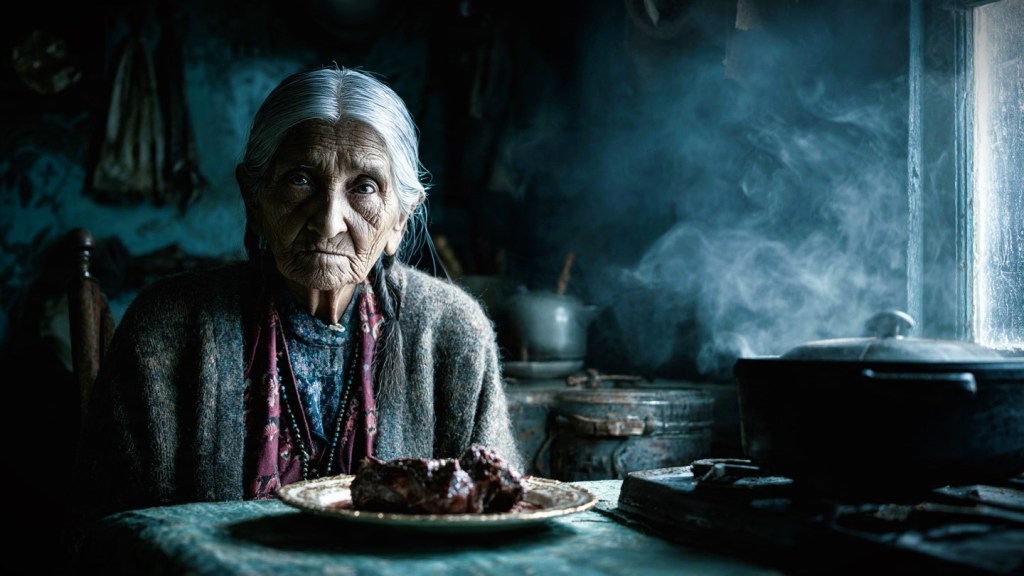
You ask me what I like to cook, and you’re probably expecting me to say something sweet, like the apple cake the church ladies bring to the funerals, or something sensible, like the soup that nurse down the street makes for her patients. But I am ninety-two years old, and I have outlived the need to be sweet or sensible. My favourite thing to cook is muskrat.
Yes, muskrat. Marsh rabbit, if you want to be polite about it, though I never saw the point in dressing up a rat in a rabbit’s coat.
It fits the day, doesn’t it? February 2nd. The rest of the country is watching a groundhog to see if winter is over. Here in New Corinth, looking out my window at the grey sludge of the Delaware River, we know winter ends when the river decides it ends. The water is high today, swollen and dark, licking at the pylons of the old pier where the boys used to dive before the chemicals ruined it. The air in my kitchen feels heavy, like the house is holding its breath.
The Preparation
Cooking muskrat takes patience, and it takes a strong stomach, both of which I have in spades. You can’t just throw it in a pan. You have to be resourceful. You have to soak it first, in saltwater, cold and biting, to draw out the blood and the game. You have to cut away the musk glands – carefully, with a sharp knife – because if you nick one, the meat is ruined. It tastes like fear smells.
I used to trap them myself, back when Minerva Creek was wilder, before they built the greenway and the condos for the people who think “riverfront living” means looking at the water but never touching it. Now, I have a deeper arrangement. There’s a man who still runs a line in the marshes south of the city, near the old chemical plant. He brings me the meat wrapped in butcher paper, and I trade him jars of pickled beets from my cellar. He doesn’t ask why an old woman living alone in a row home on Fourth Street wants swamp meat. He knows better.
The Stew
I brown the pieces in bacon fat – never oil, oil is for the newcomers who worry about their hearts – and then I smother them in onions. I use the onions I grow in the window boxes, the ones that survive the soot and the frost. Then comes the water, enough to cover the bones, and a handful of sage I dried three summers ago.
As it simmers, the smell fills the house. It is a thick, dark smell. It smells like the river bottom. It smells like wet earth and old secrets. My late husband, Thomas, hated it. He was a foreman at the Iron Works before it shut down, a man who thought he was better than the “creek trash” he married. He wanted roast beef and potatoes. He wanted to live in the suburbs, in one of those vinyl-sided boxes where you can’t hear your neighbours scream.
He forbade me to cook it. Said it was “poverty food.” Said it made us look backward.
Thomas has been in the ground for twenty-eight years. I’m still here. And every time the steam rises from that pot, fogging up the windows until the world outside disappears, I feel a little thrill in my chest. It’s not joy, exactly. It’s victory.
The Table
I set the table for one. I use the good china, the plates with the gold rim that Thomas’s mother said were too nice for me. The meat falls off the bone, dark and tender. It tastes wild. It tastes like survival.
Sometimes, when the wind howls off the river and rattles the sash, I imagine the ghosts of this city are sitting with me, not the famous ones the Historical Society talks about – not the shipyard owners or the union bosses. I mean the ones who didn’t get a plaque. The women who boiled laundry in the same water they cooked with. The men who drowned in the turning basin and were never found. We eat the dark meat together, and we laugh at the people outside with their “mindfulness apps” and their nine-dollar pastries.
They think they can reinvent New Corinth. They think they can paint over the rust and call it “vintage.” But you can’t pickle the river out of the muskrat, and you can’t paint over the truth.
This city is a hard place. It tries to drown you, or starve you, or poison you. I’ve watched it happen for nine decades. I’ve seen the breadlines on Market Street when I was a girl, and I see the opioid ghosts walking past my stoop now. The trick is to bite back.
So, I cook my muskrat. I suck the bones clean. I relish the taste of something that lived in the mud and survived. And when I’m done, I put Thomas’s plate back in the cabinet, clean and empty, and I smile at the silence.
Bob Lynn | © 2026 Vox Meditantis. All rights reserved.


 Vox Meditantis
Leave a comment