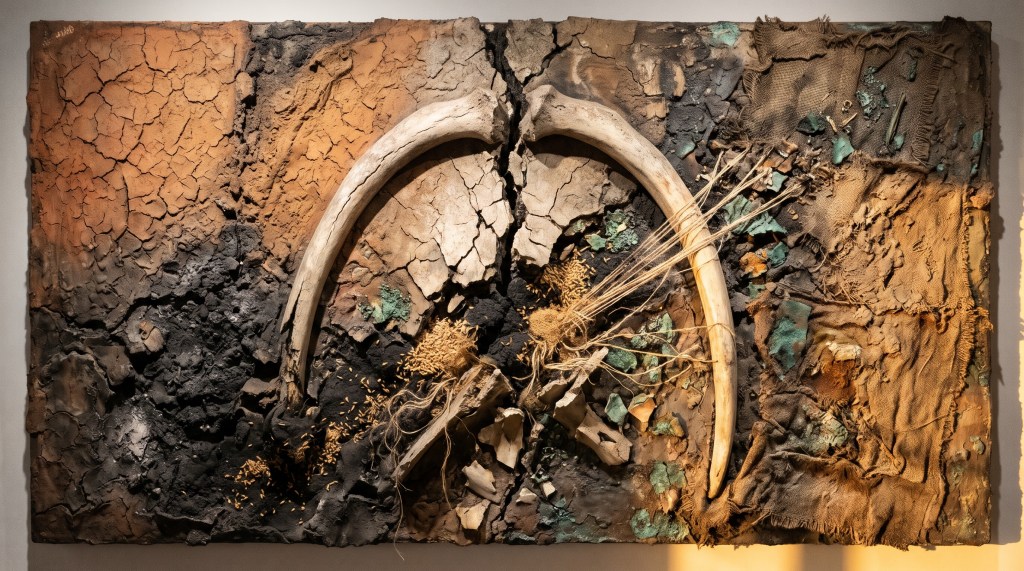
For nearly three millennia, the popular imagination has kept the women of biblical antiquity neatly catalogued under a single, defining appendage: a spare rib extracted in the twilight of Eden, secondary by design and dependent by nature.
Of the thousands of individuals who walk across the pages of the Hebrew Bible and the New Testament, fewer than two hundred women are dignified with a personal name. Even when their names were preserved, their experiences were filtered, edited, and canonised almost exclusively by male scribes who carried distinct political, dynastic, and sacerdotal agendas. In the centuries that followed, pulpit traditions and devotional retellings flattened them even further, reducing vibrant, complicated lives to a narrow set of moralising tropes: the silent, submissive saint of domestic virtue, or the treacherous temptress whose ambition brought ruin upon men.
Beyond the Rib begins from an entirely different premise: that the women named in scripture were neither porcelain figurines nor cautionary moral tales. They were flesh-and-blood historical survivors. They were agrarian labourers, political strategists, property owners, prophetesses, foreign refugees, and domestic negotiators who operated within the rigid strictures of ancient Near Eastern and Greco-Roman patriarchy. Their survival and influence were not achieved by waiting quietly in the background, but through sharp intelligence, pragmatic compromises, and an acute understanding of law, kinship, and communal honour.
To understand them today, we cannot simply repeat the verses that reduced them to footnotes, nor can we fall into the trap of projecting twenty-first-century Western feminism uncritically onto their worlds. Instead, this series employs the technique of historical ventriloquism: staged, imaginative interviews that inhabit their voices, grounded directly in exhaustive research into material culture, ancient legal frameworks, and social-scientific criticism.
In each instalment, one woman sits across the table. We meet her not in the abstract heavens of theological dogma, but in the tactile reality of her daily existence: smelling the bitter smoke of olive-oil lamps, feeling the calluses formed by stone grain-rubbers, calculating dowry rights, and navigating the precarious boundary between communal honour and existential ruin. We ask what she saw when the scribal pen looked away, what terror or grief she concealed, and what calculations she made to ensure the survival of her household and her name.
Crucially, these encounters do not end with her monologue. Following each interview, each woman faces a panel of five distinct contemporary interrogators:
- The Critical Historian, who tests the historical plausibility of her recorded narrative against archaeological excavations and ancient Near Eastern civil codes.
- The Confessional Theologian, who probes the divine covenant, providence, and doctrinal weight carried by her story.
- The Pastoral Leader, who seeks to understand her spiritual trauma, her private wrestling with silence, and what her resilience offers to ordinary people in crisis today.
- The Secular Sceptic, who challenges the divine justifications of her world and questions the human cost, cruelty, and patriarchal violence embedded in her text.
- The Intersectional Feminist Scholar, who refuses to romanticise her as an uncomplicated heroine, examining instead her social class, ethnic privilege, and complicity in the oppression of other women.
By bringing rigorous scholarship together with dramatic dialogue, Beyond the Rib invites modern readers to listen into the white spaces of the biblical text. These are not conversations meant to provide tidy, comfortable answers. They are an invitation to encounter our ancient foremothers on their own terms: unapologetic, complicated, resilient, and fully human.
Forget the borrowed cathedral light, the coiled serpent, and the fictional apple she never held. In the inaugural instalment of Beyond the Rib, history’s first foremother steps forward not as an Edenic symbol, but as a practical, dust-streaked survivor kneeling at a basalt saddle quern – hands callused from hours of grinding grain, and a woman who dared to name her sons alongside God without male permission. Coming soon, Eve sets down the heavy stone to dismantle centuries of bad translations, laying bare the brutal arithmetic of exile before facing our panel of modern interrogators on her own terms.
Bob Lynn | © 2026 Vox Meditantis. All rights reserved.


Leave a Reply