What’s the best piece of advice you’ve ever received?
Saturday 7th August 1630
Cripplegate, London
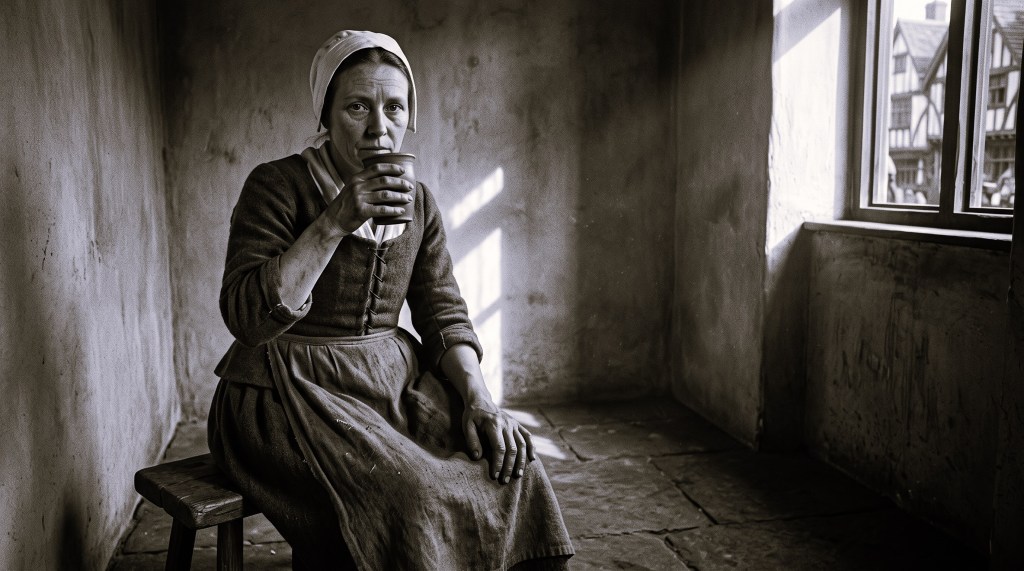
The heat today is pressing close. I warrant you feel it. It comes off the walls come afternoon, that is the way of it in August. Things that would keep another month in winter will not keep two days in this. I have learned to come early, in August.
I was at the Monkswell end this morning. A child. A girl, I think, though the sickness had been at her a good while and she was much reduced; four years, or five, thereabouts. The mother was in the next room and I could hear her. I give my verdicts to the clerk. I do not give them to the mother. That is not hardness. That is the only way the work is done steady.
Sit you down, then, if it pleases you. I have a few minutes yet. There is Silver Street still before the bells, but the beer is not quite done and I have no wish to go back out into that sun a moment sooner than I must.
You smell the vinegar, I expect. And the rosemary. I wash after every house; it is not vanity, it is sense. You carry the smell home regardless, but it is better than the other way. My hands are cracked from the scrubbing. They have been cracked so long now I do not think on it.
You asked me something. Aye. I heard you.
Let me think on it.
This light is thick today. Look at it there on the floor; there is grit in it, and the smell of the gutters coming through the window, and underneath it all the sound of the city; the wheels, the shouting, the children running on Wood Street. August in this city presses in. It always presses in. I have grown to know the smell of each season here the way another woman might know the smell of her own house; the river in winter, the tallow-fires, and in summer this, the baked stone and the open gutter. It is what is here. I have no occasion to be elsewhere.
Well, then. This woman.
She is gone now, seven years since. I laid her out myself; she would have expected no less, and I think she would not have thanked me for it either, because thanking was not her custom. She was not a comfortable woman to know. She had held the post longer than I have held it now, and the work was in her bones by the end of it, which is a hard way to end, but it was honest. All the years of the work were in her, plain to read. I read her as I have read all the others. I thought that was a kindness. I still think so.
She came to me when I was seventeen. My father was three months dead and there was not much to be done about that, and she came, or someone brought her; I cannot recall which, now. She said the parish wanted a searcher, and she was past the climbing of stairs, and would I learn it. And I said I would.
I would have said yes to most things that year. You do, when you are frightened. I have seen that proved more than once, not only in myself.
She took me on a Monday. A tanner. Three days dead. They always take you to the worst one first, to see if you will run. I do not think it is cruelty; I think it is good sense. There is no use in training a woman who will not stay in the room.
I did not run. I will not say I stood steady, because that would be the story I have made of it since, and the truth is my knees went soft and I breathed through my mouth and I could not look at his face. The smell of the tan-pits was in his clothes still, even over everything else the room had in it. I remember that. I remember standing there with two things in my head like two strangers who do not like each other: I cannot do this, and I must.
She had a grip like a tool, that woman. All bone and dry skin. She took my hand and she put it flat on the dead man’s chest; on the chest of this man I did not know, who had been a tanner and was now no more than what lay in front of us.
And she said: girl, do not look away, and do not make a story.
She said: the dead cannot lie to you. It is the living you must learn to distrust.
She said: look steady. Do not flinch, and do not let your grief or your disgust write the tale for you. Say what is there. Only what is there.
I stood there with her hand over mine on his cold chest, and the smell of the tan-pits in the air, and I thought: I do not know if I believe you. That is what I thought. I was seventeen, and I did not know yet if it was true that a body would tell its own account plain; without fear, without any wish to be thought well of. I had not known enough of people yet to understand how rare a thing that was.
Twenty years on, I know she was right. That is the short of it.
The dead cannot lie to you.
I have found men dead by violence who were said to have died of fever. I have found women dead of want who were said to have died of grief. I have found plague when plague was not welcome and the parish would rather it were called something else; I have stood in a room and known, as plain as I know this cup in my hand, what the body was telling me, and what the parish was telling me were two different things. And I have said to the clerk: no. No, that is not what is there. That is not what this body says. And it has not always been welcome.
There are men on the vestry who would prefer a searcher with less certainty. I have been spoken to, once or twice. A woman who handles the dead is not thought of very high, and there are those who think that what is not thought of high can be brought to say what it is told to say. They have not, so far, been correct in that.
I gave a false account once. Once in twenty years. I will not say whose body, nor what I said in place of what I saw. There were reasons, and I do not say they were bad reasons, but they were not the work. They were not what she told me to do. I have thought on it many times since; God knows I have. You do not stop; that is the honest truth of it.
But only once. I hold to that.
She said say what is there. And the longer I have had to think it through, the wider the instruction becomes. She meant it for the dead. But it does not stop at the dead.
My husband. I will say this, and then I will not say more on it.
The neighbours had a story of him. They had their story, the way people will have one, because a story puts a thing in its right place and gives them somewhere comfortable to rest their eyes. Their story was: here is a man who drinks, and here is a woman who endures it. That was the whole of it for them. It left everyone as they ought to be.
I looked steady. I know what I saw.
He was frightened. That was the whole of it. He was frightened through and through, and the drinking was a coat pulled over the cold; it did not warm him, it only covered him for a while. He wept at night when he thought I slept. I lay still and let him have it, because to take it from him would have been a shaming, and he had enough shame. He mended my shoes in the dark. He left them at the foot of the bed each time, where I would find them in the morning, and he never said a word about it, not once in eight years.
That is a good man. That is also a broken man. Both, at once, which is the way of most men and most women when you look at them plain and do not look away. Not the story the neighbours had. The truth is smaller than the story, and sadder, and it does not make for comfortable company at supper.
He is gone three years past. There were no children. I have a room and I have my work.
I had no verdict for him; I had only what I knew, and what I knew I kept, because the dead do not need their stories made straight by the living. What he was is what he was.
The light is moving. It will be lower by the time I reach Silver Street, and the air will be somewhat less. There is another child there, I think; I know it before I go, by the way the message came and by the season. It will be much as this morning was.
I used to think, when I was first at the work, that twenty years on I would feel the dying of children less. I thought: by then I will have seen enough of it, and it will carry less weight. That is not how it has gone. I have seen enough. The weight is the same. Perhaps that is not a failing. Perhaps that is what keeps the work honest.
Look steady, she said. Say what is there.
Aye. I have tried. I have not always managed it; I do not think any woman living has always managed it. But I have tried, and I have managed it more often than not, and that is the whole of what I can say for myself, after twenty years of this.
She was not always kind, that woman. But she was true. I have known few enough people of whom I can say that.
Now.
The beer is gone, and the light is moving, and I have Silver Street before the bells. The clerk will want his word before vespers.
You will excuse me. The dead do not keep their own appointments. But the parish expects mine, and I have never yet been late.
Bob Lynn | © 2026 Vox Meditantis. All rights reserved.

 Vox Meditantis
Leave a comment