This interview is a dramatised reconstruction. Kurt Vonnegut died in 2007, and this conversation never took place. The questions, responses, and conversational exchanges presented here have been created by the author based on extensive research into Vonnegut’s published interviews, essays, letters, biographical accounts, and literary works. Whilst every effort has been made to represent Vonnegut’s documented views, speaking style, and philosophical positions accurately, the specific words attributed to him in this piece are imaginative interpretations designed to honour his voice and legacy. Readers should treat this as a creative exploration of Vonnegut’s ideas rather than a verbatim historical record.
Welcome back to Vox Meditantis. Today’s conversation is one I’ve been preparing for with equal parts excitement and trepidation. We’re speaking with someone whose voice shaped how a generation thought about war, morality, and the absurdity of modern life – but who always insisted he was just trying to tell the truth as plainly as he could.
Our guest needs little introduction: Kurt Vonnegut, novelist, satirist, and survivor of one of the Second World War’s most controversial events. The date matters. Eighty-one years ago today, on 13th February 1945, Allied bombers began their assault on Dresden, a city Vonnegut was in as a prisoner of war. What he witnessed in the firestorm and its aftermath – sheltering in an underground meat locker, emerging to a landscape of ash and bodies – became the moral and narrative centre of Slaughterhouse-Five, the novel that made him famous and that continues to unsettle readers with its refusal to offer easy answers.
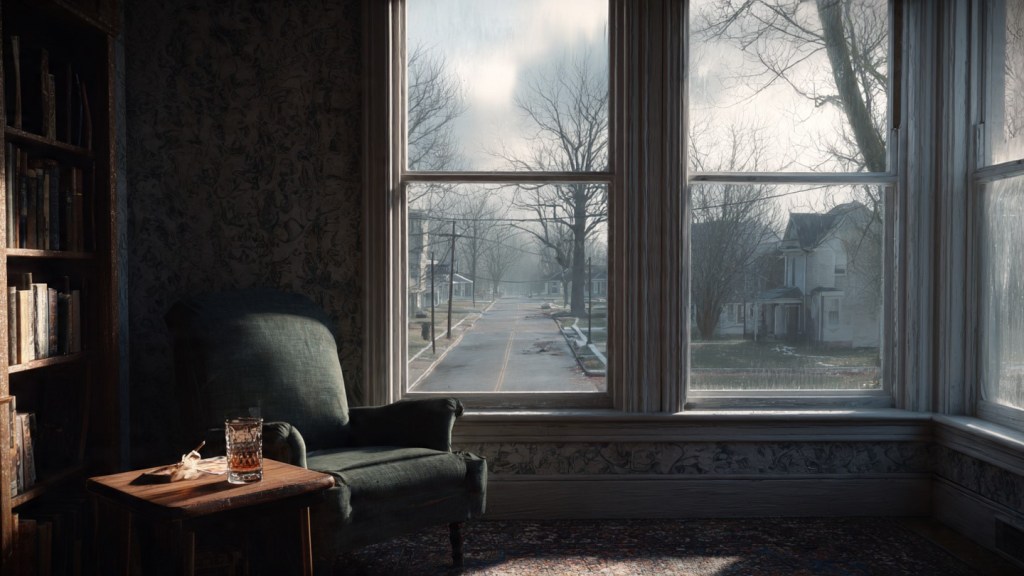
We’re conducting this interview in Indianapolis, in the modest living room of the house on North Illinois Street where Vonnegut spent much of his childhood. The wallpaper is different now, the furniture rearranged by time and other families, but the bones of the place remain. He’s seated in an armchair near the window, looking out toward the street where he once played, and there’s something quietly fitting about returning here – to the ordinary American backdrop that preceded the extraordinary rupture of war, and to which he would spend a lifetime trying to reconcile himself.
So it goes.
For readers who only know your name, how would you introduce yourself in one paragraph – without the “literary” framing?
I’m a guy from Indianapolis who got captured by the Germans, survived the firebombing of Dresden in a meat locker, came home, tried to make sense of it, failed, and wrote some books about the failure. I sold cars for a while, wrote PR copy for General Electric, raised six kids on not much money, smoked too much, got depressed a lot, and eventually people decided I had something to say. I’ve been called a lot of things – science fiction writer, satirist, pessimist – but mostly I just try to tell the truth as plainly as I can and not bore people to death in the process. I’m a humanist, which means I think we should be kind to each other without expecting a gold star from God afterwards. And I swim. In the water, I’m beautiful.
That’s quite an introduction. You mentioned swimming – is that where you feel most yourself?
Yeah. I’m six-two, two hundred pounds, badly coordinated on land – all that borrowed meat stumbling around. But in the water? Everything works. Everything’s quiet. You’re weightless. It’s the only time my body doesn’t feel like an accident I’m stuck operating.
That’s a striking image. Do you think that disconnect – between how you feel inside and how you move through the world – shaped your writing?
Probably. I mean, I’ve always felt a little unstuck, you know? Like I’m observing more than participating. The war did that, certainly. But maybe it started here, in this house, long before that. Childhood teaches you early whether the world makes sense or whether you’re just making it up as you go.
Today is 13th February; what do you want people to remember (and not assume) about Dresden when they invoke it as a symbol?
First thing: remember it was real. Real people, ordinary people, cooked alive in a city that became a furnace. And remember it started on a date you can put on a calendar – 13th February 1945 – not in some foggy “back then” where everything is sepia and inevitable.
What I don’t want people to assume is that you can use it like a tidy example in an argument – like it’s a chess move, or a sermon illustration. It’s not tidy. It’s not a morality play with labelled characters. It’s a bunch of terrified animals, including the ones in uniforms, doing what terrified animals do.
And I especially don’t want them to assume that if you can explain it, you’ve forgiven it, or excused it, or solved it. Explanation is just a type of manners. It’s you trying not to scream.
When you say “use it like a tidy example” – do you mean the people who cite Dresden to argue that war is always monstrous, or the people who cite it to argue it was justified? Or both?
Both. Because both sides can turn the dead into a rhetorical resource. That’s the real obscenity. You can be “anti-war” and still be showing off. You can be “pro-war” and still be performing arithmetic with human beings.
I was there as a prisoner of war. I didn’t have a theory of strategic bombing. I had a body, and it was trying to stay alive. That’s the perspective people forget.
You’ve written about surviving that firestorm by sheltering underground. When you look back now – what detail do you wish people could feel in their bones, rather than merely understand intellectually?
The scale of it. Not “big” like a movie. Big like weather – like being caught in a season. And then afterwards, the silence. People always imagine noise. They don’t imagine what comes after noise, when the world is still there but the reasons for it are gone.
And the other detail is: you don’t get to be heroic in a situation like that. Heroism is something you paste on later, when you’re trying to make the story acceptable at dinner parties.
That’s bleak – though I suspect you’d say it’s accurate. Do you think the urge to make acceptable stories is the main reason we keep mishandling events like Dresden?
We’re social animals. We want a story that lets us keep our friends. “My side did the right thing,” “Your side did the wrong thing,” “History has a lesson,” “It won’t happen again.” Those are friendship-maintenance stories.
Dresden is what happens when friendship-maintenance stories meet technology and bureaucracy. Then everybody gets to be sincere, and everybody gets to be wrong, and people burn anyway.
All right. Let’s stay with that for a moment – without turning it into a slogan. When you returned to ordinary life, what was the first ordinary thing that felt completely unreal?
Breakfast.
A glass of milk. A clean table. The way people complain about tiny inconveniences as if the universe has singled them out. I remember thinking: you have no idea how lucky you are to be bored.
And then you feel guilty for thinking that. Because you can’t go around demanding gratitude. That’s another way of turning suffering into a hobby.
That’s a very Vonnegut answer – compassionate and scolding at once. Shall we move on to where that voice came from, before the war got hold of it? When you look back, what moment first made you feel, “My job is going to be writing”?
I don’t think there was a moment. That’s the romantic version. The real version is: I was good at it in high school, people laughed at what I wrote for the school paper, and I liked being good at something. That’s not a calling. That’s just an accident of dopamine.
I went to Cornell to study chemistry, actually – my father and brother were architects, and the Depression had taught the family that art doesn’t pay the rent. But I kept writing for the Cornell Daily Sun, and I was happy doing it. Not “I have found my destiny” happy. Just… less miserable than in chemistry lab.
So I suppose the moment – if you need one for your article – was when I realised I could fail at chemistry and still have a thing I was competent at. Writing was the lifeboat, not the ship.
That’s refreshingly unglamorous. But there must have been something beyond competence that kept you writing through the lean years – the PR work, the Saab dealership, all of it. What was it?
The chance to say something true in a world that runs on lies. Not capital-T Truth, not prophecy. Just… small, ordinary truths that people recognise when they hear them but don’t usually say out loud.
And also: revenge.
Revenge?
Sure. On everybody who told me to grow up, get serious, stop fooling around. On the people who think sincerity means you have to be boring. On the ones who think literature has to be difficult to be good. I wanted to write books that a truck driver could enjoy and a professor could write a dissertation about – and for both of them to be right.
Did you always have that populist instinct, or did it come from somewhere specific?
From being broke, mostly. And from the war. In a POW camp, nobody cares about your thesis statement. You either tell a story that holds people’s attention or you shut up and let someone else talk. You learn to be clear. You learn to be brief. You learn that fancy language is often just cowardice dressed up.
That’s a hell of an education. So when you came back and started trying to write seriously – short stories for magazines, then novels – did you feel like you were part of a literary tradition, or were you just figuring it out as you went?
I was just trying to pay the mortgage. I sold stories to Collier’s and the Saturday Evening Post because they paid money. Literary tradition? I was a hack. I’m still a hack, if we’re being honest. I write science fiction, for Christ’s sake. That wasn’t respectable when I started.
But you know what? Science fiction let me write about the war without writing a war novel. It let me write about America without writing a social-realist novel. It let me write about God without writing a sermon. Genre is freedom if you’re smart about it.
So the moment you knew writing was your job wasn’t a mystical revelation – it was just the realisation that you’d backed into it and couldn’t afford to leave?
Yeah. Somewhere around 1950, when I had three kids and no money and my agent kept selling stories, I thought: Well, I guess this is what I do now. It wasn’t romantic. It was just what happened when you add up a lot of small decisions and discover you’ve made a life.
Which is how most lives get made, I think. You just don’t put it in the author biography that way.
What did you learn about power – who has it, who doesn’t – before you were old enough to name the concept?
I learned that power is mostly about money, until the money runs out. Then it’s about charm.
See, my family had money. My father was a successful architect, my grandfather was a big deal in Indianapolis. We were German-American aristocracy, if you can imagine such a thing. We had servants. We had a lake cottage.
Then the Depression hit, and overnight, my father’s profession – designing beautiful buildings – became as useful as being an expert on unicorn anatomy. Nobody was building anything. The money vanished. And I watched my parents just… stop.
My mother, Edith, she withdrew. She couldn’t cope with the loss of status. She tried to write fiction to make money, actually – sent stories to the same magazines I later wrote for. They all got rejected. It broke her heart. Eventually, she took her own life.
That’s a heavy lesson for a child. Watching the “powerful” adults become powerless.
It was terrifying. And clarifying. I realised that the people in charge aren’t necessarily competent. They’re just lucky for a while. And when the luck turns, they’re just as bewildered as the rest of us.
So the lesson was: Authority is fragile. The people running the show – parents, teachers, presidents – are usually just improvising. And half the time, they’re doing a terrible job of it.
Did that specific experience – seeing your father’s professional identity collapse – make you sceptical of “experts” in general?
Oh, absolutely. My father was a brilliant man, an artist. But the economy didn’t care. The system didn’t care.
It made me suspicious of any system that claims to be rational. Capitalism, militarism, even science sometimes – they all pretend to have rules that make sense. But then you look closer, and it’s just a lot of people guessing and hoping they don’t get caught.
And the people who don’t have power? The little guys? They’re usually the ones who actually know how the machine works, because they’re the ones getting chewed up in the gears.
That sounds like the germ of Player Piano right there.
Maybe. Or maybe just the germ of being a cranky Midwesterner. We don’t like being told what to do by people who haven’t done the work themselves.
But you also mentioned charm. You said when the money runs out, power becomes about charm. Did your father have that?
No. He withdrew too. He became very quiet. He lost his confidence.
The charm came from my sister, Alice. She was the one who held things together. She could make you laugh even when everything was falling apart. That’s a kind of power, too – maybe the only kind that lasts. The power to make life bearable for the people around you.
I tried to learn that from her. To be funny when things are awful. Because if you can’t fix the world, you might as well make a joke about it. At least then you’re not just a victim. You’re a witness with a punchline.
What did you misunderstand about adulthood when you were a teenager?
I thought there was a manual. I assumed that at some point – maybe around twenty-one, maybe when you got your first real job – someone took you into a back room and explained how everything actually worked. Why wars happen. Why people are cruel. How to be happy.
I thought the grown-ups were keeping secrets. Turns out, they were just keeping busy.
That’s a terrifying realisation, isn’t it? That nobody is driving the bus.
It’s the most terrifying thing there is. You look at the people running the country, or the corporations, or the universities, and you think: “Wait, you? You’re just a taller version of the kid who ate paste in second grade.”
I also misunderstood loneliness. I thought loneliness was something that happened when you were alone. I didn’t realise you could be lonely in a marriage, or in a crowded room, or while being famous. I didn’t know that loneliness is a structural part of being human, not just a temporary glitch.
Do you think that misunderstanding – about the “secret manual” and the competence of adults – is why so many of your characters seem to be searching for a rulebook that doesn’t exist?
Exactly. Bokononism in Cat’s Cradle – that’s a manual. It’s all lies, but it’s a manual. The Tralfamadorians in Slaughterhouse-Five – they have a manual, but it’s just: “So it goes.”
We crave structure. We crave a plot. But life isn’t a novel. It’s a series of unrelated events that we desperately try to wrestle into a story so we don’t go insane.
When I was a teenager, I thought adulthood meant you finally understood the plot. Now I know adulthood is just realising there is no plot, and trying to be decent to the other actors anyway.
That sounds like a kind of liberation, though. If there’s no plot, you can write your own. Or is that too optimistic?
Optimistic? Maybe. But it’s also a lot of work. If there’s no plot, then you are responsible for everything. You can’t blame the author. You can’t blame God. You have to invent your own meaning every morning.
And frankly, most of us are too tired for that. We’d rather have the manual. Even if it’s a bad one. Even if it tells us to hate our neighbours or buy things we don’t need.
So, the teenager who wanted the manual… what would you tell him now?
I’d tell him: “Relax. Nobody knows what they’re doing. But bring a sweater. And try to be useful.”
Useful?
Yeah. It’s the only thing that really helps with the loneliness. Making something. Fixing something. Being kind to someone for no reason. It’s not a grand purpose, but it gets you through Tuesday.
How did war change the way you judged other people’s decisions?
It made me stop judging them almost entirely. Or at least, it made me stop judging them for survival.
Before the war, I had all these clear categories. Cowardice. Bravery. Integrity. Selling out. Very collegiate. Very clean.
Then you get to the slaughterhouse. And you see a guy steal a crust of bread from a friend because he’s starving. Is he a bad man? No. He’s a starving animal. You see a guard who’s decent to you one day and cruel the next because his officer is watching. Is he a monster? Maybe. Or maybe he’s just a guy trying not to get sent to the Russian front.
I learned that character isn’t this fixed granite block inside us. It’s a fluid. It takes the shape of the container you pour it into. And war is a very specific, very ugly container.
That sounds like you’re arguing against the idea of free will again. That we’re just… chemistry responding to stimuli.
We are chemistry. We are machines made of meat. I don’t say that to be depressing. I say it to be forgiving.
If you think everyone has perfect free will, then you have to hate a lot of people for making bad choices. If you realise we’re all just reacting to chemicals and circumstances, it’s easier to be kind.
I saw people do terrible things in the war. I saw people do wonderful things. Often the same people, ten minutes apart. You can’t judge that on a scorecard. You just have to witness it.
But surely there’s a line? I mean, the people who ordered the bombing of Dresden – or the people running the camps. Do you suspend judgment for them too?
That’s the hard part, isn’t it? The guys at the top. The ones who sit in clean rooms and move the pins on the map.
I judge them for their certainty. That’s the sin. The belief that they know enough to decide who dies. The arrogance of thinking their “good cause” is worth burning down a city full of children.
The poor slob in the trench? I don’t judge him. He’s stuck. The general who thinks he’s playing 3D chess with human lives? Yeah, I judge him. I judge him for lacking imagination. For not being able to imagine what it feels like to be the pawn.
So the unforgivable sin isn’t cruelty, per se – it’s the failure of imagination?
Exactly. Cruelty is often just stupidity or fear. But the calculated decision to treat people like numbers? That’s the real evil. That’s what allows the machinery to work.
If the bomber pilot had to walk through Dresden on the ground, look the people in the eye, and then kill them with a knife… he probably couldn’t do it. The machine lets him do it from 30,000 feet. It separates the decision from the consequence.
My writing has always been about trying to close that gap. Trying to make the consequences visible again.
And yet, you’ve said you don’t think books can stop wars.
They can’t. They can’t stop a tank. They can’t stop a glacier. But they can make us feel a little less alone while the tank is rolling over us. And maybe – just maybe – they can make the tank driver hesitate for a second. That’s about all you can hope for.
What did you see in human behaviour under extreme stress that you still think civilians underestimate?
Passivity. Quietness.
Movies always show people screaming, running, making big speeches. Panic. Rebellion. But under real, crushing stress – starvation, captivity, the kind of terror that goes on for days – people don’t scream. They go still. They conserve energy. They turn inward.
In the boxcars, on the way to the camp… we weren’t rioting. We were just standing there. Waiting. Civilians think they’d fight back. “I wouldn’t get on the train.” Yes, you would. Because you’re tired, and you’re confused, and the guy with the gun is shouting, and you think, “Maybe if I just do what he says, it’ll be okay.”
That aligns with what you said earlier about us being “machines made of meat.” The machine just… powers down to protect the core functions?
Precisely. It’s a biological override. You become very small. You focus on your feet. “Left foot, right foot.” You don’t think about liberty or justice. You think about your feet.
And the other thing civilians underestimate is the randomness of who breaks. It’s not always the “weak” ones. Sometimes the big, tough guys – the ones who were quarterbacks or foremen – they crumble first because they can’t handle the loss of control. The little weirdos? The guys who were already outsiders? Sometimes they do just fine. They’re used to the world not making sense.
That’s fascinating. The “outsider advantage.” Did you feel that applied to you?
Maybe. I was already a bit of a goof. A bit detached. That helps. If you can look at a disaster and think, “Boy, this is absurd,” instead of “This is a tragedy,” you have a better chance of keeping your marbles.
But I also saw that kindness persists in the weirdest places. A guy sharing a cigarette when he has nothing else. A joke told in the dark. It’s not grand altruism. It’s just… a refusal to be completely erased. Civilians think war is all hate. It’s not. It’s mostly exhaustion, punctuated by moments of incredible, heartbreaking decency. And then some more exhaustion.
It sounds like you’re saying the “banality of evil” has a counterpart – the “banality of good.” Just small, unglamorous acts that keep people going.
“The banality of good.” I like that. I might steal it.
Yes. Saints are boring. Heroes are suspicious. But a guy who gives you half his potato? That’s something real. That’s the only religion I have any use for.
How did you keep your sense of humour from turning into cruelty?
That’s the trick, isn’t it? That’s the whole ballgame. Because humour is cruel. It has to be. You’re laughing at pain, at stupidity, at death. You’re saying, “Look at this idiot falling down the stairs.”
But the difference… the difference is whether you’re punching down or punching up. Or whether you’re just punching yourself.
I think I kept it from becoming mean because I always included myself in the joke. I’m the idiot falling down the stairs too. We’re all in the same boat, and the boat is sinking, and the captain is drunk. Laughing at the other passengers for being wet? That’s cruelty. Laughing at the fact that we’re all wet and the band is still playing? That’s survival.
So self-deprecation is a kind of moral safety valve?
Absolutely. If you can’t laugh at your own pretensions, you have no business laughing at anyone else’s.
And also… my humour comes from sadness. It’s not “Ha ha, look how dumb you are.” It’s “Oh God, look how sad and funny and hopeless we all are.” It’s a way of hugging people, really. A very cynical hug, but a hug.
If you just sneer… well, then you’re just a bully with a vocabulary. And the world has enough of those.
Did you ever feel yourself slipping? Getting too cynical, too cold?
Oh, sure. Especially when I was younger. You get angry. You see things that are so unfair you want to hurt someone with words.
But then you remember: the person you’re angry at is probably just as scared and confused as you are. Even the villains. Even the people running the war. They’re trapped in their own bad scripts.
So you try to make the joke about the situation, not the person. You mock the idea of war, not the soldier. You mock the greed, not the poor slob trying to get rich. It’s a fine line. Sometimes I crossed it. But I tried to step back.
It sounds like you use humour as a form of forgiveness. “We’re all idiots, so let’s not kill each other over it.”
That’s it. That’s the bumper sticker. “We’re all bozos on this bus.” So let’s be kind. And maybe crack a window. It’s getting stuffy in here.
Many people read you as pessimistic; what’s the most hopeful idea you’ve ever tried to smuggle into a story?
That we can be decent to each other even if there is no God, no Heaven, and no point to any of it.
People think that’s pessimistic – saying the universe doesn’t care. But I think it’s incredibly hopeful. Because it means the kindness we generate is ours. It’s not mandated from above. It’s not a transaction for salvation. It’s just us, deciding to be nice to the other meat-machines because it makes the ride better.
The idea that we can create a “karass” – a team that does God’s will without ever discovering what it is – that’s hopeful. It means your life might have meaning you can’t even see. You might be helping someone just by being there.
The karass concept from Cat’s Cradle – that we’re connected in ways we don’t understand. It’s almost a secular mysticism.
Sure. Why should the religious people have all the mystery?
The most hopeful thing is simply that we are capable of noticing things. That we can look at a bird or a blue sky and say, “That’s nice.” In slaughterhouse-Five, Billy Pilgrim finds moments of peace even while unstuck in time.
If you can find a moment of peace in a slaughterhouse, you can find it anywhere. That’s not optimism, exactly. It’s… resilience. It’s the stubborn refusal to be completely miserable.
Is that why you often end your books on a note of… well, not triumph, but continuance? “Poo-tee-weet”?
The bird says “Poo-tee-weet?” after the massacre. It doesn’t mean anything. But it’s a sound. It’s life continuing.
The hope isn’t that we’ll fix everything. The hope is that we’ll keep going anyway. We’ll clean up the mess. We’ll plant a garden. We’ll make a new family.
It’s a very modest hope. But the grand hopes – the “Thousand Year Reich,” the “War to End All Wars” – those are the ones that kill people. My hope is small enough to fit in your pocket. It won’t hurt anyone.
“Small enough to fit in your pocket.” I like that. A portable hope for a chaotic world.
Exactly. Keep it with your spare change. You’ll need it for the parking meter.
What part of your writing persona is a performance – and what part is the real you?
The “cranky old uncle” bit? That’s about eighty percent real, twenty percent vaudeville.
I play up the curmudgeon. It’s a mask. It lets me say things people would otherwise find sentimental or preachy. If I just said, “Please be nice to each other,” I’d sound like a Sunday school teacher. But if I say it while grumbling about the end of the world and smoking a Pall Mall, people listen. They think it’s wisdom because it sounds tired.
So the cynicism is the delivery mechanism for the kindness?
Precisely. It’s the sugar coating on the pill, except the sugar is vinegar.
But the real me? The real me is much more… bewildered. And probably softer. I worry about my kids. I worry about whether I tipped the waitress enough. I worry about things that have nothing to do with the hydrogen bomb.
The persona is fearless. The person is anxious. That’s why I write – to become the fearless version for a few hours.
That’s a very honest distinction. Do you ever feel trapped by the persona? Like you have to be the “Vonnegut character”?
Sometimes. People expect a punchline. They expect a certain rhythm. “And so it goes.”
If I just wanted to write a quiet story about a man planting a garden without any aliens or time travel or satirical bite… I’m not sure anyone would buy it. They’d be waiting for the garden to explode.
But I’m grateful for the mask. It protected me. It let me talk about Dresden without screaming. It let me be angry without destroying myself.
And now? Do you still need it?
Less and less. The closer you get to the end, the less you care about the costume. You just want to say what you mean. “I love you.” “I’m sorry.” “That was a good sandwich.”
The performance was necessary. But the silence underneath it… that’s where the truth was all along.
Thank you for that. Now, if we can shift gears slightly – back to the roots of that person, not the persona…
Shoot. I’m not going anywhere.
What were your parents doing at your age?
My parents… well. I’m over eighty now. My father, Kurt Sr., was dead by this age. He died in 1957. He was a broken man long before that, though.
At my age, my mother, Edith… she had been gone for decades. She committed suicide in 1944, on Mother’s Day, right before I shipped out overseas. She was 56.
So, what were they doing? My father was fading. He was living in the wreckage of his dreams, designing nothing, just… existing. He’d retreated into himself so far you couldn’t reach him.
And my mother… she was gone. She decided she couldn’t tolerate a life where she wasn’t wealthy and admired. She couldn’t reinvent herself. She just… opted out.
That’s… devastating. To have outlived them both by so many years, and to have succeeded in a way they couldn’t – does that feel like a betrayal, or a vindication?
It feels like a ghost story.
I spent my whole life trying to be the artist they wanted to be, but successful. My mother wrote stories that never sold. I wrote stories that made me rich. My father built buildings that no one wanted anymore. I built books that people seem to need.
It’s not vindication. It’s… survivor’s guilt. Again.
I sometimes feel like I’m living their unlived lives for them. Or maybe I’m just proving that you can make art out of despair, which they never figured out how to do.
Do you think that’s why you’ve been so prolific? Trying to do enough work for three people?
Maybe. Or maybe just trying to prove to my mother that writing can pay the bills. “Look, Mom! I sold a story to the Saturday Evening Post! We’re gonna be okay!”
But she’s not here to see it. That’s the punchline. You finally get the applause, and the people you wanted to impress are dead. So it goes.
“So it goes.” It sounds different when you say it about your parents. Less dismissive. More… accepting?
It’s just a way of saying that death is a fact. It’s not a tragedy. It’s punctuation.
My parents had their time. They suffered. They made mistakes. They were beautiful and flawed and doomed. Just like everybody else.
At my age, they were finished. I’m still here, still smoking, still complaining. I guess that makes me the winner. Or the loser who got stuck with the clean-up.
And yet, you’ve kept their memory alive in almost everything you’ve written. The architects, the frustrated artists, the people bewildered by capitalism.
Oh, sure. They’re in every book.
My father is in every character who wants to build something beautiful and gets crushed by the system. My mother is in every character who dreams too big and wakes up screaming.
I didn’t save them. But I made them characters. Which is a kind of immortality, I suppose. A very cheap, paper-thin immortality. But it’s the best I could do.
What did you inherit from your family: temperament, politics, faith, or coping mechanisms?
Temperament? No. My father was quiet and withdrawn. My mother was… volatile. I’m just moody.
Politics? Definitely not. My parents were conservative. They thought Franklin Roosevelt was the devil. I think he was a saint who saved capitalism from itself, which is a mixed blessing.
Faith? We were Freethinkers. Which is a fancy German way of saying we believed in being polite and reading books, but we didn’t expect God to answer the phone. I kept that. I’m a religious sceptic who loves the Sermon on the Mount.
But coping mechanisms? Oh, yes. I inherited the Vonnegut coping mechanism: jokes.
Jokes as a shield?
Jokes as a way of refusing to be impressed by tragedy.
My family dealt with the Depression by making fun of it, until it wasn’t funny anymore. I deal with the apocalypse by making fun of it. It’s the same reflex. If you can laugh at the thing that’s trying to kill you, you own it for a second.
And I inherited something else from my ancestors – the German ones. A respect for craftsmanship. Even if you’re just making a cuckoo clock – or a novel about time travel – you make it well. You sand the edges. You don’t do sloppy work just because the world is ending.
That respect for craft – do you think that’s what kept you grounded when the “literary” world was trying to decide if you were a genius or a hack?
Probably. I always thought of myself as a guy building a chair. Is it a good chair? Can you sit in it? Does it wobble?
If the critics say, “This chair is a metaphor for the existential void,” that’s their business. My business is making sure the legs are even.
My father wanted to build houses that lasted. I wanted to write sentences that didn’t fall apart. It’s the same impulse. Just different materials.
It’s interesting that you connect the humour and the craftsmanship. Usually, we think of the “clown” and the “craftsman” as opposites.
They’re the same guy. A good joke is a piece of engineering. It has tension, structure, release. It has to be built perfectly or it doesn’t work.
My family knew that. We were funny people. Unhappy, often. But funny. And we respected a well-told joke almost as much as a well-designed building.
So, in a way, Slaughterhouse-Five is both: a well-designed building made of jokes about death?
That’s it. A cathedral made of whoopee cushions.
And maybe that’s the only kind of monument that’s honest. Stone monuments lie. They say, “We are eternal.” Whoopee cushions say, “We are ridiculous.” And history proves the whoopee cushion right every time.
When did you first realise you could use genre (sci‑fi, satire, time-bending structure) to talk about “serious” things more honestly?
When I realised that the “serious” writers – the realists, the people writing about marriage and mortgages in Connecticut – were the ones leaving out the most important parts of modern life.
They were writing as if technology, war, and bureaucracy were just background noise. But those things aren’t background noise. They’re the weather. They’re the gods.
I started out just trying to sell stories. But I found that if I wanted to write about the feeling of being powerless in a giant machine, science fiction was the only language that made sense.
If you write a realistic novel about a guy who feels like his life is controlled by invisible forces, he sounds like a paranoid schizophrenic. If you write a sci-fi novel about a guy whose life is controlled by Tralfamadorians, he’s just a protagonist. And suddenly, you can talk about free will without getting locked up.
So genre wasn’t a disguise – it was a necessary tool?
It was a Trojan horse. You wheel in this big, silly wooden horse made of flying saucers and time travel. The critics say, “Oh, look, a toy.” And then, at night, the soldiers climb out and slaughter your illusions about American innocence.
Also, let’s be honest: science fiction is better at handling the grotesque absurdity of the 20th century. The bombing of Dresden was grotesque. The atomic bomb was grotesque. Realism can’t touch that stuff. It breaks the lens. You need a funhouse mirror to show what a monster looks like.
You’ve often said you were “a sore-headed occupant of a file drawer labelled science fiction.” Did that frustration ever go away, or did you just make peace with the drawer?
I made peace with the readers. The critics eventually caught up, mostly because they died off or got bored. But the readers… the readers always knew that the file drawer didn’t matter. They knew I was just trying to tell them what it felt like to be alive right now.
And if that required a little ice-nine or a chrono-synclastic infundibulum… well, so be it. Better to be in the sci-fi drawer than the “boring and forgotten” drawer.
How do you decide whether a horrific event should be written about directly, indirectly, or not at all?
You don’t decide. You try to look at it directly, and you go blind.
I tried to write about Dresden directly for twenty-some years. I wrote thousands of pages. I had characters who were heroes, characters who were villains. I had plot. I had drama. And it was all garbage. It was all a lie.
Because a massacre isn’t a story. It’s just a lot of dead people. There’s no beginning, middle, and end. There’s just the silence afterwards.
So I learned you have to look at it like you look at the sun – through a piece of smoked glass. You have to write about the edges of it. You write about the guy who survives and becomes a funny-looking optometrist. You write about the aliens who think time is a mountain range. You write about everything except the fire itself, until the shape of the fire is the only thing left on the page.
That’s a powerful metaphor – the “smoked glass.” Is that why Slaughterhouse-Five is so fragmented? To keep us from looking too long at the burning centre?
Exactly. If you look straight at it, you turn into a pillar of salt.
And honestly, there are some things you probably shouldn’t write about at all. If you can’t find a way to be humane about it – if you’re just writing to shock people or make them feel bad – then shut up. We have enough pain. We don’t need tourists.
Is there anything you wouldn’t touch? Anything too dark even for the smoked glass?
Maybe the moment of death itself. The actual transition. That belongs to the person dying. Writers are vampires, but we shouldn’t be ghouls.
Everything else – cruelty, stupidity, greed – that’s fair game. Because that’s what we have to live with. But the end? That’s private. Even for a character in a book.
That restraint… it feels almost religious. A reverence for the mystery.
Call it reverence. Call it good manners. It’s just knowing when to leave the room.
What do you think you got right – and wrong – about what trauma does to memory?
What I got right, I think, is that memory isn’t a filmstrip. It’s a broken kaleidoscope.
People think trauma is a linear story: “This happened, then I felt bad, then I got better.” No. Trauma is unstuck in time.
One minute you’re eating a sandwich in 1968, and the next minute you’re back in the slaughterhouse in 1945, and the smell of the meat is in your nose. There’s no transition. You’re just there. That’s what Billy Pilgrim is. He’s not a time traveller. He’s a trauma survivor.
And what did you get wrong?
I might have made it look too… passive. Too gentle.
Billy just floats. “So it goes.” He accepts it. But in real life, trauma makes you angry. It makes you cruel. It makes you drink too much and yell at your kids and destroy your marriage.
I didn’t put enough of the ugliness of survival into Billy. I made him a saint of numbness. But most of us aren’t saints. We’re just damaged goods trying not to break anything else.
That’s a profound admission. Do you think you softened it for the readers, or for yourself?
Both.
If I wrote a book about a guy who came back from Dresden and was just a mean, bitter drunk who beat his wife… nobody would read it. And I wouldn’t want to write it. I needed Billy to be innocent so I could forgive myself for surviving.
And the readers needed him to be innocent so they could pity him without feeling guilty. It was a compromise. A necessary one, maybe. But a compromise.
So Slaughterhouse-Five is, in a way, a wish-fulfilment fantasy? A fantasy of being able to endure trauma without becoming monstrous?
Yes. It’s a prayer. “Please let me be like Billy. Please let me float above it.”
But of course, we don’t float. We sink. And we have to swim. Which brings us back to the swimming pool, doesn’t it?
If you were teaching a writing seminar in 2026, what would you ban students from doing for their own good?
Semicolons.
I’d ban them. They are transvestite hermaphrodites representing absolutely nothing. All they do is show you’ve been to college.
And I’d ban the word “suddenly.” Nothing happens suddenly in a story. If it’s a surprise, just say what happened. “The bomb exploded.” Not “Suddenly, the bomb exploded.” The “suddenly” is just you clearing your throat.
Anything else? Any thematic bans?
I’d ban writing about your own childhood trauma until you’re at least forty.
Why forty?
Because before that, you think your pain is unique. After forty, you realise your pain is just part of the general human condition, and then you can write about it without sounding like a whiny teenager.
Also, I’d ban stories where the main character is a writer.
Because it’s too meta?
Because it’s boring! Who cares about a writer’s problems? “Oh no, I have writer’s block.” “Oh no, the coffee is cold.”
Write about a plumber. Write about a geologist. Write about a guy who cleans fish tanks. Write about someone who actually does something in the world. Writers are parasites. We need to write about the hosts.
That’s… refreshingly humble. Or maybe just practical.
It’s practical. If you write about a plumber, you have to learn something about plumbing. And that means you have to get out of your own head. Which is the best thing a writer can do.
Which sentence-level habit mattered more than talent: revision, reading, or attention?
Pity.
Pity? That’s not usually considered a technical habit.
It is if you do it right. I mean pity for the reader.
The reader is a stranger. They have better things to do. They could be sleeping. They could be having sex. They could be playing cards. But they’ve decided to look at your black marks on white paper.
So you have to have pity on them. You have to make it easy. You have to be clear. You have to give them a reason to turn the page every single time.
That means revision. It means cutting everything that doesn’t move the story forward or tell you something about character. It means not showing off.
So clarity is an act of compassion?
Absolutely. Confusion is rude. Obscurity is rude.
If I write a sentence that you have to read twice to understand, I’ve failed. I’ve wasted your time. And time is the only thing we really have.
So, forget talent. Talent is just luck. The habit that matters is kindness. Kindness to the poor slob who picked up your book.
That aligns with your “ban semicolons” rule. It’s all about removing friction.
Friction is for tires. Stories should glide.
And attention… well, attention is just love, isn’t it? If you love the world enough to notice it, really notice it – the way a dog looks when it’s guilty, or the sound of a radiator hissing – then the sentences will take care of themselves.
But you have to look first. Most people don’t look. They just scan.
“Attention is just love.” I think I’m going to write that down.
Feel free. I probably stole it from someone else anyway.
What’s your most controversial belief about free will and moral responsibility?
That we don’t have any free will. Zero.
We are chemistry. We are products of our environment, our genes, our traumas. We do what we must do.
And yet… we have to act as if we have free will. That’s the joke.
If you believe in free will completely, you become cruel. You judge people for being poor, or addicted, or broken. “Why didn’t you just choose to be better?”
If you believe in determinism completely, you become passive. You stop trying. “Why bother? It’s all written.”
So you have to hold both ideas in your head at once. You have to believe you are a machine, and you have to believe you are the driver.
That sounds like a recipe for cognitive dissonance.
It’s a recipe for sanity!
Cognitive dissonance is just the feeling of being alive in a complex universe. If you don’t feel dissonance, you’re not paying attention.
Moral responsibility? It’s a polite fiction. We pretend we’re responsible so we don’t kill each other. But deep down, we know we’re just passengers.
And that’s okay. As long as you try to be a nice passenger. Don’t hog the armrest. Don’t kick the seat in front of you.
So, the “lie” of free will is necessary for civilisation?
Yes. It’s the foundational lie. Like money. Money is just paper with pictures of dead presidents. But if we stop believing in it, society collapses.
Free will is just paper with pictures of our own egos. But if we stop believing in it, we lose our humanity. So we keep pretending.
And maybe, just maybe, the pretending makes it true for a second. That’s the magic trick.
Where did your distrust of institutions come from: government, business, religion, academia, or the press?
All of the above. But mostly from the government.
When you’re a kid, you’re taught that the government is a benevolent parent. “Uncle Sam.” Then you get drafted, and you realise Uncle Sam is a drunk uncle who sends you to get shot at because he had a bad day at the office.
But it’s also big business. I worked for General Electric. I saw the corporate mind up close. It’s not evil, exactly. It’s just… indifferent. It’s a machine that eats people and poops out money.
And religion? You’ve been pretty hard on organised religion, but you also seem to have a soft spot for Jesus.
I love Jesus. I just can’t stand his fan club.
Organised religion is usually just a way for people to feel superior to their neighbours. “I’m going to heaven, and you’re going to hell.” It’s a country club with a stricter dress code.
But the actual teachings? The “Sermon on the Mount”? That’s radical stuff. If we actually did what he said, the economy would collapse in a week. Which might not be a bad thing.
So your distrust isn’t of the ideas – democracy, capitalism, faith – but of the structures that claim to represent them?
Exactly. The idea is usually beautiful. The institution is usually a racket.
I trust people. Individually. I trust you not to stab me. But if you put on a uniform and tell me you’re “following orders”? Then I get nervous.
Because institutions remove the personal responsibility. “It’s not me, it’s the policy.” That’s the most dangerous sentence in the English language.
Even more dangerous than “I was just following orders”?
It’s the same sentence. Just translated into bureaucratic-speak.
What’s the best argument against your worldview that you’ve heard – and how do you answer it?
That it’s too easy.
That saying “So it goes” is just a shrug. That it’s a way of checking out. That it’s cowardly to look at horror and say, “Well, what can you do?” instead of grabbing a rifle or a megaphone.
My daughter, Edie, once told me that my books make people feel good about doing nothing. That they read Slaughterhouse-Five and think, “Ah, war is inevitable, so I don’t have to protest.”
That’s a harsh critique. Does it sting?
It stings like hell. Because she might be right.
If you tell people the world is absurd and doomed, maybe they just give up. Maybe they stop trying to fix the plumbing. Maybe they just sit on the porch and drink gin.
So how do you answer it?
I answer it by saying: Despair is honest. False hope is a lie.
If I tell you everything is going to be okay if you just vote for the right guy or buy the right car, I’m treating you like a child. If I tell you the ship is sinking but we can still play music, I’m treating you like an adult.
And maybe, just maybe, the people who know the ship is sinking are the only ones who will bother to help the other passengers into the lifeboats. The optimists are too busy arguing about who gets the captain’s chair.
So your pessimism is actually a call to action? A call to immediate, local kindness because the big picture is broken?
Exactly. You can’t save the world. But you can save the afternoon.
And maybe that’s enough. Maybe that’s all we ever really had.
How should a citizen think about patriotism when their country does something indefensible?
You should think about it like a parent with a child who just set the cat on fire.
You don’t stop loving the kid. But you don’t say, “Good job, son! That cat had it coming!” You say, “What the hell is wrong with you?” You punish them. You try to teach them better. And you grieve for the cat.
Blind patriotism is just idolatry. It’s worshipping a flag instead of caring about the people under it.
So dissent is the highest form of patriotism?
It’s the only form of patriotism that matters.
Cheering when your country wins a war is easy. Anybody can do that. But standing up and saying, “We are wrong. We are hurting people. We need to stop” – that takes love. That takes guts.
I love America. I love the Constitution. I love the Bill of Rights. But I hate it when we act like bullies. And because I love it, I have to say so.
If you love your country, you want it to be good, not just strong. You want it to be decent. And when it’s not, you should be the loudest voice in the room screaming “Stop!”
But what if the country doesn’t listen? What if you scream and the tank keeps rolling?
Then you keep screaming. Or you make a joke about the tank. Or you write a book.
You don’t do it because you think you’ll win. You do it so that when history looks back, they’ll know that someone wasn’t fooled.
You do it for your own soul. You do it so you can look in the mirror without vomiting. That’s enough.
What role should anger play in public writing – fuel, warning light, or toxin?
Fuel. Definitely fuel. But you have to refine it first.
Raw anger is just noise. It’s like screaming in a pillow. It feels good for a second, but nobody hears you.
If you just rant and rave, people tune you out. They think you’re crazy. But if you take that anger and distil it – turn it into a joke, a story, a character – then it becomes power.
It’s like uranium. You can make a bomb, or you can make electricity. I try to make electricity.
But can anger become toxic? Can it eat away at the writer?
Oh, absolutely.
If you stay angry all the time, you become bitter. You become impossible to live with. You start hating everyone, not just the bad guys.
I’ve had periods like that. Where I just wanted to shake people and say, “Wake up! Look at what we’re doing!” But that doesn’t help anyone. It just gives you ulcers.
So you have to let the anger cool down. You have to step back and say, “Okay, this is terrible. But look at that dog. Look at that cloud. Isn’t that nice?”
You have to remember the good stuff too. Otherwise, the anger just burns you up.
It sounds like a delicate balance. Keeping the fire burning without letting it consume the house.
That’s the job. Being a writer is mostly fire management.
You keep the pilot light on. You keep the furnace going. But you don’t let it burn the roof down. Or at least, you try not to. Sometimes you fail. Sometimes you just have to evacuate and start over.
What did you learn about class in America that non-Americans still routinely miss?
That nobody in America will admit they’re poor. They’re just “temporarily embarrassed millionaires.”
In Europe, if you’re working class, you have a party, a union, a neighbourhood. You have pride. In America, if you’re poor, you’re just a failure. You’re waiting for your lottery ticket to come in.
We don’t have class consciousness. We have individual shame. Every poor person thinks it’s their own fault. Every rich person thinks they’re a genius.
That’s brutal. And it explains a lot about our politics, doesn’t it?
It explains everything!
Why do people vote against their own interests? Because they don’t identify with their current situation. They identify with the fantasy version of themselves – the one with the yacht and the tax breaks.
And the rich? They love it. They tell you, “You can be like me! Just work harder!” It’s the greatest con in history.
But you grew up privileged, then lost it. Did that give you a unique perspective?
Oh, absolutely. I saw both sides.
I saw how quickly the “genius” evaporates when the money goes away. My father wasn’t any less talented in 1932 than he was in 1928. He was just broke.
I learned that class isn’t about merit. It’s about luck. And leverage.
If you have leverage – money, connections, education – you can fail upwards. If you don’t, you can do everything right and still end up in the gutter.
So the American Dream is… just a casino where the house always wins?
A casino where the house tells you you’re a winner while picking your pocket.
But hey, the drinks are free if you play long enough. And sometimes, you get lucky and hit a jackpot. Just don’t mistake luck for virtue. That’s the sin.
If you could rewrite one of your books with today’s readers in mind, which would it be – and what would change?
I wrote that in 1952. It was about automation making people obsolete. It was about machines taking away our dignity, our feeling of usefulness.
Back then, I was thinking about punch cards and vacuum tubes. I was thinking about factory jobs.
If I wrote it today? My God. I’d have to write about the internet. I’d have to write about algorithms that know what you want before you do. I’d have to write about how we’ve voluntarily handed our brains over to the machines because it’s convenient.
It’s almost quaint now, isn’t it? The idea that the machines would just take our jobs. Now they take our attention.
They take our souls!
In Player Piano, the people revolt. They smash the machines. Today? We wouldn’t smash them. We’d just complain about them on social media using the machines.
We’re trapped in the feedback loop. The machine feeds us anger and cat videos, and we feed it data. It’s a perfect circle of stupidity.
So how would you change the ending? Would there be a revolt?
No. That’s too optimistic.
I think the ending would be quieter. People would just… fade away. They’d retreat into their screens until they forgot how to talk to each other. They’d become ghosts in their own houses.
The tragedy wouldn’t be a riot. It would be silence. Everyone alone in a room, staring at a glowing rectangle, waiting for a “like” to prove they exist.
That is profoundly depressing.
Well, you asked. I’m a science fiction writer. My job is to imagine the worst-case scenario so you can avoid it. Or at least so you can say, “Hey, he warned us.”
What do you think modern culture gets wrong about “being authentic”?
That authenticity means vomiting your entire inner life onto the sidewalk for everyone to see.
People think being “real” means having no filter. No manners. Just raw, unprocessed ego. “This is my truth!” “I have to speak my mind!”
Sometimes your mind is a boring, petty place. You don’t need to share every thought. Authenticity isn’t about quantity. It’s about quality.
So you’re arguing for less sharing? For… a little more artifice?
I’m arguing for curation. For editing.
If you just dump everything out, it’s not authenticity. It’s littering.
Real authenticity is when you find the one true thing you actually believe – about love, or justice, or beauty – and you say it clearly. You don’t need to tell us what you had for breakfast or who annoyed you in traffic.
We mistake confession for connection. Confession is easy. Connection is hard.
Do you think that’s why social media feels so hollow? Because it’s all confession and no connection?
Exactly. It’s a million people shouting “Look at me!” and nobody listening.
True authenticity requires silence. It requires listening. It requires the humility to say, “Maybe my opinion isn’t the most important thing right now.”
But nobody wants to hear that. They want likes. They want validation. They want to be the main character.
So what’s the antidote? How do we find real authenticity again?
Stop performing.
Do something because you love it, not because you can post about it. Help someone without telling anyone. Create something just for yourself.
The most authentic moments of your life happen when nobody is watching. When you’re just… being. That’s the secret.
What lie do you tell yourself to get through the week?
I tell myself that it matters.
I tell myself that writing a sentence, or drawing a picture, or being kind to a stranger… that it adds up to something. That we’re not just dust in the wind. That there’s a scoreboard somewhere, and the good guys are winning.
And is it a lie?
Of course it’s a lie. The universe is cold and empty and doesn’t give a damn about us.
But it’s a necessary lie. It’s the lie that keeps us from jumping off a bridge. It’s the lie that lets us build cathedrals and plant gardens and raise children.
If we stopped believing it, we’d just lie down and die. So we keep telling it. We keep saying, “This matters.” “I love you.” “The future will be better.”
It’s a brave lie, then.
It’s the bravest thing we do.
To look at the void and say, “No. I’m going to make meaning anyway.” That’s defiance. That’s art. That’s being human.
So yeah. I lie to myself every day. And I’m going to keep lying until I die. Because the alternative is just… silence. And I’ve heard enough silence for one lifetime.
“To make meaning anyway.” That feels like the core of everything you’ve written.
I hope so. Because if that’s not it, then I’ve just been making a lot of noise. And I’d hate to think I was just noise.
What’s a small, practical habit that kept you functional when life was not?
Push-ups and sit-ups.
I’m serious. When my wife and I split up, when I was depressed, when the kids were screaming, when the writing wouldn’t come… I’d get on the floor and do push-ups until I couldn’t lift my arms.
It sounds stupid. But it forces you out of your head and into your body. It reminds you that you are a physical object in a physical world.
It’s a way of grounding yourself?
Exactly. Your brain can spin out of control. It can tell you you’re worthless, that the world is ending. But your muscles just say, “Ow.”
Pain is honest. Fatigue is honest. And the endorphins help a little.
Also, making my bed. Every morning. No matter how bad I feel.
The Admiral McRaven advice?
Before he was born! It’s just common sense. If you make your bed, you’ve accomplished one thing. The world might be chaos, but at least your sheets are straight.
It’s about reclaiming a tiny piece of territory from the entropy. “This square meter is orderly. The rest of the universe can go to hell, but this square meter is mine.”
So order is a form of defiance?
It’s the only form of defiance we have against the second law of thermodynamics.
We tidy up. We wash the dishes. We make the bed. It’s a losing battle, but we fight it every day. That’s nobility.
If you could speak to your younger self right before everything went sideways, what would you tell him to pack – emotionally, not materially?
I’d tell him to pack forgiveness.
For himself, mostly.
Because he’s going to survive when others don’t. And he’s going to hate himself for it. He’s going to think it was a mistake. He’s going to think he owes a debt he can never pay.
I’d tell him: “Pack forgiveness. You didn’t choose this. You’re just a leaf in the wind. Don’t blame the leaf for where it lands.”
Do you think he would have listened?
No. He was young. He thought he was the protagonist. He thought he could control the story.
He had to learn the hard way that he was just an extra. That we’re all extras.
But I’d also tell him to pack a sense of the absurd. Because that’s the only thing that will keep him sane.
“Pack a whoopee cushion, kid. You’re gonna need it in the bunker.”
And did he have one?
He found one eventually. But it took a long time. And a lot of tears.
What question do interviewers always ask that wastes your time – and what should they ask instead?
“Where do you get your ideas?”
I hate that question. It implies ideas are floating around like butterflies and you just need a net.
Ideas are work. They’re collisions. You smash two things together – say, a firebombing and a time-travel plot – and see if they explode.
And what should they ask?
“What are you afraid of?”
That’s where the real stuff is. That’s what drives the work. Fear of death, fear of loneliness, fear of being forgotten. Fear that nothing matters.
If you ask a writer what scares them, you get the truth. If you ask where their ideas come from, you get a lie about inspiration.
So, Kurt Vonnegut, what are you afraid of?
I’m afraid that I haven’t done enough.
I’m afraid that all the words didn’t change anything. That the world is just as cruel and stupid as when I started.
But I’m also afraid that I’ll stop caring. That I’ll become numb.
So I keep writing. Keep caring. Keep being afraid. It’s better than the alternative.
What would you like your epitaph to achieve: comfort, provocation, instruction, or laughter?
Laughter. Definitely laughter.
If I can make you laugh one last time, even while you’re standing over my grave, then I’ve won.
I don’t want a sermon. I don’t want “Rest in Peace.” I want something that makes you snort. Like: “Everything was beautiful and nothing hurt.”
Or maybe just: “The only thing he ever did wrong was everything.”
“Everything was beautiful and nothing hurt.” That’s from Slaughterhouse-Five. It’s a lie, of course.
It’s the biggest lie in the world. And the most necessary one.
Because if you can say that at the end – if you can look at the mess of a life and say, “It was beautiful” – then you’ve beaten the universe at its own game.
You’ve turned tragedy into art. You’ve turned pain into a punchline. And that’s the only victory we get.
Kurt Vonnegut, thank you for the punchlines. And for the art.
You’re welcome. Now go home and be kind to someone. It’s the only way to save the world.
Kurt Vonnegut Jr. (1922–2007) was one of the most influential American writers of the 20th century, known for his darkly satirical novels that blended science fiction, black comedy, and searing social commentary. Born into a prosperous German-American family in Indianapolis, Vonnegut’s early life was marked by the Great Depression, which devastated his father’s architectural practice and contributed to his mother’s suicide in 1944.
During the Second World War, Vonnegut served in the U.S. Army and was captured by German forces during the Battle of the Bulge. As a prisoner of war, he was held in Dresden and survived the catastrophic Allied firebombing of the city on 13th – 15th February 1945 by sheltering in an underground meat locker. The experience haunted him for decades and became the foundation of his masterwork, Slaughterhouse-Five (1969), which used time travel and science fiction elements to explore trauma, free will, and the absurdity of war.
After the war, Vonnegut struggled to establish himself as a writer, working in public relations for General Electric and briefly managing a Saab dealership whilst selling short stories to magazines. His early novels, including Player Piano (1952) and Cat’s Cradle (1963), were often dismissed as mere science fiction, but Slaughterhouse-Five brought him critical acclaim and commercial success. The novel’s non-linear structure, recurring phrase “So it goes,” and tragicomic tone became hallmarks of postmodern literature.
Throughout his career, Vonnegut championed humanism, opposed war and institutional cruelty, and insisted that writers had a moral obligation to care for their readers. His deceptively simple prose, dark humour, and insistence on kindness in the face of cosmic indifference made him a literary icon whose work continues to resonate with readers confronting the absurdities of modern life.
Bob Lynn | © 2026 Vox Meditantis. All rights reserved.


Leave a Reply