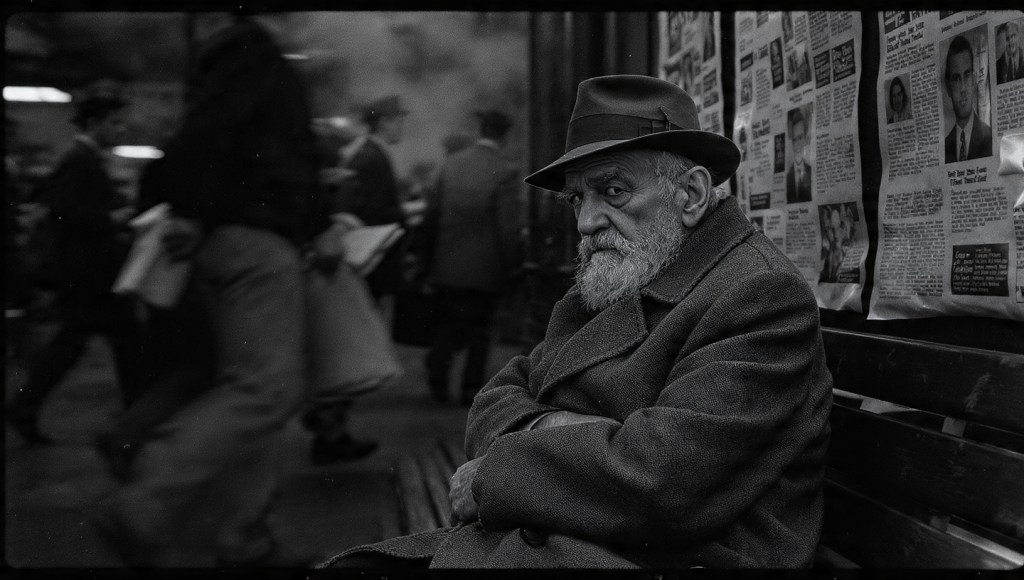
What’s something you still refuse to learn because you survived this long without it?
The joke in the question “What’s something you still refuse to learn because you survived this long without it?” hides a serious truth: most people are not curious omnivores. We all carry around zones of deliberate not-knowing. We skip certain technologies, avoid whole genres of news, refuse to master skills that younger colleagues take for granted, roll our eyes at algebra, coding, or TikTok – and we get on just fine.
In a culture that constantly preaches “lifelong learning” and “upskilling”, this can feel vaguely shameful. But refusal to learn is not just laziness or stubbornness. It is rooted in how brains protect themselves, how societies organise knowledge and power, and how people try to live meaningful lives without drowning in information.
This article follows that refusal across psychology, sociology, history, philosophy, and theology. What emerges is not a simple condemnation of ignorance, nor a romantic defence of it, but a more unsettling conclusion: in a world of limitless information and limited minds, what we decline to learn is as important ethically and politically as what we choose to know.
Part I: The Psychological Foundations of Chosen Ignorance
1. Wilful ignorance: how avoidance is built into the mind
Psychologists distinguish between simple ignorance (you don’t know because you never had the chance to find out) and wilful ignorance, where you could know, but actively choose not to.
Across many experiments, roughly four in ten people will voluntarily avoid information about the negative consequences of their own choices – particularly when those consequences involve harming others or undermining their self-image. In economic games where participants can earn more money by harming an anonymous partner, a large minority simply refuse to look at how much harm they are causing. They leave the facts unopened, so they can feel like decent people while acting selfishly.[1][2][3] The missing facts become a shield for the conscience.
A recent meta-analysis of “wilful ignorance” in moral decision-making found that avoiding information reduced altruistic behaviour by an average of around fifteen percentage points compared to situations where people had to know what they were doing.[2][3] The more “plausible deniability” people maintain, the freer they feel to act in self-interested ways.
Philosophers now distinguish between:
- Wilful ignorance: you never find out, because you choose environments and habits that keep certain facts away.
- Knowledge avoidance: you know full well that relevant information is available and even what it would roughly say, but you actively decline to look.[4]
In both cases, ignorance is not an accident; it is a strategy. Sometimes that strategy is transparently self-serving (“If I read the climate science I’ll have to fly less”). Sometimes it is protective (“I cannot cope with another medical statistic right now”). Either way, refusal is not a blank space. It is a psychological structure.
2. Motivated reasoning: how we work backward from the conclusion we like
Why does avoiding knowledge feel so natural? Partly because our minds are not neutral judges of evidence. They are defence lawyers for what we want to believe.
Motivated reasoning is the process whereby we begin with a preferred conclusion and then recruit arguments and evidence to support it, rather than the other way round. Classic work in psychology shows people:
- Test their own favoured beliefs with low standards of scrutiny.
- Demand far stronger evidence for claims they dislike.
- Seek out information sources that confirm existing views.
- Spin ambiguous evidence towards whatever they already think.[5][6][7][8]
Confirmation bias is the perceptual version of this: we simply notice and remember evidence that fits our worldview, and quietly ignore the rest.[5][9] Cognitive dissonance – the discomfort of holding inconsistent beliefs – acts as an emotional alarm bell. Confronted with facts that threaten our self-image (“I’m environmentally responsible”, “I’m a fair person”, “I’m competent”), we either revise the facts down or look away.
In the classroom, this can show up as student “resistance”: learners who are not short of intelligence or curiosity, but who contest every idea in sociology or history because accepting it would force them to re-examine cherished beliefs about race, gender, class, nation, or religion. Their problem is not lack of evidence; it is the existential cost of taking that evidence seriously.[10]
Motivated reasoning and wilful ignorance are thus two sides of the same coin. One filters incoming information; the other stops it arriving at all.
3. Identity threat: when learning feels like self-destruction
The stakes rise in adulthood. By middle age, most people have a stable sense of who they are and what they can do: “I’m good with people, not with numbers”, “I’m practical, not academic”, “I’m an old-fashioned pen-and-paper person”. These identities are not just stories; they are psychological scaffolding.
Research on identity threat suggests that when new demands – such as mastering digital tools, retraining for a new career, or returning to education – clash with that scaffolding, people feel threatened on multiple fronts: self-esteem, self-efficacy (belief in one’s own competence), and distinctiveness.[11][12]
When people feel their competence is under attack, common coping responses include:
- Denial (“this new thing is unnecessary/fad-ish/stupid”).
- Derogating the source (“these tech people are arrogant and out of touch”).
- Withdrawal or avoidance (“I’ll just let someone else handle it”).[12]
Many adults with limited literacy or numeracy develop elaborate strategies to “fake it”: memorising logos and shapes instead of reading, using shame-avoidance techniques in shops, asking relatives to fill in forms under flimsy pretexts.[13] For them, the prospect of returning to school is not a minor inconvenience; it is a direct threat to their fragile sense of adequacy.
Refusal to learn in such contexts is not mere laziness. It is self-defence – sometimes tragically so.
4. Status quo bias: the brain’s love affair with “how we’ve always done it”
Even when identity is not obviously at stake, the mind shows a deep preference for what already exists. Status quo bias describes our tendency to keep things as they are, even when alternatives are objectively better.[14][15][16][17]
Neuroscientific work sheds light on how deeply this runs. In decision tasks, the brain’s decision-making circuits show extra activation when people depart from the default option. Rejecting the status quo in difficult decisions draws heavily on the prefrontal cortex and the subthalamic nucleus, regions involved in effortful control and response suppression.[18] In effect, changing course must fight against neural gravity.
This helps explain why something like “finally learning how to use spreadsheets” feels disproportionately hard, even when the resulting efficiency gains are obvious. The default is not just a habit in the loose sense; it is quite literally encoded in reinforced neural pathways. Pushing against that encoding takes energy.
5. Neuroplasticity and the cost of rewiring
The good news is that the adult brain is plastic: it can grow new connections and reorganise itself as we practise new skills. The bad news is that this plasticity has to work against decades of prior wiring.
Repeated behaviours strengthen the synaptic connections that support them and prune those that are unused.[19][20][21][22] Over time, this yields well-worn mental paths that are efficient precisely because they are inflexible. Relearning an everyday behaviour – say, moving from paper diaries to a digital calendar, or from cash to contactless payments – means temporarily being worse at tasks you currently perform quite well. The short-term cognitive cost can feel unjustifiable.
Studies of habit formation suggest that, on average, it takes around two months of daily repetition for a new behaviour to become relatively automatic, with wide variation depending on complexity.[23] For a busy adult, that is a sizable investment. When people say “I’ve coped this long without it”, part of what they mean is: “I have a brain exquisitely tuned to do things my old way. Re-tuning it is real work.”
6. Information overload and decision fatigue: when not knowing is self-preservation
Modern life adds another layer of pressure: there is simply too much information. News feeds, health advice, financial products, educational opportunities, political analysis, endless “must-read” lists and “must-have” skills. In such an environment, refusing to learn certain things can be a way of staying sane.
Studies on information overload show that when the volume of incoming information exceeds our processing capacity, the quality of our decisions drops. People faced with too many options or too much detail become less sensitive to quality differences and more likely to stick with simple heuristics or defaults.[24] At the neural level, overload correlates with reduced early attention-related brain responses, suggesting that the brain literally cannot invest sufficient resources in each piece of input.[24]
On top of this comes message fatigue: when people are bombarded with repeated persuasive messages (for example, about health behaviour), they become less motivated to engage with any of them, even potentially useful ones.[25] In short, the more we are told what we should learn, the less inclined we become to learn anything at all.
The Dunning–Kruger effect complicates the picture. People with the least skill in a domain often overestimate their competence, because they lack the knowledge needed even to see their own deficits.[26][27][28][29] In some cases, then, “I don’t need to learn this” reflects not reflective refusal but a metacognitive blind spot.
Yet there is an opposite pattern that matters for our question: individuals who are vividly aware of their limits, feel overwhelmed by demands, and deliberately carve out “ignorance zones” to protect their attention and mental health. For them, refusal to learn is a way of keeping a grip on a manageable world.
Part II: Sociological Dimensions of Chosen Ignorance
So far, the focus has been on the individual mind. But ignorance is not only psychological; it is social. Who learns what, and refuses what, depends heavily on how societies distribute knowledge, status, and power.
1. Agnotology: ignorance as something produced, not just discovered
The historian of science Robert Proctor coined the term agnotology to describe the deliberate production of ignorance.[30][31][32][33] His initial case study was the tobacco industry, which spent decades funding junk science and public relations campaigns explicitly designed to create doubt about the link between smoking and lung cancer. Their aim was not to prove cigarettes safe – an impossible task – but to muddy the waters enough that regulators and consumers could tell themselves the science was “uncertain”.
Agnotology points to a crucial fact: often, people do not know something because powerful actors have arranged things that way. Strategies include:
- Concealing or destroying documents.
- Flooding the public sphere with low-quality or misleading information.
- Structuring education and media access along class or racial lines.
- Framing certain topics as taboo or irrelevant.[31][32][33]
A telling example comes from the history of plate tectonics. For over a decade, key seismic data that could have supported continental drift theory were classified military secrets, because they were gathered by undersea surveillance systems built for submarine detection. What looked like puzzling scientific delay was partly a product of geopolitical secrecy.[31][33]
When an individual “chooses” ignorance in such environments – say, by “not bothering” to look into climate science or structural racism – that choice is being made within an informational landscape that has been pre-shaped. Their ignorance is personal, but it is also a downstream effect of contested social and economic forces.
2. Cultural capital: when not learning is a class position
The sociologist Pierre Bourdieu introduced the concept of cultural capital to capture how families and schools pass on not just money but tastes, habits, language, and forms of knowledge that carry social advantage.[34][35][36][37] Cultural capital exists in three states:
- Embodied: ways of speaking, acting, appreciating art and food, “knowing how to behave” in elite spaces.
- Objectified: books, instruments, artworks, technologies that require the right know-how to use or appreciate.
- Institutionalised: recognised credentials – degrees, titles, professional qualifications.[34][36][37]
Schools, universities, and employers tend to reward middle-class cultural capital as if it were merit, while dismissing working-class styles and knowledge as lack or deficiency. Bourdieu calls this subtle process symbolic violence: institutions impose their values as “neutral”, making those who do not embody them feel intrinsically inadequate.[34][35]
In this light, refusal to learn certain kinds of knowledge can be a classed and political act. A working-class teenager who rejects “posh” academic language, or who resents being told that their family’s cultural world is inferior, might refuse to fully engage with school, not because they are incapable, but because they feel the content demands a betrayal of identity.[34][35]
Equally, members of the middle classes often refuse to learn manual and practical skills that working-class people take for granted – basic plumbing, car maintenance, certain crafts – because these skills do not carry institutional prestige and may feel beneath their social station. Their ignorance is not punished, because they can pay others to compensate for it; indeed, it quietly signals their position in a division of labour.
In both directions, refusal to learn is bound up with what counts as “respectable knowledge” in a particular social order.
3. Cultural transmission and resistance: who gets to teach whom what
Knowledge does not simply float around waiting to be picked up. It is transmitted: from parents to children, teachers to students, experts to laypeople, colonisers to colonised. And that transmission is shot through with power.
Scholars of cultural transmission note that subordinate groups often resist learning from dominant ones, not because the content lacks usefulness, but because to accept it is to accept the authority and values of those groups.[38][39][40] For example:
- Colonial authorities “teaching” indigenous populations European history, religion, and law, expecting them to abandon their own.
- Missionaries presenting Christianity as an upgrade on local belief systems, while denigrating traditional knowledge.
- Elite educational institutions offering scholarships to talented working-class students on condition (implicit or explicit) that they assimilate to elite cultural norms.
In such contexts, refusal to learn can be a form of resistance – a way of asserting “we will not be remade in your image”. Historians have shown, for instance, that women’s centuries-long exclusion from formal theological study was not a neutral oversight but a deliberate device to preserve male authority in religious communities.[38] To this day, when women refuse to internalise certain religious “teachings” on gender roles, they are not shunning knowledge but challenging a politicised form of it.
4. Social norms, conformity, and the uses of non-conformity
Human beings are exquisitely sensitive to social norms – the unwritten rules about what “people like us” do in a given context.[39][41][42][43] Learning what your group values and what it ignores is an early and ongoing social project.
Interestingly, research on norm conformity suggests that threats to personal control can increase conformity – but not always to the status quo. In some experiments, people whose sense of control has been undermined are actually more likely to conform to norms of change when such norms are salient.[44] If the ingroup identity is defined by being innovative or rebellious, members in distress may double down on that innovation as a way of regaining stability.
This has implications for our topic. Refusing to learn new skills can signal loyalty to a group norm (“Real farmers don’t use drones”; “Real artists don’t learn marketing”), just as enthusiastically learning every new tool can. Non-conformity – declining to acquire knowledge that one’s reference group prizes – can also serve as a signal: a way of saying, “I am not like you; I belong elsewhere.”[45][43]
Historically, such non-conformity has often been at the heart of social change. The first women to refuse “domestic science” classes, the first male nurses to train in maternity wards, the first religious converts to learn “forbidden” languages – each engaged in knowledge acquisition that went against their own group’s norms, and in knowledge refusal in other domains, to carve out new identities.
5. Technology, ageing, and the “grey digital divide”
Nowhere is chosen ignorance more visible than in the digital realm. Many older adults remain offline, or use technology minimally, not simply because of lack of access, but because they actively judge that the effort of learning is not worth the payoff.[46][47][48][49][50]
Research on technology adoption in later life distinguishes:
- Primary digital divide: lacking access to devices, connectivity, or basic infrastructure.
- Secondary digital divide: having access but choosing not to engage, or using only a restricted subset of functions.[46]
Older adults report barriers including:
- Physical issues (vision, dexterity).
- Cognitive load (“everything changes too fast”).
- Emotional concerns (fear of scams, humiliation, stigma).
- Value clashes (finding social media shallow, or surveillance intrusive).[46][47][48][50]
Crucially, many are not simply “technophobic”. Studies describe them as critical adopters: people who actively weigh up whether particular technologies fit their values and lifestyles.[50] Some reject certain devices because they symbolise dependency (“a fall alarm is for people worse off than me”), because the design treats them as incompetent, or because they see digital services as eroding face‑to‑face community.
In this context, “I’ve survived this long without online banking” is not just an expression of habit. It may be a coded refusal of a whole model of life – fast, disembodied, always-on – that they do not recognise as theirs.
Part III: Historical and Philosophical Perspectives
These modern dynamics have deep historical and intellectual roots. Philosophers and religious thinkers have long wrestled with when ignorance is a failing and when it might be a kind of wisdom.
1. Socrates and the wisdom of acknowledged ignorance
Socrates, as portrayed by Plato, built his whole philosophical stance on a peculiar kind of ignorance. After being told by the Delphic Oracle that he was the wisest man in Athens, he set out to test the claim. He questioned politicians, poets, and craftsmen, discovering that each claimed knowledge they did not actually possess. Socrates’ conclusion was not that he knew more, but that he was uniquely aware of how little he knew.
This has given rise to the notion of Socratic wisdom: true wisdom consists in recognising the limits of one’s knowledge.[51][52][53][54] This is not a lazy shrug but an active, probing humility. Socrates does not refuse to learn; he refuses to claim understanding he has not earned.
His critique of writing in the Phaedrus often gets misread as blanket technophobia. In the dialogue, Socrates recounts a myth in which the Egyptian god Theuth offers King Thamus the gift of writing. Thamus replies that writing will “produce forgetfulness in the minds of those who learn to use it, because they will not practise their memory.” Written words cannot adapt to their readers or respond to questions; they only “appear to be wise without being so”.[55][56][57][58][59]
Socrates thus refuses to embrace writing as a replacement for live dialogue. But his refusal is not about avoiding knowledge; it is about protecting a particular, relational way of knowing – question and answer, tailored to the soul of a specific interlocutor – from a technology he worries will encourage superficiality.
There is a contemporary echo here. When someone declines to learn, say, social media marketing, because they fear it will encourage shallow engagement and distract from craft, they may be enacting a Socratic preference for depth over breadth, live interaction over mass broadcast – not simply being obstinate.
2. The Luddites: rational refusal in an age of machines
The term “Luddite” has become shorthand for technophobic reactionaries. Historically, this is unfair. The original Luddites – textile workers in early nineteenth-century Britain – were highly skilled craftspeople who took up arms not against machines per se, but against a particular use of machinery that threatened their livelihoods and their sense of justice.[60][61][62][63][64]
Between 1811 and 1817, groups of weavers and framework knitters destroyed stocking frames and power looms in protest. As historians have shown, they were not opposed to technology in the abstract. They targeted specific workshops where employers used machines to drive down wages, avoid guild regulations, and flood the market with shoddy goods. They demanded:
- That machines produce high-quality products.
- That they be operated by properly apprenticed workers.
- That skilled labour receives decent wages.[61]
When these demands were ignored, smashing machines became a form of political communication. The refusal to learn the new mechanised techniques was part of that message: “We will not become cogs in this new system on these terms.”
In that light, contemporary refusals to master new workplace technologies – AI systems, surveillance tools, algorithmic management platforms – may sometimes echo Luddite logic. What looks like ignorance from above may be, from below, a defence of dignity and control.
3. Existentialism: bad faith, authenticity, and the courage to know
Existentialist thinkers like Jean‑Paul Sartre and Albert Camus place a different kind of pressure on ignorance. For Sartre, human beings are “condemned to be free”: we are always responsible for how we interpret and respond to our situations, even when we pretend otherwise. Bad faith is his term for the ways we lie to ourselves to escape that responsibility – pretending, for instance, that we are nothing but our social role (“I’m just a waiter; I have no choice”) or our past.[65][66][67][68]
Wilful ignorance fits neatly into this picture. When we avoid information that would force us to reconsider our choices, values, or complicity in injustice, we shrink our field of freedom. We act as if we are victims of circumstances, when in fact we are colluding with them.[69][66]
Camus pushes further, arguing that the temptation of ignorance is particularly strong in the face of life’s absurdity: its lack of ultimate meaning. He calls it philosophical suicide when people escape this tension by leaping into comforting illusions – ideologies, dogmas, fantasies of destiny – rather than enduring the hard work of clear-eyed engagement.[69] In modern terms, refusing to learn about climate breakdown, systemic racism, or one’s own mortality can function as such a leap.
At the same time, existentialism is suspicious of the idea that we ought to know everything. Authenticity is not about being a walking encyclopaedia; it is about taking ownership of the choices and values that actually structure one’s life. A person who declines to learn advanced financial instruments because they see the world of high finance as corrosive, and chooses to devote their limited attention to art, craft, or community work, may be living more authentically than someone who dutifully acquires every “useful” skill on offer.
The existential question is thus not “How much do you know?” but “Have you honestly faced the reasons you avoid this knowledge – and the consequences, for yourself and others, of that avoidance?”
4. Theology: holy ignorance and the vice of anti‑intellectualism
Religious traditions have an ambivalent relationship with ignorance. On one hand, there is a rich lineage of apophatic or “negative” theology, which insists that God ultimately surpasses human concepts. Medieval thinkers like Nicholas of Cusa spoke of docta ignorantia – “learned ignorance” – as the recognition that finite minds cannot fully grasp the infinite.[70]
Modern discussions of epistemic humility echo this: to be intellectually virtuous is to know that our perspectives are partial, our reasoning fallible, and our access to ultimate reality limited.[71][72][73][74] In this sense, declining to pontificate on questions one cannot possibly settle is a kind of theological modesty.
On the other hand, contemporary observers like Olivier Roy have documented what he calls holy ignorance in a more troubling sense. In his book of that title, Roy argues that some strands of religious fundamentalism actively glorify not knowing: rejecting historical scholarship on sacred texts, ignoring scientific consensus on evolution or climate, and celebrating “simple faith” that treats theological reflection as a threat rather than a deepening of devotion.[75][76]
Such movements often float free from any specific culture (hence Roy’s subtitle about “when religion and culture part ways”), offering a decontextualised, globalised religiosity that sees cultural learning as pollution.[75][76] In many cases, fundamentalists wear ignorance as a badge of purity, deriding “worldly wisdom” and specialist expertise as obstacles to salvation.[77][78] Christian young‑earth creationists who refuse to learn evolutionary biology, or certain secular militant atheists who refuse to learn even the basics of theology while denouncing “religion” in general terms, show surprisingly similar patterns.[77]
Within theological ethics, a long tradition distinguishes between invincible ignorance (which a person cannot reasonably overcome, and which does not incur moral guilt) and vincible ignorance (which could be removed by due effort, and for which one can be held responsible).[79] This distinction maps quite well onto our question. If someone has never had access to proper education or lives within strict censorship, their “refusal” to learn is largely invincible. If, by contrast, they live in an open society, repeatedly avoid information that would correct harmful beliefs, and encourage others to remain ignorant, then their ignorance begins to look like a vice.
Part IV: The Economics of Ignorance – Costs, Benefits, and Bounded Brains
Beyond psychology and culture, there is a simple economic fact: learning is costly. That cost is not just financial; it is time, energy, attention – the very stuff of life. Economics offers some useful tools to think about when refusal to learn is, in fact, rational.
1. Rational ignorance: when learning genuinely doesn’t pay
The idea of rational ignorance originated in political science. Anthony Downs noticed that in large democracies, individual voters have almost zero chance of influencing an election outcome. From a strictly economic viewpoint, it would be irrational for them to spend hours mastering policy details; the cost of learning far outweighs the expected benefit of casting a slightly more informed vote.[80][81][82]
The same logic applies elsewhere. Suppose hiring a plumber costs £80 and it would take you a weekend plus the risk of a flooded bathroom to learn the skills and do the job yourself. Even if you could do it, the opportunity cost – lost leisure, stress, potential damage – might easily outweigh the cash savings. In that case, remaining “plumbing‑ignorant” is the rational choice.
In practice, of course, people’s behaviour rarely matches the tidy equations. Studies of actual voters show they often overestimate the importance of their own vote and believe they know enough, even when they objectively don’t.[83] Rather than carefully calculating whether learning pays, most of us rely on rough-and-ready heuristics: we learn what feels necessary or interesting, and ignore what doesn’t.
This is where the language of “I’ve survived this long without it” comes in. It is a back‑of‑the‑envelope rationality: if the absence of a skill has not yet created obvious harm, that absence must be acceptable.
2. Bounded rationality and satisficing: why “good enough” is often optimal
Herbert Simon’s theory of bounded rationality sharpens this intuition.[84][85][86][87][88] Classical economics assumes that people are fully rational optimisers: they identify all possible options, gather all relevant information, and choose the one that maximises their utility. Simon pointed out that real humans have:
- Limited time.
- Limited cognitive resources.
- Limited information.
- Limited capacity to foresee complex consequences.[84][86][88]
Instead of optimising, we satisfice: we set an aspiration level (“good enough”) and stop searching once we find an option that meets it.[84][85][87]
Applied to learning, this means: if your current skills allow you to function satisfactorily in your job, relationships, and community, then from a bounded rationality perspective it may be sensible not to spend scarce time and cognitive energy acquiring extra skills whose benefit is uncertain.
In other words, your personal “ignorance budget” is part of your overall resource allocation strategy. You decline to learn Mandarin or advanced statistics not because they lack value in general, but because, given your aims and constraints, focusing on them would be a misallocation of your limited life.
3. Opportunity cost: what learning trades away
Economists use opportunity cost to name the value of the best alternative you give up when you choose something.[89][90][91][92][93] If you spend an evening learning to use a new project‑management app, you are not spending that evening relaxing, seeing friends, reading a novel, or playing with your children. The “cost” of the app is not just frustration and a subscription fee; it is also a missed sunset or bedtime story.
For students and workers, opportunity costs can be huge. A mid‑career nurse considering a degree in data analysis might weigh:
- Tuition fees and lost earnings.
- The stress of studying alongside shifts.
- The impact on family life.
- The uncertain payoff in terms of job satisfaction and pay.
If, after considering these, she thinks: “I’ve survived this long without it; my patients value what I already do; I’d rather deepen my existing practice than chase a new qualification,” that refusal may be both emotionally and economically wise.
Even at smaller scales, the calculation matters. Spending your limited “brain prime” hours each day (those where your focus is strongest) learning a skill you will rarely use may be a poor trade if it means doing your core work or relationships in a constant state of exhaustion.
4. The paradox of information abundance
We now live in an era where, for many, information is cheap and abundant. In theory, this should reduce ignorance: when you can watch an MIT lecture on your phone for free, surely there is less excuse for not knowing? Yet in practice, this abundance has shifted the bottleneck from access to attention.
The marginal cost of downloading a new tutorial is near zero. The marginal cost of watching it carefully – let alone integrating its lessons into your life – is high. Each new topic clamouring for your attention increases the value of refusing to engage. If you took every “5 books you simply must read” list seriously, you would never do anything else.
In this sense, rational ignorance has become not just forgivable but necessary. The scarce resource is not information but capacity. The question is no longer “Can I learn this?” but “What am I willing to sacrifice in order to learn this?”
Part V: When Refusal Is Wise – and When It Is a Trap
Where does this leave the original question? Is it clever self-knowledge to say, “I refuse to learn this because I’ve survived this long without it,” or is it a red flag?
The answer depends on how we parse a few crucial distinctions.
1. Epistemic humility versus wilful blindness
Philosophers of knowledge speak of epistemic humility: the virtue of recognising one’s cognitive limits, being cautious about strong claims, and staying open to correction.[71][72][73][74] Refusing to pose as an expert in areas where you are not – declining to speak authoritatively about virology, for instance, or to opine on the details of monetary policy – is a manifestation of this humility.
However, wilful blindness occurs when someone could easily acquire crucial knowledge, knows it would matter, but actively avoids it because it would force them to change. This is the corporate executive who “doesn’t want to know” about abuses in the supply chain; the citizen who pointedly avoids any journalism about a war their country is involved in; the believer who refuses to read anything that might unsettle their inherited faith.[1][4][2][77][78]
The outer behaviour (“I’m not going to learn about that”) can look the same in both cases. The inner posture is radically different. Humility says, “I don’t know enough to judge; I’ll stay quiet or seek help.” Blindness says, “I suspect I’d have to act differently if I knew; therefore I won’t find out.”
The task, for each of us, is to be honest about which posture we are actually taking.
2. Identity, autonomy, and the right to decline
Liberal societies are built on the premise that individuals have a significant say over the shape of their lives. That includes, to a large extent, the right to specialise: to become very knowledgeable in some domains and remain serenely ignorant in others.
There is nothing inherently virtuous, for example, in a bricklayer learning philosophy or a philosopher learning bricklaying. Both would probably become better people by gaining some sense of the other’s world; but they are not morally obliged to. What they are obliged to do is recognise that their expertise is partial and not to deride or dismiss knowledge they have not cared to acquire.
The same applies across class, gender, and cultural lines. Working-class people are not required to become fluent in “high culture” to be worthy of respect. Older adults are not morally defective for refusing full digital immersion. Religious believers are not bad citizens simply for not reading Nietzsche. Autonomy includes the freedom to say no to learning.
The moral calculus shifts when ignorance begins to harm others. If you vote on policies affecting millions, prescribe medication, sign off on safety procedures, educate children, or manage people’s money, then there is a strong ethical duty to know what you are doing. Here, the excuse “I’ve survived this long without understanding it” ceases to be charming and becomes dangerous.
3. The Dunning–Kruger problem: when we don’t know that we don’t know
A persistent worry in all of this is meta‑ignorance: people not only lack knowledge, they lack awareness of their lack.[26][27][28][29] The Dunning–Kruger effect shows that beginners in a domain systematically overestimate their skill because they lack the very expertise needed to spot their own mistakes.
Thus, the person most loudly insisting “I don’t need to learn this; I already know enough” may be precisely the one who should be most cautious. Conversely, those plagued by impostor syndrome – who suspect they know less than others think – may in fact have a more accurate view of their limitations.
One corrective is to treat stubborn refusal as a signal to pause. If you find yourself indignantly thinking “I have no need for this knowledge”, it may be worth asking: “How do I know that? Could I be missing costs I haven’t yet had to pay because others are quietly covering for me, or because circumstances have been unusually kind?”
4. The examined ignorance
Socrates famously said that the unexamined life is not worth living. In the same spirit, we might say: the unexamined ignorance is not worth having.
This does not mean we must rush to fill every gap. On the contrary, in a world of limited bandwidth, we must curate our ignorances as carefully as our knowledges. The key is whether that curation is conscious and honest.
An examined ignorance would look something like this:
- “I know that learning X would cost me Y in time and energy.”
- “I understand the potential benefits, and I’m willing to forego them.”
- “My choice does not significantly endanger or disadvantage others.”
- “If circumstances change and this ignorance starts to hurt people, I am willing to revisit it.”
An unexamined ignorance, by contrast, sounds like:
- “People like me just don’t do that.”
- “It’s stupid/boring/pointless” (without real engagement).
- “It’s all a conspiracy/hoax/fad” (dismissal without knowledge).
- “I don’t want to talk about it” (shutdown when risks are raised).
In daily life, most of us are a mixture of both. We have zones of well‑considered refusal, and pockets of flippant avoidance. The challenge is to shift the balance.
Conclusion: Choosing What Not to Know
The seemingly light-hearted prompt “What’s something you still refuse to learn because you survived this long without it?” is, on reflection, a deeply serious question. It asks not just for a confession of ignorance, but for a justification of it.
We have traced that justification through:
- Psychological mechanisms that make avoidance feel safe and effortful change feel risky.
- Sociological structures that shape who is invited to learn what, and on whose terms.
- Historical episodes where refusal to learn was an act of resistance rather than weakness.
- Philosophical debates about humility, freedom, self-deception, and meaning.
- Economic reasoning about costs, benefits, and human cognitive limits.
In an age of infinite information and finite attention, we cannot not choose what to be ignorant of. The only real question is whether we choose well or badly.
To choose well is to treat ignorance as a scarce resource to be allocated carefully:
- Ignorant of gossip, but informed about policies that affect the vulnerable.
- Ignorant of passing fads, but attentive to technologies that shape power.
- Ignorant of every new outrage cycle, but alert to long-term structural harms.
- Ignorant, perhaps, of skills that would only marginally increase our personal efficiency, but actively learning in domains where our knowledge (or lack of it) has real consequences for others.
To choose badly is to let habit, fear, prejudice, or manufactured doubt draw the map of our ignorance for us.
There is no formula that can tell you exactly which side any given refusal falls on. But the act of asking – honestly, concretely – “Why do I still refuse to learn this?” is already a step out of bad faith. It is a way of turning a joke into an ethical mirror.
You have survived this long without all sorts of knowledge. The deeper question is: What kind of life do you want to live from here – and what do you need to know, and not know, in order to live it well?
Bob Lynn | © 2026 Vox Meditantis. All rights reserved.
References:
[1] 40% of people willfully choose to be ignorant. Here’s why – Big Think
[2] Why do we engage in wilful ignorance? | BPS
[3] A meta-analytic review of the underlying motives of willful ignorance …
[4] Embodied Irrationality? Knowledge Avoidance, Willful …
[5] Confirmation Bias & Motivated Reasoning – Critical Thinking
[6] The case for motivated reasoning – PubMed – NIH
[7] The Case for Motivated Reasoning
[8] Motivated reasoning – Wikipedia
[9] What Is Motivated Reasoning?
[10] Student Resistance, Paralysis, and Rage – Sociology Source
[11] Coping with identity threat and health literacy on the quality …
[12] The Coping with Identity Threat Scale
[13] How common is functional illiteracy?
[14] Status quo bias – Wikipedia
[15] What Is Status Quo Bias? | Definition & Examples – Scribbr
[16] Status Quo Bias – Definition, Examples, and How to Overcome It
[17] What Is Status Quo Bias? | Definition & Examples
[18] Overcoming status quo bias in the human brain – PMC
[19] Neuroplasticity: Rewire your brain for better habits
[20] Here’s what happens in your brain when you’re trying to make or break a habit
[21] 7 Principles of Neuroplasticity: Breaking Bad Habits & …
[22] The Neuroscience of Habit Formation: How to Use Brain Science to …
[23] Rewire Your Habits, Rewire Your Life
[24] How Does Information Overload Affect Consumers’ Online Decision …
[25] How do information overload and message fatigue reduce …
[26] Dunning–Kruger effect – Wikipedia
[27] Dunning–Kruger effect – Wikipedia
[28] Dunning-Kruger Effect: Why Incompetent People Think They Are Superior
[29] David Dunning: Overcoming Overconfidence
[30] Agnotology: the study of the willful production of ignorance
[31] Agnotology
[32] The man who studies the spread of ignorance
[33] A Brief History of (the Notion of) Scientific Ignorance in …
[34] Cultural Capital Theory of Pierre Bourdieu – Simply Psychology
[35] Pierre Bourdieu and Education – The Sociology Guy
[36] The Theory of Cultural Capital in Higher Education and Its …
[37] Cultural capital – Wikipedia
[38] Violence and resistance in cultural transmission
[39] Cultural Transmission Theory
[40] Cultural Transmission: Anthropology & Theory
[41] Social Norms in Sociology
[42] Social Norms
[43] Understanding Social Conformity: Influences and Impacts …
[44] To change, but not to preserve! Norm conformity following …
[45] What Role Does Non-Conformity Play in Social Change?
[46] Older people’s attitudes towards emerging technologies
[47] Facilitators and barriers of technology adoption and social …
[48] Examining factors influencing the adoption of smart …
[49] Technology Adoption by Older Adults: Findings From the …
[50] Circumspect Users: Older Adults as Critical Adopters and …
[51] Why True Wisdom Lies in Acknowledging Ignorance
[52] The Wisdom of Ignorance | Issue 136
[53] I know that I know nothing
[54] Socratic Wisdom: The Model of Knowledge in Plato’s Early …
[55] Socrates’ Critique of Writing in Plato’s Phaedrus
[56] Plato’s Philosophical Answer to the Three Deficiencies of the …
[57] Phaedrus (dialogue)
[58] Socrates on the Invention of Writing and the Relationship …
[59] Plato’s Argument Against Writing
[60] Before AI skeptics, Luddites raged against the machine…literally
[61] What the Luddites Really Fought Against
[62] Luddite – Wikipedia
[63] The Luddites
[64] 19th-Century Protests: Workers, Weavers, Warnings on AI
[65] Existentialism – Stanford Encyclopedia of Philosophy
[66] Bad Faith: Philosophy & Existentialism
[67] Authenticity (philosophy) – Wikipedia
[68] Existentialism – Routledge Encyclopedia of Philosophy
[69] Existentialism and Ignorance
[70] Learned Ignorance? On Enlightened Blindness to the Divine …
[71] New Essay | Epistemic Humility
[72] Epistemic Humility and the Value of Acknowledging …
[73] Epistemic humility – Wikipedia
[74] Epistemic Humility – Knowing Your Limits in a Pandemic
[75] Olivier Roy – Holy Ignorance – Part I
[76] Holy Ignorance
[77] Ignorance as a badge of honor? Fundamentalism among …
[78] What are fundamentalist beliefs? – PMC – PubMed Centralpmc.ncbi.nlm.nih.gov › articles › PMC11698306
[79] Ignorance – Invincible and Vincible
[80] GEORGE MASON UNIVERSITY SCHOOL OF LAW
[81] Knowledge About Ignorance: New Directions in the Study …
[82] Rational ignorance
[83] Rational Ignorance Can’t Explain Voter Behavior
[84] Bounded rationality – Wikipedia
[85] Herbert Simon’s decision making approach
[86] Bounded Rationality Decision-making Ill-Structured …
[87] Bounded Rationality | Research Starters
[88] applying Simon’s concept of bounded rationality (0069)
[89] Concept of Opportunity Costs | Behavioral Economics
[90] A Strategy for Evaluating the Opportunity Cost of Time …
[91] The Price of Time | Chicago Booth Review
[92] Optimal allocation of time in risky choices under …
[93] Real-Life Examples of Opportunity Cost | St. Louis Fed


 Vox Meditantis
Leave a reply to Bob Lynn Cancel reply