What makes a good leader?
Today is a federal holiday. The banks are closed, the mail isn’t running, and down on Market Street, I imagine there are speeches being made. Men and women in wool coats will stand on makeshift podiums, their breath clouding in the January chill, talking about dreams and mountaintops. They will gesture wildly. They will raise their voices to reach the back of the crowd. They will try to inspire.
And I will stay right here, watching the grey sludge of the Delaware River slide past the pylons of the Commodore Bridge, unconvinced.
We ask, “What makes a good leader?” in this town, and usually, the answer is a list of loud virtues: passion, charisma, the ability to “rally the troops.” But I look at the history of New Corinth – the wreckage left by the passionate and the loud – and I come to a different conclusion. The only virtue that matters, the only one that actually keeps a city from eating itself alive, is temperance.
Restraint. Moderation. The ability to keep your head when everyone else is indulging in the luxury of an emotional breakdown.
I’ve been reading through the oral histories collected by the historical society recently – a little project to pass the winter evenings. You see the same patterns repeating. Take the story of the old Iron Works closing back in ’78. There’s a romanticism attached to it now, a tragedy about the “working man.” One account describes a worker walking out the moment the news broke, leaving his shift, walking past the foreman, past the offices, just “walking out into nothing.”
It’s dramatic. It’s poignant. But is it leadership? No. It’s a surrender to impulse. A leader doesn’t walk out into nothing; a leader stays, catalogues the inventory, secures the severance, and maps the exit. The emotional release of storming out does nothing but soothe the ego of the one leaving. It helps no one. I look at that story and I don’t see a hero; I see a man who let the chaos of the moment dictate his actions.
Then you have the modern iteration of this lack of control. I read another account from a woman, a social worker, who had an epiphany in a grocery store on Market Street over a sale on Brussels sprouts. She writes about shedding the need to be “cool,” about embracing her “messy bun” and her “bleach-stained sweatshirt.” She frames this as some great spiritual awakening, a pivot to “authenticity.”
I find it exhausting. It’s just another form of performance, isn’t it? First, she performed “sophistication” for the invisible judges of New Corinth, and now she performs “relatability” for the same audience. It’s messy. It’s undisciplined. A good leader doesn’t need to oscillate between vanity and slovenliness to find their centre. They simply are. They dress appropriately not because of social pressure, but because order in one’s appearance reflects order in one’s mind. There is a lack of dignity in this celebration of the dishevelled that I find frankly repellent. It reeks of the newcomers who move into the Riverside District, treating our city like a backdrop for their personal voyages of self-discovery while the rest of us are just trying to pay property taxes.
And don’t get me started on the “funeral costume” debate. There’s a whole school of thought now that dressing up for a funeral is “pretence.” That showing up in work boots is somehow more “honest.” It’s nonsense. It’s a rejection of standards. Civilisation is built on the maintenance of standards even when – especially when – you don’t feel like it. A leader wears the suit. Not because he cares what people think, but because the ritual requires deference to something larger than his own comfort.
New Corinth is a city that has always been pulled apart by extremes. The “Bottoms” down by the river are prone to flooding and neglect; the “Heights” to the west are prone to snobbery and isolation. We have the “shadow twin” complex with Wilmington, always trying to prove we’re tougher or smarter or more “real”. We don’t need leaders who feed into these neuroses. We don’t need a mayor who screams through a megaphone about injustice, nor do we need a developer who preaches about the “soul of the city” while flipping rowhomes.
We need a leader who is boring.
I want a leader who looks at the opiate statistics – 89 dead in 2017, a number that stains this city’s ledger – and doesn’t weep, but organises the distribution of Narcan with the cold efficiency of a logistics manager. I want a leader who looks at the gentrification of the creek valley and doesn’t write a poem about it, but adjusts the zoning codes to ensure density is balanced with infrastructure capacity.
True leadership is the suppression of the self. It is the ability to look at a crisis – whether it’s a steel mill closing or a pandemic or a flood of new money – and strip away the sentiment. It is the refusal to be swayed by the weeping mother or the angry union rep or the idealistic newcomer in her Crocs. It is the temperance to say, “No,” when everyone wants a “Yes,” and to say, “Wait,” when everyone wants to run.
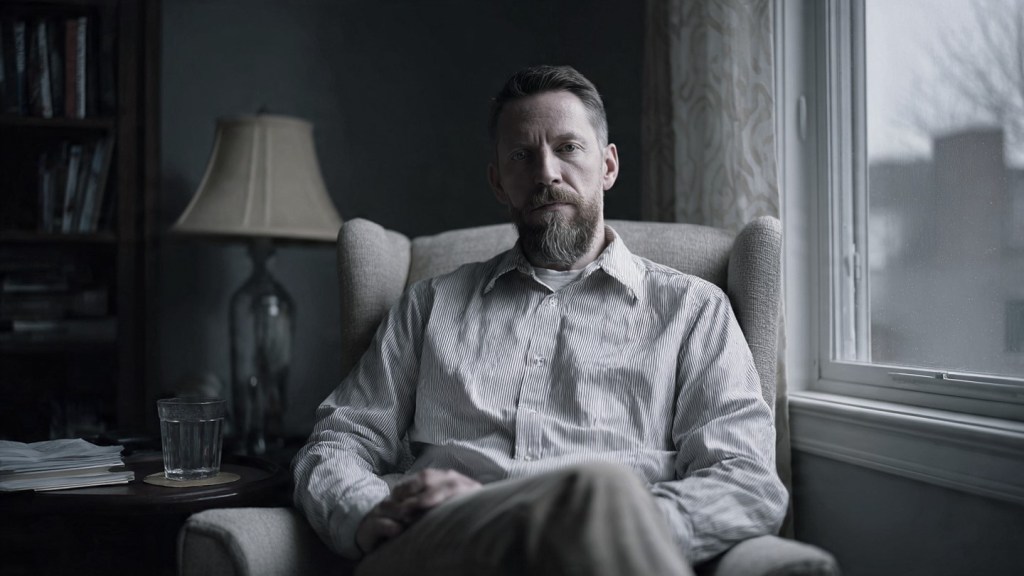
So let them have their speeches today. Let them talk about dreams. I’ll be here, in my living room, lights on, bills paid, thinking about the quiet, thankless work of keeping the water running and the roads paved. That’s the only leadership that counts.
Bob Lynn | © 2026 Vox Meditantis. All rights reserved.


 Vox Meditantis
Leave a reply to Tony Cancel reply