What is your favorite animal?
Wednesday, 15th January, 1919
The cold that evening had teeth, and Berlin – still bruised from street-fighting and slogans – seemed to bare its throat to it. Else Kappel walked quickly, shoulders set, her breath a thin, steady ribbon that vanished as soon as it left her mouth. The snow at the kerb was no longer white; it was trampled into grey ridges and gritty hollows, mixed with ash and the blackened sweepings of a city that could not decide whether it had survived a war or merely changed uniforms.
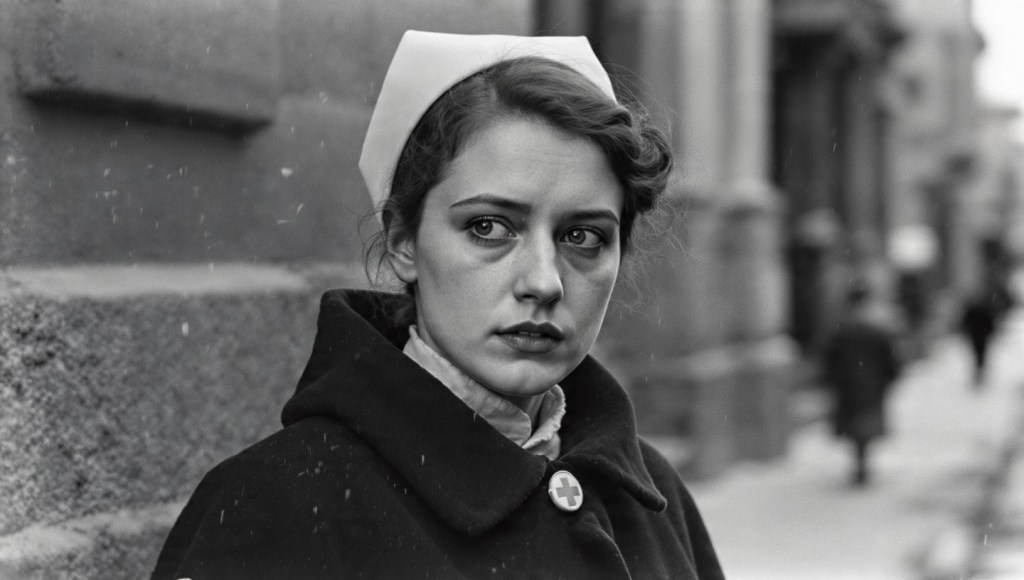
Her nurse’s cloak was too light for January, but the Red Cross band at her sleeve was clean and unmistakable. It ought to have made her safe – ought, in a sensible world, to have been a passport through any line of armed men. Tonight it felt like a lantern hung round her neck.
The bag on her left arm pulled at her shoulder: bandages, carbolic soap, a small tin of salve filched from a hospital cupboard that no longer kept proper accounts. Beneath the linen, wrapped so it did not crackle, lay a notebook no larger than her palm. Its cover was dull and workmanlike, the sort of thing a clerk might mislay and never mourn – yet the names inside it could ruin people, save people, or do both at once.
Else had not meant to become a keeper of names.
She had begun as a keeper of bodies: holding down a thrashing arm while a surgeon dug for shrapnel; wiping dried blood from a young man’s lip so his mother might recognise him; listening to last words that were never as eloquent as the newspapers made out. She had learned, quietly and without ceremony, that pain did not belong to any party.
Still, parties had found her.
On the walls, posters peeled like scabs: proclamations pasted over proclamations, dates and signatures half-torn away, as if the city itself could not bear to read what it had promised yesterday. Men hurried past with collars raised, eyes forward, hands deep in pockets – hands that might hold nothing more violent than a tram ticket, or might hold a pistol and the decision to use it. Somewhere down a side street a woman shouted, and the sound cut off at once, as though a door had shut on it.
Else did not look towards the shout. She kept her gaze on the pavement ahead and counted her steps, as if numbers might keep her steady.
The address in her head was ordinary: a stairwell, a back flat, a name that sounded harmless when spoken aloud. It was the sort of errand women were trusted with – women and priests and postmen, all those people a city pretended not to notice while it leaned on them. She had been told, with an apologetic shrug, that it would be “best” if she went alone. Best, in Berlin at present, meant least likely to be searched.
A gust came off the Tiergarten and lifted the edge of her cloak. It carried the smell of coal smoke and wet wool, and something else – old cordite, perhaps, or simply fear, which always had a metallic edge if one breathed it long enough.
As she approached the wider road, the city’s murmurs tightened into a knot. There was a queue ahead, not the orderly sort at a bakery, but a loose, resentful line that formed where men with rifles decided it should. A tram stood stalled a little way back, its conductor arguing with someone out of sight. The streetlamps were already lit, their yellow circles shivering on the ice.
Else slowed.
A checkpoint.
It had not been there yesterday, not in that place. But Berlin produced such things overnight: barricades made of carts, armed men made of boys, certainty made of rumour.
Two soldiers – no, not soldiers exactly – stood by a sawhorse thrown across the road. Their coats were a patchwork of war and improvisation. One wore an old field-grey tunic with new brass buttons; the other had civilian trousers tucked into army boots. Both held their rifles as though the weapons warmed them.
Freikorps, Else thought, and felt her stomach turn over once, neatly, as if it were trying to settle itself into a different arrangement.
“Papers!” the nearer man barked, and his voice carried the hard Berlin consonants that made even a simple demand sound like an accusation. “Ausweise raus. Don’t dawdle.”
A man in front fumbled for his wallet, fingers red with cold. “I’ve only – I mean, I’ve got – ”
“Not a sermon,” the Freikorps man snapped. He leaned in, close enough that Else could see a raw crack at the corner of his mouth. “Papers.”
Else watched, not because she wanted to, but because it was safer to watch than to pretend she had not seen. The man produced a document; it was snatched, inspected with exaggerated slowness, then thrust back.
“Move.”
A woman behind the man began to protest, some small complaint about the tram, about lateness, about a child at home. The second armed man laughed, not kindly.
“Everybody’s got a child at home,” he said. “Or says they do.”
Else touched her armband as if to reassure herself it was still there.
When her turn came, she stepped forward with the calm of someone approaching a sick-bed. Her heart, however, beat a quicker rhythm beneath it, like a second life trying to get out.
The nearer man looked her over, and his gaze snagged on the red cross as if it offended him.
“What’s this, then?” he said. “Playing angel, are you?”
“I’m a nurse,” Else replied. Her voice came out level; she was proud of that. “German Red Cross.”
“Red,” he repeated, and for a fraction of a second his mouth twisted. “A lot of things are red these days.”
She held out her papers. Her hand did not shake.
He did not take them at once. He looked past her shoulder into the queue as if searching for someone else – someone worth his attention. His mate, restless, shifted his rifle and spat into the snow.
Then a third man stepped into the light from the side, and the air at the checkpoint changed, as if a conductor had lifted his baton.
This one moved like an officer even when he was not trying. He was not old, perhaps not even thirty, but his face had the strained leanness of men who had stopped sleeping properly and started calling it discipline. His hair was cut short; his cheeks were shadowed with stubble. His uniform was, at first glance, correct – then the eye caught the mismatched details, the hurried replacements, the seams that had seen a tailor’s needle in a back room rather than an army workshop.
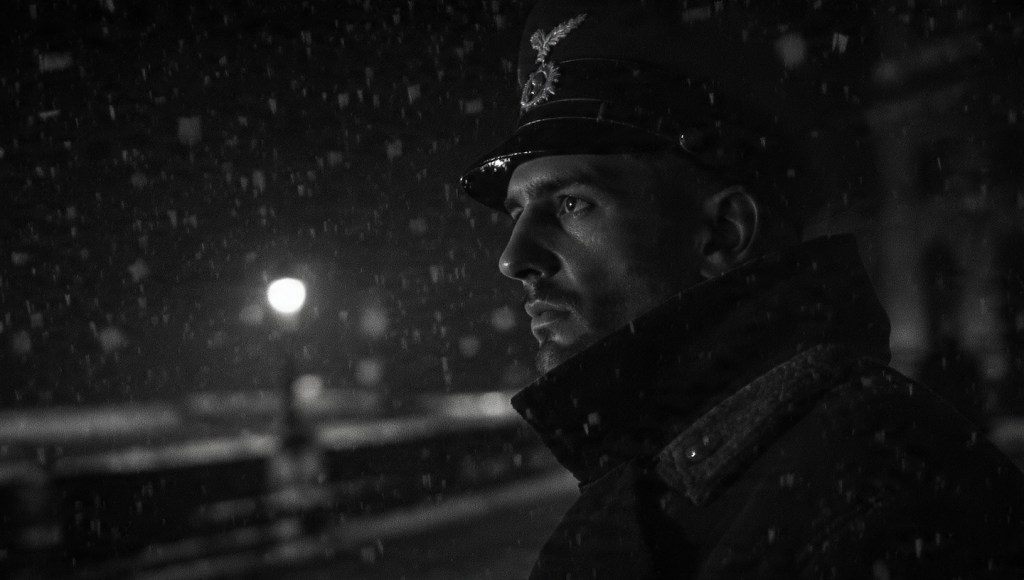
He glanced at the first man, and that man straightened as if he had been struck by an invisible hand.
“Leutnant,” the soldier muttered.
Else felt the word like a small stone dropping into water.
The officer’s gaze fell on Else, and she knew at once she had been seen before. Not as a faceless civilian, not as a nurse-shaped object in a corridor, but as herself.
His expression did not soften. That would have been easier. Instead it became more complicated – something like recognition dragged through a net.
“Fräulein,” he said, and the politeness in it sounded practised. “You’re out late.”
“I’m on an errand,” Else said, and immediately hated the vagueness of it.
His eyes flicked to her bag. “Medical?”
“Yes.”
He held out his hand for her papers at last, but his fingers did not touch hers. He studied the document, lips moving slightly as he read, then looked up again.
Behind Else, someone coughed: a rough, wet sound that had lived in too many barracks. The queue shuffled.
Else became suddenly aware of a man standing a few places back, half turned away as if he had no interest at all in the checkpoint. He was bundled in a worn coat with the collar pulled high; his cap shadowed his face. Yet something about him – his stillness, his attention – suggested a different kind of training. Not military. Animal, perhaps. Watchful.
The man’s eyes met Else’s for the briefest moment. Grey eyes. Calm, but not empty.
Jakob, she realised, though she had not expected to see him here. And then, with a flicker of dread: he had not expected to see her either.
The officer handed back her papers.
“You worked at the field hospital on Invalidenstrasse,” he said, as if reciting a fact from a ledger. “Last autumn.”
Else did not correct him. It had been one of the places she worked, and the more names she gave the less safe she became.
“Yes,” she said.
He nodded, almost to himself. “They said you kept your head.”
“They?” Else echoed, before she could stop herself.
A faint smile appeared and vanished at once, like a match struck and snuffed. “People talk. Even in a city that’s forgotten how.”
He took a step closer. Else caught the scent of tobacco on his coat, stale and sweet, and underneath it the harsh soap soldiers used when they had no time for anything gentler.
His voice lowered, and yet it carried, as if he meant it to.
“Tell me something,” he said. “A small thing. Nothing political.”
Else’s throat tightened.
“What is your favourite animal?”
For a heartbeat she did not understand the question at all. It rang wrong in the cold air – too soft, too domestic, like asking after a child’s birthday in a room full of rifles. Then she understood precisely why it had been asked, and her skin prickled under her collar as if she had stepped into a draught.
The man in the queue – the one she had recognised as Jakob – tilted his head a fraction, listening as though the answer might determine whether the world stayed in one piece.
Else looked at the officer. His eyes were steady. Not cruel, not kind. Waiting.
Around them, Berlin held its breath.
It was a question for a parlour game. It was a question for a nursery rhyme. It was, Else realised with a jolt that nearly unseated her calm, a question for a hunter.
“My favourite animal?” She repeated the words, buying herself a second’s grace. Around her, the checkpoint’s tension did not break; it merely stretched thinner, like a bandage pulled too tight over a wound that hasn’t stopped bleeding.
Leutnant Mertens didn’t blink. His stillness was unnerving because it felt borrowed, as if he were imitating a statue he had once admired. “Yes,” he said. “A simple enough thing. Everyone has one. A cat by the stove? A horse you rode as a girl? Or perhaps…” He let the sentence hang, unfinished, inviting her to fill the silence with something revealing.
Else’s mind raced, skittering over possibilities like a stone over ice.
The truth? The truth was a fox she had once seen in her father’s garden, mangy and bold, staring at her with amber eyes that held no apology for its hunger. But a fox was cunning. A fox was a thief. To say “fox” now, to a man wearing a uniform that stood for order, might sound like a confession of slyness.
The lie? A dog. Loyal, obedient, useful. The sort of answer a good German girl should give. But Fritz – she knew his name was Fritz, she had seen it on a patient chart months ago – was watching her too closely. He would hear the lie in the flatness of her voice. He would know she was offering him a script, not a piece of herself. And men like Fritz, men who felt the ground shifting under their boots, hated nothing more than being patronised.
And then there was silence. Refusal. To say nothing was to say: I do not recognise your right to ask. In this street, on this night, that was a dangerous kind of eloquence.
Behind her, the queue shifted. Boots scraped on the pavement. Someone sighed, a long exhalation of weariness that sounded like steam escaping a valve.
Jakob Reimann was three places back. Else didn’t look at him, but she felt his presence as clearly as she felt the cold wind on her cheek. Jakob, who had spent ten years at the zoo before the war took the animals and the men alike. Jakob, who knew that a cage was only a temporary arrangement. He would understand what this was. He would know that “favourite animal” was code, a way for the Freikorps to sieve the crowd. Leftists, intellectuals, artists – they might pick something exotic, something wild, something that spoke of freedom. The “good citizens” would pick something domestic. It was crude, yes, but effective in a city where symbols were suddenly more dangerous than cobblestones.
She needed an answer that walked the line. An answer that was true enough to ring sincere, but safe enough to let her pass.
“Well?” Mertens prompted, his voice dropping a register, becoming almost intimate. “It shouldn’t be a difficult choice, Fräulein. Unless you have reason to deliberate.”
From the shadows of the queue, a voice spoke up. Soft, unassuming, yet pitched perfectly to carry.
“Beg pardon, Leutnant.”
It was Jakob.
Mertens’ head snapped round. The soldier beside him stiffened, rifle barrel lifting a fraction. “Who spoke?”
Jakob stepped out of the line, just half a pace. He didn’t look like a threat; he looked like a man who was merely trying to be helpful and slightly regretted it. He kept his hands visible, palms open, the universal gesture of the harmless.
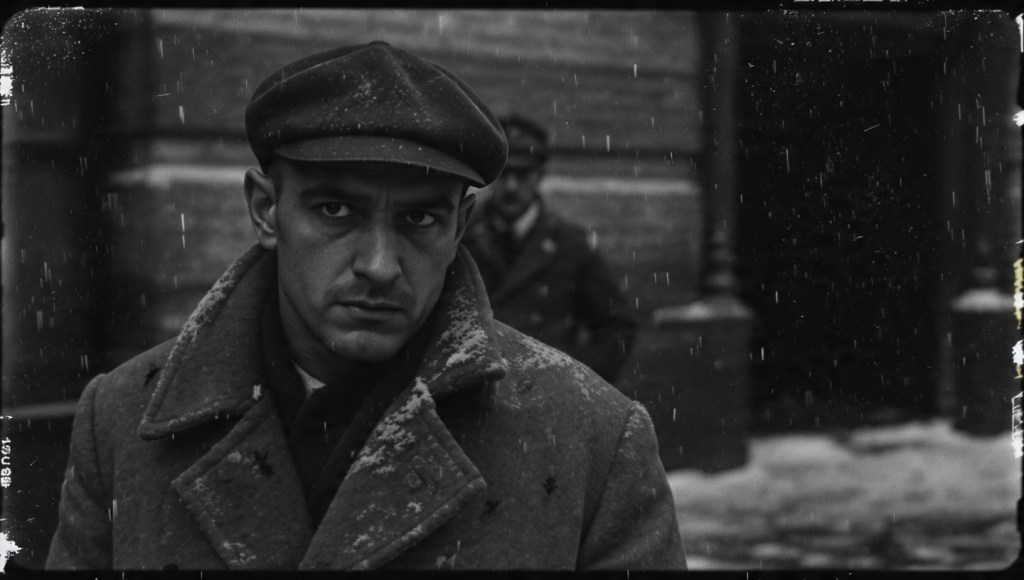
“Only… the lady might be thinking of the zoo,” Jakob said. His accent was thick Berlin, the kind that rolled its rs at the back of the throat and flattened its vowels, the voice of the market stall and the beer hall. “Hard to pick a favourite when you’ve seen the empty cages, eh? Makes a person sad to think on it. The elephants gone. The bears.”
It was a masterful intervention. He had given her an excuse for her hesitation – sorrow, not calculation. And he had done it by invoking a shared civic grief, something even a Freikorps officer might feel. The starvation had not spared the zoo animals any more than it had spared the pensioners.
Mertens stared at Jakob. For a moment, his face was unreadable. Then a flicker of something – disdain? surprise? – crossed it.
“And you are an expert on the zoo, are you?” Mertens asked, his attention momentarily diverted from Else.
“Keeper, sir. Before,” Jakob said, and let the word before do the heavy lifting. Before the war. Before the hunger. Before the city broke.
Mertens looked him up and down, taking in the worn coat, the steady hands. “A keeper,” he repeated, as if tasting the word. “Well. A keeper understands order. A keeper knows what happens when the bars break.”
“Yes, sir,” Jakob said. “Animals need feeding, mostly. Order comes second to breakfast.”
It was a risk. A subtle insolence wrapped in a fact. Else held her breath.
Mertens didn’t smile, but the tension in his shoulders dropped a fraction. He turned back to Else, and the interruption seemed to have reset the board. The intimacy was broken; the interrogation had lost its razor edge.
“He has a point,” Mertens said, his voice flatter now. “It is a grim time for creatures. So. What is it to be?”
Else looked at him. She thought of the notebook in her bag, pressing against her hip like a hot coal. She thought of the names inside – names of men who, like the animals, were being hunted for what they were, not what they had done.
“The badger,” she said clearly.
Mertens blinked. “The badger?”
“Yes,” Else said. She didn’t look at Jakob, but she spoke for him. “It is not a pretty animal, Leutnant. It is not noble like a horse or clever like a fox. It keeps to itself. It digs deep. It cleans its own house. And if you corner it…” She paused, meeting his gaze. “If you corner it, it does not ask for mercy. It simply holds its ground.”
It was the truth. It was a code. It was a warning.
I am not going to run, she was saying. And I am not going to beg.
Mertens stared at her. The answer was not what he expected. It was not a “Red” answer – no soaring eagles or communal ants. It was earthy, stubborn, German in a way that had nothing to do with flags.
He looked at her, really looked at her, and for a moment Else saw the man beneath the uniform – tired, disillusioned, perhaps even ashamed of the game he was playing. He recognised the defiance, but he also recognised the dignity in it.
“A badger,” he murmured. “Stubborn beasts.”
“Survivors,” Else corrected him gently.
He held her gaze for a second longer, then stepped back. The spell broke. He gestured to the soldier with a sharp jerk of his chin.
“Let her pass.”
The soldier lowered his rifle, looking disappointed. “But Leutnant, the bag – ”
“I said let her pass,” Mertens snapped, the officer’s bark returning. “She is a nurse. She has work to do. Unlike you, who seem to have all night to stand about freezing.”
He didn’t look at Jakob again. He didn’t ask for Jakob’s papers. It was as if by engaging with him, by accepting his interjection, he had tacitly allowed him into the circle of the tolerated. Or perhaps he simply didn’t want to push his luck. Perhaps he knew that a keeper of animals might know too much about the nature of beasts.
“Thank you, Leutnant,” Else said. She did not hurry. She adjusted her bag, nodded once – a professional nod, nurse to officer – and walked through the gap in the barricade.
She did not look back. She did not wait for Jakob. To wait would be to claim him. She walked into the dark beyond the checkpoint, her heart hammering against her ribs like a trapped bird, counting the steps until she turned the corner.
Only when the shadows of the next street swallowed her did she allow herself to shiver.
Behind her, the sounds of the checkpoint resumed – the bark of voices, the stamp of boots. But she was through. She was carrying the names. And she had left a part of the truth behind her in the snow, like a footprint for someone else to find.
The badger, she thought, and almost smiled in the dark. Yes. That will do.
The street beyond the checkpoint was a canyon of quiet. Berlin’s noise – the shouting, the distant rifle cracks – had been filtered out by the sheer mass of the buildings, leaving only the muffled thud of Else’s boots and the wind whistling through a smashed window somewhere above.
She walked for two blocks before she dared to stop. In the alcove of a boarded-up tobacconist’s, she leaned against the brickwork, pressing her forehead to the cold wood of the shutter. Her breath came in jagged bursts. The notebook in her bag felt heavier now, as if the near-miss had added weight to the ink.
She checked her watch. Ten minutes lost at the checkpoint. Ten minutes could be a lifetime tonight.
She didn’t wait for Jakob. The rules were strict: if separated, do not regroup. A single thread is harder to follow than a knot. If he had got through, he would find his own way to the safe house in Wedding. If he hadn’t… well, she couldn’t think about that. To think about it was to invite the kind of paralysis that got you killed.
She pushed off from the wall and moved on. The address was a cellar behind a bakery on Ackerstrasse. The district was poorer here; the snow was dirtier, the shadows deeper. There were no electric streetlamps working in this quarter, only the occasional gas flare hissing in the dark like an angry cat.
When she reached the bakery, the alleyway beside it was empty. She knocked on the side door: three taps, a pause, two taps.
The door opened a crack. A sliver of yellow light fell across the snow, illuminating a pair of anxious eyes and a hand clutching a shawl.
“Nurse Kappel?” A whisper.
“Yes. I have the supplies.”
The door opened wider, just enough to let her slip inside. The air in the cellar was warm and smelled of yeast and wet wool. A man sat at a table, nursing a bandaged arm. Another – the one she had come for – stood by the stove, burning papers in the grate.
He turned as she entered. He was older than the others, with the hollowed-out face of a man who had been running for a long time.
“You’re late,” he said, not unkindly.
“Checkpoint,” Else said, setting her bag on the table. She began to unpack it with steady, professional hands. “Near the Eden. They’re checking everyone.”
The man by the stove stopped feeding the fire. “The Eden? That’s Mertens’ lot. Did they search you?”
“They looked at my papers. They asked questions.”
“What sort of questions?”
Else paused, a roll of gauze in her hand. “Odd ones. A game. He asked me my favourite animal.”
The man frowned. “And?”
“I told him the badger.”
A silence fell over the room. The man by the stove looked at her, his expression unreadable. Then, slowly, a dry smile touched his lips. “The badger. Digs in. Bites back. Apt.”
“It got me through,” Else said. She took the notebook from the bottom of her bag and slid it across the table. “This is for you. The names from the hospital registry. The ones they’re planning to move tonight.”
He took the book as if it were fragile. “You know what this is worth, Else? If they knew you had this…”
“I know,” she said. “That’s why I’m giving it to you. Burn it when you’re done with the names.”
He nodded. “And the courier? Reimann?”
“He was behind me,” Else said, keeping her voice even. “He… intervened. Distracted them. I don’t know if he made it past.”
The man sighed, a heavy, tired sound. “Jakob is good. But nobody is that good forever.”
An hour later, Else was back on the street. Her bag was lighter – no notebook, no bandages – but her heart was not. The city felt different now, as if the temperature had dropped another ten degrees. The euphoria of survival was fading, replaced by the dull ache of uncertainty.
She didn’t go straight home. Her room was too quiet, and she wasn’t ready to be alone with the silence. Instead, she found herself walking back towards the canal, drawn by a morbid gravity she couldn’t explain.
The checkpoint was still there, but the queue was gone. The Freikorps men were huddled around a brazier, stomping their feet. Mertens was nowhere to be seen.
Else stood in the shadow of a doorway, watching. Why had she come back? To check on Jakob? That was foolish. If he had been taken, he would be gone by now – to the Eden Hotel’s basement, or to the canal itself.
She turned to leave, and then she saw it.
On the pavement, just beyond the sawhorse barrier, something small and dark lay in the snow. It wasn’t a body. It was too small for that.
She waited until the soldiers’ backs were turned, then slipped across the street. She crouched down, her hand brushing the icy ground.
It was a glove. A woollen glove, worn at the fingertips, smelling of tobacco and exotic animal feed.
Jakob’s glove.
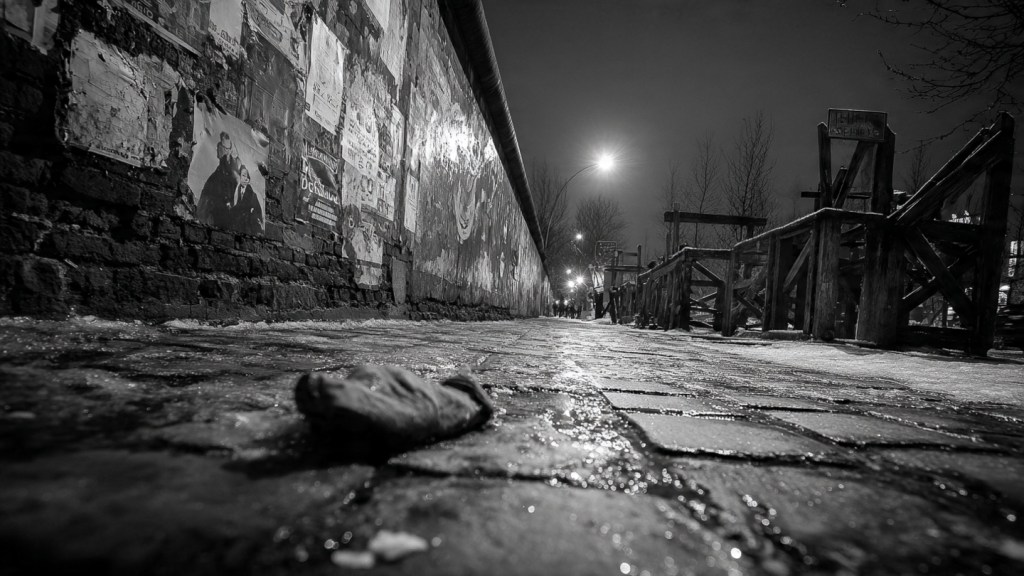
She picked it up. It was stiff with cold. There was no blood on it, which was something. But a man like Jakob didn’t drop a glove by accident. He didn’t leave traces unless he meant to.
Or unless he had been made to.
She looked around. The street was empty. No sign of a struggle. Just the glove, lying there like a dropped sentence.
And then she saw the second thing.
Scratched into the dirty snow near the kerb, barely visible in the gloom, was a mark. Not a word. A drawing. Crude, hurried, done with a boot heel or a stick.
A series of parallel lines. Bars.
And behind the bars, a shape. A long snout. Small ears. A badger.
Else stared at it. The wind bit at her face, stinging her eyes.
He had heard her answer. He had understood.
The drawing wasn’t a warning of capture. It was a message. I am in the cage, it said. But I am digging.
Else stood up. She tucked the glove into her pocket, her fingers closing around the rough wool.
He hadn’t been killed. Not yet. They had taken him, yes – Mertens must have circled back, or perhaps the “badger” answer had been too clever, too perfect, and it had tipped the balance for Jakob instead of her.
But he was alive. And he had left a sign.
She looked towards the Eden Hotel, its windows dark and uninviting. Somewhere in there, men were deciding the future of the republic with rifle butts. Somewhere in there, Mertens was washing his hands.
And somewhere, Jakob was digging.
Else turned away. She didn’t go home. She began to walk west, towards the hospital. There were other nurses there, women who knew which guards could be bribed, which cellar doors were left unlocked.
She wasn’t just a keeper of names anymore.
“What is your favourite animal?” Mertens had asked.
Else touched the glove in her pocket.
One that survives, she thought. And one that comes back for its own.
The city was vast and cold and full of wolves. But the badger was a stubborn beast. And the night was not over yet.
On 15th January 1919, the Spartacist Uprising in Berlin effectively ended with the extrajudicial murders of its leaders, Rosa Luxemburg and Karl Liebknecht. Captured by the Garde-Kavallerie-Schützen-Division (a Freikorps unit) and taken to the Eden Hotel, both were interrogated and beaten before being shot; Luxemburg’s body was discarded in the Landwehr Canal and not recovered for nearly five months. The brutal suppression of the revolt resulted in approximately 150–200 deaths, primarily among insurgents, and marked a decisive schism between Germany’s Social Democrats and the radical left. This reliance on paramilitary Freikorps units – estimated to number over 100 distinct groups by early 1919 – normalised political violence in the young Weimar Republic, establishing a precedent of state-sanctioned brutality that contributed to the erosion of democratic institutions well before 1933.
Bob Lynn | © 2026 Vox Meditantis. All rights reserved.


 Vox Meditantis
Leave a comment