If you started a sports team, what would the colors and mascot be?
If I started a sports team, the colours would be rust orange and Delaware blue-grey, and the mascot would be a phoenix rising from a gear. Not because it’s cool – though I think it is – but because it’s honest.
Mr. Baranowski, my AP English teacher, gave us this prompt before winter break, probably thinking we’d all pick our favourite football team’s colours or some mythical creature we thought made us look tough. But I’ve spent seventeen years in New Corinth, and I’ve learnt that the things that actually matter here are the things people don’t usually put on jerseys.
The Colours That Built Us
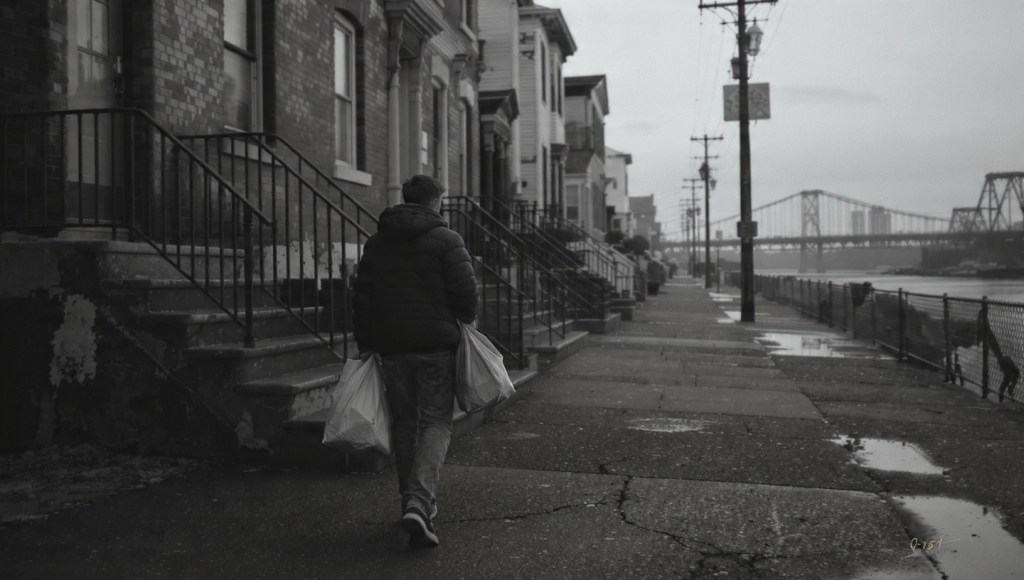
Rust orange because that’s the colour of everything real in this city. It’s the old Iron Works building that my granddad walked out of in 1978, the one they’ve converted into the Business Park where my mom processes insurance claims now. It’s the underside of the railway bridge near Minerva Creek where my mates and I used to tag before Officer Martinez caught us and made us clean it off – then bought us all chips because he said at least we were spelling everything correctly, which meant Mr. Baranowski was doing something right. It’s the colour of the hulls of decommissioned ships I can see from the Riverfront Park when I’m running drills with the Youth Athletic Association on Saturday mornings.
People who just moved here – the ones in the new flats by the casino – they see rust as decay. They want everything painted over in clean whites and safe greys. But rust is iron that’s met water and air and time. It’s proof something was built solid enough to still be standing. My da always says the problem with New Corinth isn’t that things got old; it’s that people forgot old things can still work.
Delaware blue-grey because that’s the river at dawn, before the city wakes up properly. I know this because I’ve got a paper route – yeah, people still get actual newspapers, mostly the elderly Polish ladies on Fourth Street who don’t trust screens. Three mornings a week, I’m out at half-five, and the river looks like hammered steel, exactly like my granddad described it. That colour holds everything: the depth that let ships come here for two hundred years, the cold that nearly drowned that guy who wrote about falling through the ice in 1947, the indifference that means the water doesn’t care about our redevelopment plans or our opioid statistics or whether Market Street finally gets a proper coffee shop.
The Phoenix in the Machine
The mascot would be a phoenix, but not the magical kind from Harry Potter or whatever. A phoenix made of gears and sprockets and industrial bits, rising from a pile of old machinery. Because that’s what this city’s trying to do, isn’t it? Come back from nearly dying.
I was born in 2008, which means I don’t remember the worst of it – the 127 murders in ’93, or Market Street being basically empty except for pawnshops. But I grew up in the aftermath. My primary school ran opioid education programmes when I was eight, which is mad when you think about it, but they had to because Riverside lost seventeen people the year before I started Year 3. My best friend Connor’s older brother died of an overdose when we were in Year 6, and I remember Connor missing two weeks of school, and when he came back he wouldn’t talk about it, and I didn’t know what to say, so we just played FIFA at mine for hours without speaking.
The phoenix wouldn’t be pretty. It would be rough-edged, welded together from salvage, the kind of thing you’d find in Mason’s old engine repair shop on Fourth Street – the one that closed after he died, the one where my da used to get his mower fixed. It would be mid-flight, wings spread, but you could still see the gaps in the metalwork where light comes through. Not perfect. Not finished. But flying anyway.
What The Team Would Mean
Here’s what I actually think about when I imagine this team: it would be for kids from all the neighbourhoods. Not just Minerva Heights where the houses are nice and the parents have university degrees. Not just the University Quarter where everyone’s transient and nobody knows their neighbours’ names. But Riverside kids, Little Italy kids, the eastern districts where my nana’s flat smells like her Portuguese neighbour’s cooking and everyone looks out for everyone else’s children because that’s how you survive here.
The Youth Athletic Association tries, genuinely, but they’ve got limited funding and most of the best equipment ends up at the fields near the riverfront development because that’s where donors can see their names on plaques. My imaginary team would play on whatever pitch we could book – sometimes the good fields, sometimes the one near the old freight yards where you’ve got to check for glass before warmups – and nobody would care because the point wouldn’t be showcasing New Corinth’s comeback for estate agents. The point would be showing up for each other.
The Uniform Details
The kit would have those rust orange and Delaware blue-grey colours, but not in clean stripes or blocks. More like they’d bled into each other, the way they actually do in this city – industry and water, past and future, old residents and new ones, all mixed together whether we’re comfortable with it or not. The phoenix gear emblem would sit over the heart, small enough that you’d have to be close to see it properly. On the back, above the numbers, it would say “Still Here” in simple letters. Because that’s the thing about New Corinth that nobody says out loud but everybody knows: we’re still here. After everything – the factory closures, the violence, the drugs, the slow bleeding-out of people to the suburbs, the flooding that’s getting worse every year – we’re still here.
The shorts would have pockets. Practical ones. Because this is a city where people walk places, carry things, can’t always afford to go home between school and practice and work. Details matter when your median household income is $47,600 and 28% of people live below the poverty line. Those statistics are from my Modern Studies coursework, and they’re also my neighbours, my teammates, my family.
What I’d Tell The Team
If this team were real, and I had to give some inspirational speech before a match – which sounds mortifying, but apparently captains do that – I wouldn’t talk about winning. I’d talk about my granddad walking out of the Iron Works in ’78, about how that walk wasn’t about quitting but about refusing to let one closure define him. I’d talk about the man who was saved from the frozen Delaware by someone whose name he never learnt, about how reaching out matters more than being remembered for it. I’d talk about my mom’s friend who runs the unofficial healthcare navigation service from her kitchen, helping people who can’t decode their insurance papers, and how that’s more valuable than any trophy.
I’d probably balls it up, honestly. I’m seventeen and I still can’t order at restaurants without my voice cracking sometimes. But I’d want them to know that wearing rust orange and Delaware blue-grey means carrying this city properly – not as some redemption story for people writing newspaper articles about urban renewal, but as the actual place we actually live, with all its complications and all the people who held it together when it would’ve been easier to leave.
Connor asked me the other day if I’m staying after we finish school in June. He’s already got plans – university in Pennsylvania, completely new start, no more New Corinth weighing him down. I don’t blame him, especially after his brother. But I think I might stay, at least for a bit. Not because I’m more loyal or more connected or whatever. Just because someone has to be the next generation that doesn’t leave, and maybe it’ll be me.
The Final Design
So: rust orange and Delaware blue-grey. A phoenix made of gears. “Still Here” on the back. Pockets in the shorts. A team that pulls from all the neighbourhoods and plays wherever there’s space. That’s my answer to Mr. Baranowski’s prompt.
It’s not the flashiest design. But I reckon it’s true. And in a city that’s spent decades being told to reinvent itself, to apologise for its industrial past, to paper over its struggles with casino developments and craft breweries, maybe truth is the most radical thing you can put on a jersey.
The river’s still thirty-five to forty feet deep. The old buildings are still standing, rust and all. We’re still here, playing on cracked tarmac, sorting each other’s insurance paperwork, pulling each other back from the edge. That’s not a mascot – that’s just New Corinth. But it’s worth wearing on your chest anyway.
Bob Lynn | © 2025 Vox Meditantis. All rights reserved.


 Vox Meditantis
Leave a comment