How have your political views changed over time?
Wednesday, 28th December, 1966
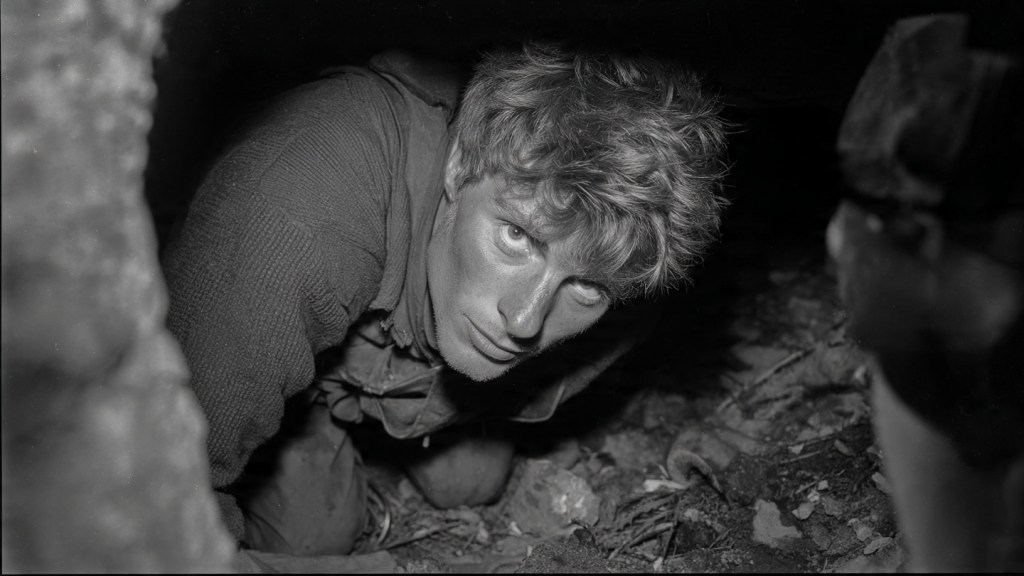
You’re down here long enough, and the dark gets into your bones like damp. Like the old foxes I’ve tracked through the January woods, gone to earth in some hidden place where no light follows. Wednesday today, twenty-eighth of December, nineteen hundred and sixty-six, and I’ve been in these chalk workings since before dawn, following something I can’t rightly name.
The torch batteries are nearly done. I’ve two left in my pocket, wrapped in oilcloth, but I’m saving those. A man learns to move by touch down here, fingers reading the stone like Braille, and there’s a strange peace in it when you stop fighting the weight of all that earth above your head. My old dad used to say I was soft in the skull for coming down here, that there’s quarry enough above ground without crawling into the belly of the Downs. But he never understood about the stillness. Never grasped what it means to follow a thing until it reveals itself.
I’ve been tracking badgers, you see. That’s what I tell folk when they ask. Good money in knowing their sets, where they run, which farmers want them gone and which turn a blind eye. But that’s only half true, and the dishonest half at that. What I’m really after is the pattern of it. The way they move through these old tunnels like they’re reading some map written in scent and memory, older than any Ordnance Survey. I’ve become fixed on it, obsessed if you want the plain word. My girl Jean says it’s not healthy, spending so much time beneath, but she doesn’t see. She can’t see what I see down here.
The Changed View
You ask me about politics, how a man’s views shift with time. That’s a queer question to pose to someone sat in the dark with chalk dust in his throat, but I’ll answer it fair. When I came out of National Service in sixty-one, I thought I had the measure of things. Two years in Cyprus, watching the empire crack apart, and I came home thinking we’d done right, kept the peace, held the line. My dad voted Labour all his life because of the mines and the dole queues, and I reckoned I’d do the same, automatic-like, because that’s what working men did.
But it’s changed, hasn’t it? Sitting underground teaches you things. You learn that what seems solid above – the towns, the laws, the way men order themselves – it’s all just a thin crust over something much older. I voted Labour again in sixty-four, for Wilson and his white heat and his promised new Britain, but I’m not sure what I was voting for anymore. The badgers don’t care about technology or progress. They follow the old ways, the proven paths. There’s a wisdom in that.
My uncle lost his job at the quarry last March when they brought in the new machines. Forty years he’d worked there, and then gone in an afternoon, replaced by something that doesn’t need tea breaks or a wage packet every Friday. Wilson talks about the future, but whose future? Not my uncle’s. Not mine, truth be told. I’m starting to think the whole machinery of politics – Labour, Tory, all of it – it’s just men in rooms deciding things for other men they’ll never meet, never sit down with over a pint. Like gamekeepers and poachers, both thinking they own the land when really the land owns them.
Down here, you see things differently. The miners who dug these tunnels a hundred years back, they had their own battles with the masters, their own unions and strikes and struggles. And before them, the folk who used these caves for God knows what – hiding, storing, worshipping perhaps. And before them, the badgers. Always the badgers. They don’t organise, don’t vote, don’t petition. They just persist. That’s a kind of politics too, I reckon. The politics of endurance.
I’m naive, Jean tells me. Says I don’t understand how the world works, that you need organisation, solidarity, collective bargaining. Maybe she’s right. She usually is. But when I’m down here, following these creatures through passages they’ve worn smooth over centuries, I can’t help thinking that all our modern certainties are just stories we tell ourselves to feel less small. I don’t know if that makes me more or less political. I just know I’m less certain than I was.
The Dream of Stars
There’s a spot about fifty yards further in where the roof opens up into a natural dome. Someone told me once – old Charlie from the Wheatsheaf, he knows these hills like his own garden – that during the war, some of the village children sheltered here during raids. They painted stars on the ceiling, he said, constellations copied from a school book, so the little ones wouldn’t be frightened of the dark. I’ve never found them. I’ve looked, mind you, swept my torch across that vaulted stone until my neck ached, but if they’re there, they’ve faded beyond seeing.
Still, I think about those stars. About children lying in the dark, staring up at painted heavens while bombs fell on Portsmouth and Southampton, trying to remember there was a sky somewhere above all that earth and terror. There’s something in that, isn’t there? Something about faith, though I’m not much of a churchgoer. The idea that you can carry the stars with you, even underground. That’s what the badgers do, in their way. They navigate by something we can’t see, some internal compass that pulls them true even in absolute black.
I’ve been coming down here for seven months now. My mates think I’ve lost the plot. Jean’s started talking about me seeing the doctor in Lewes, getting something for my nerves. But I’m not nervous. I’m calm, calmer than I’ve been since Cyprus, since watching men my age bleeding out in dust that wasn’t theirs to die in. This chalk dust is different. It’s honest. It doesn’t pretend to be about anything more than stone and time and the slow work of water eating into limestone.
The torch flickers. Nearly gone now. I should head back up, get to the pub before last orders, warm myself by the fire and let Jean fuss over my wet boots. But there’s a draught coming from deeper in, a cold breath that smells of clay and winter roots, and I know there’s another tunnel branching off the main passage. I’ve not explored it yet. The badger tracks lead that way, fresh prints in the soft patches where groundwater seeps through.
I’ll just go a bit further. Just to the next turn. That’s what I always say, and somehow the turns multiply, leading me deeper into the warren of these old workings. It’s the resilience in me, or the stubbornness – same thing, really. I’ve been lost down here twice before, found my way out by dead reckoning and sheer bloody-mindedness. Once you’ve done that, the fear becomes something else. Not gone, exactly, but transformed into a kind of dreamy acceptance.
The children who painted those stars, they probably never found them either once they’d grown up and come back down as adults. Childhood things vanish like that, don’t they? But maybe that’s the point. Maybe the stars were never meant to be found again. Maybe they were just meant to exist, a promise made in darkness that light still mattered, even if you couldn’t see it.
I can hear water somewhere ahead now, a soft trickle that echoes strangely in the confined space. The badgers will be heading for it, I reckon. They’re practical creatures beneath all their mystery. Water, food, shelter – the same things men need, when you strip away the politics and the progress and all the words we use to make ourselves feel elevated. We’re all just animals trying to survive the winter, tracking through the dark toward whatever promises sustenance.
My dad was wrong about me being soft in the skull. Or maybe he was right, but it doesn’t matter like he thought it did. There’s a kind of knowledge you can only get from being willing to crawl through small spaces, to sit still in the dark until the dark stops feeling like an absence and starts feeling like a presence. The badgers have taught me that. Or maybe I’ve taught myself, using them as an excuse.
Either way, I’m going deeper. The torch is dying, the batteries are for emergencies, and I’ve got matches in my pocket if it comes to that. Jean will worry, but Jean always worries. That’s love, I suppose, or care, or whatever word you want to put on the feeling of wanting someone to come home safe.
The stars are up there somewhere, beyond all this chalk and clay, wheeling through their courses like they have since before there were words for them. And down here, beneath it all, the ancient paths wind on into black, waiting for anyone fool enough or brave enough to follow them to their end. I’m not sure which I am. Probably both. But I know I’m not turning back yet.
Not just yet.
Bob Lynn | © 2025 Vox Meditantis. All rights reserved.

 Vox Meditantis
Leave a comment