What’s your most impressive December procrastination achievement?
Friday, 26th December, 1354
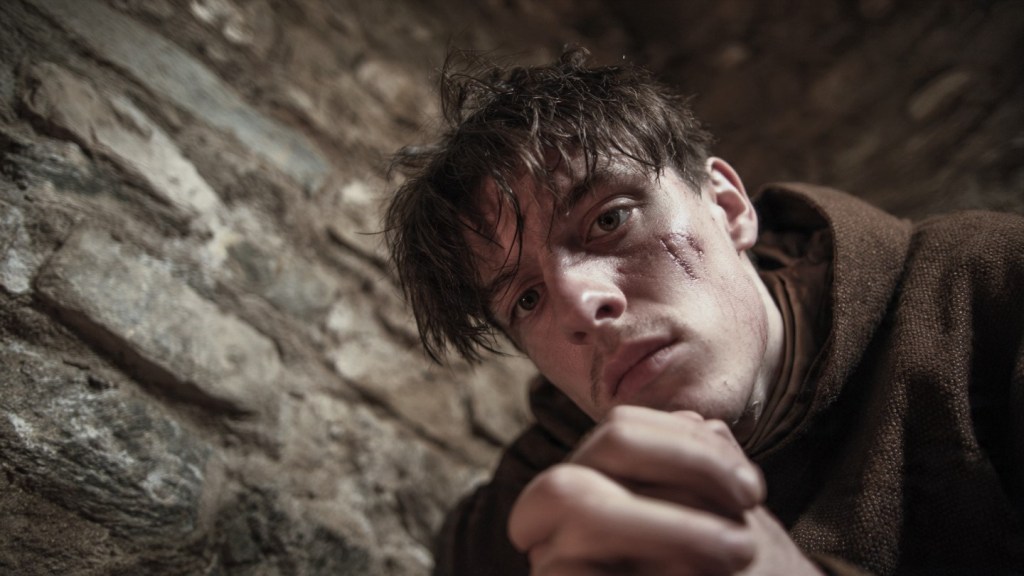
Ye sit warm, I warrant, behind walls that know no trespass, whilst I crouch here in this chill stone coffer beneath the chapter-house stair – a place where no brother treads save when keys are lost or parchment falls forgotten. The feast-day is done. St Stephen’s bells have rung their office, and the canons sup on marchpane and spiced wine above my head, their laughter seeping through the vaulting like rainwater through thatch. I hear them, aye, but they hear me not. Which is as I would have it, for my tongue this night is not fit for company.
Do you mark the irony? The protomartyr’s day, and here I am – no martyr, but a clerk who has martyred his own prospects through sheer want of temperance. Justice, they call it when a man holds fast to principle. Folly, they name it when that same man lets choler rule his hand. I have been both, and neither has earned me aught but this: a borrowed corner in the dark, the stink of tallow, and a conscience that gnaws like winter hunger at the belly.
I came to this city – Oxford, if ye must know, though it skills little – with a mind to study law: canon law, that thorny wood of decretals and gloss wherein men hunt equity and find chiefly wrangling. My master, a plump archdeacon grown sleek on tithes and fees, set me to copy a great quire of decretals and constitutions ere the Nativity. ‘By St Thomas,’ quoth he, ‘have it fair-writ by Christmastide, or seek thee another master.’ Plain labour: a penknife to mend the quill, black ink, and a steady hand. Yet what did I?
Here is my great achievement this December past, my monument to sloth: I put it off. Day upon day I found some other labour more pressing – a disputed will that wanted witness, a quarrel between two tradesmen that I deemed unjust and must needs set right, a beggar-woman cheated of alms by the bailiff’s lackey. Each morning I swore I would sit to the copying; each evening I found I had not. And now the work lies half-done, the vellum curling in the damp, the ink frozen in its horn, and I am here, exiled by my own rash tongue. For when the archdeacon upbraided me yesterday – the Nativity itself, mark you, a day of peace – I spoke such words as no scholar ought speak to his better. Words about justice, about fat priests who grow sleek whilst the commons starve, about law that serves the purse and not the soul.
He struck me. A blow across the mouth with his seal-ring, heavy silver that split my lip like a knife through suet. I tasted blood, salt and iron together, and in that instant I seized his wrist and bent it back till I heard the bones creak. He cried out. I released him and fled.
Now I am fled indeed, and my body pays the cost. My lip throbs, swollen fat as a plum, and the humour of it has spread – my jaw aches, my teeth feel loose in their sockets. I have not eaten since the blow fell, for chewing brings such pain as makes me weep. Choler, the physicians say, is hot and dry; it rises in the blood and makes a man quick to wrath. Mine own choler has ever been my undoing. I see injustice and I cannot hold my peace. I see wrong done and my hand moves ere my wit can counsel caution. And here is the fruit of it: I am become a fugitive in my own university, hiding like a thief whilst honest men feast.
The knife I brought with me – my own small blade for sharpening quills and scraping error from vellum – lies on the stone beside my candle. I have been turning it over in my palm, feeling the weight of it, the worn wooden haft smooth from use. A tool for making, not for harm, yet I wonder if harm is all my hands are fit for now. Tools ought serve their purpose: the hammer drives the nail, the stylus marks the wax, the scales measure true weight. But what use is a clerk who cannot keep peace with his master? What purpose does justice serve when the man who seeks it has none himself?
Outside this hidden place, the world turns as it has always turned. The great pestilence took half the realm ten years since, yet those who remain grow ever more grasping, ever more keen to hold what they have and take what they have not. Laws multiply like rats in granaries, each new statute meant to mend what the last one broke. And men like my archdeacon sit in judgement, their fingers fat with rings, their bellies taut with capons, whilst the widow goes without bread and the orphan shivers in rags.
I would have been one of them, I think. Had I kept my peace, copied my quire, bent my neck and swallowed my gorge – I would have risen. I would have had my own benefice by thirty, my own seal to press into wax, my own silver to wear on my hand. I would have weighed cases in the balance and called it justice, all the while knowing that the scales were bought and paid for ere ever a word was spoke.
But I could not. Cannot. Will not. And so here I am, a scholar with no school, a clerk with no quire, a man who sought the common good and found only the common door slammed in his face.
The candle gutters. Soon I must venture forth, though where I shall go I know not. My purse holds three pennies and a Venetian groat – poor metal for a poor man’s flight. Perhaps I shall make for London, where a clerk can lose himself amongst the throng. Perhaps I shall take service with some manor lord who cares not what words I spoke in Oxford, so long as I can tally his rents and keep his rolls. Or perhaps I shall simply walk until this bitter cold takes me, and let God – or whoever watches such as I – make what judgement He will.
But know this, whoever ye be that hears these words: I do not repent the blow I struck. I repent only that I struck too late, and not hard enough. For if there is justice in this world, it is not found in fat archdeacons and their purchased law. It is found in the sharp edge of resistance, in the refusal to bow when bowing is wrong, in the rash and impulsive acts of men who cannot stomach injustice even when it would profit them to do so.
The feast is ended. The saint is honoured. And I am still here in the dark, turning my small blade in my hand, and wondering whether the world has any use for such as me.
Bob Lynn | © 2025 Vox Meditantis. All rights reserved.

 Vox Meditantis
Leave a comment