Is your life today what you pictured a year ago?
Tuesday, 17th December, 1907
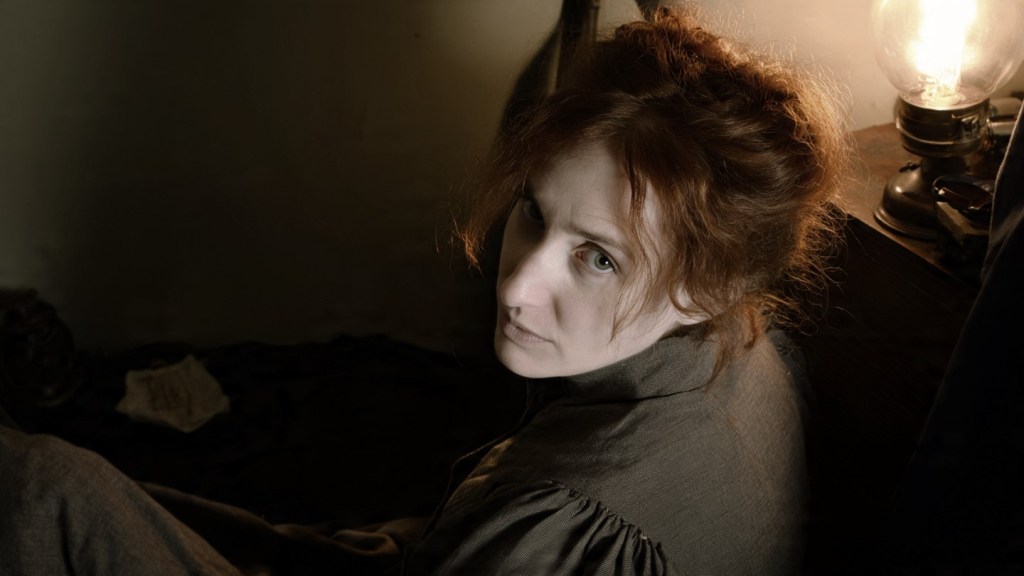
You may sit, if you wish. Or stand. I have learnt that some prefer to hover near the door when they call upon me here – as though this narrow room, with its single lamp and locked escritoire, were a place from which one might need to flee at speed. I do not take offence. The lodging-house keeper says the previous tenant claimed the wallpaper moved of its own accord after midnight, though I suspect it was merely the damp playing tricks with the paste. Still, she would not stay, and so the room became mine. A room of one’s own is not so easily come by in London, and I have learnt not to question good fortune too closely when it presents itself.
You have come because you require my services, or because someone has told you I might untangle what the official constabulary cannot – or will not – touch. I do not advertise. I do not keep an office with my name painted on the glass. What I do, I do quietly, and those who seek me out do so through whispers in solicitors’ waiting rooms, through notes passed across tea tables, through the sort of carefully worded letters that never mention the true nature of the enquiry until the third paragraph. You understand, I think, that discretion is both my currency and my chain. I am bound by it as surely as any prisoner in the Old Bailey cells.
Chains. Yes. Let us speak plainly of chains, for they are much on my mind this evening. I spent the afternoon at Pentonville, observing the fetters they use in the exercise yard – heavy things, rusted at the joins, that leave marks upon the ankle long after they are removed. The warder was kind enough to demonstrate their weight, though he thought I was there on behalf of a reformist society, documenting conditions for some charitable report. I did not correct his assumption. It is a useful thing, to be underestimated. A woman carrying a notebook and expressing concern for the welfare of inmates is merely eccentric, possibly devout, certainly harmless. She is not a woman measuring the precise distance between lock and hasp, noting which keys hang from which warder’s belt, calculating how quickly a man might move if he were suddenly freed and knew where to run.
I digress. You will forgive me – the hour grows late, and I have not yet lit the second lamp. There is something in the half-darkness that loosens the tongue, do you not find? Something that makes confession easier, truth more slippery. I have used this to my advantage more times than I care to count.
You wish to know whether I believe in fate. Whether I think our paths are laid before us like railway tracks, unyielding and fixed, or whether we might step off at any junction and choose another direction entirely. It is the great question, is it not? The vicars say we are free to choose righteousness or sin, yet they also speak of God’s plan unfolding as it must. The spiritualists – and there are more of them each year, are there not? – insist the dead have messages for us, warnings, guidance, as though our futures are written in the stars and merely require a medium to read them aloud. The scientists, meanwhile, speak of heredity, of temperament, of criminal types whose very bones predispose them to wickedness. Free will becomes merely the illusion of choice, a pretty story we tell ourselves whilst our blood and breeding drive us inexorably forward.
I find myself unable to settle upon an answer. There are days when I think I am the architect of my own circumstances, that every door I have opened, every confidence I have gained, every carefully placed word that has led another soul to reveal their secrets – these are the products of my own cleverness, my own will exerted upon the world. I am not without skill. I know how to listen in such a fashion that people forget they are speaking aloud. I know which questions to ask, and when to remain silent whilst the silence itself becomes unbearable and the truth comes spilling out like water from a cracked jug. This is craft, surely. This is choice.
And yet. There are other days when I look back upon the path that brought me here – to this dim room, to this peculiar trade, to this life lived in the margins between the respectable and the criminal – and I can see no moment when I might have turned aside. Each step led to the next with the inevitability of a clock’s mechanism. My father’s debts. My mother’s early death. The need to earn my bread without benefit of husband or family name. The first case that came to me by accident, and then the second, and then the reputation that grew like ivy, lovely and strangling all at once. Was I choosing? Or was I merely following the track laid out before me, telling myself I was free whilst the rails ran straight and true beneath my feet?
A year ago today – let me think – yes, a year ago I was in Birmingham, pursuing a matter concerning forged cheques and a gentleman who claimed his wife had absconded with his savings. December 1906. The case proved less straightforward than he had presented it. They generally do. I discovered the wife had not absconded but had been confined to a private asylum at her husband’s request, and the savings had been his father’s money, not his own, and the forgeries were his own handiwork, executed with considerable skill. I extracted myself from the matter before it came to any official notice. I am not a police officer. I do not serve justice as an abstract principle. I serve those who pay me, until such time as I discover they have lied to me in ways that matter, and then I serve… myself, I suppose. Or perhaps I serve some older law, the one that says a clever woman must look to her own preservation first, because no one else will do so on her behalf.
Did I picture then, a year ago, that I would be here tonight? That I would have this room, this trade, this reputation? I believed I knew what I was building. I thought I understood the shape of my future – more cases, more income, perhaps eventually a proper office, a clerk, a modicum of respectability wrapped around this strange profession I have fashioned for myself. I pictured myself more secure. More independent. Less beholden to the whims of clients who may pay well but who regard me always with that mixture of fascination and distrust, as though I were a performing animal who might at any moment remember its wild nature and bite.
Instead, I find I am more deeply bound than ever. Oh, not by law – I have been careful, always, to remain just within the boundaries, or to step outside them only in ways that leave no evidence, no witnesses, no trail for any clever prosecutor to follow. But I am bound by reputation now, by the network of informants and contacts and half-trusted allies that I have assembled like links in a chain. Each case binds me to the next. Each secret I uncover becomes another fetter, because knowledge is never without consequence, and to know things is to become responsible for them, whether one wishes to be or not.
There was a woman last month who came to me with tears in her eyes and five pounds in her reticule. Her sister had disappeared, she said. Vanished from her lodgings without word or warning. The police would do nothing – the sister was of age, had left no note suggesting harm, and the inspector had made it plain he had more pressing matters than chasing after working girls who might simply have found a better situation elsewhere. I took the case. I found the sister within a fortnight. She had not disappeared. She had fled. There was a man, of course – there is generally a man – and she had good reason to flee from him. I reunited the sisters. I collected my fee. And then the man found me.
He was not angry. That would have been simpler. He was impressed. He wished to hire me himself, for another matter entirely. I refused. He suggested that perhaps I would reconsider, if I understood that he knew a great deal about the nature of my work, the legal ambiguities of my position, the various ways in which I had obtained information that no respectable investigator ought to possess. I agreed to take his case. I completed it to his satisfaction. He paid me double my usual rate. He sends his regards at Christmas. I am bound to him now, by threat and by coin, by the knowledge we share and the knowledge he holds over me. This is the nature of chains.
You think me cynical, perhaps. You came here expecting someone different – more heroic, more righteous. Someone who pursues truth for its own sake, who rights wrongs and rescues the innocent and stands as a beacon of justice in a dark world. I have read the penny dreadfuls. I know what sort of detective captures the popular imagination. But I am not that creature. I am something altogether more ambiguous, more compromised. I manipulate. I deceive. I allow people to believe I am helping them when in fact I am helping myself, or serving some purpose they would never consent to if they understood it fully. I tell myself it is necessary. I tell myself that to survive in this profession, in this city, as a woman without protection or position, one must be willing to use every tool available. Including the truth, which can be the sharpest blade of all when applied with precision.
Is this fate? This slow corruption, this gradual binding? Or is it choice? Did I choose to become this – this manipulator of evidence and emotion, this dealer in secrets and lies? Or was this always what I would become, written in my character as surely as my eye colour or my height, merely waiting for circumstance to call it forth?
The lamp gutters. I shall have to trim the wick if we are to continue much longer. But I wonder whether you have heard enough. Whether you still wish to engage my services, now that you have seen the room and heard the woman who inhabits it. I do not pretend to be what I am not. I am skilled. I am discreet. I am effective. But I am not innocent, and I am not free. I am bound by chains of my own forging, and whether I chose to forge them or whether they were always waiting to be assembled from the materials of my life – that, I cannot say.
The choice now is yours. Fate has brought you to my door, perhaps. Or chance. Or desperation. What happens next – whether you engage me, whether you trust me, whether you tell me the truth or some careful version of it – that may be choice, or it may only seem to be. We shall discover together.
But do decide quickly. It grows cold, and I have another appointment at nine.
Bob Lynn | © 2025 Vox Meditantis. All rights reserved.


 Vox Meditantis
Leave a reply to S.Bechtold Cancel reply