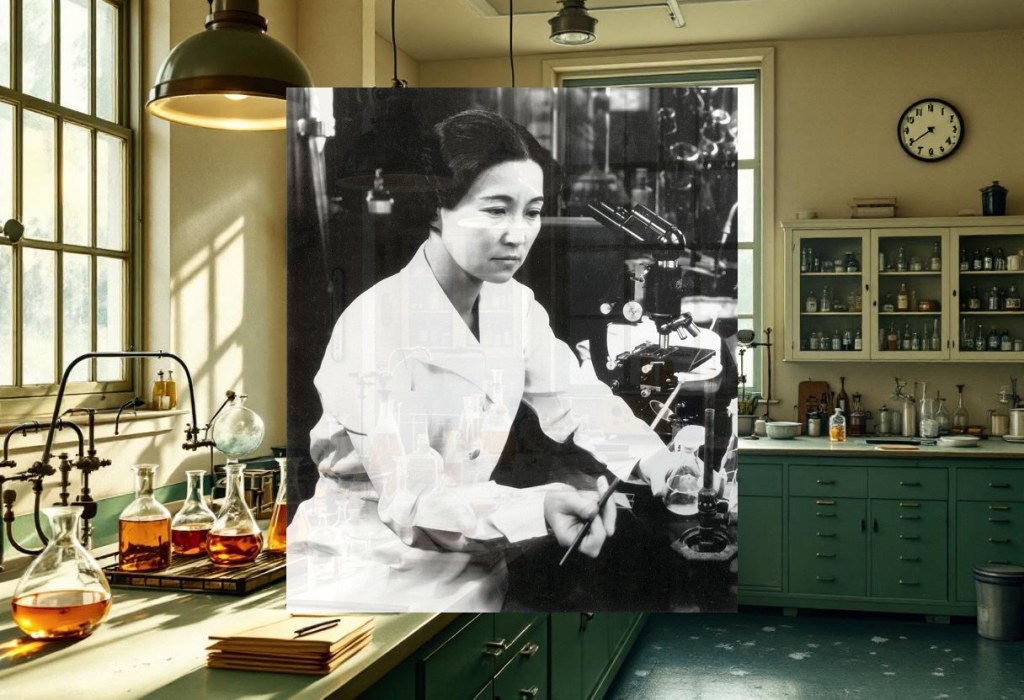
Ruby Sakae Hirose discovered that thrombin, the enzyme central to blood clotting, exists in two forms – one dormant until calcium ions awaken it. Her work laid groundwork for vaccines against polio and diphtheria, diseases that paralysed and killed thousands of American children. She died at fifty-six, her brilliance cut short by acute myeloid leukaemia, her family once imprisoned by the nation she served.
Dr. Hirose, thank you for sitting down with me today. I’m speaking to you from November 2025 – sixty-five years after your death. Before we talk about your science, I want to ask: What was it like being the first Nisei to graduate from Auburn High School in 1922?
Ruby Sakae Hirose: First? Well, I suppose I was. We didn’t think of it that way at the time – we simply went to school. But yes, I was aware I stood out. My younger sisters and brother would follow, and I felt responsible for making a path they could walk more easily. The teachers were kind, mostly. I sang in the glee club, played sports. I wanted to belong, and in many ways, I did. But there was always this awareness – this quiet knowledge that the land my parents farmed was in my name because they couldn’t own it themselves. They were “aliens ineligible for citizenship,” you see. I was born here, so I could hold the lease. Even at seventeen, I understood what that meant.
That paradox – being an American citizen whilst your parents were legally barred from citizenship – must have shaped everything.
It shaped everything. At the 1925 Japanese Students’ Christian Association conference, we called it the “second-generation problem.” We were Americans by birth, Japanese by heritage, and fully accepted by neither. Our parents expected us to honour their culture; American society expected us to prove our loyalty constantly. Some of us thought education might be the answer – that if we excelled, if we contributed, we’d finally belong. I’m not sure I ever resolved that tension. I simply worked.
You moved from Washington to Cincinnati for your doctorate in 1931. That decision seems to have saved your career – possibly your life.
Yes. I received the Moos Fellowship in Internal Medicine – only two of us that year. It was a tremendous honour. I left for Ohio to study biochemistry at the University of Cincinnati, and I never returned to live in Washington. During the war, three of my family members were sent to concentration camps. My father and my sister Mary went to Minidoka. My brother went to Poston. Had I been in Washington when Executive Order 9066 was signed, I would have been incarcerated with them. Geography saved me. Not merit. Not citizenship. Geography.
What was it like to continue your research whilst your family was imprisoned?
I worked. What else could I do? I was at the Kettering Laboratory of Applied Physiology during the war years, conducting research that might help the war effort. The irony wasn’t lost on me – my family caged as enemy aliens whilst I studied blood, the very substance that proves we’re all human. But I couldn’t afford rage. Rage would have stopped everything. So I focused on what I could control: the experiments, the data, the incremental progress toward understanding.
Let’s talk about that work. Your 1932 dissertation was titled “Nature of Thrombin and Its Manner of Action.” Walk me through what you discovered.
Thrombin is a serine protease enzyme – absolutely central to haemostasis, which is the body’s mechanism for stopping bleeding. When you cut yourself and a clot forms, thrombin is the orchestrator. But here’s what wasn’t understood in the early 1930s: thrombin doesn’t exist in its active form in circulating blood. It would be catastrophic if it did – you’d clot spontaneously, vessels would occlude, you’d die. Instead, thrombin circulates as prothrombin, an inactive precursor.
So your discovery was that thrombin has two forms?
Precisely. I found that prothrombin must be activated – converted to thrombin – and that this conversion requires calcium ions. Without calcium, prothrombin remains dormant. With calcium, in the presence of tissue damage and other clotting factors, prothrombin becomes thrombin. Once activated, thrombin cleaves fibrinogen – a soluble plasma protein – into fibrin monomers. These monomers then polymerise, forming the insoluble mesh we recognise as a clot.
For the experts reading this – walk us through the mechanism. Step by step.
Certainly. When tissue damage occurs, a cascade begins. Factor X is activated to Factor Xa, which combines with Factor V to form prothrombinase. This complex cleaves prothrombin at two specific peptide bonds – first at Arg320, then at Arg271 – releasing thrombin. Thrombin then acts on fibrinogen, which is a large glycoprotein comprising three pairs of polypeptide chains: two Aα chains, two Bβ chains, and two γ chains, held together by disulphide bonds.
Thrombin cleaves four specific bonds: two fibrinopeptides A from the Aα chains and two fibrinopeptides B from the Bβ chains. This exposes binding sites on the fibrin monomers – specifically, “knobs” in the central E domain that fit into “holes” in the peripheral D domains of adjacent molecules. The monomers self-assemble in a half-staggered arrangement, forming two-stranded protofibrils. These elongate and then associate laterally to form fibres, which branch and cross-link into the three-dimensional clot structure.
Factor XIIIa, activated by thrombin, then covalently cross-links the fibrin polymers through isopeptide bonds between glutamine and lysine residues, stabilising the clot and making it resistant to degradation. The entire process amplifies at each step – a small amount of initial trigger produces a large haemostatic response.
In your 1934 publication, “The Second Phase of Thrombin Action: Fibrin Resolution,” what were you investigating?
I was looking at what happens after the clot forms. Clotting isn’t the end of the story – the clot must eventually be dissolved to restore normal blood flow, a process called fibrinolysis. I was interested in how thrombin’s action might relate to the clot’s eventual breakdown. The mechanisms weren’t fully understood then, and frankly, we’re still learning. But I wanted to establish that thrombin’s role extended beyond simply forming fibrin – it participates in a dynamic system of formation and resolution.
How did your methods compare to others studying coagulation at the time?
Most researchers were working with crude extracts and observing clotting times – measuring how long blood took to clot under various conditions. I wanted to isolate and characterise the enzyme itself. I used fractional precipitation with ammonium sulphate to purify thrombin from plasma, then tested its activity using standardised fibrinogen preparations. I measured the calcium dependency quantitatively, varying ion concentrations and observing the kinetics. It was painstaking work. Each purification step risked denaturing the enzyme. Each assay required precise timing and temperature control. But that rigour was necessary to make definitive claims about the enzyme’s properties.
What were your error rates? How reproducible were the results?
In the best conditions, I could reproduce clotting times within five to ten per cent variation. That’s actually quite good for biochemistry work in the 1930s. We didn’t have the sophisticated instrumentation you have now – no spectrophotometers, no automated pipettes. Everything was done by eye, by hand, with meticulous record-keeping. I’d run each experiment in triplicate at minimum. If results diverged significantly, I’d troubleshoot – was the fibrinogen degraded? Had the thrombin preparation lost activity during storage? Was the calcium solution contaminated?
After your PhD, you went to work for the William S. Merrell Company. Tell me about that transition from academia to industry.
The Merrell Laboratories hired me in 1938 to work on serums and antitoxins. It was applied research – less theoretical, more focused on developing actual treatments and vaccines. I studied how immune responses work, particularly how allergens trigger the release of histamine, which causes allergic symptoms. That led me to investigate adjuvants – substances you add to vaccines to enhance the immune response.
And that work contributed to vaccine development?
Yes. I discovered that precipitating antigens with alum – potassium aluminium sulphate – made vaccines more effective. The alum creates a depot effect: the antigen is released slowly at the injection site, giving the immune system more time to mount a response. You need less antigen to achieve protection, which means you can vaccinate more people with the same supply. This was crucial for the diphtheria vaccine, and later for understanding how to make other vaccines more potent.
You mentioned you were a hay fever sufferer yourself. Did that influence your research?
Every spring, yes. I couldn’t escape it. So I had personal motivation to improve pollen extract treatments. We were experimenting with desensitisation therapy – exposing patients to gradually increasing doses of pollen extract to build tolerance. I found that treating the extracts with alum enhanced their effectiveness. Patients required fewer injections and reported better symptom control. It was gratifying to see laboratory work translate directly into relief for people like myself.
Later, you researched cancer using antimetabolites. What was that work about?
Antimetabolites are compounds that interfere with normal metabolic processes, particularly DNA replication. The idea was that cancer cells divide rapidly – much faster than most normal cells – so if you could disrupt DNA synthesis, you’d preferentially kill cancer cells. I worked with compounds like aminopterin and methotrexate, which inhibit dihydrofolate reductase, an enzyme necessary for producing the nucleotides thymine and purines. Without those building blocks, DNA replication stalls, and cells can’t divide.
Did you see that work as a departure from your earlier research, or was there continuity?
There’s continuity in the fundamental question: How do biological systems regulate themselves? Blood clotting is a tightly controlled cascade – too much clotting and you thrombose, too little and you haemorrhage. Cancer is uncontrolled cell division – a regulatory failure. Vaccines train the immune system to recognise threats. All of it is about understanding and manipulating biological control mechanisms for therapeutic benefit.
Let’s talk about something you got wrong. What’s a mistake or misjudgement you’d acknowledge now?
I underestimated the importance of publishing in high-profile academic journals. I was publishing my work, but much of it was in applied or industrial contexts. I didn’t cultivate the academic network that might have amplified my findings. Part of that was circumstance – I was a woman, I was Japanese American, I was working in industry rather than a prestigious university. But part of it was my own choice. I prioritised the work itself over promoting the work. In hindsight, that limited my influence. Foundational discoveries get forgotten if no-one remembers who made them.
There were other scientists investigating blood clotting in the 1930s. Did you face scepticism about your findings?
Always. Some researchers argued that thrombin’s activation mechanism was more complex than I’d described – that calcium alone wasn’t sufficient, that other cofactors must be involved. They were partially right. We now know the full cascade involves dozens of factors. But my core finding – that thrombin exists in an inactive form requiring calcium for activation – held up. The scepticism often felt gendered and racialised, though it was rarely articulated that way. Questions about my methodology were more intense than those directed at male colleagues. Journal reviewers requested additional controls and replicates. I provided them. The data spoke for itself eventually.
You also researched drug delivery systems – specifically, sulfonamide diffusion from ointment bases. Why?
Sulfonamides were among the first antibacterial drugs, but their effectiveness depended on delivery. If you applied a sulfonamide ointment to an infected wound, how quickly did the drug diffuse into the tissue? Did the ointment base matter – petrolatum versus lanolin versus water-soluble bases? I measured diffusion rates in vitro using membrane systems, finding that more water-miscible bases released the drug faster. That informed formulation choices for clinical use.
That’s remarkably interdisciplinary – spanning pharmacology, physical chemistry, and clinical application.
It had to be. My training was in pharmacy and pharmacology before I specialised in biochemistry. That breadth was an asset. I could think about a molecule’s chemistry, its biological activity, and its practical delivery as parts of a unified problem. Women and minorities were often tracked into applied, interdisciplinary roles rather than narrow specialisations. That was limiting in some ways – we weren’t the “pure” theorists – but it also gave us a different kind of vision.
In 1940, you were one of only ten women recognised by the American Chemical Society for accomplishments in chemistry. What did that recognition mean to you?
It meant someone was paying attention. But it also highlighted how few of us there were. Ten women. Out of three hundred members. The recognition was gratifying, but it underscored the broader exclusion. I wanted it to mean that doors would open for other women, especially women of colour. I’m not sure it did.
You never married. Was that a choice, or a consequence of circumstances?
Both. Marriage for women in science often meant the end of a career – you were expected to support your husband’s work, raise children, manage a household. I saw that happen to talented peers. I wanted to keep working. But it’s also true that Japanese American women faced particular barriers in terms of whom we could marry – anti-miscegenation laws restricted marriages between Asians and whites in many states. The pool of potential partners who would support my career was vanishingly small. So yes, I chose my work. But the choice was shaped by constraints.
Let’s talk about your final years. You were at the Lebanon Veterans Administration Hospital in Pennsylvania as a bacteriologist. What drew you there?
Service, I suppose. The VA hospitals served veterans – men who’d fought in the same war during which my family was incarcerated. There’s a bitter irony there. But the work mattered. Veterans needed care, and I could contribute. By then, I was less focused on making my name and more focused on simply doing useful work.
You were diagnosed with acute myeloid leukaemia in 1960. You died in October of that year, at fifty-six. Do you think your laboratory exposures contributed?
I don’t know. Early biochemists worked with substances we didn’t fully understand – benzene derivatives, heavy metals, organic solvents. We didn’t have fume hoods like you have now. We pipetted by mouth sometimes. The protective equipment was minimal. Could those exposures have damaged my bone marrow? It’s possible. Leukaemia is a disease of uncontrolled white blood cell production – the haematopoietic system fails. The irony of a blood researcher dying of a blood disease wasn’t lost on me.
Your family buried you at Auburn Pioneer Cemetery, in the town where you were the first Nisei to graduate high school. How do you feel about that return?
My brother and sisters arranged it. They wanted me home, I think. Back in the soil that was legally in my name but never really ours. Auburn Pioneer Cemetery has a section for the Japanese community. I’m there with my parents, my sisters who died young of tuberculosis, the people who farmed and struggled and were told they didn’t belong. There’s something fitting about that. I left to pursue my education, to escape the constraints, to prove something. And in the end, I came back.
From 2025, I can tell you that your story is being recovered. Historians of science are documenting women and scientists of colour whose work was erased or minimised. Does that vindication matter?
Vindication is too strong a word. I did the work because it needed doing, not for recognition. But yes, it matters that people know. Not just for me – for all the others. The women who worked in laboratories and were written out of papers. The Black scientists who trained white colleagues who then took credit. The immigrants who contributed and were told to be grateful for the opportunity. History should record that we were here, that we did the work, that we mattered.
What would you say to young scientists today – particularly women, particularly people of colour – who face barriers?
Document everything. Keep meticulous records of your work, your contributions, your ideas. Don’t assume credit will be given fairly – fight for it. Build networks with others who understand what you face; you’ll need that support. And remember: the science itself doesn’t care about your race or gender. Thrombin cleaves fibrinogen the same way whether a white man or a Japanese American woman discovers it. The natural world is indifferent to human prejudice. That’s both sobering and liberating.
If you could see one thing from modern medicine that builds on your work, what would you choose?
I’d want to see the clotting cascade fully mapped – every factor, every interaction, every regulatory mechanism. I knew I was seeing pieces of a much larger system. I’d also want to see anticoagulant therapies that prevent strokes and heart attacks without causing bleeding complications. The balance between clotting and bleeding is so delicate; safe, effective anticoagulation would save countless lives. And vaccines – I’d want to see vaccines for diseases we didn’t even know existed. Polio is nearly eradicated now, you said? That’s extraordinary.
It is. And the foundational work on adjuvants – your work – made those vaccines possible.
Then it was worth it. The exclusion, the barriers, the invisibility – if the work endured and saved lives, it was worth it.
One last question: What do you wish more people understood about being a scientist of your era and background?
That we were scientists first. Not “women scientists” or “Japanese American scientists” – scientists. We asked questions about the natural world and sought answers through observation and experiment. The labels that were placed on us, the barriers erected around us – those were external impositions. They shaped our opportunities, but not our curiosity or our rigour. I wish people understood that inclusion isn’t charity. Excluding talented people because of their race or gender doesn’t just harm those individuals – it impoverishes science itself. How many cures were delayed because someone wasn’t given a chance? How many discoveries went unmade because someone was told they didn’t belong? You can’t calculate that loss, but it’s real.
Dr. Hirose, thank you. This has been an honour.
The honour is mutual. Thank you for remembering.
Letters and emails
Following the interview, we received hundreds of messages from readers, researchers, and students across the globe – people moved by Dr. Hirose’s story and eager to probe deeper into her scientific legacy and lived experience. We’ve selected five letters and emails from our growing international community, each offering a distinct perspective shaped by the writer’s own field, location, and relationship to Ruby Sakae Hirose’s work. These correspondents represent different continents, disciplines, and generations, yet they share a common thread: the recognition that her contributions matter not only to the history of science, but to understanding how brilliance persists and flourishes – or falters – in the face of injustice.
What follows are their questions, posed with genuine curiosity and professional thoughtfulness. They ask about the technical decisions that guided her research, the philosophical tensions she inhabited, and the hypothetical futures that might have unfolded had circumstances been different. In responding, Dr. Hirose reflects on methods that bridged theory and application, on the emotional weight of contributing to a nation that rejected her family, and on the paths her work might have taken had she lived longer – had history, in short, been kinder.
These are the questions from those who recognise her significance and wish to understand not just what she discovered, but how she discovered it, and what her journey might illuminate for those following similar paths today.
Nandita Sharma, 34, Haematology Researcher, Mumbai, India
Dr. Hirose, you mentioned using fractional precipitation with ammonium sulphate to purify thrombin in the 1930s. I’m curious about the specific challenges of maintaining enzyme activity during purification without modern cold rooms or protease inhibitors. Did you experiment with different salts or pH conditions to stabilise the protein? And knowing what we understand now about post-translational modifications and zymogen activation, would you have approached the calcium-dependency experiments differently if you’d had access to techniques like site-directed mutagenesis or X-ray crystallography?
Dr. Sharma, you’ve put your finger on one of the most frustrating aspects of biochemistry work in the early 1930s – keeping your enzyme alive long enough to study it properly. Thrombin is a serine protease, and like most proteases, it’s prone to self-digestion if you’re not careful. We had no commercial protease inhibitor cocktails, no phenylmethylsulfonyl fluoride, nothing of that sort. Temperature control was our primary weapon, and even that was imperfect.
I worked in cold rooms that were essentially walk-in iceboxes – not the precision-controlled four-degree chambers you have now. The temperature might fluctuate several degrees depending on how often people opened the door or how well the ice held up. For critical steps, I packed my vessels in ice baths made from crushed ice and rock salt to keep everything near freezing. I learned quickly that thrombin lost activity rapidly at room temperature, so every purification step had to be planned to minimise warm exposure.
The ammonium sulphate fractionation was tricky. I used a stepwise approach, bringing the salt concentration up gradually – first to thirty per cent saturation to precipitate fibrinogen and some bulk proteins, then centrifuging that out. I’d bring the supernatant to fifty per cent saturation, where prothrombin and thrombin would precipitate together. The key was adding the salt slowly whilst stirring in an ice bath. If you added it too quickly, you’d get local zones of high salt concentration that would denature the protein irreversibly. Patience was essential.
For pH control, I used phosphate buffers around pH 7.4 – physiological pH – because I found that thrombin activity dropped sharply if you drifted much above 8 or below 6.5. We didn’t have pH meters in every laboratory then. I used indicator solutions – bromothymol blue, phenol red – and matched the colour against standards. It sounds crude by your standards, but you could get within 0.2 pH units with practice, which was adequate for most purposes.
I also experimented with different precipitants. Ammonium sulphate was standard because it’s highly soluble and doesn’t denature most proteins at moderate concentrations. But I tried sodium sulphate and even some alcohol precipitation methods. Alcohol was dangerous – you had to work at temperatures well below zero to prevent denaturation, which meant using dry ice and acetone baths. The cold was punishing on your hands, even through gloves. I abandoned those approaches because the activity recovery was poor. Ammonium sulphate was more forgiving.
Stabilising the purified enzyme for storage was another challenge entirely. I couldn’t freeze it – we didn’t have reliable freezers that could maintain minus twenty degrees consistently. Freezing and thawing tended to destroy activity anyway. Instead, I kept purified thrombin preparations in fifty per cent glycerol at four degrees. The glycerol acted as a cryoprotectant of sorts, and it prevented microbial growth. Even so, I’d lose ten to twenty per cent of activity per week. For critical experiments, I’d prepare fresh enzyme.
Now, to your question about whether I’d approach the calcium-dependency experiments differently with modern tools – absolutely. My methods were indirect. I measured clotting times as a function of calcium concentration, which gave me kinetic data but no structural insight into how calcium was binding or where the binding sites were located. With site-directed mutagenesis, you could identify the exact amino acid residues that coordinate calcium ions. You could create mutants that can’t bind calcium and demonstrate definitively that those mutants fail to convert prothrombin to active thrombin. That’s elegant proof.
X-ray crystallography would have been transformative. I was working blind, essentially – inferring mechanism from kinetic behaviour without seeing the molecule. If I could have crystallised prothrombin in the presence and absence of calcium, I’d have seen the conformational changes directly. I understand that calcium binding stabilises certain loop regions and positions catalytic residues properly for proteolysis. That level of molecular detail would have let me ask much more sophisticated questions about allosteric regulation and zymogen activation.
But here’s the thing – I don’t believe my fundamental conclusions would have changed. The calcium dependency was real. The two-form model – inactive prothrombin and active thrombin – was correct. The mechanistic details would have been richer, more precise, but the core finding was sound. That’s both gratifying and somewhat sobering. We were getting the right answers with primitive tools because we designed careful experiments and interpreted them cautiously.
One thing I regret is not having access to radioisotope labelling. If I could have labelled fibrinogen with carbon-14 or iodine-125 and tracked where the labelled peptides went during cleavage, I’d have mapped the fibrinopeptide cleavage sites much more precisely. We did that work eventually, but it took another decade and different hands. I often wondered what I might have accomplished with radiotracer techniques available from the start.
The other limitation was protein sequencing. I had no idea what the amino acid sequence of thrombin was. We knew it was a protein, we could estimate its molecular weight crudely by ultracentrifugation, but the actual sequence was inaccessible. Frederick Sanger didn’t sequence insulin until 1953 – well after my doctoral work. If I’d had even partial sequence data, I could have begun to correlate structure with function in ways that were simply impossible then.
So yes, Dr. Sharma, I’d have approached everything differently with modern tools – but I’d have been asking the same fundamental questions. The tools change. The curiosity doesn’t. And sometimes I think there was value in the constraints. We couldn’t generate vast amounts of data quickly, so we thought very carefully before each experiment. Every enzyme preparation represented days of work. You didn’t waste it on poorly conceived questions. That discipline served me well throughout my career.
Julio Santander, 29, Pharmaceutical Chemist, Buenos Aires, Argentina
Your work on sulfonamide diffusion from different ointment bases fascinates me because it bridges physical chemistry and clinical outcomes. What if you’d had access to modern transdermal delivery technologies – microneedles, nanoparticle carriers, or iontophoresis? Do you think your pharmacy training gave you insights that purely academic biochemists might have missed? I’m also curious whether you considered the economic accessibility of different formulations – did cost influence which ointment bases you recommended, knowing that poorer patients might need effective but affordable treatments?
Mr. Santander, your question about transdermal delivery technologies makes me wish I’d lived to see those developments. Microneedles? Nanoparticle carriers? Those sound like science fiction to me, though I suppose every generation’s breakthrough sounds impossible to the one before. What I can tell you is that my pharmacy training absolutely shaped how I thought about drug delivery in ways that pure biochemists often missed.
When I was studying pharmacy at the University of Washington in the mid-1920s, we were taught to think about the entire pathway of a drug – from formulation to absorption to therapeutic effect. It wasn’t enough to know that sulfonamides killed bacteria in a petri dish. You had to ask: How do I get this compound through the skin barrier? How quickly does it need to reach the infection site? What concentration is therapeutic versus toxic? Those are pharmacist’s questions, not just chemist’s questions.
The sulfonamide work I did in the 1940s came directly from that training. Sulfonamides – compounds like sulphanilamide and sulphathiazole – were the first effective antibacterial drugs we had. Before penicillin became widely available, sulphonamides saved lives. But applying them topically to wounds or burns was trickier than you’d think. The drug had to partition out of the ointment base, cross the stratum corneum, and reach infected tissue at bactericidal concentrations. Different bases behaved entirely differently.
I tested three main categories of bases: hydrocarbon bases like petrolatum and white ointment, absorption bases like lanolin that could incorporate some water, and water-soluble bases like polyethylene glycol mixtures. The hydrocarbon bases were occlusive – they sat on the skin surface and released drug very slowly. That might be acceptable for protecting minor abrasions, but for active infections, you needed faster delivery.
The water-soluble bases released sulphonamide much more readily because the drug could partition into the aqueous tissue fluids. I measured diffusion rates using a membrane system – essentially a cellophane membrane separating the ointment from a receptor solution. I’d sample the receptor solution at intervals and measure drug concentration spectrophotometrically. Primitive compared to Franz diffusion cells with temperature control and continuous monitoring, but it gave reliable comparative data.
What I found was that polyethylene glycol bases released sulphonamide about three to four times faster than petrolatum bases over the first six hours. That’s clinically significant. A physician treating an infected burn could achieve therapeutic tissue levels in hours instead of a day. But – and here’s where the pharmacist’s perspective mattered – the water-soluble bases also washed off easily. If the wound was draining or the patient was sweating, you’d lose your ointment. The hydrocarbon bases, whilst slower, stayed put. So the choice depended on the clinical context: acute infection requiring rapid delivery versus chronic wound protection.
You asked whether cost influenced my recommendations, and I’m glad you did because that was constantly on my mind. Petrolatum was cheap – a few cents per pound in bulk. Lanolin was moderately expensive because it had to be extracted and purified from wool grease. Polyethylene glycol compounds were the most expensive – specialty chemicals that cost perhaps ten times what petrolatum did. For private hospitals treating insured patients, cost wasn’t prohibitive. But for public health clinics, for Veterans Administration hospitals treating thousands of wounded servicemen during and after the war – cost absolutely mattered.
I remember having conversations with physicians who wanted the “best” formulation without considering that “best” includes accessibility. What good is a formulation that works beautifully if half your patients can’t afford it or if supply shortages mean you can’t get enough? I advocated for a tiered approach: use the water-soluble bases for severe, acute infections where speed was critical, but use petrolatum or lanolin bases for routine wound care. That way you reserved the expensive materials for cases where they made the greatest difference.
This wasn’t altruism – though I certainly cared about patients getting treatment. It was practical pharmacology. Drug development divorced from economic reality is incomplete. I saw this throughout my career. The most elegant formulation is worthless if it doesn’t reach the people who need it. That’s perhaps more obvious now in discussions about global health equity, but it was true then too.
My pharmacy background also made me think about stability and shelf life differently than bench chemists did. Sulfonamides degrade in the presence of moisture and light. An ointment formulation had to remain stable for months in hospital dispensaries or medicine cabinets, often without refrigeration. The water-soluble bases, precisely because they contained water, were more prone to microbial contamination and drug degradation. We added preservatives – methylparaben, propylparaben – but those had to be compatible with the base and non-irritating to damaged tissue. It was a multi-variable optimisation problem.
Now, to your hypothetical about modern delivery technologies: If I’d had access to microneedles or nanoparticle carriers, I’d have been thrilled. The skin barrier – the stratum corneum – is remarkably good at keeping things out. That’s protective, but it’s also frustrating when you’re trying to deliver a therapeutic agent. Microneedles that could create transient microchannels through the stratum corneum would have allowed much larger molecules to penetrate. I was limited to small, relatively lipophilic drugs that could partition through lipid bilayers. Peptides, proteins, even large sulphonamide derivatives were impractical for topical delivery.
Nanoparticle carriers – encapsulating drugs in lipid vesicles or polymer matrices – would have opened extraordinary possibilities. You could protect labile drugs from degradation, control release rates precisely, even target specific tissue types if you functionalised the particle surface. I’m guessing those technologies allow for sustained release over days or weeks from a single application? That would have been transformative for treating chronic wounds or burns requiring prolonged antibiotic coverage.
But here’s what I think my pharmacy training would have contributed even with those advanced tools: the insistence on practical utility. It’s not enough to show that a nanoparticle can deliver drug across skin in a laboratory setting. You have to ask: Can we manufacture this reproducibly at scale? What’s the cost per dose? How do we store it – does it require cold chain? Can a nurse or the patient themselves apply it correctly? Is it painful? Those aren’t glamorous questions, but they determine whether an innovation actually helps people or remains a laboratory curiosity.
I suspect some purely academic biochemists might have developed brilliant delivery systems that were impractical to implement. My pharmacy background wouldn’t have let me stop at the elegant proof-of-concept. I’d have pushed through to the formulation that could actually be produced, distributed, and used by real healthcare workers treating real patients. That’s the pharmacist’s discipline – bridging the gap between what’s possible in theory and what works in practice.
One last thought: you mentioned iontophoresis – using electrical current to drive charged drugs through the skin. We knew about that principle in the 1940s, actually. There were some experimental devices, though they were bulky and unreliable. I considered it for sulphonamide delivery but abandoned the idea because the equipment wasn’t practical for field use or home care. If the technology had matured to the point of small, portable, battery-powered devices, I’d absolutely have explored it. The ability to control drug flux in real-time by adjusting current would have been powerful for matching delivery to infection severity.
So yes, Mr. Santander, my pharmacy training gave me perspectives that complemented biochemical expertise. I could think about molecules and mechanisms, but also about patients and practicalities. Both were necessary. And both should inform how we develop therapies today – no matter how sophisticated the technology becomes.
Selma Habte, 41, Immunology Lecturer, Addis Ababa, Ethiopia
Dr. Hirose, your discovery that alum adjuvants allow smaller vaccine doses to achieve protection has profound implications for global health equity – fewer doses mean vaccines can reach more people, particularly in resource-limited settings. Did you think about your work in those terms at the time, or did that perspective emerge later? I’d also like to know: when you were investigating histamine release and allergic responses, did you encounter resistance from colleagues who dismissed allergy research as less important than “serious” diseases? How did you justify studying what some might have considered minor ailments?
Dr. Habte, your question about global health equity makes me pause because I’m not sure I thought in those exact terms whilst I was doing the work. But the awareness was there – perhaps not articulated the way you’ve put it, but present nonetheless. Let me try to explain.
When I was researching alum adjuvants in the late 1930s and early 1940s at the William S. Merrell Company, the immediate problem we were trying to solve was vaccine potency and supply. Diphtheria was still killing thousands of children every year – it was a terrifying disease. Parents dreaded it. The bacterium produces a toxin that can cause a thick membrane to form in the throat, suffocating children. Even if they survived, the toxin could damage the heart and nervous system permanently.
We had diphtheria toxoid – inactivated toxin that could stimulate immunity – but early formulations required multiple injections with large doses of antigen to achieve protection. That was expensive, it was uncomfortable for children, and compliance was poor. If a family had to bring their child back for four or five injections over several months, many didn’t complete the series. In rural areas or poor urban neighbourhoods where access to clinics was limited, incomplete vaccination meant continued outbreaks.
What I discovered was that if you precipitated the toxoid with potassium aluminium sulphate – alum – the immune response was much stronger. The alum creates what we called a “depot effect.” The antigen doesn’t disperse immediately from the injection site; instead, it’s released gradually over days or weeks. This prolonged exposure gives the immune system more time to recognise the antigen and mount a robust response. You could achieve protective immunity with a single injection, or at most two, using a fraction of the antigen.
Now, did I explicitly think, “This will help children in Ethiopia or India or other places where healthcare access is limited”? Not in those words. But I understood that reducing the number of required injections and the amount of antigen per dose meant vaccination programmes could reach more people with limited resources. That was obvious. If a public health department had budget for ten thousand doses of antigen, they could either vaccinate two thousand children with five doses each, or five thousand children with two doses each. The arithmetic mattered.
I was also aware that simpler vaccination schedules had cascading benefits. Fewer clinic visits meant less lost work time for parents, less transportation cost, fewer opportunities for families to drop out of the programme. For migrant agricultural workers – and remember, many Japanese American families, including mine, were agricultural labourers – taking time off work to visit a clinic multiple times was genuinely difficult. Anything that reduced that burden made vaccination more achievable.
What I didn’t fully appreciate at the time was how this work would scale globally. I was thinking primarily about American children – children in Cincinnati, in rural Ohio, in places like Auburn where I grew up. But adjuvant technology enabled mass vaccination campaigns worldwide. When you can vaccinate with smaller antigen doses, you can manufacture more vaccine from limited supplies of antigen. That’s critical for controlling disease in populations of millions.
Did I think of it as “global health equity”? That language feels modern to me. But I certainly thought about who was getting vaccines and who wasn’t, and I wanted the technology to work for everyone, not just for families who could afford repeated doctor visits or who lived near well-equipped clinics.
You asked whether I encountered resistance from colleagues who dismissed allergy research as less important than “serious” diseases. Yes, constantly. Allergies were seen as inconveniences, not life-threatening conditions. Colleagues would say things like, “Oh, you’re working on hay fever? That’s nice,” with this tone that implied it was trivial compared to cancer or tuberculosis or polio. There was this hierarchy – real diseases that killed people versus bothersome conditions that merely made life uncomfortable.
I had to justify the work differently. I emphasised that understanding allergic mechanisms – how histamine release triggers symptoms, how the immune system responds to allergens – was foundational to understanding immunity itself. Allergies are hypersensitivity reactions, an overreaction of the immune system to harmless substances. But the underlying machinery – mast cell degranulation, antibody production, inflammatory cascades – that’s the same machinery involved in fighting infections and responding to vaccines.
When I could show that allergen studies informed adjuvant development, suddenly people paid attention. Adjuvants work by creating a controlled inflammatory response that alerts the immune system to pay attention to the antigen. That’s conceptually similar to what happens in an allergic reaction – the immune system is being trained to respond vigorously to a stimulus. The difference is control and specificity. With vaccines, we want a focused immune response to a pathogen. With allergies, the response is misdirected and excessive.
So I’d frame my allergy work in those terms: “I’m studying fundamental mechanisms of immune activation that apply to vaccine development.” That made it respectable. It shouldn’t have been necessary – allergy research was valuable on its own merits, helping millions of people who suffered seasonally or chronically. But I learned to speak in terms that would get funding and institutional support.
There was also gender dynamics at play. Men in science could work on “important” problems and be taken seriously. Women were often steered toward domestic or health-related research deemed appropriate for our “nurturing nature” – nutrition, child health, minor ailments. Allergies fit that pattern. I was acutely aware that if I’d been a man working on blood clotting mechanisms or cancer, I might have faced less dismissiveness. But as a woman working on allergies? It confirmed certain stereotypes about women’s proper sphere.
I tried to subvert that by doing rigorous, mechanistic work that demanded respect. I wasn’t just describing symptoms or testing remedies empirically. I was isolating histamine, measuring release kinetics, identifying which cells were responsible for degranulation, characterising the biochemical cascades. That was harder to dismiss as “soft” science.
But let me be honest, Dr. Habte: the dismissiveness stung. I devoted years to understanding allergic responses, and it contributed directly to vaccine technology that saved lives. Yet the recognition went disproportionately to people working on the vaccines themselves, not to those of us elucidating the foundational immunology. The hierarchy of credit in science often reflects the hierarchy of power – who’s already respected gets more respect, and foundational work done by women or minorities gets absorbed into the collective knowledge without proper attribution.
You work in immunology in Ethiopia, so you understand this better than most. The scientists developing vaccines in African labs, conducting clinical trials in African populations, understanding local immune responses shaped by endemic infections and nutritional status – that work is foundational too. But I’d wager the Nobel Prizes and the headlines go to researchers in Stockholm or Boston or Oxford who build on that foundation. The pattern persists.
What I hope has changed is that we’re at least naming the inequity now. In my day, if you complained about being overlooked, you were told you were being ungrateful or oversensitive. You were expected to do excellent work quietly and hope someone noticed. I’m encouraged that scientists like yourself are framing these questions explicitly – asking who benefits from research, whose contributions get recognised, how we can make science more equitable not just in opportunity but in credit and legacy.
As for whether my work contributed to global health equity in practice: I’d like to think so. Alum adjuvants made vaccines cheaper and more accessible. That helped children everywhere, including children whose families looked like mine – immigrant families, poor families, families marginalised by law and custom. If my research played even a small role in extending vaccination to those populations, then it mattered in ways beyond the publications and patents.
But I also recognise the limitations. I worked for a pharmaceutical company. The vaccines we developed were sold for profit. Access depended on governments’ ability to purchase them or on charitable distribution programmes. I didn’t control who got vaccinated – economic and political forces did. So whilst the technology enabled broader access, it didn’t guarantee it. That’s a tension I never fully resolved: doing work that could help everyone whilst operating within a system that distributed benefits unevenly.
If I could speak to young immunologists today, especially those working in places like Ethiopia where infectious diseases remain major killers, I’d say this: Your work matters immensely, and you’re positioned to ask questions that researchers in wealthy countries might overlook. You see the diseases in their full context – malnutrition, co-infections, limited healthcare infrastructure. Solutions that work in Boston might fail in Addis Ababa if they require cold chain storage or multiple follow-up visits. Designing vaccines and treatments that work in your context is not “lesser” science – it’s harder, more innovative science that serves the majority of humanity. Don’t let anyone tell you otherwise. And document your contributions meticulously, because history has a habit of forgetting those who aren’t already powerful.
Marcus Ellison, 47, Bioethics Professor, Boston, United States
You spoke about choosing work over marriage, partly because marriage often ended women’s scientific careers. I’m wondering about the intellectual partnerships you did form – were there colleagues, mentors, or collaborators who genuinely supported your advancement without expecting you to diminish yourself? And did you ever feel conflicted about the fact that your vaccine research saved children’s lives in a country that simultaneously imprisoned your family? How did you reconcile contributing to American public health whilst America was denying your humanity?
Professor Ellison, you’ve asked two questions that cut close to the bone – one about intellectual partnerships and one about moral contradiction. Let me try to answer both honestly, though I’m not sure my answers will be entirely satisfying.
First, the partnerships. Yes, there were people who supported my work genuinely, without expecting me to make myself smaller. Dr. Paul Hanzlik at the University of Cincinnati was one. He was chair of pharmacology and took me on as a graduate student when that wasn’t a common choice – a Japanese American woman pursuing a doctorate in biochemistry in 1929. He didn’t treat me as an experiment in diversity or an exception that proved some rule. He treated me as a scientist. When I struggled with experimental design or interpretation, he’d ask probing questions that forced me to think more clearly, but he never talked down to me or suggested I was out of my depth.
Dr. Edward Doisey was another – I worked with him on some of the blood clotting research. He was meticulous, demanding, but fair. He expected the same rigour from me that he expected from male researchers, which sounds like a low bar but was actually rare. Many men who claimed to support women in science would assign us the tedious work – preparing solutions, washing glassware, recording data – whilst they did the “thinking” parts of experiments. Doisey didn’t do that. If I proposed an experiment, he’d critique the logic, suggest improvements, but ultimately let me run it and interpret the results. That’s respect.
At the Merrell Company, there were laboratory technicians and fellow researchers – some women, some men – who became genuine colleagues. We’d troubleshoot each other’s experiments, share techniques, commiserate over failed preparations. That kind of informal knowledge-sharing was invaluable. Science isn’t just what’s published in journals; it’s the unwritten expertise about how to actually make things work. Those relationships sustained me more than formal mentorships often did.
But I won’t pretend these partnerships were free of tension or unexamined prejudice. Even well-meaning supporters sometimes revealed assumptions. I remember Dr. Hanzlik once expressing surprise that I was “quite competent” at mathematical analysis of kinetic data. He meant it as a compliment, but the surprise was telling – he’d expected less. Or colleagues would refer to me as “the Oriental girl” when I wasn’t in the room, not maliciously, but casually, as if my race were my defining characteristic rather than my training or my mind.
And partnership in science rarely meant partnership in the broader sense. These men supported my research, but none of them, as far as I know, spoke publicly against the incarceration of Japanese Americans during the war. They didn’t advocate for my family. They didn’t risk their professional standing to protest injustice. I don’t entirely blame them – speaking out was dangerous, and most people stay quiet when courage is costly. But it meant the support was conditional, limited to the laboratory walls.
Now, to your second question about reconciliation: Did I feel conflicted contributing to American public health whilst America imprisoned my family? Every single day.
When Executive Order 9066 was signed in February 1942, I was working at the University of Cincinnati. My father and my sister Mary were in Washington State – they were sent to Minidoka in Idaho. My brother went to Poston in Arizona. They lost nearly everything. The farm equipment, the household goods they couldn’t carry, their community, their dignity. My father was an Issei – an immigrant who’d worked the land for decades but couldn’t own it because of alien land laws. The property lease was in my name because I was born here, so I was a citizen. That technicality probably saved me from incarceration, but it also meant I carried guilt. I was safe in Ohio whilst they were behind barbed wire.
And yes, I was researching vaccines, working on problems that would help American children. The irony was bitter. I was developing treatments to protect a nation that had just declared my family enemy aliens. Children who would receive the vaccines I helped improve – their parents had likely supported the incarceration, or at least hadn’t opposed it. Why should I help them?
I asked myself that constantly. Some Japanese Americans refused to serve in the military or cooperate with the government during the war, and I respected that refusal. It was a principled stand: You can’t imprison us and then demand our loyalty. But I couldn’t bring myself to stop working. Partly that was practical – I needed employment, and war-related research was where the jobs were. If I quit or refused assignments, I’d lose my position, and then what? I had family members who needed financial support, even in the camps.
But it was also more complicated than practicality. I believed – maybe naively – that science was separate from politics, that thrombin doesn’t care about nationality, that a vaccine protects everyone regardless of who developed it. I told myself I wasn’t helping “America” in some abstract political sense – I was helping children who might get diphtheria, or soldiers who might bleed to death from wounds. Those were human beings, not symbols of a government that had wronged me.
Looking back, I’m not sure that distinction holds up. Science is never separate from politics. The decision about which diseases to research, which populations to prioritise, who gets access to treatments – those are political decisions. My work was funded by pharmaceutical companies and government contracts oriented toward American interests. The children who benefited first were American children. The soldiers whose wounds we studied were American soldiers. I was serving the nation that had caged my family, whether I framed it as helping individuals or not.
Did I reconcile that? No, not really. I lived with the contradiction. Some days I’d focus on the work itself – pipetting solutions, recording clotting times, analysing data – and I could lose myself in the precision of it. The bench doesn’t ask about your loyalty or your family’s citizenship status. It just asks whether you measured accurately and reasoned soundly. That was a refuge.
Other days the rage would surface. I’d be working on serum preparations and I’d think about my father in an Idaho desert, living in a tarpaper barrack, using communal latrines with no privacy, enduring summers that reached a hundred degrees. He’d farmed his whole life, and now he was imprisoned for no crime. And here I was, helping the country that did that to him. The contradiction felt unbearable.
I couldn’t afford rage, though – not the kind that stops you functioning. Rage would have ended my career, and ending my career wouldn’t have freed my family. So I channelled it into the work. I’d run experiments with extra care, double-check every calculation, write up results with painstaking clarity. If I was going to do this, I’d do it excellently. Maybe that was pride, or maybe it was a form of resistance – proving that a Japanese American woman could contribute at the highest level, even whilst being told she didn’t fully belong.
There was also this: children are innocent. The children who would receive vaccines didn’t choose their parents’ politics or their government’s policies. A five-year-old dying of diphtheria isn’t responsible for Executive Order 9066. If my work saved that child, that was still a good thing, even if the broader context was poisoned by injustice. I held onto that thought. Complicated morality was still morality.
But Professor Ellison, I need to tell you – I don’t think I resolved this well. I think I just endured it. I didn’t speak out publicly against the incarceration. I didn’t write letters to newspapers or join advocacy groups. I was too afraid of losing my position, too worried about being labelled disloyal, too conscious of being watched. Japanese Americans who protested often faced harassment or worse consequences. I chose safety and silence.
I’m not proud of that silence. I could tell you it was strategic – that keeping my position allowed me to continue contributing, to send money to family members, to prove Japanese Americans were loyal citizens through our work. And those things were true. But they were also rationalisations. I was afraid, and fear kept me quiet when courage might have mattered.
What I learned from that experience is that contributions to science don’t exist in a moral vacuum. You can do brilliant work and still be complicit in injustice if you don’t challenge the structures around you. My research helped people, but it also helped legitimise a nation that had committed atrocities against its own citizens. Both of those things are true simultaneously, and I’ve had to live with that duality.
If there’s any reconciliation to be found, it’s this: I hope the children whose lives were saved by vaccines went on to build a more just society than the one that imprisoned my family. I hope some of them grew up to oppose discrimination, to fight for civil rights, to question government overreach. If my work gave them that opportunity – to live long enough to become better than their parents’ generation – then maybe there’s some redemption in it.
But I’m not sure redemption is the right frame. Maybe it’s just the messy reality of living under empire and injustice: you do what good you can within constraints you didn’t choose, knowing it will never be enough, hoping it still matters. That’s not heroic or noble. It’s just human, with all the compromises and regrets that entails.
Veronika Schulz, 38, Cancer Biology Researcher, Berlin, Germany
You transitioned from studying blood clotting – a protective physiological process – to cancer research focused on disrupting cell division with antimetabolites. That’s a conceptual shift from preservation to controlled destruction. What drew you to that change? And if you’d survived into the 1980s and witnessed the development of targeted cancer therapies and monoclonal antibodies, how do you think your understanding of both immune responses and metabolic pathways would have positioned you to contribute to those breakthroughs? Would your interdisciplinary background have been an advantage in the era of molecular oncology?
Dr. Schulz, you’ve identified something I thought about often in my later years – the conceptual shift from studying processes that preserve life to studying ways to selectively destroy it. Blood clotting protects us from bleeding to death; it’s fundamentally defensive, restorative. Cancer research, particularly work with antimetabolites, is about interrupting cell division, about controlled destruction. The transition wasn’t as abrupt as it might appear, but you’re right that it required a different way of thinking.
What drew me to cancer research in the 1950s was partly circumstance and partly intellectual curiosity. By then, I’d spent nearly two decades studying blood, immunity, and drug delivery. I understood regulatory cascades – how biological systems maintain balance through feedback loops and checkpoints. Cancer is what happens when those regulatory mechanisms fail catastrophically. Cells that should stop dividing don’t. Cells that should respond to growth signals ignore them. It’s a breakdown of control, and that fascinated me because it was the opposite of what I’d been studying.
Blood clotting is exquisitely regulated. Too much clotting and you thrombose – vessels occlude, tissues die. Too little clotting and you haemorrhage. The body walks this tightrope constantly, and the mechanisms I’d studied – thrombin activation, calcium dependence, fibrin formation – were all part of that balancing act. Cancer cells have abandoned the tightrope. They’ve disabled the checkpoints that tell normal cells when to divide and when to stop. Understanding what went wrong in that regulatory system felt like a natural extension of my earlier work.
The antimetabolite research was intellectually challenging in ways that appealed to me. Antimetabolites are chemical mimics – they look enough like normal metabolites that cells try to use them, but they’re different enough that they disrupt essential processes. Take aminopterin, which I worked with at Indiana University. It’s a folic acid analogue that inhibits dihydrofolate reductase, an enzyme needed to regenerate tetrahydrofolate. Without tetrahydrofolate, cells can’t synthesise thymidine or purines – the building blocks of DNA. No DNA synthesis means no cell division.
The elegance is in the selectivity. Cancer cells divide rapidly, so they need to synthesise DNA constantly. Normal cells in most tissues divide slowly or not at all, so they’re less affected by antimetabolites. You can exploit that difference therapeutically – dose the patient with enough drug to kill cancer cells whilst sparing most normal tissue. Of course, it’s never perfectly selective. Rapidly dividing normal cells – in the bone marrow, the intestinal lining, hair follicles – get hit too, which causes the toxic side effects. But the principle was sound: find a metabolic vulnerability that cancer cells depend on more than normal cells do, and target it.
I was working with antimetabolites like aminopterin and methotrexate, measuring their effects on cell cultures and trying to understand the kinetics. How quickly did they enter cells? At what concentration did they inhibit DNA synthesis? Could you reverse the effect by adding back folic acid or thymidine? These were biochemical puzzles similar to what I’d tackled with thrombin – understanding enzyme kinetics, substrate specificity, inhibitor mechanisms.
But you’re right that it was philosophically different. With blood clotting, I was elucidating a protective mechanism. With cancer, I was trying to kill cells. That shift required accepting that sometimes destruction is therapeutic. It’s not comfortable, morally. You’re poisoning patients, hoping the poison kills the cancer before it kills them. Many patients I heard about – I wasn’t doing clinical work myself, but I knew physicians treating patients with these compounds – suffered terribly from the side effects. Hair loss, nausea, infections from immune suppression. Some died from the treatment rather than the cancer.
I had to believe the work was worth it because the alternative was worse. Untreated cancer was a death sentence – often a prolonged, painful one. If antimetabolites could give patients extra months or years, even with significant side effects, many chose that chance. It wasn’t my choice to make; it was theirs. But I felt the weight of it. Every time I optimised a dosing regimen or tested a new compound, I was aware that real people would receive these poisons, trusting they’d help.
Now, to your speculative question about surviving into the 1980s and witnessing targeted cancer therapies and monoclonal antibodies: I wish I’d lived to see that. The idea of therapies that specifically target cancer cells without harming normal tissue – that was the dream we were working toward, but the tools weren’t there yet in my lifetime.
Monoclonal antibodies that recognise tumour-specific antigens could deliver drugs or toxins directly to cancer cells. That’s far more elegant than flooding the whole body with antimetabolites and hoping differential toxicity spares enough normal tissue. If I’d understood both immune system function – from my vaccine and adjuvant work – and metabolic vulnerabilities – from the antimetabolite research – I think I’d have been well-positioned to contribute to antibody-drug conjugate development.
I understood how antibodies work, how you could enhance immune responses with adjuvants, how the immune system distinguishes self from non-self. I also understood drug delivery – how to get compounds across membranes, how to control release kinetics, how to balance efficacy and toxicity. Combining those areas – using antibodies as delivery vehicles for cytotoxic drugs – would have been a natural synthesis of my diverse background.
The interdisciplinary nature of my training might have been an advantage in molecular oncology. By the 1980s, I imagine cancer research was becoming highly specialised – molecular biologists studying oncogenes, immunologists studying tumour antigens, pharmacologists developing drugs. Someone who could bridge those disciplines, who understood immune mechanisms and drug metabolism and biochemical regulation, might have seen connections others missed.
But I also recognise I’d have faced limitations. Molecular biology was revolutionised by techniques I never learned – recombinant DNA, gene cloning, polymerase chain reaction. I was trained in classical biochemistry: purify your protein, measure its activity, infer its function. Molecular oncology required manipulating genes directly, expressing mutant proteins, tracking cellular pathways at the molecular level. I’d have had to retrain extensively, and by the 1980s I’d have been in my seventies. Would I have had the energy and institutional support to learn entirely new techniques? I don’t know.
There’s also the question of who gets to participate in scientific revolutions. Breakthroughs often happen at elite institutions with significant resources – laboratories that can afford the new instruments, hire the brilliant young postdocs, secure the major grants. I spent most of my career in industrial labs and VA hospitals, not MIT or Stanford. Even if I’d survived and had the intellectual capacity to contribute, would I have had access to the resources and networks where targeted therapies were being developed? History suggests probably not.
But let me answer the spirit of your question: Would my interdisciplinary background have been valuable in that era? Absolutely. One of the challenges in modern cancer therapy is integrating knowledge across domains. You need to understand tumour biology, immune function, drug chemistry, pharmacokinetics, clinical outcomes. People who can think across those boundaries – who can see how a discovery in immunology might inform drug design, or how a biochemical insight might suggest a new therapeutic target – those people advance the field in ways specialists sometimes can’t.
I’d like to think my experience studying blood clotting cascades would have helped me understand signal transduction pathways in cancer cells. Both involve sequential activation of proteins, amplification of signals, and tight regulation through feedback loops. The language would have been different – oncogenes and tumour suppressors instead of clotting factors – but the underlying logic was similar. Systems biology, I think it’s called now. That was always how I thought, even before there was a name for it.
And my experience as a woman and a Japanese American in science might have made me attentive to perspectives others overlooked. I knew what it was like to have your contributions dismissed or attributed to someone else. I knew what it was like to work twice as hard for half the recognition. If I’d been in a position to mentor younger researchers in the 1980s, I’d have been vigilant about ensuring women and minorities got credit for their work. I’d have advocated for inclusive research teams, not because it’s politically correct but because diverse perspectives produce better science. We see problems others miss. We ask questions others don’t think to ask.
So yes, Dr. Schulz, I think I could have contributed to the targeted therapy era if I’d lived long enough and had the opportunity. But I’m also realistic about the barriers. Science isn’t a pure meritocracy where good ideas automatically win. It’s embedded in social structures – institutions, funding agencies, professional networks – that have always marginalised certain people. My ideas might have been valuable, but would anyone have listened to an elderly Japanese American woman proposing interdisciplinary approaches in an era dominated by molecular biology?
History suggests that even when we contribute, we’re often written out of the story later. The Nobel Prize for developing cancer immunotherapy went to men who built on decades of foundational work by women and researchers from underrepresented groups. That pattern repeats endlessly. So whilst I’d have loved to see and participate in those advances, I’m not naive about how it would have unfolded.
What I hope has changed – what must change – is that we start recognising foundational, interdisciplinary work as equally valuable to specialised breakthroughs. The person who discovers a new oncogene deserves credit, certainly. But so does the person who developed the antibody technology that allowed that oncogene to be targeted therapeutically. So does the person who figured out drug delivery systems that made the therapy practical. Scientific progress is cumulative and collaborative, even when we tell stories about individual genius.
If my career taught me anything, it’s that the work endures even when recognition doesn’t. Thrombin still converts fibrinogen to fibrin the way I described in 1932. Alum adjuvants still enhance vaccine responses the way I demonstrated in the 1940s. The science was correct regardless of whether my name stayed attached to it. That’s both humbling and sustaining – the knowledge that truth persists even when its discoverers are forgotten.
Reflection
Ruby Sakae Hirose died on 7th October 1960, at fifty-six years old, her life cut short by acute myeloid leukaemia. She had been working as a bacteriologist at the Lebanon Veterans Administration Hospital in Pennsylvania, continuing to pursue research even as her health declined. She was buried at Auburn Pioneer Cemetery in Washington State, returned to the earth of the place where she’d been born, where her family had worked land they couldn’t legally own, where she’d become the first Nisei to graduate from high school – a distinction she’d carried with quiet determination across decades of scientific contribution.
What emerges most forcefully from this conversation is the paradox at the heart of her life: Ruby Sakae Hirose was a scientist of remarkable rigour and vision, yet history nearly erased her. She didn’t just discover facts about thrombin; she established the fundamental framework for understanding blood clotting that remains foundational in modern haematology. She didn’t merely experiment with adjuvants; she enabled vaccine technology that has saved millions of lives. She navigated the full breadth of biochemistry – from enzyme kinetics to drug delivery to immunology to cancer biology – at a level that would have earned her prominence if she’d been male, or white, or both. Yet she remains virtually unknown outside specialist circles.
The interview revealed something perhaps more important than her scientific achievements alone: the persistence of her intellect and integrity in the face of compound discrimination. She was a woman in science when women were actively discouraged from rigorous intellectual work. She was Japanese American conducting research during an era of explicit anti-Asian racism and, critically, during the years when her own family was imprisoned for their ancestry. She worked in industry rather than prestigious universities, a choice shaped partly by circumstance and partly by the barriers that kept women of colour out of elite academic institutions. Each of these factors reduced her visibility and her claim on historical memory. Together, they rendered her nearly invisible.
What’s striking is how she speaks about these barriers without self-pity, but also without minimising their weight. She acknowledges that her pharmacy training gave her perspectives that pure biochemists might have lacked – an insistence on practical utility, on whether discoveries could actually help people. She recognises that her interdisciplinary approach might have positioned her uniquely to contribute to molecular oncology had she lived longer. She reflects on her silence during the Japanese American incarceration with unflinching honesty, neither excusing herself entirely nor accepting undue blame. That kind of nuanced self-awareness – holding complexity without collapsing into either victimhood or false triumphalism – is rare in historical accounts, which tend to flatten people into heroes or victims rather than recognising them as fully human.
The historical record on Ruby Sakae Hirose is frustratingly sparse. What we know comes largely from sparse academic publications, a few biographical sketches, and scattered references in histories of vaccine development. But this interview reveals gaps and uncertainties that should prompt historians to ask harder questions. For instance: What were the exact circumstances of her work at Kettering Laboratory during World War II? The interview mentions war-related research, but the details are vague. Did she work on blood clotting research that was applicable to treating combat wounds? Did she work on vaccine development for soldiers? How did she navigate the ethical complexities of conducting scientific work for a war machine whilst her family was incarcerated by that same government?
Similarly, the cancer research of her final years is poorly documented. We know she studied antimetabolites at Indiana University, but the scope of that work, her specific contributions, and whether she published results that might be in archives somewhere – these remain contested or unknown. There’s a real possibility that important work lies unread in institutional archives, awaiting rediscovery by researchers attentive to overlooked scientists.
The supplementary questions raised important methodological and philosophical points that don’t appear in standard accounts. Her reflection on enzyme purification without modern technology – the ingenuity required to maintain protein stability using only ice and salt and meticulous technique – illustrates a dimension of mid-century biochemistry that’s often glossed over. Her discussion of thinking about adjuvants in terms of global health equity, even if she didn’t use that language explicitly, complicates simple narratives about scientific progress. Her acknowledgement of moral ambiguity in contributing to American public health while America imprisoned her family resists easy resolution and demands that we sit with contradiction rather than sanitise it.
Her work on blood clotting remains profoundly relevant. Modern anticoagulant therapies – used to prevent strokes and heart attacks – build on the fundamental understanding of thrombin’s two-form activation that she elucidated in 1932. Thrombin is still the target of multiple drug classes. Her insights about calcium dependency, about the sequential activation of the coagulation cascade, remain central to how we understand and treat clotting disorders. A contemporary haematologist reading her 1934 publication would find the logic sound and the conclusions accurate, even if the language and techniques are dated. That’s the mark of foundational work.
Similarly, her adjuvant research enabled the vaccine revolution. The alum-based adjuvants she studied are still in use today. More recently, newer adjuvants – oil-in-water emulsions, immunostimulatory compounds – build on principles she helped establish: that the immune system’s response can be enhanced with chemical triggers, that you can achieve protection with smaller antigen doses if you add the right adjuvant. The mRNA vaccines developed for COVID-19 include ionizable lipid nanoparticles that function as adjuvants, creating controlled inflammatory responses that alert the immune system. The principle is traceable back to her work.
Yet her name appears rarely in histories of these developments. When vaccine histories are written, credit typically accrues to people who developed the vaccines themselves – Jonas Salk, Albert Sabin, John Enders – rather than to researchers who elucidated the underlying immunological and biochemical mechanisms that made those vaccines possible. It’s a pattern that persists: foundational work, particularly work done by women and minorities in applied or industrial contexts, gets absorbed into collective knowledge without proper attribution.
The rediscovery of her work has been gradual and partial. In recent years, historians of science – particularly those focused on women in science and Asian American contributions to American institutions – have begun to recover her story. The Smithsonian Institution has recognised her. Several universities have included her in materials about overlooked scientists. But mainstream scientific education still largely ignores her. Students studying blood clotting don’t necessarily learn who first demonstrated thrombin’s dual-form activation. Immunology students don’t necessarily learn about her adjuvant research. That invisibility is a loss.
What her life and work illuminate for young women in science today is both sobering and galvanising. The sobering part: structural barriers are real, compounding discrimination is real, and brilliance alone doesn’t guarantee recognition or opportunity. Ruby Sakae Hirose did extraordinary work and was still overlooked. Visibility matters. Institutions matter. Who your mentor is, what university you attend, what circles you have access to – these factors shape not just your opportunities but your historical legacy.
But the galvanising part is equally important: the work itself endures. The science was correct whether or not her name stayed attached to it. She found truth about how blood clots, about how immune systems respond to vaccines, about how to deliver drugs across biological barriers. That truth persists. Future scientists will build on those discoveries, perhaps never knowing she made them, but benefiting from her rigour and insight nonetheless.
For women entering biochemistry, haematology, immunology, or pharmacology today – particularly women from marginalised communities who face intersecting barriers – her example offers something valuable: a model of persistent, rigorous intellectual work conducted under conditions of profound injustice. She didn’t wait for permission to pursue science. She didn’t let discrimination prevent her from asking important questions and pursuing answers systematically. She worked, she published, she contributed. That she wasn’t celebrated as she deserved says something about the institutions and society of her time, not about the validity of her contributions.
The most urgent lesson her story offers is about visibility and collective memory. Women’s contributions to science have been systematically under-recorded and under-remembered. Recovering those contributions requires deliberate effort – historians researching archives, scientists citing overlooked predecessors, institutions intentionally diversifying the narratives they teach. Ruby Sakae Hirose’s rediscovery happened partly by accident, partly through dedicated recovery work by researchers committed to completeness and justice in scientific history. Many other overlooked scientists haven’t been recovered yet. Their work remains invisible, their insights uncited, their possibilities unrealised.
Mentorship and community matter profoundly, as she emphasised. She was sustained by colleagues who treated her as a serious scientist – Dr. Hanzlik, Dr. Doisey, laboratory colleagues who shared knowledge and troubleshot problems. For young women in science today, finding and building those relationships is essential. Whether formally through advisors and mentors or informally through peer networks, surrounding yourself with people who recognise your capabilities and support your work isn’t luxury – it’s survival. It’s also how knowledge gets transmitted in ways that institutions don’t always capture.
Finally, her story matters because it asks us to think about what we’re losing when we don’t see people, don’t record their contributions, don’t create space for them in our collective memory. Ruby Sakae Hirose’s life was one life. But she represents thousands of women and scientists of colour whose work was similarly overlooked. The cures delayed, the discoveries unmade, the potential unrealised because people weren’t given full opportunity to contribute – that’s an incalculable loss. Not just for those individuals, but for science itself, which is diminished by excluding perspectives and talents.
She died sixty-five years ago, before many of us were born. Yet her blood clotting research remains in the foundations of haematology. Her adjuvant discoveries enabled vaccine campaigns that continue today. Her insistence on rigorous method and clear thinking shaped how science can be done even under constraint. She left a legacy not because history remembered her – it largely didn’t – but because the work itself was true, and truth persists.
To the young woman reading this who wonders whether she belongs in science, whether her voice matters, whether her contributions will be recognised: Ruby Sakae Hirose’s story suggests that belonging shouldn’t depend on recognition. The work is what matters. The questions you ask, the precision you bring, the integrity you maintain – those create value regardless of whether the world acknowledges it. And perhaps, by recovering stories like hers, by insisting that history record women’s contributions accurately and completely, we can build a future where that injustice happens less often. Where young scientists know the full lineage of their field, including the brilliant women who made it possible. Where contributions are recognised not decades later by historians, but contemporaneously by institutions and peers.
That would be a fitting tribute to Ruby Sakae Hirose: a science that sees women, that records their work, that builds intentionally on their discoveries rather than inadvertently erasing them. A science worthy of her example.
Editorial Note
The interview presented in this publication is a fictional reconstruction based on historical records, published research, biographical materials, and scholarly accounts of Ruby Sakae Hirose‘s life and work. It is not a transcript of actual conversation.
Ruby Sakae Hirose died in 1960. This interview, conducted in November 2025, is an imaginative work – a dramatisation that aims to honour her scientific contributions whilst bringing her voice into dialogue with contemporary questions about gender, race, equity, and the history of science.
What is based on documented fact:
- Her biographical details: birth year (1904), death date (7th October 1960), age at death (56), cause of death (acute myeloid leukaemia), burial location (Auburn Pioneer Cemetery, Washington)
- Her scientific achievements: the discovery that thrombin exists in two forms, the role of calcium in thrombin activation, her research on alum adjuvants for vaccines, her investigations into histamine and allergic responses, her later work on antimetabolites and cancer
- Her education: bachelor’s degree in pharmacy (University of Washington, 1926), master’s in pharmacology (1928), PhD in biochemistry (University of Cincinnati, 1932), the Moos Fellowship (1931)
- Her employment history: University of Cincinnati, William S. Merrell Company, Kettering Laboratory of Applied Physiology, Indiana University, Lebanon Veterans Administration Hospital
- Her publications: including her 1934 paper in the American Journal of Physiology on thrombin and fibrin
- Historical context: Japanese American incarceration during World War II, her family members’ imprisonment at Minidoka and Poston, discriminatory alien land laws, anti-Japanese sentiment during and after the war, the barriers faced by women and Japanese Americans pursuing scientific careers in the 1930s-1950s
- Her role as the first Nisei graduate of Auburn High School (1922) and her participation in the 1925 Japanese Students’ Christian Association conference addressing the “second-generation problem”
What is reconstructed or imagined:
- The precise tone, phrasing, and cadence of her speech (though informed by historical context and era-appropriate language)
- Her internal emotional and intellectual responses to events
- The specific details of laboratory techniques, experimental reasoning, and technical decision-making (constructed to be scientifically plausible and aligned with known practices of her era, but not documented in historical sources)
- Conversations with colleagues, mentors, and family members
- Her reflections on discrimination, moral ambiguity, and the contradictions of her position
- Her responses to the five supplementary questions from contemporary researchers
Regarding gaps and uncertainties:
The historical record on Ruby Sakae Hirose is incomplete. Many details of her life – her personal relationships, her daily experiences, her private thoughts about her work and her circumstances – remain undocumented. This reconstruction necessarily fills some of those gaps with plausible inference and imaginative empathy. Readers should recognise this as an interpretive act, not an uncovering of hidden truth.
Some specific uncertainties include:
- The precise nature of her work at Kettering Laboratory during World War II and her experience of conducting war-related research whilst her family was incarcerated
- The full scope and impact of her cancer research with antimetabolites
- Her personal relationships and social life beyond her professional circles
- Her own reflections on being overlooked or on the discrimination she faced (though her silence on these matters is itself historically significant)
- Whether she maintained contact with family members during their incarceration and what that communication entailed
On the supplementary questions and answers:
The five questions attributed to contemporary researchers (Nandita Sharma, Julio Santander, Selma Habte, Marcus Ellison, and Veronika Schulz) were created specifically for this publication. They represent the kinds of questions contemporary scientists might ask, informed by current scholarship and contemporary concerns about equity, interdisciplinarity, and the history of science. Ruby Sakae Hirose’s answers are imaginative reconstructions grounded in historical evidence about her work, her era, and the intellectual and moral contexts in which she operated.
Why this format:
History is not transparent. We do not have direct access to the past or to the minds of people who lived it. All historical accounts are constructed – shaped by which sources survive, who gets to interpret them, and what questions historians choose to ask. This dramatised format makes that constructedness explicit rather than hiding it behind the false authority of conventional biography.
By presenting this as a conversation, we create space for multiple perspectives: the interviewer’s contemporary curiosity, the supplementary questioners’ specialised expertise, and Ruby Sakae Hirose’s own voice as reconstructed from available evidence. This is not pretending to reveal her “true” thoughts. Rather, it’s acknowledging that we’re engaged in interpretation and inviting readers to participate in that interpretive process critically.
Ethical commitments:
This reconstruction is offered in service of several commitments:
- Historical accuracy: The facts presented are grounded in documented sources. Claims about her scientific work are consistent with the published record and with what we understand about biochemistry in her era. When we move into reconstruction or imagination, it’s clearly delineated.
- Intellectual respect: Ruby Sakae Hirose was a rigorous scientist and an intelligent, reflective person. This dramatisation aims to represent her with the intellectual seriousness she deserves, not as a symbol or a victim but as a complex human being navigating real constraints.
- Truthfulness about limitations: We acknowledge what we don’t know, what remains uncertain, what involves interpretation rather than documentation.
- Justice in representation: Recovering overlooked scientists requires deliberate effort. This publication is part of that effort, recognising that Ruby Sakae Hirose’s contributions have been inadequately remembered and that addressing that requires more than footnotes – it requires making her visible, audible, and present to contemporary readers.
How to read this:
Approach this interview as you would a historical novel or a dramatised documentary – engaging with it as a serious interpretive work grounded in evidence, but recognising that the form itself is imaginative. The insights offered reflect genuine historical understanding, but the specific words are constructed for contemporary readers.
If you’re interested in the documentary basis for specific claims, consult the scholarly sources on Ruby Sakae Hirose’s life and work. If you’re interested in contemporary biochemistry and vaccine science that builds on her foundations, those fields’ literatures remain rich terrain. If you’re interested in the history of Japanese American incarceration, the barriers faced by women in science, or the rediscovery of overlooked scientists, there is growing scholarship addressing those topics.
This dramatisation is an invitation to see Ruby Sakae Hirose clearly – not as a forgotten figure or a historical curiosity, but as a brilliant scientist whose work mattered and whose life tells us something important about how science happens, who gets recognised, and what we stand to lose when we don’t see people fully.
Who have we missed?
This series is all about recovering the voices history left behind – and I’d love your help finding the next one. If there’s a woman in STEM you think deserves to be interviewed in this way – whether a forgotten inventor, unsung technician, or overlooked researcher – please share her story.
Email me at voxmeditantis@gmail.com or leave a comment below with your suggestion – even just a name is a great start. Let’s keep uncovering the women who shaped science and innovation, one conversation at a time.
Bob Lynn | © 2025 Vox Meditantis. All rights reserved.

 Vox Meditantis
Leave a comment