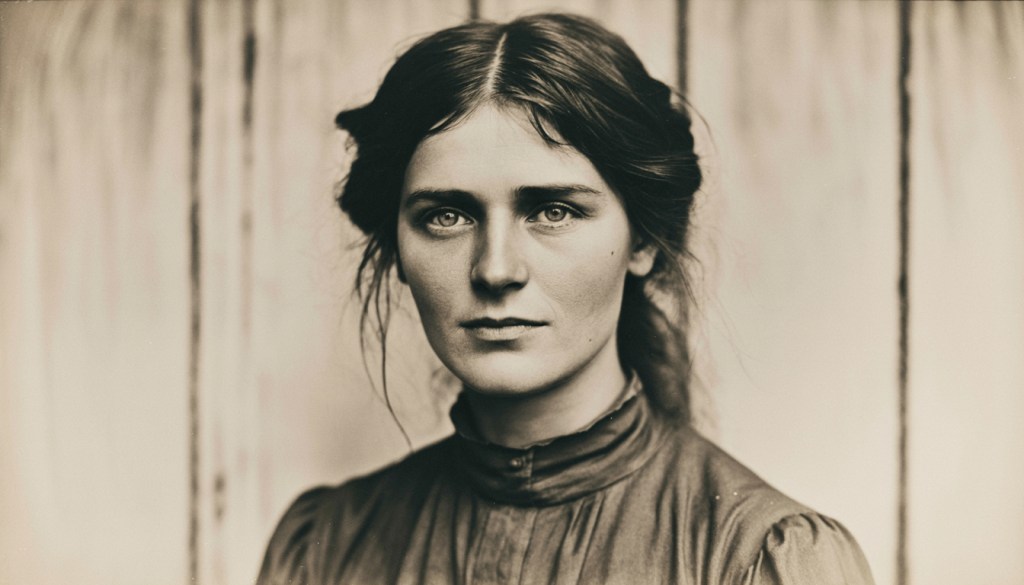
Do you trust your instincts?
Monday, 19th November 1900
They told me I should never come here, that the doors would be barred against one such as I. Yet here I stand within these whitewashed walls, and the very stones seem to sing my vindication. Monday, the nineteenth of November, in this year of Our Lord nineteen hundred – mark this date well, for it is the day I understood at last that the world may yet be transformed from the smoke-blackened inferno of cruelty I have known into something approaching an earthly paradise.
Do I trust my instincts? That is precisely what they counselled me against. The matron at the workhouse, the vicar’s wife with her tight-lipped charity, the foreman who thought a woman’s intuition worth less than a farthing – all of them would have had me doubt the very faculty which has brought me to this sanctuary. But I have learnt to read the cipher of my own soul, and it has proved a more reliable guide than all their maxims and moral instruction. When every face in the factory turned from me, when the lodging-house keeper put my bundle in the street, something within whispered that there existed yet a haven where judgement gives way to mercy. I trusted that inner voice, and it has not played me false.
This refuge is modest enough – a converted mission hall with its rows of narrow beds and its smell of carbolic and strong tea – yet to me it might be the New Jerusalem itself. For is not Heaven measured by what Hell one has escaped? I have dwelt in the dystopia of the slums, where children go barefoot in November frost and women age to crones by thirty. I have seen the great city’s underbelly, that nightmare realm of pawnshops and gin-palaces and courts so foul the sun never penetrates them. The world outside speaks constantly of Empire and Progress and the Century’s Dawn, but those are merely the codes by which the comfortable translate their own good fortune into universal law. I have cracked that cipher. I know now that their grand pronouncements conceal a simpler message: the strong shall feast, and the weak shall serve.
Yet here, within these four walls, I have glimpsed a different possibility. The woman who admitted me asked no questions about my character, demanded no references, required no confession of my sins. She saw only that I was in need, and she opened the door. Is this not the very principle upon which a true and just society might be founded? I am jubilant because I have discovered that such souls exist, that the utopian vision of the reformers and the chapel preachers need not remain mere words. It can take form in whitewashed walls and clean linen and bread given freely.
I know full well that this is but one small sanctuary in a vast and pitiless city, that beyond this door the old machinery of want and exploitation grinds on without cease. But the existence of this single room of refuge proves that another way is possible. If one house can be ordered upon principles of compassion rather than commerce, might not a street? A parish? A nation? The cipher I have been studying all my life – the hidden language of power and cruelty – can be rewritten. The code can be broken and remade.
Tomorrow I must venture forth again and make my way as best I can. But tonight I am triumphant, for I have stood at the very gate of that better world, and I have been permitted to enter. Let them say what they will about women’s weakness, about our want of reason, about our unfitness for the great questions of society’s ordering. I have trusted my instincts, and they have led me to this truth: that the world as it is constituted is not the world as it must be. And that knowledge, once possessed, can never be taken from me.
Bob Lynn | © 2025 Vox Meditantis. All rights reserved.

 Vox Meditantis
Leave a comment