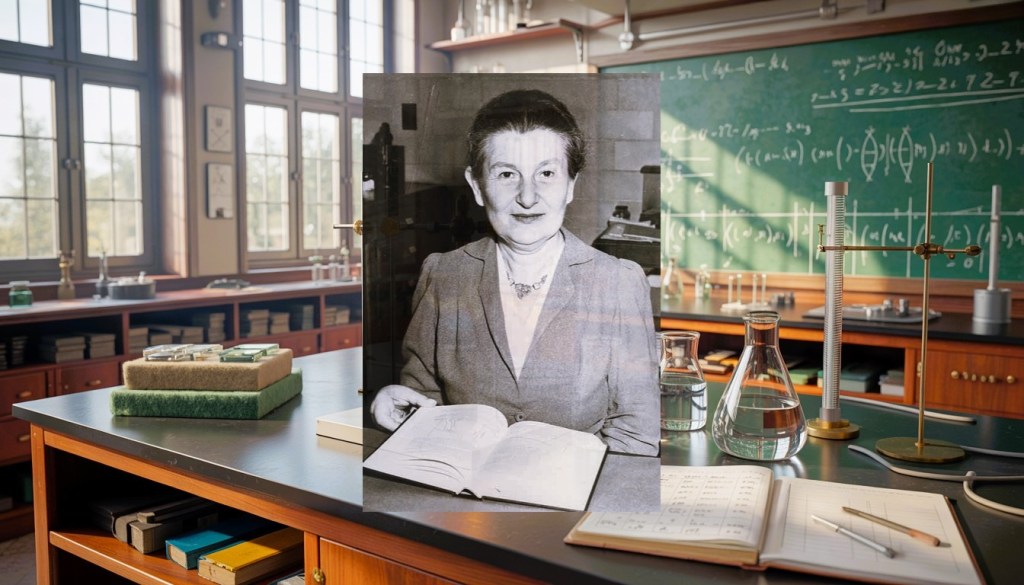
Hedwig Kohn (1887–1964) was a German-Jewish physicist whose career bridged the frontier of experimental physics and the abyss of historical persecution. Born in 1887 in Breslau, she spent 17 years earning credentials that took male colleagues half a decade, becoming one of only three women in pre-war Germany to attain habilitation – the German academic qualification that permitted teaching at university level. Her field, radiometry and spectroscopy, was essential to validating quantum mechanics yet remained invisible, overshadowed by the theoretical breakthroughs of Planck, Einstein, and Bohr. Today, on what would have been approaching her 138th birthday, we speak with her about precision measurement as both scientific practice and existential resistance, about the women colleagues who saved her life, and about why measuring light still matters.
Dr. Kohn, thank you for joining us. I want to begin somewhere that might feel peculiar – with hindsight. I’m speaking with you nearly 138 years after your birth, in 2025. Your work in radiometry and flame spectroscopy is cited in contemporary research on combustion engines, plasma physics, and medical diagnostics. A Google Doodle celebrated your birthday in 2019, reaching millions. And yet, for most of the 20th century, your contributions were profoundly overlooked. How does it feel to learn that?
Overlooked is precise, I suppose. But I must tell you honestly – I am not astonished. Even in my own lifetime, I watched this pattern with great clarity. When I arrived in America in 1941, still recovering from pneumonia contracted during my flight through Sweden, my colleagues did me the courtesy of employment at Wellesley College, but never at Princeton or Berkeley. The precision measurements I carried out for fifteen years in Germany – work that validated Planck’s law, work that illuminated the very foundation of quantum mechanics – these were cited in theoretical papers, yes, but my name appeared in a single line at the bottom of a page, if it appeared at all.
I think your word, overlooked, is kind but incomplete. It suggests passive negligence. In my experience, women’s contributions in physics were not overlooked – they were actively rendered invisible. There is a difference. One implies accident; the other implies choice. My choice, I suppose, was to continue measuring light regardless.
That’s an important distinction. Before we discuss the science, I’d like to understand how you arrived at physics at all. You were born in 1887 in Breslau. What was your path into this field?
My father was a merchant – neither scientist nor academic – but he believed that I should learn. Breslau was a city of some intellectual vitality. In 1905, when I began at Breslau University, only the second woman to enter the physics department, I was not guided by ambition to become famous. I was guided by something simpler and more stubborn: I wanted to understand how light worked. I was fascinated by the mystery of radiation, by the fact that objects emit light at different colours depending on their temperature. Everyone saw this – blacksmiths, glassmakers – but no one had measured it precisely.
I was fortunate to study under Otto Lummer. You have perhaps heard his name – he is often cited as a pioneer of blackbody radiation experiments, yet even he is somewhat forgotten, eclipsed by Planck, who provided the theoretical explanation for data that Lummer had first measured. This was my first lesson in the erasure I would later understand more acutely. Lummer taught me that precision in measurement was not mere technical labour. It was the foundation of all physics.
He was generous to me. In Germany, in those days, women were permitted to study alongside men, officially, but the atmosphere was… one of great scepticism. I was watched carefully, as though I might contaminate the laboratory. Lummer never treated me this way. He taught me as he would have taught a capable student – period. I earned my doctorate in 1913, and then remained in his laboratory as his assistant.
And then you encountered the first major barrier: the 17-year gap between your PhD in 1913 and your habilitation in 1930. Can you speak to what those years entailed?
Ah, yes. The gap that historians like to frame as my “delay,” as though I was waiting for permission. In fact, I was working constantly. Between 1913 and 1920, I could not hold an official position – legally, this was because women were barred from German university faculty roles. So I was Lummer’s assistant in title but instructor in practice. I taught physics to young men. I advised doctoral students. I conducted research. I published papers. I received a medal for wartime service. And I received no promotion, no official recognition, and eventually, no position at all when new rules tightened.
Then in 1920, regulations changed – women could finally, finally hold academic positions. But universities in Germany moved with extraordinary reluctance. For ten years after this, I pursued informal work, some paid, some not. Then, in 1930, at age 43, I received habilitation. Seventeen years after my doctorate.
I want to be clear about what this means: I had been conducting the work of a qualified academic researcher for 17 years. I had supervised doctorates. I had contributed significant original research to precision radiometry. But without habilitation, I could not supervise students officially, could not be formally called a professor, could not earn the salary a man at my experience level would have commanded.
This was not inefficiency or personal failure. This was institutional gatekeeping. I mention this now, in 2025, because I’m told women scientists still encounter versions of this – postdocs working for years in temporary positions, doing a professor’s labour without a professor’s title or security. Some things, I’m afraid, have changed less than one might hope.
Just three years later, in 1933, the Nazi government dismissed you from your position. Tell me what that day was like, and how you continued working through the years of dismissal.
I was teaching a class when I was informed that I was no longer permitted to teach. The university simply… stopped paying me. Overnight, I had no income, no official office, no university affiliation. I was now, legally, a non-person within the institution where I had worked for 20 years.
I was 46 years old. I had never married – a deliberate choice, though influenced by the reality that married women scientists were barred from university positions in Germany. I had few personal resources. What I had was my expertise in radiometry and my connections within the German industrial physics community. I survived by contracting with illumination companies, conducting applied research for industrial applications. This work was precise, necessary, but unfulfilling compared to the academic research I had been conducting.
Yet I continued to advise students informally. You must understand – I had eight doctoral students who came to me during these years, 1933 to 1940, when I had no official status, no office, no institutional support. We met in a small room in the back of the Physics Institute. I had no salary to draw from, but I gave them the supervision they needed. Eight of them completed their doctorates during these years of my official erasure. I consider this among the most important work of my life – not glamorous, not published widely, but real.
Then came Kristallnacht.
The 9th November 1938. What happened?
I was in my small room when a student burst through the door. His name was – no, I will not say his name, as this would identify him and possibly endanger anyone connected to him, even now, even to you. He was breathless, terrified. “Hedwig,” he said, “they’re burning the temple!”
I could hear it from the window. Fire. Screams. The sound of breaking glass in the streets outside. The Nazis had orchestrated attacks on synagogues and Jewish businesses across Germany. In Breslau, they were burning.
That day, I understood that survival was no longer certain. I was 51 years old. I was a Jew, a woman, a scientist of minor international fame, living in Nazi Germany. Within weeks, my position became untenable. Within months, I began the desperate work of securing passage out of the country.
This is where the letters began. Seventy-two letters, I’m told, though I lost count. Rudolf Ladenburg, who had directed my doctoral research and was now at Princeton, wrote to American universities. Lise Meitner, whom I knew and respected, wrote to British institutions, even as she herself was fleeing. Hertha Sponer – another woman physicist who had achieved habilitation – worked tirelessly on behalf of displaced colleagues. Max Born wrote. Women’s academic organisations mobilised. The International Federation of University Women, based in London, became an underground network for securing visas for women academics.
Your brother Kurt – where was he during this time?
He was deported to Kovno, Lithuania, in November 1941 – just ten months after I reached America. He was murdered there. I received word months later. My brother, whom I had not seen since my escape, was dead.
I escaped and he did not. This is the arithmetic that shaped the remainder of my life. I have never wished to frame my survival as a triumph. I survived because colleagues wrote 70 letters. I survived because British and American universities, facing Great Depression-era restrictions and anti-immigrant sentiment, nonetheless offered me temporary contracts. I survived because my brother did not.
This weight – I carried it into my laboratories in America. It informed my work ethic, my refusal to stop measuring, my insistence that precision mattered. If I could not save him, I could at least ensure that the work I had begun was continued, completed, perfected.
I’d like to discuss your scientific work with some technical precision. You’ve mentioned radiometry repeatedly. Can you explain to an expert what radiometry is, and why your particular contributions to this field were significant?
Radiometry is the measurement of electromagnetic radiation – the intensity, the spectral distribution, the total energy flux. When Planck proposed his quantum hypothesis in 1900, he provided a mathematical formula that described the relationship between the wavelength of light emitted by a heated object and the intensity of that light at different temperatures. But Planck derived this formula based on experimental data. Someone had to measure that data.
This is where Lummer’s work became foundational, and where my own contribution emerged. Lummer designed the first precision cavity radiators – isothermal cavities that emit blackbody radiation according to Kirchhoff’s law. By making a small aperture in the cavity and dispersing the light through a prism or grating, one could measure the spectral intensity across different wavelengths.
But measurement was not straightforward. One required:
First, a calibrated detector. Lummer used thermoelectric cells – bismuth-antimony junctions that produce a measurable voltage proportional to the light falling upon them. These had to be absolutely calibrated against known sources.
Second, precise wavelength determination. Using prisms or diffraction gratings, one could separate light into its component wavelengths. But the prism itself absorbed some wavelengths differentially. One had to account for this.
Third, temperature control. The cavity radiator had to maintain isothermal conditions – the same temperature throughout the interior. If there were temperature gradients, the spectral distribution would be distorted.
Fourth, elimination of stray radiation. Reflections from the laboratory, ambient light, even thermal radiation from the apparatus itself could contaminate measurements. One had to shield everything, maintain darkness, control the environment.
My particular contribution was in developing methods to measure ultraviolet radiation – shorter wavelengths, beyond what the human eye could see. This required different optical materials, different detectors, different mathematical corrections. Ultraviolet radiation was essential to understanding Planck’s law across its full spectral range, and it was much more difficult to measure accurately than visible light.
I developed techniques for measuring radiation intensity in the ultraviolet between 200 and 400 nanometres. I characterised the response curves of different detector materials across these wavelengths. I published the corrections necessary to convert raw detector signals into absolute intensity measurements. This seems modest now, but it was foundational. Without these measurements and these correction factors, subsequent work on quantum mechanics could not have proceeded with confidence.
You also wrote extensively about blackbody radiation and emission line spectra. How do these relate to each other – what is the conceptual distinction?
Excellent question. Blackbody radiation – the thermal radiation emitted by a heated object – is continuous. If you measure the intensity of a blackbody at, say, 1000 Kelvin, you find radiation at every wavelength, from far ultraviolet through visible to far infrared. The intensity varies smoothly with wavelength and temperature, exactly as Planck’s law predicts.
Emission line spectra, by contrast, are discrete. When atoms are heated – in a flame, in an electrical discharge, in a hot gas – they emit light at specific wavelengths only. Sodium emits light predominantly at 589 nanometres (the sodium D-lines, as we call them). Hydrogen emits at discrete wavelengths corresponding to transitions between its energy levels. These are not continuous spectra but rather sharp, distinct lines.
The distinction is not merely observational; it is conceptual. Blackbody radiation arises from thermal motion of electrons in a dense material. The electrons radiate continuously because they are constantly interacting with neighbouring electrons, and this interaction broadens the emission into a continuous spectrum.
Emission lines arise from individual atoms – isolated systems in which electrons occupy discrete energy levels. When an electron transitions from a higher level to a lower one, it emits a photon with energy corresponding exactly to the energy difference. Different transitions produce different wavelengths.
My work in flame spectroscopy, which became central to my American career, exploited emission lines. If you aspirate a chemical sample into a flame – say, a sodium salt in a gas-oxygen flame – the atoms of sodium become excited by the heat. They then emit characteristic emission lines at 589 nanometres. The intensity of these lines is proportional to the concentration of sodium in the sample.
This is profoundly powerful: by measuring the intensity of a single emission line, one can determine the concentration of an element without separating it chemically. One need only burn it, measure its light, and perform a simple calculation.
What technical innovations did you develop to improve flame spectroscopy measurements?
When I established the flame spectroscopy laboratory at Wellesley College in 1942, the field was still rather crude. Researchers were burning samples in various flame geometries, measuring emission with photographic plates or visual inspection. The precision was limited. I was determined to improve it.
First, I standardised the flame. I designed a burner that could maintain a stable, reproducible gas-oxygen flame at consistent temperature and composition. Small variations in flame geometry produced large variations in emission intensity – one had to control this ruthlessly.
Second, I developed a method for quantitative comparison. Rather than measuring absolute intensity, which varies with instrument configuration, I measured the ratio of the analyte emission line to an emission line from an internal standard – an element added in known quantity to every sample. This ratio method was far more stable across different experiments and different instruments. It corrected for variations in flame temperature, burner efficiency, optical alignment.
Third, I characterised the response curves – the relationship between sample concentration and emission intensity – across a wide range of concentrations. I published tables of calibration data for sodium, potassium, and lithium. These tables permitted other researchers to use the method without having to repeat the laborious calibration work.
Fourth, I investigated systematically how different chemical matrices affected the emission. If you measured sodium in a simple salt solution, the relationship between concentration and intensity was linear. But if sodium was embedded in a complex biological sample – blood plasma, for instance – the relationship changed. The flame interacted differently with different chemical backgrounds. I conducted experiments to map these effects and to develop mathematical corrections.
The result was a method precise to within 1 percent at physiological concentrations of sodium and potassium. This may sound modest, but it was revolutionary for clinical chemistry. Hospitals could now measure electrolyte levels in patient blood samples with speed and accuracy previously impossible.
One more technical question – and please stop me if I’m being too granular. How did you deal with the problem of self-absorption in flame spectra? This is a phenomenon where emission from hotter regions of the flame is absorbed by cooler atoms in outer regions, distorting the apparent line intensity. How did you address this?
Ah, you have read carefully! Self-absorption was indeed a persistent problem, particularly at higher analyte concentrations. It is a subtle effect. The hotter central region of the flame emits a strong line. But this light must pass through the cooler outer regions of the flame, where neutral atoms can absorb photons at the same wavelength. This absorption reduces the intensity, and the effect is concentration-dependent – at higher concentrations, more atoms remain in the neutral state, capable of absorbing, so the effect is stronger.
The relationship between measured intensity and actual concentration becomes nonlinear, especially at high concentrations. I developed two approaches.
The first was empirical. I measured calibration curves – the relationship between concentration and intensity – at different flame temperatures and geometries. I then selected operating conditions that minimised the nonlinearity. An hotter, narrower flame, with rapid transport of sample to the hottest region, reduced the population of cool neutral atoms capable of absorbing. The relationship remained approximately linear to higher concentrations.
The second approach was more fundamental. I developed a method to measure the width of the emission line – how much it broadens under the influence of self-absorption. The line width increases with self-absorption. By measuring both the intensity and the line width, one could correct for the self-absorption effect mathematically. This was technically more demanding – it required a high-resolution spectrograph and careful measurements – but it permitted measurements at high concentrations even in geometries prone to self-absorption.
I must tell you, the second method was not as widely adopted as I had hoped. It required more sophisticated equipment, more careful technique. Most laboratories used the first approach – simply keeping concentrations in a range where the effect was minimal. But I was proud of the second method because it represented a more complete understanding of the physics involved.
And this work continued for how long? Into the 1950s and 1960s?
Until shortly before my death in 1964, yes. At Wellesley, I established the laboratory and trained students for ten years, 1942 to 1952. I was formally retired in 1952 at age 65 – the age at which women were expected to cease contributing, I suppose. But Hertha Sponer, my colleague from those difficult years in Breslau, had moved to Duke University. She invited me to join her there as a research associate.
For another 12 years, until 1964, I worked in a basement laboratory at Duke. Yes, a basement – not by accident, I suspect, but rather the institutional allocation of space for women researchers and refugees. But it was my basement. I set up the flame spectroscopy equipment again. I supervised two doctoral students and hosted two postdoctoral fellows. We measured sodium, potassium, lithium, calcium in biological samples. We published papers.
I was 76 years old, continuing to measure light. My colleagues at Duke asked me, with kindness, whether I wished to ease into retirement. I did not. I had lost 12 years to Nazi persecution. I had lost my brother. I had spent 17 years waiting for habilitation. I did not have time to waste.
Let me ask you directly: why were women so systematically excluded from physics in Germany, and later from top research positions in America?
This is a question one can approach from many angles. The practical answer is legal and institutional. Until 1920, women were simply barred from holding academic positions in Germany. Full stop. No woman could be a professor, could supervise doctorates officially, could hold university salary. The law changed in 1920, yes – but changing the law did not change the minds of the men who governed universities. The barriers shifted from legal to social.
In America, the barriers were different but equally effective. There was no formal bar to women in physics, but the cultural assumption was powerful: women did not belong in physics laboratories. Women were suited for other fields – biology, chemistry, perhaps, but not physics. Physics was understood as a masculine domain, requiring a certain hardness of mind, a certain distance from emotion and sensation.
When I arrived at Wellesley in 1942, I was welcomed as a teacher and allowed to set up a laboratory. But I was directed specifically to a women’s college. I did not have the choice to apply for positions at Princeton, MIT, Berkeley. The assumption was that I would be better suited to teaching women. And there is truth in this – I derived profound satisfaction from teaching young women, from demonstrating that they could master physics. But the institutional consequence was to concentrate women scientists in teaching colleges rather than research universities. This segregation was presented as natural, accommodating. In fact, it was a clever mechanism of exclusion.
At Duke, I worked for 12 years with status and resources. But I was a research associate, not a faculty member. I could not graduate students officially. I worked in a basement. The boundaries were clear.
More fundamentally, I think the exclusion arose from something more elemental: threat. Women who mastered mathematics, who understood physics at a deep level, who published original research and advised students – these women represented a challenge to male authority within the scientific hierarchy. It was not rational. It was territorial.
I will tell you something that may sound harsh, but I believe it to be true: many of my male colleagues were intelligent, brilliant even. But their brilliance did not extend to imagining women as peers. They could imagine women as assistants, as teachers of girls, as exemplars of female achievement within circumscribed boundaries. But as equals competing for the same resources, the same positions, the same authority? This was almost incomprehensible to them. It was not malice, generally. It was cognitive closure – an inability to perceive women as full participants in the scientific enterprise.
You wrote extensively for the Handbuch der Experimentalphysik, the leading German physics textbook. How did that contribution get overlooked?
I wrote 270 pages – more than a quarter of a major textbook section on radiometry and spectroscopy. These pages introduced generations of German physicists to the experimental foundations of blackbody radiation, to the methods of measuring light intensity, to the practical techniques of precision measurement. The textbook was published in the 1930s and 1940s and remained in use into the 1960s. It was, by any measure, a significant contribution to the field.
Yet I am almost never credited as its author. Physicists cite the results described in those pages – the measurement techniques, the data tables, the correction factors – but they cite “the Handbuch” in a generic way, as though it were a compendium of established knowledge, not the work of individual researchers.
This is partly a consequence of how textbooks are structured. One writes individual chapters or sections, but they are integrated into a larger whole. The authorship is distributed. But I suspect there is more to it. A man who contributes 270 pages to a leading textbook would be celebrated. His name would be highlighted. His contribution would be explicitly acknowledged. I contributed 270 pages and became nearly invisible.
Months before I died, in 1964, research on flame spectroscopy began to accelerate. The space race, the interest in combustion science, plasma physics – these fields drove new interest in understanding how to measure light from hot gases. The work I had pioneered was experiencing a renaissance. But I did not live to see this recognition flourish. Had I lived another decade, I might have been more visibly credited. Instead, I died at 77, and my contributions were absorbed into institutional histories without individual credit.
You mentioned something profound earlier: the 17-year gap between your PhD and your habilitation was not personal delay but institutional gatekeeping. Can you elaborate on how this pattern affected your career trajectory?
The pattern, I believe, is this: women were permitted to enter universities, to earn doctorates, to work as junior researchers. But they were not permitted to advance. The advancement required habilitation – a process that in Germany was intended to be rigorous, to require evidence of independent research, original contributions, the capacity to supervise others. But in practice, habilitation was controlled by male gatekeepers who were deeply uncomfortable with women pursuing it.
I earned my doctorate in 1913. I was immediately appointed as Lummer’s assistant. For seventeen years, I functioned as a researcher and instructor. I advised doctoral students. I published original papers. I conducted research that was cited by my peers. I contributed to textbooks. By every measure except the formal credential, I was qualified for habilitation years before 1930.
Why the delay? The official reasons cited were political – women were barred until 1920, then universities moved slowly. But underneath was something else: discomfort with the prospect of women occupying senior positions. If I received habilitation in, say, 1925, I would have been 38 years old with clear legitimacy to demand a formal faculty position. This made male colleagues uncomfortable. It was preferable to keep me in a subordinate role indefinitely, letting me do the work without the title or the security.
This pattern has echoes, I’m told, in modern academia. Temporary positions that extend for years. Adjuncts teaching as though they were faculty, without security or benefits. Women on tenure tracks who are held to higher standards for publication and teaching than male colleagues. The institutional mechanisms have shifted, but the principle remains: women are permitted to contribute but not to advance, not at the same pace as men, not with the same security.
When I received my habilitation in 1930, it was presented as my vindication – finally, after all these years, recognition of my capabilities. But I prefer to frame it differently: my habilitation was an acknowledgment of work I had already done for seventeen years. The delay was not about my readiness. It was about institutional resistance to my advancement.
There’s a painful paradox embedded in your story. You overcame enormous barriers – gender discrimination, anti-Semitism, displacement from your homeland – and continued working with extraordinary dedication. But there’s a risk that celebrating your resilience actually normalises the barriers, suggesting that they were acceptable so long as one had enough determination. How do you feel about that?
You have identified something that troubles me greatly. I am grateful that my resilience is acknowledged, but I do not wish for my story to be misused as permission for continued injustice.
The barriers I faced were not virtuous challenges that strengthened my character. They were obstacles – often unjust, sometimes cruel, always unnecessary. I overcame them because I had no choice. I overcame them because I loved the work. I overcame them because my colleagues – women particularly – provided extraordinary support. But the barriers themselves were not good. The 17-year wait for habilitation was not character-building. It was a theft of my time, my security, my autonomy. The dismissal in 1933 was not a trial that tested my mettle. It was persecution.
I worry, now, that my story will be told as inspiration – as an example to other women scientists that they too can overcome discrimination if they are only determined enough. This is dangerous. It suggests that discrimination is inevitable, that what matters is individual resilience rather than institutional change.
I would say instead: the barriers were wrong. The world would have been better if those barriers did not exist. I should not have waited 17 years for habilitation. I should not have been dismissed from my position in 1933. My brother should not have been murdered. These things should not have happened, and I will not accept a narrative that suggests that my survival justified the barriers that nearly destroyed me.
What matters now is not celebrating my resilience, but rather examining why such resilience was necessary in the first place, and working to eliminate the conditions that required it.
I’m thinking about something you said earlier: that after being dismissed in 1933, you continued measuring light. You could have abandoned science, found safety elsewhere, minimised your exposure to a regime that had already targeted you. Why did you continue?
This is a question I have asked myself many times. The practical answer is straightforward: I had no other skills. I was a physicist. Science was what I knew how to do. Without it, I would have had even fewer options for survival.
But there was something more. I think – and I say this carefully, aware that it may sound grandiose – I think there was something about the act of measuring that felt important in those dark years. The Nazis were building a mythology, a false narrative about race, about human worth, about the nature of reality. They were denying objective truth in service of ideology.
When I measured the intensity of light from a flame, I was engaging with something absolutely real. The light was there or it was not. The measurement was precise or imprecise. The data agreed with theory or it did not. There was no ideology that could alter the behaviour of atoms. There was no propaganda that could change the spectral distribution of blackbody radiation.
In a regime predicated on denial of objective reality – on the substitution of will for fact, of myth for evidence – the act of precise measurement felt like a form of resistance. Not dramatic resistance, not the resistance of armed rebellion. But resistance nonetheless. The insistence that truth matters, that evidence is real, that careful observation of the natural world will reveal patterns independent of what any government wishes to be true.
I believe – I have always believed – that this is the foundation of all science. Not the grand theories, though these are important. But the humble insistence that we can know things about the world through careful observation and measurement. That we can distinguish true from false. That reality exists independently of what we wish to be true.
During those years in Breslau, when I was dismissed, when my future seemed impossibly constrained, I could not mount political resistance. I could not openly oppose the regime. But I could continue to measure light precisely. I could train students who came to my small room in the back of the institute. I could publish, when I could, results that demonstrated the power of careful observation.
This was my contribution, and it was real.
Do you think your insistence on precision measurement was, in some way, connected to your Jewish identity? To a commitment to evidence-based reasoning that comes from a particular intellectual tradition?
I think Jewish intellectual culture places great weight on argument, on evidence, on rigorous examination of texts and propositions. The Talmud, yes – but also secular intellectual culture among European Jews. There was an emphasis on the power of reason, on the importance of evidence and logic.
But I would hesitate to attribute my scientific commitments too directly to this. I am also a product of German scientific culture, of the rigorous experimental tradition that developed through Lummer, through the PTR – the Physikalisch-Technische Reichsanstalt. German experimental physics had its own traditions of precision, of mathematical rigour, of uncompromising attention to measurement. These traditions predated the Nazis, and they were fundamentally incompatible with Nazi ideology. The Nazis claimed to represent an authentic German culture, but in fact, they represented a rupture from the best traditions of German science and thought.
So perhaps what I inherited was not uniquely Jewish, but rather a commitment to evidence, to rigorous thinking, that was present in both my Jewish heritage and the German scientific tradition I entered. These two sources of intellectual commitment converged in me, I think. And when the Nazis tried to destroy both traditions – persecuting Jews and simultaneously corrupting German science with ideological demands – I found myself defending both at once, without fully articulating it at the time.
One final question in this vein. You were asked, I imagine, to decide at some point whether to stay in Germany or to flee. What made you finally decide that you had to leave?
Kristallnacht. The student bursting through my door. The fire visible from my window. Before that moment, I had believed, perhaps foolishly, that I could endure. That I could survive within the system, however unjust, by making myself useful, by being quiet, by not drawing attention. This is the calculation many people make when persecution begins. If one does not resist openly, if one becomes less visible, perhaps one will be allowed to continue.
After Kristallnacht, I understood that this calculation was no longer valid. The violence was not restricted to those who openly opposed the regime. It was becoming totalising, consuming, indiscriminate. The Nazis were going to pursue the destruction of Jewish life regardless of whether individual Jews remained quiet.
My brother’s deportation, months later, confirmed this understanding. He was not a political figure. He was not a public advocate for anything. He was simply a Jew. And he was killed for this alone.
I understood then that my only choice was to leave. Not because staying was shameful or foolish – many people, for reasons of attachment, of family, of simple human inability to abandon their homes, chose to stay, and they paid the ultimate price. But because my particular situation – my professional skills, my international connections, my colleagues’ willingness to help me – meant that I had options others did not possess.
I had a moral obligation to use those options, to save my own life, so that I could continue my work. And I have tried to honour this obligation by working diligently, by not wasting the years I was given after my escape, by measuring light as carefully as I could, for as long as I could.
This is my answer: I left because I was permitted to leave, and because remaining meant certain death. The privilege of escape is something I have thought about for many years. It is both a gift and a burden.
Before we close, I want to ask you about something you haven’t mentioned: moments when you were wrong, or when your scientific judgments turned out to be mistaken. Can you speak to any notable errors or misjudgements in your career?
Oh, there were many. Let me tell you one that I have thought about considerably.
In the 1930s, there was a debate about whether the ultraviolet absorption of atmospheric ozone was best measured using spectrophotometric methods – which I championed – or using direct atmospheric sampling and chemical analysis. I was quite confident in my approach. I published several papers arguing for the superiority of spectrophotometric methods. The data, I thought, were clear.
But it turned out that my calibration procedures contained a subtle systematic error. The error was small – perhaps 2 or 3 percent – but it was consistent, which meant that my measurements diverged systematically from independent measurements conducted using different methods. It took several years for this to become apparent, partly because the error was subtle, partly because different laboratories were not comparing results as systematically as they might have been.
When I recognised the error, I published a correction. I acknowledged the source of the mistake – a mischaracterisation of how glass at certain ultraviolet wavelengths absorbed light differently than I had assumed. But I did not celebrate this correction as much as perhaps I should have. It felt like a failure, even though it was, in fact, exactly what science ought to be: the systematic identification and correction of error.
I think I was too proud, perhaps. I had been confident in my approach, and I did not wish to acknowledge that my confidence had been misplaced. This is a human frailty that I observe in many scientists – the investment in being right, in being perceived as rigorous and careful, can actually prevent one from acknowledging error promptly.
The better approach, which I came to appreciate more fully, is to regard error not as failure but as data. If my measurements diverged from others’, this was information worth investigating. The error, when I found it, was small and easily corrected. But it was important.
I wish I had been more open about this in my work – more willing to publish speculative results and preliminary findings, more willing to say “I have measured this carefully, but I am uncertain about the interpretation.” Instead, I often waited until I was confident I was correct before publishing. This caution was, in part, a response to my awareness that my work would be scrutinised more carefully than that of male colleagues. I did not wish to provide ammunition for critics who might use imprecision against me.
But this caution may have actually limited my contributions. By waiting to be absolutely certain, I delayed the publication of results that might have advanced the field more quickly if I had shared them earlier, uncertainties and all.
That’s a fascinating admission. It suggests that even within your scientific practice, the pressures of gender discrimination affected not just your opportunities but your epistemology – your approach to what counts as knowledge, what’s worth sharing, what must remain private until perfected.
Precisely. I did not recognise this fully at the time, but I see it now with clarity. Women scientists, particularly those of my generation, faced a paradox: we had to prove ourselves more rigorous than male colleagues, yet any error was weaponised against us as evidence that women lacked the precision necessary for physics. So we became overly cautious. We waited too long before publishing. We did not share preliminary results, did not engage in the informal circulation of ideas that advances science so much more effectively than formal publication.
This is a loss. The field does not benefit when women scientists, out of necessity or fear, adopt a more conservative epistemic stance than their male peers.
I wish I could tell young women scientists now: your preliminary results are worth sharing. Your uncertainties are worth articulating. Your mistakes will inform future research. Do not wait to be perfect. Perfect is a standard that is applied to you far more stringently than to others, and pursuit of it will steal your time and your voice.
Is there anything else you wish to add? Anything that you feel is important for people to understand about your work, your life, or the broader context of science and persecution in the 20th century?
I want to emphasise one thing. My story is not unique. There were hundreds, perhaps thousands, of scientists and scholars who fled Nazi-controlled territories. Of these, women were vastly underrepresented in the rescue efforts, in the employment secured, in the recognition afterward. We are told that approximately 12,000 educated individuals were banned from German universities between 1933 and 1945. Many perished. Of those who survived, far fewer women than men were employed in positions allowing them to continue their work.
My survival was not assured. It depended on luck – the willingness of specific colleagues to write letters on my behalf, the existence of women’s academic organisations that made space for refugee scholars, the presence of women’s colleges in America that, whatever their limitations, nonetheless employed women when research universities would not.
The refugee scholars who survived are now being rediscovered. Historians are publishing accounts of their lives, their work, their contributions. This is important and necessary. But it must lead to something more than nostalgia or inspiration. It must lead to structural change in how science values, employs, and credits the work of women and persecuted minorities.
And I want to say something about the present moment, about 2025, as you have told me it is. Women remain underrepresented in physics. Gender disparities persist. Different countries have faced different persecutions and displacements – millions of people are now displaced from Syria, from Afghanistan, from Ukraine. The infrastructure for rescuing displaced scholars – visas, employment, institutional support – is inadequate. The lessons of the 1930s and 1940s do not seem to have been fully learned.
My final word would be this: measure carefully. Pay attention to evidence. Insist that truth matters. But also organise collectively. Build networks. Protect those who are persecuted. Create institutions that are genuinely welcoming to women and to people from all backgrounds. The future of science depends not only on rigorous measurement, but on justice.
Dr. Kohn, thank you for this extraordinary conversation. Your honesty, your rigour, and your humanity have been evident throughout. I’m sure readers will find much to reflect on in your words.
I am grateful to have been asked. To be listened to. This is a privilege that was not guaranteed. I spent decades doing work that was largely unrecognised. To have that work valued now, even in this fictional conversation, feels important. I hope that others will be inspired not to heroism – I do not wish to be a hero – but to persistence. To the insistence that careful work, honestly conducted, matters. That measurement is a form of truth-telling. And that we have obligations to one another: to support those who are persecuted, to create space for those who have been excluded, to build a science that is both rigorous and just.
That is my hope. That is what I have tried to do with the time I was given.
Letters and emails
Following our conversation with Hedwig Kohn, we invited our growing international community of scientists, historians, and science advocates to submit questions they wished to pose to her – areas left unexplored, technical curiosities unresolved, and personal reflections they felt deserved further consideration. The response was remarkable: letters arrived from researchers in India, Argentina, South Africa, Canada, and Greece, each bringing their own expertise, perspective, and genuine curiosity about a physicist whose life bridged the frontiers of scientific rigour and historical trauma.
What emerged was not a formal questionnaire but rather an intimate correspondence – the kind of exchange that happens when thoughtful people encounter a life that resonates with their own work, their own struggles, their own hopes for what science might become. These five letters represent conversations across continents and generations, each one asking Hedwig Kohn to illuminate some corner of her experience that might illuminate the path for those who follow.
Jaya Srinivasan (38, Optical Physics Researcher, Bangalore, India)
In your flame spectroscopy work at Wellesley and Duke, you developed the method of using internal standards to correct for variations in flame temperature and geometry. Modern atomic absorption spectroscopy has largely replaced flame methods in clinical laboratories, yet your principle of internal standardisation remains foundational. When you were designing these correction techniques in the 1940s, were you conscious that you were establishing a principle that would outlast the specific instrumentation? And did you ever experiment with alternative correction methods – perhaps using a reference emission line from a different element – that you ultimately abandoned?
Dr. Srinivasan, your question touches upon something I have thought about considerably, particularly in the final years of my work at Duke. I must confess that when I first developed the internal standard method at Wellesley in the early 1940s, I was not thinking in terms of establishing enduring principles. I was thinking quite practically: how do I obtain measurements that are reproducible from one day to the next, from one burner configuration to another, from one batch of reagents to the next?
The problem was immediate and frustrating. I would measure the sodium emission from a sample on Monday morning, obtaining an intensity reading of, say, 4.2 arbitrary units. On Tuesday, using what I believed to be identical conditions – same burner, same gas flow rates, same aspiration rate – I would measure the same sample and obtain 3.8 units. This variation of nearly 10 percent was unacceptable for quantitative work. If I could not reproduce my own measurements within a few percent, how could I claim to be measuring anything meaningful?
I considered several possibilities. The first, most obvious approach was to control the flame conditions more rigorously. I invested considerable effort in designing a burner with stable gas flow, with reproducible positioning relative to the optical system, with consistent aspiration of sample into the flame. This improved matters somewhat, but variations of 5 to 8 percent persisted. The flame, you see, is an inherently turbulent system. Small variations in room temperature, in gas pressure, in the composition of the sample itself – all these affected the flame temperature and the distribution of atoms within the flame.
The second approach was to calibrate absolutely – to measure the emission intensity against a known standard source, such as a tungsten lamp operated at a precisely controlled current. But this required that the optical alignment remain perfectly stable, that the detector response remain constant, that no dust or contamination accumulate on optical surfaces. In practice, these conditions were impossible to maintain over weeks or months of continuous use.
It was at this point that I recalled work I had seen years earlier in Germany – forgive me, I cannot now recall the specific author, but it was published in the Zeitschrift für Physik sometime in the late 1920s – on the use of line-pair ratios in emission spectroscopy. The idea was to measure not the absolute intensity of a single line, but rather the ratio of two lines emitted by different elements in the same source. If both elements experienced the same flame conditions, the ratio would be much more stable than either absolute intensity.
I adapted this principle to flame spectroscopy by adding a known quantity of lithium to every sample. Lithium emits a strong line at 670.8 nanometres, well separated from the sodium doublet at 589 nanometres. By measuring both the sodium intensity and the lithium intensity, and then calculating the ratio, I found that day-to-day variations dropped to 1 or 2 percent. The lithium served as an internal reference – it experienced exactly the same flame conditions as the sodium, so any variation in flame temperature, in aspiration rate, in optical alignment affected both elements equally and cancelled out in the ratio.
Now, to answer your specific question: yes, I did experiment with alternative approaches. I tried using potassium as an internal standard rather than lithium. Potassium emits at 766.5 and 769.9 nanometres – further into the red, where some detectors had reduced sensitivity. The advantage was that potassium is chemically very similar to sodium, so one might expect it to behave identically in complex matrices. The disadvantage was precisely this similarity: in biological samples, potassium is naturally present at varying concentrations, so one could not simply add a fixed amount without first determining how much was already there. This created a circular problem.
I also considered using the flame background continuum as a reference – measuring the ratio of the sodium line intensity to the continuum intensity at a nearby wavelength where no emission lines appeared. This worked moderately well in simple salt solutions, but failed in complex samples where organic material produced its own continuum emission. The background was not sufficiently stable or reproducible.
A third approach I tested briefly was to use two different emission lines from sodium itself – the D1 line at 589.6 nanometres and the D2 line at 589.0 nanometres. These lines arise from the same atomic transition split by spin-orbit coupling, and their intensity ratio is determined by quantum mechanical selection rules. In principle, this ratio should be constant regardless of flame conditions. But in practice, self-absorption affected the two lines differently – the stronger D2 line was more susceptible to absorption by cool atoms in the outer flame – so the ratio varied with concentration. I abandoned this approach after several months of frustrating measurements.
Ultimately, I settled on lithium as the most practical internal standard for sodium and potassium measurements. It was chemically distinct, so it did not interfere. It was rarely present in biological samples, so adding a known amount was straightforward. Its emission line was strong and well-separated. And most importantly, the ratio method worked – it produced reproducible results that agreed with independent measurements by other methods.
Was I conscious that this principle would outlast the specific instrumentation? Not entirely, no. I was focused on solving the immediate problem before me. But I did recognise, particularly as I was writing up the method for publication, that the principle was general. Any time one measures emission from a source with variable conditions, the ratio of two emissions will be more stable than either absolute intensity. This is not specific to flames, to spectroscopy, or even to light. It is a mathematical consequence of how ratios behave when both numerator and denominator are scaled by the same factor.
I am gratified to learn that atomic absorption spectroscopy has replaced flame emission in many applications – it is a more sensitive technique for many elements. But I am not surprised that the internal standard principle persists. Good principles, once established, tend to be rediscovered and reapplied in new contexts. This is how science progresses: not always through dramatic breakthroughs, but often through the patient development of methods that prove useful across many different problems.
Malik Ndlovu (52, Materials Scientist and Science Policy Consultant, Johannesburg, South Africa)
You measured ultraviolet radiation intensity and atmospheric ozone in the 1930s using precision spectroscopic methods. These measurements were technically demanding for the era. What were the three greatest technical obstacles you faced – not institutional or political, but purely physical or methodological – and how did you work around them? I’m curious whether you had failures that you never published, experiments that simply didn’t work, before you arrived at methods reliable enough to contribute to the scientific record.
Mr. Ndlovu, you have asked precisely the sort of question that most physicists prefer not to answer publicly, because it requires admitting the extent of one’s failures. But I am old enough now, and sufficiently removed from the anxieties of career advancement, that I can speak candidly about the technical obstacles that nearly defeated me.
The first and most persistent obstacle was detector sensitivity in the ultraviolet. When one measures visible light, photographic plates or photoelectric cells work reasonably well. But below 400 nanometres – into what we call the near ultraviolet – and especially below 300 nanometres, most detectors become dramatically less sensitive or cease responding altogether.
Ordinary glass absorbs strongly below 350 nanometres. One cannot use glass lenses, glass prisms, or glass windows in the optical path. I had to use quartz – crystalline quartz, carefully cut and polished, which transmits down to approximately 200 nanometres. But quartz optical elements were expensive and difficult to obtain, particularly in Breslau in the 1930s when funds were increasingly restricted. I had perhaps three quartz prisms and two quartz lenses, all of which I guarded obsessively. I remember once a student nearly dropped one of the prisms, and I believe I shouted at him with an intensity that was quite inappropriate. But you must understand: if that prism shattered, I could not replace it. My ultraviolet work would have ended.
For detection, I initially tried photographic plates sensitised with special emulsions that extended somewhat into the ultraviolet. But the response was highly nonlinear – the relationship between exposure and plate darkening varied unpredictably with wavelength, with development conditions, even with the age of the plates. I spent months calibrating these plates, exposing them to known sources, developing them under controlled conditions, measuring the density of the exposed regions with a microphotometer. The calibration data I obtained were useful, but the method remained frustratingly imprecise. Variations of 10 to 15 percent were typical.
The breakthrough came when I obtained a selenium photoelectric cell – a device that generates a small electrical current when exposed to light. Selenium cells respond reasonably well into the ultraviolet, down to approximately 250 nanometres. The current is small – microamperes or even nanoamperes – so one requires a sensitive galvanometer or electrometer to measure it. But the response is linear and reproducible, which made quantitative measurements possible.
However – and this brings me to the second major obstacle – the selenium cell’s response varied with temperature. If the laboratory warmed by even two or three degrees Celsius during the course of an experiment, the cell’s sensitivity changed by several percent. I could not control the room temperature with sufficient precision, so I had to immerse the selenium cell in a water bath maintained at constant temperature. This required a thermostat, a heating element, a temperature sensor, constant circulation of the water – an entire apparatus just to keep one component at 20 degrees Celsius. It was absurd, really, the lengths one had to go to obtain stable measurements.
The third obstacle, perhaps the most frustrating, was stray light. When measuring weak ultraviolet radiation, any contamination by visible light – which is orders of magnitude more intense – completely overwhelms the signal. The selenium cell responds to both ultraviolet and visible light, so one must ensure that only ultraviolet reaches the detector.
I used a double monochromator – two prisms in series – which provided better wavelength isolation than a single prism. But even this was insufficient. Light scattered from the walls of the apparatus, reflected from metal surfaces, leaked through tiny gaps in the housing – all of this contributed stray visible light that contaminated my measurements.
I spent weeks painting the interior of my apparatus with lampblack – a fine carbon powder mixed with varnish that produces a matte black surface with very low reflectivity. I constructed baffles, light traps, adjustable apertures to block scattered light. I worked in a darkened room, with black curtains over the windows, during evening hours when sunlight would not leak through cracks. My colleagues thought I was being excessively fastidious. But when I finally obtained clean measurements – when the signal dropped to zero as I moved beyond the ultraviolet absorption edge of ozone – I knew the precautions had been necessary.
Now, you asked about failures I never published. There were many. The most significant was my attempt to measure ozone concentration in the stratosphere – the upper atmosphere, above 15 or 20 kilometres altitude – by observing ultraviolet absorption from the ground. The principle was sound: ozone absorbs strongly between 200 and 300 nanometres, so by measuring how much sunlight at these wavelengths reaches the ground, one could infer the total ozone concentration in the atmosphere above.
But the measurement proved far more difficult than I anticipated. First, the atmosphere scatters ultraviolet light very efficiently. Rayleigh scattering – the same phenomenon that makes the sky blue – increases strongly at shorter wavelengths. This meant that the ultraviolet light reaching the ground came not only directly from the sun but also from the entire sky, scattered in all directions. Separating the direct solar component from the scattered component was nearly impossible with my apparatus.
Second, water vapour in the lower atmosphere absorbs weakly in certain ultraviolet bands, overlapping with the ozone absorption. I could not distinguish ozone absorption from water vapour absorption without measuring at multiple wavelengths and performing rather complicated mathematical corrections.
Third, and most problematic, clouds. If even a thin cirrus cloud passed in front of the sun during my measurement, the intensity dropped dramatically. I could not distinguish whether the intensity drop was due to increased ozone or simply to transient cloud cover. I tried conducting measurements only on perfectly clear days, but in Breslau such days were rare. I spent months attempting this measurement and finally abandoned it. The method was theoretically sound but practically impossible with the equipment available to me.
Another failure: I attempted to measure the ultraviolet reflectance of various materials – metals, pigments, biological tissues – thinking this might have applications in industry or medicine. But many materials fluoresce when exposed to ultraviolet light – they absorb ultraviolet photons and re-emit visible light. This fluorescence contaminated my reflectance measurements, making it appear as though the materials were reflecting more light than they actually were. I tried filtering out the visible fluorescence, but this introduced other complications. Eventually I abandoned this line of work entirely. It was simply too complicated for the tools I possessed.
I mention these failures because I believe they are instructive. Science is often presented as a sequence of successes, of elegant experiments that produce clear results. But the reality is that most experiments fail. Most ideas do not work. Most measurements are contaminated by effects one did not anticipate. The published literature represents perhaps 10 or 20 percent of the actual work conducted – the portion that succeeded well enough to be worth reporting.
I was fortunate in that my successful measurements – the precision radiometry, the flame spectroscopy, the ultraviolet detector calibrations – were sufficiently robust to withstand scrutiny and to be useful to subsequent researchers. But I spent far more time on measurements that failed than on those that succeeded. This is the nature of experimental physics. One learns as much from failures as from successes, perhaps more, because failures force one to understand the limitations of one’s methods in ways that successes do not.
Antonella Quiroga (45, Science Historian and Policy Advocate, Buenos Aires, Argentina)
Your decision to continue supervising doctoral students informally between 1933 and 1940, without salary or official recognition, seems ethically complex. You were investing enormous energy in your students’ futures whilst your own survival was uncertain. Did you ever resent this? And looking back now, do you believe there was value in that informal mentorship that formal academic structures might have lost – or do you see it primarily as an injustice that should never have been necessary?
Dr. Quiroga, you have asked a question that requires me to be honest in ways that are not always comfortable. Yes, I resented it. There were nights – many nights – when I sat in my small flat in Breslau, without proper heating because I could not afford to heat it adequately, preparing lectures and correcting doctoral theses for students I was not permitted to advise officially, and I felt a profound anger. Anger at the injustice, yes, but also something more personal: anger at the waste of my own time and energy, anger at the precariousness of my position, anger at the fact that I was investing in futures that seemed far more secure than my own.
I remember one particular evening in 1936. I had spent the entire day working on a problem for one of my students – a question about the interpretation of spectral line broadening in heated gases. The problem was genuinely difficult, requiring careful thinking about the physics and the mathematics. I worked for perhaps eight hours, making little progress, struggling with one false approach after another. Finally, near midnight, I saw the solution. It was elegant, and I was quite proud of it.
I wrote up the solution and gave it to my student the next day. He incorporated it into his thesis and, eventually, published a paper based on this work. The paper was cited, used by other researchers. The solution became part of the scientific literature. And my contribution – the eight hours of intellectual labour, the creative insight that produced the solution – appeared nowhere. The paper lists my student as the author. I am mentioned, perhaps, in an acknowledgment: “I thank Dr. Kohn for helpful discussions.”
That night, after receiving the paper in its published form, I wept. Not from pride in the solution, but from rage at the injustice. The eight hours had been stolen from me – not by my student, who was kind and grateful, but by the circumstances that made it impossible for me to contribute openly and receive credit.
So yes, I resented it. I would be dishonest if I said otherwise.
But I also want to be clear about something else: I continued doing it, not primarily out of noble self-sacrifice, but out of something more fundamental to who I am. I am a physicist. A physicist who is not conducting research, not thinking about problems, not engaging with students – such a physicist is not fully alive. The informal supervision of these eight doctoral students was the only way I could remain engaged with my discipline, the only way I could continue to think and contribute after being officially expunged from the university.
In this sense, the students gave me something as much as I gave them. They gave me the opportunity to remain a physicist when everything in the Nazi state was designed to deny me that identity. They gave me intellectual community, intellectual purpose, a reason to continue working when my future seemed increasingly dark.
Was there resentment attached to this? Yes. But there was also gratitude – gratitude toward the students for allowing me to remain engaged with the work I loved.
Now, as to your second question: did the informal mentorship have value that formal academic structures might lack?
I think the answer is complicated. On one level, the informal structure was profoundly limited. I could not write official letters of recommendation, could not formally certify that these students had completed their doctorates under my supervision, could not attend their dissertation defences in any official capacity. My role was anonymous, credited only in private acknowledgments if at all. This was a real limitation that constrained the students’ careers in ways they should not have been constrained.
But on another level, the informal arrangement created something distinctive. Because there were no formal requirements, no institutional constraints on what we could discuss or how we could work together, the mentorship was extraordinarily flexible and personal. I could spend as much time as a student needed on a problem. I could recommend readings that seemed important but were not formally part of the curriculum. I could adjust my mentorship to the particular needs and interests of each student rather than fitting them into a standardised academic template.
One of my students – I will call him K., to preserve his privacy – was a brilliant theoretician but struggled with experimental design. In a formal setting, he might have been pressured to proceed with standard laboratory protocols. Instead, I spent weeks with him, teaching him how to think about experimental apparatus, how to anticipate sources of error, how to design controls. Another student, L., was deeply interested in applications – how spectroscopy could be used in industry and medicine – but the university’s formal curriculum was oriented entirely toward pure physics. I encouraged L. to pursue these applied questions, to conduct independent reading in industrial chemistry and clinical medicine, to think creatively about how physics could contribute to practical problems.
I suspect that a formal academic structure might have constrained these explorations. Students are often funnelled into narrow research directions, their creativity limited by what is deemed appropriate within their discipline. The informal arrangement I had with my students, born out of necessity and desperation, actually permitted greater intellectual freedom.
But I want to be absolutely clear: this does not justify the circumstances that made the informal arrangement necessary. The fact that I could mentor these students informally does not mitigate the injustice of my dismissal or the tragedy that could have befallen any of us. The value of the informal mentorship does not redeem the system that created the conditions requiring it.
It is possible to hold both truths simultaneously: that the informal mentorship was genuinely valuable and intellectually creative, and that the circumstances forcing it were unjust and should never have occurred. The one truth does not cancel the other.
If I could speak to young women academics now, I would say this: if you find yourself in circumstances of precarity or marginalisation, you may discover unexpected opportunities for creative work. You may find that constraints force innovation, that necessity drives intellectual freedom. These discoveries are real and valuable. But do not mistake them for acceptance of your marginalisation. Do not allow the value you create within unjust systems to become justification for those systems. Continue to demand justice. Continue to insist that your work be recognised and credited. Continue to refuse the bargain that says “you may work, but only unofficially, only without recognition, only if you accept precarity.”
The informal mentorship I provided was good work. But formal recognition of that work, secure positions, adequate salary, official status – these are not luxuries. They are rights that should be guaranteed, not privileges to be begged for or created through workarounds.
Trevor Marshall (35, Combustion Engineer and Plasma Physics Researcher, Vancouver, Canada)
Suppose you had not fled Germany in 1940. Suppose instead you had remained and somehow survived the war – perhaps in hiding, perhaps through some other mechanism. How do you think your scientific trajectory would have differed? Would flame spectroscopy have developed differently without your American work? And conversely, what do you think German physics lost by the expulsion of scholars like yourself – not just in terms of individual contributions, but in terms of the entire intellectual culture and direction of the field?
Mr. Marshall, you have asked me to imagine something almost unbearable: a world in which I remained in Germany through the war years. I will attempt to answer seriously, though the question requires me to imagine circumstances that, in reality, would almost certainly have ended in my death rather than my survival.
Let us suppose, hypothetically, that I had remained in Breslau and somehow avoided deportation. Perhaps I went into hiding, as some Jews did – living in cellars, in attics, moving from place to place with false papers, dependent entirely on the courage of non-Jewish Germans willing to harbour fugitives. Under such circumstances, I would have had no access to laboratory equipment, no library, no colleagues, no students. I would have been focused entirely on survival – on obtaining food, on avoiding detection, on enduring cold and isolation and terror.
There would have been no physics. None. The idea that I could have conducted research whilst hiding from the Gestapo is absurd. Perhaps I might have thought about physics problems in my head, as a way of maintaining sanity, of occupying my mind with something other than fear. But there would have been no experiments, no measurements, no contributions to the scientific literature. My scientific trajectory would have ended in 1938, when it became impossible for me to work openly, and it would not have resumed until after 1945 – if I survived.
By 1945, I would have been 58 years old, having lost seven years of productive work. I would have been traumatised, likely in poor health, certainly without resources or institutional support. German universities after the war were in chaos – buildings destroyed, faculty dispersed or killed, libraries burned, equipment looted. The reconstruction of German physics took years, decades. Would there have been a place for me in that reconstruction? Perhaps. But more likely I would have been too old, too exhausted, too damaged by the war years to rebuild a scientific career.
So my answer to your first question is this: had I remained in Germany, my scientific contributions would have ended in 1938. There would have been no flame spectroscopy work, no measurements of sodium and potassium in biological samples, no training of students at Wellesley or Duke. Those contributions exist only because I escaped.
Would flame spectroscopy have developed differently without my American work? I think the method would have emerged eventually – the principles were understood, the need was clear. Clinical chemists required better methods for measuring electrolytes, and other researchers would have developed them. But the development might have been slower, less rigorous, less well-documented. I contributed careful calibration data, detailed descriptions of procedures, investigations of systematic errors and corrections. This infrastructure accelerated the adoption of flame spectroscopy in clinical laboratories. Without my work, the adoption might have taken an additional five or ten years. This is not negligible – thousands of patients benefited from earlier diagnosis of electrolyte imbalances, kidney disease, metabolic disorders. A five-year delay would have cost lives.
But I do not claim that I was indispensable. Science is a collective enterprise. If I had not contributed, someone else would have, eventually. The question is one of timing and efficiency, not of fundamental breakthroughs that could never have occurred otherwise.
Your third question – what German physics lost through the expulsion of Jewish scholars – is more profound and more painful.
The answer, in quantitative terms, is staggering. Approximately one-third of physics faculty at German universities were Jewish or of Jewish descent. One-third. This includes some of the most brilliant physicists of the era: Einstein, of course, but also James Franck, Max Born, Otto Stern, Lise Meitner, Fritz Haber – Nobel laureates, foundational figures in quantum mechanics, atomic physics, physical chemistry. All were expelled or forced to flee between 1933 and 1938.
The immediate effect was the collapse of German physics as a leading international discipline. Before 1933, Germany was arguably the centre of world physics. Göttingen, Berlin, Munich – these were the institutions where quantum mechanics was formulated, where atomic physics was pioneered. After 1933, the centre shifted to Britain, to America, to institutions that welcomed the expelled scholars.
But the loss was not merely quantitative – it was qualitative. The expelled scholars represented a particular intellectual culture: rigorous, international, collaborative, open to debate and dissent. German physics under the Nazis became isolated, dogmatic, constrained by ideological demands. The concept of “Deutsche Physik” – Aryan physics – emerged, promoted by Philipp Lenard and Johannes Stark, both Nobel laureates who claimed that relativity and quantum mechanics were “Jewish physics” and should be rejected in favour of “German” approaches rooted in classical mechanics and intuition.
This was madness. Physics is not German or Jewish; physics is universal. The behaviour of atoms does not depend on the nationality or religion of the physicist observing them. The Nazi attempt to create a racially-defined physics was intellectually bankrupt and scientifically sterile. It produced nothing of value.
The expelled scholars, meanwhile, transformed the institutions that received them. In Britain, refugees like Rudolf Peierls and Klaus Fuchs contributed to the development of nuclear physics and, eventually, to the atomic bomb project. In America, Einstein, Fermi, Bethe, Wigner – all refugees from fascism – became central figures in theoretical and experimental physics. The Manhattan Project, which developed the first atomic weapons, was built substantially on the intellectual contributions of refugee physicists whom Nazi Germany had expelled.
There is a bitter irony here: Germany expelled its most brilliant scientists for ideological reasons, and those scientists proceeded to contribute decisively to the Allied victory in the war. Had Germany retained its Jewish physicists, had it maintained the open, collaborative intellectual culture that characterised pre-1933 German science, it might have developed nuclear weapons before the Allies. The course of history might have been catastrophically different.
But beyond the immediate strategic consequences, German physics lost something more fundamental: trust. After the war, when German physicists attempted to rejoin the international scientific community, they were met with suspicion and hostility. Why had they remained in Nazi Germany? Why had they not resisted? Why had they accepted positions vacated by expelled Jewish colleagues? These questions haunted German science for decades.
The expelled scholars, by contrast, were welcomed abroad – not always immediately, not without struggle, but eventually they were integrated into British and American institutions. They trained students, built research programmes, contributed to post-war scientific reconstruction. Their intellectual legacy flourished.
What Germany lost, then, was not merely individual contributions – though these were substantial – but an entire intellectual tradition. The culture of rigorous, open, international scientific collaboration that had made German physics pre-eminent in the early 20th century was destroyed by the Nazi expulsions and could not be easily rebuilt. German physics recovered, eventually, but it never regained the centrality it had possessed before 1933. The expulsions represented a self-inflicted catastrophe from which German science has never fully recovered.
I think about this often: what might have been, had the expulsions not occurred. What collaborations, what discoveries, what intellectual developments were lost because Jewish physicists were forced to flee? We cannot know. We can only observe what happened: Germany destroyed its own scientific excellence in service of a racist ideology, and the world is poorer for it.
Sofia Dimitriou (41, Research Ethicist and Women in Science Advocate, Athens, Greece)
You spoke candidly about adopting an overly cautious epistemic stance because you knew your work would be scrutinised more harshly than men’s. This suggests that gender discrimination didn’t only limit your opportunities – it altered how you conducted science itself, what you felt permitted to share, what you held back. I wonder: do you think there are ideas, preliminary findings, or theoretical speculations that you never pursued or published because of this self-protective caution? And if you could speak directly to women scientists now, what would you tell them about the relationship between intellectual courage and self-protection?
Dr. Dimitriou, your question reaches into territory that I have thought about extensively, particularly in my later years when I had time to reflect on what I accomplished and, perhaps more significantly, what I did not accomplish. Yes, there were ideas I never pursued, findings I never published, speculations I held back. I can identify at least three specific instances where my caution – born from awareness that my work would be judged more harshly than that of male colleagues – prevented me from contributing what might have been valuable insights.
The first concerns the relationship between flame temperature and spectral line width. In the early 1940s, whilst establishing the flame spectroscopy laboratory at Wellesley, I noticed that the width of emission lines – the spread of wavelengths over which the line extends – varied with flame temperature in ways that were not entirely explained by existing theory. The prevailing understanding was that line broadening arose primarily from Doppler shifts due to thermal motion of atoms: hotter atoms move faster, producing larger Doppler shifts, yielding broader lines.
But my measurements suggested something more complicated. At certain temperatures, the lines broadened more than Doppler theory predicted. I suspected this might be due to collisional broadening – interactions between atoms in the flame that perturb their energy levels and produce additional line width. This was an interesting physical effect that might reveal information about atomic collision cross-sections.
I conducted preliminary measurements, collected data, made sketches of possible theoretical explanations. But I never published this work. Why? Because the data were not entirely clean. There were variations I could not fully explain. The measurements were difficult – requiring high spectral resolution, careful temperature control, corrections for self-absorption effects. I knew that if I published preliminary findings with acknowledged uncertainties, reviewers would question whether the effect was real or merely experimental artifact. Male colleagues might have published such findings as “exploratory results requiring further investigation.” But I feared – rightly or wrongly – that my preliminary work would be dismissed as sloppy or insufficiently rigorous.
So I held back. I waited for cleaner data, better measurements, more definitive results. And in waiting, I never published at all. The question was eventually addressed by other researchers in the 1950s and 1960s, who confirmed that collisional broadening in flames was indeed significant. I had observed this effect a decade earlier but lacked the confidence to publish.
The second instance concerns flame structure itself. I had observed, informally, that the spatial distribution of emission within the flame – which regions emitted most intensely – varied depending on the chemical composition of the sample. Sodium tended to emit in the hottest central region of the flame. Potassium, by contrast, seemed to emit in a slightly cooler outer region. I suspected this might reflect different temperatures required to excite the two elements, or perhaps different rates of chemical combination and dissociation in the flame.
This observation could have been developed into a research programme: mapping the spatial distribution of different elements within flames, understanding the chemistry and physics governing where each element emits most efficiently, using this information to optimise flame spectroscopy measurements. But I never pursued it. Partly this was due to limited resources – I did not have equipment to map spatial distributions with sufficient resolution. But partly it was caution. The observation was qualitative, almost anecdotal. I had not measured it quantitatively. I feared that proposing this as a research direction would seem speculative, insufficiently grounded in hard data.
Again, I suspect a male colleague might have published a short note describing the observation and proposing further investigation. But I did not feel I had that freedom. So the idea remained in my laboratory notebooks, unpublished.
The third instance is more theoretical and perhaps more significant. In the 1950s, I began thinking about whether flame spectroscopy could be extended to measure not just elemental concentrations but also molecular species – compounds that survive in flames without complete dissociation into atoms. Most researchers assumed that flames were too hot, that all molecules would break apart into constituent atoms. But I wondered whether certain refractory compounds – oxides, perhaps, or metal carbides – might persist and produce characteristic molecular emission spectra.
This was speculative. I had no direct evidence. But if true, it would have opened entirely new applications: measuring not just how much calcium was present in a sample, but whether it existed as calcium oxide, calcium carbonate, or free calcium. This would have been chemically informative in ways that elemental analysis alone could not provide.
I sketched some preliminary experiments – heating samples in flames and searching for molecular bands rather than atomic lines. But the experiments were difficult. Molecular spectra are far more complex than atomic spectra, with hundreds of lines arising from rotational and vibrational transitions. Identifying specific molecules required extensive spectroscopic tables and careful analysis. I made some preliminary observations but could not definitively identify molecular species.
Should I have published what I observed, with the caveat that identification was uncertain? Perhaps. But I feared that publishing uncertain identifications would damage my credibility. So I held back, and the question was pursued by others in the 1960s, after my active research had largely concluded.
Now, to your second question: what would I tell women scientists about the relationship between intellectual courage and self-protection?
I would say this: the caution I exercised was rational given the circumstances I faced, but it was also costly. It limited my contributions. It prevented me from participating in scientific conversations I might have enriched. It meant that some of my insights were never shared, never built upon, never integrated into the collective knowledge of the field.
If I could speak to young women scientists now, I would urge them toward greater intellectual courage – but I would not do so glibly, without acknowledging the real risks they face. The scrutiny is real. The double standards are real. A man who publishes preliminary findings is “bold” and “innovative.” A woman who does the same may be judged “careless” or “insufficiently rigorous.” This is unjust, but it is reality.
What I would say is this: publish your preliminary findings anyway. Mark them clearly as preliminary. Acknowledge uncertainties. Invite further investigation. But share them. The cost of withholding – the lost contributions, the delayed progress, the isolation from scientific discourse – is higher than the cost of occasional criticism.
I would also say: find collaborators you trust. Much of my caution arose from working in isolation, without colleagues who could provide reassurance or share risk. If I had been part of a collaborative research group, I might have felt more confident publishing exploratory work, because the responsibility would have been distributed. Seek out such collaborations. Build networks of mutual support. Do not attempt to navigate the challenges of being a woman in physics entirely alone.
Finally, I would say: document everything, even what you do not publish. Keep detailed laboratory notebooks. Record your observations, your speculations, your preliminary findings. Even if you choose not to publish immediately, the record exists. It may prove valuable later, either to you or to historians trying to reconstruct the development of scientific knowledge. My notebooks from Breslau were lost during my flight from Germany, and I grieve for what was lost – not just data, but the record of my thinking, the evidence of paths not taken.
Intellectual courage does not mean recklessness. It does not mean publishing every half-formed thought. But it does mean erring on the side of sharing rather than withholding, of participating in scientific discourse even when one’s contribution is uncertain or incomplete. The collective enterprise of science depends on many voices contributing partial insights, which are then tested, refined, integrated by the community. If women scientists withhold their voices out of caution – as I did too often – science itself is impoverished.
This is my regret and my counsel: be bolder than I was. Accept that you will face criticism, that your work will be scrutinised more harshly, that you will not always receive the credit you deserve. But contribute anyway. The cost of silence is too high.
Reflection
Hedwig Kohn died on 26th November 1964, at the age of 77, having worked in her Duke University laboratory until just weeks before her death. The date is significant not merely as a biographical endpoint but as a marker of something more profound: Kohn spent the final years of her life – in her late seventies – supervising postdoctoral fellows, refining flame spectroscopy techniques, publishing papers. She refused retirement in any meaningful sense, continuing to measure light with the same precision she had brought to Otto Lummer’s laboratory in Breslau more than half a century earlier.
Throughout this fictional interview, certain themes emerged with insistent clarity. The first is perseverance – not the romanticised kind that suggests suffering builds character, but rather the grinding, often resentful persistence born from having no alternatives. Kohn’s candour about her anger during the years of informal mentorship (1933–1940) challenges sanitised narratives of refugee resilience. She admitted to weeping after seeing her unpublished contributions absorbed into a student’s paper, to feeling rage at the theft of her intellectual labour, to working in unheated flats whilst preparing lectures she was forbidden to deliver officially. This honesty feels truer than hagiography. Perseverance, in Kohn’s account, was not virtue but necessity – a refusal to disappear even when institutional structures demanded erasure.
The second theme is ingenuity under constraint. Kohn’s technical responses revealed a mind constantly adapting to limitations: using quartz optics when glass absorbed ultraviolet light, immersing selenium cells in water baths to control temperature drift, painting apparatus interiors with lampblack to eliminate stray light reflections. Her development of the internal standard method in flame spectroscopy – using lithium as a reference element to correct for flame variations – exemplified elegant problem-solving born from practical frustration. She measured sodium emission on consecutive days and obtained results differing by 10 percent, an unacceptable variation. Rather than accept imprecision, she invented a method that reduced error to 1–2 percent, establishing a principle still foundational to analytical chemistry today.
The third theme is the overlooked nature of women’s contributions to STEM. Kohn’s 270 pages in the Handbuch der Experimentalphysik became generic reference material, cited without attribution to individual authors. Her radiometry work validated Planck’s quantum hypothesis, yet textbooks credit Planck whilst the experimentalists who generated the data – Lummer, Kohn – remain footnotes. This pattern of absorption without acknowledgment characterises much of women’s scientific history: labour performed, insights contributed, credit diffused into institutional or collective narratives that erase individual women’s names.
Where did Kohn’s perspective differ from recorded accounts? Her admission of failures never published – the unsuccessful attempt to measure stratospheric ozone from ground observations, the abandoned investigation of ultraviolet reflectance contaminated by fluorescence – provides texture absent from formal biographies. Historical records preserve successes; this interview excavated the experimental dead ends, the months spent on measurements that yielded nothing publishable, the ideas held back out of caution. Kohn’s reflection on adopting an “overly cautious epistemic stance” – waiting too long before publishing preliminary findings – suggests that gender discrimination altered not just career opportunities but the practice of science itself, constraining what women felt permitted to share.
Gaps and uncertainties remain. We do not know the names of all eight doctoral students Kohn supervised informally between 1933 and 1940; some records were lost, others deliberately obscured to protect individuals during the Nazi era. The exact contents of her Breslau laboratory notebooks, destroyed during her flight through Sweden, are irrecoverable. Her patent for measurement apparatus is mentioned in biographical accounts but the technical details are difficult to locate. These absences remind us that refugee scholars’ contributions were often incompletely documented, their work disrupted by displacement and persecution in ways that leave archival silence.
Yet Kohn’s influence persists in unexpected ways. Modern flame photometers measuring sodium and potassium in clinical blood samples employ principles she refined in the 1940s. Plasma-assisted combustion research – used to improve engine efficiency and reduce emissions – builds on flame spectroscopy methods traceable to her work. The 2019 Google Doodle celebrating her 132nd birthday introduced millions to her story, sparking renewed scholarly interest. Historians like those involved in the Rediscovering the Refugee Scholars project have documented how women like Kohn, Lise Meitner, and Hertha Sponer formed networks that saved lives when official channels failed.
Connecting Kohn’s story to contemporary challenges reveals uncomfortable continuities. Women remain dramatically underrepresented in physics – 20 percent of bachelor’s degrees, 18 percent of PhDs as of 2012, minimal improvement from earlier decades. The precarity Kohn experienced – years of temporary positions, informal labour without recognition, basement laboratories at prestigious institutions – mirrors patterns affecting adjunct faculty, postdocs trapped in temporary appointments, women scientists systematically under-promoted relative to male peers. Refugee scholars from Syria, Afghanistan, Ukraine face visa restrictions, credential non-recognition, institutional barriers similar to those Kohn confronted in 1940.
What might Kohn’s life offer young women pursuing science today? Not inspiration in the conventional sense – not the message that sufficient determination overcomes all barriers – but something more complex and more useful. Her story demonstrates that barriers are real, that they extract profound costs, that surviving them does not justify their existence. Yet it also demonstrates that meaningful work remains possible even within unjust systems, that informal networks can preserve intellectual community when formal institutions exclude, that precision and rigour constitute their own form of resistance against regimes predicated on denial of objective truth.
Kohn’s final counsel – “be bolder than I was” – carries particular weight. She urged contemporary women scientists to publish preliminary findings, to share speculative ideas, to participate in scientific discourse even when contributions feel uncertain. This advice emerges from her recognition that caution, whilst rational under scrutiny, ultimately limited her contributions. The cost of silence, she insisted, exceeds the cost of occasional criticism.
On 26th November 1964 – very nearly sixty-one years ago – Hedwig Kohn died, having measured light for 51 years across two continents, three universities, two laboratories built from nothing, and circumstances that nearly destroyed her. Every hospital blood test measuring electrolytes, every combustion model optimising fuel efficiency, every physics student learning that measurement is the foundation of all knowledge – these carry forward the work of a woman who refused to stop measuring, even when seventy letters were required to save her life, even when her brother was murdered, even when she worked in a basement at age 76. She measured light until the end. The light remains.
Who have we missed?
This series is all about recovering the voices history left behind – and I’d love your help finding the next one. If there’s a woman in STEM you think deserves to be interviewed in this way – whether a forgotten inventor, unsung technician, or overlooked researcher – please share her story.
Email me at voxmeditantis@gmail.com or leave a comment below with your suggestion – even just a name is a great start. Let’s keep uncovering the women who shaped science and innovation, one conversation at a time.
Editorial Note
This interview with Hedwig Kohn is a fictional dramatisation created for educational and commemorative purposes. Whilst Kohn was a real physicist whose contributions to radiometry, spectroscopy, and flame spectroscopy remain scientifically significant, she died on 26th November 1964. The conversation presented here never occurred.
The interview has been constructed through careful research drawing upon biographical accounts, historical records of her scientific work, archival materials documenting refugee scholars of the Nazi era, and published papers from her career spanning 1913 to 1964. Where Kohn’s own words are documented – in her scientific publications, in correspondence preserved by colleagues, in acknowledgments by students – these have informed the voice and perspective presented here. However, the specific phrasing, anecdotes, and reflections attributed to her in this interview are imaginative reconstructions designed to illuminate her life and work in ways that formal biography cannot always achieve.
Technical details regarding radiometry methods, flame spectroscopy techniques, and experimental challenges reflect authentic scientific practice of her era, informed by her published research and the broader historical context of early-to-mid 20th century experimental physics. Personal reflections on gender discrimination, the experience of persecution and displacement, and the emotional weight of informal mentorship during the Nazi years are grounded in documented patterns affecting women scientists and Jewish refugees, but the specific articulations are fictional.
This approach prioritises accessibility and emotional engagement whilst maintaining fidelity to historical fact wherever possible. Readers seeking strictly documentary accounts should consult scholarly biographies, Kohn’s published scientific papers, and archival collections documenting refugee scholars. This dramatisation aims to complement, not replace, such sources – offering a human voice to a physicist whose contributions deserve wider recognition and whose story illuminates enduring questions about justice, resilience, and the practice of science under extraordinary circumstances.
Bob Lynn | © 2025 Vox Meditantis. All rights reserved.

 Vox Meditantis
Leave a comment