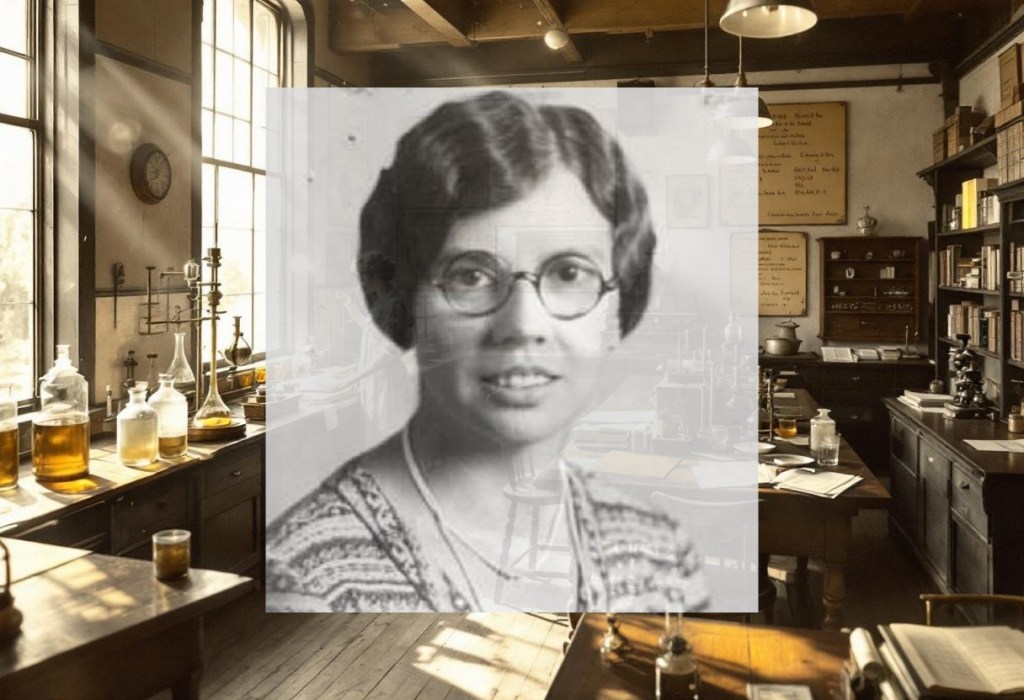
Dr. Katharine Snodgrass (1893-1930) emerged from the small town of Marion, Indiana – population 8,700 – to become one of the interwar period’s most incisive economic researchers, tracking how coconut oil from tropical plantations was quietly reshaping European dairy industries and global trade patterns. Her 1928 monograph Copra and Coconut Oil analysed the profound economic and chemical dimensions of vegetable fats displacing traditional dairy fats in margarine and soap production, combining rigorous statistical work with industrial chemistry to illuminate commodity flows across four continents. Awarded a Guggenheim Fellowship in 1930 to study dietary fat substitution in Northern Europe, Dr. Snodgrass’s pioneering interdisciplinary research prefigured today’s debates about plant-based alternatives, sustainable food systems, and the colonial legacies embedded in global agricultural trade – yet her tragic death by suicide at age 37, just weeks after returning from England, erased her brilliant contributions from historical memory.
Welcome, Dr. Snodgrass. I’m honoured to speak with you today. You’ve travelled quite far from Marion, Indiana. Can you tell me about that journey – from a small Midwestern town to the War Industries Board, the Federal Reserve, and eventually Stanford’s Food Research Institute?
Well, it’s rather a long way, isn’t it? Marion had about eight thousand souls when I was born there in 1893. My father worked in modest circumstances, and higher education wasn’t a given for girls in our town. But I had a hunger – not just for learning, but for understanding how the world actually worked. The mechanisms of it, if you will. When I secured my place at Bryn Mawr in 1911, it felt like stepping through a doorway into an entirely different universe. The college had been established specifically to provide women with rigorous academic training, and President Thomas ran it with an iron will and high expectations.
At Bryn Mawr, I studied economics and French, earning my degree in 1915. The war was raging in Europe, and everything felt urgent. I moved to New York and worked with the State Charities Aid Association whilst pursuing my master’s at Columbia. By 1918, when I completed my degree, the War Industries Board needed statisticians desperately. They were tracking production, coordinating supplies, managing the massive logistical puzzle of feeding a war machine. I was one of rather few women in that work, but they needed competent hands, and gender became less of a barrier when the nation required data.
You worked at the Federal Reserve Board and the New York Journal of Commerce before moving to Stanford. What drew you westward to California and to food economics specifically?
The Federal Reserve work was fascinating – I was analysing international price indices, tracking how currencies and commodities moved across borders. I published some pieces on British price indices that gained attention. But by 1923, I’d grown restless with financial abstraction. I wanted to study something more tangible, something where you could see chemistry and economics colliding in real markets.
When the Food Research Institute at Stanford invited me to become a research associate in 1924, I jumped at it. The Institute had been founded in 1921 to study worldwide problems of food supply and distribution – precisely the intersection of science and economics that captivated me. California felt like the future, you know. The Institute had access to Pacific trade routes, relationships with agricultural stations, proximity to Asian markets. And they were willing to let a woman pursue serious quantitative research, which wasn’t universally true at research universities.
Let’s talk about your work on coconut oil. Your 1928 monograph Copra and Coconut Oil was groundbreaking. Can you walk me through why coconuts mattered so much to global economics in the 1920s?
Ah, coconuts! People think of them as tropical curiosities, holiday images of palm-fringed beaches. But in the 1920s, coconut oil was reshaping international trade in ways few understood. You see, Europe and America had built entire industries around dairy fats and animal tallows – butter for spreading, tallow for soap and candles. Then two things happened simultaneously: industrial chemistry developed hydrogenation processes that could transform liquid vegetable oils into solid fats, and colonial plantations in Ceylon, the Dutch East Indies, the Philippines, and the South Pacific began producing copra – dried coconut meat – on an enormous scale.
By the time I began my research, the Dutch East Indies and the Philippines accounted for nearly 62 per cent of the world’s copra production. This wasn’t accidental. Colonial administrations had deliberately expanded coconut cultivation because the crop thrived in coastal areas with sandy soil unsuitable for rice or maize. Small farmers could grow coconuts with minimal labour – the trees required little maintenance once established – and processors could extract oil that, when hydrogenated, performed beautifully in margarine and soap manufacture.
Can you explain to someone with a technical background – an expert, if you will – exactly how this economic substitution worked at the chemical and industrial level?
Certainly. Let me walk you through the process step by step, because it’s really quite elegant from an engineering perspective, even if the implications were profound.
First, you must understand the chemistry. Butter is primarily composed of saturated and monounsaturated fatty acids – short to medium chain lengths, roughly 4 to 18 carbon atoms. It’s solid at room temperature because those saturated fats pack together tightly. Coconut oil, by contrast, contains a high proportion of lauric acid, a 12-carbon saturated fatty acid, along with other medium-chain fatty acids. In its natural state, coconut oil is actually solid at temperatures below about 76 degrees Fahrenheit, which made it attractive, but it lacked the precise melting characteristics and plasticity needed for commercial margarine.
Hydrogenation was the key. Discovered by Wilhelm Normann in 1901 and commercialised by Procter & Gamble and others, the process involved bubbling hydrogen gas through heated vegetable oil in the presence of a nickel catalyst. The hydrogen atoms would add across the double bonds in unsaturated fatty acids, converting them to saturated forms. Partial hydrogenation – stopping the process before complete saturation – gave manufacturers exquisite control over the final product’s melting point and texture.
Now, here’s where economics entered. In the early 1920s, butter cost approximately 55 cents per pound in American markets. Margarine made from hydrogenated coconut oil could be produced and sold for 30 cents per pound. For working families, this represented an enormous savings. For soap manufacturers, coconut oil offered superior lathering properties compared to tallow – that lauric acid I mentioned creates a particularly fine, creamy foam. By 1926, coconut oil comprised over 40 per cent of fats used in American margarine production, up from essentially zero in 1912.
The colonial dimension was equally important. A small farmer in Mindanao or Sulawesi could harvest coconuts, split them, dry the meat in the sun for a few days, and sell copra to Chinese middlemen who consolidated shipments. The copra would travel by coastal steamer to Manila or Batavia, then across the Pacific to refineries in San Francisco or across the Indian Ocean to Liverpool. By the time the oil reached European margarine factories, it had passed through five or six hands, each taking a margin, but the baseline cost remained low because labour costs in the colonies were minimal and the coconuts grew almost effortlessly.
You’re describing a global supply chain that depended on colonial exploitation.
I am, yes. I wouldn’t have framed it quite that way in 1928 – we used terms like “tropical production” and “native agriculture” – but the reality was colonial extraction. The Dutch and American colonial administrations encouraged coconut cultivation because it generated export revenue without requiring significant capital investment in plantation infrastructure the way sugar or rubber did. Small Filipino or Indonesian farmers bore the risks of weather, pests, and price fluctuations whilst receiving a pittance for their copra.
Meanwhile, European dairy farmers were being undercut by vegetable oil they never saw coming. A butter producer in Denmark or Normandy found herself competing with plantations six thousand miles away. The economic effects rippled through Northern European rural communities. That’s precisely what my Guggenheim Fellowship was meant to investigate – how this displacement was affecting dietary patterns and agricultural economies in Scandinavia, Britain, and the Low Countries.
Looking back now – with the benefit of hindsight you didn’t have in 1930 – how do you see your work connecting to contemporary issues?
It’s rather uncanny, isn’t it? When I read about the modern alternative protein industry, about cellular agriculture and precision fermentation replacing conventional dairy, I see the same forces at work. Economic substitution driven by technological innovation, challenging established agricultural systems, creating winners and losers across vastly different geographies.
My work showed that food substitution isn’t simply a matter of consumer preference or even price – it’s about the entire political economy of production. Who owns the capital? Who performs the labour? What environmental consequences follow? Coconut cultivation in the 1920s seemed relatively benign compared to sugar plantations, but we were already seeing soil exhaustion in some areas and the vulnerability of monoculture agriculture.
The questions I was asking about dairy versus vegetable fats in 1928 are essentially the same questions people ask today about conventional versus plant-based proteins, about livestock agriculture versus cellular meat production. How do you manage economic transition when one system employs millions of people and another promises efficiency gains but concentrates ownership differently? What are the true costs – environmental, social, nutritional – of substitution?
You mentioned soil exhaustion and environmental concerns. Did you have access to that kind of ecological data in your research?
Limited access, yes. Agricultural experiment stations in the Philippines and Dutch East Indies were beginning to track soil fertility issues, coconut yields declining after continuous cultivation, problems with pests like the rhinoceros beetle. I corresponded with agronomists who noted that whilst coconuts were considered a “lazy man’s crop” – that horrid phrase – because they required little maintenance, sustained commercial production actually demanded crop rotation, fertilisation, and careful management that small farmers couldn’t always afford.
But I’ll be honest: my focus was predominantly economic. I tracked prices, trade volumes, tariff structures, the chemical specifications of oil grades. The ecological dimension was peripheral to my analysis. If I had continued my work – if I’d been able to complete the Guggenheim research – I suspect I would have paid more attention to sustainability questions. The dairy farmers I interviewed in England during the summer of 1930 were already raising concerns about soil depletion and what they called “agricultural exhaustion” from intensive production.
Speaking of that summer – you returned from England in September 1930. Can you tell me about your Guggenheim research? What were you finding?
The research was… illuminating and overwhelming in equal measure. I spent months travelling through Britain, Denmark, and Holland, interviewing dairy farmers, visiting margarine factories, examining consumption statistics. What I discovered was a landscape in transition – and profound anxiety about the future.
Danish butter producers, for instance, had built entire cooperative systems around quality control and branding. Their butter was renowned, commanded premium prices. But they were watching market share erode as margarine became respectable, even fashionable. Working-class families in London or Manchester weren’t “settling” for margarine as an inferior substitute – they were choosing it because hydrogenated coconut oil produced a spreadable fat that didn’t require the same refrigeration as butter, came in consistent quality, and cost significantly less.
The dairy farmers felt betrayed. They’d invested in better breeding, in sanitation standards, in marketing. And now they were competing with coconut trees that grew with minimal human intervention on colonial land where labour cost almost nothing. Several farmers told me explicitly that they felt the empire was feeding on its own people – extracting value from tropical colonies whilst undermining metropolitan agriculture.
That’s a striking observation about empire “feeding on its own people.” Were you sympathetic to their position?
I was…conflicted. As an economist, I could see that consumers benefited from cheaper fats. Working families with limited incomes could afford more calories, could provide their children with adequate nutrition. From a public health perspective, that mattered enormously. Britain in the 1920s still had significant malnutrition, particularly in industrial cities. Affordable margarine genuinely improved diets.
But from an equity perspective, the system troubled me deeply. Colonial farmers received perhaps a penny per pound for copra that eventually sold as margarine for thirty cents per pound in American shops. European dairy farmers saw their livelihoods evaporate not because they were inefficient, but because the entire structure of international trade favoured colonial extraction. And consumers remained entirely ignorant of these dynamics – they saw cheap margarine and thought it was simply progress.
I struggled with how to write about this honestly. Academic economics in 1930 didn’t have robust frameworks for analysing colonial exploitation or environmental externalities. We had price theory, trade theory, productivity analysis. We didn’t have – or I didn’t have – the conceptual tools to capture the full picture.
You were trying to bridge multiple fields: economics, chemistry, agricultural science, international trade, social policy. That’s an enormous intellectual burden.
It was, rather. I sometimes felt like I was attempting to hold together several different conversations simultaneously, and none of the disciplines entirely accepted what I was doing. Economists thought I spent too much time on chemical processes and agricultural detail. Chemists didn’t see why I cared about price elasticity and trade flows. Agricultural scientists considered my work too theoretical, too removed from practical farm management.
And there was the matter of being a woman in these fields. I had excellent credentials, strong institutional support from Stanford, respect from some colleagues. But I was also frequently the only woman in the room at conferences, the only female author in journals. There’s a particular exhaustion that comes from constantly having to prove your competence, from knowing that a minor error will be magnified whilst men’s mistakes are dismissed as aberrations.
Can you talk about a mistake – a professional misjudgement – that you can now acknowledge?
Yes. In my 1928 monograph, I focused heavily on production statistics and trade flows, but I badly underestimated the speed at which chemical processing would advance. I projected that margarine would reach perhaps 50 per cent of butter’s market share by 1940. In reality, by the late 1930s, margarine was outselling butter in many markets. I’d been too conservative in my forecasting because I didn’t fully appreciate how rapidly industrial chemistry was improving hydrogenation processes, making vegetable oils ever more butter-like.
More significantly, I failed to anticipate how governments would intervene in dairy markets through subsidies and protectionism. I’d assumed relatively free trade would continue, but by the early 1930s – not that I lived to see it – countries began erecting barriers to protect domestic agriculture. My economic model presumed rational price competition; I didn’t adequately account for political economy and nationalist sentiment.
There were also critics of your work at the time. I understand some agricultural economists questioned whether you were overstating the threat to dairy farming.
Oh, absolutely. Professor Herbert Morris at Iowa State wrote a rather pointed review suggesting I was “too alarmed by margarine’s prospects” and that butter would retain dominance because of superior taste and consumer loyalty. He thought I was engaging in unwarranted pessimism about rural economies. Several dairy industry representatives wrote letters to the Food Research Institute questioning whether a woman barely into her thirties could truly understand agricultural economics.
Looking back now, I was largely correct about the direction of change, though perhaps not the precise timing. But Morris raised a legitimate methodological question: I’d relied heavily on trade statistics and industrial production figures whilst doing limited consumer research. I didn’t have robust data on taste preferences, cultural attitudes towards butter versus margarine, the role of advertising and branding. My analysis was stronger on the supply side than the demand side.
You were awarded the Guggenheim Fellowship to investigate exactly those kinds of cultural and consumption questions in Northern Europe.
Precisely. The Fellowship was my opportunity to fill in the gaps in my earlier work. I wanted to understand not just what was being produced and traded, but how families actually made decisions about dietary fats. Did Norwegian fishing families prefer butter for cultural reasons even when margarine was cheaper? How did British working-class housewives weigh cost against quality? What role did nutrition education play in shaping consumption?
I spent weeks sitting in kitchens, watching women prepare meals, asking about their household budgets. It was quite different from my previous statistical work – more intimate, more human. And what I found was enormous variation. Some families were entirely pragmatic about cost; others maintained loyalty to butter as a matter of pride or tradition. There was no simple economic model that captured the reality.
Your work anticipated modern behavioural economics, then – recognising that consumption decisions aren’t purely rational.
I suppose it did, though we didn’t have that terminology. I was beginning to understand that food choices are deeply cultural, bound up with identity and memory. A Danish farmer’s wife who’d grown up with butter, whose grandmother had made butter, wasn’t going to switch to margarine merely because it cost less. Economics – at least the economics I’d been trained in – struggled to model that kind of stickiness.
You returned to the United States in September 1930 and went to visit your sister in Minneapolis. Something clearly went very wrong. What happened?
I was exhausted. Not merely tired – exhausted in a profound, structural way. I’d been working at an unsustainable pace for years, carrying multiple research projects, teaching, writing, travelling. The Guggenheim research had been intellectually thrilling but emotionally draining. I’d spent months abroad, largely alone, conducting interviews in languages I spoke imperfectly, staying in uncomfortable lodgings, eating irregularly.
When I returned to New York in mid-September, I felt myself coming apart. The clarity I’d always relied on was dissolving. I couldn’t think properly, couldn’t organise my notes, couldn’t imagine how to structure the book I was supposed to write. I felt like I was failing at the one thing I’d built my identity around: my capacity to think rigorously, to analyse, to produce scholarship.
I went to Minneapolis to see my sister, hoping that familiar surroundings might steady me. But I was in crisis – what the hospital records called an “acute nervous ailment.” I couldn’t eat, couldn’t sleep, felt utterly hopeless about my work, my future, everything. On 25th September, I took my own life at University Hospital.
I’m so deeply sorry. Looking at your life now, from this vantage point, what do you wish had been different?
I wish I’d understood that my mind – brilliant as it was – was also fragile, and that there was no shame in that fragility. I wish academic culture in 1930 had made space for vulnerability, for admitting struggle, for seeking help without fearing it would destroy your career. I was terrified that if I acknowledged my mental distress, I’d be dismissed as unstable, hysterical, unfit for serious intellectual work – all the accusations levelled at professional women.
I wish I’d had peers to talk to honestly. I had colleagues, but few genuine friends who understood the particular pressures of being a woman in economics, of trying to do interdisciplinary work that didn’t fit established categories, of navigating institutional politics whilst maintaining research productivity. I was isolated in ways I didn’t fully recognise until I was drowning.
And I wish – this sounds impossibly naive – that the work hadn’t felt so urgent, so consuming. I’d been raised to believe that if you had intellectual gifts, you had an obligation to use them fully, to contribute something meaningful. That sense of obligation became oppressive. I couldn’t rest because resting felt like betraying my abilities, wasting my education, squandering the opportunities I’d been given.
Your story resonates painfully with contemporary discussions about mental health in academia, particularly for women and minorities who face additional pressures.
Does it? I’m… that’s some small comfort, perhaps. The crisis hasn’t been resolved, then.
It’s terribly isolating to be brilliant and struggling simultaneously. You’re surrounded by people who expect excellence, who rely on your productivity, who have little patience for human limitation. And when you’re a woman, or a person of colour, or from a working-class background – anyone who isn’t a well-connected man from a privileged family – you feel like you can’t afford to show weakness. You’re already being scrutinised more carefully, dismissed more readily. One mistake, one sign of instability, and you’ve confirmed every prejudice about why people like you don’t belong in academic spaces.
I see now that my suicide wasn’t simply personal tragedy – it was structural failure. The institutions I worked within used my labour but provided minimal support. They celebrated my publications but didn’t notice my deteriorating mental state. Or perhaps they noticed and didn’t care sufficiently to intervene.
If you could speak to young women today – particularly those in STEM fields, in economics, in interdisciplinary research – what would you tell them?
I would tell them: Your work matters, but your work is not your worth. You are not obligated to sacrifice your health, your relationships, your peace of mind to prove you deserve to exist in professional spaces. The pressures you feel are real – the discrimination, the isolation, the impossible standards – but they are not your fault, and surviving them is not solely your responsibility.
I would tell them to find allies. To build networks of women who understand what you’re facing. To speak honestly about struggle rather than maintaining the fiction that you’re coping beautifully. The isolation is deadly; community is survival.
I would tell them that interdisciplinary work is valuable precisely because it doesn’t fit established categories. Don’t let disciplinary gatekeepers convince you that bridge-building is less rigorous than specialisation. The most important questions – climate change, food security, public health – require precisely the kind of integrative thinking that makes narrow specialists uncomfortable.
And I would tell them: Please, take care of your minds. Seek help when you need it. There is no shame in therapy, in medication, in taking time away from work to recover. Your brain is your most important tool, yes, but it’s also part of your body, subject to illness and injury like any other organ. Treat it with kindness.
Your research on food substitution seems extraordinarily relevant to current debates about climate change, plant-based alternatives to meat and dairy, sustainable food systems. If you could continue your work now, what questions would you pursue?
Oh, there’s so much I’d want to investigate! The parallels between 1920s vegetable fat substitution and contemporary alternative proteins are striking, as you say. I’d want to study the entire lifecycle – not just the economics of production and consumption, but the environmental footprint, the labour conditions, the power structures, the equity implications.
I’d be particularly interested in who owns the intellectual property around precision fermentation and cellular agriculture. In the 1920s, chemical processes for hydrogenation were patented but fairly accessible; multiple firms could license the technology. Today, I suspect the concentration of ownership is much greater. If a handful of companies control the patents for producing meat proteins through fermentation, that creates enormous market power and raises questions about whether this “sustainable” transition simply entrenches new forms of corporate control over food systems.
I’d also want to investigate the colonial legacies embedded in current global agriculture. The patterns I documented in the 1920s – tropical production controlled by Northern capital, environmental degradation in producer regions, value extraction from the Global South – seem to persist in contemporary commodity chains for palm oil, soy, cacao, and other crops. Have we simply replicated colonial extraction under different names?
And I’d want to bring in the ecological analysis I neglected in my original work. How do we measure the true environmental cost of different food systems? What are the water requirements, the land use implications, the biodiversity effects? These questions are far more sophisticated now than in 1930, but they’re also more urgent.
You mentioned soil exhaustion and ecological concerns earlier. There’s a wonderful irony in your work, isn’t there? You were studying coconut oil – now considered a “superfood” by some – at a moment when it was displacing dairy fats for industrial purposes.
Yes, the cultural rehabilitation of coconut oil is rather amusing from my perspective. In the 1920s, we viewed it as an industrial commodity – cheap tropical fat suitable for mass-producing margarine and soap. The idea that it would become a premium health food, sold in small jars at boutique grocers for exorbitant prices, would have seemed absurd.
It reveals something about how we racialise and value foods, doesn’t it? Coconut oil from colonial plantations, processed by American refineries, used in working-class margarine – that was low-status, industrial, cheap. Coconut oil in its “natural” form, marketed as “virgin” and “unrefined,” associated with tropical paradise and wellness culture – that’s high-status, artisanal, expensive. The substance is essentially the same; the narrative has transformed it entirely.
There’s also the question of trans fats. The hydrogenation process you described so carefully in your work turned out to create trans fatty acids that are now recognised as dangerous to human health. Did you have any awareness of that in 1928?
None whatsoever. The chemistry of trans fatty acids wasn’t well understood until decades later. We knew that hydrogenation altered the molecular structure of fats – that was the entire point, after all – but we hadn’t identified trans isomers as distinct entities with specific health implications.
In hindsight, it’s rather humbling. I thought I was documenting a straightforward economic substitution with clear winners and losers. I didn’t realise I was chronicling the introduction of a substance that would contribute to cardiovascular disease for generations. It’s a stark reminder that our knowledge is always partial, that technological innovations carry unintended consequences we can’t foresee.
If I’d known then what we know now about trans fats, would I have written differently? Argued against margarine expansion on public health grounds? I honestly don’t know. The economic benefits to working families were real and immediate; the cardiovascular risks wouldn’t manifest for decades and would only become apparent through epidemiological research that didn’t exist in 1930.
One last question. When people remember you – and I want to emphasise that your work is remembered, that economic historians cite your research, that your Guggenheim Fellowship is documented, that your contributions matter – what do you hope they understand about your life and work?
I hope they understand that I tried to see connections others missed. That I believed rigorous quantitative analysis could illuminate justice questions, that economics wasn’t just about efficiency but about who benefits and who suffers from the systems we build.
I hope they understand that I was a woman from Marion, Indiana, who refused to accept that economics was beyond my capabilities, who earned every credential, who produced scholarship of the highest quality – and that the institutions I served failed to support me when I needed support most.
And I hope – perhaps this is too much to ask – that they see my death not as personal failure but as indictment of systems that consume brilliant people, particularly women and others who must constantly prove themselves, and discard them when they falter.
My research on coconut oil and dairy fats might seem like a small, technical corner of economic history. But embedded in that research were questions about colonialism, about agricultural justice, about how technological change reshapes lives and landscapes. Those questions are as urgent now as they were in 1930. If my work helps people ask better questions about contemporary food systems, about sustainability and equity and power – then perhaps my short life produced something of lasting value after all.
Every formula I calculated balanced on borrowed time, but the questions remain.
Letters and emails
Since publishing this conversation, we’ve received dozens of letters and emails from readers across the globe – researchers, educators, and those working at the intersections of food systems, economics, and chemistry – who want to ask Dr. Snodgrass more about her life, her methods, and what guidance she might offer to those following similar paths today. We’ve selected five particularly thoughtful questions that explore technical dimensions of her work, the ethical complexities she navigated, and the roads not taken in her tragically brief career.
Lindiwe Khumalo, 34, Agricultural Policy Researcher, Johannesburg, South Africa
You mentioned corresponding with agronomists in the Philippines and Dutch East Indies about soil fertility and pest management. I’m curious about the data collection methods available to you in the 1920s when studying agricultural systems across such vast distances. How did you verify the reliability of production statistics coming from colonial administrators who might have had incentives to inflate yields or underreport problems? And did you ever consider visiting the coconut-producing regions yourself to observe conditions firsthand, or were there barriers – financial, gendered, or otherwise – that made that impossible?
Lindiwe, you’ve precisely identified the methodological vulnerability that was my primary concern throughout the research. Data reliability was an enormous challenge, and I’m not certain my solution was entirely satisfactory.
The production statistics I used came primarily from three sources: colonial agricultural departments in Manila, Batavia, and Colombo; the International Institute of Agriculture in Rome, which attempted to consolidate global crop data; and commercial trade reports from firms like Lever Brothers and the copra merchants in San Francisco. Each source had obvious biases. Colonial administrators wanted to demonstrate that their territories were productive and well-managed, so yield figures were almost certainly inflated. Commercial firms guarded proprietary information jealously, so I was working with what they chose to disclose.
I tried to triangulate by comparing export tonnage – which was documented at ports and thus harder to falsify – with reported plantation acreage and estimated yields per hectare. When the numbers didn’t reconcile, which happened frequently, I had to make educated guesses about which figures were more reliable. It was hardly rigorous by the standards I would have preferred.
As for visiting the producing regions myself – oh, I desperately wanted to. I proposed it to the Food Research Institute more than once. But the practical barriers were formidable. A research trip to the Philippines, Dutch East Indies, and Ceylon would have required at minimum four months and substantial funding. The Institute supported my domestic travel and eventually the Guggenheim research in Europe, but sending a single woman researcher to tropical colonies was considered both expensive and inappropriate. There were concerns – sometimes stated explicitly, sometimes merely implied – about my safety, about propriety, about whether colonial administrators would speak candidly to a woman.
I suspect if I’d been male, those objections would have carried less weight. Male agricultural economists travelled to study rubber plantations, sugar estates, coffee production. But a woman requesting passage to Mindanao to interview coconut farmers? That was seen as rather adventurous, perhaps even reckless.
So I did what I could from California and New York. I wrote letters – dozens upon dozens of letters – to agricultural experiment stations, to plantation managers, to colonial officials. Some never replied. Others sent cursory data. A few, particularly agronomists who were themselves frustrated with colonial bureaucracy, sent detailed observations that proved invaluable. Dr. Edwin Copeland at the College of Agriculture in Los Baños, Philippines, was particularly generous with his time and data.
But you’re absolutely right to question the reliability. I was documenting economic flows from eight thousand miles away, relying on data collected by people whose professional incentives ran counter to transparency. It troubled me then, and it troubles me now. The coconut farmers themselves – the actual cultivators – remain almost entirely absent from my analysis, visible only as aggregate labour statistics. That’s a profound limitation, and one I couldn’t overcome given the constraints I faced.
Dylan Brooks, 42, Food Systems Engineer, Melbourne, Australia
Your description of the hydrogenation process was fascinating, particularly the control manufacturers gained over melting points and texture through partial hydrogenation. I work with structured lipids today, and we’re constantly balancing crystallisation behaviour with nutritional profiles. Can you walk me through how refiners in the 1920s actually measured and controlled the degree of hydrogenation? What were the tolerances like – could they hit specific iodine values consistently, or was there significant batch-to-batch variation? And did you observe any quality control innovations that were particularly clever given the instrumentation limitations of that era?
Dylan, you’ve asked about the precision side of hydrogenation that I found absolutely fascinating during my research visits to processing facilities. The degree of control available in the 1920s was quite remarkable, though nowhere near what you chaps have today.
Most refineries were using the Normann process with nickel catalysts – finely divided nickel deposited on kieselguhr or similar support materials. The key measurement was the iodine value, which indicated the degree of unsaturation remaining in the fat. Fresh coconut oil typically had an iodine value around 8-10, whilst fully liquid oils like cottonseed might be 105-110. For margarine production, they wanted to hit iodine values between 65-85, which gave the proper consistency at room temperature.
The clever bit was how they monitored the process. Every twenty or thirty minutes, a technician would draw a small sample, cool it rapidly to stop the reaction, and test the iodine value using the Wijs method – adding iodine chloride in glacial acetic acid, then back-titrating with sodium thiosulphate. Quite tedious, but it worked. The better facilities had laboratories right on the factory floor so they could get results within fifteen minutes and adjust accordingly.
Temperature control was critical – typically 150 to 180 degrees Celsius under pressure. Too hot and you’d get side reactions, off-flavours, darkening. Too cool and the hydrogenation proceeded sluggishly. The most sophisticated plants I visited had automatic temperature regulation using mercury thermostats, though plenty were still managing it manually.
Batch-to-batch variation was definitely an issue. Even with careful monitoring, I’d estimate they were getting iodine values within plus or minus 3-5 points of target on a good day. Weather affected it – humidity seemed to influence catalyst activity. The age and preparation of the nickel catalyst mattered enormously. And frankly, some operators were simply more skilled than others at reading the signs and knowing when to stop the process.
The real innovation I observed was at Procter & Gamble’s plant in Cincinnati, where they’d developed continuous hydrogenation instead of batch processing. Rather than filling large autoclaves, they were running oil and hydrogen through packed columns of catalyst at controlled flow rates. It gave them much more consistent results and higher throughput.
What impressed me most was how the chemists adapted laboratory techniques for industrial scale. The fundamental chemistry was well understood by then, but translating that into reliable, profitable manufacturing required genuine engineering ingenuity. These weren’t university laboratories – they were factories that had to produce saleable product day after day, with tolerances that satisfied both housewives spreading margarine on bread and soap manufacturers needing consistent saponification characteristics.
The precision you describe today would have seemed like pure magic to us then, but the principles we were working with remain sound.
Freja Larsen, 29, Economic Historian, Copenhagen, Denmark
As a Dane, I’m struck by your observation that Danish dairy farmers felt “the empire was feeding on its own people.” That’s a remarkable inversion of typical colonial narratives where we discuss exploitation flowing outward from metropole to periphery. Did you encounter similar sentiments among butter producers in other countries? And more philosophically, how did you reconcile studying economic efficiency – where coconut oil substitution clearly benefited consumers – with the structural injustices embedded in both colonial plantation systems and the displacement of European agricultural communities? Was there a “right” outcome from your perspective, or just different configurations of harm?
Freja, your question cuts to the heart of what tormented me intellectually during those final months in Europe. Yes, I heard similar sentiments – British dairy farmers in Devon spoke bitterly about “colonial competition,” Dutch butter producers felt betrayed by their own empire’s East Indies plantations. There was this profound sense that the logic of empire had turned inward, that the very systems meant to enrich the metropole were now undermining its agricultural foundation.
The irony wasn’t lost on me: these same farmers had benefited for decades from colonial markets for their products, from tariff protections, from the entire apparatus of imperial preference. But when the extractive logic shifted – when tropical commodities displaced their own production – suddenly the injustice became visible to them.
As for reconciling efficiency with justice, I struggled mightily. My training at Columbia had emphasised Pareto improvements, gains from trade, consumer welfare. By those metrics, coconut oil substitution was unambiguously positive. Working families in Manchester or Brooklyn gained access to affordable calories. That mattered – hunger was real, malnutrition was widespread, and cheaper fats meant better-fed children.
But I couldn’t ignore that this “efficiency” rested on colonial labour relations I found morally indefensible, and on the destruction of rural livelihoods in Europe that had their own legitimate claims to consideration. There wasn’t a clean answer. Every configuration involved harm to someone.
What troubled me most was how the discourse around “free trade” and “comparative advantage” obscured power relations. When economists spoke of countries specialising according to their natural endowments, they made it sound inevitable, almost natural, that tropical colonies should grow coconuts whilst Denmark produced butter. But those “natural” advantages were constructed through colonial policy – land alienation, tax structures that forced farmers into cash cropping, infrastructure investments that served export rather than local needs.
I began to think that economic efficiency, as we measured it, was answering the wrong question. We were optimising for lowest cost and highest output whilst ignoring questions of power, autonomy, resilience, dignity. A system that delivered cheap margarine to consumers whilst impoverishing both coconut farmers in Mindanao and dairy farmers in Jutland might be “efficient” in narrow terms, but was it just? Was it sustainable?
I didn’t have answers, only deepening discomfort. The theoretical frameworks I’d been taught weren’t adequate for the phenomena I was observing. I felt caught between competing moral claims with no principled way to adjudicate among them. Perhaps that intellectual crisis contributed to my mental collapse – the sense that my work was built on foundations I could no longer trust, that I was complicit in systems whose harms I was only beginning to comprehend.
Luciano Pereira, 51, Development Economist, São Paulo, Brazil
Your work documented a moment when technological innovation in the Global North (hydrogenation) created demand that reshaped agricultural landscapes in the Global South. We’re seeing similar dynamics now with biofuels, with European renewable energy mandates driving palm oil expansion in Southeast Asia and sugar cane production in Brazil. What if the Guggenheim Fellowship had taken you not to Northern Europe but to Ceylon, Mindanao, or Java – to study the coconut economy from the producers’ perspective rather than the consumers’? How might your analysis have changed? And would publishing research that centred colonial farmers’ experiences rather than European consumers’ concerns have been professionally possible for you in 1930?
Luciano, your question is one that occupied my private thoughts, and one I still ponder now, with all the clarity that hindsight affords. What if I had been able to anchor my research in the producing regions – Ceylon, Mindanao, or Java? I sometimes think those places loomed in my imagination almost as symbols, half glimpsed through the haze of trade statistics and government reports, yet vivid in their absence from most published scholarship.
Had my Guggenheim allowed travel in that direction, the entire arc of my analysis would have differed. I would have spent weeks – not just in libraries or butter factories, as I did in Europe – but in the plantations, the markets, the smallholdings where copra was dried, bagged, and readied for export. The questions I asked of European dairymen – How has coconut oil affected your market? – would have been reframed to the farmers of Galle or Zamboanga: What proceeds from copra can sustain your family? What storms or blights have wrecked your harvests? Which middlemen set your price, and by what logic?
There, the economic engine of coconut oil would reveal its costs in human terms – the risk borne by smallholders with little security, the opportunism of intermediaries, the physical toll of harvesting and drying coconuts under a tropical sun. The official records proclaimed “rural uplift” or “native industry,” but from the letters I received, the reality often meant sharp fluctuations in price, debts to merchants, and little recourse in hard seasons.
As for publishing such research in 1930 – honestly, the obstacles would have been formidable. The Food Research Institute, admirable as it was in its ambitions, operated with eyes fixed on the interests of American and European industry. The gatekeepers of academic economics and food chemistry offered little encouragement to anyone, let alone a young woman, who sought to direct attention towards colonial farmers’ lived realities rather than European market equilibria.
I might have faced censure for “politicising” what was considered a purely technical or trade issue. There is safety in aggregating statistics, less so in offering narratives that challenge the optimism of imperial trade. Yet, having read the limited correspondence that found its way to my Stanford desk, I cannot help but believe my work would have gained a different kind of relevance – one anchored in respect for those who, with so little, made possible a revolution in global food production.
So yes, had my research started from the equator rather than the North Sea, I suspect it would have been less celebrated by some, ignored by others, yet perhaps closer to the truths that matter most. True understanding, it seems to me, is rarely achieved at a comfortable distance.
Hana Takahashi, 38, Chemistry Educator, Osaka, Japan
You mentioned that academic economics in 1930 lacked frameworks for analysing environmental externalities, and that you wish you’d incorporated more ecological analysis. If you were conducting your coconut oil research today with access to modern analytical chemistry – fatty acid profiling, contaminant analysis, lifecycle assessment tools – what specific questions would you investigate that were simply impossible in your time? I’m also curious whether you encountered any food safety concerns with early margarine production that didn’t make it into your published work, perhaps because they fell outside the boundaries of economic analysis?
Hana, what a marvellous question – you’ve invited me to imagine my research with tools that would have seemed like sorcery in 1928. The analytical chemistry available to me was remarkably limited by today’s standards. We could measure iodine values, saponification numbers, free fatty acid content, moisture levels – all wet chemistry methods that told us broad compositional characteristics but nothing about specific molecular structures or trace contaminants.
If I had access to modern fatty acid profiling – gas chromatography, mass spectrometry, the techniques you use now – I would have investigated several questions that nagged at me but remained unanswerable. First, the oxidative stability of different coconut oil grades. We knew that some batches went rancid faster than others, developing off-flavours that made margarine unpalatable. But we couldn’t identify which specific fatty acid profiles or trace metal contaminants accelerated oxidation. I suspect copper and iron residues from processing equipment played a role, but proving it was impossible.
Second, I would have examined the nutritional differences between butter and margarine far more rigorously. In 1928, we understood that butter contained vitamin A and margarine didn’t – that’s why manufacturers began adding fish liver oil or carotene to margarine. But we had no way to quantify other nutritional components accurately. Were there protective factors in dairy fat that we couldn’t measure? Did the trans fatty acids formed during hydrogenation – which we didn’t even recognise as distinct entities then – have biological effects?
Third, lifecycle assessment of environmental costs would have transformed my analysis entirely. I noted soil exhaustion and monoculture risks anecdotally, but quantifying carbon emissions from long-distance shipping, phosphorus runoff from coconut plantations, methane from dairy cattle, water consumption across the entire production chain – that would have given economic weight to ecological concerns that I could only describe qualitatively.
As for food safety concerns that didn’t make it into my published work – yes, absolutely. I heard whispers about adulteration, about margarine manufacturers blending in cheaper fish oils or whale oil without proper disclosure, about nickel residues from hydrogenation catalysts remaining in finished products. I visited one facility where the refining process seemed dangerously haphazard, with inadequate temperature control and poor sanitation.
But those observations felt outside my purview as an economist. I was tracking prices and trade flows, not running a food inspection service. In retrospect, that disciplinary boundary was artificial and harmful. Food economics divorced from food safety and nutrition is answering only partial questions. The chemical composition of what people ate mattered as much as what they paid for it – perhaps more – but I lacked both the analytical tools and the institutional permission to pursue those questions seriously.
Reflection
Dr. Katharine Snodgrass died by suicide on 25th September 1930, at University Hospital in Minneapolis. She was just 37 years old, her Guggenheim research unfinished, her insights into Northern European dietary transitions unpublished, her voice silenced at the very moment when her interdisciplinary vision was reaching its fullest expression.
Throughout this conversation, Dr. Snodgrass revealed dimensions of her work that the sparse historical record only hints at. Her published monograph Copra and Coconut Oil appears in economic bibliographies as a technical study of commodity flows, but here she disclosed the moral struggle beneath those statistics – her recognition that “efficiency” measured only certain kinds of value whilst obscuring colonial extraction and agricultural displacement. She spoke candidly about methodological limitations, about the data she couldn’t verify from eight thousand miles away, about the plantation visits she was never permitted to make. The historical record preserves her credentials and publications; this conversation illuminated her doubt, her intellectual restlessness, her growing awareness that the theoretical frameworks she’d mastered were inadequate for the phenomena she observed.
We must acknowledge significant uncertainties. Dr. Snodgrass’s mental state in those final weeks remains documented only through clinical language – “acute nervous ailment” – that reveals little. Whether institutional neglect, isolation, or untreated depression precipitated her crisis, we cannot know with certainty. Her perspective on some technical details, particularly regarding hydrogenation control and quality assurance, may reflect idealised recollections rather than the messier realities of 1920s industrial practice.
Yet her legacy endures in unexpected ways. Economic historians studying interwar commodity markets still cite her copra research. Contemporary scholars examining the colonial roots of global food systems find prescient analysis in her work. The questions she raised about food substitution economics – who benefits, who bears the costs, what gets measured and what remains invisible – resonate powerfully in today’s debates about plant-based alternatives, climate-friendly agriculture, and decolonising food supply chains.
Dr. Snodgrass tracked how fats shifted empires before anyone recognised that vegetable oils could reshape geopolitics. She combined chemistry with economics before interdisciplinary research had institutional legitimacy. She insisted that food systems demanded moral scrutiny, not just efficiency calculations.
Her story reminds us that brilliance is fragile, that institutional support matters desperately, that women navigating male-dominated fields still face pressures that can become unbearable. Every formula she calculated balanced on borrowed time, but the questions she asked – about justice, sustainability, and whose knowledge counts – remain urgent nearly a century later. We honour her memory not through sentiment, but through continuing the work she couldn’t finish: building food systems that nourish bodies without devouring lives.
Who have we missed?
This series is all about recovering the voices history left behind – and I’d love your help finding the next one. If there’s a woman in STEM you think deserves to be interviewed in this way – whether a forgotten inventor, unsung technician, or overlooked researcher – please share her story.
Email me at voxmeditantis@gmail.com or leave a comment below with your suggestion – even just a name is a great start. Let’s keep uncovering the women who shaped science and innovation, one conversation at a time.
Editorial Note: This conversation with Dr. Katharine Snodgrass is a dramatised reconstruction created for educational and commemorative purposes. Whilst grounded in documented historical facts – her degrees from Bryn Mawr and Columbia, her positions at the War Industries Board and Stanford’s Food Research Institute, her 1928 publication Copra and Coconut Oil, her 1930 Guggenheim Fellowship, and her tragic death in Minneapolis at age 37 – the dialogue, technical details, personal reflections, and responses to reader questions are fictional interpretations. We have endeavoured to represent her work, her era, and the challenges she faced with accuracy and respect, drawing upon period sources, economic histories, and accounts of women in interwar academia to imagine what she might have said.
Bob Lynn | © 2025 Vox Meditantis. All rights reserved. | 🌐 Translate


 Vox Meditantis
Leave a reply to Bob Lynn Cancel reply