
Queen Elizabeth II Centre, Westminster, London – 22nd August 2025
Good morning, delegates, and welcome to the headline event of Urban Futures Summit 2025. Over the past three days, we have witnessed extraordinary discussions that have challenged our thinking, inspired new approaches, and reminded us why cities remain humanity’s greatest collaborative achievement.
Our opening panels on sustainable infrastructure drew standing ovations. Yesterday’s sessions on social equity in urban design sparked conversations that continued long into the evening. And this morning’s workshops on climate-resilient planning have given us practical tools we can implement immediately in our own communities.
But now, as we conclude this remarkable gathering, we turn to perhaps the most fundamental question of all: “How would you design the city of the future?“
To explore this question, I am honoured to introduce six extraordinary visionaries whose collective wisdom spans millennia of urban innovation. Each has demonstrated an unparalleled ability to transform the physical landscape while understanding that cities are, ultimately, about people.
Please join me in welcoming our distinguished panel:
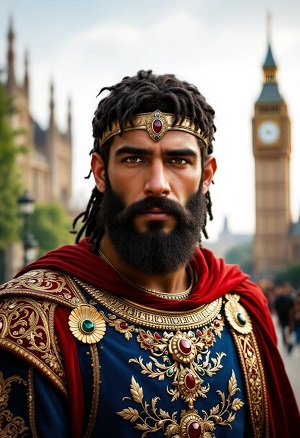
Nebuchadnezzar the Great, whose vision transformed ancient Babylon into the world’s most magnificent metropolis, pioneering urban infrastructure that sustained hundreds of thousands of residents through innovative water management and defensive systems that protected communities for generations.

Alexander of Macedon, the master of strategic urban networks, whose twenty-plus city foundations created a connected world of trade, culture, and knowledge exchange that laid the groundwork for globalisation itself.

Caesar Augustus, who understood that great cities require both grand vision and practical governance, transforming Rome from a collection of neighbourhoods into the marble heart of an empire while establishing administrative systems that cities still emulate today.

Emperor Qin Shi Huang, whose ambitious projects connected vast territories through roads, walls, and communication systems, demonstrating how infrastructure can unite diverse populations under shared civic identity.

Baron Georges-Eugène Haussmann, the architect of modern Paris, who showed us that cities must constantly evolve, courageously reimagining urban spaces to serve both public health and civic beauty.

And Robert Moses, whose four decades of public works remind us that bold infrastructure investments can dramatically improve quality of life, even as they challenge us to balance efficiency with community needs.
Together, these city builders have shaped how billions of people live, work, and dream. Today, they will share their insights on designing cities for tomorrow’s challenges – from climate change to social equity, from technological integration to preserving human dignity in an increasingly urban world.
Ladies and gentlemen, our panel on “How would you design the city of the future?“
Thank you all for that warm welcome to our distinguished panel.
Now, as we open the floor for questions, I need to set some parameters for our discussion. Given the extraordinary nature of this gathering – and the fact that we have six remarkable city builders with us today, each bringing perspectives from vastly different eras and contexts – we want to ensure every panelist has the opportunity to share their insights comprehensively on each question posed.
Therefore, we will have time for exactly four questions from our audience today. I know many of you have burning questions about urban futures, and I encourage you to make them count.
Please remember that our panelists have various commitments this afternoon – some have planes to catch back to their respective continents, others have… well, let’s just say they have rather unique travel arrangements involving certain temporal conveyances that operate on very strict schedules.
So, when you’re recognised, please state your name, your affiliation, and pose one clear, focused question. Make it a good one – this is your chance to tap into millennia of urban planning wisdom.
I can see hands going up already. Let’s begin with our first question. Yes, I see you there in the third row…
Zanele Mbeki, Director of Urban Resilience, South African Cities Network, Johannesburg, South Africa:
Africa’s urban population is projected to double to 1.4 billion by 2050, with many cities struggling with inadequate infrastructure, informal settlements, and limited financial resources. Given your experiences building cities that could accommodate massive populations, how would you approach planning cities of the future that can absorb this unprecedented growth while ensuring equitable access to services, particularly for the urban poor who often end up in informal settlements on city peripheries?
Nebuchadnezzar the Great responds to Zanele:
Learned lady of the southern lands, your question strikes at the very heart of what it means to rule a great city. When I came to the throne of Babylon, I inherited a realm that drew peoples from across the known world – from the mountains of Armenia to the marshes of the sea-land, from Assyrian craftsmen to Judean exiles. The city swelled like the Euphrates in flood season, and like the river, it required channels to direct its flow.
You speak of your informal settlements – what we would call the mushkenu, those who dwell outside the ordered districts. But hear me: a king who allows his people to live like beasts in hovels is no king at all, but a shepherd who has lost his flock to wolves.
First, know this truth – water is life, and life is water. Before I built my hanging gardens, before I raised the Ishtar Gate to scrape the heavens, I dug canals. The Nahar Malka, the Royal Canal, and the great Nar Šamaš that bears the sun-god’s name – these were not monuments to my glory, though glory they brought. They were the arteries through which Babylon’s lifeblood flowed. Your African cities must do likewise. Channel the waters, direct them with the wisdom of engineers, and let no quarter of the city thirst while another drowns in plenty.
Second, the walls – not to exclude, but to include with order. My walls of Babylon could hold six chariots abreast upon their ramparts. But within those walls, every man from noble to brick-maker had his place, his quarter, his protection. Build your cities in rings, I counsel you – let each ring serve its purpose, but let none be forgotten. The outer ring for those newly arrived, with simple dwellings but clean water and straight roads. As they prosper through their labours, let them move inward toward the centre, toward greater prosperity and responsibility.
But understand this, daughter of Africa – a city is not stones and bitumen alone. It is the god’s breath made manifest through human hands. Marduk blessed Babylon because we honoured him with great works, but also because we fed the hungry and gave shelter to the displaced. Your growth cannot be merely the sprawl of refugees seeking work. It must be the planned expansion of a people building something eternal.
Set your craftsmen to work training the newcomers – not as servants, but as future masters of trades. Let those who arrive with nothing leave with skills that make cities greater. Commission great works that employ thousands – not palaces for the few, but aqueducts, roads, and temples that serve all. When I rebuilt the Esagila, every worker who laboured on its foundations knew he was building something sacred, something that would outlast his great-grandson’s great-grandson.
The wealth for such works? Tax the trade routes fairly but firmly. Babylon sat at the crossroads of the world because we made it profitable to stop here, to do business here, to build here. Your cities must become indispensable to the flow of commerce, not merely destinations of desperation.
Mark my words, questioner from the land of gold – the cities that survive the coming centuries will be those that channel growth like a wise farmer channels flood-waters. Let chaos reign, and you will have chaos. Plan with wisdom, build with purpose, rule with justice, and honour the gods of your people, and your cities will shine like jewels set in the crown of creation itself.
The alternative? The alternative is Nineveh – great once, now dust and owl-roosts, because her kings forgot that power without planning is merely organised destruction.
Alexander of Macedon responds to Zanele:
By Zeus Ammon! The Great King speaks wisdom about channels and waters – though I would add that rivers, noble Nebuchadnezzar, flow ever toward the sea, and cities too must look outward, not merely inward.
Hear me, kyria of the African lands – I who founded more cities than any mortal before or since, I who planted the seeds of Hellenic civilisation from the Tanais to the Indus. Your challenge is not unlike what I faced when I stood before the Hydaspes, or gazed upon the vast stretches of Sogdiana. How does one bring order to the unlimited?
The answer lies not in building one great city, but many – a sympoliteia, a confederation of cities working as one body with many limbs.
When I founded Alexandria – not just the great one by Egypt’s shore, but Alexandria Eschate, Alexandria Arachosia, Alexandria Bucephalus – each served a purpose in the greater design. Think not of your 1.4 billion as a mass to be contained, but as streams to be directed into multiple channels!
Here is what Alexander would do in your Africa: Establish not one megapolis, but a network of interconnected poleis – cities of perhaps 200,000 to 500,000 souls each. Let them be linked by swift roads – roads wider than those the Great King spoke of, for goods must flow like blood through arteries. Each city specialised, yet dependent on its sisters: one for mining and metals, another for learning and governance, a third for trade and crafts.
And here – listen well – make each new settlement a place where your people choose to go, not where they flee in desperation. How? Promise them what I promised my veterans: land, citizenship, opportunity to rise by merit rather than birth. When I settled my makedones with Persian wives and Bactrian craftsmen, I created not mere garrisons but new breeds of men – kosmopolitês, citizens of the world.
Your informal settlements – these are not problems, they are opportunities awaiting generals with vision! Each one is a potential Alexandria. Send your best administrators there – not as overseers, but as oikistês, founding fathers who will shape raw humanity into ordered communities. Give them walls, yes, but also gymnasiums where the young can strengthen their bodies and minds. Establish agoras where all can gather, trade, and speak freely.
But hear this crucial truth, learned woman: No city prospers without mixing. The strength of my cities came not from keeping peoples separate, but from blending them like a smith mixes copper and tin to make bronze. Your wealthy districts must not stand apart like enemy camps. Build your new cities so that the son of a herdsman might dwell three streets from the son of a merchant, attend the same schools, compete in the same games.
And remember – decisive action matters! When I moved, I moved like lightning. Hesitation breeds chaos. Your African cities cannot wait decades for perfect plans while millions suffer. Build swiftly, but build with phronêsis – practical wisdom. Start with the essentials: fresh water, defensible walls, straight roads, public spaces. Beauty and grandeur can follow, but survival and order must come first.
The Great King spoke of honouring gods – wise counsel. But I would add: honour also the daimon of each place, the spirit that makes one city different from another. Let your coastal cities embrace the sea, your mountain cities the heights, your river cities the flow of commerce. A city that fights its nature is like a horse fighting its rider – exhausting for both.
One final thought, from one who learned this lesson dear: beware the temptation to rule through fear alone. I held my empire through thirty cities because each felt itself part of something greater, something glorious. Your future cities must be places men are proud to call home, not merely places they’re trapped by circumstance.
The world is wide, the possibilities endless. Be bold! Fortune favours the tolmêros – the daring ones who dare greatly.
Caesar Augustus responds to Zanele:
Domina Zanele, citizens of this assembly – my distinguished colleagues speak with the fire of conquest and the grandeur of ancient kingship. Yet permit me, who found Rome brick and left it marble, to offer counsel tempered by long experience in the art of governance.
The Divine Nebuchadnezzar speaks truly of infrastructure – indeed, Rome’s greatness flowed through her aqueducts as surely as through her legions. And young Alexander – though I achieved my victories through patience rather than speed, his vision of interconnected cities echoes our own colonial foundations from Emerita Augusta to Caesarea Maritima.
But observe, learned domina, how each of us speaks from the perspective of absolute power – divine kings and conquerors who commanded without question. Your Africa faces a different challenge: how to achieve great works through consensus, through res publica – the public thing shared by all citizens.
This is not weakness – it is Rome’s greatest strength, though it took me decades to understand it fully. When I became Princeps, I could have ruled as Antony wished to rule from Alexandria, as an eastern despot. Instead, I chose to honour the mos maiorum – the customs of our ancestors – while quietly revolutionising everything.
For your African cities, I counsel this: Begin not with grand monuments but with institutions that outlast any single leader. Establish magistratus – local officials elected by neighbourhoods, responsible for sanitation, water distribution, markets. Let each settlement choose its own leaders, but bind them all through common law, common standards, common purpose.
Your informal settlements need not remain informal forever. Study how we transformed the vicus – the urban villages within Rome itself. Each had its vicomagistri, its local priests, its neighbourhood festivals. The people governed themselves in small matters while contributing to the greater whole. Pride, domina – pride in one’s own quarter makes citizens, not subjects.
But here lies the crucial point: Such growth requires what we Romans call cursus honorum – a ladder of advancement. A young man in the Subura could dream of rising to the Palatine through merit and service. Without such hope, your cities become not communities but camps of the desperate.
Create vocational collegia – guilds that train newcomers while maintaining standards. Let a talented stonemason from your peripheries compete for contracts in your city centre. Let a clever woman from the settlements rise to manage urban planning for her district. When people have spes – hope – they build rather than merely survive.
Now, regarding resources – here Alexander’s network approach shows wisdom. Rome succeeded because we made our subjects into partners in prosperity. Your wealthy coastal cities must see the inland settlements not as burdens but as markets, sources of labour, contributors to the common defense.
Establish annona – public food distribution – but tie it to public works. Let those who receive grain also contribute labour to road-building, aqueduct construction, public building maintenance. This preserves dignity while achieving necessary works.
But hear me clearly on this matter: Beware the populist who promises everything to everyone. I survived the civil wars because I learned to balance interests – optimates and populares, veterans and civilians, Romans and provincials. Your cities will only thrive if all groups feel they have stake in the outcome.
Tax the wealthy, yes, but fairly and predictably. Honour the poor, yes, but expect contribution in return. Accommodate local customs, yes, but within a framework of common law that protects all equally.
Most importantly, think in generations, not election cycles. When I began rebuilding Rome, I planned for my great-grandchildren’s great-grandchildren. Your African cities must be designed for the long view – climate changes, technological advances, social evolution. Build flexibly but durably.
Remember this above all: Cities are not merely places where people live – they are places where people become civilised. Give them beauty, give them pride, give them reason to believe their children will inherit something better than they found. Do this, and your 1.4 billion will not be a crisis to manage but a civilisation to celebrate.
Haec dixi – I have spoken.
Emperor Qin Shi Huang responds to Zanele:
Honoured lady from the southern lands, you ask how to build cities for multitudes. I, who unified six warring kingdoms into one empire, who brought order to tianxia – all under Heaven – speak from experience governing more souls than any ruler before me.
My esteemed colleagues speak of networks and neighbourhoods, of local governance and gradual growth. The Babylonian King builds with divine blessing, the Young Conqueror with swift boldness, the Roman with patient consensus. All have merit. But observe – each ruled lands already civilised, peoples already knowing city life.
Your challenge, learned questioner, is different. You face not conquest but transformation – turning wandering tribes into settled citizens, scattered villages into ordered settlements. This requires not the gentle hand, but the firm one.
When I became Huangdi – First Emperor – I inherited chaos. Six kingdoms, each with different laws, different weights and measures, different writing systems. How does one govern such diversity? Through standardisation – tongyi – making all things uniform under one system.
Your African cities must follow this principle. Not Alexander’s many specialised settlements – too complex, too prone to conflict. Not Augustus’s careful balance of interests – too slow when millions suffer. One standard system, applied everywhere, adapted to local conditions but fundamentally unified.
First – measurement. Every city built to the same grid, every district following identical proportions. In my empire, cart axles were made to identical width so all could use the same roads. Your cities must be built so a administrator trained in Lagos can govern in Nairobi, so an engineer from Cape Town can build waterworks in Cairo.
Second – movement. I built roads that connected every corner of the empire to the capital. Your 1.4 billion cannot remain where they are – they must be directed to where they can be most productive. Build your roads first, then your cities along them. Not random growth, but planned distribution according to natural resources and strategic necessity.
Third – hierarchy. The Roman speaks of local officials elected by neighbourhoods. Chaos! Who elects knows nothing of governing. I appointed prefects answerable only to higher authority, trained in uniform methods, transferred regularly to prevent local corruption. Your informal settlements need not democracy – they need competent administration.
Create ranks within your cities. New arrivals begin in outer districts – not as punishment, but as training. They learn proper sanitation, proper work habits, proper citizenship. Those who prove themselves advance to inner districts with greater privileges, greater responsibilities. Those who serve the state well can rise through examination – not birth, not wealth, but demonstrated ability.
Fourth – works. Great projects unite people in common purpose while providing employment for millions. I built the Great Wall not merely for defense, but to give idle hands productive labour, to teach cooperation across tribal boundaries. Your Africa needs continental projects – roads spanning deserts, canals connecting river systems, cities built where none existed before.
Set entire populations to building these works. Not voluntary participation – required service. Every able adult contributes two years to public construction before settling permanently. This teaches discipline, creates bonds between peoples, and builds the infrastructure your future requires.
The others speak of honouring local customs, local gods. Dangerous thinking! I unified China by establishing one writing system, one legal code, one currency, one set of proper rituals. Diversity breeds division. Your African cities must create new traditions that serve the future, not preserve old ones that caused current problems.
But understand – this transformation requires absolute commitment from your leadership. Half-measures breed half-failures. When I ordered the burning of books that taught outdated ways, scholars complained. When I required universal conscription for public works, nobles objected. Yet without such firmness, China would remain six squabbling kingdoms instead of one great civilisation.
Your 1.4 billion people are not a problem to be managed – they are the foundation of a great civilisation waiting to be built. But civilisation is not natural – it is artificial, created by human will imposing order upon chaos. Build with the authority of Heaven, plan for ten thousand generations, and let none question what serves the greater good.
This is the Way of the True King. All else is mere administration.
Chen yan bi – Your servant has spoken.
Baron Georges-Eugène Haussmann responds to Zanele:
Madame Zanele, distinguished colleagues – I have listened with great interest to these perspectives, from divine mandate to imperial decree. Yet permit me, as one who spent twenty years not conquering cities but rebuilding them, to address the practical realities your Africa faces.
My Roman colleague speaks wisely of institutions, though I would observe that sometimes institutions become obstacles to progress rather than instruments of it. When I arrived in Paris in 1853, the city was choking – literally choking – on its own medieval past. Narrow streets, pestilential alleys, buildings that hadn’t seen proper maintenance since the reign of Henri IV. The cholera of 1832 killed 18,000 souls precisely because the city clung to old forms unsuited to modern needs.
Your informal settlements, madame, are not shameful aberrations – they are symptoms of cities that have failed to anticipate growth. But here lies the opportunity: Unlike we Europeans, bound by centuries of accumulated mistakes, you can design from the ground up with modern knowledge.
First principle: Percée – the grand breakthrough. When dealing with explosive growth, half-measures are worse than useless. You cannot nibble at the edges of the problem with small improvements. You must think in terms of transformations complètes – total transformation.
Study what we achieved in Paris: 27,000 buildings demolished, 40,000 constructed, 600 kilometers of new sewers, 2,400 kilometers of sidewalks. We didn’t merely build – we rebuilt entire quartiers according to rational principles. Your African cities require this same bold approach.
Second: Salubrité – public health through urban design. The Chinese Emperor speaks of standardisation – très bien! But standardise first for health, then for administration. Every district must have proper drainage, proper ventilation, proper light. I mandated that no Parisian building could exceed six stories, that every street must be wide enough for proper air circulation and – c’est important – wide enough for artillery to maintain public order when necessary.
Your settlements of 200,000, 500,000 souls will become death-traps without proper sanitation. Build your sewer systems first, before the grand boulevards, before the monuments. Rome fell because it forgot to maintain its aqueducts. Don’t repeat such folly.
Third: Financement – the money question that none of my colleagues wish to address directly. Great works require great capital, and public treasuries are never sufficient. I financed Paris’s transformation through l’expropriation pour cause d’utilité publique – forced purchase of private property at fair value, followed by redevelopment that increased land values dramatically.
Your governments must capture this plus-value – this increase in land worth created by public investment. When you build a new avenue, the surrounding properties triple in value. Tax that increase! When you install water systems, nearby land becomes profitable. Claim a share! Not confiscation – partnership between public investment and private gain.
But here I must disagree respectfully with my imperial colleagues. The Great King speaks of divine mandate, the Chinese Emperor of absolute authority, young Alexander of swift conquest. Mes amis, we live in different times. Your African leaders cannot simply decree urban transformation – they must demonstrate its benefits.
Begin with projets pilotes – demonstration projects that show skeptics what modern urban planning can achieve. Choose one informal settlement, apply full modern principles: wide streets in geometric patterns, proper sewerage, gas lighting, public gardens, mixed-income housing. When neighbouring settlements see the results – better health, better commerce, better lives – they will demand similar treatment.
Remember this crucial point: Cities are not just places to house people – they are machines for creating wealth. Medieval Paris was poor because its layout prevented efficient commerce. Modern Paris became Europe’s financial capital because our boulevards allowed goods, people, and ideas to flow efficiently.
Your 1.4 billion Africans represent enormous productive potential, but only if your cities enable rather than hinder their productivity. Design for circulation – of people, goods, capital, information. Make it easier to do business than to remain idle, easier to prosper than to merely survive.
One last observation, madame: Timing matters crucially. We rebuilt Paris during an era of unprecedented prosperity and political stability. Your Africa faces these challenges during global uncertainty, climate change, technological disruption. But this is precisely why bold action is necessary now. Wait for perfect conditions, and you will wait forever while millions suffer in preventable squalor.
Build big, build fast, build smart – and let the future judge whether you were bold enough to match the scale of your opportunity.
Voilà, mesdames et messieurs – there is the method that transformed the City of Light.
Robert Moses responds to Zanele:
Listen, lady – and I mean this with all due respect to these distinguished gentlemen – but we’re talking about 1.4 billion people who need places to live, work, and move around, and we need solutions that work in the real world, not in some ivory tower seminar.
Now, the Baron here gets it – he understands you gotta think big and move fast. But even Haussmann, God bless him, was working with maybe a million Parisians. You’re talking about numbers that would make my head spin, and I built more public works than any man in American history.
First thing – and listen carefully because this is where most planning goes to hell – you gotta understand that housing is just one piece of a much bigger puzzle. I spent forty-four years in public service, and I learned this: You can build all the housing projects you want, but if people can’t get to jobs, can’t move goods efficiently, can’t access services, you’ve just built expensive slums.
Your African cities need what I gave New York: infrastructure first. Roads, bridges, power grids, water systems – the unsexy stuff that politicians don’t want to cut ribbons for, but without it, everything else falls apart. I built 416 miles of parkways, 13 major bridges, dozens of tunnels. Why? Because cities live or die by how well they move people and goods.
Now, the Chinese Emperor talks about standardisation, and he’s not wrong – but he’s thinking too rigid. What you need is systems thinking. I developed what we call “coordinated development” – you don’t build a highway without thinking about where people are gonna live along it, where they’re gonna work, where their kids are gonna go to school.
Here’s what I’d do with your 1.4 billion: Forget about trying to upgrade existing settlements piecemeal. That’s like trying to fix a Model T by bolting on jet engines. You need new towns – complete communities built from scratch with 20th-century – hell, 21st-century – planning principles.
Pick your locations based on where the economic development’s gonna be – ports, mining areas, manufacturing centres. Then you build out from there with proper zoning: residential here, commercial there, industrial over there, but connected by efficient transportation networks. And I mean efficient – wide roads designed for automobiles, not these narrow European streets that worked fine for horse carts but are disasters for modern traffic.
But here’s the key difference between me and these other fellows: I learned you can’t just impose solutions from the top down. You gotta work with the political system as it exists, not as you wish it were. I got things done because I understood how to work with mayors, governors, federal agencies – even when they were fighting each other.
The Baron talks about forced purchase – expropriation. Good luck with that in a democracy! What you need are development authorities with real power but also accountability to the public. Give ’em bonding authority, let ’em condemn land when necessary, but make sure they’re answerable to elected officials.
And decisive action – Christ almighty, decisive action matters! I got criticised for moving too fast, for not consulting every neighbourhood committee and community group. But you know what? While the planners were still planning, I was building. Jones Beach, the West Side Highway, Lincoln Centre – these things got built because somebody had the guts to make decisions and stick with them.
Your Africa can’t afford to spend twenty years studying the problem while people are living in cardboard shacks. You identify the sites, you design the infrastructure, you start construction. Sure, you’ll make mistakes – I made plenty. But a mediocre plan implemented is worth ten brilliant plans that never get off the drawing board.
Now, I’ll give you one warning based on hard experience: Don’t let the perfect become the enemy of the good. I got crucified by the intellectuals for “destroying neighbourhoods” and “ignoring community input.” Maybe sometimes I did. But you know what I also did? I gave millions of people access to beaches, parks, decent housing, and efficient transportation they never would have had otherwise.
Your 1.4 billion Africans don’t need another conference about sustainable development or community engagement. They need somebody with the vision to see what needs to be built and the political skill to build it. Give me the authority, give me the funding, and give me five years – I’ll show you cities that work.
That’s how you get things done in the real world.
Arjun Mehta, Smart Cities Program Coordinator, Asian Development Bank, Manila, Philippines:
Asian cities face the dual challenge of rapid urbanisation combined with severe environmental pressures – from air pollution in megacities to climate vulnerability along coastlines. Many Asian cities are experimenting with green infrastructure, renewable energy integration, and smart city technologies to create more sustainable urban environments. How would you balance the need for large-scale infrastructure development with environmental sustainability, and what role should technology play in the cities of tomorrow?
Nebuchadnezzar the Great responds to Arjun:
Learned keeper of the eastern treasuries, your words stir my heart like the sound of hammers on the great works. You speak of balancing stone with wind, bronze with the breath of heaven – this is the eternal challenge of those who would build cities that please both gods and men.
Hear me well: When I raised the Hanging Gardens – those terraced wonders that made green bloom where only dust should dwell – the priests said I defied the natural order. “Why grow cedars of Lebanon where Marduk placed only sand?” they asked. But I understood what they did not: The gods give us minds to work with their creation, not merely submit to it.
Your “environmental pressures” – this is nothing new under the sun! Babylon faced the same trials. The Euphrates would flood and destroy, or fail to flood and bring famine. The desert winds carried choking dust that darkened the sky for days. Salt would rise from the earth and poison the fields. Yet we did not merely endure – we commanded these forces to serve our purpose.
The secret lies in understanding that the elements are not enemies to be conquered, but servants to be properly directed. My engineers – blessed be their memory – built the great irrigation systems not to fight the river, but to channel its strength. We dug reservoirs that captured the flood-waters and released them when the fields thirsted. We planted groves of date palms not merely for their fruit, but because their roots held the soil against the desert’s advance.
You speak of “smart city technologies” – curious words! But I comprehend your meaning. In my day, we had our own such marvels. The great astrolabe towers where my Chaldean scholars tracked the movements of Nabu’s stars, calculating the proper times for planting, for building, for making war. The signal fires that carried messages faster than the swiftest horse from Babylon to Borsippa. The hydraulic mechanisms that lifted water to my gardens’ highest terraces.
But mark this well, eastern administrator: All such clever devices serve one purpose – to multiply the power of human wisdom applied to natural forces. Your “renewable energies” – do you not speak of harnessing wind and sun as we harnessed water and earth? The principle remains unchanged since the foundations of the world were laid.
The New York builder speaks of moving fast, building first and perfecting later. But in matters touching the gods’ domain – what you call “environment” – such haste brings catastrophe. When I built my great works, we first consulted the baru-priests who read the signs in oil and water, the ašipu-priests who knew which spirits governed each plot of ground.
Your “green infrastructure” – this is wisdom! Build not against nature but through nature. In my palace gardens, every fountain served three purposes: to delight the eye, to cool the air, and to water the growing things. Every grove of trees gave shade, bore fruit, and held the earth firm against flooding. This is efficiency that pleases heaven.
But hear this warning, keeper of the Asian cities: Do not let your clever devices make you forget the fundamental truth – cities exist to serve life, not to consume it. When I see your great cities shrouded in poisonous vapors, when I hear of waters that no man can drink, when you speak of coastlines swallowed by angry seas, I see the work of rulers who have forgotten to honour the covenant between heaven and earth.
Therefore, let your infrastructure be like my canal systems – designed not just for this year’s harvest, but for the tenth generation’s prosperity. Use your wind-capturing devices as we used our windmills for grain – but place them where they serve the city’s needs while respecting the paths of migrating birds, for the gods speak through all their creatures.
Let your “smart” systems be like my astronomical towers – gathering knowledge to serve wisdom, not mere convenience. And above all, remember that no technology, however clever, can replace the need for rulers who think in terms of eternal principles, not temporary profits.
Build your Asian cities as I built Babylon – as jewels set in gardens, not fortresses set against the world. Let every great work enhance both human comfort and natural beauty. Let your people breathe clean air and drink pure water not as luxuries, but as the natural right of those who dwell in cities blessed by the gods.
This is the path of the wise king: to make the desert bloom, the waters serve, and the very stars illuminate the way to prosperity that endures beyond the counting of years.
Alexander of Macedon responds to Arjun:
By the gods, friend Arjun! You present a puzzle worthy of the Gordian Knot itself – how to build great cities while honouring the very elements that sustain life. But as I told those who said the knot could not be untied: sometimes the boldest solution is the simplest.
The Great King speaks wisdom about working with the forces of nature rather than against them. When I founded Alexandria beside the great harbor, I did not fight the Mediterranean’s moods – I embraced them! The city breathes with the sea’s rhythms, catches the cooling winds, uses the Nile’s flood as blessing rather than curse.
But hear me, learned coordinator of the eastern banks – your “environmental pressures” are not obstacles to overcome but opportunities to surpass all who came before! When I stood before the Hindu Kush, my generals said the mountains were impassable. When I reached the Hydaspes in monsoon season, they said the rains made warfare impossible. Yet these very challenges forced us to innovations that made us stronger!
Your Asian cities face floods, typhoons, scorching heat, choking air – magnificent! These pressures will forge urban innovations as the forge shapes steel. But – and here I learned from Aristotle’s teachings – you must think like a philosophos, a lover of wisdom, not merely like a builder of walls.
Consider how I founded my cities: Alexandria Eschate faced the frozen winds of Scythia, so we designed buildings that captured and held warmth. Alexandria in the Indus delta dealt with monsoons, so we raised the agora on stone platforms and created channels that turned flood-waters into the city’s servants. Each challenge taught us new mastery!
Your “smart technologies” – by Zeus, what would I have given for such tools! Imagine if my engineers could speak instantly with Alexandria, with Bucephalus, with Antioch! If they could predict storms days in advance, measure the earth’s trembling, track the movement of goods across continents!
But here’s the crucial point, eastern friend: Technology without vision is mere cleverness. I succeeded because I saw not just individual cities but a kosmos – an ordered universe of interconnected poleis sharing knowledge, resources, solutions.
Your Asian coastlines face rising seas? Build floating districts that rise and fall with the waters – not as refuges from nature but as new forms of urban life! Your mountain cities choke on thick air? Create wind-channels between buildings that pull clean air from the heights, just as my Alexandria caught Mediterranean breezes through carefully planned streets.
The Master of Waters speaks of serving life, not consuming it – exactly! But I would add: Make your cities laboratories of life, places where human ingenuity multiplies nature’s gifts rather than merely taking from them.
You see, friend Arjun, I learned from the best minds of my age – not just Aristotle, but Persian magi, Egyptian priests, Indian brahmans, Babylonian astronomers. Each people had mastered different aspects of living wisely with their environment. The secret is synthesis – blending the best knowledge from everywhere into something entirely new.
Your “green infrastructure” – build it, but build it bold! Not tiny gardens squeezed between concrete towers, but entire districts where buildings and growing things interpenetrate like lovers! Rooftop forests that cool the air and feed the people! Streets that channel rainwater to underground cisterns while supporting markets above!
And your “renewable energies” – by Apollo’s chariot, harness them all! Wind, sun, the very movement of your peoples through the streets! But think like a conqueror, not like a merchant counting coppers. Use these forces not just to light lamps but to power great works – desalination plants that turn your rising seas into fresh water, atmospheric processors that clean your choking air!
But urgency, my friend – urgency matters crucially! While you debate the perfect balance, millions suffer in poisoned air and rising waters. I conquered half the world in thirteen years because I moved decisively and adapted constantly. Build your green cities now, learn by doing, improve through experience!
Make your Asian cities not just sustainable but glorious – places that prove human beings can live in harmony with nature without sacrificing greatness. Show the world that environmental wisdom and urban magnificence are not enemies but allies in the greatest campaign of all: building a civilisation worthy of the gods themselves!
After all, what is the point of saving the world if we make it boring in the process?
The knot can always be cut, friend – but cutting it beautifully, that takes true arete!
Caesar Augustus responds to Arjun:
Domine Arjun, honoured colleagues – Alexander speaks with the fire of youth and conquest, while the Divine King of Babylon counsels the wisdom of working with nature’s forces. Both perspectives have merit, yet permit me to offer the view of one who governed not for thirteen years of brilliant campaign, but for forty-five years of daily administration.
Your question strikes at the heart of what we Romans call utilitas publica – the public good that must balance immediate needs against long-term survival. When I became Princeps, Rome faced its own environmental crisis. The city had grown beyond its natural capacity to sustain life – sewage poisoned the Tiber, smoke from countless fires choked the narrow streets, the very weight of buildings caused them to collapse regularly.
But observe the difference between crisis and opportunity: These pressures forced us to innovations that became the foundation of Roman greatness. Our aqueducts didn’t merely supply water – they demonstrated that human engineering could improve upon nature’s random distribution of resources. Our cloaca maxima didn’t merely remove waste – it transformed public health from a matter of luck into a matter of sound administration.
Your “smart technologies” remind me of the cursus publicus – our imperial post system. Swift messengers carrying standardised reports allowed governors in distant provinces to coordinate responses to floods, famines, and other crises. Information, properly organised and rapidly transmitted, multiplies administrative capacity far beyond mere numbers of officials.
But here I must counsel caution regarding the young Macedonian’s enthusiasm for speed. Yes, rapid response to environmental threats is essential – when the Tiber flooded, we couldn’t debate for months about relief measures. Yet the infrastructure that prevents such crises requires patient, methodical construction over decades.
Consider our approach to urban planning: Every Roman city followed standardised patterns not from mere bureaucratic tidiness, but because experience taught us which layouts promoted both commerce and public health. Your Asian cities would benefit from similar systematisation – not rigid uniformity, but flexible principles adapted to local conditions.
For your environmental challenges, I counsel this Roman approach: Gradual but relentless improvement. Begin with pilot projects in select districts – demonstrate that green infrastructure actually works, that it increases property values and improves citizens’ lives. Then expand these proven methods systematically across your urban network.
But understand this crucial point about “balancing” development with sustainability: This is not a zero-sum calculation where environmental protection necessarily constrains growth. Properly designed, green infrastructure enables greater growth by making cities more liveable, more productive, more attractive to the talent and investment that drive prosperity.
Our Roman baths, for instance, served multiple functions: public health through cleanliness, social cohesion through shared civic spaces, and – though we didn’t understand it then as you do now – environmental benefit through efficient water use and waste heat recovery. Your “smart cities” should follow this principle of integrated solutions.
Regarding technology’s role – here I speak from experience managing the transition from Republic to Empire. New tools and methods can provide enormous benefits, but they also create new forms of dependency and vulnerability. Your cities must not become so reliant on complex systems that they collapse when those systems fail.
Build redundancy into everything. If your wind-powered systems fail during storms, have water-powered backups. If your smart sensors cease functioning, ensure human administrators can still maintain basic services. Rome endured for centuries after the Western Empire fell precisely because we had created systems robust enough to function even when central coordination broke down.
Most importantly, remember that environmental sustainability and urban greatness are not competing values but complementary ones. The cities that survive and thrive over centuries are those that work with natural systems rather than against them – not from modern ecological wisdom, but from hard practical experience.
When I declared that I found Rome brick and left it marble, I wasn’t merely boasting about monuments. Marble buildings lasted longer, required less maintenance, and reflected heat better than brick ones. Beauty and practicality, grandeur and sustainability – these serve the same ultimate purpose.
Your Asian cities have the opportunity to surpass even Rome’s achievements by applying both ancient wisdom and modern knowledge to create urban environments that enhance rather than degrade the natural world. But remember – lasting change comes not from dramatic proclamations but from patient, sustained effort over generations.
Build for your great-grandchildren’s great-grandchildren, and they will call you blessed.
Haec est via – this is the way.
Emperor Qin Shi Huang responds to Arjun:
Learned keeper of the eastern development, you pose a question that reveals the fundamental weakness of fragmented thinking. My distinguished colleagues speak of “balancing” development with environmental needs, as if these were opposing forces to be negotiated between like warring states.
This is the error of small minds ruling small kingdoms. When I unified tianxia – all under Heaven – I did not “balance” the interests of Qi against Chu, Wei against Zhao. I imposed one system that served the greater harmony of the whole.
The Roman speaks wisely of gradual improvement, the Macedonian of bold innovation, the Babylonian of working with natural forces. All have merit for their times and places. But observe – each rules through persuasion, through accommodation of local interests, through what the Roman calls “consensus.”
Your environmental crisis demands not consensus but transformation. Not balance but unified direction toward a single goal.
When I ordered the construction of the Great Wall, officials complained of the environmental cost – mountains stripped of trees, rivers diverted, valleys flooded. “Think of the disruption to natural harmony!” they cried. Yet what did this great work achieve? It protected millions of lives for thousands of years, prevented far greater environmental devastation from barbarian raids and constant warfare.
Your Asian cities face rising seas, poisoned air, failing agriculture – these are symptoms of disorder in the relationship between human activity and natural law. The solution is not to tinker with local improvements but to impose systematic order across all urban development.
First principle: Tongyi huanjing – unified environmental standards. Every city in your region must follow identical regulations for air quality, water purity, waste disposal. Not suggestions – requirements enforced with the full power of the state. A factory that pollutes in Manila must face identical punishment to one that pollutes in Jakarta.
Second: Zhongyang guihua – centralised planning. Your “smart technologies” are useful tools, but tools serve no purpose without a unified intelligence directing their use. Establish one authority – answerable only to the highest leadership – that coordinates all environmental and development decisions across your entire region.
Third: Qiangzhi xingdong – compulsory action. The Roman speaks of “pilot projects” to demonstrate benefits. Wasteful! While you demonstrate and debate, the poisoned air continues killing your people. Mandate the solutions, implement them universally, punish resistance swiftly.
You ask about technology’s role in future cities. Technology is like the compass and measuring rod – essential tools, but meaningless without the wisdom to apply them correctly. Your “renewable energies” are like our water-powered mills and wind-driven grain winnowers – useful innovations, but they serve the state’s purposes, not individual preferences.
But understand this fundamental truth: Environmental protection is not achieved through individual virtue but through collective discipline. Do not rely on merchants to voluntarily reduce profits for cleaner air, or farmers to sacrifice yields for purer water. Such expectations are childish fantasies.
Instead, make environmental compliance more profitable than violation. Tax pollution so heavily that clean methods become the only economical choice. Reward cities that exceed environmental targets with infrastructure investment. Punish those that fail with reduced authority and resources.
Your “green infrastructure” – build it, but build it according to imperial standards. Not scattered gardens chosen by local preferences, but systematic networks of air-purifying vegetation, water-filtering wetlands, soil-stabilising forests. Treat environmental infrastructure like military fortifications – essential for survival, designed by experts, built to uniform specifications.
The Babylonian King speaks of serving life rather than consuming it – wisdom. But serving life sometimes requires harsh measures that appear destructive in the short term. When I standardised agriculture across the empire, many traditional practices disappeared. Yet the result was greater food security for more people than ever before in human history.
Your Asian cities can become the most environmentally advanced in human history – but only if you abandon the illusion that environmental protection and rapid development are competing interests. They are complementary aspects of proper imperial administration.
Build your cities as I built the empire – according to rational principles applied uniformly across vast territories, enforced by competent administrators, designed to serve not this generation’s comfort but ten thousand generations’ prosperity.
Heaven’s mandate requires nothing less than perfection in execution. Environmental harmony and urban greatness are not achieved through compromise, but through absolute commitment to correct principles.
Bi shuo – Thus it must be.
Baron Georges-Eugène Haussmann responds to Arjun:
Monsieur Arjun, esteemed colleagues – I find myself in the curious position of being perhaps the most modern man at this table, yet also the one most skeptical of purely technological solutions to urban problems.
His Imperial Majesty speaks of unified environmental standards – parfaitement! This is precisely what we achieved in Paris. But observe the crucial difference: I worked within the constraints of parliamentary democracy, public opinion, and – mon Dieu – budgetary limitations that these absolute rulers never faced.
Your Asian cities face what we faced in 1850s Paris: the collision between modern industrial life and medieval urban infrastructure. The cholera epidemic of 1832 killed 18,000 Parisians not because we lacked medical knowledge, but because the city’s physical layout made disease inevitable. Narrow streets trapped poisonous vapors, inadequate sewers contaminated water supplies, overcrowded tenements bred pestilence.
But here’s what my distinguished colleagues don’t fully appreciate: Environmental problems in cities are fundamentally engineering problems, and engineering problems have engineering solutions. Your “air pollution” is caused by poor circulation – the same principle that made our old Parisian alleys death-traps. Your “climate vulnerability” along coastlines requires the same systematic approach we used for the Seine’s flooding.
First: La circulation – movement of air, water, people, goods. Everything in a healthy city must flow efficiently. Your “smart technologies” can optimise this flow far beyond what we achieved with gas lighting and telegraph systems, but the fundamental principle remains unchanged.
Design your Asian cities with grands boulevards – not merely for automobiles, but as atmospheric channels that allow monsoon winds to sweep away industrial pollutants. Build your coastal districts in terraced levels that can shed storm surges while maintaining commerce during normal conditions.
Second: L’assainissement – sanitation in its broadest sense. We didn’t just build sewers under Paris – we rebuilt the entire relationship between the city and its waste products. Your environmental crisis requires similar systematic thinking.
My Roman colleague speaks of redundant systems – très sage! But I would add: Build systems that improve with use rather than degrade. Our Paris sewers became more efficient as the city grew, because we designed them with expansion in mind. Your green infrastructure must follow the same principle.
Your “renewable energy integration” – c’est logique, but don’t let technological fascination distract from basic urban physics. Solar panels and wind turbines are useful, but the greatest energy savings come from proper building orientation, efficient street layouts, rational zoning that minimises transportation needs.
I spent seventeen years rebuilding Paris, and I learned this: Environmental improvements pay for themselves through increased productivity, property values, and public health. But – et c’est crucial – only if implemented at sufficient scale to achieve visible results.
The Roman’s “pilot projects” and the Macedonian’s scattered innovations will not solve continental-scale environmental problems. You need what we call transformation d’ensemble – comprehensive transformation applied simultaneously across entire urban regions.
Here’s the method that worked in Paris and will work in your Asian cities: Identify the worst environmental problems, then design infrastructure improvements that solve multiple problems simultaneously. Our grand boulevards improved traffic flow, reduced disease transmission, prevented revolutionary barricades, and created economic development corridors. Efficacité maximale!
Your coastal megacities need similar multi-purpose solutions. Build elevated walkways that serve as emergency evacuation routes during floods but also as aerial parks during normal times. Construct canal systems that manage storm water, provide transportation, and create cooling microclimates. Use your “smart sensors” not just to monitor problems but to actively redirect resources where needed most.
But remember this lesson from Paris: Public acceptance requires visible benefits that ordinary citizens can appreciate immediately. Our tree-lined boulevards weren’t planted primarily for environmental reasons – they made the city more beautiful, more pleasant to walk in, more valuable to live in. Environmental benefits followed naturally.
The fundamental mistake of environmental planning is treating “sustainability” as separate from “development.” Absurde! Proper development is sustainable development. Cities that poison their own air and water are simply poorly designed cities, like buildings that collapse under their own weight.
Your Asian cities have advantages we lacked in 1850s Paris: better understanding of public health, superior engineering capabilities, and these “smart technologies” that can optimise urban systems in real time. But you still need what we needed: political will to act decisively, financial resources to build at scale, and administrative competence to coordinate complex projects.
Build big, build comprehensively, and build with the understanding that environmental protection and urban prosperity are not competing goals but aspects of the same civilisational achievement.
Voilà – the method that transformed the City of Light can illuminate your path to sustainable Asian megacities.
Robert Moses responds to Arjun:
Alright, Arjun – and listen, I appreciate the Baron’s engineering approach, but let me tell you something about environmental sustainability from somebody who actually built things that had to work in the real world for real people.
First off, let’s cut through the academic nonsense. Your Asian cities aren’t facing some abstract “balance” between development and environment – they’re facing a crisis that’s killing people right now. While you’re debating the perfect sustainable solution, kids in Manila are getting asthma from air pollution, and coastal communities in Bangladesh are losing their homes to storm surges.
The Chinese Emperor talks about unified standards – fine in theory, but try getting the mayor of Jakarta to follow environmental rules written in Beijing! The Roman wants gradual pilot projects – great, let’s study the problem for another twenty years while millions suffer. Alexander wants floating cities – beautiful idea, where’s the money gonna come from?
Here’s what I learned in four decades of getting things built: Environmental problems require infrastructure solutions, and infrastructure requires political muscle and financial resources that most governments don’t have or won’t commit.
But here’s where these guys are all missing the boat – environmental sustainability isn’t some luxury you add on after you’ve solved the basic urban problems. It is the basic urban problem! You think I built Jones Beach because I was some kind of nature lover? Hell no! I built it because New York’s population was exploding, and people needed access to clean air and open space or the whole city would become unliveable.
Your “smart city technologies” – sure, use ’em, but don’t let the tech guys sell you a bill of goods. I’ve seen too many fancy systems that work great in the lab and fall apart the first time they meet real-world politics and budget constraints.
What you need is what I pioneered with the Triborough Bridge Authority model: independent authorities with real bonding power, insulated from political interference, focused on specific missions. Create regional environmental authorities that can plan and build across municipal boundaries – because air pollution and rising sea levels don’t respect city limits.
And timing matters! Every year you delay is another year of environmental damage that’s gonna cost ten times more to fix later. When I decided to build the Cross-Bronx Expressway, I didn’t spend five years doing environmental impact studies. I looked at the problem, designed the solution, and built it.
Now sure, I got criticised later for “destroying neighbourhoods” and “ignoring environmental concerns.” But you know what? That highway moved traffic efficiently for decades, reduced air pollution by preventing gridlock, and connected communities that had been isolated. Sometimes you gotta break a few eggs to make an omelette.
For your Asian coastal cities, here’s what I’d do: Stop thinking small! You need massive flood control systems – not just seawalls, but comprehensive drainage, pumping stations, backup power systems, emergency evacuation routes. Build ’em big enough to handle the worst-case scenarios, because “worst-case” has a way of becoming “everyday reality.”
Your air pollution problem? It’s not gonna be solved by electric buses and rooftop gardens. You need to physically restructure how your cities move goods and people. Build dedicated freight corridors that keep trucks out of residential areas. Create rapid transit systems that actually work better than driving. Design industrial zones with proper ventilation and pollution controls.
But here’s the thing nobody wants to admit: Real environmental sustainability requires getting the economics right. Make clean solutions profitable and polluting solutions expensive, and the market will solve most of your problems for you.
I spent my career proving that big public works projects could pay for themselves through increased economic activity. Your green infrastructure needs to follow the same model. Build transit systems that increase property values along their routes. Create flood control systems that also provide recreation and tourism revenue. Design waste treatment facilities that generate energy and valuable byproducts.
Look, I’m not gonna pretend I had all the answers. Maybe I could’ve been more sensitive to community concerns, maybe I could’ve been better at selling my projects to the public. But at the end of the day, I got things built that improved millions of people’s lives.
Your Asian cities need somebody with the vision to see what needs to be built and the political skill to build it – environmental constraints and all. Give me the authority, give me the resources, and give me five years, and I’ll show you cities that are both sustainable and liveable.
That’s how you solve environmental problems in the real world – you build your way out of them.
Moderator interjects:
Ladies and gentlemen, if I may interrupt at this point – I can see the passion and intensity of these discussions reflected not only in our distinguished panellists but in your faces throughout the audience. We’ve witnessed truly extraordinary exchanges on two fundamental challenges facing our urban future.
Our city builders have given us remarkable insights – from Nebuchadnezzar’s wisdom about channelling natural forces, to Alexander’s vision of interconnected urban networks, Augustus’s emphasis on institutional durability, Qin Shi Huang’s systematic approach to unified standards, Baron Haussmann’s engineering pragmatism, and Robert Moses’s infrastructure-first philosophy.
I can see many of you taking notes, and I suspect there are follow-up questions forming in your minds as we speak. The intellectual energy in this room is palpable, but I also know that great thinking requires proper sustenance.
It’s now just past eleven o’clock, and I think this would be an excellent moment to break for refreshments. We have coffee, tea, and light refreshments available in the exhibition hall adjacent to this auditorium. Please take twenty minutes to stretch your legs, discuss what you’ve heard with your colleagues, and prepare for what promises to be an equally engaging continuation of our roundtable.
Our distinguished guests will also be taking a brief respite, and I encourage you to use this time to reflect on the fascinating convergences and divergences we’ve heard – particularly around the role of authority, the pace of change, and the relationship between human ambition and natural constraints.
We’ll reconvene at eleven thirty-five sharp for our remaining questions. Thank you all for your attention, and please do join us for refreshments.
Gentlemen, if you’d care to join us informally during the break, I’m sure our delegates would appreciate the opportunity for brief informal exchanges as well.
***
Moderator calls the session back to order:
Ladies and gentlemen, if you could please take your seats – I can see our distinguished panellists are ready to continue, and frankly, I’m not sure we should keep them waiting much longer.
I must say, the conversations during our break were absolutely fascinating. I had the privilege of observing some quite spirited exchanges backstage – including what appeared to be a rather animated discussion between Baron Haussmann and Emperor Qin about the merits of centralised versus parliamentary approaches to urban planning.
Alexander was heard explaining his network city concept to Augustus with the aid of what looked suspiciously like a napkin sketch, while Nebuchadnezzar seemed particularly intrigued by Robert Moses’s description of public authorities with bonding power – apparently drawing parallels to ancient temple financing systems.
These informal exchanges remind us that great urban visionaries, regardless of their era, share common challenges and often surprisingly similar insights. The passion for building better cities clearly transcends both time and cultural boundaries.
I can see you’re all eager to continue, and we have several excellent questions remaining. Our next question comes from someone at the heart of contemporary European urban policy development.
Please join me in welcoming Elena Novak, Senior Urban Planner with the European Commission’s Urban Development Initiative, all the way from Brussels, Belgium. Elena, the floor is yours.
Elena Novak, Senior Urban Planner, European Commission’s Urban Development Initiative, Brussels, Belgium:
European cities are dealing with aging infrastructure, demographic changes, and the need to retrofit existing urban areas for climate resilience while preserving cultural heritage. Unlike building new cities from scratch, today’s urban planners must often work within established historical frameworks. Drawing from your diverse experiences – from creating entirely new capitals to transforming existing urban centres – how would you approach the challenge of retrofitting and modernising cities that are already built, while maintaining their cultural identity and liveability?
Nebuchadnezzar the Great responds to Elena:
Noble lady of the western lands, you speak to the very heart of kingship – the sacred duty to honour what the ancestors built while serving the needs of generations yet unborn. This is the test that separates true rulers from mere conquerors who build only for their own glory.
When I came to the throne of Babylon, I inherited a city already ancient when your Rome was but shepherds’ huts. The Esagila temple of Marduk had stood for centuries, the great ziggurat Etemenanki reached toward heaven since time immemorial. Yet the city was also crumbling – walls breached by enemies, canals silted with neglect, sacred buildings whose foundations had shifted with the flooding of countless years.
Did I tear down these monuments to build anew? Khaya – never! To destroy what the gods had blessed through previous kings would invite their terrible wrath. Instead, I learned the greatest art of kingship: how to renew without destroying, how to strengthen without abandoning what made Babylon sacred.
Listen well to this principle, learned planner: Every ancient city has a spirit – what we called the lamassu, the protecting genius of the place. This spirit dwells not just in the greatest temples and palaces, but in the very layout of streets, the rhythm of markets, the flow of daily life that has been consecrated by generations of human prayers and labours.
When I restored the Ishtar Gate, I did not merely repair the old structure. I rebuilt it grander than before, with glazed bricks that caught the morning sun like jewels, with lions and dragons that proclaimed Babylon’s power to all who entered. Yet I kept the same proportions, the same sacred geometry, the same ritual purposes that had blessed the city for centuries.
The Young Conqueror speaks of bold innovation, the Roman of systematic planning – both have their place. But when dealing with cities that have accumulated the blessings of centuries, one must move with the wisdom of priests, not the haste of generals.
Here is the method that served in Babylon and will serve your European cities: First, understand what truly must be preserved – not merely what is old, but what carries the spiritual and practical essence of the place. The sacred sites where the gods have been worshipped, the gathering places where the people have celebrated and mourned, the waterways and roads that form the city’s vital organs.
Then – and this is crucial – strengthen these essential elements by rebuilding around them with greater magnificence. When I rebuilt the Processional Way, I made it wider than before to accommodate greater festivals, paved it with stones that would last millennia, lined it with walls that told Babylon’s story in imperishable images. The same path, but transformed to serve both tradition and future glory.
Your “aging infrastructure” – this is like a great tree whose roots remain strong but whose branches have grown weak. You do not fell such a tree! You prune the dead wood, strengthen the trunk, guide new growth to follow the pattern established by nature and time.
But hear this deepest wisdom: Cities, like temples, have layers of sacred meaning built up over generations. When you retrofit, you must respect these layers. The Roman sewers beneath London, the medieval walls within Paris, the ancient trade routes that still guide your modern highways – these are not obstacles to overcome but foundations to build upon.
Your “climate resilience” – we faced similar challenges when the Euphrates changed its course, when the desert winds grew fiercer, when the seasonal floods came earlier or later than the old patterns. We did not abandon Babylon to build elsewhere. We adapted the city to serve new conditions while maintaining its essential character.
Build new aqueducts along the paths of old ones, but with greater capacity. Strengthen old foundations with new engineering, but keep the buildings’ sacred proportions. Create new gathering spaces that honour old ceremonies while serving new needs.
I spent forty-three years ruling Babylon, and I learned this truth: A city’s culture is not preserved in museums but in the daily life of its people. When you retrofit for modern needs, ensure that the baker still knows where to set up his stall, that the children still have places to play the games their grandparents played, that the festivals still flow along the same processional routes that have been blessed by centuries of celebration.
Remember, noble planner: You are not just updating infrastructure – you are serving as guardian of the sacred trust between past and future. Build with such wisdom that those who come after will say: “Here ruled one who honoured the ancestors while serving the children’s children, who made the ancient city new without making it strange.”
This is the Way of the True King – to be the bridge between what was blessed and what shall be blessed, ensuring neither is forgotten in service to the other.
Alexander of Macedon responds to Elena:
By Athena’s wisdom! Noble kyria Elena, you present a puzzle more complex than any battlefield I ever faced. The Great King speaks beautifully of honouring the lamassu of ancient places – and by Zeus, he’s right! But let me offer you the perspective of one who learned to blend the old with the new not in one city, but across three continents.
You see, when I conquered Babylon, I didn’t merely capture it – I married it! I adopted its customs, honoured its gods, learned its languages. When I took Memphis, I became Pharaoh according to their ancient rites. When I reached Persepolis, I dressed in Persian robes and observed Persian court ceremonies. This wasn’t weakness – it was strategy!
The Divine King understands this perfectly – one doesn’t destroy what the gods have blessed through centuries of human devotion. But here’s what I learned that he perhaps didn’t need to: How to take that sacred essence and make it serve larger purposes while keeping its power intact.
Your European cities, learned planner, are like the great cities I encountered – each with its own genius loci, its own accumulated wisdom. But they’re also like my empire: they must serve new purposes while honouring old truths. The secret is not to choose between preservation and innovation, but to make them serve each other!
Consider what I did with Alexandria – not the great one by Egypt’s shore, but think of all my Alexandrias! Each was built to serve local needs while connecting to the broader oikoumene – the inhabited world. They preserved local customs while introducing Hellenic paideia. They honoured native gods while building Greek theatres.
For your aging European cities, I counsel this approach: Think like a general planning a long campaign across varied terrain. You don’t use the same tactics in Egyptian deserts and Scythian steppes – but you do maintain the same overall objectives and adapt your methods to achieve them.
Your “cultural heritage” is like the elite hetairoi cavalry I inherited from my father – incredibly valuable, irreplaceable, but needing constant training and adaptation to face new challenges. You don’t disband such units – you retrofit them with new weapons, new tactics, new purposes!
Here’s the Alexandrian method for retrofitting ancient cities: First, identify the essential cultural DNA – not just the pretty buildings tourists photograph, but the living patterns that make each place unique. The way Parisians use their cafés, how Romans gather in their piazzas, the rhythm of market days in Barcelona.
Then – this is crucial – use new infrastructure to strengthen these patterns, not replace them! Build your climate-resilient systems so they enhance the evening passeggiata, not disrupt it. Design your energy-efficient retrofits so the morning café ritual becomes even more pleasant, not more difficult.
You see, I learned something profound from Aristotle that served me well in conquered cities: Form and function must work together, but function can evolve while preserving essential form. A Roman amphitheatre can host modern concerts while remaining fundamentally Roman. A medieval market square can accommodate electric vehicles while keeping its essential character as a gathering place.
But, dear planner – momentum matters crucially! While you debate the perfect balance between old and new, climate change and demographic shifts are imposing their own changes whether you plan them or not. Better to guide transformation actively than let it happen chaotically!
I moved through Asia faster than anyone thought possible because I learned to make quick decisions with incomplete information, then adapt as I gained experience. Your European cities need similar boldness. Try new approaches in pilot districts, learn rapidly from results, scale up what works.
And here’s something I learned from ruling such diverse peoples: Cultural identity isn’t fragile porcelain that breaks if you touch it wrongly. It’s more like living bronze – strong enough to be reshaped, flexible enough to serve new purposes, but retaining its essential character through all transformations.
The Baron speaks of comprehensive transformation – exactly! But make it comprehensive in depth as well as scale. When you retrofit a neighbourhood, engage not just with architects and engineers, but with the grandmothers who know how the light falls at different seasons, the shopkeepers who understand foot traffic patterns, the children who’ve discovered every hidden corner.
Your European cities have something my empire ultimately lacked – continuity. They’ve survived Roman legions, barbarian invasions, medieval plagues, modern wars, and emerged stronger each time. That resilience isn’t an accident – it comes from successfully blending preservation with adaptation, generation after generation.
Trust that resilience! Be bold in your retrofitting, creative in your solutions, but remember that the greatest victory is not conquering a city but making it love being conquered – making change feel like coming home to a better version of itself.
After all, what good is saving a city’s body if you lose its soul in the process?
Emperor Qin Shi Huang responds to Elena:
Honoured administrator of the western confederation, you present a problem that reveals the fundamental weakness of sentimental attachment to the past. My esteemed colleagues speak eloquently of honouring traditions, preserving cultural identity, working within established frameworks.
All speak as rulers who inherited functioning systems and needed only to improve them. I faced a different reality: six warring kingdoms, each clinging to its own “cultural heritage,” each refusing to abandon customs that prevented unity, each claiming that its particular way of writing, measuring, governing was sacred and unchangeable.
The Babylonian King restored ancient temples – admirable when one rules a single people with unified beliefs. The Young Conqueror adopted local customs – effective when conquest is swift and resistance temporary. The Roman preserved republican forms – wise when the underlying system still functions.
But what does one do when the “cultural heritage” itself has become the obstacle to survival?
Your European cities cling to medieval street patterns that strangle modern traffic, preserve building heights that prevent efficient housing, maintain administrative boundaries that fragment rational planning. These are not sacred traditions to honour – they are chains that bind your cities to obsolescence.
When I unified China, local nobles protested: “But we have always governed this way! Our ancestors established these customs! Our people will not accept change!” Yet what did these cherished traditions produce? Constant warfare, economic chaos, millions dead from preventable conflicts.
I ordered the burning of books that taught outdated methods, the standardisation of writing systems, the demolition of walls between kingdoms. Did the people weep for their lost “cultural identity”? Some did. But their children grew up in peace, prosperity, and unity that their ancestors never imagined possible.
Your “aging infrastructure” and “demographic changes” are symptoms of the same disease that plagued the Warring States period – fragmented authority preventing rational solutions. You cannot retrofit piecemeal what requires systematic transformation.
Here is the method that unified an empire and will modernise your cities: First, identify which aspects of “cultural heritage” actually serve the people’s welfare, and which merely serve the comfort of those who profit from inefficiency.
Your citizens need adequate housing, efficient transportation, clean air, reliable services. These are not culturally specific requirements – they are universal human needs. Any “tradition” that prevents meeting these needs has forfeited its claim to preservation.
Second: Establish uniform standards for retrofitting that apply regardless of local preferences. Every district must achieve identical levels of energy efficiency, accessibility, climate resilience. Not suggestions – requirements enforced with the full authority of your confederation.
The Roman speaks of working through consensus, the Macedonian of adapting to local customs. Both approaches serve rulers whose authority depends on popular approval. But some problems require solutions that populations may not initially understand or appreciate.
Your climate crisis will not wait for community consultations. Your aging populations cannot climb medieval staircases regardless of their “cultural significance.” Your economies cannot compete globally while trapped in inefficient urban layouts designed for horse-carts.
Therefore: Mandate comprehensive retrofitting according to scientific principles, not historical sentiment. Relocate populations if necessary to enable proper reconstruction. Compensate displaced residents fairly, but do not allow individual preferences to prevent collective survival.
The others speak of “preserving what makes each place unique.” But uniqueness that impedes functionality is merely expensive decoration. Better to have efficient cities that serve their people well than picturesque cities that slowly strangle their inhabitants.
Your European confederation has the opportunity to demonstrate that Western civilisation can adapt as successfully as Eastern civilisation did under proper leadership. But this requires abandoning the illusion that every local custom deserves perpetual preservation.
Build new cities adjacent to old ones if sentimental attachment makes direct retrofitting impossible. Then demonstrate superior living conditions, economic opportunities, and quality of life in the modern districts. Within one generation, people will voluntarily relocate to where life is better.
Remember this lesson from the unification of China: Cultural identity that adapts survives and flourishes. Cultural identity that refuses adaptation becomes museum exhibits, admired by tourists but irrelevant to actual human life.
Choose whether your European cities will be living centres of advanced civilisation or nostalgic monuments to vanished ways of life. You cannot have both.
Huang shang ming – The Emperor has spoken clearly.
Baron Georges-Eugène Haussmann responds to Elena:
Madame Elena, distinguished colleagues – I find myself in the unique position at this table of being the only one who actually lived through what you’re describing. Not conquering new territories or founding fresh cities, but taking an existing medieval metropolis choking on its own past and transforming it into the model for modern urban life.
His Imperial Majesty speaks of burning books and demolishing walls – très dramatique! But observe the crucial difference: I worked within the constraints of parliamentary democracy, public opinion, private property rights, and – mon Dieu – newspaper critics who documented every mistake. Far more complex than imperial decree, I assure you.
When I arrived in Paris in 1853, the city was a medieval labyrinth of narrow alleys, crumbling tenements, and pestilential courtyards where cholera bred like mushrooms after rain. The Île de la Cité was so overcrowded that sunlight never reached the ground level. Notre-Dame itself was surrounded by hovels that blocked any view of its magnificence.
But here’s what separates successful urban renovation from mere destruction: I understood that Paris’s greatness lay not in preserving every medieval stone, but in revealing and enhancing the essential character that made Paris Paris. The challenge was surgical – removing what strangled the city while strengthening what made it glorious.
Your “cultural heritage” concern is precisely what I faced with every project. The vieux Paris sentimentalists wailed that we were destroying the “authentic” city. Yet what is authentic about letting magnificent architecture suffocate in squalor? What is cultural preservation worth if the culture itself becomes unliveable?
The method that worked – and will work for your European cities – is what I call révélation par transformation. Don’t preserve everything; preserve what matters by making it function magnificently in modern conditions.
Take our approach to the Louvre area. We demolished hundreds of decrepit medieval buildings that blocked views of the palace, but we preserved and restored the palace itself to unprecedented grandeur. We created the Place du Carrousel that finally allowed Parisians to appreciate their architectural heritage properly. More people see the Louvre now in a single year than saw it in the previous century combined!
Your “aging infrastructure” requires the same strategic thinking. Don’t retrofit piecemeal – transform comprehensively. When we built the grand boulevards, we didn’t just widen existing streets. We created entirely new circulation systems that made the whole city work better while highlighting its most beautiful elements.
For your climate resilience challenges, apply this principle: Use necessary infrastructure improvements as opportunities for urban beautification. Your flood control systems can become magnificent riverside promenades. Your energy-efficient retrofits can create more beautiful building façades than the originals. Your new transit systems can provide better access to historical districts than ever before.
But – et c’est crucial – success requires what we call vision d’ensemble. You cannot retrofit building by building, neighbourhood by neighbourhood, hoping somehow the pieces will work together. You need comprehensive planning that coordinates all improvements according to a unified aesthetic and functional vision.
The Roman’s patient consensus-building and the Macedonian’s community engagement have their place, but observe this reality: While you consult and debate, your cities continue deteriorating. I spent seventeen years rebuilding Paris precisely because I moved decisively when opportunities arose.
Remember this lesson from Paris: “Cultural heritage” is not a museum exhibit but a living tradition. The Paris we preserved and enhanced has attracted more visitors, generated more economic activity, and inspired more civic pride than the medieval city ever did. Voilà true cultural preservation!
Your European cities need what Paris demonstrated: the courage to distinguish between form and essence. The essence of Roman grandeur, of Gothic magnificence, of Renaissance humanism – these can be expressed through modern materials and technologies more powerfully than through slavish reproduction of obsolete forms.
And vitesse – decisive action matters! Climate change will not wait for perfect community consensus. Demographic pressures will not pause while you debate architectural aesthetics. Use the crisis as motivation for bold action, just as Napoleon III used Paris’s health crisis as justification for comprehensive transformation.
Build your retrofitting projects so magnificently that future generations will thank you for having the vision to enhance rather than merely preserve, to transform rather than merely maintain. Show them that respect for the past and preparation for the future are not competing values but complementary aspects of truly great urban leadership.
C’est la méthode parisienne – the method that created the City of Light can illuminate the path for all of Europe’s great cities.
The proof, mesdames et messieurs, is in the magnificent results that endure to this day.
Robert Moses responds to Elena:
Listen, Elena – and I mean this with all due respect to these distinguished gentlemen – but you’re asking the right question to the wrong group of people. Except for the Baron here, none of us had to deal with community boards, environmental impact studies, landmark preservation societies, and newspaper editorial boards second-guessing every decision.
Haussmann gets it because he actually lived through what you’re facing. But even he had Napoleon III backing him up with imperial authority. Try rebuilding Paris today with the Village Voice and preservationist groups fighting you every step of the way!
When I started rebuilding New York in the 1920s, the city was choking on its own success – just like your European cities today. We had elevated railways that darkened the streets, tenements that were firetraps, a waterfront that was basically one giant slum. And everybody – everybody – had an opinion about what should be preserved and what should be changed.
But here’s what I learned that these imperial types never had to deal with: In a democracy, you can’t just bulldoze your way through community opposition. You gotta be smarter than that. You gotta make people want the changes you’re making, even when they don’t understand why they need them.
Take Lincoln Centre. That whole area was what polite people called “blighted” – slums, basically. The preservationists screamed that we were destroying “authentic neighbourhood character.” But what kind of character? Kids getting bitten by rats, families living without proper plumbing, elderly people afraid to walk the streets at night?
We didn’t preserve that neighbourhood – we transformed it into something that served the same community better. More housing, but decent housing. Cultural facilities that gave residents pride in their area. Parks where kids could play safely. That’s real preservation – preserving people’s right to live decent lives.
For your European cities, here’s the Moses method: Stop thinking about “heritage preservation” and start thinking about “heritage enhancement.” Your medieval town centres are beautiful – great! But make them work for modern life. Install proper lighting, accessible pathways, climate control that doesn’t destroy the architecture but makes it liveable year-round.
Your aging infrastructure isn’t a problem to work around – it’s an opportunity to leapfrog into the 21st century. When we rebuilt the West Side Highway, we didn’t just patch the old roadway. We created a completely new transportation corridor that served the city’s needs for decades.
As I said earlier, speed – speed matters! Every year you spend debating the perfect solution is another year your cities deteriorate further. I got things built because I understood that a good plan implemented beats a perfect plan that never gets off the drawing board.
Now, I’ll admit – maybe I could’ve been more sensitive to community concerns. Maybe I should’ve done more public engagement before starting construction. But you know what? The millions of people who used Jones Beach, Lincoln Centre, the Triborough Bridge – they didn’t complain about the process. They were grateful for the results.
Your climate retrofitting needs to follow the same principle: Focus on outcomes that improve people’s daily lives, not on preserving every historical detail that makes those lives more difficult. Install modern heating and cooling systems that make old buildings comfortable. Build flood barriers that also create beautiful waterfront amenities. Design transit systems that connect historical districts better than ever before.
And here’s the key insight from forty-four years in public service: People don’t actually care about preserving the past – they care about not losing what they love about where they live. Give them better versions of what they love, and they’ll embrace change.
Your European cities have incredible bones – Roman foundations, medieval centres, Renaissance expansions, baroque districts. But bones need living flesh, functioning organs, circulating blood. That’s what infrastructure provides. Don’t let historical preservation become historical mummification.
Build big, build smart, and build with the understanding that the best way to honour the past is to ensure it has a future. Give people cities that work as well as they look, and they’ll forgive you for not preserving every single architectural detail.
The greatest cultural heritage you can leave is cities that make people’s lives better. Everything else is just tourism.
Mateo Fernández, Regional Coordinator for Sustainable Urban Development, UN-Habitat Latin America and Caribbean, Bogotá, Colombia:
Latin American cities face persistent challenges of inequality, with stark divisions between affluent neighbourhoods and informal settlements, combined with high crime rates and inadequate public transportation. Recent innovations like Bogotá’s care blocks and integrated urban acupuncture projects show promise for more inclusive development. Given your experiences creating cities that served diverse populations – from ancient trading centres to modern metropolitan areas – how would you design future cities to ensure they truly serve all residents, not just the wealthy, and create genuine social cohesion across economic divides?
Nebuchadnezzar the Great responds to Mateo:
Noble keeper of the southern settlements, your words pierce to the very heart of righteous rule. You speak of divisions between rich and poor, of some dwelling in palaces while others shelter in hovels – this is the mark of a king who has failed in his sacred duty to Marduk and the people alike.
Listen well: When I rebuilt Babylon, I inherited a city where nobles lived in magnificent houses while craftsmen crowded in crumbling quarters, where the wealthy controlled the best water sources while the poor carried jars from distant wells. This was not merely inefficient – it was impious, an offense against the cosmic order that demands justice from those who rule in the gods’ name.
A true king understands this fundamental principle: The strength of a city flows from all its people, not merely the noble-born. The baker who provides bread, the potter who shapes vessels, the builder who lays bricks – these are as essential to the city’s glory as the priests who serve in the great temples. To neglect any part is to weaken the whole, like a fortress with crumbling foundations beneath golden walls.
When I commissioned the great works of Babylon – the Ishtar Gate with its glazed lions, the Processional Way paved with finest stones – I ensured that every quarter of the city could participate in their glory. The festivals that celebrated these monuments drew all Babylonians, from palace officials to dock workers, in common worship and shared pride.
But here is the deeper wisdom your question demands: True social cohesion cannot be achieved through charity given by the wealthy to the poor, but only through systems that allow all citizens to contribute meaningfully to the city’s greatness and share in its prosperity.
In Babylon, I established what you might call “pathways of advancement” – not based on birth alone, but on skill and service to the city. A talented scribe from the mushkenu class could rise to serve in the royal administration. A skilled craftsman could earn commissions for the great temples. A wise trader could gain the king’s protection for ventures that enriched the entire city.
Your Latin American cities must follow this principle: Create not merely housing for the poor, but opportunities for them to rise through their own talents and efforts. Build not just walls to separate districts, but bridges – literal and figurative – that allow movement between them based on merit and contribution.
The great canal systems I built served every part of Babylon – not just the palace district, but the humblest residential quarters. Clean water, productive gardens, efficient transportation – these benefits flowed to all because the prosperity of each part served the strength of the whole. Your cities must apply this same principle to modern infrastructure.
But beware this error that destroys cities from within: Some rulers think they can maintain stability by keeping different classes in separate districts, believing that ignorance breeds contentment. Folly! Babylon’s glory came precisely from the mixing of peoples – Chaldeans, Arameans, Jewish exiles, Egyptian craftsmen, Persian merchants – all contributing their skills while learning from each other.
Your “informal settlements” are not shameful problems to hide, but communities with their own wisdom, skills, and cultural wealth. The challenge is not to relocate these people to distant housing projects, but to connect their settlements to the city’s larger systems of opportunity and advancement.
I learned this truth through governing diverse peoples: When citizens – regardless of their birth station – can see their children rising through education and achievement, when they can participate in the city’s great projects, when their neighbourhoods share in improvements and celebrations, then they defend the city as fiercely as any palace guard.
Build your future cities so that a child born in the poorest quarter can dream of contributing to great works, can access the same clean water and safe streets as the wealthy, can worship in temples that welcome all faithful souls. Not through forced equality that ignores differences in talent and effort, but through genuine opportunity that rewards merit wherever it appears.
And remember this: Cities divided against themselves cannot stand against external threats – whether from natural disasters, economic shocks, or social upheaval. But cities where all citizens share common pride and common purpose become as strong as the great walls that defended Babylon for generations.
Therefore, design your cities not as collections of separate districts serving separate classes, but as unified organisms where every part contributes to and benefits from the health of the whole. This is the Way of the Righteous King – to create cities that please both the gods and all who dwell within their protective embrace.
Only thus can your Latin American cities achieve the glory and endurance that heaven grants to rulers who govern with justice and wisdom.
Alexander of Macedon responds to Mateo:
By Zeus Philios – Zeus the god of friendship – here is a question worthy of a true basileus! Noble Mateo, you speak of creating cities that serve all their people, not just the privileged few. This – this – was the greatest challenge I faced, far more complex than any battlefield!
The Great King speaks wisdom about pathways of advancement and shared glory – exactly! But let me tell you what I learned when I tried to forge one empire from Macedonian shepherds, Persian nobles, Egyptian priests, Indian brahmans, Scythian horsemen, and Phoenician merchants. The secret isn’t just creating opportunities – it’s creating common identity that transcends old divisions.
When I married Roxana of Bactria, when I adopted Persian court dress, when I ordered my officers to marry Asian wives – my own Macedonians nearly mutinied! “Why should we Hellenes lower ourselves to barbarian customs?” they demanded. But I understood what they didn’t: True strength comes not from dominance but from synthesis!
Your Latin American cities face the same challenge I faced at Opis when my veterans refused to serve alongside Persian soldiers. How do you make the wealthy porteño and the favela builder see themselves as equally essential citizens of the same polis? Not through force – that breeds resentment. Not through separation – that breeds ignorance. Through shared excellence!
Here’s the Alexandrian method for your cities of inequality: Create institutions where people from all backgrounds must work together to achieve something magnificent. When I founded my Alexandrias, I didn’t segregate by ethnicity or class – I mixed them deliberately in the same gymnasia, the same agoras, the same festivals.
Your “informal settlements” are like the warrior tribes I encountered – each with their own fierce pride, their own survival skills, their own forms of excellence. The mistake is thinking you need to “civilise” them according to upper-class standards. Madness! Instead, find ways for their talents to contribute to achievements that make the whole city proud.
I learned this at Alexandria-by-Egypt: The city became great not when Greeks dominated Egyptians, but when Greek engineering combined with Egyptian astronomy, when Phoenician trade networks carried both cultures’ goods, when the Great Library welcomed scholars regardless of their birth.
For your Latin American cities, create what I call kosmopolitan projects – cosmopolitan endeavours that require talents from every neighbourhood! Design public works where favela engineers work alongside university graduates, where street artists collaborate with formal architects, where indigenous wisdom guides sustainable development.
But here’s the crucial insight from ruling such diversity: You cannot create social cohesion by pretending differences don’t exist. The Persian remained Persian, the Greek remained Greek – but both became Alexandrian. Your wealthy districts and informal settlements must keep their distinct characters while contributing to shared urban greatness.
Bold action matters here too, friend Mateo! Every day your cities remain divided, talented people waste their potential, brilliant solutions remain undiscovered. When I integrated my armies, I didn’t wait for perfect cultural understanding – I thrust them into campaigns where they had to depend on each other for survival.
The Divine King speaks of merit-based advancement – exactly! But make it visible advancement that everyone can witness. Create public competitions where genius from any quarter can shine. Build monuments that celebrate achievements from all communities. Hold festivals that showcase the best from every neighbourhood.
You see, I discovered something profound during my campaigns: People don’t really want equality – they want dignity. They want to know their contributions matter, that their children can rise as high as their talents can carry them, that their community adds something valuable to the larger whole.
Your “integrated urban acupuncture” – brilliant concept! Like my policy of founding cities at strategic points that connected trade routes, knowledge networks, cultural exchanges. But make each intervention serve multiple purposes: a new market that provides economic opportunities and becomes a meeting place for different communities. A school that educates children from all backgrounds and becomes a centre for adult learning and civic engagement.
Build your cities like I built my empire – not as conquered territories divided between rulers and subjects, but as symphonies where every instrument, from the humblest flute to the most magnificent trumpet, contributes essential notes to music more beautiful than any could create alone!
After all, what good is a city where only some citizens can flourish? That’s not a polis – that’s just an elaborate prison with golden walls!
The greatest victories are won not on battlefields, but in the hearts of people who discover they’re stronger together than apart.
Caesar Augustus responds to Mateo:
Domine Mateo, distinguished colleagues – you raise what may be the most crucial question of statecraft: How does one forge genuine unity from natural diversity? The Divine King of Babylon and young Alexander speak eloquently of merit-based advancement and shared excellence, yet permit me to address the practical mechanisms by which such ideals become lasting reality.
When I came to power, Rome faced its own version of your Latin American challenge. The city itself was divided between the patrician optimates on the Palatine and Aventine hills, and the plebeian masses crowded into the Subura’s tenements. Beyond Rome, our provinces ranged from Gallic chieftains to Egyptian priests, from Germanic warriors to Greek philosophers – each group convinced of their own superiority.
Yet observe this crucial difference between my colleagues’ approaches and what circumstances forced me to develop: Neither divine mandate nor military conquest can sustain social cohesion over generations. True unity requires institutions that make cooperation more profitable than conflict, advancement more attractive than resentment.
The solution I developed – what we called Romanitas – was not imposed uniformity but rather a framework within which diverse peoples could pursue prosperity while contributing to common purposes. A Gallic youth could rise to senatorial rank, but through Roman law and customs. A Spanish merchant could gain citizenship, but by serving Roman interests alongside his own.
For your cities of stark inequality, this principle translates thus: Create pathways of integration that allow movement between social levels while maintaining the distinct character that gives each community its strength and pride. Not forced mixing, which breeds resentment, but chosen collaboration that benefits all participants.
Consider our collegium system – professional associations that included members from all social classes united by common trades or interests. A collegium fabrorum might include both wealthy contractors and common carpenters, but all gained protection, training, and political influence through membership. Your cities need similar cross-class institutions.
But here is where I learned something that neither conquest nor divine authority can teach: Lasting social peace requires that all groups have genuine stakes in the system’s success. This means more than mere opportunity for advancement – it means creating economic and political arrangements where the prosperity of each neighbourhood genuinely contributes to the prosperity of others.
Our annona – the public grain distribution – was not charity but investment in social stability. Well-fed citizens could contribute productively rather than spending all their energy on mere survival. But observe: We funded the annona through taxes on trade, which increased as the economy prospered, which happened because social stability attracted investment and commerce.
Your informal settlements contain enormous productive potential – human capital that your formal economy fails to use effectively. The challenge is not relocating these populations but connecting them to opportunities for legitimate prosperity while addressing the security concerns that drive wealthy flight to gated communities.
I counsel this Roman approach: Establish integrated public works that require cooperation across social lines while providing visible benefits to all participants. Build markets where informal entrepreneurs can interact safely with formal businesses. Create educational institutions that serve all neighbourhoods while maintaining standards that wealthy families respect.
But understand this lesson from Rome’s civil wars: Inequality becomes dangerous not when it exists, but when it appears permanent and unjust. People accept differences in wealth and status if they believe the system rewards merit and provides opportunities for their children’s advancement.
Therefore, your “care blocks” and “urban acupuncture” must demonstrate visible pathways between informal and formal economies. Let successful street vendors expand into legitimate businesses. Let talented youth from favelas compete for scholarships alongside wealthy children. Let community leaders from all backgrounds participate in municipal planning.
Remember that social cohesion is not achieved through eliminating differences but through creating common purposes that make those differences complementary rather than competitive. The wealthy businessman and the informal recycler both contribute to urban prosperity – the challenge is structuring incentives so they recognise their mutual dependence.
Build your cities so that every citizen – regardless of their starting point – can look at great public works and say: “I contributed to this, my children will benefit from this, this success belongs partly to me.” When enough people feel this way, you have achieved what neither force nor charity can create: a genuine res publica where the public good truly serves all the public.
This is the foundation upon which lasting urban greatness must rest.
Emperor Qin Shi Huang responds to Mateo:
Learned coordinator of the southern territories, you describe a problem that reveals the fundamental weakness of allowing class divisions to persist based on accident of birth rather than contribution to the state. My distinguished colleagues speak of pathways for advancement, shared excellence, and institutional frameworks – all have merit for those who rule through consensus and persuasion.
But observe the deeper truth they avoid: Your cities remain divided because you permit different groups to follow different rules, pursue different goals, and serve different masters. This is not social diversity – this is governmental chaos disguised as cultural sensitivity.
The Babylonian King speaks of merit-based advancement within traditional hierarchies. The Young Conqueror celebrates synthesis while maintaining distinct identities. The Roman creates frameworks that accommodate diverse interests. All preserve the fundamental problem: multiple centres of loyalty competing within the same territory.
When I unified the Warring States, each kingdom claimed its local customs were sacred, its traditional nobility deserved perpetual privilege, its particular way of organising society was blessed by heaven. The result? Centuries of warfare, millions of deaths, prosperity impossible because energy went to conflict rather than construction.
Your Latin American cities suffer the same disease in modern form: Wealthy enclaves operate by one set of rules while informal settlements operate by another. Elite children attend private schools while poor children receive inferior education. Rich neighbourhoods get reliable services while poor areas are neglected. This is not one city – this is multiple cities occupying the same geographic space.
The solution requires what I achieved across six kingdoms: unified administration that eliminates class-based exceptions to common law. Every neighbourhood must meet identical standards for sanitation, safety, education, and economic regulation. Every citizen must have identical rights and obligations regardless of wealth or ancestry.
Your “informal settlements” exist precisely because your formal systems fail to serve all citizens equally. Rather than treating this as a heritage to preserve, treat it as evidence of administrative failure requiring systematic correction.
Establish uniform urban standards that apply universally: Every district must provide the same quality of schools, health services, infrastructure, and economic opportunities. Not suggestions – requirements enforced by competent administrators answerable to central authority, not local political interests.
Create mandatory integration through universal service programs: Every young citizen, regardless of background, serves two years in public works construction before pursuing private careers. Wealthy and poor work side by side building the infrastructure that serves all. This eliminates artificial class barriers while training the next generation in civic cooperation.
The others speak of preserving distinct neighbourhood characters while promoting mobility between them. But why preserve divisions that cause conflict? Better to forge new identities based on shared contribution to urban greatness rather than ancestral wealth or poverty.
Relocate populations strategically to eliminate concentrated poverty and concentrated wealth. Mix housing types within every district so children grow up knowing peers from all backgrounds as natural equals. This seems harsh, but observe the result: Within one generation, class-based prejudices disappear because they lack supporting social structures.
Your crime and social unrest stem directly from allowing parallel societies with incompatible interests. Eliminate the underlying segregation, and you eliminate the conflicts it generates. Create common education, common service, common law, and common opportunity – then watch how quickly artificial barriers dissolve.
The Roman speaks of making cooperation more profitable than conflict – correct! But profit requires systematic incentives, not individual goodwill. Tax policies that penalise wealth concentration, housing policies that prevent economic segregation, educational policies that ensure genuine equality of opportunity regardless of family background.
Your “urban acupuncture” projects touch symptoms while ignoring the disease. Better to perform comprehensive surgery that removes the underlying causes of division. Build entirely new districts designed from the beginning for integrated living, then relocate populations from both wealthy and poor areas to create balanced communities.
Remember this lesson from the unification of China: Social harmony is not achieved by accommodating existing divisions but by creating new systems where those divisions become irrelevant. Build your cities as I built the empire – according to rational principles that serve collective prosperity rather than inherited privilege.
Heaven’s mandate requires nothing less than genuine equality under unified law. All else is mere administrative cosmetics applied to fundamental injustice.
Tiandi zhengming – Let heaven and earth bear witness to proper governance.
Baron Georges-Eugène Haussmann responds to Mateo:
Monsieur Mateo, esteemed colleagues – I find myself once again in the position of being the only one here who actually had to deal with real democratic politics, real budget constraints, and real newspaper critics monitoring every decision I made regarding social equity.
His Imperial Majesty speaks of mandatory relocation and uniform standards – magnifique in theory, but try implementing that when every property owner has legal rights, every neighbourhood has political representatives, and every journalist is looking for scandal! The others speak of noble ideals, but I dealt with the messy reality of transforming a city where the poor and wealthy had very different ideas about what constituted improvement.
When I began rebuilding Paris, we faced exactly what you describe in Latin America: stark divisions between the beaux quartiers and the industrial faubourgs, between the elegant hôtels particuliers and the pestilential courtyards where cholera bred. The wealthy lived in splendid isolation while the poor died from preventable diseases.
But here’s what separates successful urban integration from mere good intentions: You cannot achieve social cohesion through charity or moral exhortation. You achieve it through infrastructure that makes cooperation more efficient than segregation, through public works that benefit everyone while creating opportunities for all classes to improve their circumstances.
The method that worked in Paris – and will work in your cities – is what I call amélioration par inclusion – improvement through inclusion. We didn’t just build grand boulevards for the wealthy; we designed them to connect all parts of the city. We didn’t just create parks for the bourgeoisie; we made them accessible from working-class neighbourhoods too.
Your “informal settlements” need what we provided to Paris’s worst slums: connection to the city’s circulatory systems – water, sewerage, transportation, economic opportunity. But – et c’est crucial – this connection must enhance rather than destroy the communities’ existing strengths.
Take our approach to the old Île de la Cité. We could have simply demolished the medieval hovels and built luxury housing – politically impossible and socially destructive. Instead, we created mixed-use developments: commercial spaces on ground floors where working-class entrepreneurs could start businesses, residential units above for various income levels, public buildings that served the entire community.
The key insight from seventeen years of urban transformation: Social integration happens naturally when different classes need each other’s services and can benefit from each other’s proximity. Your wealthy neighbourhoods need services that informal economy entrepreneurs can provide efficiently. Your informal settlements need access to formal economy opportunities that proximity to wealth districts enables.
For your Latin American cities, apply this principle: Use public works projects to create zones of interaction where economic cooperation across class lines becomes profitable for everyone involved. Build markets that serve both formal and informal vendors. Create transportation hubs that connect isolated settlements to job opportunities while bringing customers to local businesses.
But beware the mistake of thinking small. The Roman’s gradual institutional approach and Alexander’s cultural synthesis have their place, but your inequality crisis requires comprehensive intervention at sufficient scale to overcome entrenched interests that profit from division.
We rebuilt entire districts of Paris simultaneously – not building by building, but quartier by quartier – because piecemeal improvements can be absorbed by existing patterns of segregation. Your cities need similar transformation d’ensemble that makes integration inevitable rather than optional.
Remember this lesson from Paris: True social cohesion is not achieved by making the poor more like the rich, or vice versa. It’s achieved by creating urban environments where everyone’s distinct contributions are necessary for the whole system to function effectively.
Your “care blocks” and “integrated urban acupuncture” point in the right direction, but think bigger! Create comprehensive networks of such interventions that transform entire urban regions, not just isolated neighbourhoods. Use your public investment to leverage private investment that serves integration rather than segregation.
Build your cities so that spatial integration drives social integration – where living separately becomes less convenient and less profitable than living together, where cooperation across class lines becomes the natural choice rather than the exceptional one.
C’est la méthode qui fonctionne – this is the method that actually works in the real world of democratic governance and market economics. The proof lies in Paris itself, where our integrated boulevards and mixed neighbourhoods created the urban model that cities worldwide still seek to emulate.
Integration through infrastructure, messieurs – not through ideology, but through intelligent design that makes unity profitable.
Robert Moses responds to Mateo:
Alright, Mateo – let me tell you something about social cohesion from somebody who actually built public facilities that served everybody from Wall Street bankers to Bronx janitors. And I mean actually built them, not just talked about building them in academic conferences.
First off, let’s cut through the noble rhetoric here. The Baron talks about “integration through infrastructure” – he’s absolutely right. The Chinese Emperor wants mandatory relocation – politically impossible in a democracy, but he understands that geography shapes social relations. These ancient kings are talking about merit systems and shared excellence – fine ideals, but where’s the practical mechanism for implementation?
Your inequality problem isn’t solved by good intentions or cultural festivals where rich and poor people shake hands once a year. It’s solved by creating public facilities so good that everybody wants to use them, and designing them so that using them brings different groups together naturally.
When I built Jones Beach, I made sure it was accessible by public transportation from the poorest neighbourhoods in Brooklyn and the Bronx, but I also made it so beautiful and well-maintained that wealthy Long Islanders drove there in their Cadillacs. You know what happened? On the beach, a kid from Harlem and a kid from Garden City were just two kids playing in the same sand.
That’s the secret, friend – build public spaces so magnificent that nobody wants to avoid them. Your wealthy neighbourhoods isolate themselves in gated communities because the public alternatives are inadequate. Give them public facilities that compete with their private amenities, and they’ll use them.
Take Central Park – my predecessor Olmsted understood this perfectly. He designed it so that working-class families from the Lower East Side and upper-class families from Fifth Avenue would naturally use the same paths, the same playgrounds, the same recreational facilities. Not forced integration – natural integration through superior public design.
For your Latin American cities, here’s the Moses method: Stop thinking about inequality as a social problem and start thinking about it as an infrastructure problem. Your informal settlements exist partly because your formal cities don’t provide adequate public services. Fix the services, and you start breaking down the barriers.
Build transportation systems that actually work – not just for commuting to jobs, but for accessing education, healthcare, recreation, cultural opportunities. When the subway connects the favela to the university as efficiently as it connects the wealthy suburb to downtown, you’ve created real opportunity mobility.
And don’t get hung up on preserving every aspect of “community character.” I got crucified by the do-gooders for “destroying neighbourhoods,” but you know what I destroyed? Substandard housing, inadequate schools, dangerous playgrounds, isolated communities with no access to opportunity.
Your “care blocks” and “urban acupuncture” – fine as pilot projects, but you’re treating symptoms while ignoring the disease. The disease is systematic underinvestment in public infrastructure that serves everyone equally. You need comprehensive regional planning that creates genuine metropolitan unity.
Look, I learned something in forty-four years of public service: People don’t actually want equality – they want access. They want to know their kids can get to good schools, good jobs, safe recreation. They want to feel like the city works for them, not just for some other group.
Build your cities so that using public facilities brings people together around shared experiences – great beaches, great parks, great cultural institutions, great transportation systems. Make the public realm so attractive that private isolation becomes less appealing than public participation.
And decisive action – Jesus, decisive action matters! Every year you spend studying the problem is another year that talented kids in your informal settlements don’t get access to opportunities that could change their lives. I got things built because I understood that imperfect action beats perfect planning every time.
You know what really creates social cohesion? Shared pride in shared achievements. When people from all backgrounds can look at a great public work and say, “That’s ours, we built that together, our city did that” – that’s when you get real unity. Not through speeches about diversity, but through concrete accomplishments that benefit everyone.
Your inequality crisis won’t be solved by sensitivity training or community dialogues. It’ll be solved by public infrastructure so good that everyone wants to use it, so comprehensive that everyone benefits from it, and so magnificent that everyone takes pride in it.
Build facilities that serve all your people equally well, and they’ll start seeing themselves as one people. That’s how you create genuine social cohesion in the real world.
Moderator’s Closing Remarks
Ladies and gentlemen, what an absolutely extraordinary conclusion to Urban Futures Summit 2025! Over the past couple of hours, we have witnessed something truly remarkable – six of history’s greatest city builders engaging with the most pressing urban challenges of our time with wisdom, passion, and practical insight that spans millennia.
To our distinguished panelists – His Majesty Nebuchadnezzar the Great, Alexander of Macedon, Caesar Augustus, Emperor Qin Shi Huang, Baron Georges-Eugène Haussmann, and Robert Moses – thank you for sharing your profound wisdom with us today. Your responses to questions about rapid urbanisation in Africa, environmental sustainability in Asia, heritage preservation in Europe, and social equity in Latin America have been nothing short of illuminating. Each of you has demonstrated that the fundamental challenges of urban development transcend time and geography, whilst the solutions require both timeless principles and bold innovation.
And to our questioners – Zanele Mbeki, Arjun Mehta, Elena Novak, and Mateo Fernández – thank you for posing such thoughtful and challenging questions that drew out the very best insights from our panel. The issues you’ve raised will undoubtedly continue shaping discussions long after we leave this hall.
Before we disperse, I do hope you’ll take advantage of our conference gift area, which remains open for business until 3 PM. Whether you’re looking for that perfect Urban Futures Summit 2025 mug for the office, a set of our specially engraved pencils for your drawing office staff, or perhaps some commemorative tea towels for the tearoom – there’s something to help you remember this remarkable gathering.
Most importantly, please do remember to register for next year’s conference as soon as possible. Given the overwhelming success of this year’s event and the extraordinary calibre of discussions we’ve witnessed, places for Urban Futures Summit 2026 will be strictly limited. Early registration ensures you won’t miss what promises to be another transformative gathering of urban visionaries and practitioners.
As we conclude this remarkable day – indeed, this remarkable three-day conference – I want to wish each and every one of you safe travels on your journeys home. Whether those journeys take you across continents or across centuries, to bustling metropolises or quiet planning offices, may you carry with you the inspiration and wisdom shared here today.
The future of our cities rests in capable hands – yours. Now go forth and build tomorrow’s urban wonders with the timeless wisdom our distinguished guests have so generously shared.
Thank you all, and farewell from Urban Futures Summit 2025!
Disclaimer: This panel discussion is a dramatised event created for educational and illustrative purposes. Whilst the responses are grounded in extensive historical research and reflect documented approaches, philosophies, and achievements of these historical figures, the specific dialogue presented here is fictional. The panellists’ views on modern urban challenges are interpretative extrapolations based on their known methods, writings, and historical records, rather than authentic statements. Readers are encouraged to consult primary historical sources and scholarly works for authoritative information about these remarkable city builders and their actual contributions to urban development.
Bob Lynn | © 2025 Vox Meditantis. All rights reserved. | 🌐 Translate


 Vox Meditantis
Leave a reply to Bob Lynn Cancel reply