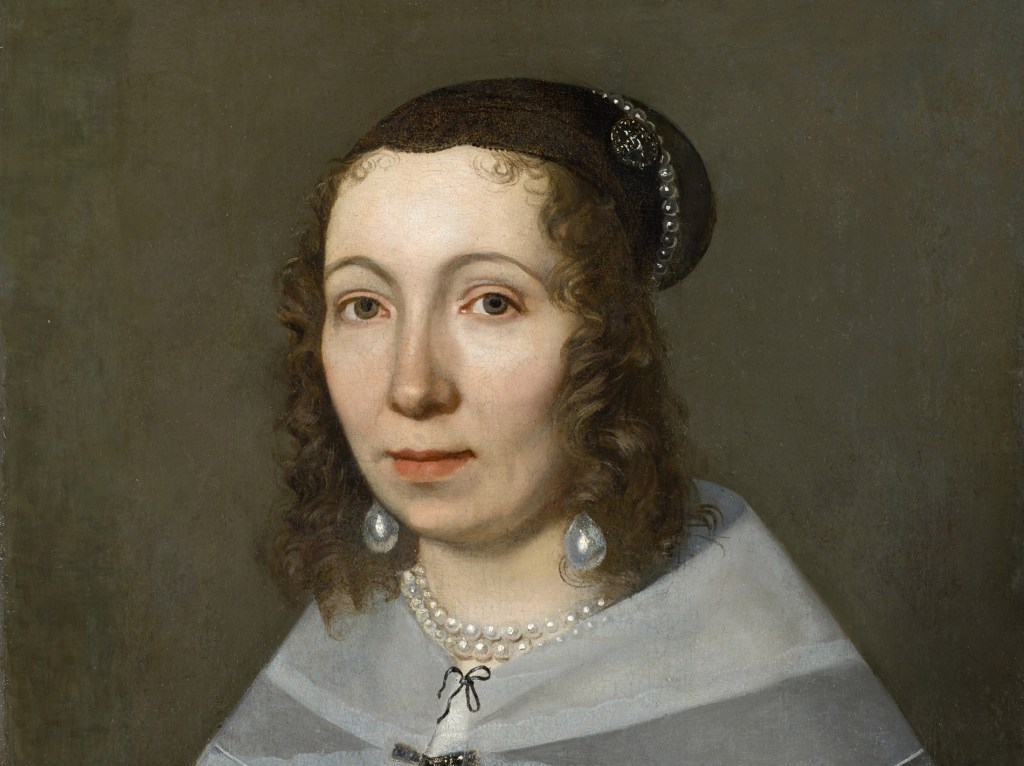
Here was a woman who changed the course of science while the academic establishment looked the other way. Maria Sibylla Merian (1647-1717) didn’t just paint pretty pictures of butterflies—she revolutionised our understanding of the natural world at a time when women were barred from universities, scientific societies, and any formal recognition whatsoever.
The sheer audacity of her achievement still takes the breath away. In 1699, at 52 years old, she sailed to the Dutch colony of Suriname with her youngest daughter Dorothea, funding the expedition herself by selling 255 of her own paintings. This wasn’t some gentleman’s collecting jaunt—this was serious scientific fieldwork undertaken by a divorced woman in an era when such independence was virtually unthinkable.
What she accomplished there fundamentally altered European understanding of insect life. Her masterwork, Metamorphosis Insectorum Surinamensium, published in 1705, documented the complete life cycles of 60 insect species alongside their ecological relationships. This wasn’t mere illustration—it was groundbreaking science that demolished the prevailing theory of spontaneous generation, the medieval notion that insects simply sprouted from mud and rotting matter.
The Making of a Revolutionary
Born into a family of printers and engravers in Frankfurt, Merian’s education came through her stepfather Jacob Marrel, who taught her watercolour techniques and the art of flower painting. By 13, she was already raising silkworms and documenting their metamorphosis—work that would prove foundational to modern entomology.
Her approach was revolutionary: she studied living insects in their natural habitats rather than working from dried specimens. She bred her own insects, observing them from egg to adult across multiple generations. This methodology alone set her apart from her contemporaries, who typically worked from preserved collections in their studies.
The results were stunning. Her illustrations showed insects not as isolated curiosities but as integral parts of complex ecological webs. She was the first to document that “caterpillars which fed on one flowering plant only, would feed on that one alone, and soon died if I did not provide it for them”. This insight into host-plant relationships—now fundamental to ecology—was utterly novel in the 17th century.
Breaking the Barriers
In 1685, Merian made a decision that would have been scandalous in any respectable household: she left her husband and moved with her daughters to a Labadist religious community in Friesland. After a few years, she obtained a divorce and relocated to Amsterdam, where she established herself as an independent artist and scientist.
This independence was crucial. Working without institutional backing or male sponsorship, she developed her own scientific programme. In Amsterdam, she encountered collections of exotic specimens from the Dutch colonies, which fired her imagination about tropical ecosystems. Unlike other naturalists who relied on commercial or royal patronage, Merian financed her own research through art sales and her own entrepreneurial activities.
The Suriname Expedition
The journey to Suriname was unprecedented. No woman had undertaken such a scientific expedition before. For two years, Merian and her daughter worked in the tropical forests, documenting species unknown to European science. She collaborated with enslaved Africans and indigenous peoples, acknowledging their expertise and recording their knowledge of plant uses—a practice that was rare among European naturalists.
Her observations were meticulous. She documented not just metamorphosis but ecological interactions: predator-prey relationships, parasitic wasps, the effects of climate on insect development. She noted that “caterpillars… shed their skins completely three or four times” and illustrated shed exoskeletons to prove it. She recorded how “when caterpillars have no food, they devour each other”.
One of her most controversial illustrations showed a large spider attacking a hummingbird—an observation that European naturalists dismissed as fantasy. They were wrong. Modern research has confirmed that large neotropical spiders do indeed prey on birds, beginning by attacking the eyes to facilitate enzyme injection. It took over 250 years for science to vindicate her careful observation.
The Institutional Dismissal
Despite international acclaim during her lifetime, Merian’s work was systematically devalued by the male-dominated scientific establishment. The Royal Society, which wouldn’t admit women until 1945, praised her artistic skill whilst dismissing her scientific contributions. Her meticulous observations were relegated to “mere illustration” rather than serious research.
The 19th century was particularly brutal. As science became increasingly professionalised and institutionalised, women like Merian were written out of the narrative entirely. Her lack of formal credentials—impossible for any woman to obtain—was used to dismiss contributions that had been celebrated a century earlier. Male naturalists praised her artistry whilst systematically ignoring her scientific insights.
This wasn’t accidental. The exclusion of women from scientific institutions was a deliberate strategy to maintain male dominance over intellectual life. Universities barred women students, academies refused female members, and scientific societies operated as gentleman’s clubs. The few women who managed to contribute to science—like Merian—were relegated to footnotes or erased altogether.
The Ecological Vision
What makes Merian’s work so remarkable is her ecological perspective. At a time when naturalists focused on classification and cataloguing, she understood that organisms exist in relationships. Her illustrations showed insects alongside their host plants, predators, and prey—creating what we now recognise as ecological diagrams.
She was the first to document that “each stage of the change from caterpillar to butterfly depended on a small number of plants for its nourishment”. She observed that eggs were laid near these specific plants, and that environmental factors influenced insect development. This understanding of species interdependence and ecological relationships wouldn’t be formalised until the 20th century.
Her work on plant-insect relationships was particularly groundbreaking. She documented 54 plant species in Suriname, noting their uses as food, medicine, and toxins. She recorded that enslaved women used certain plant seeds to induce abortions “in order to spare them from the cruelty of slavery”—a stark documentation of colonial brutality.
The Modern Vindication
The 20th century finally began to recognise Merian’s true contributions. David Attenborough called her “among the more significant contributors to the field of entomology”. Modern ecologists acknowledge her as a pioneer who understood ecological relationships centuries before the discipline existed.
Her classification system for butterflies and moths remains relevant today. Museums worldwide display her original illustrations as masterpieces of scientific art. The Getty Museum, the British Museum, and the Rijksmuseum all hold major collections of her work.
Perhaps most importantly, numerous species now bear her name: the Cuban sphinx moth, a bird-eating spider, a snail, butterflies, and even a genus of praying mantises. A new butterfly species discovered in 2023 was named Catasticta sibyllae in her honour.
The Lasting Legacy
Merian’s story exposes the systematic exclusion of women from scientific recognition. Her work was dismissed not because it lacked merit, but because she was a woman working outside institutional structures. The very qualities that made her work revolutionary—her independence, her ecological thinking, her collaborative approach with indigenous knowledge—were used to marginalise her contributions.
Today, as we face an ecological crisis, Merian’s holistic understanding of natural systems seems prophetic. Her recognition that species exist in complex interdependencies, that human activities affect these relationships, and that indigenous knowledge holds crucial insights, resonates powerfully with contemporary environmental science.
She proved that revolutionary science doesn’t require institutional approval—it requires careful observation, rigorous thinking, and the courage to challenge established beliefs. Maria Sibylla Merian had all three in abundance. It’s time science gave her the recognition she deserved three centuries ago.
Maria Sibylla Merian died in Amsterdam on 13th January 1717, still working despite partial paralysis from a stroke. Her daughters continued her work, but it would be another 300 years before science fully acknowledged her as the pioneering ecologist she truly was.
Bob Lynn | © 2025 Vox Meditantis. All rights reserved.


 Vox Meditantis
Leave a reply to S.Bechtold Cancel reply