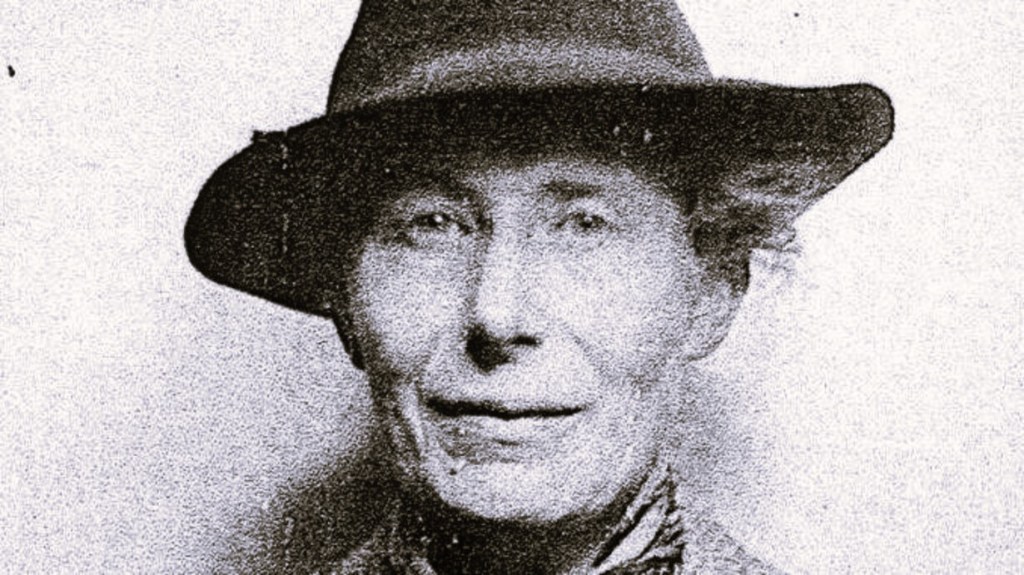
A brilliant mind constrained by gender bias who revolutionised our understanding of the planet’s core
In the annals of scientific discovery, few breakthroughs have reshaped our understanding of the world as fundamentally as Inge Lehmann’s 1936 revelation that the Earth possesses a solid inner core. Yet this Danish seismologist’s extraordinary achievement – which would have warranted a Nobel Prize in atomic physics – remains largely unknown to the public. Her story is one of intellectual brilliance constrained by systematic gender discrimination, a tale that exposes the brutal reality of how society’s prejudices can nearly crush even the most exceptional minds.
The Making of a Scientist
Born on 13th May 1888 in Copenhagen, Inge Lehmann entered the world at a time when women were considered “mentally and physically unsuited to academic studies, let alone scientific careers”. Her father, Alfred Georg Ludvik Lehmann, was a pioneering experimental psychologist who studied the body’s reaction to intellectual work. Her mother, Ida Sophie Tørsleff, came from a family deeply involved in the women’s rights movement. This progressive household proved crucial in shaping Lehmann’s scientific ambitions.
The Lehmann family’s decision to enroll Inge at Fællesskolen in 1904 was revolutionary. This co-educational school, run by Hanna Adler (Niels Bohr’s aunt), treated boys and girls equally – a radical concept for the time. As Lehmann later reflected, “No difference between the intellect of boys and girls was recognised, a fact that brought some disappointment later in life when I had to recognise that this was not the general attitude”.
The Cambridge Catastrophe
After completing her mathematics degree at the University of Copenhagen in 1910, Lehmann entered Cambridge University’s prestigious Newnham College. Cambridge was renowned for its Mathematical Tripos, an examination so demanding that it required equal parts theoretical study and physical training. Yet the university’s treatment of women was appalling – they could attend lectures but could not matriculate, access laboratories, or receive degrees.
The gender segregation at Cambridge proved devastating for Lehmann, who had never experienced such restrictions. Her correspondence with Niels Bohr reveals the frustration she felt with the university’s archaic social conventions, which prevented knowledge sharing between male and female students. When arranging a simple dinner party, Lehmann was forced to secure a chaperone and seek permission from college authorities, leading her to write resignedly: “but Cambridge is Cambridge”.
The Breakdown and Its Aftermath
The winter of 1912 marked a turning point in Lehmann’s life. Exhausted from preparing for the Mathematical Tripos, she suffered what her father characterised as a mental breakdown. Recent archival discoveries reveal that this breakdown was not merely a personal failing but a direct consequence of the “academic overcompensation” required to overcome gender bias. As historian Margaret Rossiter observed, many women scientists drove themselves to exhaustion in their quest to prove their right to practice science.
Alfred Lehmann’s response epitomised the era’s devastating attitudes towards women in academia. In a letter to his daughter, he quoted male professors who believed women lacked the “mental stamina” for academic work and related “a series of sad examples of how it went with intellectually gifted women who wanted something more”. Their studies, he claimed, made them “forever in and out of nerve clinics, if not half insane”. This biological determinism, rooted in 19th-century medical theories, held that women’s physiology made them unsuitable for intellectual pursuits.
The Pragmatic Pivot
Denied the opportunity to complete her Cambridge studies, Lehmann spent six years working as an actuarial clerk – a common refuge for mathematically trained women. The insurance industry was one of the few sectors where women could utilise their statistical skills, though advancement remained limited. When passed over for promotion in favour of male colleagues, Lehmann recognised that “gender was again the restricting factor”.
In 1918, she returned to the University of Copenhagen to complete her mathematics degree. But the mathematics department offered little opportunity for women to advance beyond clerical positions. It was only through a pragmatic career shift that Lehmann found her path to scientific recognition.
The Seismological Solution
In 1925, Lehmann became an assistant to Niels Erik Nørlund, director of the Danish Geodetic Service. When Nørlund needed someone to establish Denmark’s first seismological stations, he recognised Lehmann’s potential. Seismology was an ideal field for a woman scientist – it was new, unprestigious, and lacked male candidates. As Lehmann herself acknowledged, by “pragmatically changing her field from prestigious mathematics to little-known seismology,” she could finally “establish herself as a successful scientist”.
In 1928, Lehmann was appointed Director of the Seismology Department at the Danish Geodetic Institute. She expressed her profound gratitude to Nørlund: “I could not have wished for anything better… It is no small thing to have the opportunity and permission to use all one’s strengths”.
The Discovery That Shook the World
By the 1930s, Lehmann was meticulously analysing seismic data from earthquakes worldwide. The prevailing scientific understanding held that the Earth’s core was entirely liquid. However, after studying a massive New Zealand earthquake in 1929, Lehmann noticed something extraordinary. P-waves (primary seismic waves) were appearing in locations where they should have been blocked by the liquid core.
In September 1936, Lehmann published her groundbreaking paper, succinctly titled “P’”. Her hypothesis was elegantly simple: “inside the core there is an inner core in which the velocity is larger than in the outer one”. This solid inner core, she proposed, was deflecting seismic waves and creating the anomalous readings.
The scientific community initially received her theory with scepticism. However, leading seismologists like Beno Gutenberg and Harold Jeffreys gradually accepted her model as it explained previously inexplicable seismic observations. By 1971, advanced computer calculations confirmed what Lehmann had deduced through painstaking hand calculations using boxes of index cards.
Recognition and Legacy
Lehmann’s discovery fundamentally transformed our understanding of Earth’s structure and dynamics. The inner core plays a crucial role in generating the planet’s magnetic field, and her work laid the foundation for modern geodynamics. Francis Birch, awarding her the American Geophysical Union’s Bowie Medal in 1971, declared that her discovery was achieved through “exacting scrutiny of seismic records by a master of a black art for which no amount of computerisation is likely to be a complete substitute”.
Despite retiring in 1953, Lehmann continued her research well into her 90s, making significant contributions to understanding the Earth’s mantle. She discovered a seismic discontinuity at approximately 220 kilometres depth, now known as the Lehmann discontinuity International honours poured in: the William Bowie Medal (1971), the Medal of the Seismological Society of America (1977), and numerous honorary degrees.
The Injustice of Invisibility
Lehmann’s case illustrates the systematic barriers that prevented women from receiving recognition commensurate with their contributions. Her discovery of the Earth’s inner core was of such magnitude that it “would have warranted a Nobel Prize in atomic physics,” yet she remained largely unknown to the public. The Nobel Prize in Physics has never been awarded for seismological discoveries, despite their fundamental importance to our understanding of the planet.
Her story also reveals how gender discrimination forced brilliant women to make strategic compromises. By abandoning prestigious mathematics for the nascent field of seismology, Lehmann traded academic prestige for scientific opportunity. This pragmatic decision ultimately enabled her greatest achievement, but it also confined her to a less visible scientific discipline.
A Lasting Inspiration
Today, Lehmann’s legacy lives on through the Inge Lehmann Medal, awarded annually by the American Geophysical Union for outstanding contributions to understanding the Earth’s deep interior. Denmark’s Inge Lehmann Programme provides research funding to support gender equality in science. Yet perhaps her greatest legacy lies in demonstrating that exceptional scientific minds can triumph even when constrained by society’s prejudices.
Inge Lehmann’s story demands our attention not merely because she made a remarkable discovery, but because she represents countless brilliant women whose contributions to science were diminished by systematic discrimination. Her achievement – cracking the Earth’s deepest secret through sheer intellectual prowess – stands as a monument to human curiosity and resilience. In recognising her properly, we honour not just one extraordinary scientist, but the principle that scientific genius knows no gender.
The Earth’s inner core, that solid sphere of iron and nickel spinning at our planet’s heart, remains Lehmann’s eternal legacy. Every time we study geomagnetism, every time we understand how our planet generates its protective magnetic field, we build upon the foundation she laid through her meticulous analysis of seismic waves. Her discovery continues to illuminate the darkness at the centre of our world – a fitting metaphor for how she brought light to the shadows of scientific history.
Bob Lynn | © 2025 Vox Meditantis. All rights reserved.


 Vox Meditantis
Leave a reply to S.Bechtold Cancel reply