The dust motes danced in the amber light filtering through the grimy windows of the storage room, each speck suspended like a memory refusing to settle. I had volunteered to reorganise the library’s forgotten collection—boxes upon boxes of books that had escaped the recent digitisation project, relics from an era when knowledge lived only on paper and could be held, touched, and hidden.
It was June 4th, 1999. Ten years to the day.
I told myself the date was merely coincidence, that my decision to tackle this neglected corner of our school library had nothing to do with the calendar. But as I lifted each volume from its cardboard tomb, I felt the weight of anniversaries pressing against my chest like stones.
The morning had begun ordinarily enough. I’d taught my usual classes—Year 8 students stumbling through Tang poetry, their young voices reciting verses about moonlight and longing with the mechanical precision of those who had not yet learned that words could be dangerous. During lunch, whilst my colleagues discussed summer holiday plans and complained about the unseasonable humidity, I had excused myself and made my way to the storage room.
Now, three hours later, I knelt amongst towers of rescued books, my fingers black with dust and my heart heavy with the peculiar melancholy that comes from handling forgotten things. Most of the volumes were standard educational texts—mathematics primers, geography atlases with borders that no longer existed, science books proclaiming theories that had since been disproved. But nestled between a collection of Mao’s quotations and a water-damaged anthology of revolutionary songs, I found something that made my breath catch.
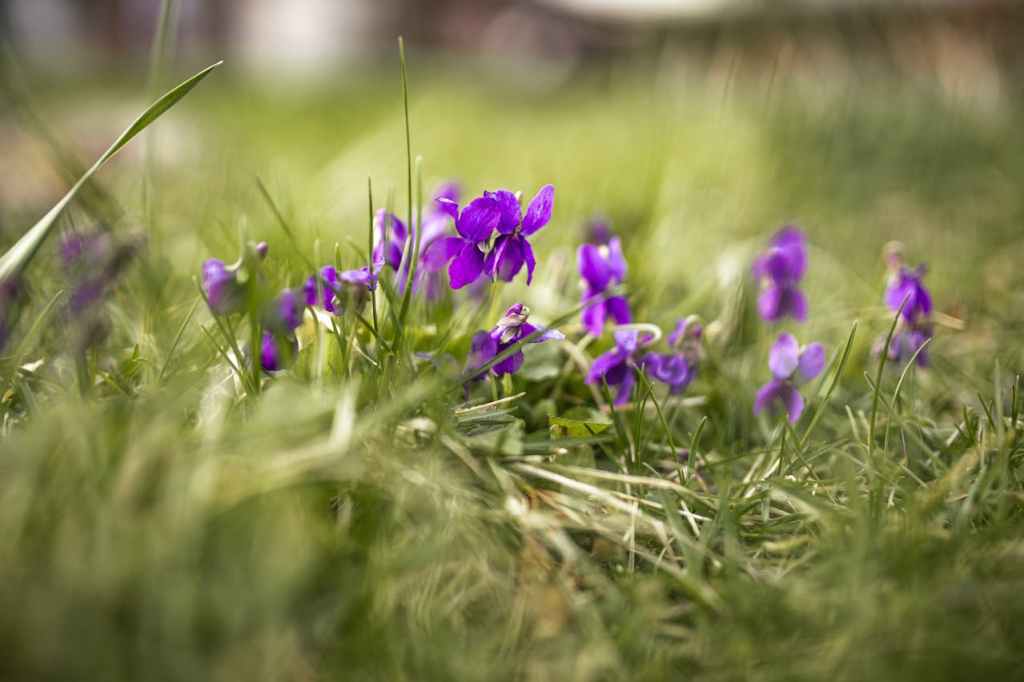
Le Petit Prince. The Little Prince. A slim volume with a pale blue cover, its spine cracked from countless readings. I lifted it with trembling fingers, and as I did, something fluttered from between its pages—a pressed violet, purple as a bruise, brittle as old promises.
I knew this book.
The flood of memory came without warning, washing over me with such force that I had to steady myself against the wall. I was eight years old again, curled beneath my quilt on a winter evening in 1979, following the little prince’s journey from asteroid to asteroid whilst my brother Jun read aloud in his careful, measured voice. He would pause at difficult passages, translating not just the French words but their meaning, making sure I understood each philosophical observation, each gentle criticism of adult folly.
“Books are bridges, Lan-mei,” he had told me, using the pet name that meant “little sister orchid.” “They carry us to places we cannot go, teach us things we are not allowed to learn in school.”
Jun had been seventeen then, already tall and serious, with ink-stained fingers from his poetry and eyes that seemed to hold questions too large for his narrow shoulders. He had saved for months to buy me that translated copy, had wrapped it in brown paper and tied it with string he’d unravelled from his own school bag.
Now, holding this battered twin of my childhood treasure, I opened the cover with reverent care. There, on the title page, in Jun’s precise handwriting: “For Wei Lan, who sees with her heart. —Your devoted brother, December 1979.”
My hands shook as I turned the pages. Margin after margin bore his annotations—observations in pencil so faint they were barely visible, philosophical musings that revealed the depth of a mind I had been too young to fully appreciate. Beside the passage about the rose and her thorns, he had written: “Some things are worth protecting, even when they hurt us.” Near the fox’s lesson about taming, his note read: “The invisible threads that bind us are stronger than any chains.”
But it was the final annotation that undid me completely. On the last page, where the little prince vanishes into the desert, Jun had written in barely legible script: “June 1989—Sometimes we must disappear so that others might remember what we stood for. If something happens to me, know that I loved you and Mother and Father more than my own life. Keep reading, Lan-mei. Keep questioning. Never let them convince you that silence is the same as peace.”
The book slipped from my numb fingers, landing with a soft thud on the dusty floor. Around me, the storage room seemed to pulse with the weight of unspoken truths. Jun had known. Somehow, he had known what was coming, had prepared this message like a time capsule meant to detonate a decade later in my unsuspecting hands.
He had vanished on June 3rd, 1989, telling our parents he was going to study at a friend’s house. He never returned. For days, we had waited by the telephone, our mother cooking his favourite dishes as if the smell of steamed fish and chrysanthemum tea might summon him home. Father had walked the streets, visiting hospitals and police stations, coming back each evening with hollow eyes and excuses about traffic disruptions and temporary communication breakdowns.
The official silence had been absolute. No records, no explanations, no acknowledgement that our Jun had ever existed. His university expelled him for “unauthorised absence.” His friends stopped visiting. Even his name became taboo in our household, mentioned only in whispers during sleepless nights when grief overwhelmed our collective caution.
I retrieved the book, cradling it against my chest as tears tracked through the dust on my cheeks. For ten years, I had buried my questions, had learned to navigate conversations that skirted around the crater Jun’s absence had left in our lives. I had become a teacher myself, had filled my mind with safe literature and sanctioned poetry, had trained myself to sleep through the nightmares that came each spring.
But here, in this forgotten corner of an insignificant library, surrounded by books that had escaped the great forgetting, I allowed myself to remember fully for the first time. Jun’s laughter echoing through our cramped apartment. His patient explanations of metaphors and symbolism. The way he would sneak into my room after particularly vivid political education classes to whisper, “Think for yourself, little sister. Question everything, even me.”
The violet fell from the book’s pages again, and this time I caught it. Purple as twilight, delicate as truth, it crumbled slightly between my fingers. I did not know if it had been pressed by Jun or by some previous reader, but it felt like a sign—evidence that beauty persists even in the driest places, that memory flowers in the most unlikely soil.
As the afternoon light shifted through the grimy windows, I made a decision that felt both terrifying and inevitable. I would take this book home. I would read it again, would trace each of Jun’s annotations with my fingertip, would remember not just his disappearance but his life, his questions, his gentle rebellion against a world that demanded conformity.
More importantly, I would begin to ask the questions he had taught me to ask, would search for the truth he had died seeking. Not loudly, not foolishly, but with the quiet persistence of water wearing away stone.
The little prince had understood something about love and loss, about the things that mattered and the adults who forgot them. Jun had understood it too, had tried to pass that understanding to me through stories and pressed flowers and pencilled notes in forbidden margins.
Today, on this anniversary that officially did not exist, I finally understood as well.
Some things are worth protecting, even when they hurt us. Some silences must be broken, even when the breaking carries risks. And sometimes, the most profound act of resistance is simply to remember—fully, honestly, and without apology.
I tucked The Little Prince into my bag and walked home through the Beijing evening, carrying my brother’s questions like seeds.
The End
Bob Lynn | © 2025 Vox Meditantis. All rights reserved.
Photo by Daniela Bártová from Pexels


 Vox Meditantis
Leave a reply to Darryl B Cancel reply