I knew it was time when I found myself checking my phone whilst standing at my father’s graveside.
The notification had buzzed against my chest pocket during the vicar’s final blessing, and without thinking, I’d glanced down at the screen. A work email marked “urgent”—though in my experience, everything was urgent these days, and nothing truly was. The irony wasn’t lost on me that I was reading about quarterly projections whilst dirt was being scattered over the man who’d taught me to whittle boats from driftwood and identify constellations without an app.
My name is Thomas Hartwell, and until that grey October morning in 2024, I’d been what you might call successfully connected. Senior partner at a London consultancy firm, three phones, two tablets, and a smartwatch that monitored everything from my heart rate to my sleep patterns. I lived in a world of constant pings, buzzes, and notifications—a digital symphony that had become the soundtrack to my existence.
But standing there in that ancient churchyard in the Cotswolds, watching my father’s coffin disappear into the earth, I felt something crack inside me. Not break, exactly, but crack—like ice on a pond when the first warm day of spring arrives.
The funeral reception was a blur of well-meaning relatives and childhood friends I barely recognised. They spoke in hushed tones about Dad’s “good innings” and how he’d “lived to see the new millennium,” as if longevity were some sort of achievement rather than mere chance. I nodded and smiled, all whilst my devices continued their relentless chorus of demands.
It was my Aunt Margaret who finally said what needed saying.
“Your father worried about you, you know,” she said, cornering me by the tea urn. She was a formidable woman in her seventies, with steel-grey hair and eyes that missed nothing. “Said you’d forgotten how to be still.”
“I’m perfectly still,” I protested, even as my watch buzzed with a reminder to stand up and move about.
“No, dear,” she said gently. “You’re perfectly busy. There’s a difference.”
That evening, I found myself alone in Dad’s cottage for the first time since childhood. The place felt impossibly quiet without the constant hum of electronics—he’d never owned anything more sophisticated than a radio and a landline telephone. I wandered through rooms filled with his watercolour paintings, his collection of maritime novels, and the chess set we’d used for our weekly games until work had made me too “busy” to visit regularly.
On his bedside table, I discovered a leather-bound journal. The final entry, dated just a week before his death, stopped me cold:
“Tommy came by today, but he wasn’t really here. His body was present, but his mind was elsewhere—probably in that glowing rectangle he carries everywhere. I remember when he was eight, how he’d spend hours watching the clouds change shape. Now he can’t sit through a cup of tea without checking his messages. I fear we’ve created a generation that’s forgotten how to simply be.”
I sat on his bed and wept—great, heaving sobs that seemed to come from somewhere deep and long-buried. When had I last cried? When had I last felt anything without immediately documenting it, sharing it, or scheduling a follow-up action?
The decision came to me with startling clarity. I would unplug. Not forever—I wasn’t naive enough to think I could abandon the modern world entirely—but long enough to remember who I’d been before the devices had colonised my consciousness.
The next morning, I began my digital detox with the methodical precision I’d once applied to corporate restructuring. First, I gathered every electronic device in the cottage—my phones, tablets, laptop, even my fitness tracker—and placed them in a drawer. Then I drove to the village and informed the postmaster, Mrs. Pemberton, that I’d be staying at my father’s cottage for an indefinite period and would appreciate it if she could hold any urgent post.
“Going off-grid, are we?” she asked with a knowing smile. “Your father mentioned you might need to do that someday.”
The first few days were torturous. My hand reached for my phone dozens of times, muscle memory seeking the familiar weight and warmth of the device. I found myself experiencing what I can only describe as phantom vibrations—the sensation that my phone was buzzing when it was locked away in the drawer. My mind raced with imagined emergencies: What if a client needed me? What if there was a family crisis? What if the world ended and I missed the notification?
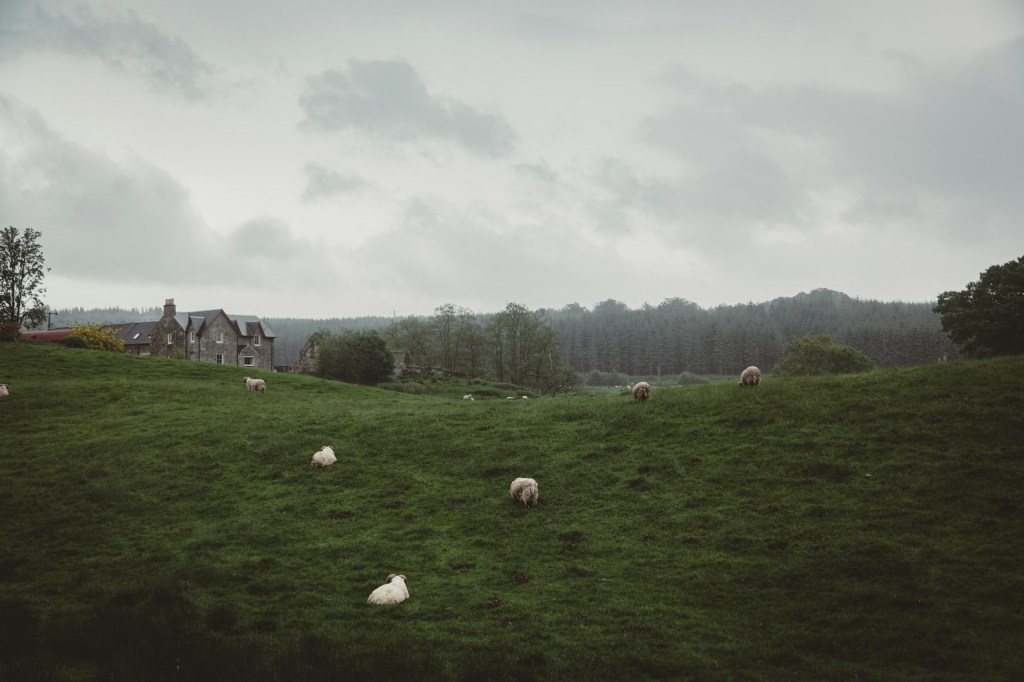
But gradually, something remarkable began to happen. The silence that had initially felt oppressive started to reveal its own subtle symphony. I became aware of sounds I’d forgotten existed: the tick of the grandfather clock in the hallway, the whisper of wind through the apple trees, the distant bleating of sheep on the hillside.
I began to follow my father’s routines. Morning walks through the village, where I actually noticed the architecture—Tudor cottages with their distinctive timber framing, Georgian houses with their elegant proportions. I struck up conversations with neighbours I’d previously acknowledged only with distracted nods. Mrs. Pemberton introduced me to her grandson, a boy of perhaps ten who reminded me startlingly of myself at that age—curious, present, unencumbered by the weight of constant connectivity.
In the afternoons, I took up painting. Dad had left behind an easel and a collection of watercolours, and I found myself attempting to capture the changing light on the village green. My first efforts were laughably amateur, but there was something profoundly satisfying about the process—the way the paint flowed across paper, the unpredictable beauty of colours bleeding into one another.
Evenings were for reading. Real books, with actual pages that rustled when turned. I worked my way through Dad’s library: Dickens and Hardy, Austen and the Brontës. Stories that unfolded at their own pace, demanding patience and attention rather than instant gratification.
Three weeks into my digital sabbatical, I experienced what I can only describe as a moment of grace. I was sitting in the cottage garden at twilight, watching bats emerge from their roosts, when I realised I hadn’t thought about work, emails, or social media for an entire day. My mind felt clear, uncluttered—like a room after a thorough spring cleaning.
I understood then what my father had been trying to tell me. The devices themselves weren’t evil, but they’d become my masters rather than my tools. I’d allowed them to fragment my attention, to scatter my thoughts like leaves in an autumn wind. In seeking to stay connected to everything, I’d become disconnected from what mattered most: the present moment, genuine human relationships, the simple pleasure of being alive in the world.
When I finally returned to London six weeks later, I did so with new boundaries firmly in place. I kept only one phone, checked emails at designated times, and instituted a daily “quiet hour” when all devices were switched off. Most importantly, I made a commitment to be present—truly present—in whatever I was doing.
The irony wasn’t lost on me that it had taken unplugging to reconnect with the most essential parts of myself. In a world that profits from our distraction, choosing to be still had become a radical act. But it was also, I discovered, the most important decision I’d ever made.
Sometimes, the bravest thing you can do is simply turn off the noise and listen to the silence.
The End
Bob Lynn | © 2025 Vox Meditantis. All rights reserved.
Photo by Gilley Aguilar on Unsplash


 Vox Meditantis
Leave a reply to Kim Whysall-Hammond Cancel reply