What experiences in life helped you grow the most?
Ah, the 2nd of March. Another birthday. You know, when you reach a certain age – or in my case, when you observe the world from whatever vantage point history affords the dead – birthdays cease to be about celebration. They become a mirror. And looking into the mirror of the world today, in 2026, I see the reflection of a dangerous hubris I recognise all too well.
I read the news today. I see that the United States and Israel have launched a series of attacks resulting in the assassination of Iran’s supreme leader, Ayatollah Ali Khamenei. They call it an operation to degrade “the regime’s capabilities” and speak openly of triggering regime change. It makes my heart heavy. Have they learned nothing from the ghosts of the past? History in places like Iraq and Afghanistan should teach us that regime change imposed from the outside rarely runs smoothly. It is a dangerous fantasy to think you can send a swarm of Tomahawk missiles and fighter jets, eliminate a leader, and expect stability to simply blossom from the rubble.
Instead, what do we see? We see innocent blood. I read of the catastrophic strike on a girls’ elementary school in Minab, where nearly 150 people were reportedly killed. We see the conflict immediately spilling beyond borders, with waves of Iranian missiles and drones targeting bases across the Gulf in places like Qatar, Kuwait, and the UAE. Even the British RAF base at Akrotiri in Cyprus has been hit by a suspected drone strike. The UN Secretary-General António Guterres is absolutely right to warn of a potential wider conflict with grave consequences for civilians and regional stability. It is madness. I recall that in 2016, Donald Trump said the US would stop racing to topple foreign regimes. Yet here we are, watching explosions light up the skies over Tel Aviv, Doha, and Dubai.
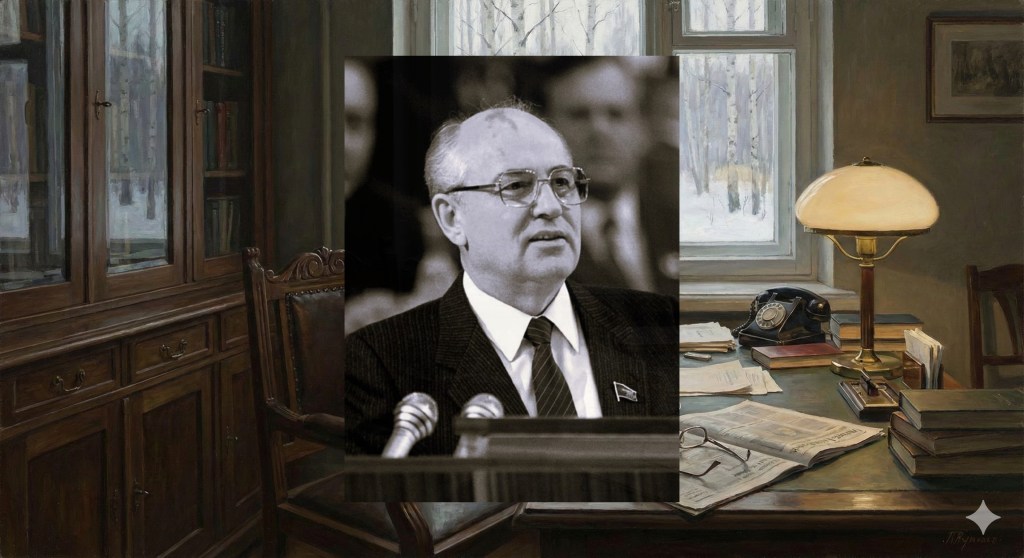
You ask me: What experiences in life helped me grow the most? It is a profound question. Many assume it was the high-stakes summits in Geneva or Reykjavik, sitting across from Ronald Reagan, reducing the nuclear arsenals that threatened our very existence. Those moments were historic, yes. But they were the result of my growth, not the cause of it.
The experiences that truly fostered my growth were rooted in tragedy and the painful confrontation with reality. I grew up in Privolnoye during the devastating famine of the 1930s. I saw my own family suffer under Stalin’s purges. I learned early on that a system built on fear, coercion, and the suppression of truth is inherently fragile.
But if I had to pinpoint the single most transformative experience of my life, it was Chernobyl. April 1986. That disaster tore the blinders from my eyes. Up until that point, I still believed we could simply tinker with the Soviet machine – reform it gently from the inside. Chernobyl showed me that the system of secrecy, the culture of lies, and the absolute arrogance of unchecked power were not just inefficient; they were a mortal threat to humanity. The radioactive cloud did not respect borders, much like the consequences of these modern airstrikes on intelligence headquarters and ballistic missile sites will not be confined to 14 Iranian cities.
Chernobyl forced me to realise that Glasnost – openness and transparency – was not just a political tactic. It was a matter of survival. I grew the most when I was forced to abandon the comforting illusions of imperial control. I had to face the bitter truth that true strength is not measured by the number of tanks you command or the regimes you can topple.
When I look at the leaders today, reshaping a region overnight with violence, I worry they are still trapped in that old illusion of control. They believe force can solve deeply rooted historical grievances, forgetting that foreign interference remains a powerful grievance of its own. Today, governments and civilians from the Mediterranean to the Gulf are holding their breath, watching to see whether this conflict burns out or burns wider.
True growth, for a person or a nation, only comes when you realise that true strength is not the ability to destroy your enemies. It is the courage to understand them, to speak the truth even when it exposes your own flaws, and to dismantle the systems of violence before they dismantle us all.
Bob Lynn | © 2026 Vox Meditantis. All rights reserved.

 Vox Meditantis
Leave a comment