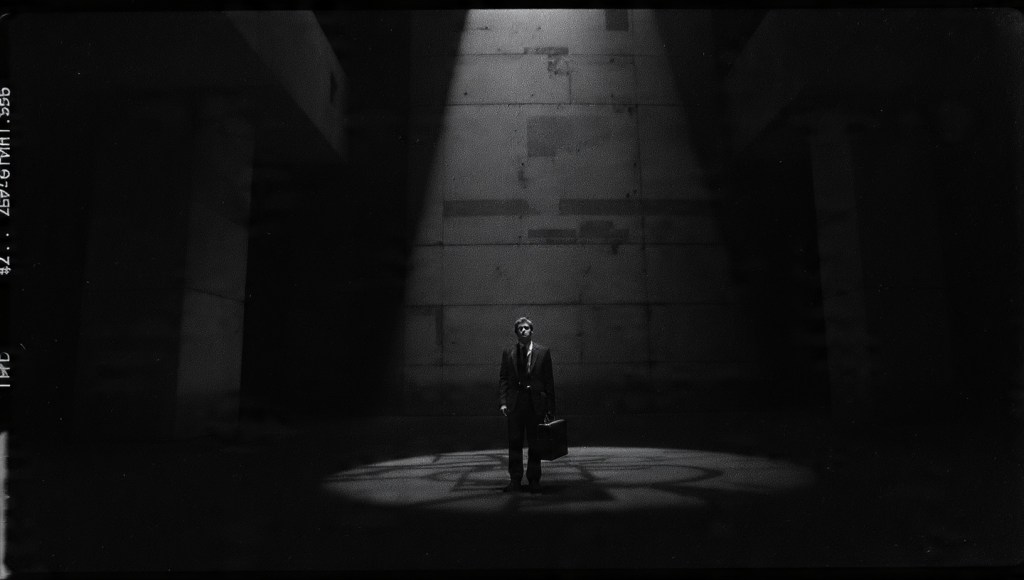
Somewhere around 2008, a word began circulating on Twitter that would soon crystallise one of the defining anxieties of contemporary life. “Adulting” – a jocular gerund formed from a perfectly respectable noun – first appeared in scattered posts contrasting the word with “kidding,” and its meaning was not entirely clear[1]. By 2013, the American journalist Kelly Williams Brown had built a popular blog and then a bestselling book around the concept: Adulting: How to Become a Grown-Up in 468 Easy(ish) Steps[2]. Grammar Girl named it her Word of the Year in 2014. The first five months of 2016 saw a sixfold increase in published usage, and brands from Credit Karma to Amazon rushed to deploy it in advertising copy[1]. Merriam-Webster finally added the word to its dictionary in September 2023[1].
To “adult” is to behave like an adult – to do the things adults regularly have to do. But the word carries an implicit confession: the speaker finds something fundamentally strange, even absurd, about performing the role of a responsible grown-up. It covers mundanities like making dental appointments, getting one’s car registered, and remembering to collect dry cleaning[1]. The humour is gentle but pointed. If adulthood were simply natural – a settled identity rather than a performance – there would be no need for a special verb to describe it.
This essay argues that the feeling is not merely a generational meme. It is the surface expression of deep structural, philosophical, and psychological tensions that can be traced through the history of rites of passage, existentialist philosophy, classical and contemporary sociological theory, and developmental psychology. “Adulting” names a genuine condition of modern life: the experience of occupying a social role whose traditional scaffolding has been dismantled without any clear replacement.
I. How Societies Once “Made” Adults
Rites of Passage and the Anthropological Record
For most of human history, becoming an adult was not something one did alone. It was something a community did to you. The Belgian ethnographer Arnold van Gennep, in his landmark 1909 work Les rites de passage, identified a tripartite structure that he argued was universal across cultures: separation, liminality, and incorporation[3]. First, the initiate was removed from their childhood identity – physically taken from the family home, stripped of familiar clothing, sometimes symbolically “killed.” Then came the liminal phase: a threshold period of ambiguity, ordeal, and instruction, during which the initiate was neither child nor adult. Finally, incorporation: the community formally received the individual back as a full adult member, with new rights, responsibilities, and standing[3].
Examples span the globe. In some Native American cultures, adolescent boys undertook a vision quest – a period of solitary fasting in the wilderness to seek spiritual guidance and discover their life’s purpose[3]. The Jewish Bar and Bat Mitzvah marks the transition to religious adulthood at thirteen and twelve respectively, signifying personal responsibility under religious law[3]. The Maasai circumcision ceremony publicly signifies a boy’s readiness to take on the duties of manhood[3]. Japan’s Seijin-no-Hi (“Coming of Age Day”) celebrates all individuals reaching twenty with official ceremonies and traditional dress[3]. In Latin American cultures, the Quinceañera celebrates a girl’s fifteenth birthday as her threshold into womanhood[3].
The crucial insight from this record is that adulthood was bestowed by communal ritual, not privately achieved. The liminal phase – that vertiginous standing on the threshold – was contained and temporary, managed by elders, mentors, and social structure[4]. As the Australian-based Rites of Passage researcher Dr Arne Rubinstein has observed, these ceremonies always involved story-sharing, facing a challenge, and an acknowledgement of the initiate’s spirit; they marked a shift from “child psychology (‘It’s all about me; I don’t take responsibility’) to ‘healthy adult’ psychology,” and they produced “a deep and profound sense of belonging in their community”[4].
Modern Western societies, by contrast, have largely abolished such communal rituals. University graduation comes closest, but it confers a credential, not an identity. There is no public ceremony in which a community collectively declares: You are now an adult; here is what that means; here is how we will support you. The result is that the liminal phase – the “in-between” – extends indefinitely.
The Reformation Theology of Vocation
Before the Protestant Reformation, the medieval Church maintained a sharp distinction between “sacred” and “secular” callings. Monasticism was the higher spiritual plane; the priest was in a better position to secure his place in heaven than the cobbler, because the former served God while the latter only served self[5]. Even the word “vocation” prior to the Reformation referred specifically to church-related callings – serving as a priest, monk, or nun[5].
Martin Luther dismantled this hierarchy. His rediscovery of justification by faith alone – the idea that a sinner is declared righteous apart from works – removed the distinction between so-called sacred and secular employments[5]. If salvation was received by faith, not earned through sacramental ritual, then there was no need to retreat to a monastery to do the truly important work of life. As Luther wrote in his Open Letter to the Christian Nobility: “A cobbler, a smith, a farmer, each has the work and the office of his trade, and they are all alike consecrated priests and bishops, and every one by means of his own work or office must benefit and serve every other”[6].
Luther’s concern was deeply pastoral. He saw that “people did not want to fulfil mundane God-given tasks such as being a parent, but rather devised their own tasks, such as celibacy, which they thought would please God and make them holy”[6]. When his own sovereign, Frederick the Wise, neglected his administrative duties to do devotional exercises, Luther reprimanded him. Luther’s favourite examples of vocation were deliberately unglamorous: “the father washing smelly diapers, the maid sweeping the floor, the brewer making good beer”[6].
Behind this lay a radical theological claim: in the mundane work of adult life, God himself serves others through us. The farmer cultivating fields is carrying out God’s providential care for hungry people. Luther called our vocations “the masks of God” – the disguises under which divine care operates in ordinary human labour[6]. Gene Edward Veith summarised the point: “When I go into a restaurant, the waitress who brings me my meal, the cook in the back who prepared it, the delivery men, the wholesalers, the workers in the food-processing factories, the butchers, the farmers, the ranchers, and everyone else in the economic food chain are all being used by God to ‘give me this day my daily bread’”[6].
This theological reframing gave mundane adult responsibilities a cosmic significance. The drudgery of “adulting” – paying bills, maintaining a household, showing up reliably to work – was not mere survival. It was participation in the hidden work of God. For the many in today’s secular West who no longer hold such a framework, one response to the question “Why does any of this matter?” has been quietly removed. The tasks remain; the consecration has evaporated. That gap is part of what makes adulthood feel like a prank.
Historical Markers of Adulthood in the Modern West
From the late eighteenth century onwards, five demographic markers crystallised as the standard script for the transition to adulthood in Western societies: leaving school, entering the workforce, leaving home, marriage, and parenthood[7]. For much of the twentieth century, these milestones were concentrated into a relatively short period and were socially stratified by class, gender, and geography[7]. Fifty years ago in the United States, the median age for marriage was twenty-two for men and twenty for women; now it has climbed past twenty-eight for men and edged above twenty-four for women[8]. Similar trends hold across Britain and Europe.
This matters because when these milestones arrived in rapid succession, the transition from youth to adulthood felt relatively sharp – even if the inner experience was uncertain, the external markers were clear. When the markers drift later and later, or become inaccessible altogether, the border between adolescence and adulthood blurs into an ambiguous, extended threshold.
II. Freedom, Dread, and the Burden of Self-Creation
Kierkegaard and the Dizziness of Freedom
Long before anyone coined the word “adulting,” the Danish philosopher Søren Kierkegaard put his finger on the precise sensation it describes. In The Concept of Anxiety (1844), Kierkegaard wrote: “Anxiety may be compared with dizziness. He whose eye happens to look down into the yawning abyss becomes dizzy. But what is the reason for this? It is just as much in his own eyes as in the abyss… Hence, anxiety is the dizziness of freedom”[9].
This is not fear. Fear, Kierkegaard argued, is a person’s concern about what threatens from outside – a predator, a lost job, an approaching storm. Anxiety is concern about what threatens from inside: the bewildering awareness that one is free to choose, and that choosing not to choose is itself a choice[10]. A man standing on the edge of a cliff fears that the ground might give way or that someone might push him. But greater than this fear is his anxiety that he is free to jump – that his not jumping is an ongoing choice he might abandon at any moment. This anxiety, Kierkegaard insisted, is not a weakness. “Only a prosaic stupidity maintains that this is a disorganisation,” he wrote. “Whoever has learned to be anxious in the right way has learned the ultimate”[9].
“Adulting” is, in Kierkegaardian terms, the dizziness of freedom applied to the everyday. No external authority dictates the shape of your adult life. You must choose a career, a partner, a place to live, a set of values – and keep choosing, day after day, with no guarantee that any of it is correct. The joke in calling it “adulting” is the momentary acknowledgement of the abyss: I am doing this, but I could stop at any point, and there is nothing anchoring me except my own continuing decision.
Sartre: Existence Precedes Essence
Jean-Paul Sartre radicalised Kierkegaard’s insight. In his 1946 lecture Existentialism Is a Humanism, Sartre declared that there is no pre-given human nature, no divine blueprint, no essence that precedes existence[11]. You are not born with a destiny. You are what you make of yourself, and you cannot blame anyone or anything else for who you become. “When we say that a man is responsible for himself,” Sartre wrote, “we do not only mean that he is responsible for his own individuality, but that he is responsible for all men”[11]. Each choice you make implicitly proposes a model of what humanity should be.
This is exhilarating – and terrifying. If there is no essence behind the performance, then the “competent adult” is a role with nothing underneath it. Sartre called the attempt to deny this radical freedom “bad faith” (mauvaise foi): the pretence that you are determined by your job, your upbringing, your circumstances, when in truth you remain free. The “prank” feeling of adulting may be precisely the eruption of Sartrean awareness through the veneer of bad faith – the nagging suspicion that the responsible grown-up you are performing does not exist as a stable entity, only as a moment-to-moment choice that could be revoked.
Sartre recognised that this freedom produces “anguish, loneliness and despair,” but he regarded these not as pathologies but as the inescapable conditions of authentic human existence[11]. The question is not whether adulthood feels absurd. It is whether we can face the absurdity honestly and act anyway.
Performativity and the Performance of Maturity
The philosopher Judith Butler, in her groundbreaking Gender Trouble (1990), argued that identity is not an inner core expressed outwardly but “a stylised repetition of acts… which are internally discontinuous… [so that] the appearance of substance is precisely that, a constructed identity, a performative accomplishment which the mundane social audience, including the actors themselves, come to believe and to perform in the mode of belief”[12].
Butler’s original argument was about gender, but the logic extends powerfully to the performance of adulthood. “Adulting” is adulthood-as-performance: repeating the acts – paying council tax, attending parents’ evenings, scheduling boiler services – until the repetition solidifies into the appearance of a stable adult identity. The performative nature of these acts is usually invisible; we do them, and we come to believe we are the sort of person who does them. The joke in calling it “adulting” is the momentary refusal to let the performance fully solidify into belief. The word places scare quotes around the identity, drawing attention to the constructed nature of something that is supposed to feel natural.
Butler emphasised that “this is not freedom, but a question of how to work the trap that one is inevitably in”[12]. We cannot step outside performativity. There is no “authentic self” behind the performance waiting to be liberated. But the slight deviation, the self-conscious naming of the act – “Look at me, I’m adulting” – reveals, if only for a moment, the machinery behind the illusion of a settled self.
III. Why Modernity Makes Adulthood Feel Unreal
Durkheim and Anomie
In 1893, in his doctoral dissertation The Division of Labour in Society, Émile Durkheim introduced the concept that would become one of sociology’s most enduring: anomie, from the Greek anomia – “without law,” or more precisely, “normlessness”[13][14]. Anomie describes a social condition in which shared norms and values lose their power to regulate behaviour. It is not the absence of rules per se, but the feeling that the rules no longer apply, no longer convince, no longer hold the community together.
Durkheim argued that anomie arises during periods of rapid social change, when traditional ways of life are disrupted faster than new moral frameworks can form[13]. In traditional societies, what Durkheim called “mechanical solidarity” held people together through shared beliefs, shared labour, and a powerful collective conscience. As industrialisation and urbanisation drove the transition to modern “organic solidarity” – where people depend on one another through an increasingly complex division of labour – the old moral glue weakened. Individuals became freer, but also more adrift[14].
Crucially, Durkheim believed that human desires are, in principle, unlimited. Unlike other organisms, whose needs are biologically regulated, human beings harbour “an insatiable and bottomless abyss” of wants[14]. Society itself is the only force powerful enough to act as a regulative brake – to tell people what they may reasonably expect and where their ambitions should find a limit. When that social regulation fails, when the old rules lose their authority and new ones have not yet formed, desires become unmoored. Durkheim called this “the malady of the infinite”[13].
Applied to “adulting,” the Durkheimian diagnosis is straightforward. When there is no shared, authoritative script for what adulthood should look like – when the markers are shifting, the sequence is optional, and the collective conscience can no longer prescribe a single path – every adult choice feels arbitrary and provisional. You are not stepping into a role that society has carved for you; you are improvising, and the audience has no fixed expectations. The proliferation of lifestyle options in late capitalism is, paradoxically, a recipe for anomic disorientation.
Weber and the Iron Cage
Max Weber, writing in the early twentieth century, identified a different but complementary pathology. In The Protestant Ethic and the Spirit of Capitalism (1904–05), Weber described the evolution of Western society from one governed by tribal custom and religious obligation to an increasingly secular organisation based on the goal of economic gain[15]. Industrialisation brought material advances, but it also introduced a relentless process of rationalisation: the replacement of tradition, intuition, and personal relationships with formal rules, bureaucratic procedures, and cost-benefit calculations.
The result, Weber argued, was an “iron cage” of rationality[15]. Bureaucracy – with its hierarchies, standardised procedures, and impersonal efficiency – was both inevitable and necessary for industrial society. But it also threatened to stifle the very individualism that had led people to reject dogmatic religious authority in the first place. “The fully developed bureaucratic apparatus compares with other organisations exactly as does the machine with the non-mechanical modes of production,” Weber wrote[15]. And the human beings within the machine? They became “cogs.”
Weber’s vision was bleak: capitalism had promised a technological utopia with the individual at its heart, but had instead “created a society dominated by work and money, at the mercy of a logical but godless system”[15]. The desire for self-improvement was replaced with obsessive ambition; creativity was valued less than productivity; and the individual’s worth was determined by the system rather than by their own skills or craftsmanship[15].
The adult world of tax codes, insurance forms, pension schemes, mortgage applications, and HR portals is the iron cage made personal. The “prank” feeling of adulting is partly the experience of navigating systems designed for abstract rational actors, not for embodied, confused, emotional human beings. The forms demand certainty – your name, your address, your annual income, your next of kin – when everything inside you is uncertain. Weber saw this coming. “No one knows who will live in this cage in the future,” he wrote, “or whether there will be a great rebirth of old ideas and ideals”[15].
Bauman and Liquid Modernity
The Polish-British sociologist Zygmunt Bauman, writing at the turn of the twenty-first century, argued that the iron cage had itself begun to melt. In Liquid Modernity (2000), Bauman described a world in which the traditional structures of “solid” modernity – stable employment, lifelong marriage, fixed community, predictable career ladders – had dissolved into a “fluid, uncertain state”[16].
In liquid modernity, identity is no longer a fact but a task. “Each of us runs into the self-building, which replaces the project itself”[17]. Being an individual does not simply mean being a good consumer; it means being a competitive commodity in the global market. The world demands a “constant and increasingly controversial search for identity,” and that identity must be continually purchased, curated, and updated[17].
Bauman was particularly acute on the role of consumerism. “Contemporary society relates to its members primarily as consumers, and only secondarily, and in part, involves them also as producers,” he wrote. “To meet the standards of normality and to be recognised as a mature and respectable member of society, we must respond quickly and efficiently to the temptations of the consumer goods market”[17]. Adulthood, in this framework, is experienced as an endless shopping list of competencies, possessions, and lifestyle markers rather than a settled social estate. The satisfaction derived from any acquisition is fleeting, quickly replaced by the desire for something newer, something better[16]. This cycle of desire and disappointment produces what Bauman regarded as the defining affect of liquid modernity: pervasive anxiety.
The old question – Am I an adult? – becomes, in Bauman’s terms: Am I consuming correctly? Am I curating the right self? Am I keeping up? The “prank” feeling is the dawning recognition that the finish line keeps moving, because the system is designed never to let you arrive.
IV. The Inner Experience of the “Prank”
Emerging Adulthood: The Extended Threshold
In 1995, the American psychologist Jeffrey Jensen Arnett began a five-year study in which he interviewed three hundred young people aged eighteen to twenty-nine across the United States, asking them what they wanted out of life[8]. Despite stark differences in social background and economic prospects, Arnett was struck by similar answers. His respondents shared a perception of “feeling in between” – knowing they were pulling clear of adolescence and starting to feel responsible for themselves, but still closely tied to their parents and family[8]. Many were still pondering their personal identity, a theme that surprised Arnett, who had expected most would have settled that question as adolescents.
From these interviews and broad demographic indicators, Arnett proposed a new period of lifespan development: “emerging adulthood,” a term he coined in his 2004 book of the same name[8]. He identified five defining features:
- An age of identity exploration. Young people are deciding who they are and what they want out of work, school, and love.
- An age of instability. The post-school years are marked by repeated moves – to university, then flatshares, then a partner’s place, then somewhere new.
- An age of self-focus. Freed from the parent- and school-directed routine of childhood, young people try to decide what to do, where to go, and who to be with.
- An age of feeling in between. Many say they are taking responsibility for themselves but still do not fully feel like an adult.
- An age of possibilities. Optimism reigns – most believe they have good chances of living “better than their parents did”[8].
Arnett linked this development to larger historical trends: later marriage, greater access to higher education, and the availability of contraception, all of which extend the transition period[8]. The brain’s executive-function systems – responsible for planning, impulse control, and long-term decision-making – are still maturing into the mid-twenties[18]. Adults in their twenties may therefore be biologically primed to feel that serious decisions are being made by someone not quite qualified to make them.
Arnett also warned of a coming disappointment. “If happiness is the difference between what you expect out of life and what you actually get,” he said, “a lot of emerging adults are setting themselves up for unhappiness because they expect so much”[8]. The “prank” may be, in part, the collision between the age of possibilities and the age of constraints.
Impostor Phenomenon
In 1978, the clinical psychologists Pauline Rose Clance and Suzanne Imes described a pattern they called the “impostor phenomenon”: a persistent, internal experience of intellectual self-doubt in which individuals believe their achievements are fraudulent and fear being “found out” as incompetent[19]. Despite strong evidence of their abilities, those affected attribute their success to luck, timing, or the ability to appear more competent than they really are.
The phenomenon is remarkably widespread. A systematic review published in the Journal of General Internal Medicine in 2020 found that up to 82% of people experience impostor feelings at some point in their lives[19]. A study of Indian medical undergraduates and interns found that 56.7% demonstrated impostor phenomenon, with first-year students and interns – those at the most acute transition points – scoring highest[20]. Impostor feelings correlate positively with neuroticism and negatively with self-esteem, extraversion, agreeableness, and conscientiousness[20]. They are especially intense among people navigating new social roles – precisely the situation of anyone stepping into adult responsibilities for the first time[19].
The “adulting” meme can be understood as a collective, pre-emptive confession of impostor feelings. By joking that adult tasks are absurd – I just made a phone call to my GP without crying; give me an award – one inoculates oneself against the shame of potential failure. The humour functions as a social defence mechanism: if we all acknowledge the performance, nobody gets singled out as the fraud. It is impostor phenomenon democratised, turned into a shared cultural script.
Peter Pan Syndrome and the Refusal to Launch
In 1983, the psychologist Dan Kiley coined the term “Peter Pan syndrome” to describe adults – initially primarily men – who display a persistent resistance to adult responsibilities, marked by emotional paralysis, avoidance, and continued reliance on others[21][22]. Key characteristics include chronic difficulty with commitment, reluctance to pursue stable employment, and a pattern of depending on parents or partners for support that would normally be self-provided[23].
Although not a clinical diagnosis, the concept highlights that the resistance to adulthood can calcify into a persistent psychological pattern. Research associates it with overprotective or authoritarian parenting, low self-esteem, and fear of failure[24]. It is worth noting, however, that the syndrome pathologises the individual without always asking whether the social conditions that make adulthood unappealing or inaccessible might be part of the cause. Senator Ben Sasse’s 2017 book The Vanishing American Adult exemplified this tendency, arguing that young people are stuck in a “Peter Pan-like state of carefree childhood” – a diagnosis that, as the sociologist Victor Tan Chen observed, misses the structural factors entirely[25].
V. The Economics of Delayed Adulthood
The Material Basis of the “Prank”
Abstract philosophy and developmental psychology explain the feeling of the prank. But feelings do not arise in a vacuum. They are shaped by material conditions – and the material conditions facing young adults in the 2020s are, by historical standards, extraordinarily difficult.
In the United Kingdom, 28% of people aged twenty to thirty-four lived with their parents in 2024, up from 25.6% in 2014 – an increase of approximately 300,000 individuals[26]. A third of men in that age bracket (33.7%) were still in the parental home[26]. The Institute for Fiscal Studies reports that the proportion of 25- to 34-year-olds living with parents surged by over a third in nearly two decades, driven primarily by escalating rents and house prices[27].
In the United States, the picture is similar. Some 19.2% of adults aged 25 to 34 lived with parents or parents-in-law in 2023 – approximately 8.5 million people – and the figure is highest in expensive coastal areas like California (26.5%) and New Jersey (26.3%)[28]. In 2024, nearly a third (32.5%) of all Americans aged 18 to 34 lived with their parents[29]. These rates remain elevated by historical standards; in 2000, fewer than 12% of young adults lived with their parents[28].
The transition to adulthood is also socially stratified. As Chen’s analysis makes clear, the popular narrative of entitled millennials and Gen Z members choosing avocado toast over mortgages obscures a deeper truth: “Not even a majority of millennials are college-educated. Barely four out of ten Americans between ages twenty-five and thirty-four have a bachelor’s degree”[25]. Young Americans with degrees are half as likely to live with their parents as those with only school-level qualifications. The real driver of delayed milestones is not laziness but class: working-class young adults face a labour market of precarious, low-paid employment that makes independent housing, let alone homeownership, structurally unattainable[25].
The Gap Between Script and Reality
When the traditional five-step script – leave school, get a job, leave home, marry, have children – becomes economically unattainable for large portions of a generation, the script itself starts to feel like a fiction. The “prank” is not merely existential; it is economic. The social markers that once confirmed adult identity – a mortgage, a stable career, a pension – are either postponed or absent. You perform the internal work of being responsible, but the external world declines to validate the performance. You are, in Arnett’s phrase, “feeling in between”[8] – indefinitely.
Chen argues that American culture idealises whatever the children of the well-off excel in, turning a college degree into “the ultimate sign of making it” and framing those who fail to obtain one as losers. “Lower-income kids are told to play the ‘college for all’ game in order to become upstanding adults, but aren’t given the resources to compete”[25]. The joke of “adulting” thus has a bitter class dimension: it is primarily a middle-class meme, a luxury of self-awareness available to those who have enough security to find the situation funny rather than desperate.
VI. Mortality, Meaning, and Mundanity
Terror Management Theory and the “Adulting” Defence
In 1986, the social psychologists Jeff Greenberg, Tom Pyszczynski, and Sheldon Solomon developed Terror Management Theory (TMT), drawing on the cultural anthropologist Ernest Becker’s Pulitzer Prize-winning The Denial of Death (1973)[30]. TMT’s central tenet is that human beings are unique in their capacity for self-awareness, including the awareness that death is inevitable and can occur at any time for reasons beyond our control. This awareness generates a potentially debilitating existential terror[30].
Humans manage this terror, TMT argues, through two principal mechanisms. First, cultural worldviews: humanly constructed beliefs about reality that confer meaning, prescribe acceptable behaviour, and offer some form of immortality – whether literal (souls, heavens, reincarnation) or symbolic (legacy, wealth, children, fame)[31][30]. Second, self-esteem: the sense of personal significance that comes from meeting or exceeding culturally defined standards within one’s social roles[30].
More than 1,500 studies have provided empirical support for TMT’s predictions[30]. When people are reminded of death – even subliminally – they intensify their defence of cultural worldviews, react more positively to similar others, and respond more negatively to those who are different[30].
What does this have to do with adulting? Consider the mundane rituals of adult life: insurance policies, wills, pension contributions, health screenings. In TMT terms, these are symbolic structures that buffer mortality anxiety by connecting the individual to something enduring – a family’s financial security, a legacy, a plan that extends beyond one’s own death. They are small acts of symbolic immortality. When these acts feel like a “prank” – when filling in a life-insurance form feels absurd rather than meaningful – it may be because the broader symbolic system has lost its capacity to confer significance. The bureaucratic surface remains, but the existential reassurance underneath has drained away, leaving the terror of mortality exposed beneath the paperwork.
The Loss of the Sacred Canopy
The sociologist Peter Berger, in his influential 1967 work The Sacred Canopy, argued that religion functions as a comprehensive framework of meaning – a “canopy” that shelters human beings from the chaos and terror of a universe that is, without interpretation, indifferent to their existence[32]. Secularisation, in Berger’s analysis, is the process by which this canopy thins and tears, exposing individuals to what he called “the terror of anomie” and “the nightmare threats of chaos”[33].
With the decline of shared theological frameworks in much of the modern West, the mundane duties that Luther once endowed with divine significance are experienced as bare obligation. The farmer is no longer a “mask of God” feeding the hungry; the office worker filing quarterly reports is not participating in a cosmic order. The tasks persist, but the meaning that once sanctified them has, for many, evaporated. The “prank” is partly the absence of a convincing answer to the question: Why does any of this matter?
This is not to argue that religious belief is necessary for a meaningful adult life – plenty of secular frameworks offer robust answers to the question of purpose. But the sheer availability of meaning has contracted. Where Luther’s cobbler could console himself that God was working through his hands, today’s cobbler (or software developer, or barista, or logistics coordinator) must construct that meaning from scratch. And constructing meaning from scratch, every day, in the face of mortality, is exhausting.
VII. Why “Adulting” Feels Like a Prank – A Multi-Layered Explanation
The threads of this essay now converge into a single, layered answer:
- Historically, traditional societies used communal rites of passage to confer adult identity with clarity and finality. The liminal phase was contained and temporary, managed by elders and ritual[3]. Modern Western societies have largely abolished these ceremonies without replacing them, leaving a prolonged, ambiguous threshold that van Gennep never envisaged.
- Theologically, the Reformation once endowed ordinary adult duties with cosmic significance, making the mundane sacred[6][5]. The secular decline of shared religious frameworks has stripped these duties of their transcendent meaning, leaving obligation without consecration[32].
- Philosophically, the existentialist tradition reveals that radical freedom generates anxiety. Kierkegaard’s “dizziness of freedom” and Sartre’s absolute responsibility mean that every adult performance is provisional – a choice that must be remade each day, with no essence underneath to guarantee its stability[9][11]. Butler’s theory of performativity generalises the point: adult identity is not possessed but enacted through stylised repetition, and the repetition can always be interrupted[12].
- Sociologically, Durkheim’s anomie describes the normlessness that arises when shared rules lose their regulative power during rapid change[13][14]. Weber’s iron cage captures the dehumanising effect of bureaucratic rationalisation – the experience of navigating systems designed for abstract actors rather than real people[15]. Bauman’s liquid modernity dissolves the stable structures that once made adulthood legible, replacing settled identity with an endless consumer project of self-curation[16][17].
- Psychologically, Arnett’s concept of emerging adulthood identifies a new developmental stage characterised by instability, identity exploration, and “feeling in between”[8]. Impostor phenomenon – experienced by up to 82% of people – means that a large proportion of ostensible adults genuinely feel unequal to the role[19]. Even the brain’s executive-function systems are still maturing into the mid-twenties[18].
- Economically, structural barriers have made the traditional markers of adulthood unreachable for millions. In the UK, 28% of 20- to 34-year-olds live with their parents[26]; in the US, nearly a third of 18- to 34-year-olds do the same[29]. When the adult script becomes an aspiration rather than a description of lived reality, the script itself feels like a fiction – an elaborate prank orchestrated by an economy that no longer delivers on its promises[25].
- Existentially, Terror Management Theory suggests that the mundane rituals of adult life once served as symbolic buffers against mortality anxiety[30]. When those rituals lose their capacity to confer meaning, the existential terror they were designed to manage seeps through the cracks.
No single one of these explanations is sufficient on its own. The power of the “adulting” phenomenon – its resonance across cultures, classes, and age groups – lies in the fact that it sits at the intersection of all six. It is simultaneously a philosophical condition, a sociological product, a psychological experience, an economic consequence, a historical rupture, and a theological absence.
VIII. From Prank to Practice
Acknowledging that adulthood feels like a prank is not, then, a sign of immaturity. It is a rational response to genuine philosophical and structural conditions. The question is not how to eliminate the feeling – that would require reversing the Enlightenment, restoring pre-industrial community structures, and solving the housing crisis simultaneously – but how to build new scaffolding that makes the role of “adult” once again inhabitable.
Several directions suggest themselves:
- Secular rites of passage: intentional community ceremonies that mark transitions – first jobs, first flats, significant commitments – with the seriousness and public recognition that van Gennep’s model suggests are psychologically necessary[4].
- Economic policy: affordable housing, secure employment, and social safety nets that allow young people to reach traditional milestones without depending entirely on parental wealth[25]. The evidence from Nordic countries is striking: where states invest in housing subsidies, generous education benefits, and universal healthcare, the likelihood of crossing into independent adulthood depends far less on who one’s parents are[25].
- Communities of practice: normalising the learning curve of adulthood rather than treating competence as something that should arrive fully formed. The popularity of “adulting” classes, YouTube tutorials on filing taxes, and subreddits devoted to basic life skills suggests that the demand for such communities is enormous.
- Philosophical frameworks: whether existentialist, theological, Stoic, or otherwise, that can once again endow ordinary duties with purpose – that offer answers, however provisional, to the question of why any of this matters.
Finally, it is worth remembering that every generation has had to construct the meaning of adulthood anew. The Reformation did it. The Enlightenment did it. The post-war social contract did it. The difference today is that the current generation does so with an unprecedented awareness that the construction is, and has always been, a collective human project rather than a natural fact. “Adulting” is not a confession of failure. It is, in its own wry and self-conscious way, the first step in a necessary reconstruction: the acknowledgement that if adulthood is a performance, then the script can be rewritten – and that the rewriting is itself a profoundly adult thing to do.
Bob Lynn | © 2026 Vox Meditantis. All rights reserved.
References
[1] Adulting
[2] Word: Adulting
[3] Rites of Passage in Anthropology – Anthroholic
[4] Recognising the critical importance of Rites Of Passage in our …
[5] Martin Luther and the Doctrine of Vocation
[6] Luther on ordinary work and vocation
[7] The Social Stratification of Choice in the Transition to Adulthood
[8] Emerging adults: The in-between age
[9] S. Kierkegaard on the Anxiety of Alienation and Dizziness of Freedom
[10] Kierkegaard: Young, Free & Anxious | Issue 145
[11] The Paradox of Responsibility in Sartre’s Existentialism
[12] Judith Butler’s Concept of Performativity – Literary Theory and Criticism
[13] Anomie Theory in Sociology
[14] Durkheim’s Anomie in a Time of Crisis – Liberal Arts
[15] Max Weber and the Iron Cage of Bureaucracy
[16] Navigating Zygmunt Bauman’s Liquid Modern World
[17] Zygmunt Bauman. Individual and society in the liquid modernity
[18] Emerging Adulthood as a Critical Stage in the Life Course
[19] How to overcome impostor phenomenon
[20] A study on impostor phenomenon, personality, and self- …
[21] Peter Pan syndrome
[22] Peter Pan Syndrome: When Adults Refuse to Grow Up
[23] Peter Pan Syndrome: When Growing Up Feels Impossible
[24] Peter Pan Syndrome: the Reality of Never Growing Up
[25] Adulting While Poor
[26] Families and households in the UK: 2024
[27] More people in late 20s still living with parents
[28] More Young Adults Opting to Live with Parents | NAHB
[29] Young Adults Are Once Again Moving Back Home
[30] Terror Management Theory – Ernest Becker Foundation
[31] Terror Management Theory | Research Starters – EBSCO
[32] The Dynamics of Secularization: Insights from Peter Berger • Sociology Notes by Sociology.Institute
[33] Peter Berger, The Sacred Canopy, and Theorizing the African …
[34] The Secular Sacred Canopy: A Paradigm Revision in the Study of …
[35] [PDF] Judith Butler Performative Acts – OwnTracks
[36] Peter Berger, The Sacred Canopy, and Theorizing the African …
[37] Judith Butler Performative Acts – www .ec -undp
[38] Performative Acts and Gender Constitution
[39] Why So Many Young Adults Are Still Living With Their Parents In The U.S.
[40] [PDF] Peter L. Berger and the Sociology of Religion – UCL Discovery
[41] Butler, Judith. Gender Trouble

 Vox Meditantis
Leave a comment