This interview is, of course, impossible. Robert Nesta Marley left this physical plane in 1981, yet his voice remains as vital as ever. At Vox Meditantis, we believe that true wisdom transcends linear time. What you are about to read is a “speculative dialogue” – a conversation constructed meticulously from Marley’s archival interviews, song lyrics, and documented beliefs, then reimagined for the present day. While the setting is imagined and the questions are new, the answers are rooted in the authentic spirit of the man himself. We invite you to suspend disbelief and listen to the Gong one more time.
I have the extraordinary privilege of bringing you a conversation that transcends the ordinary boundaries of journalism. As I write these words, I’m seated in the front yard of 56 Hope Road, Kingston, Jamaica – a place where history, music, and revolution converge in equal measure.
The mango trees provide dappled shade from the Caribbean sun, and somewhere in the distance, I can hear the faint rhythm of drums from the old Tuff Gong studio at the rear of the property. This 19th-century colonial house served as both sanctuary and creative headquarters for the man I’m about to interview – a place where he composed some of reggae’s most enduring anthems, where he narrowly survived an assassination attempt in 1976, and where he lived until his passing in 1981.
Today, 6th February 2026, marks the 81st anniversary of his birth in the rural hills of Nine Mile, St. Ann Parish. Last year, the world celebrated his 80th “Earthstrong” with concerts, tributes, and a renewed appreciation for his message of unity and resistance. Now, through means that defy conventional explanation, I find myself face to face with Robert Nesta Marley – musician, prophet, revolutionary, and the man who carried reggae from the government yards of Trench Town to every corner of the globe.
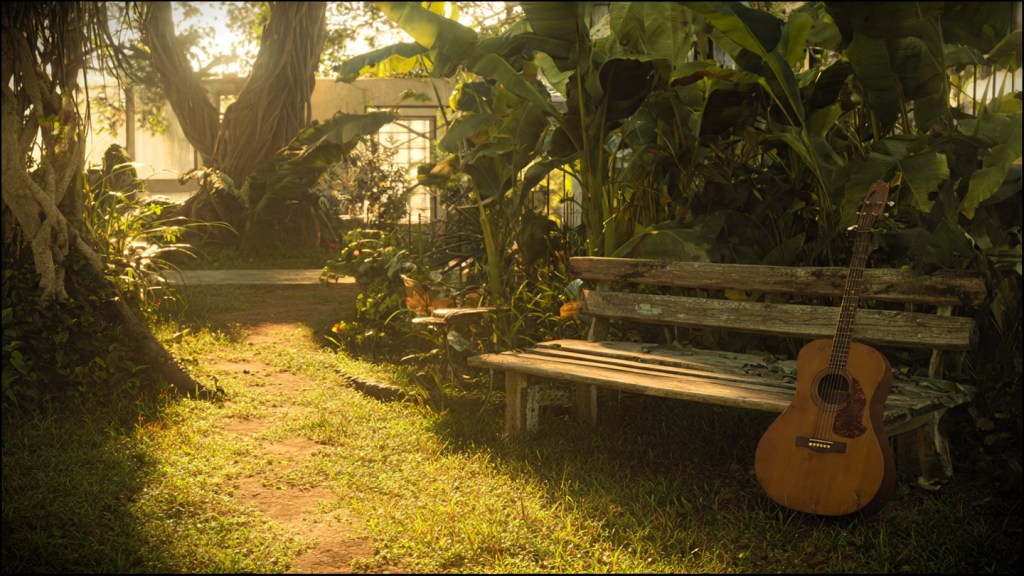
He sits across from me on a wooden bench, guitar resting against his knee, dreadlocks falling past his shoulders, eyes carrying that familiar intensity – part mischief, part ancient wisdom. The same eyes that stared down political violence, that envisioned African liberation, and that saw music as the ultimate weapon against oppression.
Bob Marley wasn’t merely a singer. He was the voice of the dispossessed, a spiritual guide to millions, and a man who believed so fervently in peace that he returned to the stage just two days after being shot, declaring that “the people who are trying to make this world worse are not taking a day off – how can I?”. His Exodus album was named by Time magazine as the album of the 20th century. His face remains one of the most recognisable on Earth.
What follows is our conversation – a chance for modern readers to hear directly from a legend about poverty, faith, music, family, politics, and the questions that still burn in our times.
The yard at 56 Hope Road has witnessed history before. Today, it witnesses something more: a dialogue between eras, between a world that Bob Marley helped shape and the man himself.
Let us begin.
Mr Marley, thank you for sitting with me today. On your birthday, no less.
Earthstrong, bredren. We say Earthstrong. The day I-man touch down ‘pon this Earth. And give thanks, you know – give thanks for life. Every day is a blessing from Jah.
Earthstrong – I like that. Let me start at the beginning, then. You were born not far from here, in Nine Mile, St. Ann Parish. What are your earliest memories of that place?
Nine Mile is the hills, seen? Green, green hills. My grandfather Omeriah – him have land there, coffee and bananas growing. I remember the mist in the morning, the smell of the earth after rain. Simple life, you know. No electricity, no running water. But peaceful. I used to sit on a rock there – big rock near the house – and just… feel things. Feel the vibration of the land. That rock still there now.
You’ve spoken before about being able to read palms as a child. Is that true?
Yeah, man. From young. People in the village would come to me, show me them hand. And I could see things, tell them things about themself. I don’t know how to explain it – is like something just come through me. Some people fear it, you know. But is a gift. Everything is a gift from the Most High.
Your father was white – a British naval officer – and your mother was Black Jamaican. Did you feel caught between two worlds growing up?
My father… him never really there, you understand? Him come, him go. I see him few times only. So I grow with my mother, with my grandfather, with Black people. But yes, I know what you asking. In Jamaica, them have a word – “half-caste.” People look ‘pon you different. Not Black enough for Black people, not white enough for white people. When I was young, it trouble me. But then I realise something important: I don’t have to choose. I belong to Jah. And Jah is for all people.
That sense of not belonging – did it shape your music, your message of unity?
Definitely. Because I feel both sides, I can speak to both sides. “One Love” – that come from knowing that division is just illusion, you know? Babylon want to divide – Black from white, rich from poor, nation from nation. But when you look with spiritual eye, you see we all one. All one blood, one destiny.
Speaking of your early years – you eventually moved to Kingston, to Trench Town. That’s quite a different environment from the hills of Nine Mile.
Trench Town is the ghetto, seen? Government yard. Concrete. Zinc fence. Plenty people packed together, plenty suffering. But also plenty creativity, plenty spirit. That’s where reggae born – right there in those yards. We never have nothing material, but we have music. Music was our way out, our way to express the pain and the hope.
You’ve called Trench Town a university of sorts.
Yeah, man! Trench Town is where I learn everything. I meet Bunny and Peter there – we become brothers, form the Wailers. I learn guitar there, learn to write song. Learn about Rastafari. Learn about struggle. The streets teach you things that no school can teach. How to survive, how to stay true when everything around you trying to corrupt you.
Those early days with Peter Tosh and Bunny Wailer – what was the dynamic like? Three young men with massive ambitions.
Fire, bredren. Pure fire. Peter was the militant one, always ready to fight. Him have a temper, you know? But brilliant – brilliant musician, brilliant mind. Bunny was more spiritual, more quiet. And me – I was somewhere in the middle, trying to hold it together. We argue, yes. We disagree. But the music… when we sing together, is like one voice. Harmony. That’s what people don’t understand – the Wailers was never just three man. Was one spirit singing through three mouth.
Eventually the original Wailers went their separate ways. Was that painful?
Everything have its season. Peter and Bunny – them never like the touring life, you know? The road is hard. Far from home, far from family. And them have them own vision, them own path. I respect that. We never stop being brothers – the music just… evolve.
Let’s talk about your spirituality. When did Rastafari enter your life?
Rastafari was always there, even before I know the name. Is like… you know something true, you feel it inna your heart, but you don’t have the words yet. Then you meet people who give you the words, the teachings. Mortimer Planno was one of the first elders who reason with me proper. Him explain about His Majesty, about Africa, about the whole thing. And when I hear it, is like coming home. Everything make sense.
His Imperial Majesty Haile Selassie – you never met him personally, yet he was central to your faith. How do you reconcile worshipping someone you never knew?
But I know him, bredren. I know him through the spirit. I know him through the words him speak, the things him do. When Selassie come to Jamaica in 1966 – April – Rita was at the airport. She see him wave, and she see the stigmata ‘pon him hands. She come home changed. And from that day, everything different.
Some people question whether Selassie himself would have accepted being viewed as divine.
Let people question. I deal with what I know in my heart. The Bible speak of the returned Messiah. It say Him would come from the lineage of David, from the root of Jesse, King of Kings, Lord of Lords, Conquering Lion of the Tribe of Judah. That is Haile Selassie – every title. If people want to close their eyes to truth, that is them business. Rasta don’t need no validation from Babylon.
Your song “War” takes the Emperor’s words directly from his 1963 UN speech. How did that come about?
My bredren Skill Cole – him bring me a pamphlet with the speech. And when I read those words – “until the philosophy which holds one race superior and another inferior is finally and permanently discredited and abandoned” – I feel electricity, you know? Is like the words was already music, already rhythm. I barely have to do anything – just let it flow. His Majesty was a prophet. Him see the future, see what the world would need to hear.
In December 1976, gunmen entered this very house and shot you, your wife, and your manager. Can you take me back to that night?
Right here. Right here where we sitting now, was blood that night. We was rehearsing for the Smile Jamaica concert – a peace concert, you understand? To bring the people together. And men come with guns, right through the back. Shoot up the whole place. Rita get shot in the head – bullet graze her skull. Don Kinsey get shot. I get shot in my arm and chest.
Did you know who sent them?
Politics, bredren. Jamaica was at war with itself – PNP against JLP, gunmen everywhere. I was trying to stay neutral, trying to bring peace. But when you stand in the middle, both sides see you as enemy. I never find out exactly who. Maybe I don’t want to know.
And yet, two days later, you performed at that concert anyway.
The people who are trying to make this world worse are not taking a day off. How can I? Seventy-five thousand people waiting. If I don’t play, what message that send? That the gunman win? No, bredren. We play. Arm in sling, bullet still in me – we play.
After the shooting, you left Jamaica for London, where you recorded Exodus. Many call it your masterpiece. What was that period like?
London was exile, but it was also freedom. No politics, no gunman at the door. Just music. We stayed in Chelsea, then moved to a house in South London. Cold, cold weather – nothing like Jamaica. But the band was tight, and we just focus. Exodus came together quick, you know – like the songs were already there, waiting to be born. “Jamming,” “Waiting in Vain,” “One Love,” “Exodus” – all from that time.
Time magazine later named Exodus the album of the twentieth century. Did you have any sense, while making it, that you were creating something so significant?
Man never think about legacy when making music. You just try to channel what Jah give you, make it pure, make it true. If it touch people, give thanks. But I never sit in studio thinking, “This one going be the greatest.” That’s ego. Music don’t come from ego – music come through you, not from you.
In 1978, you returned to Jamaica for the One Love Peace Concert. That night, you brought two political enemies – Michael Manley and Edward Seaga – together on stage and joined their hands. How did you have the courage to do that?
Courage? Is not courage. Is necessity. Jamaica was bleeding, bredren. People dying every day from this political foolishness. Both man claim to love Jamaica, but them followers killing each other in the streets. So I say, let the people see. Let them see these two man can touch hand, can stand together. Maybe then the gunman put down them weapon.
Did it work?
For a moment. For that night, maybe. But the system… the system deeper than two man holding hands. Babylon don’t change from one concert. Still, we try. Every little step matter.
Let me ask you something different. The most important invention in your lifetime – what would you say it is?
Important how? For good or for bad?
However you interpret it.
The aeroplane, bredren. Not because it new in my lifetime – but because of what it mean. Before plane, Jamaica is a island, cut off. Africa is far, far away – just a dream. But the plane shrink the world. I can go Zimbabwe, play for independence. I can go Gabon, Ethiopia. The music can travel. Ideas can travel. The plane make it possible for the message to spread. Reggae would still be in Trench Town if not for plane.
Interesting – I might have expected you to say radio or recording technology.
Radio and record important too – but them already there when I born. The plane is what make everything connect. Good and bad, you know – because Babylon also use it to move them weapons, them exploitation. But for Rasta, for music, the plane is liberation.
Speaking of the modern world – what’s something everyone else seems to love that you genuinely don’t understand?
Oh, plenty things, bredren. Plenty things. Insurance.
Insurance?
Yeah, man. Insurance. Babylon people love to insure everything – house, car, life. Pay money every month so that when something bad happen, you get money back. But is based on fear, you see? Whole life organised around fear of death, fear of loss. Rasta don’t fear these things. Jah provide. And this obsession with paperwork, contracts, guarantees – like you can make a contract with life? Life don’t work like that. You born, you live, you return to the earth. No insurance policy gonna change that.
You’ve also spoken about wealth in a way that confuses some people. A journalist once asked if you were rich, and your answer became famous.
Him ask, “Are you a rich man?” And I say, “What you mean rich? Possessions make you rich? I don’t have that type of richness. My richness is life, forever.” Because what is money? Paper. Numbers. You can’t take it when you go. The richest man in the cemetery is still dead. But life, love, spirit – these things eternal. I am rich because I live, because I feel, because I have purpose.
Yet you did accumulate money – the music was successful. How did you reconcile that?
The money come, I use it. Build Tuff Gong studio. Take care of my family, my community. Feed people. Spread the message further. Money is just energy – you can use it for good or for evil. I never worship it, never let it control me. If tomorrow all the money gone, I still have my guitar, still have my voice. That’s enough.
You have many children – twelve by various accounts. What’s the most important thing you’ve tried to teach them?
To know Jah. To know themselves. To stand firm in truth and never let Babylon system tell them who they are. And music – I teach them music. Ziggy, Stephen, Damian – all of them grow up with music in the house, hear the rehearsals, feel the vibration. I want them to carry on, you know? Not copy me – find them own voice. But carry on the mission.
Do you worry about them navigating the world carrying the Marley name?
Worry? No. Jah don’t sleep. The children are protected. The name can be burden or blessing – depend how you carry it. But my children are strong. They know where they come from.
Let’s talk about Rita. She’s been beside you through so much – including taking a bullet meant for you. How do you describe your relationship?
Rita is queen. From the first time I see her singing with the Soulettes, I know she special. She have a voice like angel – and spirit like warrior. We go through everything together – the struggle, the success, the shooting, the exile. She bring me to Rastafari proper. Without Rita, I don’t know where I would be.
Marriage is complicated for anyone. Was it complicated for you?
I am not a perfect man, bredren. I have my faults, my weaknesses. The road is temptation. But Rita know my heart. She know where home is. Some things between man and wife don’t belong in interview. What I say is this: love is not simple. Love is work, is forgiveness, is growth. We still growing.
You’ve lived in Jamaica, in London, in Miami. Where do you feel most yourself?
Jamaica. Always Jamaica. Even when I’m far, Jamaica is in my blood – the rhythm, the language, the spirit. But also, I feel at home anywhere Rastaman gather, anywhere the music play. Home is not just place – home is vibration.
You’ve mentioned Africa repeatedly. Did visiting Zimbabwe for independence in 1980 change you?
Oh yes, bredren. Zimbabwe was… was like prophecy coming true. All my life, Rasta teach about Africa, about the motherland, about freedom from colonial bondage. And here I am, watching the flag go up, watching Black people take control of them own destiny. I cry that night – no shame to say it. The concert, the crowd – hundred thousand people singing together. Is the greatest moment of my life musically.
You paid for your band’s travel yourself when the government couldn’t afford it.
How I going sit in Jamaica while Zimbabwe gain freedom and not be there? Money is nothing next to history. That moment was worth everything.
Let’s talk about football. You’re almost as famous for playing football as for making music.
Football is meditation for me, you know? The running, the kicking, the competition – it clear the mind. Every day, wherever I am, I must play. In London, in Miami, in Kingston – we find a pitch, we play. Some people use yoga, some people use prayer. I use football.
I’ve read that you’d play matches sometimes for hours on end.
Yeah, man. Morning to night sometimes. The body need movement. Music is sitting, standing, concentrating. Football balance it out. Plus, I love to win. I am competitive, don’t let anyone tell you different.
Who were the musicians that shaped you? Whose music did you study?
American soul music first – Curtis Mayfield, Sam Cooke. The way Curtis use music for social message, that inspire me deeply. And rhythm and blues – Fats Domino, them man. In Jamaica, we listen to American radio from New Orleans, pick up the signals at night. That’s how the rhythm reach us, mix with Jamaican mento and ska, become something new.
Curtis Mayfield is an interesting comparison – he also used music for activism.
Yeah, Curtis was a prophet in his own way. “People Get Ready” – that song is scripture to me. The Impressions show that popular music can carry serious message, can lift people up. I study that, learn from it.
What about Jamaican musicians before you?
Joe Higgs. Joe Higgs is the one who really teach me to sing, to harmonise. We call him the godfather of reggae. And the studio men – the Skatalites, all them musicians who create the foundation. We standing on their shoulders.
Some people hear reggae and think it’s all relaxed, peaceful music. But a lot of your songs are angry, even revolutionary.
Peaceful and revolutionary is not opposite, bredren. You can fight with love. “Get Up, Stand Up,” “Revolution,” “Zimbabwe” – these songs are militant, yes. But the weapon is truth. The anger come from love – love for the people suffering, love for justice. If you see wrong and feel nothing, you are dead inside. Anger is right – is what you do with it that matter.
Where did you stand on violence as a tool for change?
I prefer peace always. Music is my weapon. But I understand why people fight. When the system crush you every day, when your children starving, when them shoot you in your own house – what you supposed to do? Some things cannot be solved with guitar alone. I never tell a oppressed man not to defend himself. That is not my place.
Yet you named an album Uprising rather than Revolution.
Uprising is rising up – within yourself first, then in the world. Revolution can mean just changing who hold the power – same oppression, different face. But uprising is spiritual, is fundamental. When the people’s consciousness rise, everything change. That’s what Rasta teach – change must come from within.
What song of yours means the most to you personally?
Hard to say. Like asking a father which child him love most. But if I must choose… “Redemption Song.” Because is just me and guitar, nothing to hide behind. “Emancipate yourselves from mental slavery – none but ourselves can free our minds.” That is the whole message right there. Everything else I sing is commentary on that one truth.
You wrote that song when you knew you were ill.
Yes. When man face his mortality, him see things clear. All the noise fall away. I want to leave something pure, something that would last. “Redemption Song” is my testament.
We have to talk about what happened – the melanoma. It started in your toe.
Just a little wound, from football. Under the toenail. I think nothing of it. But it don’t heal, and when them finally check it proper, them say is cancer.
The doctors recommended amputation. Why did you refuse?
Rasta believe the body is temple of Jah. We don’t cut our hair, we don’t eat certain things – and we don’t cut off parts of the body. Is not just stubbornness, bredren. Is spiritual principle. Maybe I was wrong – I don’t know. Maybe if I cut the toe, I live longer. But then I would not be living as myself. You understand?
That’s a profound stance – choosing principles over survival.
Every man must make that choice eventually. I made mine. I don’t regret. The body is temporary anyway – the spirit is what matter.
You continued touring even as the cancer spread.
The music couldn’t stop. Too many people depending on it, too much work still to do. I collapse onstage in Pittsburgh – that was the end. Body finally say no more. But right up to that moment, I was giving everything.
Your final resting place is back in Nine Mile, where it all began.
Full circle, seen? The hills where I born, where I sat on that rock as a child. That’s where the body return to the earth. Is right. Is fitting.
What do you make of the world as it exists now? We have conflicts, climate change, inequality that might seem familiar to you.
Same Babylon, different clothes. The technology change, the faces change – but the system is the same system. Rich still exploiting poor. Powerful still crushing the weak. Wars still fighting. Until humanity address the spiritual sickness, everything else is just rearranging furniture on a sinking ship.
Does that make you pessimistic?
No, bredren. Never pessimistic. Because I see the youth – every generation, new youth rising up, questioning, fighting for change. The seeds we plant in the ’70s still growing. The music still playing. “One Love” still being sung in places I never even hear of. The message spreading. Slow, but spreading.
Your music remains extraordinarily popular – arguably more popular than during your lifetime. Does that surprise you?
Jah work, bredren. The message is bigger than Bob Marley. I am just the messenger. When the message is true, it don’t die. It can’t die.
A film was released recently – Bob Marley: One Love – telling your story to a new generation. What do you think about your life being dramatised that way?
I never see the film, so I can’t say if them get it right. But if it bring people to the music, to the teachings of Rasta, to the history of Jamaica – then good. Just don’t worship the man. Worship Jah.
What do you hope people will remember about you in a hundred years?
Not the hair. Not the ganja. I hope them remember the message: One love. One heart. One destiny. That we are all connected, all children of Jah. And that music is the weapon that can change the world without spilling blood. If them remember that, I am satisfied.
Is there anything you wish you’d done differently?
Maybe… spend more time with the children. The touring, the recording – it take you away. I miss things. First steps, first words. That is the price. I don’t know if I could choose different – the music was calling. But if I do it again, I would try to balance better. Family is everything.
What would you say to the young musicians of today, trying to make music that matters in a world so full of noise?
Don’t chase the money. Don’t chase the fame. Chase the truth. If your music is true, really true, it will find its people. Might take time. Might take your whole life. But truth always surface eventually. And surround yourself with people who love you for you, not for what you can give them. That is the most important thing.
Last question. If you could share one more song with the world, one message, what would it be?
I already share it, bredren. “Could you be loved, and be loved?” That is the question. Can you receive love? Can you give it? So many people afraid – afraid to be vulnerable, afraid to be hurt. But without love, what is life? Just survival. And survival is not living.
“Don’t let them change you, or even rearrange you… Oh no… We’ve got a life to live…”
Mr Marley – Bob – thank you. Truly. This has been an honour beyond words.
Give thanks, bredren. Give thanks for listening. And remember: the truth is an offence, but not a sin. Keep speaking it.
Robert Nesta Marley, born on 6th February 1945, in Nine Mile, Jamaica, rose from the impoverished “government yards” of Trench Town to become the world’s first global superstar from the Global South. The setting of this speculative interview, 56 Hope Road in Kingston, was Marley’s home and the headquarters of his Tuff Gong record label from 1975 until his death. It is now the Bob Marley Museum. This location holds deep historical weight: it was here, on 3rd December 1976, that Marley, his wife Rita, and manager Don Taylor were wounded in an assassination attempt during the height of Jamaica’s violent political conflict between the People’s National Party (PNP) and the Jamaica Labour Party (JLP).
Defying his attackers, Marley performed at the “Smile Jamaica” concert two days later before entering a self-imposed exile in London. During this period, he recorded Exodus (1977), which Time magazine later named the greatest album of the 20th century. His return to Jamaica for the 1978 One Love Peace Concert is historically immortalised by the moment he invited bitter rivals Michael Manley and Edward Seaga onto the stage to join hands – a symbolic gesture of unity in a nation on the brink of civil war.
Marley’s commitment to Pan-Africanism was absolute; he notably self-funded his band’s travel to perform at Zimbabwe’s independence celebrations in 1980. However, his life was cut short by acral lentiginous melanoma, a rare form of skin cancer discovered under his toenail in 1977. Citing religious objections to amputation, he continued to tour until his health collapsed in 1980. Bob Marley died on 11th May 1981, in Miami at the age of 36. Today, 6th February 2026, marks the 81st anniversary of his birth, a date celebrated worldwide by Rastafari and music lovers alike as his “Earthstrong.”
Bob Lynn | © 2026 Vox Meditantis. All rights reserved.

 Vox Meditantis
Leave a comment