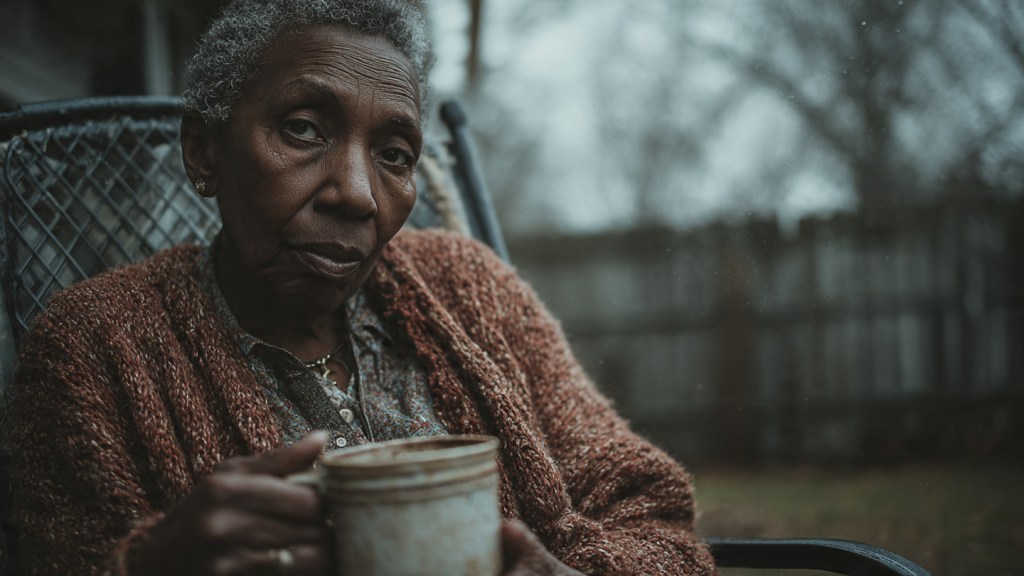
Write about a few of your favorite family traditions.
The prompt asks for “favourite family traditions,” which is a dangerous question to ask a woman who has lived in New Corinth for sixty-two years. In this town, “tradition” is usually just a polite word for “habits we’re too tired to break.” My granddaughter, who is currently studying sociology at the University of Delaware and uses words like “intergenerational trauma” over Sunday dinner, would probably call our family customs “maladaptive coping mechanisms.” She’s probably right. But at my age, I’ve found that the line between a coping mechanism and a beloved ritual is mostly just lighting.
I am not a woman of action. I never marched on City Hall when they closed the Iron Works in ’78, even though my Daddy lost his pension. I didn’t join the neighbourhood watch when the crack epidemic turned Fourth Street into a war zone in the nineties. My superpower, if you can call it that, is a kind of aggressive honesty about my own inertia. I watch. I witness. And I keep the traditions that require the least amount of movement.
Here are a few of the ones I actually like.
The Minerva Creek Flood Watch
Every time we get a “severe weather event” – which, let’s be honest, is just Tuesday now – my family gathers on my back porch to watch the creek rise. We don’t sandbag. We don’t panic. We don’t briskly move valuables to higher ground like the sensible people in the new condos down by the riverfront. We just sit there with mugs of lukewarm tea and narrate the water’s progress with the detachment of golf commentators.
“It’s taken the Johnson’s birdbath,” my brother will say.
“Yep. There goes the recycling bin,” I’ll reply.
It started when we were kids. My Daddy would say there was no point fighting water because water always wins eventually – a philosophy that applied to the Delaware River, the leak in the roof, and the city council. So we just watched. It’s a passive tradition, terrible in practice but strangely comforting in spirit. It’s our way of saying, We are still here, and we are not moving, even if we get wet. Last year, when the creek crested three feet over the bank, my niece asked if we should evacuate. I told her the truth: “Honey, if the water wants the house, it can have it. I’m not carrying that sofa.” We stayed. The water stopped at the bottom step. I took no credit for this, but I did finish my tea.
The “It Used To Be” Drive
This is a game we play every time I’m in a car with anyone under the age of forty. New Corinth is currently in the throes of what the brochures call “revitalisation,” which mostly means turning places where people used to sweat into places where people buy overpriced lattes. The tradition involves driving past these shiny new developments and aggressively pointing out what they used to be, just to make sure no one enjoys the new version too much.
“See that yoga studio?” I’ll say, pointing a crooked finger at a brick building in the Warehouse District. “That used to be a meat packing plant. The floor was always sticky.”
“See that craft brewery?” pointing to the renovated firehouse. “Your uncle got arrested there in 1982.”
My children hate this. They want to enjoy their artisanal flatbreads in peace without me reminding them that the “rustic industrial aesthetic” is just polished rust from a factory that laid off 1,200 people when I was fourteen. But I can’t help it. It’s not nostalgia – I don’t miss the smell of sulphur or the unemployment lines on Market Street. It’s just honesty. The city is trying to wear a new coat, and I feel obligated to point out the stains on the lining. It’s my contribution to the historical record. I don’t protest the erasing; I just annotate it.
The Scrapple Peace Treaty
In most families, holiday breakfasts are joyous. In ours, they are a grim standoff involving scrapple – that grey, rectangular slab of pork scraps that is the unofficial masonry of Delaware. I am the only one who knows how to cook it properly (sliced thin, fried until it shatters like glass), but here is the tradition: I pretend I’m going to let someone else do it.
Every Christmas morning, I sit in my chair, sipping coffee, watching my daughter-in-law approach the stove with the optimism of the uninitiated. I see her turn the heat too low. I see her slice it too thick. I say nothing. I let the tragedy unfold. I let the scrapple turn into a mushy, grey paste that looks like wet cement. I watch her serve it. I watch everyone eat it in polite silence.
“Is it… supposed to be this texture?” she’ll ask.
“It is if you cook it that way,” I’ll say, smiling over my mug.
It’s petty, I know. A better woman would jump up, take the spatula, and save breakfast. A kinder woman would offer a lesson. But I am not a better woman. I am a woman who enjoys the spectacle of small, low-stakes failures. It’s the one time a year I allow myself to be indispensable by doing absolutely nothing.
I suppose that’s the thread running through all of these. We don’t fight the flood; we watch it. We don’t fix the city; we remember what broke it. We don’t save the breakfast; we eat the mistake. They aren’t the kinds of traditions you put in a heartfelt memoir, but they’re honest. And in a town like New Corinth, which has spent the last fifty years trying to be something it isn’t, a little honest inertia feels like the only legacy worth keeping.
Bob Lynn | © 2026 Vox Meditantis. All rights reserved.

 Vox Meditantis
Leave a comment