What’s the funniest way you’ve ever saved a day that was headed straight for disaster?
Monday, 29th December, 1539
Thou askest how I came to lie here, in this stone-walled house of sickness, these four days past Christmas-tide? Aye, sit thee down if thou canst bear the stench of fevered breath and tallow-smoke, and I shall tell thee plain.
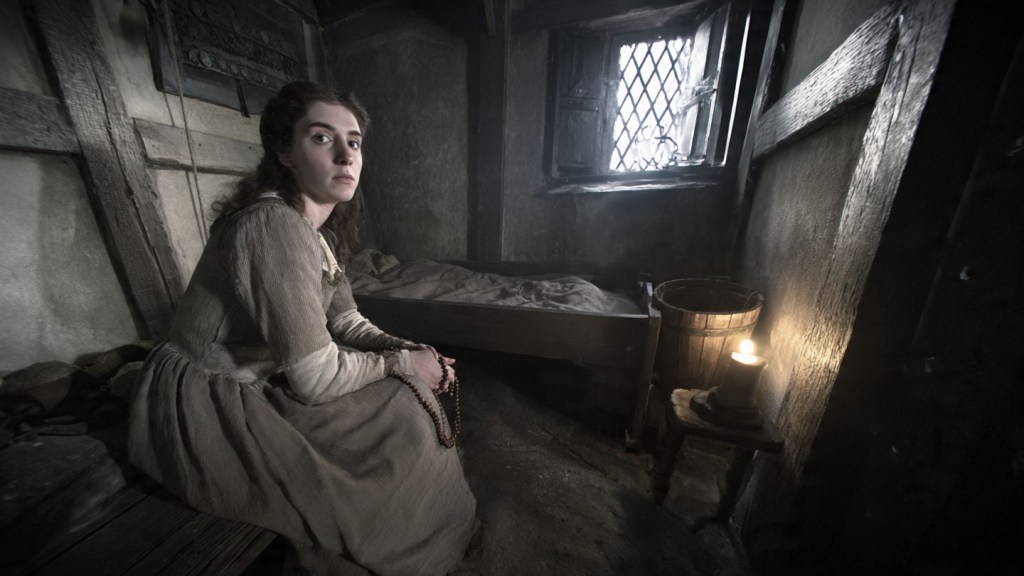
I am no Englishwoman born, though my tongue shapes thy words well enough now. Flanders was my country – Bruges, where the canals run black as ink come winter, and the wool-ships crowd the quays like geese upon a pond. But when the old Duke died and soldiers came with torches, my father’s house went up in flame, and I with naught but my mother’s wooden beads and the shift upon my back. That was three years since. Three years of walking, begging passage, sleeping in ditches and under hedgerows, learning which roads lead to charity and which to the constable’s rope. The wheel turns, and turns again, and here I lie – displaced, they call it, as though I were some piece of furniture set down in the wrong chamber.
This place – this infirmary that was once a priory guesthouse before the King’s men came and tore down the rood-screen – it reeks of rosemary and vinegar, of pottage gone cold in wooden bowls, of urine in the pails beneath the beds. But it is warm. God’s bones, it is warm, and there are woollen blankets rough as a cow’s tongue, and twice daily they bring broth with barley floating fat and soft upon the top. I have known worse. I have lain in barns where the cold crept through the straw and bit my fingers blue.
The matron here – a widow-woman, sour-faced as week-old milk – she misliked me from the first. Said I was too forward, too quick with my tongue. And perhaps I am. My choler rises swift as smoke when I am crossed, and I have learned ’tis a sin the priest must hear each month, though I confess it brings me small amendment. When she bid me scrub the flags upon my knees – me, who was brought so low with coughing I could scarce draw breath – I told her she might take her bucket and her bristle-brush and – well. Let us say I spoke words unfitting for a Christian house. She struck me across the mouth. I tasted blood, salt-sharp upon my lip, and for a moment saw red as any bull at Bartholomew Fair. But I held. I held my hand, though it shook, and I bent my head and took up the brush. For where else should I go? Back to the roads, to sleep beneath hedges with snow upon the ground? Nay. I have learned this much: to endure is to survive, and to survive is its own manner of victory.
Now to the matter that made thee smile when I spoke of it afore – the strangest turn by which I saved a day that was like to go all to ruin. ‘Twas but a day past, upon the Feast of the Holy Innocents. The physician – a man with hands like ham-hocks and breath that could fell an ox – he came to bleed old Margery in the bed beside mine, for she had been raving with fever these three nights. But the basin – dost thou mark me? – the basin for the blood was cracked, and when he set the lancet to her vein, the red stream ran not into the bowl but straight across the linen and onto the floor, pooling there like some sacrifice gone awry. The matron shrieked. The physician cursed – aye, cursed, though he crossed himself after. And Margery, poor soul, she began to weep and cry that she was dying, that her life was flowing out upon the rushes, and would no one say a prayer?
Well. My temper flared. I know not why – perhaps because I was weary of the matron’s shrieking, or because the physician stood there gape-mouthed as any landed fish whilst Margery bled. I threw off my blanket – though my head spun and my chest felt tight as a drum – and seized a great armful of those same rushes from the corner where they keep them for changing. I thrust them down upon the blood, soaking it up, and then I rounded upon the physician and told him if he meant to kill the woman he might at least do it with some competence. Fetch another basin, I said – nay, shouted – or bind her arm and be done.
He was so affronted – so puffed up like a rooster – that he forgot his incompetence and did as I commanded. Found a wooden pail, bound up Margery’s arm with a clean cloth, muttered something about humours and phases of the moon. The crisis passed. The matron ceased her wailing. And Margery lived, though she knows not that I am the one who stanched the flow and bullied the physician into sense. When ’twas done, I stood there trembling, my shift soaked with blood and my bare feet cold upon the stone, and I began to laugh. Not merry laughter, mark thee, but the wild, helpless sort that comes when one has been so near to disaster that it seems a jest of God. The matron called me mad. Perhaps I am.
But here is truth: I persevere. That is my portion, my lot, the one gift I possess that cannot be stolen nor burned nor taken by statute or sword. When my choler rises I master it, or I am mastered – and I have chosen the former, though it costs me dear. Each day here I wake to the same round: prayers at dawn if the warden remembers to ring the bell, gruel or pottage or yesterday’s bread, the washing of bandages in great tubs of scalding water, the turning of the sick in their beds so they do not rot into the linen, the emptying of pails, the scraping of candle-wax from the stones. The wheel turns, and I turn with it, and there is a comfort in that – in knowing that I can bend my back to labour, that I can hold my tongue when I must, that I can rise again though I am brought low.
This December light is thin and grey as whey, slanting through the narrow windows and touching the edges of things: the rim of a pewter cup, the curve of a woman’s shoulder beneath her shift, the round smooth beads of my mother’s rosary that I clutch at night when the coughing comes. Circles, all of it. The year turning toward its ending, the cycle of the fevers that return and ebb and return again like the tide at Dover, the endless round of prayer and labour and sleep and waking. I am caught in the wheel, but I am not broken by it. Not yet.
And if thou wouldst know what sustains me through this grinding round of days, ’tis not hope – not the airy, golden sort that priests preach of – but something heavier and more stubborn. Call it wrath, if thou wilt, or courage, or simple mulish refusal to die in a ditch like a dog. I think on Flanders, on the canals frozen hard and the swans that returned each spring though we children threw stones at them. I think on my mother’s hands, red and chapped from the wash-tub, and how she never once complained though my father drank away his wages and beat her besides. Endurance, she taught me, though she never named it such. To last longer than the grief, to outlive the cold, to wake each morning and set one’s feet upon the floor and say: Not yet. Not yet will I yield.
The matron thinks me broken, I suspect. She sees a woman brought low, a foreigner with naught but rags and rage. Let her think it. I shall scrub her flags and wash her bandages and bite my tongue when she speaks sharp, and all the while I shall be gathering strength like a miser hoarding coins. For the wheel turns, does it not? And who is to say which way ’twill tip when next it comes full round? She may be matron now, but I have persevered through worse than her sour temper and her bucket. I have crossed the sea in a fishing-boat, slept in a ditch with snow upon my hair, watched a city burn and lived to speak of it. I am not yet spent.
So aye, I lie here in this house of sickness, and I am angry – always angry, a coal that will not cool – and I am weary unto death. But I endure. And that, I have learned, is its own manner of grace, though no priest would call it so. The circle closes and begins again, and I with it, stubborn as stone, hot-tempered as a summer storm, and alive – God rot me – alive still.
Bob Lynn | © 2025 Vox Meditantis. All rights reserved.


 Vox Meditantis
Leave a comment