When are you most happy?
Monday, 21st December, 1874
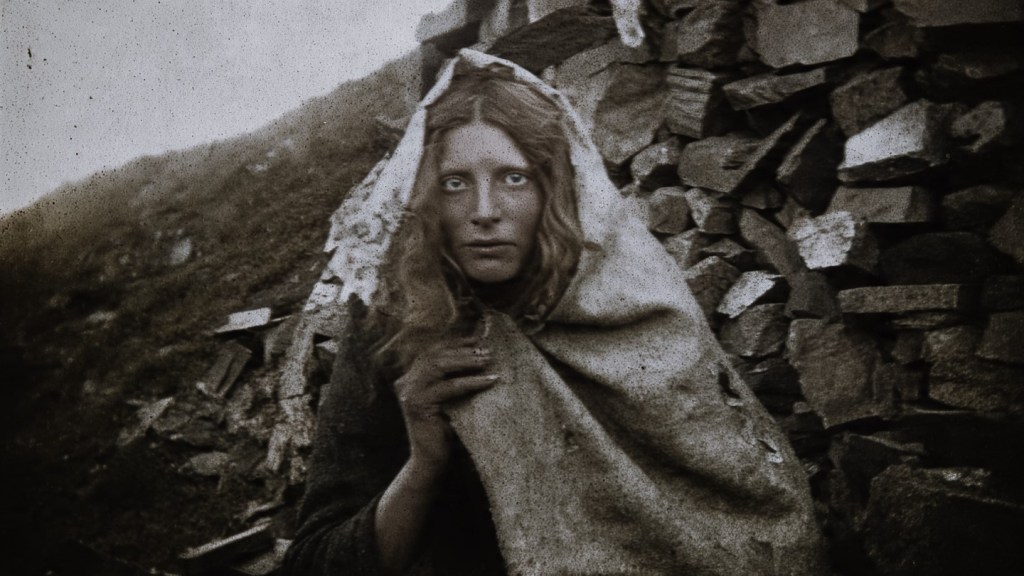
I speak to you from the bottom of Penrhyn quarry, where the winter dusk comes early and the cold settles like judgement in the stone.
You will ask why I am here. Why a woman stands amongst the rubble and the broken slate, her shawl pulled close, her boots worn through at the sole. I have nowhere else to go. When you have burnt your life to ash with your own hands, when you have let fury consume what ought to have been sacred, you find yourself drawn to places like this – to pits and wounds in the earth where other men have torn something out that cannot be replaced.
I was not always a wanderer. I had a name once, a place at a hearth, hands that knew the weight of dough and the rhythm of the loom. But I carried within me something I could not speak of, something that sits even now like a stone in my throat. There are things a woman may not say aloud in this world – not to her husband, not to her mother, not even in the confession of prayer. And when the unspoken thing grows too large, when it presses against your ribs until you cannot draw breath, it turns to poison. Mine turned to wrath.
I do not ask your forgiveness. I seek only to understand what I have become.
They say anger is the province of men – that righteous fury belongs to fathers and magistrates, to parsons thundering from their pulpits about sin and damnation. A woman’s rage is unseemly, unnatural. It marks you as mad or wicked or possessed. But I tell you this: my anger was not madness. It was clear-sighted and deliberate, and that is what makes it unforgivable. I knew what I did when I struck out. I knew the cost, and I paid it gladly in that moment, thinking only of the hot rush of satisfaction, the sweetness of destruction.
What did I destroy? That I cannot tell you. It remains unspoken still. But know this: I unmade myself in the unmaking of another. I severed the thread that bound me to home, to kin, to the woman I might have been. And now I wander these December roads, sleeping where I can, taking work where it is offered, moving always because to stay is to invite questions I cannot answer.
You ask – though you have not spoken it yet – when I am most happy. Strange question for one whose life is penance and cold stone. But I will answer it true. I am most happy in the early morning, when I wake before the dawn and the world is still dark and silent. In those moments, I am no one. The quarry sleeps, the workmen have not yet arrived with their hammering and their curses, and I stand alone in the grey light, watching the mist rise from the valley below. I am neither the woman I was nor the woman I have become. I am simply breath and heartbeat, a creature of flesh returning briefly to innocence before the day begins and I must remember what I have done.
It is a thin happiness, you understand. Fleeting as frost on glass. But it is mine, and I cling to it.
I have spent these weeks in solitude, working where I can amongst the slate-workers, carrying water, clearing rubble, doing the rough labour that needs no skill. The men do not speak to me. They know I am not one of their wives or daughters, that I have no right to be here, but they tolerate my presence because I work without complaint and ask for little. The overlooker watches me with suspicion, but he has not turned me away. Perhaps he senses that I am already punished enough.
There is a chapel in the village below – a plain, slate-roofed building where the miners gather on Sunday evenings to sing their hymns in Welsh. I went once, stood at the back with my head covered, and listened to them sing of redemption. They sang as though they believed it – as though a man or woman could be washed clean, made new, restored to grace. I wanted to believe it. I tried to let the music fill the hollow place inside me. But when I closed my eyes, I saw only what I had done, and I knew that some things cannot be undone by singing.
Still, I think of those voices now. I think of the fervour in them, the passion that drove them to raise their voices together in that cold room, seeking something beyond themselves. Passion – that is what I have left. Not the pure devotion of the faithful, but the fierce, unyielding drive that keeps me moving, keeps me breathing when I ought by rights to lie down and die. It is passion that brings me back each morning to this quarry, that makes me lift the broken slate and stack it, piece by piece, as though I might build something from the ruins.
Perhaps that is what we are called to do – those of us who have fallen, who have let our basest nature rule us. We are called to confront the wreckage we have made, to stand in the midst of it and acknowledge what we have destroyed. Not to excuse it, not to soften it with pretty words, but to see it clear and true. Only then can we begin the work of restoration.
I do not speak of heavenly restoration. I am not fit to speak of that. But I speak of the human work – the daily labour of choosing to live with conviction, to seek what is true and just even when you have forfeited your right to those things. There are others like me, I think. Men and women who carry secrets, who have transgressed, who wander in search of something they cannot name. We recognise each other by the shadows in our eyes. And perhaps in that recognition there is a kind of fellowship – not redemption, but companionship in our shared brokenness.
I have come to believe this: that we are not beyond reach, even in our worst moments. That the human spirit possesses some capacity for renewal that cannot be entirely extinguished, even by our own hands. I do not know if I will ever be whole. I do not know if wholeness is possible for one who has done what I have done. But I know that each morning I choose to rise, to work, to endure – and in that choosing there is a kind of defiance. A refusal to let the worst of myself be the final word.
The philosophical men would tell you that truth sets you free. Perhaps it does, for those whose truths can be spoken aloud. Mine must remain locked in silence. But I tell you this: even the unspoken truth has weight and substance. Even the taboo thing, the shameful thing, the thing that cannot be named – it exists, and it shapes the world. To acknowledge it, if only to oneself, is a kind of liberation. Not freedom from consequence, but freedom from the pretence that we are anything other than what we are.
Night comes early in December. Already the light is failing, and the quarry fills with shadow. Soon the men will leave their work, returning to their cottages and their suppers, and I will remain here, watching the stars emerge above the jagged rim of stone. Today is the shortest day, the turning of the year. From tomorrow, the light will begin its slow return. There is something in that which offers comfort – the knowledge that even in the depths of winter, even in the darkness, the world is already preparing for renewal.
I do not delay in speaking these truths to you, though I know they are hard to hear. The moment for transformation is not in some distant future. It is now, in this cold quarry, on this December evening, in the honest reckoning of what we are and what we have done. Seize it, if you have the courage. Do not wait for easier circumstances or a more convenient hour. The work of confronting yourself begins in whatever moment you find yourself, however bleak that moment may be.
And if you cannot yet speak your truth aloud – if the taboo remains unbroken, as mine must – then speak it in your actions. Let the way you live be a testimony to the person you wish to become. Align yourself with those who seek integrity, even if you yourself have fallen short. Extend to others the grace you cannot yet claim for yourself. For love, in its highest form, is not earned or deserved – it is freely given, a principle woven into the fabric of existence, offering restoration to all who will receive it.
I offer this to you because no one offered it to me when I most needed it. I offer it because the darkness is real, and the brokenness is real, but they are not the only realities. There is also the possibility of something more – not innocence regained, but a different kind of wholeness built from the fragments of what we were.
The cold deepens. I must find shelter before full dark. But I leave you with this: do not despair of yourself, however far you have fallen. The capacity for renewal lives in you still. Tend it carefully. Let it grow. And when you are ready, step forward into the life that awaits you – the life you were meant to live, if only you have the courage to claim it.
The darkness comes, but I am still here. That is enough for now.
Bob Lynn | © 2025 Vox Meditantis. All rights reserved.

 Vox Meditantis
Leave a comment