Tell us one thing you hope people say about you.
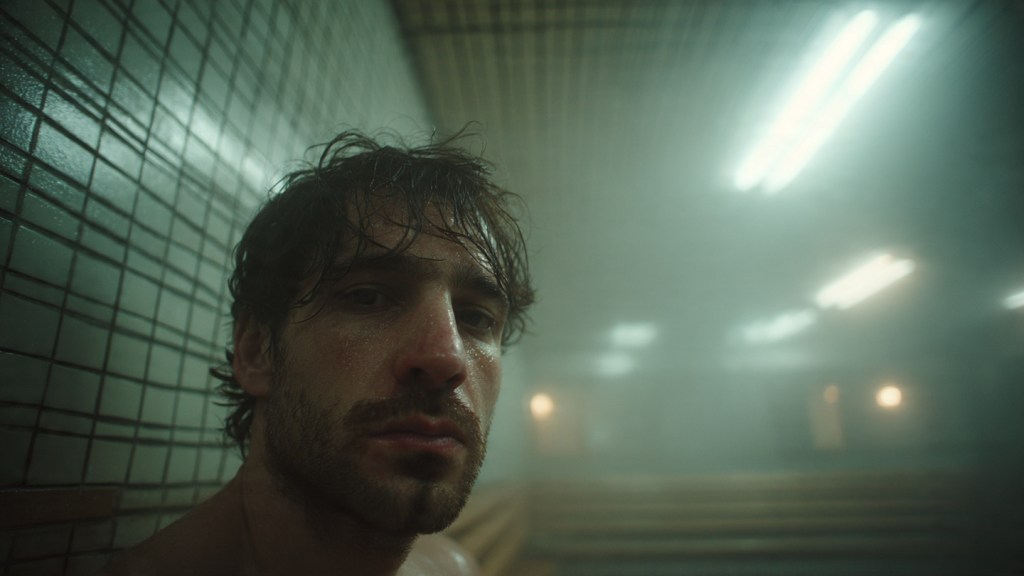
You come to me here, in the steam. Always in the steam. I suppose you think it fitting – the prophet stripped bare in the Turkish baths on Seven Sisters Road, water beading on tiles the colour of old bruises, condensation running down the walls like the city weeping. Monday afternoon, fourteenth of December, 2033, and the heating’s broken again in half of North London, so they come in greater numbers than usual. Refugees from their own flats. The hum of the filtration system sounds like prayer if you listen long enough, a low thrum that fills your lungs whether you want it or not.
They ask me about the ceasefire. That’s what they always ask now – will it hold, this fragile thing stitched together in Geneva whilst the drones still circle above Odessa and the Baltic states hold their collective breath? I tell them what the wind tells me. And the wind, I remind them, is fickle. It changes direction between one heartbeat and the next. You feel it even here, when someone opens the outer door – that cold draught that cuts through the mineral-thick air, sharp as prophecy, gone before you can name it.
I’ve been clean eleven days. You didn’t ask, but I’m telling you anyway. Eleven days since I last touched the stuff – those little printed squares, the ones you lay on your tongue like a bitter communion. Synthetic serenity, they call it on the feeds. “SS” in the street shorthand, which makes us all laugh until we’re weeping, because we know what those letters meant once, and we’re too tired for the irony. It promises clarity, and it delivers, but clarity isn’t the same as truth. That’s the trap, you see. The thing wraps itself around your brainstem like liturgy, like wire, like purpose, and you think you’re seeing the shape of things to come when really you’re just seeing the shape of your own hunger reflected back at you.
Someone near the cold plunge is arguing politics – their voice bouncing off the vaulted ceiling, words I don’t catch but the cadence I know: desperation dressed as certainty. The municipal baths were built in 1896, and they’ve outlasted empires. That should tell you something. The stones remember more than we do. I come here because the steam opens the throat, and if you’re meant to speak – if that’s the particular curse you’ve been handed – then you need an open throat. The air here is so thick you could chew it. Sulphurous. Clean and filthy at once.
Tell us one thing you hope people say about you. That was the question on the application form, the one the Arts Council made me fill when they still had money for “community spiritual practitioners.” As though prophets need grants. As though you can invoice vision. I stared at that question for twenty minutes, my fingers hovering over the keypad, and finally I wrote: I hope they say I was still trying. Not that I succeeded. Not that I was right. Just that I kept faith with the trying, even when the trying looked like failure, tasted like failure, felt like drowning in your own certainty.
Because that’s the thing about peace – it’s not a destination. It’s a daily choice made by millions of people who have every reason to choose otherwise. War is simple. War has clear lines. I understood war when I was using; it made sense to me, the way binary code makes sense to a machine. Peace requires you to hold contradictions in both hands and not let go when they start cutting into your palms. Peace is the harder addiction to maintain.
The steam shifts. There’s a ventilation shaft above my head, and when the wind outside picks up – and it’s picking up now, I can hear it testing the old window frames – cold air falls down like revelation. Like grace, if you still believe in grace. I’m not sure I do, most days. What I believe in is breath. The simple mechanics of it: in, out, the bellows of the lungs, the way the diaphragm contracts and releases. You can’t lie to your lungs. When they’re clear, you know it. When they’re not, when they’re full of fog or memory or the residue of synthetic bliss, you know that too.
A woman passes me, her wet hair plastered to her skull, and she nods as though we’ve spoken before. Perhaps we have. I don’t always remember faces when I’m coming down – eleven days, did I mention? Eleven days of remembering how to be sober, which is harder than remembering how to be holy. Sobriety doesn’t promise you anything. It just makes you present for whatever comes next, and what comes next is often unbearable. That’s why people like me exist, I think. Not to make the unbearable go away, but to sit with you whilst you bear it.
The news feeds say the peacekeeping forces are moving into position along the demilitarised corridor, that we might see Christmas without incident this year. Christmas. The oldest story about peace we have – the one about a child born in filth and straw, about empires that didn’t notice and stars that only shepherds saw. I wonder if it was true, any of it. I wonder if truth even matters when the story does the work.
My sponsor – because even prophets need sponsors now, even the ones who hear the voice of whatever-you-want-to-call-it in the hiss of steam – my sponsor says the addiction isn’t to the chemical. It’s to the relief. The relief from having to hold it all, from carrying the weight of other people’s questions, from being the one who’s supposed to see clearly when the air itself is thick with lies and ash and the particular fog that passes for hope in this particular winter of this particular century.
But eleven days. Eleven days of being here, of breathing this soup-thick air, of listening to the wind find its way through cracks in the old walls. Eleven days of being wrong and right in equal measure, of being insufficient to the task and doing it anyway. That’s what I want them to say, in the end. Not that I was wise. Not that I knew. Just that I showed up, day after bitter day, and tried to read the wind.
The cold plunge beckons, but I’m not ready. Not yet. You have to work up to the shock of it, the way you work up to truth. First, you sit in the heat until you can’t stand it. Until your skin screams and your heart races and you think you might dissolve entirely into water vapour, into prayer, into nothing. Then – and only then – you submerge. And in that moment of impossible cold, when your lungs seize and your entire body revolts against the choice you’ve made, you remember: this is what being alive feels like. This sharp. This real.
The wind outside is howling now. You can hear it even through the stone, even through the steam. It’s carrying something – snow, maybe, or rain, or just the smell of the city in winter, diesel and roasting chestnuts and the particular metallic tang that comes before weather changes. I used to think prophecy meant seeing the future. Now I know it just means paying attention to the wind.
So here’s what I’ll tell you, since you came all this way, since you’re listening: the ceasefire might hold. It might not. The peace we’re building is as fragile as breath, as fierce as breath, as necessary as breath. And I can’t promise you I’ll stay clean – eleven days isn’t forever, and forever is asking too much. But I can promise you this: I’m still trying. I’m still here, in the steam and the stone, still reading the wind, still holding my lungs open to whatever truth comes next.
That’s all prophecy ever was. The willingness to keep breathing when the air burns.
Bob Lynn | © 2025 Vox Meditantis. All rights reserved.


 Vox Meditantis
Leave a comment