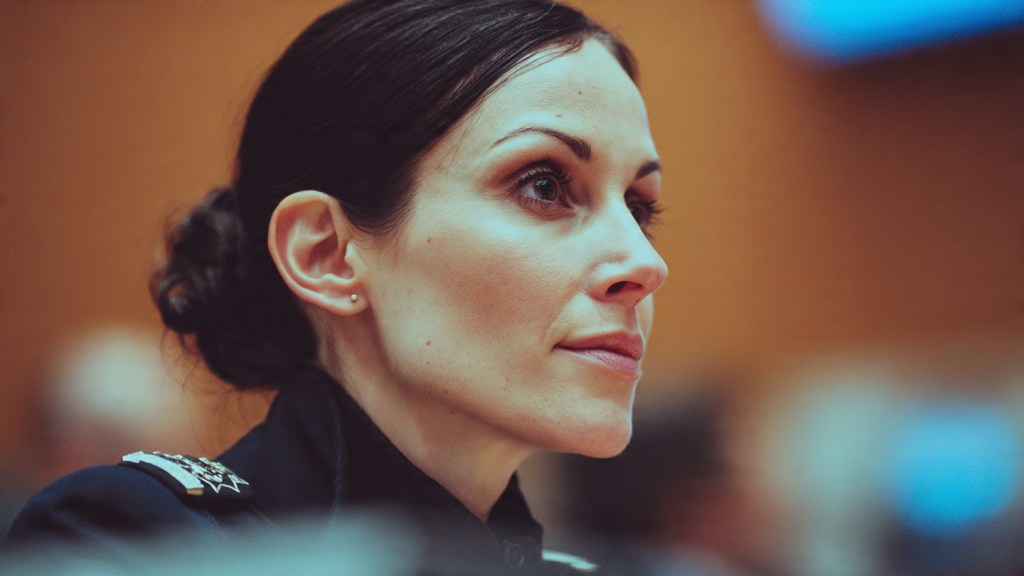
What positive events have taken place in your life over the past year?
Yes, of course, I understand completely why you’ve asked me here today. And I’m grateful – truly grateful – for the opportunity to address this tribunal directly, to speak in my own words, rather than having my account filtered through lawyers or algorithmic assessments or whatever else passes for justice these days.
Wednesday, 7th December 2039. Let that be noted for the record, please.
My name is on your screens already, I’m sure. Chief Navigator, Atlantic-Pacific freight route, licensed and certified for autonomous oversight since ’34. Fifteen years at sea before that, working my way up from deck crew on the old diesel freighters – the ones they’ve all scrapped now, melted down for their metals. I know these waters better than most people know their own families. Better than the satellite systems, if I’m being honest, though I suppose that’s what’s got me into trouble, isn’t it? Trusting my own judgement over the network protocols.
But let me address the question you’ve posed, because I think it speaks to my character, my reliability. What positive events have taken place in my life over the past year? Well now, that’s thoughtful of you to ask. Shows you’re interested in the whole picture, not just the incident report that brought me before you.
I was promoted to lead navigator on the Meridian Crossing last January. That’s a thirty-thousand-tonne hybrid vessel, entirely automated except for human override – which is where I come in. It’s an honour, truly. Only twelve of us qualified for that level of autonomous partnership in the whole European-Atlantic fleet. The ship’s systems trust my inputs over their own calculations in emergency scenarios, you see. Or they did, until three weeks ago.
My daughter – she’s eight now – she won’t remember the rising, not properly, but last spring we finally secured permanent housing in the Manchester redevelopment zone. Inland, elevated, flood-certified through 2070. That’s positive, wouldn’t you say? That’s stability. That’s me providing for my family in an uncertain world. Some might even call it success, the kind that comes from making the difficult choices, the unpopular ones, when everyone else is paralysed by committee consensus and risk-aversion algorithms.
I mention this because I want you to understand: I’m not reckless. I’m not cavalier with lives or cargo. I’m someone who plans, who secures futures, who sees patterns before they fully form.
And that’s where we come to the dreams, isn’t it? The psychological evaluation questioned me about those. As if imagination were some kind of liability in a navigator. I dream about the ocean, yes – great nets of current and counter-current, thermal layers weaving through each other like – like textiles, like programmes running through each other. I can see routes in my sleep that the predictive models miss because they’re too busy averaging out anomalies. The ocean isn’t an average. It’s a living system, and sometimes you need human instinct to read it properly.
When I overrode the routing algorithm on 16th November, it wasn’t arrogance, whatever the incident report claims. It was professional judgement. The system wanted us to hold position for eighteen hours until the storm system passed. Eighteen hours burning fuel, eighteen hours behind schedule, eighteen hours of penalties accumulating. But I’d been tracking that low-pressure system for three days, and I knew – knew in my bones, in my experience – that there was a window. A narrow one, yes. Difficult, yes. But navigable.
I’ve brought vessels through worse. I’ve threaded passages that the autonomous systems flagged as impossible. That’s why they pair human navigators with the AI in the first place, isn’t it? Because sometimes the safe choice isn’t the right choice, and you need someone with the – forgive me – the courage to make that call.
The fact that we encountered unexpected wind shear, that we took minor hull damage, that we had to put in for repairs in the Azores – well, yes, I understand that’s costly. I understand that it’s inconvenient. But we didn’t lose the cargo. We didn’t lose any crew. And we would have been just as late if I’d followed the algorithm’s recommendation and sat idle for eighteen hours like frightened children waiting for permission to move.
You see, what concerns me – and I hope you’ll forgive my candour, but I think this tribunal deserves my honesty – what concerns me is that we’re creating a system that punishes initiative. That traps us in a tangle of protocols and permissions until we can’t move at all. Every decision logged, every override flagged, every deviation from the predicted path subject to review and assessment and potential disciplinary action.
How are we supposed to navigate anything in those conditions? How are we supposed to adapt to a changing world – and it is changing, you must have noticed – when we’re caught like fish in a net of our own making? The climate’s shifting faster than the models predicted. The currents aren’t where they used to be. The safe routes of ten years ago are dangerous now, and the dangerous routes might be our only options soon.
I’m not saying I’m infallible. I would never claim that. But I am saying that my instincts, my experience, my willingness to make the hard choices – those are assets, not liabilities. Those are exactly what you should want in someone responsible for millions of pounds of cargo and a crew of thirty souls.
The mediator asked me earlier if I understood why my actions were being reviewed. And I do, I truly do. There are regulations. There are procedures. There’s a whole infrastructure of safety systems designed to prevent exactly the kind of independent decision-making that I exercised. I respect that. I respect the intention behind it.
But I also know – and I think if you’re honest, you know this too – that the world we’re navigating now isn’t the world those regulations were written for. The seas are higher. The weather’s more violent. The margins are thinner. And sometimes the person who’s willing to take calculated risks, who’s willing to trust their judgement over the machine’s caution, who’s willing to be held accountable for their choices – sometimes that person is exactly who you need at the helm.
I’m not asking for leniency, exactly. I’m asking for understanding. I’m asking you to see the full context, not just the incident report. I’m asking you to consider whether you want navigators who follow orders without question, or navigators who can still think for themselves when the systems fail.
Because they will fail, eventually. The systems will collapse. The infrastructure will break. And when that happens, you’ll want someone like me- someone who knows how to sail by the stars and the currents and the old knowledge, not just the glowing screens and the satellite feeds and the voices telling us all to stay until, stay safe, stay within the designated parameters.
So yes, your honour – or honours, I should say, members of the tribunal – I’m here in good faith, answering your questions, accepting this process. But I’m also here with my head held high, because I made the choice I’d make again. The ship is afloat. The crew is safe. The cargo was delivered. And if that’s not success, by any reasonable definition, then I don’t know what we’re measuring anymore.
Thank you for hearing me out. I know I’ve taken more time than perhaps was allotted, but I thought you deserved to hear the truth as I see it. And I do hope – I genuinely hope – that we can find a way forward that recognises both the need for safety and the need for human judgement. Because without both, I fear we’re all just drifting, waiting for the next storm to make our decisions for us.
Bob Lynn | © 2025 Vox Meditantis. All rights reserved.

 Vox Meditantis
Leave a comment