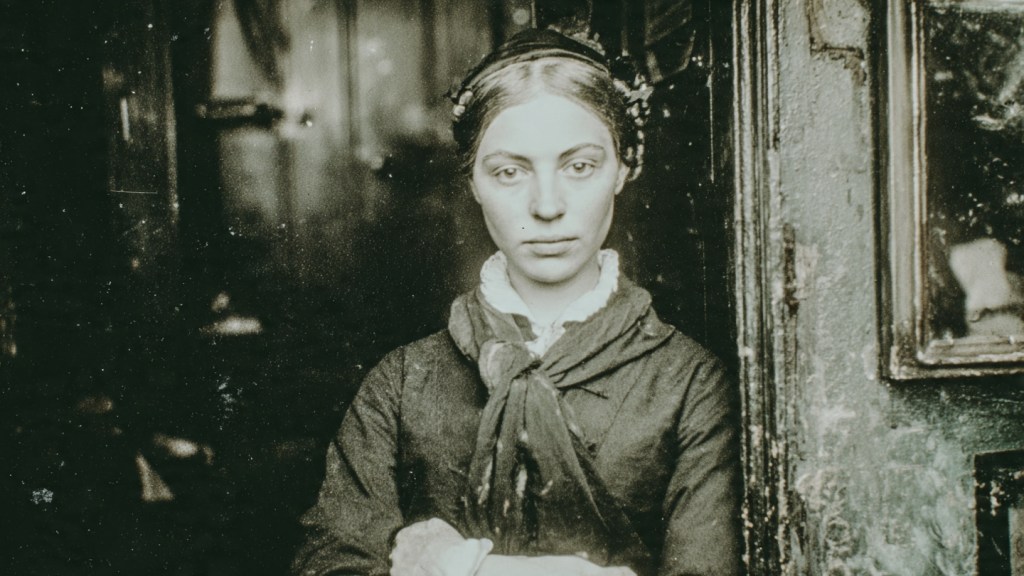
Do you have a favorite place you have visited? Where is it?
Saturday, 5th December 1835
You ask me – you, who sit warming your hands at this poor fire whilst the ostler tends to your horses – you ask me if I have a favourite place amongst all those I have visited in my wanderings? I shall tell you, and mark well what I say, for I do not speak idly nor change my opinions with the wind as so many do in these uncertain times.
There is but one place that has touched my soul with its truth, and that is the ancient city of York, where the Minster rises like a finger pointing to Heaven itself, reminding all who behold it of the eternal verities that govern our lives. I painted there, you understand – I sat before that great edifice for three days entire, capturing its likeness in watercolours whilst the September light played upon the stone. That is art! That is beauty wedded to purpose! Not the frivolous daubs and sketches that pass for painting in these modern times, where artists chase after novelty like children after soap-bubbles.
I tell you plainly – and I have said as much to the Royal Academy itself, though they care not for the opinions of a woman who earns her bread by her brush – that art must serve a higher purpose. It must instruct. It must elevate. It must remind us of our duties and our proper station. When I paint a portrait, I do not merely capture a likeness; I reveal character. I show virtue or its absence. The mirror of art, rightly employed, reflects not merely the surface of things but their essential nature.
And this brings me to speak of love, since you have enquired after my history. Love! How that word is bandied about by those who know nothing of its true meaning! I have loved once, and once only, for I am not one of those inconstant creatures who gives her heart here and there as a child scatters flower petals. I loved a man – a fellow artist, though his talents were modest compared to mine – and I believed him to possess that same devotion to Truth and Beauty that animated my own breast.
But I was deceived. I discovered him one evening in his studio – this very month, three years past – standing before his looking-glass, practising expressions of sincerity! Rehearsing sentiment as an actor rehearses his lines! In that moment, the glass revealed what I had been too blind to see: he was false entire. His professions of love, his declarations of artistic purpose – all counterfeit. All performance.
I cast him from my life that very hour. Some called me cruel. My own sister wept and begged me to reconsider, saying that all men have their weaknesses, that forgiveness is a Christian virtue. But I tell you – and I tell you true – there can be no compromise with falsehood. Either one lives by principle or one does not. Either one speaks truth or one speaks lies. There is no middle ground, no accommodation to be made with deceit.
And so I journey from town to town, from inn to inn such as this one where we sit tonight, with its low beams and smoking fire and the smell of mutton stew from the kitchen. I paint those who will pay for my services – merchants’ wives, clergymen, the occasional gentleman who desires a likeness of his children. I tell stories too, when the painting is scarce, tales of ancient times when heroes knew the meaning of honour and women understood the value of virtue.
Do you know what I observed here, not two hours since, when I arrived upon the evening coach? There is a mirror – a poor thing, spotted with age – hanging in the passage that leads to these private rooms. I watched as each traveller passed it by. Some glanced quickly, adjusting a cravat or smoothing a curl, then hurried on. But one woman – a young thing, newly married by the look of her ring – stopped and gazed long at her own reflection, and her face was sorrowful. She saw something there that displeased her, though her features were fair enough.
I wished to tell her: The glass shows only what is, not what ought to be. Reform yourself according to the eternal pattern, not according to the fleeting fashions of this world. But I held my tongue, for young wives seldom welcome instruction from unmarried women, though we often see more clearly for our independence.
You think me harsh, perhaps. You think my convictions too rigid. But I have lived six-and-thirty years upon this earth, and I have learned this lesson above all others: When one compromises one’s principles, one loses oneself entire. Better to be alone and true than companioned and false. Better to sleep in coaching inns and eat bread and cheese than to dine at fine tables where lies are served with every course.
York showed me this truth. Standing before that great Minster, I understood that some things are eternal and unchanging. The stones know nothing of fashion or sentiment. They stand as they were built to stand, fulfilling their purpose century upon century. So must I stand. So must all who would create anything of lasting worth.
The love I sought was a chimera, a reflection in a distorted glass. But the love of one’s art, the love of Truth itself – that is real. That is solid. That will not betray or disappoint. I am wedded to my calling as surely as any nun is wedded to Christ, and I shall not falter in my devotion though the whole world should call me mad for it.
Now the hour grows late, and tomorrow I must rise early to catch the mail-coach to Durham, where a gentleman has commissioned me to paint his aged mother before she departs this life. I have told you what you wished to know. Whether it profits you is your own concern, not mine. I speak as I must speak, without ornament or prevarication.
Remember this, though, as you continue your own journey: The world will tempt you to bend, to accommodate, to make peace with falsehood for the sake of comfort. Do not yield. Hold fast to what you know to be true, whatever the cost. That is the only way to live with honour in these compromising times.
Bob Lynn | © 2025 Vox Meditantis. All rights reserved.

 Vox Meditantis
Leave a comment