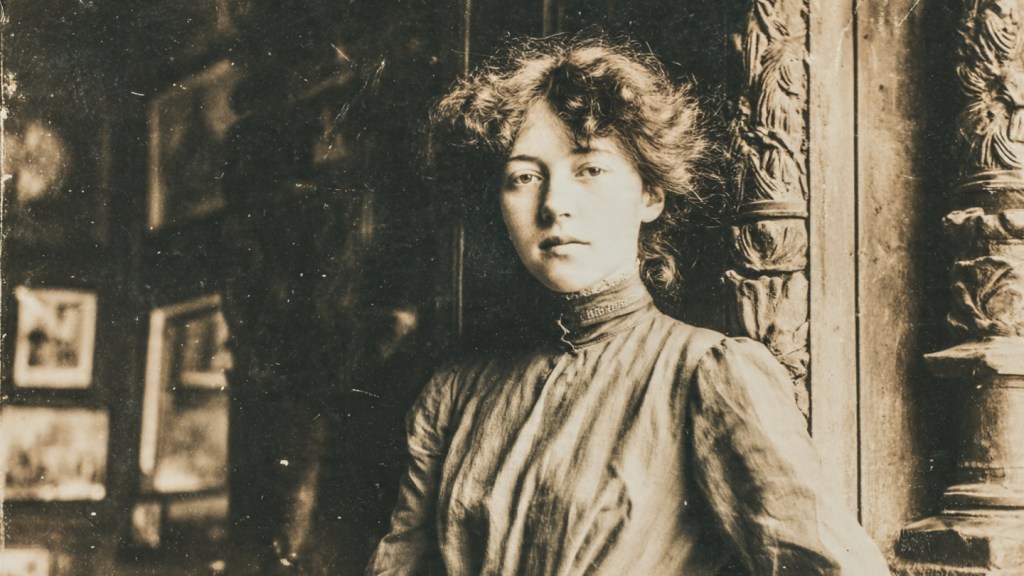
What is one thing you would change about yourself?
Wednesday, 3rd December 1919
You will wonder, perhaps, why I address you at all. The impulse to speak, even to an unseen auditor, persists like the creeping ivy on the eastern wall – it requires no encouragement, no particular nourishment, yet it spreads regardless. I have been held here these seven weeks past, in rooms that once belonged to someone of consequence, and I have had sufficient leisure to observe the peculiar architecture of captivity.
They call me hostage, though the word sits strangely on the tongue. I am security against some debt or promise, a living token in negotiations I am not permitted to witness. The palace itself – for it was a palace once, before the war altered the meaning of such places – retains its gilt and its grandeur, but the servants move differently now, with the furtive efficiency of those who understand that power has merely changed hands, not vanished. The marble echoes with the same coldness it always possessed.
The matter that most occupies my thoughts is that of the other. I do not mean my captors, though they are other enough – men who speak of justice and necessity whilst holding a woman against her will. No, I mean the recognition that I have become the other to myself. When one is removed from the ordinary course of one’s life, held in abeyance like a breath half-drawn, one begins to see oneself as a stranger might. I observe my own hands as though they belonged to someone else. I note my habits with the detachment of a natural philosopher cataloguing the behaviours of some curious specimen.
They ask questions of me sometimes, these men who keep me here. Yesterday one of them – the younger, who retains some vestige of drawing-room manners – enquired whether, given the choice, there was anything I should wish to alter about my character. It was an odd question, delivered in that tone men employ when they fancy themselves philosophically inclined. I told him I should wish to possess less memory. This surprised him, I think. He had expected me to claim a desire for greater courage, or perhaps more beauty – the usual feminine aspirations.
But I spoke truthfully. Memory is a form of monstrosity when one has witnessed what I have witnessed. The mind preserves with perfect fidelity those images one would most wish to forget: the gardens at home before they were trampled by soldiers, the face of my brother as he left for France – he did not return, naturally – the sound of glass breaking in the streets below whilst we huddled in darkened rooms and pretended safety was merely a matter of drawn curtains. If I could pare away those recollections as one prunes dead wood from a rose bush, I should do so without hesitation.
Yet perhaps that is the very monstrosity: not the remembering, but the desire to forget. We are meant to carry our dead with us, are we not? To honour their sacrifice by bearing witness to what they endured. To wish otherwise seems a kind of moral cowardice, and yet I confess it freely. I am weary of being the repository of other people’s suffering.
The garden below my window has gone wild in the months since the household staff diminished. The box hedges, once trimmed with geometric precision, have sent out untidy shoots. The roses bloom and die untended. There is something almost restful in this neglect – a suggestion that the world continues its essential business regardless of human interference. Growth does not pause for revolution or imprisonment or grief. It simply persists, blind and inexorable.
I wonder whether that is the lesson I am meant to derive from my confinement: that one endures because there is no alternative. That survival is not a choice but merely the default state of organisms that have not yet died. It is not a comforting philosophy, but then, I did not come here seeking comfort. I did not come here at all, in point of fact. I was brought, and I remain, and one day I shall presumably be released or not released, and the garden will continue growing either way.
Bob Lynn | © 2025 Vox Meditantis. All rights reserved.

 Vox Meditantis
Leave a comment