What are your favorite websites?
Sunday, 2nd November 2025
Some questions arrive like those browser tabs you meant to close before sleep – quiet squares of intention waiting in the corner of the day – so the evening finds you deciding what truly earns a place on the small shelf of attention you’ll carry into tomorrow. The kettle has done its good work, the window throws back the harbour’s breath, and the page asks not for a list but for a map of where the mind goes when it is being honest about what steadies it.
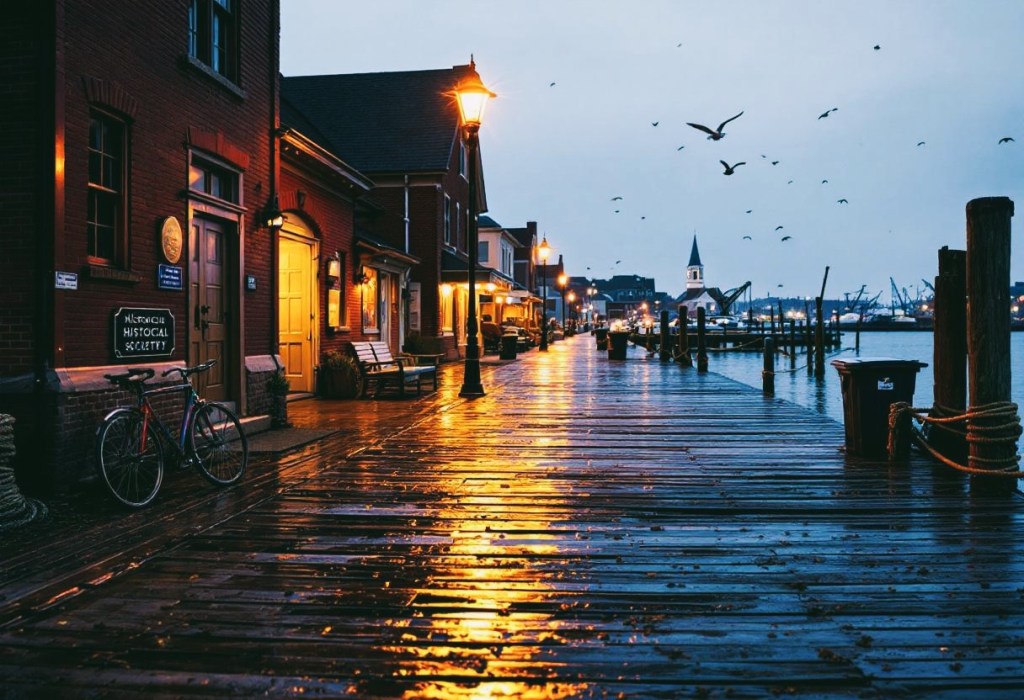
This morning began with the small courage of posting the signed envelope through the Historical Society’s door – benches and sanctuary cards and Thursday hours made real by ink and timing – and the relief that comes when a value becomes a date. Rajesh confirmed our traded hour with his usual measured kindness, the sort of collegial accommodation that keeps fragile commitments from fraying at their edges. After the bells, David and I walked the lee side of the harbour, not far, not fast – just enough to keep conversation in motion without forcing it – whilst Father Walsh remains in the tender interval between here and Wilmington, practising the old discipline of choosing without performing it.
The first site that earns a daily place is the tide and weather – nothing glamorous, only the harbour authority’s plain numerals and small arrows – so the morning route can be drawn with a pencil rather than a dare. Wind direction, low water’s hour, the particular shiver promised by a passing front; the page tells me whether to take the upper streets or risk the boards, and it has saved more ankles and moods than any affirmation ever could.
Then the library – our catalogue’s spare interface, all bone and little fat – where Jenny’s penmanship becomes metadata and a search for “sanctuary” yields pedagogy and, unexpectedly, a slim book of poems that knows something about waiting. I hold a quiet fondness for the way a hold request is really a promise between strangers: someone finishes, someone begins, and the town remembers how to share.
On most afternoons, the Historical Society’s pages get a respectful visit – not for nostalgia, but for logistics: which room needs a softer corridor, which docent training wants a better sentence, where the footfall thickens and breath thins. Maggie keeps the calendar honest and the language humane, and there’s a satisfaction in seeing “Thursday 1600–1900: Pilot Quiet Hours” sit there like furniture finally in the right place.
The local paper – our Observer in its online jacket – gets opened not for outrage but for bearings: council agendas, river levels, obituary paragraphs that read like love letters drafted under time pressure. Amanda’s pieces about the harbour’s long memory and the town’s short tempers have the virtue of proportion, and proportion is a public health measure we talk about too rarely.
After session hours, there are the open-access essays that help me think in straight lines when the day’s stories have braided themselves into something knotted: trauma and space, attention and overstimulation, the simple moral architecture of a chair that invites rather than contains. I read slowly, pencil in the margin, and notice how often the best sentences are really permissions – stay as long as you need; return if you must leave now; nothing terrible will happen if you breathe.
There is a corner of the internet I rarely confess to but visit when the flat asks for a spoon and the heart asks for my mother: the sort of recipe archive that privileges instruction over performance, where ingredients are ordinary and the comments sound like aunts. Tonight it was lentils and fennel (Elena slipped the latter into my bag with a conspirator’s wink), and I followed the method as if it were a metronome: soften, season, simmer – the kind of page that returns you to yourself by insisting on sequence.
Poems, too – nothing fashionable, just a site that sets one plain lyric on a clean screen, as if to say enough; take this and walk. It is astonishing how often four honest lines can take the sharpness off a day that would otherwise cut.
There are smaller islands: Marcus will send a link to a profile of a neighbourhood baker who understands fermentation as patience; Dan will nudge me toward an essay on museum etiquette that is really about kindness disguised as signage. Jenny, from her citadel of order, forwards a digitised broadsheet from 1891 – the river at flood, the town at prayer – and suddenly an algorithm functions like a neighbour.
And then the personal links that aren’t quite websites but travel by them: a concert programme David thought I’d want to annotate before Thursday’s rehearsal in the museum of a different sort; a message from Kevin about next month’s river clean-up sign-ups; a note from Tom’s grandchildren on a fundraiser that says plainly what his hip has been too proud to admit. The internet becomes tolerable when it behaves like a town – specific, proximate, answerable to faces you might meet at the grocer.
I’m wary of the places that convert curiosity into performance, of feeds that chew attention into confetti; at fifty-eight, the budget is finite and the appetite for spectacle is blessedly smaller than my appetite for use. What I keep are sites that return me to disciplines I trust: watch the water, read the record, prepare the room, stir with care, let the poem be brief.
If there is a bridge from yesterday to tonight, it is this: yesterday I promised presence on paper; today I organised the hours that will make it possible, with help from colleagues and the sober logistics of calendars and chairs. Favourite, then, is not a hierarchy but a practice – pages that make me more neighbourly in my own life rather than more impressed with myself at a screen.
The harbour is already thinking about Monday, and so am I: the tide table is open for the dawn, the museum diagram waits with its little arrows, the soup will be better for resting, and there is a message to send that says simply – walk again soon? Enough for a Sunday; the tabs can sleep, and so, with luck, will I.
Catherine
Bob Lynn | © 2025 Vox Meditantis. All rights reserved.


 Vox Meditantis
Leave a comment