20th October 1976
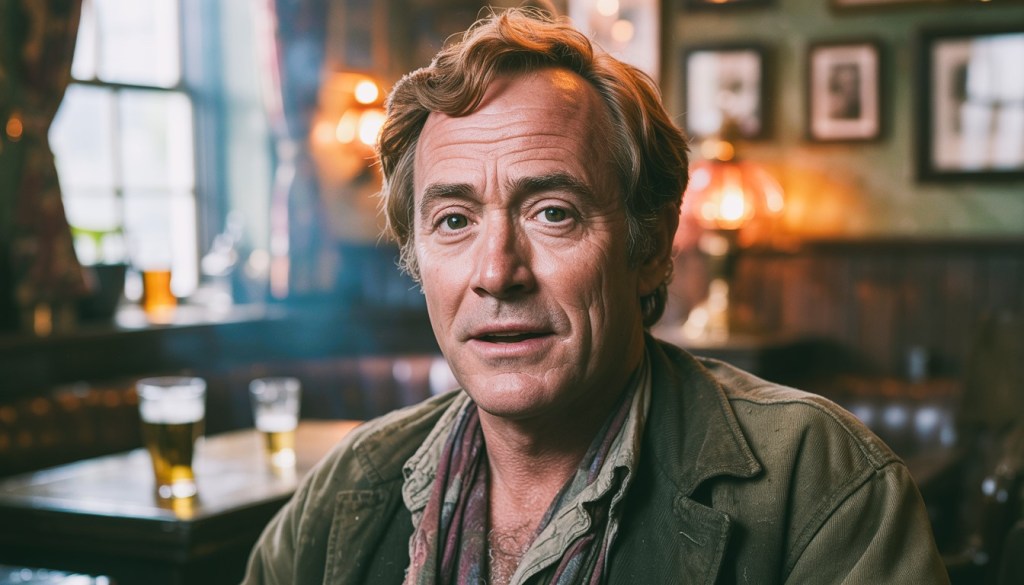
I find myself writing this by the uncertain light of the saloon bar at the Wheatsheaf, my hand unsteady not from drink but from something stranger – a peculiar elation that has possessed me these past hours. The place is thick with smoke and noise, bodies pressed close at every turn, and yet I feel no urge to flee as I might have done even a fortnight ago. Something has shifted in me, some door long bolted has swung open.
I came down from the cottage this evening with no clear purpose, only following an impulse I could not name. The wireless had been crackling on about the Government and money troubles, the pound falling, men in Whitehall arguing over loans and cuts whilst ordinary folk carry on as they must. But I switched it off, seized by a restlessness that would not be stilled. Before I quite knew what I was about, I had put on my jacket and was walking the lane towards the village, drawn by the amber glow of the pub windows like a moth to flame.
Inside, the warmth hit me first – bodies and beer and coal fire – then the din of voices competing with the jukebox playing that new lot, all snarling guitars and shouted lyrics. A different sort of music from what I remember, harder-edged, angrier perhaps, though whether it speaks to our times or merely to youth I cannot say. The young men by the bar were arguing football, voices rising and falling, whilst in the corner an old fellow nursed his bitter and read the evening paper, his face creased with worry over headlines I need not see to imagine.
And yet – here is the strange thing – I felt no alienation from it, no desire to retreat into my familiar solitude. Rather, I was seized by a profound sense of recognition, as though I had stumbled upon something half-forgotten. These people, with their ordinary cares and their small pleasures, their Friday evening rituals and their companionship – I found myself moved almost to tears by the simple beauty of it. The barmaid’s laugh. The clink of glasses. Two old friends greeting each other with that peculiar reserve and warmth that marks long affection.
I ordered a pint and took it to a corner table, content merely to observe, to be amongst them even if not quite of them. A man at the next table nodded to me – I have seen him about the village though never spoken – and we exchanged a few words about the weather, the rain after all that endless summer drought. Nothing of consequence, and yet it felt like a sacrament of sorts, this small exchange between strangers.
I have been thinking much of late about dreams – not the sort that come in sleep, though those too have been vivid and strange, but the waking kind, the visions we carry of how life might be lived. For years I have held fast to the dream of solitude, believing it to be my natural state, my refuge from a world that seemed too harsh, too demanding. I told myself I had chosen isolation, that it was a kind of wisdom. But tonight, watching these ordinary souls at their ordinary pleasures, I wonder if I have not been running from something rather than towards it.
There was a dream I had last week – proper dream this time, in the small hours – in which I stood at the edge of a great gathering, hundreds of people moving together in some dance or ceremony I could not quite comprehend. I wanted desperately to join them, but each time I stepped forward, they seemed to recede, always just beyond my reach. I woke with such a sense of loss, of exile, that I could not shake it for days. Now I wonder if it was not prophecy but mirror, showing me what I have made of my life through my own choices.
Someone has put money in the jukebox again – Abba now, incongruously cheerful – and the mood has lifted. A couple is dancing badly, laughing at themselves, and others are clapping time. I catch myself smiling, my foot tapping beneath the table.
If someone were to ask me – if that barmaid were to lean across and say, “What are you most proud of in your life, love?” – I confess I should struggle for an answer. Not my work, though I have laboured honestly enough at various trades before retreating to my cottage and my books. Not any great achievement or recognition, for I have sought none and earned none. Perhaps, if I am honest, the only thing I might claim with any satisfaction is this: that I have remained true to something, even if that something was only a stubbornness, a refusal to bend entirely to expectation. I have lived according to my own lights, however dim, however uncertain. And yet tonight, in this fuggy tavern with its raucous company, I find myself questioning whether that was enough, whether that was even admirable. There is a pride, surely, in connection as well as in solitude. In vulnerability as well as in self-sufficiency.
The evening is drawing on. Soon they will call last orders, and I shall walk back up the lane to my cottage, to my books and my silence. But something has changed. I carry with me now the sound of voices, the warmth of bodies pressed close, the knowledge that community is not the enemy of the self but perhaps its completion. The dream has shown me the door. Whether I shall have the courage to walk through it remains to be seen.
For tonight, though, I am grateful. Grateful for this strange euphoria, this unexpected joy in the midst of ordinary life. Grateful to have sat amongst my fellow creatures and felt, for a few hours at least, that I belonged.
The autumn of 1976 in Britain marked the uneasy aftermath of a record-breaking summer drought and the ongoing economic turmoil that defined the decade. Inflation, industrial unrest, and a weakening pound led the Labour government to negotiate a major loan from the International Monetary Fund later that year – an event that shaped national policy and social mood throughout the late 1970s. Against this backdrop of uncertainty and austerity, ordinary Britons sought solace in familiar gatherings: pubs, sports clubs, and community halls that offered continuity amid upheaval. These spaces became quiet sanctuaries of resilience, reflecting the endurance of everyday life during national difficulty.
Bob Lynn | © 2025 Vox Meditantis. All rights reserved.

 Vox Meditantis
Leave a comment