19th October 2018
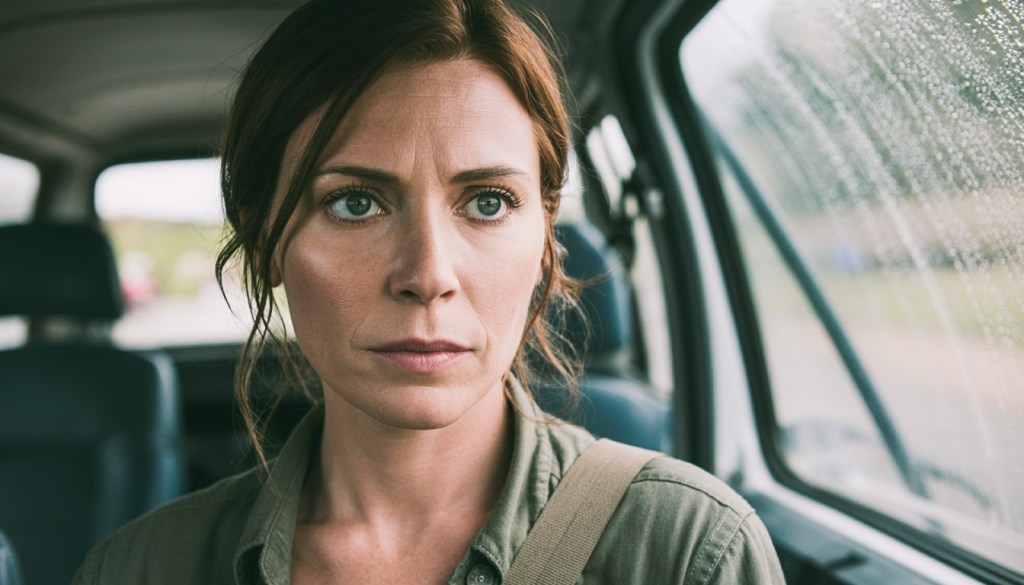
Mile marker 347. Somewhere between the last petrol station and the next survey site. The van’s suspension groans over every pothole – fourteen years old, borrowed from a department that no longer exists under its old name. They’ve merged us twice now. Efficiency, they said. Streamlining.
I’ve stopped at a lay-by to write this, though I’m not certain why. Habit, perhaps. The thermos flask sits beside me, steel dented at the base from where it rolled off a table in Ankara three years ago. Still holds heat. Still functions. I admire that in objects – their quiet persistence, their indifference to whether anyone notices.
Someone asked me yesterday, in that tedious way people do when they’ve run out of small talk: What have you been working on? I gave the standard answer. Settlement patterns. Material culture. The usual evasions that make strangers’ eyes glaze over with polite incomprehension. What I didn’t say: I’ve been excavating the margins of other people’s certainties. I’ve been cataloguing what gets left behind when the narrative moves on.
The trowel in my field kit is older than most of my students. Carbon steel, wooden handle worn smooth. My supervisor gave it to me, and his supervisor gave it to him. There’s something almost obscene about that continuity now, when everything else fractures and reforms and fractures again. The tools endure. The institutions that house them – well. One reads the news.
They found that journalist’s body. Or rather, they found enough to confirm what everyone already knew. The world made its noises of shock, of outrage, and then the news cycle moved on because there’s always something else, isn’t there? Another hurricane, another border, another crisis that will be memory by Monday. I think about this as I scrape through soil layers, each one representing decades, sometimes centuries. What will remain of us? What will some future excavator make of our stratum – this moment when we knew so much and understood so little?
The irony isn’t lost on me. I spend my days reconstructing the lives of people who left almost nothing behind – a few post-holes, some pottery sherds, the ghost of a hearth. Trying to make them matter. Trying to prove they were here. And all the while wondering if my own work will outlast the next round of funding cuts, the next departmental restructure, the next shift in what’s deemed worthy of study.
Metal corrodes. Wood rots. Stone survives but tells us almost nothing. The things we make with such care, such precision – do they matter at all if there’s no one left who remembers how to read them?
The light is fading. I should drive on. The site won’t excavate itself, and there’s a meeting on Monday where I’ll need to justify, once again, why any of this matters. Why we should care about people who’ve been dead for a thousand years when we can barely make sense of the present.
I’ll use the old arguments. Knowledge. Heritage. Understanding. The words taste like tin in my mouth.
Late 2010s, marked by rising trade tensions, volatile markets, and renewed scrutiny of institutional trust, form the backdrop to the diarist’s journey, with 2018 seeing a sharp equity downturn after years of expansion and escalating U.S.–China tariffs that unsettled global investment. International agencies warned in October 2018 that near‑term financial stability risks had increased a decade after the global crisis, underscoring persistent vulnerabilities despite regulatory reforms since 2008. Subsequent years brought continued tariff disputes, currency pressures in emerging markets, and periodic market shocks, reinforcing debates over resilience, inequality, and the durability of academic and cultural institutions amid shifting funding and political priorities.
Bob Lynn | © 2025 Vox Meditantis. All rights reserved. | 🌐 Translate

 Vox Meditantis
Leave a comment