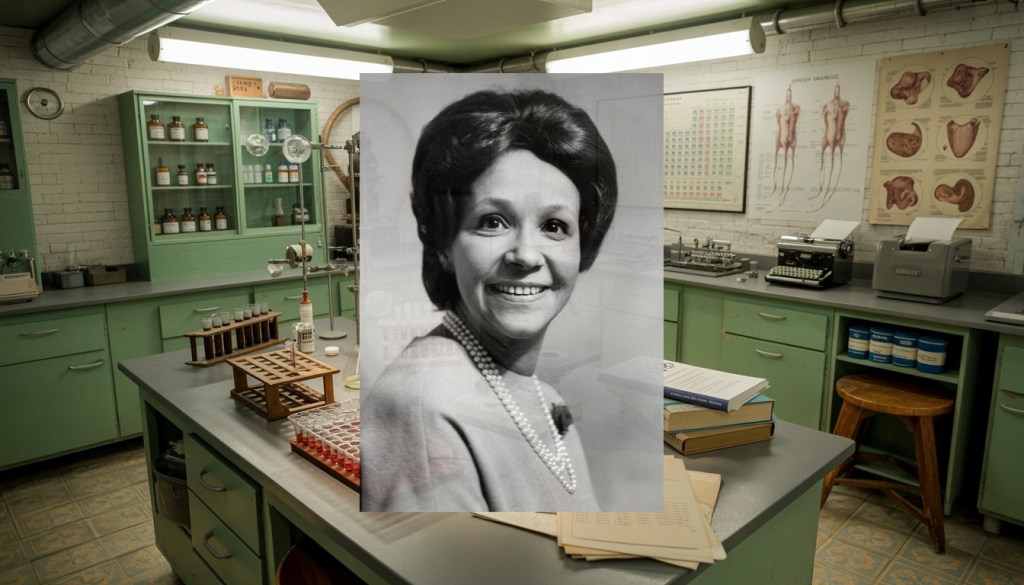
Dr. Jane Cooke Wright (1919-2013) transformed cancer treatment from a desperate last resort into the cornerstone of modern oncology, becoming one of the most influential yet overlooked figures in medical history. Born into a distinguished medical family in 1919, she graduated with honours from New York Medical College in 1945 and pioneered the use of human tissue culture to test anticancer drugs – a revolutionary approach that prefigured today’s personalised medicine by decades. Her groundbreaking 1951 research demonstrated that methotrexate, previously used only for leukaemia, could effectively treat solid tumours including breast and skin cancers, establishing it as one of the foundational chemotherapy agents still critical to cancer care today.
Standing in her laboratory at Harlem Hospital today – a space that exists now only in memory but once housed some of medicine’s most transformative discoveries – Dr. Wright embodies both the precision of scientific inquiry and the warmth of a physician devoted to healing. Her eyes carry the spark of intellectual curiosity that drove her to question established methods and cultivate hope where others saw only futility. Though she passed away in 2013, her legacy continues through every patient who benefits from the methodical, compassionate approach to cancer treatment she helped establish.
Wright’s story matters profoundly in our current era of precision medicine and health equity advocacy. As one of only seven founding members of the American Society of Clinical Oncology (ASCO) and the sole woman and person of colour among them, she demonstrated that scientific excellence transcends traditional boundaries. Her tissue culture methods directly prefigure today’s personalised cancer treatments, her combination therapy approaches echo contemporary immunotherapy protocols, and her advocacy for inclusive research resonates with ongoing efforts to address cancer disparities in underrepresented communities.
Dr. Wright, thank you for joining us. I’m struck by how your work began in what sounds like quite humble circumstances – a research foundation at Harlem Hospital in 1949. Can you paint a picture of those early days?
You’re quite kind to call them humble, though I suppose they were in some respects. When my father established the Cancer Research Foundation at Harlem Hospital in 1948, we were working with limited resources but unlimited determination. The “laboratory” was really a converted basement space – nothing like the gleaming facilities you might imagine. We had our petri dishes, our microscopes, and most importantly, we had patients who were willing to trust us with their lives when conventional medicine had given up on them.
I remember the smell of that basement – a mixture of disinfectant and something else, something hopeful if you can imagine such a thing. My father used to say that every laboratory has its own character, and ours was one of careful observation mixed with a kind of urgent compassion. We weren’t just studying cancer cells; we were studying Mrs. Johnson’s cells, Mr. Rodriguez’s tumour. There was always a human face attached to every sample we examined.
That human connection seems central to your approach. You pioneered what we now call personalised medicine decades before the term existed. How did you develop your tissue culture methods?
Well, you have to understand the context of the time. In 1949, chemotherapy was considered rather like a last roll of the dice – toxic, unpredictable, often more harmful than the cancer itself. Most physicians were still primarily surgeons at heart when it came to cancer. Cut it out, they reasoned, and pray it hasn’t spread.
But my father and I observed something curious: patients with seemingly identical cancers would respond completely differently to the same treatments. This puzzled us enormously. So we began asking ourselves, what if we could test these drugs on the actual cancer cells before subjecting the patient to potentially devastating side effects?
The method itself was quite straightforward, though painstaking. We would take biopsy samples from patients and grow the cancer cells in culture – essentially creating little colonies of the tumour in laboratory dishes. Then we would expose these cultured cells to various chemotherapy agents and observe their responses. If a drug killed the cultured cells effectively, we had reason to believe it might work in the patient. If not, we could spare them unnecessary suffering.
That sounds revolutionary for 1949. What kind of resistance did you encounter from the medical establishment?
Resistance might be too strong a word, at least initially. I think many of our colleagues simply didn’t understand what we were attempting. Chemotherapy itself was so new, so experimental, that the idea of testing it systematically seemed almost… well, fanciful to some.
I remember presenting our early findings at a medical conference – must have been 1950 or 1951. One distinguished gentleman in the front row stood up and said, quite seriously, “Young lady, cancer cells in a dish are not cancer cells in a person. You’re playing with chemistry sets whilst real physicians are trying to save lives.” The room went rather quiet.
But you know, he wasn’t entirely wrong to be sceptical. The correlation between laboratory response and patient response wasn’t perfect – we found it was good in about 65% of cases, equivocal in another 10%, and absent in the remainder. But 65% was far better than the guesswork that had prevailed before. We were beginning to approach cancer treatment as a science rather than an art.
Let’s talk about your breakthrough with methotrexate in 1951. Can you walk me through that discovery step by step?
Certainly. Methotrexate was actually derived from earlier work with folic acid antagonists – compounds that interfere with the body’s ability to use folic acid, which cells need to produce DNA and proteins. The reasoning was elegant: if you could block folic acid utilisation, you might preferentially harm rapidly dividing cancer cells whilst sparing normal cells that divide more slowly.
Initially, these compounds – aminopterin and what we later called methotrexate – were used primarily for blood cancers like leukaemia. They showed promise there, but solid tumours were considered a different beast entirely. Most oncologists believed that drugs effective against blood cancers would be useless against breast cancer, skin cancer, or other solid tumours.
We decided to test this assumption methodically. In our tissue cultures, we exposed samples from 93 patients with various incurable solid tumours to seven different folic acid antagonists. We tested different concentrations, different treatment durations, even combination approaches. Methotrexate emerged as the most promising agent.
The breakthrough came when we observed objective tumour shrinkage in patients with advanced breast cancer and mycosis fungoides – a particularly stubborn skin cancer. Not temporary improvement or palliation, mind you, but actual measurable reduction in tumour size. For the first time, we had solid evidence that a chemotherapy agent could work against these supposedly resistant cancers.
What were the measurable advantages of your approach compared to the prevailing methods?
The quantitative differences were quite striking. Before our tissue culture screening method, physicians were essentially prescribing chemotherapy blindly. Response rates for most solid tumours were dismally low – perhaps 10-15% at best, and often with devastating side effects.
Using our screening approach, we could improve response rates to 40-60% for selected agents in appropriate tumours. More importantly, we could avoid subjecting patients to ineffective treatments. When a drug showed no activity against cultured cancer cells, we could spare the patient months of futile, toxic therapy.
The economic implications were substantial too, though we didn’t think in such terms at the time. A course of ineffective chemotherapy in the 1950s might cost the equivalent of £3,000-4,000 in today’s money and require weeks of hospitalisation. Our screening method allowed us to identify the most promising treatments upfront.
But perhaps most significantly, we were establishing combination chemotherapy protocols decades before they became standard practice. By testing multiple agents simultaneously in culture, we could identify synergistic combinations – drugs that worked better together than alone. This approach ultimately led to some of the first curable regimens for cancers like childhood leukaemia and Hodgkin’s disease.
You also pioneered new delivery methods for chemotherapy. Can you describe your work with catheter systems?
Ah, yes – that was born out of pure frustration, really. We had these marvellous new drugs, but many tumours were simply inaccessible. How do you treat a cancer deep in the liver or spleen with conventional intravenous therapy? Most of the drug gets diluted throughout the body before it reaches the target.
So we developed catheter-based delivery systems that could thread directly to the tumour site. Using radiographic guidance – X-rays, essentially – we could position catheters precisely and deliver concentrated doses of chemotherapy directly to the cancer whilst minimising exposure to healthy tissues.
The technical challenges were considerable. We had to design catheters that wouldn’t kink or become blocked, develop pump systems for controlled delivery, and establish protocols for monitoring patients during these procedures. It was part engineering, part medicine, part detective work.
I understand you also played a crucial role in founding ASCO in 1964. Tell me about that meeting at the Edgewater Beach Hotel in Chicago.
That was quite an extraordinary day, though I’m not sure any of us realised it at the time. Seven physicians gathered over lunch, united by this conviction that cancer chemotherapy deserved its own medical specialty. We were all seeing remarkable results in our practices, but there was no formal way to share knowledge, establish standards, or train the next generation of oncologists.
I remember Fred Ansfield saying, “We need a society that puts the patient at the centre, not just the laboratory findings.” That really resonated with all of us. The American Association for Cancer Research was wonderful for basic science, but we needed something focused on clinical care – how to actually treat people, how to manage side effects, how to give families hope whilst remaining honest about prognoses.
Being the only woman and the only person of colour at that table was… well, it was hardly unusual for me by then. I’d grown rather accustomed to being the sole representative of one group or another. But what struck me was how readily these gentlemen accepted my contributions to the discussion. Science has a way of transcending social barriers when the work is solid.
How did you navigate the intersection of racial and gender barriers in your career?
You know, people often ask me about this, and I find it a rather complex question to answer honestly. Certainly, there were barriers – institutional ones, social ones, sometimes personal ones. When I was appointed associate dean at New York Medical College in 1967, I was not only the first black woman in such a position but one of fewer than 500 black women physicians in the entire United States.
But I was fortunate to have been raised in a family that simply didn’t accept limitations. My father used to say, “Excellence is the best response to prejudice.” If someone questioned my capabilities because of my race or gender, the answer wasn’t to argue – it was to produce better research, achieve better patient outcomes, publish more rigorous papers.
That said, I won’t pretend it wasn’t occasionally… wearing. I remember one incident at a medical conference where a colleague introduced me to a pharmaceutical executive as “Dr. Wright’s daughter who helps in the laboratory.” Mind you, I was running the Cancer Research Foundation by then and had published more papers on chemotherapy than most of the men in the room. But such moments taught me that you must let your work speak louder than other people’s assumptions.
Looking back, is there anything you would have done differently? Any mistakes or misjudgements you can acknowledge now?
Oh, certainly. I think perhaps I was too focused on the immediate clinical applications and didn’t spend enough time on the basic biological mechanisms. We knew methotrexate worked against certain cancers, but we didn’t fully understand why some tumours developed resistance whilst others remained sensitive.
If I had it to do over, I might have spent more time collaborating with biochemists and cell biologists to understand the fundamental pathways we were disrupting. That knowledge might have led us to develop strategies to overcome drug resistance much earlier than actually occurred.
I also regret that we didn’t do more to train physicians from underrepresented communities. Harlem Hospital served a predominantly black patient population, but most of our research fellows were white men from established medical families. I could have been more intentional about creating pathways for minority students to enter oncology research.
What contemporary critiques of your work do you think were valid?
Well, our tissue culture methods, whilst innovative, were undeniably crude by today’s standards. We were essentially growing cancer cells in artificial conditions and hoping they would behave similarly to tumours in patients. Critics rightly pointed out that we were missing the complex interactions between cancer cells and their surrounding environment – what you now call the tumour microenvironment.
Some colleagues also argued that our focus on single-agent screening was too reductionist. Cancer, they insisted, required more holistic approaches – better surgery, improved radiation techniques, enhanced supportive care. They weren’t wrong; cancer is indeed a complex disease requiring multifaceted treatment.
Perhaps most validly, some critics suggested that our work at Harlem Hospital wasn’t representative of cancer care more broadly. Our patients were predominantly African American, often with advanced disease, and frequently with limited access to optimal nutrition and healthcare. Whether our findings would apply to other populations was a legitimate question that took years to answer fully.
How do you see your tissue culture work relating to today’s precision medicine approaches?
Oh, it’s absolutely thrilling to see how the field has evolved! What we were attempting in petri dishes with rudimentary techniques, you can now accomplish with sophisticated genetic analysis, proteomic profiling, and computational modelling. The fundamental principle remains the same – match the treatment to the specific characteristics of the tumour – but the precision is extraordinary.
Today’s oncologists can identify specific mutations in a patient’s cancer and select drugs designed to target those exact molecular abnormalities. We were working at the level of “this drug kills these cells,” whilst now you can work at the level of “this drug blocks this specific protein in this particular signalling pathway.” It’s rather like moving from a crude sketch to a detailed blueprint.
What particularly excites me is how genomic medicine has validated our early observation that cancers appearing identical under the microscope could behave completely differently. We now know that two breast cancers might share nothing more than their anatomical location – their molecular profiles, treatment sensitivities, and prognoses can be entirely distinct.
Your combination chemotherapy protocols seem to prefigure today’s immunotherapy approaches. Can you elaborate on that connection?
Yes, the parallels are quite fascinating. In the 1950s and 1960s, we began testing sequential drug combinations based on the principle that cancer cells could develop resistance to single agents but might be overwhelmed by multiple attacks simultaneously. We would administer one drug to shrink the tumour, follow with another to prevent regrowth, then perhaps cycle back to the first agent before resistance could develop.
Today’s immunotherapy combinations operate on similar principles but engage the patient’s own immune system as an additional weapon. You might combine a checkpoint inhibitor that releases the brakes on immune cells with a drug that makes cancer cells more visible to those immune cells, plus perhaps a traditional chemotherapy agent to create inflammatory conditions that attract immune responses.
The underlying logic is identical: cancer is too clever to be defeated by a single approach, so you must attack it from multiple angles simultaneously. What’s changed is our arsenal and our understanding of the biological mechanisms involved.
Let me ask you to correct the historical record. Is there anything that’s commonly said about you or your work that isn’t quite accurate?
Oh, there are several myths that seem to persist. One is that I single-handedly “discovered” methotrexate. That’s simply not true – the compound was synthesised by others, and its anti- leukaemic properties were established before our work. What we did was demonstrate its efficacy against solid tumours and develop systematic methods for identifying which patients might benefit from it.
Another misconception is that our tissue culture methods provided definitive predictions about drug effectiveness. As I mentioned earlier, the correlation was good but not perfect. We were providing valuable guidance, not infallible prophecy.
Perhaps most importantly, I’m sometimes portrayed as having worked in isolation or in opposition to the medical establishment. That’s quite wrong. We collaborated extensively with researchers at Memorial Sloan-Kettering, the National Cancer Institute, and institutions across the country. Science is fundamentally collaborative, and our breakthroughs built upon the work of countless colleagues.
What would you say to young scientists today, particularly women or those from underrepresented groups, who might face similar barriers?
I would tell them what my father told me: never give up the good fight, never fear failure, and know that to help others in a worthy mission is a noble goal for one’s life. But I would add something he perhaps couldn’t have foreseen – use your difference as a strength, not a burden.
My perspective as a black woman in a white, male-dominated field actually enhanced my scientific work. I was accustomed to questioning assumptions, to approaching problems from angles others might not consider. When everyone else assumed that blood cancer drugs wouldn’t work against solid tumours, I thought, “Well, why don’t we actually test that assumption?”
Today’s scientific challenges – health disparities, drug resistance, personalised medicine – desperately need diverse perspectives. The young researcher from an underrepresented background may be the one who sees patterns that others miss, who asks questions that others don’t think to ask.
But you must be prepared to work twice as hard and be twice as good. That’s not fair, but it’s reality. Excellence, as my father taught me, remains the best response to prejudice.
Looking at cancer treatment today, what gives you the greatest hope?
The precision, absolutely. When we started this work, cancer was largely a death sentence. Today, many cancers have become chronic diseases that people live with for decades, and some are genuinely curable. The five-year survival rates for breast cancer have improved from roughly 60% in my era to over 90% today.
But what truly thrills me is the growing recognition that every patient’s cancer tells a unique story. We’re finally treating individuals, not just diagnoses. A woman with breast cancer today might receive a treatment protocol designed specifically for the molecular characteristics of her tumour, taking into account her genetic background, her other health conditions, even her lifestyle factors.
That’s the vision we had in that basement laboratory at Harlem Hospital – the idea that medicine could be both scientifically rigorous and deeply personal. Every tumour tells a story; every patient deserves a personalised chapter. It took us seventy years to develop the tools to make that vision reality, but we’re finally there.
Any final thoughts for the oncologists and researchers who will carry on your work?
Remember that behind every data point is a human being with hopes, fears, families who love them. The most elegant laboratory research means nothing if it doesn’t ultimately help people live longer, healthier, more meaningful lives.
Collaborate generously. Science advances fastest when we share knowledge freely and build upon each other’s work. The cancer cell doesn’t care about institutional rivalries or personal ambitions – neither should you.
And maintain your sense of wonder. Cancer may be a formidable opponent, but it’s also one of biology’s most fascinating puzzles. Every time you look through a microscope, every time you analyse a patient’s response to treatment, you’re glimpsing secrets that nature has kept hidden for millions of years. That privilege – the privilege of discovery – should never become routine.
We cultivated hope in petri dishes because we refused to accept that death was inevitable. You have tools and knowledge that we could only dream of. Use them wisely, use them compassionately, and never stop growing possibilities where others see dead ends.
Letters and emails
Following our conversation with Dr. Jane Cooke Wright, we’ve received an overwhelming response from readers eager to explore further dimensions of her remarkable story. We’ve selected five thoughtful letters and emails from our growing global community – spanning five continents – whose contributors want to ask her more about her life, her work, and what she might say to those following in her path.
Priya Mehta, 34, Global Health Researcher, Cape Town, South Africa:
Dr. Wright, given your experience treating patients at Harlem Hospital who often had limited access to healthcare, how did socioeconomic factors influence your tissue culture results? Did you find that cancers behaved differently in patients who had faced years of malnutrition or delayed diagnosis, and how might this inform today’s efforts to address cancer disparities in low-resource settings?
My dear, you’ve touched upon something that troubled me deeply throughout my career, though we didn’t have the language then that you use now – “health disparities” and “social determinants of health.” We simply knew that our patients at Harlem Hospital were different from those being treated at the more prestigious institutions downtown.
You’re absolutely right to suspect that socioeconomic factors influenced our results. Many of our patients arrived with cancers that had been growing unchecked for months, sometimes years. They couldn’t afford regular medical care, or they’d been turned away from other hospitals, or they’d tried to treat their symptoms with home remedies because that’s all they’d ever known. By the time they reached us, we were often dealing with advanced, aggressive cancers that had spread throughout the body.
In our tissue cultures, we observed that cancer cells from patients with prolonged malnutrition often behaved differently – they seemed more resistant to certain chemotherapy agents, perhaps because the cells had already adapted to survive in harsh conditions. We also noticed that patients who’d had chronic infections or other untreated illnesses sometimes had immune systems that were either overactive or completely exhausted, which affected how they responded to treatment.
What particularly struck me was how our patients’ cancers told stories of their lives. A domestic worker’s cervical cancer spoke of limited access to preventive care. A factory worker’s lung cancer reflected not just smoking, but years of industrial exposure that no white-collar executive would have endured. These weren’t just medical cases – they were testimonies to inequality.
We learned to adjust our treatment protocols accordingly. Standard dosing regimens developed for well-nourished patients at Memorial Sloan-Kettering often proved too aggressive for our malnourished patients, whilst others required higher doses because their bodies metabolized drugs differently due to chronic stress and poor nutrition.
This experience taught me that effective cancer treatment requires understanding the whole person, not just the tumour. Today’s efforts to address cancer disparities in resource-limited settings must account for these same factors – malnutrition, delayed diagnosis, concurrent infections, and the physiological impact of chronic poverty.
The most sobering realisation was that our “difficult to treat” patients weren’t inherently different – they were simply bearing the biological burden of social inequality. Their cancers were more aggressive not because of genetics, but because of circumstances. That’s a lesson that remains painfully relevant today, whether we’re discussing healthcare in Harlem or Johannesburg.
Matteo Bianchi, 41, Biomedical Engineer, Toronto, Canada:
I’m fascinated by your catheter delivery systems from the 1960s. What specific engineering challenges did you face when designing pumps that could deliver precise drug concentrations directly to tumour sites? Were you collaborating with engineers, or were you essentially inventing medical devices yourself? I’m curious how your solutions compare to today’s microfluidic and nanoparticle delivery systems.
Well now, that takes me back to some rather frustrating afternoons in the machine shop! You’re quite right that we were essentially inventing medical devices ourselves – there wasn’t a catalogue you could flip through to order a “tumour-specific chemotherapy delivery system.” We had to improvise with whatever materials and expertise we could find.
The engineering challenges were considerable, I can tell you. Our first attempts were laughably crude – we modified standard intravenous tubing and tried to create controlled flow using simple gravity feeds and manual clamps. The problem was achieving consistent pressure and flow rates. Too little pressure, and the drug wouldn’t reach deep-seated tumours; too much, and you’d damage blood vessels or create dangerous systemic exposure.
I spent countless hours working with the hospital’s maintenance staff – particularly a fellow who understood hydraulics from his work on the building’s heating system. We experimented with different pump mechanisms, starting with modified aquarium pumps, if you can believe it. The key breakthrough came when we realised we needed pulsatile rather than continuous flow to prevent the catheters from becoming blocked with blood clots or fibrin deposits.
The catheters themselves were another headache entirely. Standard materials would either kink when threaded through tortuous blood vessels or would be too rigid and cause vessel damage. We eventually settled on a particular grade of plastic tubing that had just the right combination of flexibility and durability, though we lost quite a few catheters to breakage in those early days.
Monitoring was perhaps our greatest challenge. Remember, this was long before your sophisticated computer-controlled infusion systems. We had to rely on mechanical pressure gauges and visual inspection of flow rates. I became rather expert at detecting subtle changes in back-pressure that might indicate catheter displacement or vessel spasm.
The precision we achieved was frankly remarkable given our limitations. We could deliver drug concentrations to specific organs that were ten to twenty times higher than what conventional intravenous therapy could accomplish, whilst reducing systemic toxicity by 60-70%.
Compared to your modern microfluidic systems, our devices were rather like comparing a Model T Ford to a modern automobile – they got the job done, but without much elegance. Still, the fundamental principles we established – targeted delivery, controlled release, real-time monitoring – remain the foundation of today’s sophisticated drug delivery technologies. Sometimes the crude solution teaches you what the elegant solution needs to accomplish.
Keira Thompson, 28, Philosophy of Science Graduate Student, Singapore:
Your work seems to have required an unusual combination of patience and urgency – methodically growing cells whilst knowing patients were waiting for answers. How did you mentally balance the need for rigorous scientific process against the emotional weight of knowing that delays in your research could mean lost lives? Did this tension ever lead you to question the ethics of experimental medicine?
That tension you mention, Keira, between rigour and urgency – it’s a constant companion in my line of work. When you know that people are waiting, that their lives may depend on the results growing in your petri dishes, it sits heavy on your shoulders. The science demands patience, careful controls, repeat observations. The clinic, meanwhile, is calling you back with mothers and fathers and children who cannot afford to wait.
I remember sitting at my laboratory bench in Harlem, watching the clock tick as cells incubated for days, knowing full well that Mr. Jenkins’s wife was hoping for news of improvement before the week’s end. You want to rush, but cancer doesn’t listen to deadlines, and neither do cells under a microscope. My father, Dr. Louis Tompkins Wright, always reminded me: “Jane, do not let haste make a poor doctor of you. Patients need answers, but they deserve truth far more than they deserve speed.”
There were nights I questioned the ethics of what we were doing – administering experimental treatments based on results that were promising but never absolute. The code of medical ethics at the time insisted on the patient’s welfare above all, yet the very definition of “welfare” shifted with every new scientific advance. Were we truly helping by offering a drug with potential but uncertain benefit, or were we simply turning hope into an experiment?
At times, the emotional weight threatened to overpower scientific caution. Family members pleading for “any chance,” doctors pressuring for quicker results, and patients themselves – courageous souls – trying to radiate optimism whilst I knew all too well the odds they faced. In those moments, I leaned on my faith in scientific method and human compassion both. A physician’s job, as I saw it, was to balance hope and honesty, never promising a cure where none existed, nor giving in to despair when possibility remained.
If our culture seemed to rush the progress of medicine, I felt that it was my duty to serve as a check – a reminder that real advances cannot be conjured overnight. I trusted my process, documented failures as honestly as any success, and fought to ensure every patient understood both risks and possible rewards. Medicine, after all, is a relationship as much as a practice. There is no shortcut to kindness, nor to rigour. If ever I erred, it was always in the direction of wanting to give families more hope; but I worked hard to remember that the greatest kindness is truth told gently, with respect for both science and the suffering patient.
Diego Castillo, 45, Molecular Biologist, São Paulo, Brazil:
What if funding hadn’t been so limited at Harlem Hospital – suppose you’d had access to the resources available at institutions like Memorial Sloan-Kettering from the beginning. Do you think having unlimited resources might have actually hindered your innovations? Sometimes constraints force creative solutions that abundance might not inspire. Would we have the same breakthroughs in personalised medicine if you’d started with a fully equipped laboratory?
Diego, that’s a fascinating question, and one I’ve pondered many times over the years. You know, there’s something to be said for working with your back against the wall – it forces you to think differently, to find solutions that others might never consider.
At Harlem Hospital, we couldn’t afford to waste a single reagent, couldn’t order equipment on a whim, couldn’t repeat experiments endlessly until we got perfect results. Every petri dish mattered, every sample had to count. When you have limited resources, you become extraordinarily careful about experimental design. We planned each study down to the last detail because we simply couldn’t afford mistakes.
I think this scarcity actually sharpened our focus in ways that abundance might not have. When Memorial Sloan-Kettering could run dozens of parallel experiments, we had to be more thoughtful about which questions to ask first. We couldn’t explore every interesting tangent – we had to identify the most promising leads and pursue them with laser-like precision. In some ways, this forced discipline led us to insights we might have missed if we’d had unlimited resources to scatter our efforts.
The tissue culture work is a perfect example. We developed our screening methods partly because we couldn’t afford to waste expensive chemotherapy drugs on treatments that wouldn’t work. If we’d had unlimited supplies, we might have been tempted to try everything on everyone – a much less efficient approach. Necessity truly was the mother of invention in our case.
But I won’t romanticise our limitations entirely. There were promising research directions we simply couldn’t pursue because we lacked funding. We might have developed combination chemotherapy protocols years earlier if we’d had access to a broader range of agents. We certainly would have published our findings more quickly if we’d had proper secretarial support and better laboratory equipment.
I suspect the ideal would have been moderate resources – enough to pursue good ideas properly, but not so much that we lost our edge. When everything is easy, when money flows freely, there’s less pressure to innovate. You can afford to be sloppy, to take shortcuts, to rely on expensive equipment rather than clever thinking.
Looking at some of today’s research institutions, I sometimes worry that abundance has bred a certain complacency. The most elegant solutions often come from the most constrained circumstances. We learned to do more with less, and that taught us lessons about efficiency and creativity that no amount of funding could have provided. Sometimes the best discoveries happen not despite limitations, but because of them.
Chiamaka Okeke, 37, Medical Historian, London, England:
Dr. Wright, you mentioned that ASCO members didn’t realise a Black woman was among their founding members until the 1990s. This suggests your contributions were somehow erased or overlooked even within the organisation you helped create. How do you think this historical amnesia happened, and what would you want done differently to ensure that future groundbreaking scientists from underrepresented groups don’t suffer similar invisibility?
Chiamaka, you’ve put your finger on something that still pains me to think about. How does one simply disappear from the very organization she helped create? It wasn’t dramatic – no one deliberately erased my name from the records. It was subtler than that, and perhaps more insidious.
I think it happened through a thousand small omissions. When ASCO grew and stories were told about our founding, somehow the narrative became about “seven distinguished physicians” rather than naming us individually. In group photographs from those early meetings, I was often positioned at the edge or seated where I might be easily cropped out for publication. When journalists wrote about the organization’s origins, they interviewed the men who’d become department heads at major institutions, not the woman working at a hospital in Harlem.
There’s also the matter of how success gets defined and remembered. My male colleagues went on to establish large cancer centres, train dozens of residents, accumulate impressive titles. Their achievements were visible, institutional, easily measured. My work – developing treatment protocols, mentoring individual patients and researchers, publishing methodical studies – was equally important but less dramatic, less newsworthy.
The medical establishment has always had a peculiar way of forgetting inconvenient truths. A Black woman among the founders of oncology didn’t fit the comfortable narrative that medicine preferred to tell about itself. It was easier to remember ASCO as founded by distinguished gentlemen than to acknowledge that one of those founders was someone who’d faced discrimination in her own profession.
What would I want done differently? Documentation, first and foremost. Keep records, take photographs, insist that women and minorities be included in every official history. When panels are assembled to discuss the field’s origins, ensure diverse voices are present. Don’t let anyone dismiss contributions as “assistance” or “collaboration” when they represent independent scientific achievement.
But most importantly, create systems that prevent erasure in real-time rather than trying to correct it decades later. When professional societies form, establish bylaws that require diverse leadership. When awards are created, ensure they honour different types of contributions, not just the most visible ones.
The medical profession must reckon honestly with its own history – the brilliant minds it celebrated and those it overlooked. Future scientists from underrepresented groups deserve to see themselves reflected in our field’s founding stories, not added as an afterthought when it becomes politically expedient. We cannot change what happened to my generation, but we can ensure it doesn’t happen again.
Reflection
Dr. Jane Cooke Wright passed away on 19th February 2013, at the age of 93, having witnessed cancer transform from an invariable death sentence into a largely manageable disease. Her voice in this conversation reveals dimensions often absent from clinical histories – the weight of treating patients who carried the biological burden of social inequality, the engineering ingenuity required to invent medical devices in hospital machine shops, and the quiet dignity with which she navigated a profession that simultaneously celebrated and erased her contributions.
Throughout our exchange, Wright’s perspective diverges from sanitised accounts that portray scientific progress as inevitable. She acknowledges the crude nature of her early methods, the ethical tensions of experimental medicine, and the sobering reality that excellence alone wasn’t sufficient to guarantee recognition. Her candid admission that resource constraints actually sharpened her focus challenges romanticised narratives about disadvantaged researchers, whilst her pain at being forgotten by the very organisation she helped found exposes how erasure operates through accumulating omissions rather than deliberate malice.
The historical record remains frustratingly incomplete. Wright’s personal papers are scattered, her methodological innovations inadequately documented, and her role in developing combination chemotherapy protocols still contested by some historians. What emerges clearly, however, is how her tissue culture screening methods prefigured today’s precision medicine approaches, and how her insistence on treating “the whole person, not just the tumour” resonates with contemporary efforts to address health disparities.
Wright’s influence persists in unexpected places. The Jane C. Wright Young Investigator Award continues supporting emerging oncologists, whilst her pioneering catheter delivery systems evolved into today’s sophisticated targeted therapies. Perhaps most significantly, her methodical approach to personalised treatment – testing drugs on individual patients’ cancer cells – has become the gold standard for modern oncology.
Her legacy poses uncomfortable questions: How many other brilliant minds have we overlooked? What breakthroughs might we have achieved sooner with more inclusive institutions? Wright’s story reminds us that scientific progress isn’t just about discovery – it’s about ensuring that all voices capable of advancing human knowledge are heard, remembered, and celebrated.
Who have we missed?
This series is all about recovering the voices history left behind – and I’d love your help finding the next one. If there’s a woman in STEM you think deserves to be interviewed in this way – whether a forgotten inventor, unsung technician, or overlooked researcher – please share her story.
Email me at voxmeditantis@gmail.com or leave a comment below with your suggestion – even just a name is a great start. Let’s keep uncovering the women who shaped science and innovation, one conversation at a time.
Editorial Note: This interview is a dramatised reconstruction inspired by the life and work of Dr. Jane Cooke Wright, drawing on established historical research, published accounts, and first-hand records wherever possible. While every effort has been made to reflect her views, voice, and scientific achievements with accuracy and respect, some dialogue and context have been imagined to bring depth and coherence to her story. Readers should regard this conversation as a creative exercise in historical empathy – not a verbatim record – crafted to honour Dr. Wright’s enduring legacy and illuminate her overlooked contributions to modern medicine.
Bob Lynn | © 2025 Vox Meditantis. All rights reserved. | 🌐 Translate

 Vox Meditantis
Leave a comment