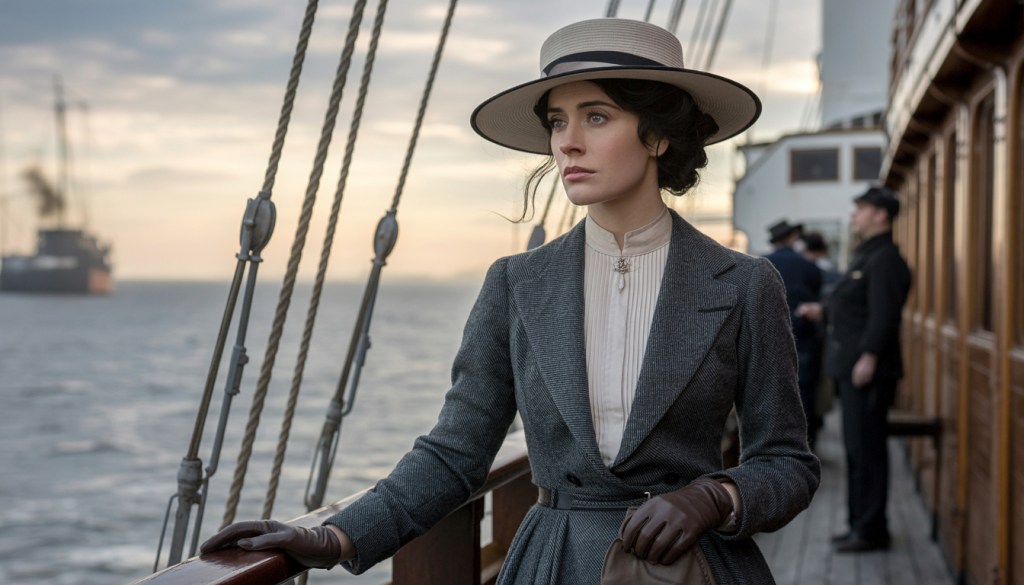
1st October 1910
The engines throb beneath my feet – a ceaseless, mechanical pulse that permits no respite. I sit in my narrow cabin aboard this Liverpool steamer bound for the Mediterranean, and the din seems almost to mock the terrible silence that has descended upon my spirit. All day the pistons hammer their rhythm, the coal-smoke billows, the sailors call to one another in voices roughened by wind and labour, yet within me there stretches a vast, unnatural quiet, as though some essential faculty of the soul has been stoppered up.
I cannot cease thinking upon the reports from Lisbon. Revolution, they say, is imminent – perhaps has already come to pass whilst I have been at sea, cut off from all intelligence. The Portuguese monarchy teeters upon its throne, and I find myself gripped by an unseemly fascination with the machinery of its collapse. How does a kingdom fall? By what invisible threads is power maintained, and by what sudden rupture do those threads snap? I have read the telegraphs in The Times before embarking: strikes, assassinations, the King’s Ministers fleeing like rats before the flood. And yet the ocean rolls on, indifferent, its own vast silence swallowing the cries of nations.
I think often of the suffragettes, too – those women who chain themselves to railings and smash windows that their voices might be heard above the roar of masculine government. Mrs Pankhurst languishes again in Holloway, I believe, for her defiance. I confess I am divided in my judgment. Their methods appal the gentler parts of my nature, bred up as I was to submission and propriety. Yet I cannot deny the dreadful arithmetic of their position: where soft petitions meet with silence, violence becomes a kind of speech. The window breaks, and in that shattering, a voice emerges.
This question will not leave me alone: what skill would I learn, if I might command the learning of it? I have turned it over in my mind these three days past, whilst the ship carves its furrow through grey waters. Not languages, though I possess some facility with Greek and a tolerable French. Not music, though I was taught the pianoforte as befits a woman of education. No – what I crave, what burns within me like a coal that will not be extinguished, is the skill of persuasion in the councils of men. To speak and be heard. To turn the tide of argument as a helmsman turns his vessel. I long to understand the secret springs of influence, the invisible architecture by which one man’s word becomes law and another’s falls upon deaf ears.
Is this ambition sinful? I know not. I know only that I have watched too many worthy causes founder for want of a voice that could command attention. The Apostle Paul spoke of women keeping silence in the churches, yet did not Deborah judge Israel? Did not Esther plead before the King and save her people? The Scriptures contain multitudes; we select from them according to our need.
The ship’s bell has just struck eight times. The sound cleaves through the fog and the engine-noise, clear and imperative. For a moment, all other sounds seem to fall away, as though the bell has created a pocket of clarity in the confusion. Then the ordinary clamour resumes: footsteps on deck, the creak of ropes, men’s voices raised in some nautical duty I cannot interpret.
I wonder if this is how power truly operates – not through constant shouting, but through the strategic deployment of silence and sound. The bell speaks seldom, but when it does, all men attend. The King says little, but his words carry the weight of centuries. Perhaps this is what I must learn: not merely eloquence, but when to speak, and when to hold my peace until the moment ripens.
Tomorrow we dock at Gibraltar. I shall post this entry from there, though to what purpose I cannot say. Perhaps merely to mark that I was here, in this moment between worlds, when kingdoms trembled and the very air seemed charged with the possibility of transformation. I am neither prophet nor revolutionary, yet I feel the age turning like a great wheel, and I am caught upon it, neither willing nor able to descend.
The engines throb on. The silence within me deepens. I pray for wisdom, and for the courage to use whatever voice the Almighty has granted me, however small it may seem against the din of empires.
The early twentieth century saw the fall of Portugal’s monarchy and the birth of the First Portuguese Republic, foreshadowed in October 1910 by mounting unrest in Lisbon and the imminent toppling of the Braganza line. Years of crisis – compounded by the 1890 British Ultimatum, the 1908 assassinations of King Carlos I and the crown prince, and deep party instability – undermined royal authority and fuelled organised republican agitation. On 5th October 1910, after military units in the capital refused to suppress the uprising, the Republic was proclaimed and a provisional government under Teófilo Braga assumed power, later enacting a 1911 constitution. Consequences included a new national flag and anthem, strong anticlerical policies, and the exile of King Manuel II to Britain, while the First Republic itself endured chronic instability in the years that followed.
Bob Lynn | © 2025 Vox Meditantis. All rights reserved. | 🌐 Translate

 Vox Meditantis
Leave a comment