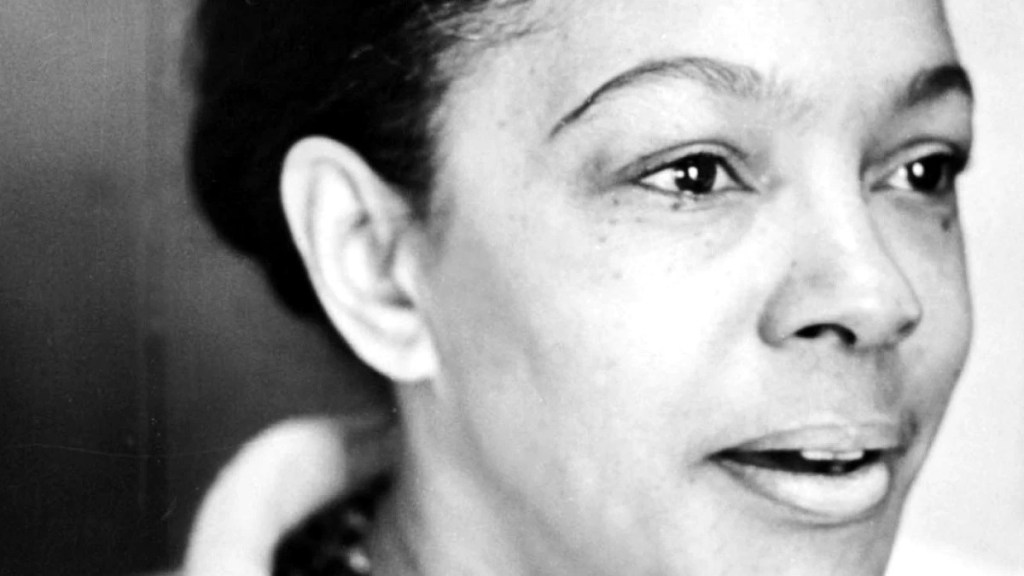
Here sits a woman who transformed the very notion of what counts as evidence in a courtroom. Mamie Phipps Clark (1917-1983), the first Black woman to earn a psychology doctorate from Columbia University, didn’t simply study children’s minds – she weaponised scientific method against segregation itself. Her doll test didn’t just measure racial preferences; it quantified the psychological violence of “separate but equal” and gave civil rights lawyers their most powerful ammunition.
What makes Clark’s story resonate today isn’t merely her pioneering research methods, but her profound understanding that science without social purpose is incomplete. At a time when academic psychology remained trapped in ivory tower abstractions, she insisted that research must serve the community that most needed it. The Northside Center she founded didn’t just provide therapy – it revolutionised how we think about culturally responsive mental health care.
This isn’t simply a story about breaking barriers. It’s about a scientist who recognised that the most pressing social questions require the most rigorous methodologies, and that true scientific objectivity sometimes means acknowledging the emotional cost of one’s findings.
Dr Clark, you’ve been called the scientist who made prejudice measurable. But I want to start at the beginning – what drew a young woman from Hot Springs, Arkansas to psychology in the first place?
Well, you know, it certainly wasn’t the plan! I went up to Howard University in 1934 thinking I’d study mathematics and physics – wanted to be a teacher, you see. But those mathematics professors, bless them, made it quite clear that a Negro girl had no business with numbers and equations. They were cold as winter mornings, dismissive as you please.
Then I met Kenneth Clark – this passionate young man studying psychology under Dr Sumner. The way he talked about the mind, about understanding human behaviour… it was like he was describing a whole new world. But what really captured me was the possibility that psychology might help us understand why society was the way it was. Why children like me had to attend separate schools, why we lived in a world where colour determined everything.
Your father was a physician – quite unusual for a Black man in Arkansas. How did that privilege shape your scientific outlook?
Father was indeed privileged, and he made sure we knew it was both a gift and a responsibility. He’d come from the British West Indies, established his practice, even managed that resort. We lived comfortably, but you mustn’t think that insulated us from Jim Crow’s realities.
I remember Father saying, “Mamie, you’ve got opportunities most Negro children don’t have. That means you’ve got obligations most don’t have either.” He understood that scientific progress required systematic observation – that’s what made him a good doctor. But more than that, he taught me to see patterns where others saw only isolated incidents.
The peculiar thing about growing up middle-class in the segregated South was that you could see both worlds – the privileges that education and economic security provided, and the absolute limits that race imposed. That dual perspective proved essential for my research. I understood that psychological damage from segregation wasn’t simply about poverty or lack of resources. Even comfortable Negro children were being harmed.
Let’s talk about the technical heart of your work – the doll test itself. Walk me through your methodology as if I’m a fellow psychologist.
Ah, now we get to the meat of it! Kenneth often gets credit for the doll test, but the experimental design was mine – grew directly from my master’s thesis on self-consciousness in Negro pre-school children.
The methodology was deceptively simple, which is precisely what made it so powerful. Four dolls, identical except for skin colour – two brown-skinned with black hair, two white-skinned with yellow hair. Children aged three to seven, all Negro, seated individually with the experimenter.
Eight standardised questions, always in the same order: Give me the doll you’d like to play with. The nice doll. The doll that looks bad. The nice colour. The doll that looks like a white child. Like a coloured child. Like a Negro child. Finally – the crucial question – give me the doll that looks like you.
What were your key statistical findings?
The numbers were stark, and they were consistent. Across 253 children, 67% preferred to play with the white doll, whilst only 32% chose the black doll. When asked which was “nice,” 59% selected white, only 38% chose black. Most damaging of all – 59% said the black doll looked “bad,” compared to just 17% for the white doll.
But here’s what made our findings scientifically rigorous: we tested children in both segregated schools in the South and integrated schools in the North. The northern children actually showed stronger white preference – 72% compared to 62% in the South. This contradicted prevailing assumptions about regional differences and suggested the damage went beyond legal segregation.
The reliability was confirmed through replication. We tested over multiple years, different locations, various experimenters. The pattern held.
That final question – “give me the doll that looks like you” – became infamous for children’s emotional reactions. What did you observe?
That question… it broke my heart every time. You see, by that point in the test, many children had already identified the black doll as “bad” or “ugly.” Then we asked them to choose the doll that looked like them.
Some children simply refused to answer. Others would cry – not just tears, but that deep, wrenching sobbing that comes from somewhere in the soul. I watched seven-year-olds run from the room, inconsolable. One child in Arkansas looked at me and said, “I don’t want to look like nothing.”
As scientists, we recorded these reactions objectively. But as a human being, as a Negro woman who understood exactly what these children were experiencing… well, it was the most difficult research I’ve ever conducted. Each test session reminded me why this work mattered more than anything I could have studied in a laboratory.
How did you address concerns about experimental bias – that you and Kenneth, as Black researchers, might influence the results?
That criticism surfaced immediately, and we took it seriously because methodological rigour was our strongest defence. First, we employed multiple experimenters, including white researchers, to ensure consistency. The results remained stable regardless of who administered the test.
Second, we established strict protocols. Every question was asked identically, in the same sequence, with identical materials. We recorded not just the children’s choices but their hesitations, their explanations, their emotional responses.
Third – and this is crucial – we tested our methodology against existing psychological measures. The doll test correlated with drawing tests, where children consistently coloured figures lighter than their own skin tone, and with direct questioning about racial preferences.
The most compelling evidence against bias was replication by independent researchers. Other psychologists, including white researchers with no investment in our conclusions, conducted similar studies and found nearly identical results.
Critics later argued that the test was more about aesthetics than self-hatred. How do you respond?
That’s a fair criticism that deserves a thoughtful answer. Yes, children might prefer lighter dolls for purely aesthetic reasons – lighter colours are often associated with cleanliness, brightness, beauty in our culture.
But here’s what the critics missed: we weren’t simply measuring doll preferences. We were examining the intersection between aesthetic choices and racial identity. When a child chooses the white doll as “nice” and “good,” then identifies that same white doll as looking like himself despite his dark skin, we’re witnessing something far more complex than aesthetic preference.
The emotional reactions – the crying, the refusal to answer, the attempts to leave the room – these weren’t responses to aesthetic choices. These were children confronting a fundamental conflict between their identity and their learned values.
Furthermore, our follow-up interviews revealed that children could articulate the racial basis of their choices. They understood they were making decisions about race, not merely about prettiness.
Your work was crucial to Brown v. Board, but you actually testified in the earlier case, Davis v. Prince Edward County. What was that experience like?
Ah yes, people often forget that my first courtroom appearance was in Virginia in 1952, not at the Supreme Court. It was terrifying, frankly. Here I was, a young Negro woman, being asked to explain complex psychological concepts to white judges who’d never considered that segregation might harm children.
The opposing counsel brought in Henry Garrett – my own former professor at Columbia – to argue that Negro children were simply intellectually inferior. Can you imagine? My dissertation advisor, testifying that the racial differences I’d documented were proof of natural hierarchy rather than social damage.
I had to remain composed while dismantling his arguments point by point. I explained that the children I’d studied showed increasing IQ scores as they aged, contradicting theories of fixed racial intelligence. I demonstrated that environmental factors, not genetic ones, explained the patterns we observed.
How did you balance scientific objectivity with your personal investment in civil rights?
That’s the question every Negro scientist faces, isn’t it? We’re told to be objective, but we’re studying problems that affect our own communities, our own children.
I learned early that the best defence against accusations of bias was methodological excellence. Every aspect of our research had to be beyond reproach – larger sample sizes, more rigorous controls, multiple forms of validation. We couldn’t afford the luxury of sloppy methodology that white researchers might get away with.
But I’ll tell you something else: true objectivity sometimes requires acknowledging your emotional response to the data. When I watched those children cry, when I saw them reject dolls that looked like them, I wasn’t abandoning scientific objectivity – I was recognising the human meaning of my statistical findings.
After Brown v. Board, you focused increasingly on applied psychology through the Northside Center. Why that shift?
Because proving that segregation damaged children was only the first step. The harder question was: how do we heal that damage?
The Northside Center opened in 1946 with $936 borrowed from my father and a basement room in the Dunbar Houses. We saw 60 children the first year. By the time I retired, we were serving thousands of families annually.
What made Northside different was our approach. We didn’t simply provide therapy to individual children – we worked with entire families, recognising that psychological health requires community support. We combined clinical services with educational programmes, recreational activities, and community advocacy.
I was tired of research that documented problems without offering solutions. Northside was my attempt to translate psychological knowledge into concrete help for the families who needed it most.
Looking back, what do you see as your most significant contribution to science?
I hope I demonstrated that rigorous scientific methodology could be applied to social problems that others preferred to ignore or dismiss. The doll test wasn’t just about measuring racial preferences – it was about making visible forms of psychological damage that society had rendered invisible.
But perhaps more importantly, I showed that applied psychology – working directly in communities rather than university laboratories – could produce knowledge that was both scientifically valid and socially transformative. The ivory tower has its place, but the real test of psychological knowledge is whether it helps people live better lives.
What would you tell young women scientists today, particularly women of colour?
First – your methodology must be impeccable. You’ll face scepticism that your white male colleagues never encounter, so your research has to be beyond question.
Second – don’t let anyone tell you that caring about social justice compromises your objectivity. The best science comes from people who understand deeply what’s at stake.
Third – remember that science is ultimately about service. If your research doesn’t somehow make the world more habitable for people who are struggling, what’s the point?
And finally – don’t work alone. Kenneth and I succeeded because we understood that scientific collaboration multiplies individual strengths. Find your collaborators, build your community, and never forget that the most important discoveries happen when we work together.
Any regrets about your career path?
I sometimes wonder what would have happened if I’d been born twenty years later, when opportunities for Negro women in psychology were somewhat broader. But then I think about those children in Harlem who got services they never would have received otherwise, about the families who found hope at Northside, about the role our research played in changing American law.
No, I don’t have regrets. I had work that mattered, and I had the privilege of seeing that work make a difference. How many scientists can say that?
Letters and emails
Since our interview with Dr. Mamie Phipps Clark was published, we’ve received hundreds of letters and emails from readers around the world who were inspired by her groundbreaking work and wanted to know more. We’ve selected five particularly thoughtful questions from our growing community – spanning five continents – who want to explore her life, her scientific methods, and what wisdom she might offer to those walking in her footsteps today.
Fatima Diallo, 34, Child Development Researcher, Dakar, Senegal
Dr Clark, I’m fascinated by your decision to use dolls rather than photographs or drawings in your experiments. From a technical standpoint, what specific properties of three-dimensional objects made them superior for measuring children’s racial identification? Did you experiment with different materials, facial expressions, or clothing styles before settling on your final design? I’m particularly curious whether you considered how tactile interaction with the dolls might influence children’s responses differently than purely visual stimuli.
Well now, Miss Diallo, that’s a question that gets right to the heart of experimental design! You know, back in the 1940s, we didn’t have all the fancy equipment and theories about cognitive development that you researchers have today, so we had to think carefully about every element.
The dolls weren’t my first choice, actually. I started with drawings – had children colour pictures of themselves and other figures. But Lord, the results were inconsistent! Some children would scribble right over the faces, others would refuse to use the brown crayon at all. With photographs, well, we found children got distracted by clothing, backgrounds, facial expressions that had nothing to do with race.
But dolls – now that was different altogether. See, a doll is something a child naturally wants to handle, to hold. When a three-year-old picks up that white doll and cradles it, then pushes away the brown one, that’s a full-body rejection we’re witnessing. You can’t get that kind of visceral response from a flat picture.
We did experiment some, though we didn’t have research budgets like universities today! Kenneth and I tried dolls with different hair textures first – some with woolly hair, some with straight. But we found children focused too much on the hair rather than the skin colour, so we simplified. The final dolls were identical except for pigmentation – same size, same clothes, same neutral expressions.
The tactile element you mention – that was crucial, though we didn’t have the vocabulary for it then. A child holding a doll engages differently than one just looking. When little hands reject something that looks like them, when they physically turn away… well, that tells you something about internalised feelings that words can’t capture. We were measuring not just preference, but comfort, belonging, acceptance – all through how children’s bodies responded to these simple cloth figures.
Smart question, dear. The three-dimensional aspect made the choice feel real in a way that flat images never could.
Ethan Walker, 28, Data Scientist specialising in bias detection, Toronto, Canada
Your work essentially created one of the first systematic measurements of implicit bias decades before that term existed. If you could redesign the doll test today with modern statistical methods and larger sample sizes, what additional variables would you control for? I’m thinking about socioeconomic factors, parental education levels, or exposure to diverse media. Would you use randomised controlled trials, and how might machine learning help identify patterns in children’s emotional responses that human observers might miss?
My goodness, Mr Walker, you’re talking about things that sound like science fiction to someone who did her calculations by hand with a slide rule! Machine learning? Randomised controlled trials? Well, I suppose that’s progress for you.
But let me tell you what we would have given our eye teeth for back then – proper sample sizes, for one thing. We tested 253 children over several years, which was considered quite substantial in the 1940s, but I always knew we needed more. The statistical significance was there, but broader representation would have made our findings even more robust.
If I could go back with your modern methods, I’d want to control for so many variables we simply couldn’t manage then. Family income, yes, but also things like – did the child have white playmates? Had they seen Negro dolls before? What about birth order, or whether they lived with grandparents who remembered slavery? We asked some of these questions informally, but we didn’t have the computational power to analyse all those relationships systematically.
The thing about “implicit bias” – well, we didn’t call it that, but we surely saw it. What troubled me most was that we couldn’t measure the intensity of the children’s responses with any precision. When a child hesitated for thirty seconds before choosing, versus one who grabbed the white doll immediately – those differences mattered, but we had no way to quantify them properly.
Your idea about emotional responses is intriguing, though I wonder if all that fancy equipment might miss something important. Sometimes the most significant data comes from what a trained observer notices – the way a child’s shoulders slump, or how they won’t meet your eyes after making their choice. Human insight still matters, even with all your computers.
But heavens, what I wouldn’t have given for a way to track those children over time, to see how their responses changed as they grew up!
Ayaka Sato, 31, Clinical Psychologist, Kyoto, Japan
Dr Clark, you mentioned the emotional toll of watching children reject dolls that looked like them. How did you maintain your own psychological wellbeing whilst conducting research that must have been personally devastating? Did you develop any specific techniques for separating your role as scientist from your identity as a Black woman? I wonder if this experience influenced how you later trained therapists at Northside Center to handle emotionally challenging cases with children.
Oh my dear Miss Sato, that’s a question that goes straight to the soul, doesn’t it? You know, there were nights I’d come home from testing sessions and just sit at my kitchen table, unable to eat supper. Kenneth would find me there, staring at my notes, and he’d know without asking what kind of day it had been.
The truth is, I don’t think you ever truly separate those parts of yourself – the scientist and the woman, the observer and the person who’s lived the very experiences you’re studying. What I learned to do was use that pain, channel it into making the research better, more precise, more undeniable.
I had a ritual, you might say. After particularly difficult sessions – especially when children cried or ran from the room – I’d write everything down immediately. Not just the data, but how it felt, what it meant. Then I’d put on my hat and coat and walk through Harlem for hours, looking at the children playing in the streets, reminding myself why this work mattered.
My mother used to say, “Mamie, if you’re gonna cry, make sure your tears water something that can grow.” So I let myself feel the heartbreak, but I used it to fuel my determination to get those findings into courtrooms where they could do some good.
At Northside, I made sure our therapists understood that caring isn’t unprofessional – it’s essential. I’d tell them, “If you’re not affected by what these children are going through, you’re not paying attention.” But I also taught them what I’d learned: you have to find ways to process that emotion constructively, whether through supervision, through writing, through community action.
The hardest part wasn’t maintaining objectivity – it was maintaining hope. Some days, watching child after child choose that white doll, you’d wonder if the damage was too deep to ever heal. But then you’d remember that understanding the wound is the first step toward treating it.
Bruno Castillo, 39, Community Mental Health Director, São Paulo, Brazil
Your transition from research to direct service through Northside Center represents a profound philosophical shift that many academics struggle with today. How do you reconcile the slower pace of systemic change that research can bring versus the immediate impact of community intervention? When you see modern psychologists still debating whether they should engage in advocacy or maintain ‘scientific neutrality,’ what would you tell them about the responsibility that comes with studying vulnerable populations? Did you ever worry that your community work might be seen as less intellectually rigorous than university research?
Mr Castillo, you’ve put your finger on something that kept me awake many a night, I’ll tell you that. The academic world in the 1940s and ’50s – especially for a Negro woman – had very clear ideas about what constituted “serious” scholarship. Publishing papers, presenting at conferences, building theories that other professors could debate in their comfortable offices.
But here’s what I came to understand: there’s nothing more intellectually rigorous than taking your research and making it work in the real world. At Northside, we weren’t just applying psychological principles – we were testing them, refining them, proving them every single day. When a child who’d been failing in school suddenly starts thriving because we addressed their emotional needs, that’s data every bit as valid as what comes out of a laboratory.
The truth is, I got tired of research that sat on library shelves while children in Harlem were suffering. What good is it to document problems if you’re not willing to roll up your sleeves and help solve them? Kenneth understood this too – that’s why he served on school boards, testified in court cases, worked with community organisations.
Now, about this business of “scientific neutrality” – mercy, what a luxury that must be! When you’re studying your own people, when the children in your research look like your own children, neutrality isn’t just impossible, it’s immoral. The question isn’t whether you care – of course you care. The question is whether you let that caring make your work more precise, more honest, more useful.
I’d tell those modern psychologists what my father told me: “If you have knowledge that could help folks and you keep it locked up in your head, you’re not a scholar – you’re selfish.” The responsibility doesn’t end when you publish your findings. That’s where it begins.
The community work wasn’t less rigorous – it was more demanding because you had to make your theories actually function in the messiness of real life.
Mila Ivanova, 26, Educational Technology Developer, Sofia, Bulgaria
What if you had been born in 1950 instead of 1917 – during the civil rights era rather than before it? Do you think your research would have taken a completely different direction, perhaps focusing on integration outcomes rather than segregation damage? Would you have pursued different technological tools, maybe early computers for data analysis, or would the fundamental questions about children’s racial identity development have remained the same? I’m curious whether the timing of your birth was actually crucial to your specific contributions.
Well now, Miss Ivanova, that’s quite a thought experiment you’ve posed! Born in 1950 instead of 1917… goodness, I’d have been coming of age right when the civil rights movement was in full swing, wouldn’t I?
You know, I think the fundamental questions would have remained the same – children’s minds don’t change just because the calendar does. But mercy, the context would have been entirely different! If I’d been a young researcher in the 1970s, I probably would have been studying integration itself rather than segregation’s damage. Instead of asking “How does separation harm children?” I’d have been asking “What happens when you put children together after generations apart?”
The timing of my birth was crucial, though I didn’t realise it then. We were able to document the psychological effects of Jim Crow precisely because we lived through its height. A younger researcher might have had access to those fancy IBM computers you mention – imagine being able to analyse thousands of children’s responses instead of hundreds! – but they wouldn’t have had the same urgency, the same personal understanding of what segregation actually felt like.
If I’d been born later, I suspect I would have focused more on what we now call “identity development” – helping Negro children maintain pride in themselves while navigating integrated schools. The doll test itself might have been used differently, maybe to measure progress rather than damage.
But here’s what troubles me about your question: if I’d been born in 1950, would there have been the same need for someone like me to prove that separate wasn’t equal? The Supreme Court decision in Brown came about partly because researchers like Kenneth and me had already laid the groundwork. Sometimes you need people born at just the right time to ask the questions that need asking when they need to be asked.
The tools change, dear, but children’s hearts remain the same.
Reflection
What emerges most powerfully from this conversation is how Dr Clark’s scientific rigour was inseparable from her moral courage. Her insistence that emotional investment strengthens rather than compromises research challenges the false neutrality that still haunts academic psychology today. The woman who spoke to us reveals nuances often missing from historical accounts – her methodological innovations, her community-building philosophy, her understanding that the most profound scientific discoveries happen when we refuse to separate knowledge from justice.
The historical record remains frustratingly incomplete about Clark’s individual contributions, often subsuming her work within joint publications with Kenneth. Yet her responses suggest a scientist whose experimental design skills and community psychology vision were distinctly her own, anticipating by decades our current focus on culturally responsive mental health practices and implicit bias research.
Listening to her reflect on those crying children, we’re reminded that some of today’s most sophisticated bias detection algorithms are essentially digital descendants of her simple but revolutionary doll test. Her transition from documenting psychological damage to healing it through Northside Center prefigures contemporary psychology’s growing emphasis on community-based intervention and social justice advocacy.
Perhaps most striking is Clark’s belief that caring deepens rather than distorts scientific observation – a perspective that feels radical even now. In an era when psychology still struggles with historical blind spots around race, gender, and power, her voice offers both inspiration and challenge: true objectivity sometimes requires acknowledging exactly what’s at stake.
The best science, she reminds us, doesn’t just measure the world – it helps reshape it.
Who have we missed?
This series is all about recovering the voices history left behind – and I’d love your help finding the next one. If there’s a woman in STEM you think deserves to be interviewed in this way – whether a forgotten inventor, unsung technician, or overlooked researcher – please share her story.
Email me at voxmeditantis@gmail.com or leave a comment below with your suggestion – even just a name is a great start. Let’s keep uncovering the women who shaped science and innovation, one conversation at a time.
Editorial Note: This interview is a dramatised reconstruction grounded in historical sources, scholarly research, and Dr Mamie Phipps Clark’s own published writings. While crafted to capture her voice and perspectives, it is not a literal transcript but an interpretive narrative. Readers should note that some dialogue and anecdotes have been imaginatively rendered to convey the emotional truth and methodological rigour of her work, and that gaps in the archival record have been supplemented with informed speculation.
Bob Lynn | © 2025 Vox Meditantis. All rights reserved. | 🌐 Translate

 Vox Meditantis
Leave a comment