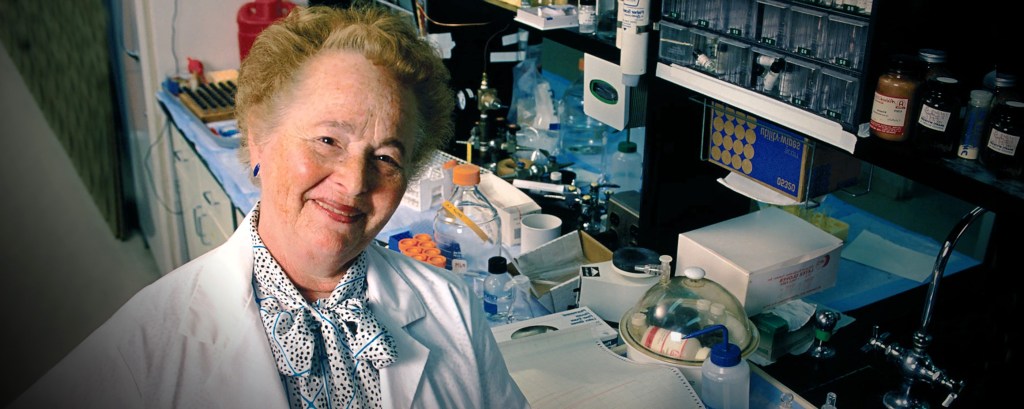
You sit across from Gertrude Elion (1918-1999) in what feels like a moment stolen from time itself. At 81, she carries herself with the quiet authority of someone who has spent decades proving herself in rooms where she was never meant to belong. Her hands, marked by years of careful laboratory work, rest easily on the table between us. Behind wire-rimmed spectacles, her eyes hold a spark that hasn’t dimmed despite a lifetime of battles fought and won.
This is the woman who revolutionised how we make medicines – without ever holding a doctoral degree. While her male colleagues pursued traditional academic pathways, Elion carved out something entirely different: a methodical, systematic approach to drug development that saved millions of lives and earned her the 1988 Nobel Prize in Physiology or Medicine. Her story isn’t just about scientific achievement; it’s about persistence, innovation, and the power of looking at old problems with fresh eyes.
Dr. Elion, thank you for speaking with us today. Your grandfather’s death from cancer when you were fifteen seems to have set your entire life’s course. Can you take us back to that moment?
You know, people always say that, and it’s true to an extent. But I think what they miss is that I was already curious about everything – mathematics, literature, languages. I was one of those children who drove adults mad with questions. When Grandpa died, though, it gave that curiosity a focus. A purpose.
I remember sitting by his bedside, watching him suffer, and thinking – this is unacceptable. There must be something we can do. I was fifteen, mind you, and rather naive about the complexities of cancer research. But sometimes naivety is a blessing. It means you don’t know what’s impossible.
You’ve spoken about how doors were closed to you until you started knocking on them. What was that like in the late 1930s?
“Nobody took me seriously. They wondered why in the world I wanted to be a chemist when no women were doing that. The world was not waiting for me”. That’s what I said later, but at the time, I was genuinely shocked. I’d attended Hunter College – an all-women’s college – where I was surrounded by bright, ambitious women studying chemistry. Seventy-five chemistry majors in my class alone! Of course, most were planning to teach, but still.
When I started applying for jobs and graduate school, suddenly I was hearing, “You’re qualified, but we’ve never had a woman in the laboratory before, and we think you’d be a distracting influence”. A distracting influence! As if I were planning to perform cabaret numbers between titrations.
In 1944, you joined Burroughs Wellcome as George Hitchings’ assistant. What was different about the approach you two developed?
Everything. Absolutely everything. Traditional drug development in the 1940s was what we’d now call “random screening” – you’d test thousands of compounds against a disease and hope something worked. It was like throwing darts blindfolded. George and I decided to open our eyes first.
We started by asking a fundamental question: what makes a cancer cell different from a healthy cell? What makes a virus different from its host? If we could understand those differences at the molecular level, we could design drugs that would target only the diseased cells.
That sounds remarkably straightforward now, but it must have seemed radical then.
Oh, it was heretical! The pharmaceutical world thought we were mad. “Too methodical,” they said. Can you imagine? Too methodical for medicine! But we pressed on because the logic was irresistible.
We focused on nucleic acids – DNA and RNA. All cells need these to reproduce, but rapidly dividing cells like bacteria, viruses, and cancer cells need them desperately. We reasoned that if we could interfere with nucleic acid production in a targeted way, we could starve the diseased cells without harming healthy ones.
Let’s talk about your technical approach. Can you explain how you actually went about creating these drugs?
Certainly. My first assignment was to work with purines – adenine and guanine, two of the building blocks of DNA. The idea was to create what we called “antimetabolites” – molecules that looked like the real thing but didn’t work properly.
Think of it like this: imagine a factory that makes bicycles. They need specific parts – wheels, chains, gears. Now suppose you substituted fake wheels that looked identical but couldn’t roll. The factory would try to make bicycles, but they’d all be useless. That’s essentially what we were doing to cancer cells.
Walk us through the process of developing 6-mercaptopurine, your breakthrough leukaemia drug.
First, we synthesised hundreds of purine analogues – molecules that resembled natural purines but had subtle differences. We tested each one against Lactobacillus casei – a bacterium whose metabolism we understood well. When we found compounds that inhibited the bacteria’s growth, we’d test them against cancer cells.
The breakthrough came in 1950. We created a compound – 6-mercaptopurine, or 6-MP – that disrupted DNA formation in leukaemia cells. In animal tests, tumours actually shrank. When we moved to human trials in 1953, we achieved complete remission in one in three children with leukaemia.
Now, let me be clear – these children eventually relapsed. The drug alone wasn’t enough. But it proved the concept worked. Later, doctors learned to use 6-MP in combination with other drugs, achieving cure rates of about 80 percent.
The precision of that approach seems almost modern. How did you track the biological effects?
We had to develop our own testing methods. We’d track how quickly cells divided, measure DNA content, monitor enzyme activity. We used spectrophotometry to measure compound absorption, thin-layer chromatography for purification. Every step had to be documented meticulously because we were building the science from scratch.
I kept detailed notebooks – not just of successful experiments, but of every failure, every unexpected result. Those “failures” often pointed us toward new discoveries. The compound that became allopurinol for gout, for instance, emerged from our attempts to make 6-MP last longer in the body.
Your work on acyclovir changed how we think about fighting viruses. How did that project begin?
With everyone telling us it was impossible. The scientific consensus in the 1960s was that you couldn’t kill a virus without killing the host cell. Viruses hijack the cell’s own machinery, you see. Any drug toxic enough to stop viral replication would presumably destroy the host cell too.
But George had retired by then, and I was head of the Department of Experimental Therapy. I kept thinking about nucleic acid metabolism. Viruses need to replicate their DNA, just like cancer cells. Surely there had to be differences we could exploit.
What was the specific breakthrough?
In 1969, we synthesised 2,6-diaminopurine arabinoside and sent it to our colleague John Bauer in the UK for testing. When he reported it was highly active against herpes simplex virus with low toxicity to normal cells, I knew we were onto something.
But the real elegance came later with acyclovir itself. This drug is what we call a “smart bomb” – it’s only activated by an enzyme that herpes viruses produce. Healthy cells don’t have this enzyme, so they can’t activate the drug. It remains harmless until it encounters infected cells.
Can you describe the mechanism more precisely?
Acyclovir mimics deoxyguanosine, one of DNA’s building blocks. The herpes virus has an enzyme called thymidine kinase that converts acyclovir into its active form. Once activated, acyclovir gets incorporated into the viral DNA, but because it lacks a crucial chemical group – the 3′-hydroxyl group – DNA synthesis stops dead.
It’s like building a ladder and suddenly having a rung that can’t connect to the next one. The whole structure falls apart. Meanwhile, human cells, which don’t produce the activating enzyme, remain completely unaffected.
You’ve mentioned that your lack of a PhD was seen as a disadvantage, yet you achieved things many academics never could. How do you reflect on that now?
You know, when I was forced to choose between my job at Burroughs Wellcome and finishing my PhD at Brooklyn Polytechnic, it felt like a terrible setback. The dean insisted I attend full-time, but I couldn’t abandon my research. I was finally doing meaningful work!
Looking back, it was probably the best decision I ever made. In academia, I would have been pressured to specialise narrowly, to publish quickly, to chase grant money. In industry, I could follow my curiosity wherever it led, even if it took twenty years to pay off.
What advantages did industry research offer?
Resources, for one thing. We had access to synthesis equipment, biological testing facilities, clinical trial networks. But more importantly, we had a different mindset. Academic researchers often study problems; industrial researchers solve them. We weren’t just trying to understand how cancer cells work – we were trying to cure cancer.
The collaboration was different too. George and I worked together for 39 years. We shared ideas freely, built on each other’s insights. There was no competition for tenure, no pressure to claim individual credit. “It’s amazing how much you can accomplish when you don’t care who gets the credit” – that became our motto.
Looking back at your career, are there any mistakes or misjudgements you wish you could correct?
Oh, several. In the early days with 6-MP, we focused so intensively on leukaemia that we nearly missed its potential as an immunosuppressant. One of the modified compounds – azathioprine – turned out to be crucial for organ transplantation, but we almost didn’t pursue it.
And I must confess, I was initially sceptical about some of the biological testing methods that became standard later. I was so focused on chemical elegance that I sometimes underestimated the importance of biological complexity.
What about the broader scientific establishment? Did you ever doubt your approach?
Never the approach itself, but certainly my ability to convince others of its value. The resistance to rational drug design was enormous in the 1950s and 60s. Pharmaceutical companies were comfortable with their random screening methods. Academic biochemists thought our work was “too applied” to be real science.
I remember presenting our early results at conferences and watching distinguished professors dismiss our findings because we hadn’t followed traditional pathways. It was infuriating and, I’ll admit, sometimes discouraging.
Your antiviral work laid the foundation for modern HIV treatments. How does that feel?
It’s gratifying, of course, but also bittersweet. By the time HIV/AIDS emerged in the early 1980s, I was nearing retirement. My former colleagues at Burroughs Wellcome used our methods to develop AZT – the first drug licensed to treat HIV.
Seeing that rational drug design could tackle this new, devastating disease… it validated everything we’d worked for. But I also felt frustrated that I couldn’t be directly involved in that fight.
What would you say to modern pharmaceutical researchers who might be facing similar scepticism about new approaches?
Persist. Document everything. Let the results speak for themselves. The scientific establishment can be remarkably conservative, but good science eventually wins. Don’t let anyone tell you your method is “too methodical” or “too systematic.” If it works, it works.
And don’t underestimate the value of interdisciplinary collaboration. Some of our best insights came from combining organic chemistry with biochemistry, pharmacology with virology. Modern drug discovery is even more complex – you need computational chemists, molecular biologists, clinical researchers all working together.
Any advice for women entering STEM fields today?
Don’t be afraid of hard work. Nothing worthwhile comes easily. Don’t let others discourage you or tell you that you can’t do it. In my day I was told women didn’t go into chemistry. I saw no reason why we couldn’t.
The barriers are different now, thankfully. But persistence remains essential. Find your passion and pursue it relentlessly. And remember – sometimes being outside the traditional establishment gives you advantages. You see problems differently, ask different questions.
The Nobel Prize is often seen as the pinnacle of scientific achievement. How did winning it change your perspective?
People ask me often whether the Nobel Prize was the thing you were aiming for all your life, and I say that would be crazy. Nobody would aim for a Nobel Prize because, if you didn’t get it, your whole life would be wasted. What we were aiming at was getting people well, and the satisfaction of that is much greater than any prize you can get.
The real reward was always the patients. The children with leukaemia who lived to have children of their own. The transplant recipients who got second chances at life. The people with herpes who could manage their condition with dignity. That’s the true measure of success in medicine.
Looking back now, how do you want to be remembered?
As someone who proved that you don’t need to follow conventional pathways to make meaningful contributions to science. That systematic, rational thinking can solve problems that seemed impossible. That industry and academia each have their place in advancing human knowledge.
Most importantly, that science is fundamentally about reducing human suffering. Every compound we synthesised, every mechanism we elucidated, every drug we developed – it was all in service of that simple, powerful goal.
And perhaps as someone who showed that the best science happens when you combine rigorous methodology with genuine compassion. Logic and heart working together. That’s what real discovery looks like.
Letters and emails
Following our conversation with Dr. Elion, we’ve received dozens of letters and emails from our community of readers eager to explore different aspects of her groundbreaking career and personal journey. We’ve selected five particularly thoughtful questions from contributors across the globe who want to know more about her scientific methods, the challenges she faced, and the wisdom she might share with today’s researchers walking in her footsteps.
Francine Beaupre, 34, Pharmaceutical Research Manager, Montreal, Canada:
Dr. Elion, you mentioned keeping detailed notebooks of every failure alongside your successes. In our current era of digital lab management systems and AI-assisted drug discovery, what specific insights from those ‘failed’ experiments do you think modern researchers might be missing by relying too heavily on computational predictions rather than hands-on laboratory intuition?
Francine, that’s an astute observation. You’ve touched on something that genuinely concerns me about modern pharmaceutical research. These digital systems and AI predictions are extraordinary tools – don’t misunderstand me – but they risk creating a dangerous distance between the researcher and the actual phenomena being studied.
In my notebooks, those “failed” experiments weren’t really failures at all. They were conversations with nature. When a compound didn’t work as expected – say, when we were developing 6-mercaptopurine and found that certain modifications actually enhanced toxicity rather than selectivity – that unexpected result told us something crucial about the underlying biochemistry.
I kept detailed records of pH shifts during synthesis, unusual crystal formations, unexpected colour changes during reactions. These observations often pointed toward mechanisms we hadn’t considered. For instance, when we noticed that some of our purine analogues degraded differently under various storage conditions, that led us to investigate metabolic pathways we’d initially overlooked.
But here’s what modern computational approaches might miss: the texture of discovery. When you’re physically manipulating compounds, watching reactions proceed, you develop an intuition about molecular behaviour that algorithms can’t replicate. I could often predict whether a synthesis would work just from the smell of the reaction mixture or the way crystals formed.
Your AI models are brilliant at pattern recognition, but they’re trained on successful experiments – the data that gets published. They don’t learn from the countless small failures, the subtle variations that didn’t quite work but suggested alternative pathways. My notebooks captured those nuances: “Compound 247 showed interesting selectivity but caused unexpected cell membrane changes at higher concentrations.” That observation, deemed a failure at the time, later informed our work on acyclovir’s delivery mechanisms.
I worry that researchers now might accept computational predictions without sufficient scepticism. We used to synthesise dozens of variations of a promising compound, testing each one methodically. Now, I suspect there’s pressure to trust the algorithm’s top candidate. But what about compounds 2 through 20? They might hold unexpected insights about structure-activity relationships that no amount of computational modelling can anticipate.
The real treasure in those failed experiments was understanding why things didn’t work. That’s where breakthrough insights come from – not just knowing that compound X inhibits enzyme Y, but understanding the precise molecular interactions that cause that inhibition to succeed or fail under different conditions. Keep those hands-on experiments alive, Francine. The future of drug discovery depends on it.
Jinling Mou, 28, Biomedical Engineering PhD Student, Shanghai, China:
Your rational drug design approach was revolutionary for targeting specific cellular differences. If you were starting your career today with access to CRISPR gene editing, single-cell sequencing, and advanced structural biology techniques, which aspect of your original methodology would you consider most outdated, and what entirely new research questions would you pursue that weren’t possible in your era?
Jinling, what a fascinating question! You’ve touched on something that would have seemed like pure science fiction when I started at Burroughs Wellcome in 1944. The precision tools available today would have accelerated our work dramatically – but perhaps not in the ways you might expect.
To answer your first point about what would be outdated: surprisingly little of our fundamental methodology would be obsolete. Our rational approach – understanding cellular differences and targeting them systematically – remains the cornerstone of modern drug development. What would be different is the speed and precision with which we could implement those principles.
With CRISPR, we could have created precise disease models almost immediately. Instead of spending months breeding leukaemic mice or waiting for cell lines to develop the right characteristics, we could engineer exact genetic lesions that mirror human diseases. Imagine being able to create a cell line with a specific oncogene deletion in days rather than years! That would have transformed our understanding of 6-mercaptopurine’s mechanism of action.
Single-cell sequencing would have been revolutionary for our antiviral work. When we were developing acyclovir, we had to observe viral replication in populations of cells – millions at once. We knew some cells responded differently, but we couldn’t examine individual cellular responses. With your modern techniques, we could have tracked exactly how each infected cell metabolised our compounds, identified the precise moment when viral DNA synthesis stopped, and perhaps discovered additional mechanisms we missed entirely.
Jinling Mou: What entirely new research questions would these tools enable?
The questions we couldn’t even conceive of asking! First, I’d want to understand cellular heterogeneity in drug response. We always knew that not every cancer cell responded identically to 6-mercaptopurine, but we treated them as uniform populations. With single-cell analysis, I could ask: what makes some leukaemic cells intrinsically resistant? Are there subpopulations that metabolise purines differently? Could we design combination therapies that target multiple cellular subtypes simultaneously?
Second, I’d explore temporal drug dynamics at the single-cell level. Our compounds didn’t just inhibit DNA synthesis – they triggered complex cellular responses over time. With modern tools, I could track how individual cells progress through death pathways, which genes get activated first, whether some cells attempt DNA repair mechanisms we never detected.
But here’s what really excites me: rational resistance prediction. We knew patients eventually developed resistance to our drugs, but we couldn’t predict it. With CRISPR screens, I could systematically knock out every gene in cancer cells, treat with 6-mercaptopurine, and identify which deletions confer resistance. That information could guide combination therapies from the outset, rather than waiting for resistance to emerge clinically.
Jinling Mou: Would your systematic approach need fundamental changes?
The systematic thinking remains essential – it’s the execution that would transform. Our basic principle of “study the differences, exploit the differences” still holds. But the tools would allow us to be far more precise about which differences matter.
For instance, with structural biology advances, I wouldn’t just know that acyclovir inhibits viral DNA polymerase – I could visualise the exact molecular interactions, design variants with improved binding affinity, and predict which mutations might confer resistance before they appear in patients.
The integration possibilities fascinate me most. We could combine CRISPR editing with single-cell metabolomics to track how genetic modifications alter cellular metabolism in real-time. We could use AI to predict which chemical modifications might improve selectivity, then test those predictions with precision gene editing.
However, I worry about one thing: the temptation to rely too heavily on computational predictions. These tools are powerful, but they’re still based on our current understanding of biology. Some of our most important discoveries came from unexpected observations – like finding that certain purine analogues had immunosuppressive properties we never predicted. Make sure you maintain space for serendipity, Jinling. The best science often comes from asking, “That’s odd, why did that happen?” rather than just confirming what algorithms predict.
The future belongs to researchers who can combine computational power with experimental curiosity. That combination would have made our forty-year journey much shorter – but hopefully just as enlightening.
Susanna Gläser, 45, Science Policy Researcher, Vienna, Austria:
You chose industry over academia partly because it allowed you to follow long-term curiosity without publication pressure. Given today’s debates about intellectual property, drug pricing, and open science, how do you think the balance between private pharmaceutical research and public benefit should be structured? Would your discoveries have emerged faster or slower under a different system?
Susanna, this question cuts to the very heart of what I’ve been struggling with since receiving the Nobel Prize. The tension between innovation and access has only intensified since my time, and I fear we may have lost our way in some fundamental respects.
When George Hitchings and I were developing our compounds at Burroughs Wellcome, the relationship between industry and public benefit felt more straightforward. Yes, we were a commercial enterprise, but our primary motivation was genuinely therapeutic. We measured success by whether children with leukaemia lived longer, whether transplant patients could keep their new organs, whether people with herpes could lead normal lives.
Today’s system troubles me deeply. The pharmaceutical industry has become increasingly focused on financial returns rather than therapeutic breakthroughs. Companies spend vast resources on “evergreening” – slightly modifying existing drugs to extend patent protection rather than developing genuinely innovative treatments. This represents a betrayal of the scientific mission I dedicated my life to.
But here’s what I find particularly disturbing: much of today’s fundamental research is publicly funded through universities and government grants, yet the resulting medicines are priced as if they were entirely private discoveries. When I developed 6-mercaptopurine, the basic understanding of purine metabolism came from decades of publicly funded biochemical research. We built on that foundation, but we never forgot we were standing on the shoulders of publicly supported science.
Susanna Gläser: How would you restructure the balance between private and public interests?
The solution isn’t to eliminate private pharmaceutical research – that would be catastrophic. Industry brings essential capabilities: the ability to take risks on long-term projects, sophisticated manufacturing expertise, and the drive to translate laboratory discoveries into actual medicines. What we need is a more nuanced approach that recognises different stages of innovation require different incentive structures.
I’d advocate for what I call “graduated exclusivity” – shorter patent periods for drugs developed primarily with public funding, longer protection for genuinely risky private investments in neglected diseases. When taxpayers fund the basic research that makes a drug possible, they deserve affordable access to the results.
More importantly, we need to revive the precompetitive research model. Some of our greatest breakthroughs at Burroughs Wellcome came from sharing fundamental knowledge with academic researchers. We published our findings about purine metabolism, nucleic acid biosynthesis, viral replication mechanisms. This openness accelerated everyone’s research and ultimately benefited patients more than secretive competition would have.
Susanna Gläser: What about the argument that strong patent protection incentivises innovation?
That argument has become a convenient excuse for practices that actually stifle innovation. Yes, patents serve a purpose – they provided security for our long-term research programmes. But the current system has perverted that purpose.
Today’s pharmaceutical companies often patent not to protect genuine innovation, but to create “patent thickets” that block competitors. They file dozens of patents around a single drug – covering not just the active compound, but every possible formulation, delivery method, and combination. This isn’t innovation; it’s rent-seeking behaviour that delays generic competition and keeps prices artificially high.
Susanna Gläser: What role should open science play in modern drug development?
Open science represents a return to the collaborative spirit that made our work successful. The most promising model I’ve observed is the “precompetitive consortium” approach – where multiple companies, universities, and government agencies pool resources to tackle fundamental challenges that no single entity could solve alone.
Take the Structural Genomics Consortium as an example. They generate basic research tools and data that everyone can use, funded jointly by public and private sources. This eliminates wasteful duplication – instead of five companies separately trying to understand the same protein target, they collaborate on the basic science, then compete on developing actual drugs.
The beauty of this model is that it preserves competitive incentives where they matter most – in the final stages of drug development where companies can differentiate their products – whilst promoting cooperation in the early stages where sharing accelerates progress for everyone.
But we must be careful about implementation. Open science works best when there’s genuine commitment to sharing, not just marketing rhetoric. Some companies claim to embrace “open innovation” whilst actually extracting value from public research without reciprocating.
Susanna Gläser: Looking at today’s drug pricing controversies, what would you say to critics?
The pricing of essential medicines has become morally indefensible. When companies charge tens of thousands of pounds for drugs that cost mere pounds to manufacture – particularly when those drugs were developed using publicly funded research – they violate the social contract that justifies patent protection.
I lived through an era when pharmaceutical research was genuinely risky and uncertain. Companies deserved reasonable returns for successful drugs because they absorbed the costs of the many failures. But today’s system socialises the risks whilst privatising the rewards. That’s not capitalism; it’s exploitation.
The solution isn’t price controls, which would reduce innovation incentives, but rather value-based pricing tied to genuine therapeutic benefit and transparency about development costs. If a company invested £100 million developing a truly innovative drug, they deserve to recover that investment plus a reasonable profit. But they shouldn’t charge breakthrough prices for minor modifications of existing treatments.
Ultimately, we need to remember that pharmaceutical research exists to serve human health, not shareholder wealth. The most successful model would combine the efficiency of private enterprise with robust public accountability. That’s not socialism – it’s simply ensuring that scientific progress serves its proper purpose: reducing human suffering and extending healthy life. My generation proved this was possible. Yours must make it sustainable.
Ernesto Gameiro, 52, Research Ethics Committee Chair, São Paulo, Brazil:
Imagine if funding bodies in the 1950s had suddenly embraced your systematic approach and provided unlimited resources for rational drug design. Do you think accelerated development of your methods might have prevented some major public health crises of the latter 20th century, or would rushing the fundamental research have created unforeseen ethical dilemmas about which diseases received priority treatment?
Ernesto, that’s a fascinating hypothetical, but also a deeply troubling one. You’re asking me to imagine a world where good intentions might have led to unintended consequences – a scenario that haunts anyone who’s worked in pharmaceutical research.
Let me start with the appealing part of your question: yes, unlimited resources in the 1950s embracing rational drug design could have accelerated discoveries dramatically. We spent decades working with primitive equipment and limited funding. George Hitchings and I often had to wait months for simple chemical analyses, synthesise compounds one at a time, and test them in small batches. With unlimited resources, we could have run hundreds of parallel experiments, hired teams of chemists, and established comprehensive biological testing facilities immediately.
Ernesto Gameiro: What diseases might have been addressed earlier?
The obvious candidates are HIV/AIDS, certainly, but also hepatitis B and C, more effective cancer treatments, and perhaps – most tantalizingly – we might have developed a whole arsenal of antiviral drugs before the major epidemics struck. Our acyclovir work proved that selective antiviral therapy was possible. With unlimited resources, we could have systematically explored antiviral compounds against every known virus family.
We might have prevented the 1957 Asian flu pandemic, which killed over a million people worldwide, or the 1968 Hong Kong flu. We could have had effective treatments for hepatitis decades before they actually appeared, potentially saving millions of lives and preventing countless cases of liver cancer.
But here’s what really excites me about this scenario: we might have established rational drug design as the standard methodology much earlier. Instead of the pharmaceutical industry spending the 1960s and 70s on random screening programmes, they would have adopted our systematic approach from the beginning. This could have fundamentally changed how medicines are discovered.
Ernesto Gameiro: But you mentioned ethical dilemmas. What concerns you about this scenario?
The ethical implications are profound, and I’ve seen enough of human nature to worry about them. Unlimited resources and accelerated timelines create enormous pressure to prioritise certain diseases over others. Who would have made those choices? Which lives matter most?
In the actual timeline, our work on 6-mercaptopurine for leukaemia led to azathioprine for organ transplantation – an unexpected connection that emerged from methodical research. But with pressure to prevent major epidemics quickly, would we have pursued those “side discoveries” that proved so valuable? Would pharmaceutical companies have focused exclusively on diseases affecting large populations in wealthy countries, neglecting rare diseases or conditions primarily affecting the developing world?
There’s also the question of safety standards. The accelerated approval processes we’re seeing today for rare diseases already create ethical dilemmas about informed consent and long-term effects. Imagine if that pressure had existed across all of medicine in the 1950s. We might have rushed treatments to market that caused unforeseen problems decades later.
Ernesto Gameiro: How might the prioritisation have played out?
This is where the ethical dilemmas become most acute. In our actual timeline, we worked on leukaemia partly because it was scientifically tractable – we could study purine metabolism in detail. But with unlimited resources and pressure to prevent major crises, the temptation would have been to focus on diseases with the greatest “public health impact”.
Cancer, heart disease, infectious diseases – these would have received enormous attention. But what about sickle cell disease, which primarily affected African Americans? Or tropical diseases that mainly killed people in poor countries? The market-driven priorities that have plagued pharmaceutical research for decades might have been entrenched even earlier.
There’s also the question of research infrastructure versus immediate solutions. We built our methodology slowly, learning from failures, developing robust testing protocols. Rushed development might have produced effective drugs but missed the fundamental insights that make drug development sustainable. We might have won individual battles whilst losing the war against disease itself.
Ernesto Gameiro: What about the broader implications for scientific progress?
This touches on something I feel strongly about: the relationship between basic science and applied research. Our rational drug design approach succeeded because it was built on decades of fundamental biochemistry research – much of it publicly funded university work.
If governments had poured unlimited resources into preventing specific crises, they might have neglected the basic research infrastructure that makes breakthrough discoveries possible. We might have developed excellent treatments for 1950s diseases whilst remaining unprepared for entirely new challenges like HIV or antibiotic-resistant bacteria.
The beauty of our systematic approach was that it taught us principles that could be applied to new diseases as they emerged. Unlimited resources focused on specific crises might have created a generation of researchers who were brilliant at solving known problems but unprepared for unknown ones.
Ernesto Gameiro: How would you balance rapid response with responsible research?
If I could design that alternative 1950s scenario, I’d want to see resources directed toward building robust research infrastructure rather than crash programmes for specific diseases. Establish multiple centres of excellence for rational drug design, fund comprehensive training programmes, and create international collaborative networks.
Most importantly, I’d want strong ethical oversight from the beginning. Not just safety committees, but panels specifically focused on research priorities and resource allocation. Who decides which diseases deserve “unlimited resources”? How do we balance the needs of patients with common diseases against those with rare conditions? These aren’t just scientific questions – they’re moral ones that require broader societal input.
The fundamental lesson from my career is that sustainable progress comes from systematic thinking, not crash programmes. Yes, unlimited resources in the 1950s might have prevented some tragedies. But they might also have created different tragedies – rushed treatments with unforeseen consequences, neglected rare diseases, and a research culture focused on quick fixes rather than deep understanding. Sometimes the most ethical approach is the patient, methodical one. The lives saved over decades of careful research might ultimately outnumber those saved by immediate but unsustained interventions.
Şeyda Sağdiç, 31, Chemical Engineer and Entrepreneur, Istanbul, Turkey:
Dr. Elion, you’ve spoken about persistence in the face of scepticism, but I’m curious about the emotional toll. Were there specific moments when you questioned not just your scientific approach, but your own worth as a researcher? How did you distinguish between legitimate scientific criticism and bias-driven dismissal, especially when you were building entirely new methodologies?
Şeyda, that’s perhaps the most important question anyone has asked me. The emotional toll… yes, there were moments when I questioned not just my methods, but my very right to be in that laboratory at all.
The most devastating moment came in 1957. I’d been working on purine analogues for seven years, had just seen 6-mercaptopurine enter clinical trials with promising early results, and I presented our findings at the American Chemical Society meeting. After my presentation, a distinguished professor – a man whose textbooks I’d studied – approached me. He didn’t comment on the science. Instead, he said, “Young lady, this work is far too sophisticated for someone of your… background. Who’s really doing the thinking here?”
I stood there, surrounded by colleagues who’d just heard me explain years of meticulous research, and I felt completely exposed. Not as a scientist who might be wrong – that I could handle – but as a fraud who’d somehow fooled everyone into thinking I belonged there. That night in my hotel room, I seriously considered leaving chemistry entirely. The imposter syndrome was overwhelming.
Şeyda Sağdiç: How did you distinguish between legitimate scientific criticism and bias-driven dismissal?
That’s the crucial skill every woman in science must develop, and it took me years to master. Legitimate scientific criticism focuses on your methods, your data, your conclusions. It asks questions like: “Have you considered alternative explanations?” or “What controls did you use to rule out contamination?” Gender bias, on the other hand, questions your competence to do the work at all.
I developed what I called my “substance test.” When someone challenged my work, I’d ask myself: Are they attacking the science or attacking me? Real scientific criticism made me think harder, examine my assumptions, design better experiments. Biased criticism left me feeling diminished as a person rather than challenged as a scientist.
But here’s the insidious part – sometimes the criticism was both legitimate and biased. A colleague might have a valid point about experimental design but deliver it in a way that questioned whether I was intellectually capable of understanding the flaw. Learning to separate the useful criticism from the demeaning delivery was essential for my survival.
Şeyda Sağdiç: What were your internal coping strategies?
I’m not sure all my strategies were healthy, honestly. I developed what you might call “defensive perfectionism” – I worked longer hours than anyone else, checked my calculations multiple times, documented everything obsessively. If someone was going to question my competence, I wanted to be absolutely certain they couldn’t find any genuine flaws.
The problem was that this created a vicious cycle. The more perfectly I prepared, the more I attributed any success to over-preparation rather than ability. “Of course the experiment worked,” I’d think, “I spent three weeks planning every detail. Anyone could have done it with that much preparation.”
My saving grace was George Hitchings. He treated me as a scientist from day one – questioned my ideas vigorously but never questioned my right to have them. When I doubted myself, I’d remind myself that George had hired me for my mind, not despite my gender. That external validation became an anchor.
Şeyda Sağdiç: How did you maintain resilience during the longest periods of doubt?
I learned to focus on the science itself rather than on myself as a scientist. When I felt overwhelmed by self-doubt, I’d return to the laboratory bench, run my hands through a synthesis reaction, watch crystals form under the microscope. The molecules didn’t care about my gender or my credentials – they followed the laws of chemistry regardless.
I also kept what I privately called my “evidence file” – not for others, but for myself. Every successful synthesis, every positive biological result, every published paper. When the imposter feelings became overwhelming, I’d review this evidence. Not to boast, but to remind myself that genuine scientific progress was happening, whatever my internal emotional state.
Most importantly, I connected my daily work to its ultimate purpose: helping patients. When I felt like giving up, I’d think about children with leukaemia, people waiting for organ transplants, patients suffering from viral infections. My self-doubt seemed trivial compared to their need for effective medicines.
Şeyda Sağdiç: What sustained you through decades of subtle discrimination?
Stubborn curiosity, mainly. I genuinely loved the puzzle-solving aspect of drug development. Each failed experiment suggested new questions, new approaches. Even when colleagues dismissed me, the scientific problems themselves remained fascinating.
I also found allies in unexpected places. Not just George, but technicians, graduate students, even some of the professors who initially doubted me. Once they saw that I could design elegant experiments and interpret complex data, many became supporters. Building those relationships one person at a time created a network of scientific respect that helped shield me from broader institutional bias.
But I won’t romanticise it. There were nights when I cried from frustration, days when I felt completely isolated, moments when I wondered if fighting for recognition was worth the emotional cost. The resilience wasn’t some innate strength – it was something I had to consciously rebuild every day.
Şeyda Sağdiç: What would you tell young women facing similar challenges today?
First, trust your own competence. If you’re getting results, publishing papers, solving problems – that’s not luck or fraud. That’s genuine scientific ability. The imposter syndrome lies to you. It tells you that everyone else belongs there naturally whilst you’re fooling everyone. In reality, most scientists – male and female – experience some degree of self-doubt.
Second, find your own version of George Hitchings – mentors who see your potential and challenge you to fulfill it. These relationships are crucial for developing the internal sense of legitimacy that external criticism can’t shake.
Third, document your achievements. Not for others, but for yourself. When self-doubt strikes – and it will – having concrete evidence of your scientific contributions provides emotional stability.
Finally, remember that advancing science isn’t just about individual brilliance. It’s about persistence, curiosity, and methodical thinking. Those qualities aren’t gendered. The molecules don’t care who discovers their secrets. Your job is to ask the right questions and design experiments that reveal the answers. Everything else is just noise.
The greatest revenge against those who doubted us isn’t proving them wrong through anger, but through the quiet accumulation of scientific knowledge that improves human lives. That’s a legacy no amount of bias can diminish.
Reflection
As our conversation with Dr. Elion draws to a close, I’m struck by the profound disconnect between her monumental contributions to medicine and the relative obscurity that still surrounds her name. Here was a woman who quite literally changed the rules of pharmaceutical research – transforming it from random chemical screening into the systematic, rational discipline we know today – yet she remains largely unknown outside scientific circles.
What emerges most powerfully from our discussion is not just her scientific brilliance, but her methodical approach to overcoming systemic exclusion. When denied a PhD programme that would accommodate her work schedule, she didn’t abandon her research – she made industry her laboratory and proved that meaningful discovery could happen outside traditional academic pathways. When colleagues dismissed her work as “too methodical,” she persisted with that very methodology until it revolutionised drug development. When questioned about her competence because of her gender, she responded with meticulous documentation and flawless experimental design.
Dr. Elion’s perspective on several key aspects of her career differs notably from typical historical accounts. While most biographies emphasise the obstacles she faced as a woman in science, she consistently redirected our conversation toward the collaborative nature of her work and the intellectual satisfaction of solving complex problems. Rather than dwelling on discrimination, she focused on the scientific logic that sustained her through decades of scepticism. This isn’t to minimise the very real barriers she encountered, but to highlight how she reframed them as challenges to overcome rather than limitations to accept.
Her reflections on modern pharmaceutical research reveal someone who understood the broader implications of her work far beyond individual drug discoveries. The tension she identifies between computational prediction and hands-on experimentation speaks to contemporary debates about artificial intelligence in drug discovery. Her concerns about accelerated development timelines and market-driven priorities remain strikingly relevant to current discussions about drug pricing and access to medicines.
Perhaps most significantly, Dr. Elion’s approach to distinguishing legitimate scientific criticism from gender-based dismissal offers a masterclass in resilience that extends far beyond her historical moment. Her “substance test” – asking whether criticism targets the science or the scientist – provides a framework that remains essential for women navigating male-dominated fields today.
The historical record, of course, remains incomplete. We know frustratingly little about the day-to-day emotional reality of being one of the few women in pharmaceutical research during the 1940s and 50s. Company records from that era rarely documented the informal conversations, subtle exclusions, or psychological strategies that shaped careers. Dr. Elion’s Nobel Prize inevitably colours how we view her journey, potentially obscuring moments of genuine doubt or alternative paths she might have considered.
What connects her story most powerfully to today’s challenges is the enduring tension between innovation and access that she helped create. Her rational drug design methodology made possible the targeted therapies that define modern medicine – from HIV treatments to cancer immunotherapies. Yet the same systematic approach that enables these breakthroughs also creates the market pressures that can price life-saving medicines beyond reach of those who need them most.
As we face new global health challenges – from pandemic preparedness to antibiotic resistance – Dr. Elion’s systematic methodology remains more relevant than ever. But her career also reminds us that scientific progress depends not just on brilliant individuals, but on institutions willing to recognise talent regardless of conventional credentials. Her success without a PhD challenges our assumptions about expertise and suggests that diversity of pathways may be as important as diversity of people in driving innovation.
The greatest tragedy isn’t that Gertrude Elion faced discrimination – it’s that we likely lost countless other potential discoveries from women who lacked her extraordinary persistence or didn’t find their version of George Hitchings. Her story illuminates not just what one remarkable person achieved despite the obstacles, but what society might accomplish if we removed those obstacles entirely.
In the end, Dr. Elion’s legacy lies not just in the lives saved by acyclovir, 6-mercaptopurine, and azathioprine, but in proving that science advances fastest when we judge ideas by their merit rather than their source. That lesson remains as urgent today as it was when she first walked into that Burroughs Wellcome laboratory in 1944, determined to find new ways of understanding the molecular machinery of life – and death.
Her final words to us capture something essential: the best science happens when rigorous methodology meets genuine compassion. In an age of increasingly sophisticated technology, that fundamentally human insight may be her most enduring contribution of all.
Who have we missed?
This series is all about recovering the voices history left behind – and I’d love your help finding the next one. If there’s a woman in STEM you think deserves to be interviewed in this way – whether a forgotten inventor, unsung technician, or overlooked researcher – please share her story.
Email me at voxmeditantis@gmail.com or leave a comment below with your suggestion – even just a name is a great start. Let’s keep uncovering the women who shaped science and innovation, one conversation at a time.
Editorial Note: This interview is a dramatised reconstruction based on extensive historical research, including published papers, biographical accounts, recorded speeches, and documented quotes from Gertrude Belle Elion. While grounded in factual material about her life, work, and era, the specific dialogue and responses represent an interpretive synthesis designed to illuminate her scientific contributions and personal experiences. Any errors in historical detail or scientific interpretation remain the responsibility of the author. This work is intended to honour Dr. Elion’s legacy whilst acknowledging the inherent limitations of reconstructing historical voices.
Bob Lynn | © 2025 Vox Meditantis. All rights reserved. | 🌐 Translate

 Vox Meditantis
Leave a comment