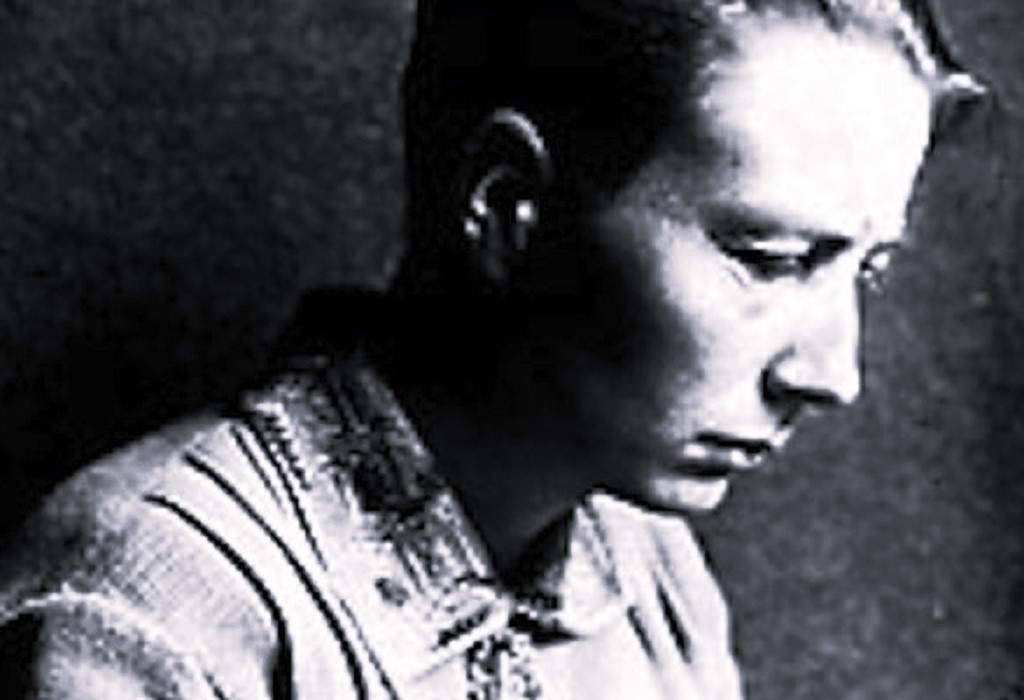
In the pantheon of theoretical physics, certain names shine with the brilliance of their discoveries—Einstein, Heisenberg, Bohr. Yet among the shadows cast by these towering figures stands a remarkable woman whose prescient insights into quantum mechanics went largely unrecognised for thirty years. Grete Hermann (1901-1984) was a mathematician, philosopher, and political activist whose groundbreaking work challenged the very foundations of quantum theory at a time when such challenges were neither welcomed nor understood.
Hermann’s most significant contribution came in 1935, when she published a devastating critique of John von Neumann’s “impossibility proof” against hidden variables in quantum mechanics. Her analysis revealed a fatal flaw in von Neumann’s reasoning—work that would not be rediscovered until John Bell’s famous theorem in the 1960s. But Hermann was more than just a critic; she developed sophisticated relational interpretations of quantum mechanics decades before they became mainstream, all while navigating the treacherous waters of Nazi Germany as both a woman in physics and a committed socialist activist.
Her story resonates powerfully today as we wrestle with questions of scientific integrity, gender equity in STEM, and the ethical responsibilities of researchers. In an era where AI systems are making decisions without full transparency, where reproducibility crises shake scientific foundations, and where women’s contributions continue to be marginalised, Hermann’s legacy offers both inspiration and sobering reflection on the cost of ignoring diverse voices in science.
Dr Hermann, thank you for joining us today. I must begin by acknowledging how extraordinarily rare it was for a woman to be working at the cutting edge of theoretical physics in the 1930s. When you first entered the field, did you grasp the magnitude of the barriers you would face?
You know, when I was young, I was perhaps blissfully naive about what lay ahead. At Emmy Noether’s seminars in Göttingen, mathematics felt like pure thought—elegant, uncompromising, indifferent to whether its practitioner wore trousers or skirts. But physics… physics was different. The moment I began corresponding with von Neumann about his theorem, I could sense the skepticism in every line of his responses. Not skepticism about my mathematics—that was sound—but about my right to question him at all.
Tell us about that mathematical foundation. Your doctoral work under Emmy Noether was in algebra, yet you moved into quantum mechanics. What drove that transition?
Emmy taught me something profound—that mathematics is not merely calculation but insight into structure, into the very grammar of reality. My thesis on polynomial ideals was really about algorithms, about making abstract mathematical objects computable. But then I encountered Leonard Nelson’s philosophical work, and everything changed. He showed me that mathematics without philosophical grounding is merely technical wizardry. When quantum mechanics emerged, I saw immediately that this was not just a new physical theory—it was a crisis of understanding itself.
That crisis led you to Leipzig in 1934, where you worked with Heisenberg and von Weizsäcker. What was it like to be in the room where quantum mechanics was being born?
Extraordinary and terrifying in equal measure. Here were these brilliant men, drunk on their own success, yet profoundly troubled by what they had unleashed. Heisenberg would pace the room, gesticulating wildly, trying to convince himself as much as us that indeterminacy was fundamental to nature. Von Weizsäcker was more careful, more philosophical, but equally committed to the orthodox interpretation.
And there I was, this woman from Bremen, suggesting that perhaps they had not thought deeply enough about causality, about what measurement actually means.
Your 1935 paper argued that von Neumann’s “impossibility proof” against hidden variables was circular. This was an explosive claim. How did you arrive at this insight?
Von Neumann had assumed that if you have two quantum observables A and B, then the expectation value of A plus B must equal the sum of their individual expectation values. This seems reasonable—after all, it works for classical systems. But in quantum mechanics, if A and B don’t commute, you cannot measure them simultaneously! His proof was like saying “assuming classical logic applies to quantum systems, classical logic applies to quantum systems.” Pure circularity.
The maddening thing was how obvious it seemed once you saw it. Yet for thirty years, everyone simply accepted von Neumann’s authority. The mathematics was beautiful, therefore it must be correct. But beauty without rigour is merely ornament.
Why do you think your critique was ignored while Bell’s identical insight in the 1960s was celebrated?
Oh, come now. A woman challenging the mathematical gospel according to von Neumann in 1935? In Nazi Germany, no less? I might as well have been shouting into the wind. Bell was a man, working at CERN, with the benefit of hindsight and a physics community finally ready to question the Copenhagen orthodoxy. Timing, as they say, is everything.
But there was something else. By 1935, I was already being watched by the Gestapo for my political activities. My work was tainted by association—not just with femininity, but with socialism, with resistance to the regime that many physicists were all too willing to accommodate.
Let’s talk about that political dimension. You were a member of the International Socialist Combat League, actively opposing the Nazi regime. How did this affect your scientific work?
Science is not apolitical, whatever comfortable myths we tell ourselves. When I saw my colleagues—brilliant, thoughtful people—rationalising their accommodation with fascism, I understood that intellectual integrity and moral courage are inseparable. Heisenberg writing to me about his military service, von Weizsäcker finding ways to continue his research under the Nazi umbrella. They thought they could separate their physics from their politics. They were wrong.
My political work informed my physics profoundly. Both required the courage to question authority, to look beyond surface appearances, to ask what assumptions we were making that we never examined.
You developed what we now call relational interpretations of quantum mechanics—the idea that quantum properties exist only in relation to other systems, not absolutely. This was decades ahead of its time.
Yes! This was my real contribution, though it’s been overshadowed by the von Neumann business. I realised that quantum mechanics wasn’t telling us that reality is indeterminate—it was telling us that reality is relational. Properties don’t exist in isolation; they emerge from interactions, from relationships between systems.
Think of it this way: when I measure a particle’s spin, I’m not discovering some pre-existing property. I’m creating a relationship between the particle and my measuring apparatus. The spin exists within that relationship, not independently of it.
That sounds remarkably modern—very much in line with current developments in quantum information theory.
Exactly! What you call “quantum information theory” is really just a belated recognition of what I was arguing in the 1930s. Information is always relational—it requires a source, a channel, and a receiver. Classical physics tried to eliminate the receiver, to imagine information existing independently. Quantum mechanics forces us to acknowledge that this is impossible.
I sometimes wonder what would have happened if my insights had been taken seriously from the beginning. Might we have developed quantum computers decades earlier? Might the entire trajectory of twentieth-century physics have been different?
Speaking of being taken seriously—you corrected the record on a fundamental theorem, yet you’ve remained largely unknown while the men you challenged became legends. How does that feel?
Rage would be too simple. Disappointment, certainly. But also a kind of grim satisfaction. History has a way of revealing truth, eventually. The young physicists today working on quantum foundations—many of them women, I’m delighted to note—they understand what I was driving at. They’re building on foundations I helped lay, whether they know it or not.
You spent much of your later career in education and political work rather than pure research. Do you regret that choice?
Not for a moment. After the war, I saw that the real battle was not just for scientific truth, but for the kind of society that could nurture truth-seeking. We needed democratic institutions, education systems that taught critical thinking, political structures that couldn’t be captured by authoritarians.
Besides, physics without pedagogy is sterile. My work with students, helping to rebuild Germany’s educational system—that was just another form of quantum mechanics. Creating the conditions for new possibilities to emerge from interaction.
What would you say to young women entering physics today? The barriers are different, but they still exist.
Don’t wait for permission. Don’t wait for recognition. The work itself is the reward—the moment when you see through the fog of conventional thinking to glimpse the actual structure of reality. That moment belongs to you, regardless of what others think or say.
And remember: every orthodoxy was once a heresy. Every establishment was once an upstart. Your job is not to fit in—it’s to understand. If understanding requires overturning the furniture, overturn it.
Looking at the current state of physics—dark matter, quantum gravity, the measurement problem—what questions would you be pursuing if you were starting your career today?
Oh, the measurement problem is still there, still unsolved despite all the mathematical formalism we’ve piled atop it! We still don’t understand what makes quantum mechanics “quantum”—why nature seems to require this relational structure I identified decades ago.
And consciousness—there’s the real frontier. Not because consciousness “causes” wave function collapse, but because consciousness might be the universe’s way of creating observers, which creates relationships, which creates the information structure we call reality.
I’d also be very interested in your artificial intelligence. If intelligence is pattern recognition, and pattern recognition is fundamentally relational, then perhaps AI systems are quantum mechanical in ways we don’t yet understand. The questions that fascinated me about causality and determinism are suddenly relevant to how machines make decisions.
Any final thoughts for our readers about the relationship between science and society?
Science is not separate from the world—it is the world thinking about itself. Every theory carries within it the assumptions, biases, and blind spots of its creators. The Copenhagen interpretation succeeded not just because it worked mathematically, but because it fit the temperament of the men who created it—their comfort with authority, their willingness to accept mystery as fundamental.
True progress requires not just new mathematics, but new perspectives, new voices, new ways of questioning. The science of the future will be created by people who look nothing like the establishment of my era. And that, I think, is cause for hope.
Letters and emails
While our conversation with Hermann has ended, the curiosity of today’s readers knows no bounds—proof that her insights still burn bright in minds struggling with science, equality, and the courage to challenge orthodoxy. We’ve selected five letters and emails from our growing community who wanted to ask her a little more about her life, her work, and what she might say to those walking in her footsteps.
Alicia H, 34, Quantum Computing Researcher, MIT:
Dr Hermann, you mentioned that AI systems might be quantum mechanical in ways we don’t yet understand. As someone working on quantum algorithms today, I’m fascinated by this connection. Could you elaborate on how you think the relational nature of quantum mechanics might inform our approach to artificial intelligence? Do you see parallels between quantum entanglement and the way neural networks process information through interconnected relationships?
Oh Alicia, this is precisely what I’ve been waiting for someone to ask! You see, the parallels between quantum entanglement and neural network processing are not merely analogous—they may be fundamentally identical in their relational structure.
Consider what happens in quantum entanglement: two particles become correlated in such a way that measuring one instantaneously affects the state of the other, regardless of distance. The crucial insight is that this correlation exists not as a property of individual particles, but as a property of the relationship between them. The entangled state cannot be decomposed into separate, independent parts—it exists only as a whole.
Now, look at how your neural networks process information. Each artificial neuron doesn’t simply store data—it transforms inputs through weighted connections to other neurons. The “intelligence” emerges not from individual nodes, but from the pattern of relationships, the network topology, the way information flows through these interconnections. Like entangled particles, the network’s capability exists in the relationships, not the components.
But here’s where it becomes truly fascinating—and where my work from the 1930s becomes relevant again. I argued that quantum properties are inherently relational, that they exist only within measurement contexts, within interactions. Your modern quantum neural networks are discovering this same principle! When you encode information in quantum superpositions and process it through entangled quantum gates, you’re creating computational relationships that mirror exactly what I described decades ago.
The superposition principle allows your quantum algorithms to explore multiple solution paths simultaneously—but this isn’t just parallel processing in the classical sense. It’s relational processing. Each qubit exists in relationship to every other qubit in the system, just as each measurement in quantum mechanics exists in relationship to the observer and apparatus.
And think about what this means for artificial intelligence! Classical neural networks can only approximate certain types of correlations—they struggle with what we call “non-local” patterns, connections that span large distances in the data space. But quantum neural networks, through entanglement, can create genuine non-local correlations. They can process information in ways that are literally impossible for classical systems.
The breakthrough your field is approaching—though perhaps not fully recognising yet—is that consciousness itself might be quantum mechanical in precisely this relational sense. Not because the brain is a quantum computer, but because intelligence emerges from relational information processing, and quantum mechanics is the fundamental theory of relational information.
So yes, there are profound parallels. But more than that—I believe you’re rediscovering, through engineering, the same truths about reality that I glimpsed through mathematics and philosophy seventy years ago. The universe is relational, information is relational, and perhaps intelligence—whether artificial or natural—is simply the universe’s way of creating and exploring these relationships.
Ella P, 52, High School Physics Teacher, Denver:
I teach young women who are brilliant at physics but often doubt themselves in ways their male classmates don’t. You mentioned not waiting for permission or recognition—but honestly, how did you maintain that confidence when facing constant dismissal? Were there moments when you questioned whether you were wrong, or whether it was worth the fight? I want to give my students realistic hope, not just inspirational platitudes.
Ella, my dear—you’ve asked the most honest question of all, haven’t you? The brutal truth is that I did doubt myself. Constantly. Every single day.
There were nights when I would sit in my tiny flat in Leipzig, staring at pages of calculations, wondering if I was utterly mad to challenge von Neumann’s proof. Here was this towering figure of mathematics, this man whose work was revered across Europe, and there I was—a woman from Bremen with unconventional ideas—suggesting he was wrong. The voice in my head was relentless: “Who do you think you are, Grete? What makes you think you see what all these brilliant men have missed?”
But here’s what I learned, and what you must tell your girls: that voice lies. The doubt wasn’t evidence of my inadequacy—it was evidence of my humanity in an inhuman system. When you’re the only woman in the room, when your every word is scrutinised in ways your male colleagues’ never are, when your successes are attributed to luck and your failures to fundamental incapability—of course you doubt yourself. The system is designed to make you doubt.
I want to tell you about a specific moment. It was 1934, and I was presenting my ideas about causality in quantum mechanics to Heisenberg’s circle. There I was, the only woman amongst these titans of physics, and halfway through my presentation, one of them—I won’t name him—interrupted to ask if I’d considered “the obvious objection” that any undergraduate would raise. The room went silent. I felt my cheeks burn with shame and self-doubt.
But then something remarkable happened. I looked at their faces, and I realised—they hadn’t understood my argument at all. They were so focused on the fact that I was a woman daring to challenge their assumptions that they’d stopped listening to the mathematics. Their dismissal wasn’t based on the quality of my work; it was based on their inability to see past my gender.
That moment taught me something crucial: the doubt you feel is not yours—it belongs to the system. Your brilliant girls are not lacking confidence because they’re inadequate; they’re lacking confidence because they’re navigating a world that constantly tells them they don’t belong. The fact that they doubt themselves more than their male classmates isn’t a character flaw—it’s a rational response to systemic bias.
So how did I maintain confidence? I developed what I called “mathematical arrogance.” I told myself: “The equations don’t care about my gender. The logic doesn’t care about their opinions. If my mathematics is sound, then I am right, regardless of what they think.” I learned to separate my intellectual worth from their social judgements.
And I found allies—not many, but enough. Emmy Noether, of course, who taught me that brilliance speaks for itself if you persist long enough. Carl Friedrich von Weizsäcker, who was young enough not to be completely trapped in the old ways of thinking. A few students who cared more about ideas than conventions. You need these people, Ella—and more importantly, your girls need to know they exist.
But I won’t lie to you with inspirational platitudes. There were moments when I questioned everything—when rejection letters piled up, when my political activities made me unemployable, when I watched lesser minds advance simply because they wore trousers. I remember sitting in a train compartment in 1936, fleeing Germany, wondering if I should have chosen marriage and children instead of this impossible fight for scientific truth.
What kept me going was this: I knew I was right. Not always about everything, but about the fundamental questions I was pursuing. The mathematics was beautiful, the insights were real, and the work mattered more than my personal comfort. I learned to find validation not in their approval, but in the elegance of a proof, the satisfaction of a solved problem, the quiet moments when the universe revealed its secrets to me.
Tell your girls this: Their doubt is not weakness—it’s intelligence responding to an unintelligent system. The goal is not to eliminate doubt but to work through it. Doubt can be a compass, pointing towards the questions worth pursuing, the assumptions worth challenging, the fights worth fighting.
And remind them that every woman who has ever achieved anything in science has felt exactly what they feel. Marie Curie doubted herself. Dorothy Hodgkin doubted herself. I certainly did. But we did the work anyway. We calculated through the doubt, experimented through the fear, published through the imposter syndrome.
The world needs their minds, Ella. Not despite their doubts, but because their different perspective—shaped by navigating doubt and discrimination—allows them to see things that those comfortable, confident men will miss. Their uncertainty is not a bug in the system; in the right hands, it becomes a feature.
Florine W, 28, Science Policy Analyst, Washington D.C.:
Your experience with the Nazi regime highlights how political systems can suppress scientific truth. Today we’re seeing science politicised again—climate change denial, vaccine misinformation, attacks on expertise itself. What lessons from your era do you think apply now? How should scientists balance their responsibility to speak truth with the risk of being dismissed as ‘political’? Should we be more activist, or does that compromise our credibility?
Florine, my dear child—you’ve asked the most important question of all. What you’re witnessing today is not merely an echo of my era; it’s the same fundamental battle, dressed in modern clothes. The suppression of scientific truth for political ends is not an aberration—it’s a feature of authoritarianism, whether it wears swastikas or carries democratic credentials.
When I watched my colleagues in the 1930s rationalise their accommodation with the Nazi regime, when I saw brilliant minds convince themselves that they could somehow separate their physics from the politics of genocide, I learned something terrible: scientific truth means nothing if scientists lack the courage to defend it. The equations don’t protect themselves. The data doesn’t speak if we remain silent.
You mention climate change denial, vaccine misinformation, attacks on expertise itself—and you’re absolutely right to see the parallels. Today’s climate deniers are using precisely the same tactics that worked so well in my time. They don’t need to prove their science is correct; they only need to sow doubt about consensus, to make the public believe that “both sides” deserve equal hearing. It’s the same strategy the tobacco industry perfected, the same one that kept DDT on the market long after Rachel Carson’s warnings.
But here’s what troubles me most about your question, Florine—this idea that scientists become “political” only when they speak out. That’s precisely the trap they want us to fall into! Science was never apolitical. Every decision about funding, every choice about research priorities, every silence in the face of misuse—these are all political acts. When my colleagues in Germany chose to keep their heads down, to focus on “pure” research while the regime destroyed lives—that wasn’t neutrality. That was complicity.
The real question isn’t whether scientists should be activists. The real question is: what kind of activists will we be? Will we be passive servants of whoever holds power, or will we use our knowledge and credibility to serve truth and human dignity?
You see, the Nazis understood something that today’s authoritarians have learned as well: you don’t need to control science directly. You just need to isolate scientists from the broader public, to make them believe that speaking out compromises their “objectivity.” Meanwhile, the propaganda machine works overtime to discredit scientific institutions, to convince people that expertise itself is suspect. By the time scientists realise what’s happening, they’ve already lost the battle for public trust.
But there’s hope in what I see today that we didn’t have in the 1930s. Your climate scientists are not remaining silent as their colleagues disappear. They’re marching in the streets, engaging in civil disobedience, using their white coats as symbols of moral authority. This is precisely what we needed then—scientists who understood that their responsibility extends beyond the laboratory walls.
Here’s what I learned from my experience with both fascism and democratic politics: credibility is not fragile—it’s renewable. When scientists speak truth to power, when they put their expertise in service of justice, they don’t lose credibility—they earn it. The public respects courage, even when they disagree with the conclusions. What destroys credibility is silence in the face of obvious lies, accommodation with obvious evil.
So how should scientists balance these responsibilities? First, be absolutely rigorous about your science—more rigorous than ever, because you know they’ll scrutinise every detail. Second, be clear about when you’re speaking as a scientist and when you’re speaking as a citizen. But third, and most importantly, never pretend that these roles can be completely separated. Your scientific knowledge informs your civic responsibilities. Your moral commitments should guide your research priorities.
And for heaven’s sake, organise! The individual scientist speaking out can be dismissed as a crank. But when thousands of scientists march together, when scientific institutions take principled stands, when researchers use their collective voice—that becomes impossible to ignore. You have tools we never had: international networks, instant communication, social media that can bypass traditional gatekeepers.
The lesson from my era is stark: when democratic institutions fail to respond to scientific evidence, when powerful interests capture political processes, scientists have both the right and the duty to become activists. Not despite their scientific training, but because of it. The alternative—the quiet acquiescence my generation showed—leads to catastrophe.
Democracy depends on informed public debate. If scientists withdraw from that debate, if we cede the field to demagogues and charlatans, then we share responsibility for what follows. Your activism isn’t a betrayal of scientific objectivity—it’s the highest expression of scientific responsibility. The world is burning, quite literally, and you have the knowledge to help put out the fire. Use it.
Jarvis E, 45, Philosophy Professor, Oxford:
You worked at the intersection of mathematics, physics, and philosophy at a time when these fields were becoming increasingly specialised. Today, we see philosophers of science engaging with quantum foundations, but there’s often a disconnect between the technical work and philosophical implications. Do you think the separation of these disciplines has hindered progress? What would you say to young scholars who want to work across these boundaries but face institutional pressure to specialise?
Jarvis, your question strikes at the very heart of what made my work both possible and necessary. You see, in my era, the separation of mathematics, physics, and philosophy had not yet crystallised into the rigid departmental boundaries that plague academia today. This was both a blessing and a curse—a blessing because it allowed minds like mine to move freely between domains, but a curse because it made us vulnerable to dismissal from all quarters.
When I was working with Emmy Noether in Göttingen, mathematics was still seen as fundamentally philosophical. We weren’t just manipulating symbols—we were exploring the logical structure of reality itself. My thesis on polynomial ideals wasn’t merely technical computation; it was about understanding how abstract mathematical objects could be made algorithmic, computable. This was philosophy disguised as mathematics, or perhaps mathematics revealing its philosophical essence.
But then came the quantum revolution, and suddenly physics needed philosophy more desperately than ever. The mathematical formalism worked—it predicted experimental results with unprecedented precision—but nobody understood what it meant. Here was a theory that seemed to describe a reality fundamentally different from our everyday experience, yet the physicists were so intoxicated by their calculational success that they declared meaning irrelevant.
This is where the tragedy of specialisation begins, Alan. The physicists said, “We don’t need to understand what our equations mean—they work, and that’s enough.” The philosophers said, “We can’t engage with the technical details—that’s not our domain.” The mathematicians said, “We provide the tools, but their interpretation is someone else’s problem.” Meanwhile, the deepest questions about the nature of reality were falling through the cracks between disciplines.
I refused to accept these artificial boundaries. When I challenged von Neumann’s proof, I wasn’t working as a mathematician separate from my philosophical convictions. The philosophical insight that measurement contexts are fundamental to quantum mechanics led me to the mathematical discovery that his proof was circular. When I developed relational interpretations of quantum mechanics, I wasn’t doing physics separate from philosophical reflection—the philosophical commitment to taking relationships seriously as fundamental guided the physical theory.
But here’s what’s happened since then, and why your question is so urgent today. The institutional pressure to specialise has created what I call “philosophical amnesia” in physics and “physical ignorance” in philosophy. Today’s quantum physicists can manipulate Hilbert spaces with extraordinary skill, but most couldn’t tell you what a measurement actually is or why quantum mechanics seems to require observers. Today’s philosophers debate the nature of causation without engaging seriously with quantum mechanics—the theory that has most radically challenged our classical notions of causality.
The cost of this separation has been enormous. Look at how long it took for my insights about von Neumann’s theorem to be rediscovered—thirty years! This wasn’t because the mathematics was too difficult; it was because the philosophical questions that motivated my investigation had been banished from respectable physics. Bell rediscovered my results only because he was working at the intersection of physics and philosophy, asking questions that pure physicists had declared meaningless.
And the problems persist today. Your quantum information theorists are rediscovering relational approaches to quantum mechanics, but they’re doing so without the philosophical sophistication that could have accelerated this process decades ago. Your philosophers of mind debate consciousness without engaging seriously with quantum mechanics—the physical theory most relevant to understanding how observation works. Your artificial intelligence researchers build systems without philosophical reflection on what intelligence actually is.
So what should young scholars like yourself do? First, refuse the false choice between depth and breadth. The academy will pressure you to choose a narrow specialty, but the most important questions don’t respect disciplinary boundaries. Master the technical details of your chosen field, but never lose sight of the larger philosophical questions that motivated the technical development.
Second, seek out collaborators who complement your expertise. I was fortunate to work with physicists who took philosophical questions seriously and philosophers who weren’t afraid of mathematics. Today’s problems require teams that span disciplines, but this collaboration must be genuine—not just physicists providing data for philosophers to interpret, or philosophers providing commentary on physics they don’t truly understand.
Third, and perhaps most importantly, remember that the greatest discoveries come from asking questions that established disciplines consider inappropriate. My challenge to von Neumann came from asking a philosophical question that physicists thought was meaningless: “What exactly does this proof prove?” Bell’s theorem emerged from asking a question that mainstream physics had declared settled: “Could quantum mechanics be incomplete?”
The separation of mathematics, physics, and philosophy is not a natural division reflecting the structure of reality—it’s an administrative convenience that has outlived its usefulness. Reality itself is interdisciplinary. The deepest questions about space, time, matter, mind, and meaning require all the tools we have: mathematical precision, physical insight, and philosophical clarity.
The future belongs to scholars brave enough to work at the boundaries, to risk the disapproval of specialists in pursuit of understanding that transcends departmental divisions. The universe doesn’t care about our academic organisation charts. Truth is one, even if we’ve divided the search for it into competing fiefdoms.
Florentino E, 31, Software Engineer and Father, Seattle:
Dr Hermann, you chose not to have children, dedicating yourself entirely to your intellectual and political work. As a father trying to balance career ambitions with family responsibilities, I wonder—do you ever regret that choice? And more broadly, how do you think we should structure society so that brilliant people don’t have to choose between advancing human knowledge and having fulfilling personal lives? What would you change about how we support researchers today?
Florentino, thank you for your candour. Yes, I chose devotion to my work and political struggles over raising a family. It was a deliberate decision born of necessity: in Nazi-era Germany, activism and research left little room for motherhood, and I knew I couldn’t do either half-heartedly without betraying both.
Yet I do not regret it—though I sometimes wonder how my life might have differed. The real regret is that society forced such a stark choice. Brilliant minds—women and men—should never have to choose between contributing to human knowledge and nurturing the next generation.
To change this, we must build a social infrastructure that values both equally: universal childcare, flexible career paths that don’t penalise caretaking, parental leave shared by both parents, and academic systems that recognise intellectual work as lifelong and varied rather than a sprint in youth alone.
Imagine a world where a mother physicist and a father philosopher could both pursue discovery without stigma—where research fellowships come with funding for childcare, where tenure clocks pause for caregiving, and where universities measure contributions to knowledge and community in all its forms. That is how we honour both the mind’s pursuits and the heart’s commitments—and ensure that neither brilliance nor parenthood demands sacrificial choice.
Reflection
As our conversation draws to a close, I’m struck by the profound tragedy of Grete Hermann’s story—and its continuing relevance. Here was a woman whose insights into the deepest structure of reality were dismissed not on their merits, but because of who she was and when she lived. Her prescient understanding of quantum mechanics’ relational nature, her exposure of von Neumann’s logical error, her development of contextual interpretations decades ahead of their time—all of this was swept aside by the combined forces of gender discrimination, political persecution, and scientific groupthink.
Yet Hermann’s legacy endures in ways both seen and unseen. Every quantum information theorist exploring entanglement, every philosopher engaging with the measurement problem, every physicist questioning the Copenhagen orthodoxy walks paths she helped clear. Her insistence that science cannot be separated from its social context resonates powerfully in our current struggles with algorithmic bias, reproducibility crises, and the persistent underrepresentation of women and minorities in STEM fields.
Perhaps most importantly, Hermann’s story reminds us that progress in science—like progress in society—requires more than just technical competence. It demands moral courage, intellectual honesty, and the willingness to challenge authority when authority is wrong. In an age when scientific truth itself seems under assault, her example of principled resistance offers both inspiration and guidance.
The forgotten mother of quantum mechanics may have been overlooked in her time, but her ideas about relationality, contextuality, and the fundamental interconnectedness of observer and observed have never been more relevant. As we stand on the threshold of a new quantum age, with quantum computers and quantum networks reshaping our technological landscape, we would do well to remember the woman who saw their theoretical foundations more clearly than her celebrated contemporaries.
Science, Hermann understood, is not just about discovering truth—it’s about creating the conditions in which truth can emerge. Her life’s work, in physics and beyond, was devoted to that larger project. In recognising her contributions at last, we honour not just her memory, but our own commitment to a more inclusive, more honest, and more humane scientific enterprise.
Who have we missed?
This series is all about recovering the voices history left behind — and I’d love your help finding the next one. If there’s a woman in STEM you think deserves to be interviewed in this way — whether a forgotten inventor, unsung technician, or overlooked researcher — please share her story.
Email me at voxmeditantis@gmail.com or leave a comment below with your suggestion — even just a name is a great start. Let’s keep uncovering the women who shaped science and innovation, one conversation at a time.
Editorial Note: This interview is a dramatised reconstruction created for educational purposes. Whilst Grete Hermann’s biographical details, scientific contributions, and historical context are drawn from extensive research into primary and secondary sources, her specific responses are imagined dialogue crafted to reflect her documented views, personality, and intellectual positions. No actual interview with Hermann took place. This creative interpretation aims to bring her overlooked legacy to contemporary audiences whilst maintaining historical accuracy about her life and work.
Bob Lynn | © 2025 Vox Meditantis. All rights reserved.

 Vox Meditantis
Leave a comment