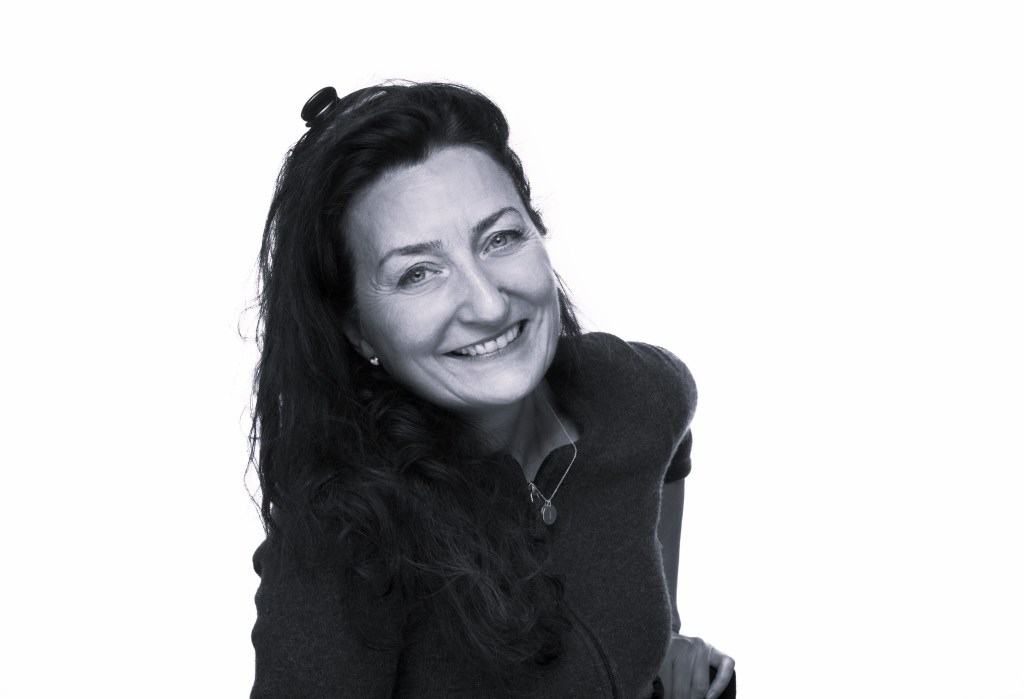
In the grand narrative of scientific discovery, few stories capture the imagination quite like that of a young woman from a remote Norwegian island who decoded one of the brain’s most fundamental mysteries. May-Britt Moser, born on 4th January 1963 in the small coastal town of Fosnavåg, has revolutionised our understanding of how the human mind navigates space and memory—achievements that earned her the 2014 Nobel Prize in Physiology or Medicine. Yet her remarkable contributions to neuroscience remain frustratingly overshadowed by the technical complexity of her field and the persistent tendency to credit her collaborative work primarily to her former husband and research partner.
This oversight represents more than mere academic bookkeeping. It exemplifies a broader pattern of institutional amnesia that consistently diminishes women’s scientific achievements, even when those achievements fundamentally reshape entire fields of human knowledge. Moser’s story demands recognition not simply as belated acknowledgment, but as urgent evidence of how genius manifests when curiosity meets determination—and how society’s biases continue to obscure the very discoveries that illuminate our understanding of human consciousness.
From Sheep Farm to Scientific Revolution
The trajectory from rural Norwegian farming to Nobel laureate might seem improbable, but Moser’s early life reveals the foundational elements that would define her scientific career. Growing up as the youngest of five children on a small sheep farm where her father worked as a carpenter and her mother managed both household and livestock, Moser developed what she would later describe as an insatiable curiosity about animal behaviour. These weren’t idle childhood observations—they represented the earliest manifestations of a scientific mind.
“I would spend time out in our fields where I would play by myself. I even studied the behaviour of snails as they ate grass. As I watched, I would always wonder about the reasons behind what the animal was doing,” Moser recalled in her Nobel autobiography. This instinctive questioning of natural phenomena, nurtured by a mother who filled her imagination with stories of overcoming humble beginnings through intelligence and determination, established the intellectual framework that would later revolutionise neuroscience.
Her mother’s influence proved particularly significant. Having once dreamed of becoming a doctor herself, she encouraged May-Britt to avoid the constraints of traditional domesticity by pursuing education with unwavering dedication. The family’s economic limitations meant staying home during summer holidays while friends travelled, but this apparent disadvantage became opportunity—providing extended periods for observing and contemplating the natural world that surrounded their farm.
Teachers recognised something exceptional in young Moser, even when her grades didn’t initially reflect her potential. “I was not always the best student with the highest grades, but my teachers saw something in me and tried to encourage me,” she later reflected. This recognition of latent ability, combined with maternal encouragement and an environment that rewarded curiosity, created the conditions for scientific excellence to emerge.
The Psychology Student Who Chose the Brain
Moser’s entry into higher education at the University of Oslo in the early 1980s initially lacked clear direction. She had harboured childhood dreams of becoming a medical doctor to “rescue the world like Doctors Without Borders,” but admitted to being “too lazy to get better marks” for medical school admission. Instead, she began studying mathematics, physics, and psychology—a combination that would prove remarkably prescient for her future work.
The defining moment came through her encounter with Edvard Moser, a fellow student from her high school physics and chemistry classes. Their shared intellectual passion for understanding the brain transformed casual academic interest into burning scientific ambition. “We simply burned with eagerness to understand the brain,” she later described this period. Their romantic partnership, beginning with marriage in 1985, would evolve into one of neuroscience’s most productive collaborations.
Under the mentorship of neurophysiologist Per Andersen, the couple embarked on their first significant research project—constructing a water maze laboratory from scratch to study spatial learning in rats. This wasn’t merely academic exercise; it represented the beginning of a decades-long quest to understand how the brain creates internal maps of spatial environments.
The choice to focus on spatial navigation reflected both practical and philosophical considerations. As Moser explained, “This is a fundamental cognitive function that we share with all animals”. By studying how rats navigate mazes, they were investigating universal principles of brain function that transcend species boundaries—work that would ultimately illuminate fundamental aspects of human cognition and memory.
Breakthrough Discovery: The Brain’s Internal GPS
The discovery that would earn Moser her Nobel Prize emerged from painstaking research conducted at the Norwegian University of Science and Technology (NTNU), where she and Edvard had established their laboratory in 1996. Their investigation into the entorhinal cortex—a brain region that serves as the primary gateway for information entering and leaving the hippocampus—yielded results that exceeded their most optimistic expectations.
In 2005, their recordings of neurons in freely moving rats revealed an extraordinary pattern. Certain cells in the medial entorhinal cortex fired at multiple locations that formed a precise hexagonal grid overlaying the entire space available to the animal. These “grid cells,” as they termed them, appeared to function as a coordinate system for spatial navigation—essentially providing the brain with its own GPS system.
The implications were staggering. “The firing fields tiled the entire space available to the rat, in a pattern reminiscent of the holes of a beehive,” Edvard later wrote, capturing the elegant geometry of their discovery. These cells didn’t simply respond to specific locations like the previously known place cells in the hippocampus; they created a universal metric for measuring distance and direction across any environment.
The discovery represented more than anatomical mapping—it provided the first glimpse into how the brain generates abstract spatial representations from concrete sensory input. Grid cells work in concert with other specialised neurons: head direction cells that function like an internal compass, border cells that detect environmental boundaries, and speed cells that track movement velocity. Together, these cell types constitute what the Nobel Committee described as “a comprehensive positioning system, an inner GPS, in the brain”.
Revolutionising Understanding of Memory and Cognition
The significance of Moser’s grid cell discovery extends far beyond spatial navigation. Her research has fundamentally altered our understanding of how the brain processes and stores memories, with profound implications for comprehending neurological diseases that devastate millions of lives.
The entorhinal cortex and hippocampus—the brain regions where Moser identified grid cells and their associated networks—are among the first areas affected by Alzheimer’s disease. This connection isn’t coincidental; it reflects the fundamental role these regions play in forming and retrieving memories. The spatial disorientation and memory loss characteristic of early Alzheimer’s can now be understood as direct consequences of grid cell dysfunction.
Her work has also revealed the remarkable precision of the brain’s spatial computations. Grid cells don’t simply provide rough approximations of location—they create highly accurate metric measurements that allow for flexible navigation across diverse environments. This discovery has implications that stretch from understanding child development to designing artificial intelligence systems.
Recent research from Moser’s laboratory has pushed these insights even further. Her team has demonstrated how grid cells might encode not just physical space but abstract conceptual relationships. This suggests that the brain’s spatial navigation system serves as a more general computational framework for organising all types of experience and knowledge.
Scientific Leadership and Institutional Innovation
Moser’s contributions to neuroscience extend well beyond her research discoveries. She has demonstrated exceptional leadership in building and directing some of the world’s most prestigious neuroscience institutions, creating environments where scientific excellence flourishes.
In 2002, she co-founded the Centre for the Biology of Memory at NTNU, which received prestigious “centre of excellence” status from the Norwegian Research Council. This was followed in 2007 by the establishment of the Kavli Institute for Systems Neuroscience, supported by substantial funding from the Kavli Foundation. Most recently, in 2023, she founded the Centre for Algorithms in the Cortex, positioning Norway at the forefront of computational neuroscience research.
These institutions represent more than administrative achievements—they embody Moser’s vision of collaborative scientific inquiry. As she explains, “Our slogan is that we want excellent science through happy people and happy animals. We work hard to achieve that”. This philosophy has attracted outstanding researchers from around the world and established NTNU as a global centre for neuroscience research.
Her leadership extends to mentoring the next generation of scientists. During the period from 1998 to 2022, the Moser laboratories trained 41 postdoctoral associates and 35 doctoral students. Many of these researchers have gone on to establish their own successful research programmes, multiplying the impact of Moser’s mentorship across the global scientific community.
Recognition Versus Reality: The Attribution Problem
Despite her groundbreaking discoveries and institutional leadership, Moser’s individual contributions often remain overshadowed by her collaborative relationship with Edvard Moser. This attribution problem reflects broader systemic biases that persistently diminish women’s scientific achievements, even when those achievements are formally recognised at the highest levels.
The 2014 Nobel Prize, shared with Edvard Moser and John O’Keefe, explicitly credited all three researchers for their collaborative discoveries. Yet popular science narratives frequently emphasise the contributions of her male colleagues while treating her role as supplementary. This pattern persists despite clear evidence of her independent intellectual contributions and leadership.
Moser herself has addressed this dynamic with characteristic directness. When asked about gender bias in her career, she noted: “At some point in our lives, we have all experienced other people who have tried to stop or discourage us. I have assumed that when this happened to me it was not because of the fact that I am a woman—but rather because they were ignorant or didn’t know what they were doing”. This response reveals both resilience and a strategic refusal to allow discrimination to constrain her ambitions.
Her approach to potential bias demonstrates remarkable psychological sophistication. Rather than becoming defensive or allowing discrimination to limit her aspirations, she has maintained focus on scientific excellence while building institutional structures that support diverse researchers. This strategy has proved highly effective, but it shouldn’t obscure the fact that such navigation of systemic bias represents an additional burden that her male colleagues rarely face.
The Ongoing Scientific Revolution
Moser’s current research continues to expand our understanding of brain function in ways that promise transformational applications. Her laboratory has developed cutting-edge technologies, including miniaturised two-photon microscopes that can monitor the activity of more than 1,000 neurons simultaneously in freely moving animals. These technological advances are enabling unprecedented insights into how large populations of neurons coordinate to generate behaviour and cognition.
Recent discoveries from her laboratory include the identification of “object-vector cells” that encode the direction and distance to environmental landmarks, and evidence that the brain’s spatial system also encodes the passage of time. These findings suggest that the entorhinal cortex provides the hippocampus with information about what happened, where it happened, and when it happened—precisely the components necessary for episodic memory formation.
The clinical implications of this research are profound. By understanding how healthy brains encode and retrieve spatial and temporal information, researchers can better comprehend how these processes break down in neurological diseases. This knowledge is already informing new approaches to early diagnosis and potential treatment of conditions like Alzheimer’s disease.
Work-Life Integration and the Question of Balance
Throughout her scientific career, Moser has navigated the complex challenges of maintaining excellence in research while raising two daughters, Isabel and Ailin. Her approach to this challenge offers insights into how exceptional women manage competing demands while refusing to compromise on either professional or personal commitments.
Rather than viewing work and family as competing priorities, Moser has integrated both into a coherent life philosophy focused on curiosity, learning, and growth. Her daughters, both now pursuing careers in medicine, grew up immersed in an environment where scientific inquiry was treated as natural and engaging. This integration required exceptional support systems and careful planning, but it also demonstrated that the highest levels of scientific achievement remain compatible with family life when proper structures exist.
The divorce from Edvard in 2016, while personally difficult, has not disrupted their productive scientific collaboration. Their ability to maintain professional partnership while restructuring their personal relationship demonstrates remarkable maturity and commitment to their shared scientific mission. As May-Britt explained: “We have a common vision and it is stronger than most. We have outstanding partners. Both have strengths and weaknesses, but we are complementary”.
Global Impact and Future Directions
The influence of Moser’s discoveries extends far beyond academic neuroscience into fields ranging from artificial intelligence to urban planning. Her revelation that the brain uses geometric principles to encode spatial relationships has informed the development of navigation algorithms and robotic systems. The discovery that similar grid-like patterns might encode abstract conceptual relationships suggests even broader applications for understanding human cognition.
Her work has also contributed to a fundamental shift in how neuroscientists approach the study of brain function. Rather than focusing on individual neurons or simplified laboratory tasks, her research demonstrates the importance of studying large populations of neurons in naturalistic settings. This approach is now being adopted across neuroscience, leading to more comprehensive understanding of brain function.
Looking forward, Moser’s laboratory continues to push the boundaries of what’s possible in neuroscience research. Their current investigations into how neural circuits develop, how they’re modified by experience, and how they break down in disease promise insights that could transform treatment of neurological and psychiatric conditions.
A Model for Scientific Excellence
May-Britt Moser’s career provides a compelling template for scientific achievement that transcends traditional boundaries and expectations. Her journey from rural Norwegian farm to Nobel laureate demonstrates how curiosity, determination, and exceptional mentorship can overcome seemingly insurmountable obstacles.
More importantly, her approach to scientific leadership offers a blueprint for creating research environments that foster both excellence and inclusivity. Her insistence that “diversity brings interesting ideas, interesting challenges and creativity” isn’t merely politically correct rhetoric—it reflects a deep understanding of how innovation emerges from the intersection of different perspectives and experiences.
Her message to young people facing discrimination based on gender, ethnicity, or other characteristics emphasises persistence and self-belief: “If you don’t give up, you might become that entrepreneur, that scientist, that professor, that you are capable of being”. This isn’t naive optimism—it’s practical wisdom grounded in lived experience of overcoming barriers through excellence and determination.
Legacy and Lasting Impact
The scientific revolution initiated by May-Britt Moser’s discoveries continues to unfold across multiple fields of inquiry. Her identification of grid cells and the broader spatial navigation system has provided neuroscience with its first mechanistic understanding of how abstract cognitive functions emerge from neural network activity. This breakthrough has implications that will likely continue generating new insights for decades to come.
Perhaps more significantly, her career demonstrates how exceptional individuals can reshape entire fields while maintaining commitment to nurturing the next generation of researchers. The institutions she has built and the scientists she has trained represent a multiplication of her impact that extends far beyond her direct research contributions.
Her story also serves as a powerful reminder of the scientific talent that remains underrecognised due to systemic biases and attribution errors. While Moser has achieved the highest possible recognition in her field, countless other women in science continue to face barriers that limit both their opportunities and the acknowledgment of their achievements.
The task for the scientific community—and for society more broadly—is to ensure that future May-Britt Mosers receive the recognition, support, and opportunities their talents deserve from the beginning of their careers, rather than requiring extraordinary persistence to overcome institutional neglect. Only by addressing these systemic issues can we fully harness the innovative potential that comes from truly diverse and inclusive scientific communities.
In celebrating May-Britt Moser’s remarkable achievements, we honour not just an exceptional scientist, but a visionary leader who has expanded the boundaries of human knowledge while demonstrating that the highest levels of scientific excellence are fully compatible with empathy, collaboration, and commitment to lifting others. Her legacy reminds us that the most profound discoveries often emerge when brilliant minds are given the freedom and support to pursue their deepest questions about the nature of existence itself.
Who have we missed?
This series is all about recovering the voices history left behind. History is packed with brilliant women, their work quietly shelved or handed off to men. I’m determined to shine a light where it’s long overdue—and I want your help. Know of a trailblazer in science, tech, engineering or maths left out of the spotlight? Share her name and story in the comments below, or email me at voxmeditantis@gmail.com. Let’s make sure no more pioneers are left in the dark. Justice, after all, demands nothing less.
Bob Lynn | © 2025 Vox Meditantis. All rights reserved.


 Vox Meditantis
Leave a comment