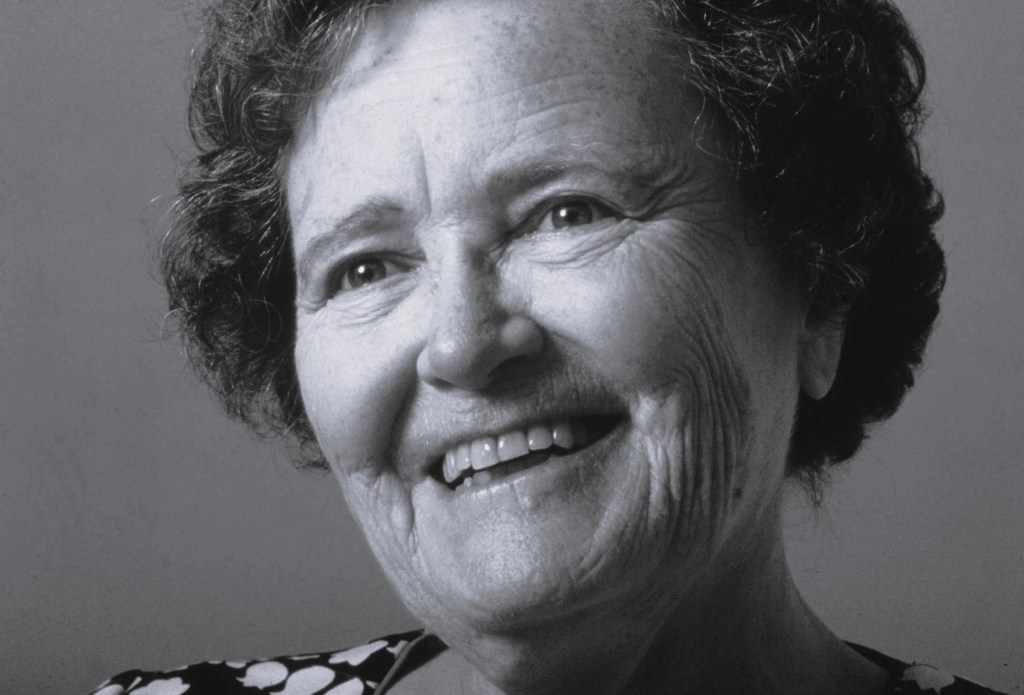
In a world obsessed with the heroic narratives of male scientists, we’ve overlooked remarkable women whose discoveries fundamentally shaped how we understand our natural world. Ruth Patrick stands as one of the most significant—and criminally underestimated—environmental pioneers of the 20th century. Born in 1907, when women couldn’t even vote, she spent over eight decades revolutionising freshwater ecology and establishing the scientific foundations for modern pollution control.
Patrick’s genius lay not in the dramatic, headline-grabbing breakthroughs that capture public attention, but in the methodical brilliance of recognising that tiny algae called diatoms could reveal the health of entire river systems. Her “Patrick Principle”—that biological diversity serves as nature’s most reliable indicator of environmental health—became the cornerstone of all modern environmental science and management. Yet whilst Rachel Carson rightfully earned fame for Silent Spring, Patrick’s equally groundbreaking work remained largely confined to academic circles, overshadowed by her industrial consulting rather than university research.
Today, as we face unprecedented environmental crises, Patrick’s story offers both inspiration and a sobering reminder of how societal biases determine whose contributions we celebrate. Her approach—combining rigorous scientific methodology with practical solutions that bridge industry and conservation—provides a blueprint for the systems thinking desperately needed to address climate change, biodiversity loss, and ecological degradation. This is the story of a woman who diagnosed rivers like a doctor examines patients, who worked without pay for eight years simply for the privilege of doing science, and who lived to see her methods become the global standard for environmental monitoring.
Dr Patrick, thank you for joining us today. I’d like to start at the beginning—tell me about your childhood in Kansas and how a seven-year-old girl ended up fascinated by microscopic life.
Well, you know, I was extraordinarily fortunate in my father. Most girls of my generation were told to stay indoors, learn domestic arts, prepare for marriage. But my father—Frank Patrick, he was a lawyer who’d studied botany at Cornell—he had rather different ideas about what his daughters should be doing with their time.
Every Sunday, from the time I could walk properly until I was about twelve, we’d take these marvellous expeditions. Father would equip us with baskets and collecting jars, and off we’d go to the woods and streams around Kansas City. I collected everything you can imagine—worms, mushrooms, plants, rocks, anything that caught my eye. But what I remember most vividly was Father’s tin can fastened to a pole. He’d scrape it along the rocks in the stream, then transfer what he’d found to glass tubes so we could examine it later.
When I was seven, he gave me my first microscope. I can still recall the moment he rolled back the top of his big desk in the library and brought out that instrument. It was absolutely miraculous—like looking through a window into another world entirely. Those tiny creatures dancing and swimming about… I was utterly captivated.
Your mother apparently had rather different views about your interests?
Oh, Mother thought the whole business was quite unseemly. She felt very strongly that girls should be in the home, not tramping about in fields and streams. “Nice healthy girls,” she’d say, “simply shouldn’t want to get a PhD.” But Father had his own philosophy. He used to tell me, “With your spare time, read, improve your mind. You can hire people to wash dishes.”
You have to understand, this was the 1910s and 1920s. The very idea that a woman might pursue serious scientific work was considered rather revolutionary, if not downright inappropriate. But Father believed women could accomplish a great deal. He influenced me to realise that the most important things in life were to understand the natural world and to be kind to one’s fellow human beings, even if you might not understand them.
Those Sunday walks clearly planted something profound. How did you navigate the transition from childhood collecting to serious scientific work?
The path wasn’t exactly straightforward, I’m afraid. I went to Coker College in South Carolina—Mother insisted on a women’s school, you see—but Father was worried they wouldn’t provide adequate scientific education. So he arranged for me to take summer courses to supplement what I was learning. Even then, he was thinking ahead, making sure I wouldn’t be held back by institutional limitations.
After my bachelor’s degree in 1929, I went to the University of Virginia for graduate work. That’s where I began to focus seriously on diatoms. These remarkable single-celled algae with their intricate, glass-like shells… they were largely ignored by other researchers, considered rather mundane. But I could see their potential immediately.
My research on fossilised diatoms revealed that the Great Dismal Swamp had once been a forest, later flooded by seawater. Similar work showed that the Great Salt Lake hadn’t always been saline. These tiny organisms were telling us the history of our landscape in ways no one had imagined.
Yet when you finished your doctorate in 1934, you couldn’t find paid work in science?
That’s correct. The Depression was in full swing, and being a woman in science… well, let’s just say the opportunities were rather limited. I approached the Academy of Natural Sciences in Philadelphia, and they were quite frank: they’d be delighted to have me work there, but they couldn’t pay me. Not because of budget constraints, mind you—because I was a woman.
I worked without salary for eight years. Eight years! From 1937 to 1945, volunteering as curator of the Leidy Microscopical Collection, building what would become one of the world’s largest diatom collections. People today find that rather shocking, but honestly, I was simply grateful for the opportunity to do the work.
I wasn’t going to let financial arrangements—or gender discrimination—prevent me from pursuing what I knew was important research. My father had taught me that understanding the natural world was too vital to abandon because of societal prejudices.
During those unpaid years, you were also told not to wear lipstick. How did such restrictions affect your daily life?
Oh yes, that particular directive came from the Academy administration. Apparently, wearing cosmetics might compromise my scientific credibility—or perhaps make the male staff uncomfortable. It seems rather absurd now, doesn’t it? As if the validity of my diatom research somehow depended on the colour of my lips.
But you learn to navigate these things. I was determined not to give them any excuse to question my seriousness or competence. If that meant no lipstick, so be it. I had larger battles to fight.
Tell me about the moment you realised diatoms could be used to assess water quality. That insight would eventually revolutionise environmental monitoring.
It was really a gradual revelation rather than a sudden epiphany. I’d been studying diatom communities for years, noticing how different species thrived in different conditions. Some preferred clean, well-oxygenated water; others seemed to tolerate pollution quite well.
The breakthrough came when I began to see the pattern systematically. In the late 1940s, working on the Conestoga Creek in Lancaster County, Pennsylvania, I assembled the first truly multidisciplinary team to study a waterway comprehensively. We weren’t just looking at chemistry—we examined everything from microscopic algae to fish populations.
What became clear was that the diversity and abundance of diatom species could tell us precisely what kind of pollution was present, how severe it was, and how the ecosystem was responding. These tiny organisms were like canaries in a coal mine, but far more sophisticated. They could distinguish between industrial discharge, agricultural runoff, and organic waste. My diatometer—a device I invented to collect and measure these organisms—made it possible to diagnose a river’s health as accurately as a physician examines a patient.
The “Patrick Principle”—that biological diversity indicates ecosystem health—seems obvious now. Why was it revolutionary then?
Most scientists of that era were still thinking in rather narrow terms. Chemists measured chemical pollutants. Biologists studied individual species. Engineers focused on physical systems. The idea that you needed to examine entire communities of organisms, that the health of an ecosystem could only be understood through its biological diversity… this was genuinely novel.
Industry particularly resisted this approach. They’d been quite comfortable with simple chemical testing—it was cheaper, quicker, and often showed their operations in a more favourable light. But biological monitoring reveals the true impact of human activity on natural systems. You can’t hide ecological damage behind misleading chemical data when the living communities themselves are telling the story.
Thomas Lovejoy later coined the term “Patrick Principle” for this concept, and he’s called it the foundation of all environmental science and management. I’m rather proud that such a straightforward idea—look at the living things to understand the health of the system—has had such lasting influence.
Your work with DuPont and other industrial clients was sometimes controversial among environmental colleagues. How do you respond to criticism that you were too accommodating to business interests?
This criticism has always struck me as rather naive and counterproductive. You cannot have a functioning society without industry. That’s simply a fact. The question isn’t whether to have industrial activity, but how to make it compatible with environmental health.
My approach was to work with industry to find solutions, not to demonise them from the outside. When Crawford Greenewalt of DuPont approached me in the early 1950s, he wasn’t looking for a rubber stamp—he wanted genuine scientific assessment of their environmental impact. They commissioned baseline studies before building plants so they could monitor their effects accurately.
This collaborative approach led to real improvements in industrial practices. I helped write the Clean Water Act of 1972, legislation that remains America’s principal federal law on water pollution. That wouldn’t have happened through confrontation alone—it required bringing industry, government, and scientists together around shared goals.
Some of my colleagues preferred the purity of academic criticism, but I was interested in actually solving problems. If that meant working with chemical companies to develop better practices, so be it.
You’ve mentioned being called “the den mother of ecology” by E.O. Wilson. How do you feel about that characterisation?
Oh, Edward means it affectionately, and I suppose there’s some truth to it. I did mentor many young scientists over the decades—particularly women who were trying to establish themselves in environmental fields. But I rather prefer to think of it as creating opportunities for good science to flourish.
The “den mother” label, whilst endearing, also rather diminishes the intellectual content of what I was doing. I wasn’t simply nurturing young scientists—I was establishing entirely new methodological approaches, building research programmes from scratch, training people in techniques that hadn’t existed before.
My husband Charles used to joke that living with me was “like being married to the tail of a comet.” I was constantly travelling to field sites, leading expeditions, setting up laboratories. That’s hardly typical “motherly” behaviour, is it?
You’ve worked well into your 90s. At 105, you’ve seen the environmental movement evolve from its earliest days to the climate crisis we face today. What changes have most surprised you?
The speed and scale of environmental degradation has been quite shocking, honestly. When I began this work in the 1930s, we were dealing with localised pollution problems—a contaminated river here, an industrial discharge there. Now we’re facing planetary-scale disruption: climate change, ocean acidification, mass extinction.
But I’ve also been amazed by how quickly good science can influence policy when it’s presented properly. The Clean Water Act, the establishment of the Environmental Protection Agency, the Montreal Protocol on ozone depletion—these weren’t inevitable. They happened because scientists did rigorous work and communicated it effectively to decision-makers.
What troubles me is how the environmental movement has sometimes abandoned the collaborative approach I advocated. There’s been a tendency towards confrontation rather than problem-solving, ideology rather than careful science. Climate change is real and urgent, but we won’t address it by demonising entire industries or dismissing economic realities.
You’ve spoken about the importance of kindness alongside scientific understanding. How has that philosophy guided your career?
My father’s influence, again. He taught me that understanding the natural world and being kind to fellow human beings were equally important. This profession can make you rather hard, you know—constantly fighting for funding, defending your methods, proving your competence. But science without compassion becomes mere technique.
I’ve tried to remember that the people I was working with—whether they were graduate students or industrial executives—were human beings with their own pressures and limitations. The chemical company manager who’s concerned about environmental regulations isn’t necessarily evil; he may genuinely worry about his workers’ jobs. The young woman trying to establish herself in environmental science isn’t just competing for a position; she’s fighting against decades of systematic exclusion.
Understanding these human dimensions has made me a more effective scientist, I believe. You can have the most brilliant research in the world, but if you can’t communicate it in ways that respect your audience’s perspective, it won’t change anything.
Looking back, do you feel your contributions have been adequately recognised?
Recognition is a complicated thing, isn’t it? I’ve been extraordinarily fortunate in many ways—the National Medal of Science, membership in the National Academy of Sciences, more awards than I can properly remember. But you’re quite right that the broader public knows little about this work.
Rachel Carson wrote one remarkable book and became the face of the environmental movement. I published over 200 scientific papers, established monitoring methods used worldwide, helped write fundamental environmental legislation… and remained largely unknown outside academic circles. That’s partly because I worked in applied science rather than pure research, partly because I spent decades consulting for industry rather than building a university career.
But there’s also, let’s be honest, the simple fact that society pays more attention to dramatic narratives than to methodical problem-solving. A story about pesticides killing birds captures public imagination more readily than technical advances in biological monitoring. Women’s contributions, particularly in technical fields, often remain invisible unless they fit certain acceptable patterns.
What would you say to young women entering environmental science today?
First, don’t let anyone convince you that your perspective isn’t valuable. When I started, people routinely suggested that women lacked the intellectual capacity for serious scientific work. Absolute rubbish, of course, but it was pervasive enough to discourage many capable individuals.
Second, master your technical skills thoroughly. There’s no substitute for rigorous training and methodological competence. You’ll face enough challenges based on gender bias—don’t give anyone legitimate reasons to question your scientific abilities.
But most importantly, remember that environmental science exists to solve real problems in the real world. Don’t get so caught up in academic recognition or ideological purity that you lose sight of the actual environmental challenges we’re facing. The climate crisis, biodiversity loss, pollution—these require practical solutions implemented by people working within existing systems.
Be prepared to work with imperfect institutions, to compromise on tactics whilst holding firm on principles, to spend years building the evidence base for changes that may seem obvious to you. Good science combined with patient advocacy can move mountains, but it requires both intellectual rigour and human wisdom.
Any final thoughts about your legacy and what you hope people remember about your work?
I hope people remember that understanding the natural world requires both scientific precision and genuine respect for the complexity of living systems. My diatoms taught me that—these tiny, beautiful organisms that most people never notice, yet they’re fundamental to the health of every freshwater ecosystem on Earth.
I also hope people understand that environmental protection isn’t about choosing between human welfare and natural systems—it’s about recognizing that they’re inseparable. The health of our rivers and streams directly affects human health, economic prosperity, social stability. We don’t protect nature for sentimental reasons; we protect it because our survival depends on it.
And perhaps most importantly, I hope young scientists—particularly women—will remember that persistence and kindness can be as powerful as brilliance. I worked without pay for eight years, faced dismissal and discrimination, had my methods questioned simply because they came from a woman. But I kept doing the work because it mattered. Good science, properly communicated, eventually finds its audience.
The natural world is facing unprecedented challenges, but we have better tools than ever before to understand and address them. Use those tools wisely, work with all kinds of people, and never lose sight of why this work matters. The future of our planet may well depend on it.
Letters and emails
Ruth Patrick’s story deserves more than a single conversation—it demands the rigorous interrogation that only comes when brilliant minds engage with brilliant work. The questions that follow, drawn from our community of scientists, students, and advocates, cut straight to the heart of what it means to pursue knowledge whilst battling systemic barriers, and they refuse to let her extraordinary contributions slip quietly into history’s footnotes.
Sonia McN, 34, Environmental Data Scientist, Portland, Oregon:
Dr. Patrick, your collaborative approach with industry was groundbreaking, but I’m curious about the emotional toll. Were there moments when you felt you were compromising your environmental values to maintain those relationships? How did you navigate the internal conflict between wanting to push harder for change and needing to work within existing systems?
Oh, Sonia, you’ve touched on something quite painful, actually. Yes, there were absolutely moments when I questioned whether I was being too accommodating, too willing to compromise. The worst was probably in the early 1960s, when I was working with a chemical company—I won’t name them—whose executives kept asking me to modify my reports to make their pollution levels seem more acceptable.
I remember one particular evening, sitting in my study in Chestnut Hill, looking at data that clearly showed their discharge was devastating the local fish populations. The diatom communities were completely disrupted—species that had thrived for decades were disappearing. But the company wanted me to emphasise the “recovering” areas downstream, to suggest the ecosystem was “adapting” rather than dying.
I didn’t sleep that night. I kept thinking about my father’s lessons—understand the natural world, be kind to fellow human beings. But what did kindness mean here? Being kind to the executives who were worried about their jobs and shareholders? Or being kind to the river and the communities that depended on it?
The emotional toll was considerable, Sonia. There were times I felt quite isolated—too radical for industry, too collaborative for the environmental purists. Some of my academic colleagues thought I’d “sold out.” Meanwhile, industry representatives would grow frustrated when I refused to soften inconvenient findings.
But here’s what I learned: compromise on methods, never on truth. I could work with companies to find solutions, help them understand what the data meant, even suggest less disruptive ways to achieve their goals. But I could not—would not—falsify scientific findings. The rivers don’t lie, and neither could I.
The breakthrough came when I realised that real environmental progress required changing how people thought about these issues, not just confronting them with data they’d inevitably reject. By working within the system, I could influence policy at levels that pure opposition never could. The Clean Water Act exists partly because industry leaders had learned to trust my methods and findings. That’s worth a few sleepless nights, don’t you think?
Terrance B, 29, Graduate Student in Marine Biology, Miami, Florida:
Given that you lived through both the pre-digital age and the beginning of our current technological revolution, how do you think modern tools like satellite monitoring, AI-powered analysis, and real-time data collection would have changed your research methodology? Would these advances have made the Patrick Principle easier to demonstrate and implement?
Oh, Terrance, what a fascinating question! You know, I’ve had many years to ponder this very thing. When I began my work in the 1930s, collecting diatoms meant scraping rocks with a tin can attached to a pole—quite literally getting my hands dirty in every stream and river. Today’s technology would have been absolutely revolutionary for someone like me.
Satellite monitoring, for instance, would have transformed how we understood watershed dynamics. Instead of studying individual sites in isolation, we could have seen the entire river system simultaneously—how pollution plumes moved, where biodiversity hotspots existed, how land use changes affected water quality across vast distances. My diatometer was revolutionary for its time, but imagine having real-time sensors throughout an entire river network!
But here’s what strikes me most profoundly about your question—artificial intelligence and machine learning would have made the Patrick Principle far easier to demonstrate, yes, but also infinitely more sophisticated. You see, I spent decades training my eye to recognise different diatom species, cataloguing their abundance patterns, correlating community structures with environmental conditions. It was painstaking work that required years of expertise.
AI could process thousands of samples simultaneously, identify species with perfect accuracy, detect subtle pattern changes that even experienced researchers might miss. We could have tracked biodiversity indicators across temporal scales that were simply impossible with manual methods. Instead of studying one river system for a decade, we might have analysed hundreds simultaneously.
However—and this is crucial, Terrance—technology is only as good as the questions we ask and the principles that guide us. The Patrick Principle itself—that biological diversity indicates ecosystem health—required a fundamental shift in how we thought about environmental monitoring. No amount of technological sophistication would have led to that insight without first understanding that living communities tell us more than chemical measurements alone.
What excites me most is how modern tools could have democratised environmental monitoring. Instead of requiring highly trained taxonomists like myself, communities could potentially monitor their own waterways, students could contribute to citizen science projects, and environmental protection could become truly participatory rather than confined to academic institutions.
The irony is that whilst we now have these incredible tools, we’re facing environmental challenges of a scale I could never have imagined—climate change, ocean acidification, planetary-scale biodiversity loss. Perhaps that’s the real question: not whether better tools would have made my work easier, but whether they’re making today’s environmental scientists more effective at protecting what remains.
Marci C, 41, STEM Education Policy Advocate, Chicago, Illinois:
You mentioned working without pay for eight years – a sacrifice that seems almost unthinkable today. What would you say to current institutions and funding bodies about supporting women and underrepresented scientists? How can we prevent talented researchers from having to make such extreme sacrifices to pursue their calling?
Marci, that sacrifice was not noble—it was absurd and entirely unnecessary. Eight years without pay! When I think of the brilliant women who might have contributed to science but couldn’t afford such luxury, it makes me absolutely furious. The waste of human potential is staggering.
Let me be perfectly clear about what those eight years represented: institutional sexism masquerading as financial prudence. The Academy of Natural Sciences had money—they were paying male curators and researchers. They simply chose not to pay women, using our desperation to do meaningful work as justification for exploitation.
Modern institutions must understand that unpaid internships, research positions that require independent wealth, and “opportunities” that demand years of uncompensated labour are not just unfair—they’re scientifically counterproductive. They eliminate everyone except those with substantial family resources, creating a scientific establishment that lacks diversity of thought, background, and perspective.
Here’s what funding bodies should do immediately: establish liveable stipends for all research positions, provide childcare support for scientists with families, create pathways that don’t require geographic mobility—many brilliant minds are tied to specific locations for family reasons. Stop treating scientific passion as justification for poverty wages.
But I want to address something deeper, Marci. The reason I could afford those eight years wasn’t just financial—I had my husband Charles’s support, both emotional and economic. Most women of my generation didn’t have partners who encouraged their careers. Many current institutions still operate as if scientists don’t have families, don’t have caregiving responsibilities, don’t need work-life integration.
Universities and research centres must also examine their hiring practices critically. Are they unconsciously favouring candidates who’ve had uninterrupted career trajectories? Are they penalising researchers who’ve taken time for family responsibilities? Are they creating cultures where asking for accommodation is seen as weakness rather than reasonable professional need?
And here’s something that particularly troubles me: the modern “gig economy” in academia—endless postdoctoral positions, adjunct teaching, grant-dependent employment. It’s recreating the same precarious conditions I faced, but now it’s affecting an entire generation of scientists, not just women.
Institutions serious about supporting underrepresented scientists must provide: guaranteed minimum salaries for all research positions, clear pathways to permanent employment, family-friendly policies that don’t penalise career interruptions, and leadership training that helps women and minorities navigate academic politics.
Most importantly, they must recognise that diverse perspectives improve scientific outcomes. When I developed biological monitoring methods, my outsider status—as a woman, as someone working in applied rather than pure research—allowed me to see connections that established researchers missed. Supporting underrepresented scientists isn’t charity; it’s strategic investment in better science.
No one should have to work eight years without pay to prove their worth. That I managed it doesn’t make it acceptable—it makes it a cautionary tale about how many brilliant minds we’ve lost to systemic discrimination.
Clyde McC, 52, Water Treatment Plant Manager, Phoenix, Arizona:
Dr. Patrick, your diatometer and biological monitoring methods are still used in facilities like mine today. But I’m wondering – if you could witness one modern environmental crisis firsthand, which would you choose to study? The Great Pacific Garbage Patch, coral bleaching, or perhaps microplastics in drinking water? How might you adapt your principles to tackle these contemporary challenges?
Clyde, what a thought-provoking question! You know, having spent decades diagnosing the health of rivers and streams, I find myself drawn to the crisis that most closely parallels my own work—microplastics in freshwater systems. It’s the perfect intersection of my methodology and the modern world’s complexity.
Microplastics fascinate me because they represent a completely novel form of pollution that my generation never anticipated. When I was scraping diatoms from river rocks in the 1940s, we were dealing with industrial chemicals, sewage, agricultural runoff—substances that, however harmful, were at least biodegradable. But plastic particles persist indefinitely, accumulating in ways we’re only beginning to understand.
I would approach microplastics exactly as I approached traditional pollution—through community-level analysis. How do these particles affect the diversity and abundance of microscopic life? Are certain diatom species more sensitive to plastic contamination than others? Can we identify indicator species that signal dangerous levels of microplastic pollution?
The beauty of biological monitoring is its integrative nature. Chemical analysis might tell you how many plastic particles are present, but biological indicators reveal the ecological consequences. Are fish populations declining? Are algal communities shifting? How do microplastics interact with traditional pollutants to create compound effects?
What particularly intrigues me about this crisis is how it demonstrates the interconnectedness of all water systems. Microplastics travel from land to rivers to oceans and back—through precipitation, through the food web, through pathways we’re still discovering. It’s a perfect example of why we need the systems thinking I advocated throughout my career.
For someone like you, Clyde, managing water treatment, microplastics present unique challenges. Traditional filtration methods weren’t designed for particles this small and persistent. We’d need to develop new monitoring protocols, probably combining my biological diversity principles with modern detection technologies.
I can envision developing a “microplastic diatometer”—a device that could measure not just plastic particle concentrations, but their biological impacts on microscopic communities. Just as my original diatometer revealed pollution that chemical tests missed, this could detect ecosystem stress from plastic contamination before it becomes visible in larger organisms.
But here’s what truly concerns me about microplastics: they represent humanity’s failure to consider long-term consequences of our innovations. When plastics were first developed, they seemed miraculous—lightweight, durable, versatile. No one asked what would happen when billions of tons of non-biodegradable material entered natural systems.
This is why biological monitoring remains so crucial, Clyde. Chemical analysis tells us what we’ve already released into the environment. Biological indicators reveal what those substances are actually doing to living systems. If we’d had comprehensive biological monitoring when plastics were first introduced, we might have detected problems decades earlier.
The microplastics crisis reminds us that environmental protection isn’t just about cleaning up past mistakes—it’s about developing better ways to anticipate and prevent future ones. That’s the lesson I hope modern environmental scientists take from my work: always ask what the living communities are telling us, because they see consequences we’ve not yet learned to measure.
Alexandra McG, 27, Science Communications Writer, London, UK:
You’ve seen environmental science evolve from a niche field to a global urgency. Rachel Carson became a household name with ‘Silent Spring,’ but your equally vital contributions remained largely within academic circles. If you could go back, would you have written for the general public? Or do you believe that working behind the scenes, influencing policy and training scientists, was ultimately more impactful than seeking popular recognition?
Alexandra, you’ve asked perhaps the most difficult question of all. I’ve wrestled with this for decades, watching Rachel’s fame grow whilst my own work remained largely invisible to the public. There’s no denying a part of me wondered… what if?
The honest answer is that I was never suited for popular writing in the way Rachel was. She had a poet’s soul—she could make readers feel the tragedy of a silent spring, could transform scientific data into emotional narrative that moved people to action. I was always more… methodical, shall we say. My strength lay in the meticulous accumulation of evidence, the patient building of scientific consensus.
But I wonder sometimes if that wasn’t partly socialisation. Women of my generation were taught to be modest, to let our work speak for itself, to avoid drawing attention. Perhaps if I’d been encouraged to seek the spotlight as men were, I might have developed different skills. Rachel, you know, faced enormous criticism for daring to write for popular audiences—she was accused of being “hysterical,” of abandoning scientific rigour.
Here’s what I’ve come to understand, though: the environmental movement needed both approaches. Rachel’s Silent Spring created the emotional urgency that made political action possible. But the Clean Water Act, the establishment of EPA monitoring protocols, the actual regulatory framework that protects water quality—that required the kind of behind-the-scenes technical work I was doing.
Think about it this way, Alexandra: Rachel’s book inspired millions of people to care about environmental protection. But my methods are what water treatment facilities like Clyde’s use every day to actually measure and maintain water quality. Both contributions were essential.
However—and this troubles me—the lack of public recognition has real consequences for women in science. When young girls read about environmental heroes, they learn about Rachel Carson. They rarely hear about Ruth Patrick. This perpetuates the idea that women’s contributions to science are somehow less significant, less worthy of celebration.
If I could do it again? I think I would have written one popular book—not trying to emulate Rachel’s lyrical style, but explaining biological monitoring in accessible terms. Something like “Reading the Rivers: How Tiny Organisms Reveal Nature’s Secrets.” The public deserved to understand how we actually measure environmental health, not just why we should care about it.
What frustrates me most is how this pattern continues today. The scientists who appear on television, who write bestselling books, who become public intellectuals—they’re still predominantly men. Women doing equally important work remain largely invisible. We’ve made progress, certainly, but not nearly enough.
Perhaps the real lesson here is that science communication can’t be left to chance or individual choice. Institutions need to actively promote diverse voices, to ensure that groundbreaking work by women and minorities reaches public consciousness. The history of environmental science shouldn’t be a story about lone male heroes—it should reflect the collaborative, diverse community of researchers who actually built the field.
So to answer your question directly: yes, I should have written for the public. Not because my behind-the-scenes work wasn’t valuable, but because invisible contributions, however crucial, don’t inspire the next generation. If we want more women in environmental science, they need to see examples of women whose environmental science made a difference. Rachel Carson provided that inspiration through popular writing. I could have provided it through a different kind of visibility—but I chose the shadows instead.
Though I must say, having this conversation with you suggests that perhaps it’s not too late for these stories to find their audience after all.
Reflection
Speaking with Ruth Patrick—even in imagination—reveals the profound gap between recognition and contribution in environmental science. Her story embodies both the remarkable resilience required of women in male-dominated fields and the methodical brilliance that transforms entire disciplines. Patrick’s approach—combining rigorous scientific methodology with collaborative problem-solving—offers a compelling model for addressing today’s environmental crises.
Perhaps most striking is how Patrick’s emphasis on biological diversity as the key indicator of ecosystem health has proven prophetic. As we face unprecedented biodiversity loss and climate disruption, her insight that healthy ecosystems require complex, interconnected communities of organisms becomes ever more relevant. The “Patrick Principle” isn’t merely historical curiosity—it’s an essential framework for understanding and protecting the natural systems upon which human civilisation depends.
Patrick’s legacy challenges us to move beyond the comfortable heroic narratives of environmental history and recognise the countless women whose patient, methodical work built the foundations of modern environmental science. Her story reminds us that real progress often comes not from dramatic breakthroughs but from sustained commitment to rigorous research and collaborative problem-solving. In our current moment of environmental crisis, we need more scientists like Ruth Patrick—technically brilliant, pragmatically wise, and utterly committed to the twin goals of understanding the natural world and protecting it for future generations.
Who have we missed?
This series is all about recovering the voices history left behind — and I’d love your help finding the next one. If there’s a woman in STEM you think deserves to be interviewed in this way — whether a forgotten inventor, unsung technician, or overlooked researcher — please share her story.
Email me at voxmeditantis@gmail.com or leave a comment below with your suggestion — even just a name is a great start. Let’s keep uncovering the women who shaped science and innovation, one conversation at a time.
Editorial Note: This interview is a dramatised reconstruction based on extensive historical research into Ruth Patrick’s life, work, and documented statements. Whilst every effort has been made to remain faithful to the historical record and Patrick’s known views, the specific dialogue and responses are imagined interpretations designed to illuminate her remarkable contributions to environmental science.
The facts about Patrick’s scientific achievements, career challenges, and historical context are accurate. Her personality, working methods, and perspectives have been carefully constructed from biographical sources, scientific papers, and contemporary accounts. However, readers should understand that this represents a creative interpretation of how she might have responded to modern questions, not verbatim historical testimony.
This approach serves an important purpose: bringing overlooked figures like Patrick into public consciousness whilst maintaining intellectual honesty about the creative process involved. Too many pioneering women in science remain invisible because their stories weren’t deemed worthy of popular attention during their lifetimes.
The responsibility lies with us to tell these stories truthfully—acknowledging both their historical foundation and their interpretive nature.
Bob Lynn | © 2025 Vox Meditantis. All rights reserved.

 Vox Meditantis
Leave a comment