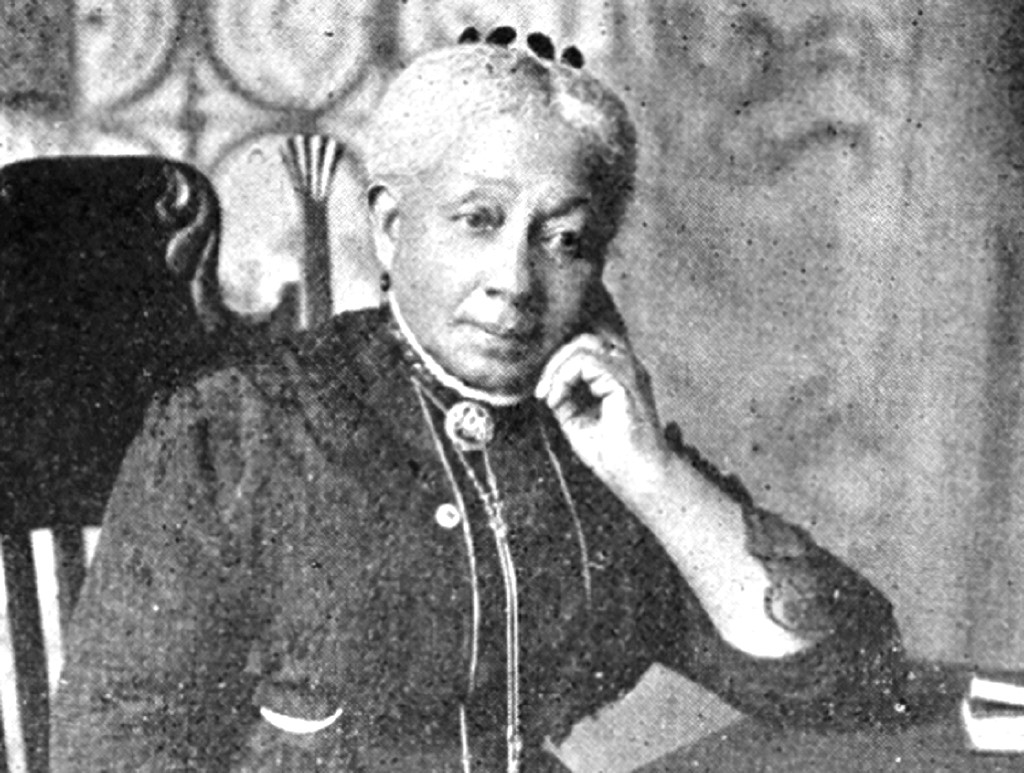
Dr. Susan McKinney Steward stands as a towering figure in the history of American medicine, though her remarkable achievements have been obscured by the very forces she spent her lifetime challenging. As the third African American woman to earn a medical degree in the United States and the first in New York State, her 1870 graduation from the New York Medical College for Women marked not merely a personal triumph, but a seismic shift in who could claim the title of healer in post-Civil War America.
What makes her story particularly compelling today is how her approach to medicine embodied the very systems thinking that modern healthcare desperately needs. Her work in prenatal care and paediatrics, her establishment of clinics serving underserved communities, and her understanding that health was inextricably linked to social justice – these weren’t merely progressive ideas for her time, they were prescient insights that modern medicine is only beginning to fully appreciate. Her innovations came not from luxury or privilege, but from necessity – the necessity of serving communities that traditional medicine had abandoned.
Dr. Steward, thank you for joining us today. I want to begin by asking about your childhood in Weeksville, Brooklyn. How did growing up in what was essentially a thriving Black community shape your early understanding of what was possible?
You must understand, Weeksville wasn’t merely a community – it was proof. Proof that we could govern ourselves, prosper, educate our children, and build institutions that rivalled anything in Manhattan. My father, Sylvanus, wasn’t just a pig farmer; he was a businessman who understood that economic independence was the foundation of all other freedoms. When I watched him conduct his affairs with dignity and success, when I saw my sister Sarah excel as an educator, it never occurred to me that medicine should be beyond my reach simply because I was a woman of colour.
But I must correct a persistent misunderstanding about my motivation. People love to romanticise that I entered medicine because of personal tragedy – my brothers’ deaths during the war, the cholera epidemic of 1866. Whilst these experiences certainly affected me, they weren’t what drove me to medicine. What drove me was witnessing the systematic exclusion of my people from proper healthcare. I saw how women of colour were dismissed, how their pain was ignored, how their children were written off as expendable. That’s what made me determined to claim a place at the medical table.
Tell me about your time at the New York Medical College for Women. What was it like being not just a woman in medicine, but a Black woman in 1867?
Dr. Clemence Lozier’s institution was revolutionary, make no mistake. She understood that women needed their own space to learn medicine properly. But even in that progressive environment, I was singular. I was the only woman of colour in my class, possibly in the entire school during my time there.
The isolation was… profound. My white classmates were polite enough, but there was always this sense that I was there on borrowed time, that I needed to prove not just my own worthiness, but the worthiness of my entire race. When we did our clinical rotations at Bellevue Hospital, the male students would throw paper balls at us, hiss, use language I won’t repeat. But for me, there was an additional layer – they questioned not just whether a woman belonged in medicine, but whether a Negro woman had the intellectual capacity for such work.
I paid my own fees, you know. My father could have afforded them easily, but I insisted on using money I’d earned teaching. This wasn’t pride for pride’s sake – it was strategy. I knew that every aspect of my presence would be scrutinised, and I couldn’t afford to give anyone reason to say I hadn’t earned my place through my own merits.
You graduated as valedictorian, yet this achievement was largely ignored by the press. How did that feel?
Ah yes, the great silence of 1870. The New York Times didn’t mention my valedictory address. Most papers ignored it entirely. The one paper that did acknowledge my graduation – The Courier – spent more ink describing my “modest attire” and speculating about what my clothing choices might mean for “the improvement of the African race” than discussing my medical achievements.
This taught me something crucial about how society would treat my work: they would either ignore it completely or reduce it to spectacle. My medical knowledge, my innovations in treating marasmus in infants, my work in prenatal care – none of that mattered as much as whether my dress was appropriately modest for a Negro woman stepping out of her place.
But here’s what they didn’t understand – by ignoring my achievements, they were giving me tremendous freedom. I could develop my practice, my methods, my approach to community health, without the burden of constant scrutiny. Sometimes invisibility is its own form of power.
Let’s talk about your medical practice. You specialised in prenatal care and childhood diseases – areas that were particularly crucial for underserved communities.
This is where I must insist on precision about my contributions. I wasn’t simply treating individual patients – I was developing a comprehensive approach to community health that integrated medical treatment with social reform.
Consider my work with marasmus – what we called the wasting disease in infants. The traditional medical establishment would treat the symptoms: the chronic vomiting, the diarrhoea, the failure to thrive. I treated the causes: poor nutrition due to poverty, inadequate housing, lack of education about infant care, and yes, inherited syphilis from mothers who’d been denied proper medical attention.
My approach was what you might now call “holistic,” though we used homeopathic principles. I believed – and my results proved – that you couldn’t separate a patient’s health from their living conditions, their economic circumstances, their access to clean water and nutritious food. When I established the Brooklyn Women’s Homeopathic Hospital and Dispensary in 1881, it wasn’t just a medical facility. It was a community resource that provided education, support for new mothers, and affordable care regardless of a patient’s ability to pay.
The establishment dismissed homeopathy as “quackery,” but they missed the point entirely. Homeopathy wasn’t about the remedies – it was about treating the whole person, understanding that illness doesn’t exist in isolation from a person’s life circumstances. This approach was particularly important for my patients, most of whom were women and children who’d been failed by traditional medicine.
You faced what we might now call “triple discrimination” – being Black, female, and working in medicine during the post-Civil War era. How did you navigate these intersecting challenges?
Triple discrimination – yes, that captures it precisely. But you must understand, these weren’t separate challenges I faced one at a time. They were interwoven, mutually reinforcing barriers that required constant strategic thinking to overcome.
As a woman, I was excluded from medical societies and professional networks. As a Negro, I was barred from most hospitals and relegated to treating only patients of my own race – though I defied this by building a practice that served both Black and white families. As someone practising homeopathic medicine, I was dismissed by the allopathic establishment as unscientific.
But here’s what my critics never grasped: these exclusions forced me to innovate in ways that ultimately made my practice more effective, not less. Because I couldn’t rely on established medical networks, I built my own. Because I couldn’t admit patients to most hospitals, I helped establish facilities that better served our community’s needs. Because I was dismissed as “unscientific,” I kept meticulous records and developed treatment protocols that demonstrated measurable improvements in patient outcomes.
The irony is that my exclusion from the mainstream medical establishment allowed me to develop approaches that were, in many ways, more advanced than what my white male colleagues were practising. They were focused on individual pathology; I was addressing community health. They were treating symptoms; I was addressing root causes.
I want to ask about your involvement in the suffrage movement. How did your medical work intersect with your advocacy for women’s rights?
Medicine and suffrage were never separate causes for me – they were two aspects of the same struggle for human dignity and social justice. When my sister Sarah and I co-founded the Brooklyn Equal Suffrage League in 1902, we understood that women’s health could never be fully addressed without women’s political power.
Think about it practically: how could I advocate for better maternal health policies when women couldn’t vote for the legislators who made those policies? How could I push for improved sanitation in tenements, better regulation of food safety, or adequate funding for public health measures when half the population – the half most affected by these issues – had no political voice?
My work with the Women’s Christian Temperance Union wasn’t about moral crusading, though that’s how it’s often characterised. Alcohol abuse was a public health crisis that disproportionately affected women and children in poor communities. Men would spend family resources on drink whilst their wives struggled to feed and care for their children. This wasn’t a moral failing – it was a social problem that required both medical intervention and political action.
When I spoke at the National Association of Colored Women’s Clubs in 1914 about “Women in Medicine,” I argued that medicine itself would be improved by women’s full participation – not as tokens or exceptions, but as equal partners in shaping how healthcare was delivered and who had access to it.
Your later career took you to Wilberforce University in Ohio. How did that transition affect your work?
Wilberforce represented something I’d been working toward my entire career – the opportunity to shape the next generation of healers and thinkers. When my second husband, Chaplain Theophilus Steward, and I moved there in 1898, I wasn’t retreating from my medical practice. I was expanding it.
As college physician, I was responsible not just for treating students’ ailments, but for teaching them about nutrition, hygiene, and preventive health measures. I developed what I called “practical health education” – teaching young people, particularly young women, how to maintain their own health and that of their families.
But perhaps more importantly, Wilberforce allowed me to model what a professional Black woman could be. Many of my students had never seen a woman of colour in a position of medical authority. They could observe how I conducted myself, how I approached problems, how I balanced professional responsibilities with community service.
I also continued my writing and speaking. My 1911 presentation at the Universal Race Congress in London on “Colored American Women” was an opportunity to demonstrate to an international audience the contributions Negro women were making to medicine, education, and social reform. Too often, discussions about race progress focused exclusively on what men were achieving. I wanted to ensure that women’s contributions were recognised and celebrated.
Looking back now, with the benefit of hindsight, how do you think your work has been remembered or misremembered?
Well, for many decades, it wasn’t remembered at all, was it? I suspect most medical histories written in the early-to-mid 20th century didn’t mention me, or relegated me to a footnote as “the third Negro woman physician.” My contributions to homeopathic medicine, my innovations in community health, my role in establishing medical facilities – all of that was erased.
When people did remember me, they often got the story wrong. They focused on the novelty – “first Black woman doctor in New York!” – rather than on what I actually accomplished. They made my story about overcoming barriers rather than about the barriers I broke down for others. They emphasised my personal triumph rather than the systemic changes I advocated for.
And they certainly didn’t understand the sophistication of my medical approach. Because I practised homeopathy, later historians dismissed my work as pre-scientific, not recognising that my patient-centred, community-based approach to healthcare was actually far ahead of its time.
I’m gratified that in recent decades, there’s been more serious scholarship about early Black women physicians. But I’d still argue that too much focus is placed on us as individual success stories rather than as part of a broader movement for social and medical justice.
What would you want modern medical students – particularly women and people from underrepresented backgrounds – to understand about your experience?
First, understand that your presence in those institutions is not an accident or a favour. It’s the result of generations of people who fought, strategised, and sacrificed to create opportunities for you. Honour that by excelling, but also by opening doors for those who come after you.
Second, don’t let anyone convince you that your perspective – as a woman, as a person of colour, as someone who comes from a community that’s been marginalised – is a limitation. It’s your greatest strength. You understand aspects of human health and suffering that your more privileged colleagues may never grasp. Use that understanding to improve how medicine is practised.
Third, remember that individual success is meaningless if it doesn’t contribute to collective progress. I could have been satisfied with building a comfortable practice, treating wealthy patients, staying quietly in my lane. But what would have been the point? The real work was using my position to advocate for better health outcomes for everyone, particularly those who’d been neglected by the medical establishment.
And finally – never apologise for taking up space in medicine. They may question your qualifications, your methods, your right to be there. Let your work speak. Keep meticulous records. Demonstrate measurable results. Show them not just that you belong, but that medicine is better because you’re in it.
How do you think the challenges you faced compare to what medical professionals from underrepresented backgrounds face today?
The barriers are more subtle now, aren’t they? In my time, the exclusion was explicit – medical societies that simply wouldn’t admit women or Negroes, hospitals that refused to grant privileges, colleagues who openly questioned our intellectual capacity. At least we knew exactly what we were fighting against.
Today’s discrimination is more insidious. It’s implicit bias in evaluations, it’s being held to higher standards whilst being given fewer resources, it’s having your expertise questioned in ways that your white male colleagues’ expertise never is. It’s being the only person of colour in a room and feeling the weight of representing your entire race. It might be harder to combat because it’s harder to prove.
But I’d argue that today’s professionals have advantages I never had. There are legal protections, formal mentorship programmes, professional organisations dedicated to supporting underrepresented minorities in medicine. There’s a growing body of research about bias in healthcare that provides evidence for what we always knew intuitively.
Most importantly, there are numbers. In my time, we could be dismissed as anomalies – exceptional individuals who proved nothing about our groups’ capabilities. Today, there are enough successful professionals from diverse backgrounds to demonstrate definitively that talent and dedication aren’t distributed according to race or gender.
What do you think modern medicine could learn from your approach to community health?
Oh, so much! Modern medicine has become extraordinarily sophisticated at treating acute conditions, at developing targeted therapies, at performing miraculous surgical interventions. But it’s lost sight of the fundamental truth I built my practice on: health doesn’t exist in isolation from social conditions.
You cannot address the diabetes epidemic without addressing food deserts and poverty. You cannot reduce maternal mortality without addressing systemic racism in healthcare delivery. You cannot improve children’s health outcomes without ensuring their families have access to stable housing, quality education, and economic opportunities.
My approach to prenatal care wasn’t just about monitoring pregnancy – it was about ensuring women had adequate nutrition, safe housing, knowledge about infant care, and support systems. Modern medicine is finally beginning to understand what we call “social determinants of health,” but I was practising that approach 150 years ago.
The other thing modern medicine could learn is the importance of building trust with communities that have been historically marginalised. I succeeded because my patients knew I understood their lives, their challenges, their cultural context. I lived in the community I served. I shared many of their experiences of discrimination and economic hardship.
Today’s healthcare system often fails to build that trust, particularly with communities of colour. Practitioners who come from those communities – who understand the historical reasons for medical mistrust – are essential for bridging that gap.
Any final thoughts on how we should remember your legacy?
Don’t remember me as a symbol – remember me as a strategist. Don’t focus on the barriers I faced – focus on the systems I changed. Don’t celebrate me as an exception – celebrate me as part of a tradition of healers who understood that medicine is inseparable from justice.
And for heaven’s sake, don’t reduce my story to one of individual triumph over adversity. That narrative, whilst inspiring, misses the point entirely. My life’s work was about proving that when you include voices that have been excluded, when you centre the needs of those who’ve been marginalised, you don’t just help those individuals – you improve the entire system.
I’d want to be remembered as someone who demonstrated that the margins are often where the most important innovations happen, because that’s where the current system’s failures are most visible. The solutions I developed out of necessity – community-based care, holistic approaches to health, patient-centred treatment protocols – these weren’t alternatives to good medicine. They were examples of what good medicine looks like when it’s accessible to everyone.
Letters and emails
Our conversation with Dr. Susan McKinney Steward has concluded, but the curiosity of today’s readers continues to flourish. From our growing community, we’ve selected five thoughtful inquiries that delve deeper into her life, her groundbreaking work, and the guidance she might offer to those following her pioneering path.
Dr. Maria R, 34, Emergency Medicine Physician, Los Angeles:
Dr. Steward, I’m struck by how you balanced your demanding medical practice with raising two children and supporting extended family members. As a working mother today, I still struggle with this balance even with modern conveniences. How did you manage the emotional and practical challenges of being the primary breadwinner while maintaining your commitment to patient care? Did you ever feel torn between your roles as mother and physician?
Maria, your question touches the very heart of what it meant to be a woman of my time—and perhaps your time as well. The balance you speak of… I wonder if “balance” is even the correct word. It suggests some sort of equilibrium that I’m not certain I ever achieved.
When I married William McKinney in 1871, I was already established in my practice, earning a considerable income treating patients throughout Brooklyn and Manhattan. William, bless him, was seventeen years my senior and understood from the beginning that he was marrying a physician, not merely a wife who happened to have medical training. Still, society expected me to be both—and to make it appear effortless.
Our two children, Anna and William Sylvanus, were born into a household where mama’s medical bag sat beside the children’s toys. I remember nights when I would return from delivering a baby in Red Hook, my dress still bearing the evidence of the birth, to find Anna waiting up for me, wanting help with her lessons. There were mornings when I would examine little William’s throat for signs of illness while simultaneously reviewing notes for a medical society presentation I was to give that afternoon.
The emotional challenge was profound. When William suffered his cerebral hemorrhage in 1890, I became the sole support not just for him and our children, but for six additional relatives who lived in our home. People today speak of the “sandwich generation”—caring for both children and aging parents. I was supporting a household of nine people on my medical practice alone, whilst maintaining the public composure expected of a “lady physician.”
But here’s what I learned, Maria—and what I suspect you’ve learned as well: we don’t actually balance these roles so much as we integrate them. My children grew up understanding that healing was not just my profession but my calling. Anna became a schoolteacher, carrying forward the family commitment to education and service. William Sylvanus entered the priesthood, showing he understood that service to others was the highest calling.
Did I feel torn? Daily. But not between being a mother and a physician—I felt torn between what society expected of me in each role and what I knew each role actually demanded. Society wanted me to be a delicate, retiring mother who happened to dabble in medicine. Reality required me to be a breadwinner, a community leader, a medical innovator, and yes, a mother who could tend scraped knees and broken hearts with the same precision I brought to treating marasmus in my youngest patients.
The secret, if there was one, was refusing to compartmentalise my life completely. My children learned medicine by observation. My patients became extended family. My medical practice informed my mothering, and my experience as a mother deepened my understanding of what other mothers needed from their physician.
When my mother died on Anna’s wedding day—and we proceeded with the ceremony because life demands we continue even in grief—that was perhaps the most vivid example of how these roles don’t separate neatly. We celebrated love whilst mourning loss, we honoured family whilst acknowledging the reality that duty sometimes demands we carry on when our hearts are breaking.
What sustained me was not balance, but purpose. I was not just practicing medicine and raising children—I was demonstrating to the world that a woman of colour could excel in both spheres, that my success in one enhanced rather than diminished my capacity for the other. Every successful birth I attended, every child I saved from malnutrition, every moment of maternal tenderness I shared with my own children—all of it was part of the same mission: proving that healing and nurturing were not separate gifts, but aspects of the same calling.
James C, 28, Medical Student, Boston:
Your approach to homeopathic medicine was dismissed by the mainstream medical establishment, yet modern healthcare is increasingly recognizing the importance of holistic, patient-centered care. Looking back, do you think the resistance to homeopathy was primarily about scientific validity, or was it more about protecting the power structures within medicine? How would you advise today’s medical students who want to challenge conventional approaches?
James, you’ve touched upon what I consider one of the great intellectual battles of my era—and apparently, one that continues in yours. The resistance to homeopathy was never truly about scientific validity, though that became the convenient sword they wielded. It was about power, pure and simple.
Let me be precise about what homeopathy represented in 1870. We weren’t anti-scientific—quite the contrary. We were proposing a different paradigm entirely. Whilst the allopathic establishment was bloodletting, purging with mercury and calomel, and practicing what they euphemistically called “heroic medicine,” we were conducting systematic drug provings, maintaining detailed case records, and treating patients based on careful observation rather than theoretical speculation.
The allopaths of my time were still operating under the humoral theory—that disease resulted from imbalances of bodily fluids. Their “science” consisted of purging those fluids through violent means. We homeopaths were actually more empirical in our approach. We tested substances on healthy individuals, documented their effects, and prescribed based on observed patterns of symptom similarity. By any reasonable measure, our methodology was more systematic and less speculative than theirs.
But here’s what threatened them most profoundly: our success rates. During the cholera epidemics of the 1830s and 1850s, homeopathic hospitals consistently reported mortality rates of 9-16%, whilst allopathic institutions were losing 40-60% of their patients. The London Homeopathic Hospital invited independent inspection to verify their cholera statistics. The allopathic establishment’s response? First denial, then claims that we must be treating “false cholera” cases.
When that failed to discredit us, they adopted what I can only describe as strategic nihilation. They began absorbing our most effective practices whilst denying their homeopathic origins. The vis medicatrix naturae—the healing power of nature—which had been central to homeopathic philosophy, suddenly became respectable in allopathic circles when they needed to explain why patients recovered under gentler treatments.
Most tellingly, they excluded us from medical societies, denied us hospital privileges, and then claimed we lacked institutional legitimacy. It was a perfectly circular argument: “You can’t practice real medicine because you’re not part of our institutions, and you can’t join our institutions because you don’t practice real medicine.”
The tragedy is that by the 1890s, when bacteriology emerged, the allopathic establishment used this new knowledge not to genuinely advance medical understanding, but to create a new language for dismissing anything that didn’t fit their materialist paradigm. They translated our principle of similars into their serum therapy—using small amounts of disease products to treat tuberculosis—whilst simultaneously claiming homeopathy was “unscientific.”
What strikes me most about your question, James, is your phrase “challenging conventional approaches.” In my time, homeopathy was challenging the conventional approach, which was barbarically invasive and demonstrably ineffective. We weren’t the rebels—we were proposing a more rational, more humane, more effective system of medicine.
My advice to today’s medical students who want to challenge conventional approaches would be this: First, understand that the establishment will always protect its own interests by claiming the mantle of “science” whilst often practicing the most unscientific methods imaginable. Second, keep meticulous records of your results. Let your outcomes speak louder than their theories. Third, never allow yourself to be isolated. Build networks, create alternative institutions, support one another.
But most importantly, remember that the history of medicine is littered with “conventional wisdom” that was later proven wrong. The physicians who mocked hand-washing, who ridiculed the germ theory, who insisted that ulcers were caused by stress rather than bacteria—they all claimed the authority of established science. True scientific inquiry requires intellectual humility and openness to paradigm shifts, not defensive protection of professional turf.
The real question isn’t whether homeopathy was scientifically valid by the standards of 1870. The question is whether the medical establishment of 1870 was genuinely committed to scientific inquiry or to maintaining their power structure. Their treatment of homeopathy suggests the latter.
Dr. Aisha P, 45, Public Health Researcher, Atlanta:
You mentioned that your exclusion from medical societies forced you to build your own networks and ultimately made your practice more innovative. I see similar patterns today where physicians from underrepresented backgrounds often create their own professional organizations and approaches. What specific strategies did you develop for building trust and credibility within your community when the broader medical establishment denied you recognition?
Aisha, your question touches on perhaps the most crucial aspect of my entire career—the architecture of trust and credibility when the very institutions that should validate your expertise have locked you out.
You see, exclusion taught me something the medical establishment never intended: that credibility doesn’t flow downward from institutions, it flows upward from results. When the Kings County Medical Society initially rejected my application—not once, but repeatedly—I realized I needed to build what I call “community-based credibility” rather than waiting for institutional recognition.
First, I made my home office a visible symbol of professional competence. Located at 205 DeKalb Avenue, it wasn’t tucked away in some back alley where “colored physicians” might be expected to practice. It was on a main thoroughfare in Brooklyn, with proper signage, professional furnishings, and operating hours that rivaled any white physician’s office. When patients—both Black and white—saw the quality of my facilities, they understood immediately that this was serious medicine, not some makeshift operation.
But more importantly, I created what you might now call “outcome transparency.” I kept detailed records of every case, every treatment, every recovery. When word spread through the community that “Dr. McKinney” had successfully treated Mrs. Johnson’s difficult pregnancy or saved little Thomas from marasmus, that wasn’t just gossip—it was documented medical evidence that anyone could verify.
I also understood the power of what we might call “network bridging.” Rather than limiting myself to serving only the Negro community, I deliberately built a practice that crossed racial lines. When white families began bringing their children to me for treatment—and this happened regularly—it sent a powerful message to both communities. White patients wouldn’t entrust their children’s health to someone they considered incompetent, and Negro patients could see that their physician was respected even by those who held social power.
The strategy that proved most effective, however, was what I term “institutional creation.” When existing medical societies excluded me, I didn’t waste energy begging for admission. Instead, I co-founded the Brooklyn Women’s Homeopathic Hospital and Dispensary in 1881. This wasn’t just about providing healthcare—it was about creating visible proof of medical leadership and administrative competence.
Think about the message this sent: while my male colleagues were debating whether women belonged in medicine, I was actually running a medical institution. When they questioned my qualifications, I could point to a fully functioning hospital that I’d helped establish and manage. That kind of concrete achievement speaks louder than any credentials committee.
I also learned to leverage what I call “cultural authentication.” In the Negro community, I didn’t just treat patients—I became a community leader. I served as organist at the Bridge Street A.M.E. Church for twenty-eight years, I was active in the Women’s Christian Temperance Union, I helped establish the Equal Suffrage League. This wasn’t mission creep—it was strategic positioning. When people saw me as a respected community leader in multiple spheres, my medical expertise gained additional credibility.
But perhaps most crucially, I understood that trust isn’t just about professional competence—it’s about shared experience and genuine care. My patients knew that I understood their struggles in ways that white physicians never could. When a Negro mother came to me worried about her malnourished child, she knew I understood not just the medical implications but the social and economic realities that contributed to her child’s condition.
The result? When the Kings County Medical Society finally accepted me as a member—after years of initial rejection—it wasn’t because they’d suddenly overcome their prejudices. It was because my reputation in the community had made my exclusion untenable. My patient outcomes, my institutional leadership, my community standing had created such a body of evidence that even their bias couldn’t justify continued exclusion.
The lesson for today’s underrepresented physicians is this: don’t wait for institutional validation to begin building credibility. Create your own evidence base, serve your community with excellence, bridge different networks, and when necessary, build the institutions that should have included you from the beginning. Credibility earned through results is far more durable than credibility granted through committee decisions.
Marcus W, 31, Healthcare Policy Analyst, Washington D.C.:
Your work essentially pioneered what we now call ‘social determinants of health’ – addressing poverty, housing, and nutrition as medical issues. If you could design today’s healthcare system from scratch, knowing what you know about the interconnection between social conditions and health outcomes, what would be your top three structural changes? How do you think we can better integrate medical treatment with social reform in our current system?
Marcus, your question strikes at the very heart of what I spent my entire career attempting to demonstrate—that medicine cannot be separated from the social conditions in which people live, work, and die. If I could design today’s healthcare system from scratch, knowing what I’ve learned about these interconnections, I would fundamentally restructure how we conceptualize and deliver care.
First and foremost, I would eliminate the artificial separation between medical treatment and social intervention. In my practice, I learned that treating a malnourished child’s symptoms whilst ignoring the family’s poverty was not just ineffective—it was medical malpractice. I would design a system where every healthcare facility is required to have social workers, nutritionists, housing advocates, and employment counselors working alongside physicians as equal members of the treatment team.
Consider my work with marasmus—what you now call severe malnutrition in infants. I didn’t just prescribe remedies; I addressed the underlying causes: mothers who couldn’t afford proper food, unsanitary housing conditions that bred disease, lack of education about infant care, and yes, the social stigma that prevented many women from seeking prenatal care. A truly effective healthcare system would institutionalize this comprehensive approach.
My second structural change would be the complete integration of community health workers into the medical system. These would not be auxiliary personnel but central figures—individuals from each community who understand its specific challenges, cultural contexts, and existing resources. In my time, I succeeded partly because I lived in the community I served. I understood that Mrs. Patterson’s “hysteria” was actually exhaustion from working sixteen-hour days whilst caring for six children, and that little Johnny’s “failure to thrive” stemmed from his family’s inability to afford both rent and adequate food.
Modern healthcare still struggles with this disconnect. Your physicians, particularly in underserved areas, too often parachute in from outside communities, deliver treatments based on textbook knowledge, and then wonder why their interventions fail. Community health workers would serve as the bridge between clinical knowledge and lived reality.
Third, I would restructure medical education entirely. Every medical student would be required to spend significant time in the communities they’ll serve—not just clinical rotations in hospitals, but actually living in and understanding the social contexts that shape health outcomes. They would study housing policy, employment law, nutrition access, environmental justice—all as core medical subjects, not electives.
In my homeopathic training, we learned to see the patient as a whole person existing within social and environmental contexts. Modern medicine’s reductionist approach—treating isolated symptoms rather than underlying causes—represents a profound step backward from what we understood in the 1870s.
But beyond these structural changes, I would address what I consider the fundamental philosophical flaw in your current system: the treatment of healthcare as a commodity rather than a human right. In my practice, I provided care regardless of patients’ ability to pay, and I established the Brooklyn Women’s Homeopathic Hospital and Dispensary specifically to serve those excluded from traditional medical institutions.
A just healthcare system would operate on the principle that health is a prerequisite for meaningful participation in society, not a privilege to be purchased by those fortunate enough to afford it. This means universal access, yes, but also universal quality—the same standard of care available to the wealthy must be available to the poor.
What strikes me most about your question, Marcus, is how little has changed in terms of the fundamental challenge. In my time, the medical establishment resisted the idea that social conditions caused disease, preferring to blame individual moral failings. Today, your medical system still struggles to acknowledge that zip code is often a better predictor of health outcomes than genetic code.
The solution then, as now, requires not just policy changes but a fundamental shift in how we understand the physician’s role. We are not merely technicians treating biological malfunctions—we are advocates for human flourishing, which necessarily means advocating for the social conditions that make health possible.
If I were designing your healthcare system today, it would look much like what I tried to create in Brooklyn 150 years ago: community-based, socially conscious, accessible to all, and operated by people who understand that healing extends far beyond the consulting room to encompass the entire fabric of social life.
Dr. Rachel T, 52, Pediatrician and Mother of Three, Denver:
You faced what you called ‘triple discrimination’ yet maintained such dignity and strategic thinking throughout your career. I wonder about the emotional toll – did you have moments of doubt or despair? How did you maintain your mental health and sense of purpose during the most challenging periods? What role did your faith, family, or community play in sustaining you through the inevitable setbacks and rejections?
Rachel, your question reaches into the most private chambers of my heart—the places where even the strongest among us must reckon with our human frailties. Yes, there were moments of profound doubt, nights when the weight of representing not just myself but my entire race and gender felt almost unbearable.
The early years of practice were particularly harrowing. When I would sit in my office at 205 DeKalb Avenue, having treated patients all day only to return home to find rejection letters from medical societies, or to read newspaper accounts that dismissed my achievements as novelties. There were evenings when I would question whether the path I’d chosen was sustainable, whether the cost to my spirit was worth the ground I was trying to break.
The loneliness was perhaps the most difficult aspect. Even among my fellow homeopathic physicians, I was often the only woman of colour. At medical society meetings—when I was finally permitted to attend—I would sit surrounded by colleagues who, whilst polite, could never fully understand the compound nature of my struggles. They might empathise with the challenges of being a woman in medicine, but they couldn’t comprehend what it meant to carry the additional burden of racial prejudice.
When my first husband William suffered his cerebral hemorrhage in 1890, I felt the full weight of what isolation truly meant. Suddenly, I wasn’t just responsible for my medical practice—I was the sole support for nine people living in our household. The financial pressure was crushing, but the emotional burden was worse. I couldn’t afford to show weakness, couldn’t afford to grieve properly, because too many people depended on my strength.
There were moments when I would sit at the Bridge Street A.M.E. Church, playing the organ during evening services, and the music would become my refuge—the only space where I could express the depths of my weariness without words. Those hymns carried prayers I couldn’t speak aloud: for endurance, for purpose, for the strength to continue when continuation felt impossible.
But here’s what sustained me through those darkest periods: the knowledge that my struggles were not mine alone. Every successful treatment, every patient I helped heal, every barrier I managed to breach—it wasn’t just personal victory. It was proof that others like me could succeed, that the limitations society placed on us were artificial and temporary.
My faith was crucial, but not in the way people might expect. It wasn’t simply about believing in divine providence. It was about understanding that I was part of something larger than myself—a movement toward justice that would continue long after I was gone. When I felt overwhelmed by the magnitude of the prejudice I faced, I would remind myself that I was planting seeds I might never see bloom, but that would nonetheless bear fruit for future generations.
My sister Sarah was perhaps my greatest source of emotional support. As the first Black woman principal in New York City’s public school system, she understood the unique pressures of pioneering in professional spaces where we weren’t wanted. We would spend evenings discussing not just the practical challenges of our work, but the psychological toll of constant performance, of never being allowed the luxury of simple competence.
The community that grew around the Brooklyn Women’s Homeopathic Hospital and Dispensary became another source of strength. Working alongside other women—both Black and white—who understood that healing was political work, that serving underserved communities was both medical and moral imperative… this gave me a sense of shared purpose that helped counteract the isolation I felt in other professional contexts.
What I learned about mental health—though we didn’t use that term then—was that resilience isn’t about never experiencing doubt or despair. It’s about developing systems of support and sources of meaning that carry you through those inevitable periods of darkness. For me, that meant music, faith, family, community service, and the constant reminder that my individual struggles were connected to a larger struggle for human dignity.
The work itself became healing. Every time I successfully treated a case of marasmus, every mother I helped through a difficult pregnancy, every child I saved from preventable disease—these weren’t just medical victories. They were affirmations that my presence in medicine mattered, that the barriers I’d overcome had genuine purpose beyond personal achievement.
I want today’s physicians, particularly those from underrepresented backgrounds, to understand that feeling overwhelmed, questioning your path, experiencing periods of despair—these aren’t signs of weakness or unsuitability for medicine. They’re normal responses to abnormal circumstances. The key is building networks of support, finding sources of meaning beyond individual success, and remembering that your struggles are part of a larger story of progress that extends both backward to those who made your opportunities possible and forward to those who will benefit from the paths you’re creating.
Reflection
In conversation, Dr. Susan McKinney Steward reveals herself to be far more than the pioneering figure history has made her. She emerges as a systems thinker ahead of her time, a strategist who turned exclusion into innovation, and a visionary who understood that individual excellence means little without collective progress.
Her story speaks to today’s conversations about equity in STEM fields and healthcare access. Her approach to medicine – treating not just symptoms but social conditions, not just individuals but communities – prefigures modern concepts like precision medicine and population health. Her understanding that diversity in medicine improves outcomes for everyone has been validated by contemporary research showing that patients treated by physicians who share their background often receive better care.
Perhaps most importantly, Dr. Steward’s life demonstrates that the greatest innovations often come from those working at the margins, those who must find new solutions because existing systems have failed them. Her legacy challenges us to consider not just who gets to practise medicine, but how the inclusion of previously excluded voices can transform medicine itself – making it more effective, more compassionate, and more just.
In our current moment, when medicine is confronting persistent disparities in health outcomes and representation in the profession, Dr. Steward’s example offers both inspiration and instruction. She shows us that barriers can be transformed into bridges, that necessity can drive innovation, and that the work of healing extends far beyond the consulting room to encompass the fundamental question of who gets to be well in our society.
Who have we missed?
This series is all about recovering the voices history left behind — and I’d love your help finding the next one. If there’s a woman in STEM you think deserves to be interviewed in this way — whether a forgotten inventor, unsung technician, or overlooked researcher — please share her story.
Email me at voxmeditantis@gmail.com or leave a comment below with your suggestion — even just a name is a great start. Let’s keep uncovering the women who shaped science and innovation, one conversation at a time.
Editorial Note: This interview is a dramatised reconstruction created for educational purposes. Whilst Dr. Susan McKinney Steward was a real historical figure whose achievements and experiences are well-documented, her responses here are imagined based on historical records, contemporary accounts, and scholarly research about her life and work. The views expressed reflect historical context and available evidence about her beliefs and experiences, but the specific dialogue is fictional. This format allows us to explore her remarkable contributions to medicine and social justice whilst maintaining historical accuracy about her documented achievements and the challenges she faced.
Bob Lynn | © 2025 Vox Meditantis. All rights reserved.

 Vox Meditantis
Leave a comment