Three European nations have broken ranks. Ireland, Norway, and Spain recognised Palestine as a state in May 2024, marking what they called “an investment” in Middle East peace. Slovenia followed in June. France’s Emmanuel Macron has now announced his country will follow suit at the United Nations General Assembly in September, making France the first G7 nation and first permanent UN Security Council member to take this step. This isn’t mere gesture politics. It represents a fundamental challenge to the diplomatic stalemate that has characterised the Israeli-Palestinian conflict for decades.
But what does this recognition actually achieve? And more critically, what does it mean for the 5.5 million Palestinians living under occupation in the West Bank, the siege in Gaza, and the contested reality of East Jerusalem?
Britain’s Historical Burden
Britain bears particular responsibility here. The 1917 Balfour Declaration promised a “national home for the Jewish people” in Palestine whilst supposedly safeguarding “the civil and religious rights of existing non-Jewish communities”. This imperial pledge, made without consulting Palestinians who comprised 90% of the population, was incorporated into the League of Nations mandate. Britain facilitated Jewish immigration and settlement whilst systematically denying Palestinian political rights. When Britain abandoned the mandate in 1948, it left behind a conflict that continues to this day.
The UK now finds itself under unprecedented pressure. Over 220 MPs from across the political spectrum—more than one-third of Parliament—have written to recognition. The letter includes significant Labour figures, demonstrating the depth of concern within the governing party. Yet Starmer remains cautious, speaking of recognition as part of a “pathway to peace” rather than an immediate step.
This hesitation reflects Britain’s position between competing pressures. Macron’s recognition pledge places diplomatic pressure on London. But Donald Trump’s dismissive response—”What he says doesn’t matter”—signals American hostility to such moves. Britain cannot afford to alienate either ally, leaving Starmer caught between opposing forces.
The EU’s Arsenal: Mechanisms for Meaningful Action
Recognition alone rings hollow without substantive measures. The European Union possesses extensive economic and diplomatic tools that could transform symbolic gestures into meaningful pressure.
The EU’s economic leverage is staggering. As Israel’s largest trading partner, with bilateral trade worth €42.6 billion in 2024, the EU holds tremendous sway. The Netherlands alone holds €50 billion in Israeli investments—more than any other country worldwide, including the United States. This economic interdependence creates vulnerabilities that Europe has barely begun to exploit.
The EU-Israel Association Agreement provides the legal framework for action. Article 2 establishes human rights as an “essential element” of the relationship. The European External Action Service review found “indications” that Israel breached these obligations through excessive force, blocked humanitarian aid, attacks on civilian infrastructure, and mass displacement. This breach triggers legal mechanisms for suspension.
Five concrete measures sit before European foreign ministers: full or partial suspension of the Association Agreement, targeted sanctions on Israeli officials and extremist settlers, trade restrictions, an arms embargo, and suspension of scientific cooperation. Each carries real economic consequences. Suspending the Association Agreement would reinstate tariffs on bilateral trade, directly impacting Israel’s export-dependent economy. The EU currently provides Israel with preferential trade terms worth billions annually—removing these benefits would constitute genuine economic pressure.
Targeted sanctions offer another pathway. The EU has already sanctioned violent settlers under its Global Human Rights Sanctions Regime, freezing assets and imposing travel bans. But these measures remain limited in scope. Expanding sanctions to include Israeli officials responsible for settlement expansion, home demolitions, and military operations could create meaningful accountability. The United States has demonstrated this approach, using executive orders to bypass Congressional opposition and sanction individuals contributing to West Bank instability.
The EU could implement comprehensive trade restrictions on settlement goods. Currently, the EU merely distinguishes between products from Israel proper and occupied territories, denying preferential terms to settlement goods whilst allowing market access. The International Court of Justice ruling demands stronger action—complete prohibition of trade with illegal settlements. Human Rights Watch and 162 civil society organisations have called for exactly such measures.
An arms embargo represents the most serious step. Despite the Gaza conflict, European countries continue military cooperation with Israel. Germany remains a major arms supplier, whilst other EU members provide dual-use technology and components. A comprehensive arms embargo would signal European seriousness about accountability whilst cutting Israel’s access to military equipment used in occupation and bombardment.
The legal precedent exists through the EU’s Trade and Sustainable Development chapters, which allow sanctions for breaches of human rights obligations. Article 60 of the Vienna Convention on the Law of Treaties permits trade sanctions for material breaches of core obligations. Israel’s documented violations provide ample legal justification for such measures.
Yet internal EU divisions constrain action. Germany and Austria oppose serious measures against Israel, whilst Hungary and the Czech Republic serve as “Trojan horses of the Israeli right in Europe”. France proposed sanctioning settlement organisation Regavim, but Germany blocked the move. Achieving unanimous decisions on comprehensive sanctions remains elusive.
The European Trade Union Confederation has called for leveraging trade policy as a foreign policy tool to address serious violations of human and labour rights. This approach recognises that economic relationships carry political responsibilities. The EU’s deep financial ties with Israel—€72.1 billion in foreign investment compared to America’s €39.2 billion—create leverage that Europe has yet to utilise.
Global South and Non-Western Responses: Beyond the Western Framework
European recognition unfolds within a broader global context that transcends Western diplomatic circles. The Global South’s overwhelming support for Palestinian statehood reveals how the conflict exposes Western isolation from majority world opinion.
China’s strategic positioning demonstrates sophisticated non-Western diplomacy. Beijing facilitated the 2024 Beijing Declaration, uniting 14 Palestinian factions including Hamas and Fatah around national unity. This diplomatic triumph positions China as a credible mediator whilst the United States remains sidelined by its inability to engage Hamas directly. China’s approach reflects calculated opposition to Western hegemony—supporting Palestinian rights whilst maintaining trade relationships with Israel, demonstrating what analysts term “anti-Western neutrality”.
The Beijing Declaration achieved what Western mediation could not: formal agreement between rival Palestinian factions on interim unity government formation. Whilst implementation remains uncertain, China’s success contrasts sharply with American diplomatic failures. Chinese Foreign Minister Wang Yi explicitly called for Muslim nations to “speak with one voice” with Beijing on Palestinian issues.
China’s strategy serves multiple objectives beyond Middle East mediation. Beijing uses Palestinian support to consolidate Global South leadership, contrasting its moral stance with American complicity in Palestinian suffering. This messaging enables domestic Chinese nationalism whilst positioning China as defender of international law against Western double standards. The Chinese Embassy in France explicitly contrasted “prosperous” Xinjiang with “devastated” Gaza, using Palestinian suffering to deflect criticism of Uighur treatment.
Russia’s position remains complex. Whilst Moscow recognises Palestine and calls for two-state solutions, Russian focus remains on Ukraine rather than Middle East engagement. Russia’s recognition predates current European moves, reflecting Soviet-era solidarity with liberation movements. But contemporary Russian involvement remains limited compared to Chinese diplomatic activism.
India’s response reveals Global South divisions. Despite being among the first non-Muslim countries to recognise Palestine in 1988, India abstained on recent UN resolutions calling for Gaza ceasefires. Prime Minister Modi’s government prioritises relations with Israel over traditional Palestinian solidarity, reflecting broader strategic calculations including ties with the United States and domestic Hindu nationalist considerations. This break with Non-Aligned Movement consensus demonstrates how Global South unity on Palestine faces contemporary pressures.
The Non-Aligned Movement, comprising 121 countries, maintains unanimous support for Palestinian recognition except for Myanmar and Singapore. Indonesian Foreign Minister Retno Marsudi emphasised NAM countries must use their influence to increase Palestinian recognition and implement UN resolutions demanding Israeli withdrawal. This represents substantial global support that Western media often ignores.
Brazil, South Africa, and other Global South powers consistently vote for Palestinian rights at international forums. The Organisation of Islamic Cooperation and African Union provide institutional backing for Palestinian statehood. Over 147 UN member states recognise Palestine—more than three-quarters of global membership. This reality exposes Western claims about “international community” consensus as representing minority positions globally.
The Belt and Road Initiative adds economic dimensions to Chinese engagement. China’s regional infrastructure investments require stability, making Gaza ceasefire and Palestinian statehood strategic priorities. Unlike Western powers focused on Israeli security, China perceives regional instability as threatening economic interests across the Middle East and Red Sea shipping routes.
Global South responses challenge Western diplomatic monopolies. Whilst the United States claims mediator status, its military support for Israel disqualifies it from neutral arbitration. China’s success in Palestinian faction reconciliation demonstrates alternative diplomatic approaches. European recognition must acknowledge this shifting global context where Western positions increasingly appear isolated from majority world opinion.
Palestinian Agency: Beyond Victimhood Narratives
Western discourse often reduces Palestinians to passive victims awaiting external salvation. This perspective obscures decades of Palestinian self-organisation, resistance, and institution-building that continues despite occupation constraints.
Palestinian civil society demonstrates remarkable resilience and innovation. Since 1948, grassroots organising in refugee camps has maintained political consciousness and resistance networks. The First Intifada exemplified Palestinian agency through mass civil disobedience, boycotts, and demonstrations organised by local communities rather than external leadership.
The Palestinian Authority’s establishment paradoxically constrained Palestinian agency whilst creating new institutional frameworks. International donor funding led to “NGO-isation” of resistance, potentially depoliticising grassroots activism. Yet Palestinian organisations adapted, with groups like the Palestinian Human Rights Organisations Council coordinating documentation of Israeli violations whilst monitoring Palestinian Authority practices.
The 2005 Boycott, Divestment, Sanctions (BDS) call represents Palestinian strategic innovation. This grassroots initiative mobilised international solidarity whilst providing Palestinians agency in defining resistance terms. BDS challenges Israeli impunity through economic pressure, demonstrating Palestinian capacity for strategic thinking beyond traditional diplomatic channels.
Popular Resistance Committees across the West Bank organise non-violent direct action against settlement expansion and separation wall construction. Communities like Bil’in and Budrus placed their bodies before bulldozers, demonstrating sustained commitment to non-violent resistance despite violent Israeli responses. These local initiatives reflect Palestinian agency in choosing resistance methods rather than simply reacting to occupation policies.
Palestinian educational institutions maintain cultural identity and political consciousness despite systematic Israeli attacks. Universities like Birzeit developed alternative curricula during closures, whilst the Right to Education Campaign created innovative distance learning during curfews. The Palestinian Authority’s 2018 textbook revisions represented strategic nation-building, focusing on historical Palestine whilst rejecting Oslo framework limitations.
Women’s committees have played crucial roles since the 1920s, organising protests against British rule and maintaining social services during occupation. These committees demonstrate Palestinian feminist agency whilst challenging both occupation and patriarchal constraints within Palestinian society.
Palestinian union of medical relief committees and similar organisations fill service gaps whilst maintaining political engagement. These institutions represent Palestinian capacity for self-governance and social organisation despite occupation restrictions.
The Alternative Information Centre and Palestinian Environmental NGO Network exemplify Palestinian intellectual agency. These organisations produce analysis challenging dominant narratives whilst building coalitions with international partners. Such initiatives demonstrate Palestinian capacity for strategic communication and alliance-building.
Palestinian human rights organisations like Al-Haq, Al Mezan, and Palestinian Centre for Human Rights maintain international legal advocacy whilst documenting violations. These groups pursue accountability through international courts, demonstrating Palestinian agency in legal spheres beyond traditional diplomatic channels.
Recent protests against Palestinian Authority policies reveal continued grassroots activism. The 2021 demonstrations following Nizar Banat’s death by PA security forces showed Palestinian willingness to challenge authority regardless of political affiliation. These protests demanded regime change, demonstrating Palestinian agency in defining political futures.
Palestinian reconciliation efforts, including the Beijing Declaration, reflect internal Palestinian agency rather than merely external mediation. Whilst China facilitated meetings, Palestinian factions chose engagement and compromise terms. This represents Palestinian strategic decision-making about internal unity and governance structures.
Palestinians in Gaza demonstrate agency through continued resistance despite siege conditions. Grassroots committees organise social services whilst Hamas maintains governance structures under extreme pressure. These efforts reflect Palestinian determination to maintain social cohesion and political organisation despite systematic isolation.
Economic initiatives like Palestinian businesses maintaining operations under occupation demonstrate practical agency. Farmers protecting land against settler violence, merchants maintaining trade networks despite checkpoints, and cooperatives supporting local production all represent Palestinian economic agency under constraints.
Recognition must acknowledge Palestinian agency rather than treating Palestinians as passive beneficiaries of external decisions. Palestinian organisations, institutions, and resistance movements have sustained national consciousness and political organisation for over seven decades. European recognition should strengthen Palestinian agency rather than substitute for it.
Grassroots Innovation and Community Self-Organisation
Palestinian communities have developed sophisticated networks of mutual aid and resistance that operate independently of formal political structures. The Emergency Response Rooms (ERRs) that emerged during Sudan’s crisis demonstrate Palestinian organisational capacity: displaced Gazans in Egypt have created volunteer networks using online platforms to coordinate humanitarian aid, medical support, and community assistance. These initiatives rely on bottom-up funding through crowdfunding platforms and social networks, rejecting traditional donor dependency.
Palestinian civil society extends far beyond formal NGOs. Since 1948, grassroots activism in refugee camps has maintained political consciousness through locally-organised committees, cultural preservation efforts, and resistance networks. The First Intifada exemplified this grassroots power—Palestinians organised mass civil disobedience, boycotts, and demonstrations through neighbourhood committees rather than top-down political leadership.
Economic Resistance and Self-Reliance Initiatives
Palestinian economic agency challenges occupation constraints through innovative business models and cooperative structures. Agricultural cooperatives represent perhaps the most significant form of economic resistance, with over 30 youth-led cooperatives now operating across the West Bank despite systematic obstacles.
The Land of Despair cooperative in Saffa village demonstrates Palestinian economic agency under extreme constraints. Founded by four university students in 2017, the cooperative transformed a smallgroecological experiment. The founders explicitly rejected donor funding, instead securing private loans to maintain political independence. Their model has inspired similar cooperatives throughout the Nablus, Tulkarem, and Ramallah regions.
Palestinian women entrepreneurs have created digital businesses to circumvent occupation restrictions. Operating from home-based enterprises, they develop skincare products, food businesses, and craft sales whilst avoiding checkpoints and security constraints. These initiatives represent Palestinian agency in adapting to oppressive conditions whilst maintaining economic independence.
The fuel smuggling networks that emerged in the West Bank demonstrate Palestinian economic agency on a larger scale. By 2018, these networks supplied nearly one-third of consumed fuel, creating new Palestinian economic beneficiaries and challenging Israeli spatial control. This represents systematic Palestinian resistance to economic dependency through entrepreneurial innovation.
Youth Movements and Student Activism
Palestinian youth movements operate across multiple fronts, from campus activism to community organising. The Palestinian Youth Movement (PYM) has chapters across North America and Europe, coordinating solidarity campaigns whilst maintaining anti-Zionist and anti-imperialist positions. PYM organised the 2024 Columbia University occupation and coordinates with groups like Students for Justice in Palestine to build campus divestment campaigns.
Research on Palestinian youth movements reveals their commitment to non-violent struggle through demonstrations, strikes, and civil disobedience. Palestinian students have developed democratic agendas that transcend factional divisions, working toward reconciliation within Palestinian society whilst maintaining resistance to occupation.
The 2024 pro-Palestinian university encampments demonstrated Palestinian youth agency in mobilising international solidarity. Students across 36 UK institutions and over 60 US campuses organised occupations demanding university divestment from Israeli complicity. These movements drew direct inspiration from Palestinian resistance whilst developing their own organisational structures and tactical innovations.
Cultural and Educational Resistance
Palestinian cultural institutions maintain national identity through educational initiatives that operate parallel to occupation structures. The Right to Education Campaign developed distance learning systems during Israeli closures, whilst Palestinian universities like Birzeit created alternative curricula that preserve Palestinian historical narratives.
Popular Resistance Committees organise non-violent direct action against settlement expansion across the West Bank. Communities like Bil’in and Budrus have sustained multi-year campaigns using creative protest methods, international solidarity, and legal challenges. These local initiatives demonstrate Palestinian strategic thinking about resistance methods and community mobilisation.
The Palestinian BDS movement represents perhaps the most successful Palestinian strategic initiative of recent decades. The 2005 call by Palestinian civil society created a global solidarity framework that Palestinians control and direct. This contrasts sharply with international aid relationships where external donors set agendas and priorities.
Community-Based Resource Mobilisation
Palestinians have developed sophisticated funding mechanisms that bypass traditional donor relationships. The Palestinian Social Fund, established by diaspora Palestinians in North America, provides grassroots funding for agricultural cooperatives through small recurring contributions. This model rejects conditional funding whilst supporting politically grounded community initiatives.
The “Victory Gardens” campaign during the First Intifada saw Palestinians plant 500,000 trees and establish neighbourhood cooperatives for food production. These initiatives provided reliable income for thousands of families whilst demonstrating Palestinian capacity for collective economic organisation under crisis conditions.
Palestinian women’s committees have operated since the 1920s, organising protests, maintaining social services, and building parallel institutions. These committees demonstrate Palestinian feminist agency in challenging both occupation and internal patriarchal constraints whilst maintaining essential community functions.
Digital Organising and Media Production
Palestinian activists have pioneered digital organising methods that circumvent traditional media gatekeepers. The Palestinian Youth Movement and grassroots organisations use social media platforms for mass mobilisation whilst producing independent media content that challenges dominant narratives.
Palestinian filmmakers, writers, and artists maintain cultural production despite systematic constraints on movement and resources. The 2024 English translation of Wisam Rafeedie’s “The Trinity of Fundamentals” by Palestinian Youth Movement demonstrates Palestinian intellectual agency in controlling their own narrative production.
Legal and Advocacy Strategies
Palestinian human rights organisations like Al-Haq, Al Mezan, and the Palestinian Centre for Human Rights have developed sophisticated legal advocacy strategies. These groups pursue accountability through international courts whilst documenting violations and building legal cases against occupation policies. Their work represents Palestinian agency in international legal forums rather than passive reliance on external advocacy.
The campaign that led Maersk to cut ties with Israeli settlement companies demonstrates Palestinian strategic capacity in economic pressure campaigns. Palestinian Youth Movement coordination of this international campaign shows Palestinian agency in directing global solidarity efforts toward concrete victories.
Resistance to Donor Dependency
Palestinian organisations increasingly reject conditional funding that constrains their political positions. Grassroots Jerusalem adjusted its funding model in 2018 to exclude “conditional funding which dictates agendas and visions with which we disagree”. This represents Palestinian agency in maintaining political independence rather than accepting external control.
The joint statement by 32 Palestinian community organisations calling for “disengaging from…dependence on foreign aid” whilst “mobilising and employing resources at our disposal” demonstrates collective Palestinian agency in rejecting donor relationships that constrain resistance.
Rawa, a Palestinian community-based funding initiative, supports creative projects through “participatory, democratic, and independent decision-making” led by Palestinian community committees. This model prioritises Palestinian agency and independence over external donor preferences.
Agency Under Constraints
Palestinian agency operates within severe structural constraints but demonstrates remarkable creativity, persistence, and strategic thinking. From agricultural cooperatives to digital organising, from legal advocacy to cultural production, Palestinians continue developing autonomous institutions and resistance strategies.
Recognition of Palestinian statehood must acknowledge and strengthen this existing Palestinian agency rather than treating Palestinians as passive recipients of external decisions. Palestinian communities have sustained political consciousness, economic innovation, and cultural resistance for over seven decades. European recognition should support Palestinian self-determination whilst respecting Palestinian strategic autonomy and organisational independence.
The challenge facing European policymakers is whether they will engage with Palestinian agency on Palestinian terms, or continue treating Palestine as an object of external intervention rather than a subject of historical agency. The difference will determine whether recognition becomes another form of external control or genuine support for Palestinian liberation.
The Grim Reality on the Ground
Recognition means little if conditions on the ground continue to deteriorate. The West Bank has seen an unprecedented expansion of Israeli settlements. In May 2025, Israel announced 22 new settlements—the largest expansion in three decades. This followed approval of 49 settlements since the current Israeli government took office in December 2022.
These aren’t isolated outposts. They represent systematic colonisation designed to fragment Palestinian territory and prevent meaningful statehood. Settlement expansion has intensified since the Gaza war began, with violence against Palestinians increasing dramatically. Death and injury rates for Palestinians are now 5.72 and 16.47 times higher respectively than for Israelis. Since October 2023, West Bank deaths have exceeded expected levels by 25%.
East Jerusalem faces particular pressure. Palestinian home demolitions have nearly doubled since the Gaza conflict began. The Jerusalem municipality has demolished 931 inhabited Palestinian properties between 2024 and April 2025. These demolitions follow the same pattern: Palestinians are denied building permits whilst being forced to demolish their own homes to avoid crushing financial penalties.
Gaza presents perhaps the starkest challenge to any recognition. The territory faces complete reconstruction needs estimated at over $53 billion. Basic infrastructure lies in ruins. Over two million Palestinians require food, shelter, and medical care. Yet Hamas remains in de facto control, complicating any governance arrangements that international donors might accept.
The Limits of Symbolic Diplomacy
Recognition alone changes little on the ground. Palestine has been recognised by 143 of 193 UN member states, yet conditions have only worsened. International law already considers Israeli settlements illegal and the occupation unlawful—recognition by more European states doesn’t alter these legal facts.
The International Court of Justice delivered a landmark ruling in July 2024 declaring Israel’s occupation illegal and demanding its immediate end. The court ordered Israel to dismantle settlements, provide reparations, and facilitate Palestinian return. Israel dismissed the ruling entirely. If binding international legal decisions carry no weight, what impact can symbolic recognition have?
European recognition may actually prove counterproductive. Israel has already responded aggressively, recalling ambassadors and threatening further settlement expansion. Israeli ministers have warned that more European recognition could trigger formal annexation of West Bank areas. Given that Israel has already approved the largest settlement expansion in decades, these threats suggest recognition could accelerate rather than restrain Israeli actions.
The Governance Challenge
Recognition raises fundamental questions about Palestinian political unity. The Palestinian Authority governs parts of the West Bank but lacks legitimacy and effectiveness. Hamas controls Gaza but remains designated as a terrorist organisation by recognising countries. Recent attempts at reconciliation have failed, leaving Palestinians divided between competing authorities.
Who exactly would European recognition endorse? A reformed Palestinian Authority? A technocratic committee? Some imagined unified government? Without addressing internal Palestinian divisions, recognition risks cementing dysfunction rather than enabling effective governance.
American Intransigence
US policy remains the decisive factor. While Joe Biden has spoken of supporting a two-state solution, America continues providing military aid to Israel whilst blocking Palestinian membership at the UN. The US vetoed Palestine’s 2024 membership bid, with only Switzerland and the UK abstaining.
Trump’s return to office complicates matters further. His previous Middle East plan offered Palestinians a truncated state whilst giving Israel sovereignty over settlement blocs and an undivided Jerusalem. His current administration shows little interest in Palestinian statehood, with US Ambassador Mike Huckabee stating he doesn’t believe a Palestinian state is “the goal of US policy”.
Without American support, European recognition remains largely symbolic. The US provides Israel with diplomatic cover and military aid worth billions annually. European recognition cannot counterbalance American enablement of Israeli actions.
The Regional Dimension
Arab state reactions have been notably cautious. While some governments express support for Palestinian statehood, the Abraham Accords have demonstrated that Arab normalisation with Israel can proceed without Palestinian consent. Saudi Arabia has indicated normalisation remains contingent on Palestinian statehood, but recent events suggest this position may not hold indefinitely.
The broader regional context works against Palestinian interests. Iran’s influence through Hamas and other proxies has made Arab states more willing to cooperate with Israel against perceived Iranian threats. The October 7 attacks and subsequent war have only deepened this dynamic.
The Justice Imperative
Despite these limitations, recognition carries moral weight. Palestinians have endured 57 years of military occupation, systematic settlement expansion, and denial of basic rights. The International Court of Justice has confirmed what Palestinians have long argued: the occupation is illegal and must end.
European recognition acknowledges Palestinian national rights and challenges Israeli impunity. It may not change immediate conditions, but it reinforces international law and Palestinian legitimacy. In a conflict where narratives matter, recognition contests Israeli claims to permanent control over Palestinian territory.
More practically, recognition could strengthen Palestinian participation in international forums. Palestine already has observer status at the UN and belongs to various international bodies. Recognition by major European powers could expand these opportunities and provide platforms for accountability mechanisms.
The EU’s Incomplete Response
The European Union has begun reviewing Israel’s compliance with the human rights provisions of its Association Agreement. The review found significant evidence of Israeli violations, including excessive force, blocked humanitarian aid, and mass displacement. Yet EU action remains constrained by internal divisions, with countries like Germany and Hungary opposing strong measures against Israel.
Even limited EU steps like trade sanctions or arms embargoes could have real impact. But reaching consensus among 27 member states on meaningful measures remains elusive. Recognition by individual countries may be easier to achieve than collective EU action.
What Comes Next?
European recognition represents a necessary but insufficient step. It acknowledges Palestinian rights and challenges Israeli impunity without changing fundamental power dynamics. Real progress requires addressing root causes: ending the occupation, dismantling settlements, and enabling genuine Palestinian self-determination.
The UK faces a particular choice. With over 220 MPs calling for recognition and France preparing to act, Britain could join a growing European consensus. This would mark a significant shift from decades of conditional support and acknowledge Britain’s historical responsibility for Palestinian dispossession.
Yet recognition alone won’t end the conflict. It must be accompanied by concrete actions: ending arms sales to Israel, supporting accountability mechanisms, and pressing for meaningful negotiations based on international law rather than Israeli preferences.
The danger lies in treating recognition as an endpoint rather than a beginning. Symbolic gestures risk becoming substitutes for substantive action. Palestinians need justice, not just acknowledgement of their rights.
Conclusion
European recognition of Palestine represents a moral stand in an immoral situation. It challenges Israeli impunity and acknowledges Palestinian national rights. But recognition divorced from concrete action risks becoming another diplomatic gesture lost in the gridlock of Middle East politics.
The test of European seriousness will come not in recognition ceremonies but in subsequent actions. Will recognising countries impose sanctions on Israeli settlements? Will they support accountability mechanisms at international courts? Will they press their allies—particularly the United States—to end complicity in Palestinian dispossession?
Recognition may be symbolically important, but symbols don’t stop bulldozers demolishing Palestinian homes or prevent settlers seizing Palestinian land. The Palestinian people deserve justice, not just diplomatic recognition. Whether European action marks a turning point or another false dawn depends entirely on what comes next.
The choice facing European leaders is stark: meaningful action to uphold international law and Palestinian rights, or continued complicity in systematic injustice. Recognition alone is not enough. The question is whether Europe has the political will to move beyond gestures toward justice.
TL;DR?
Background and Recent Developments
The Israeli-Palestinian conflict stems from competing national claims to the same territory. Palestinians have lived under Israeli military occupation since 1967, when Israel captured the West Bank, Gaza Strip, and East Jerusalem during the Six-Day War. This occupation, along with expanding Israeli settlements, remains illegal under international law.
In 2024, several European nations broke from traditional diplomatic approaches. Ireland, Norway, and Spain formally recognised Palestine as a state in May, followed by Slovenia in June. Most significantly, France’s President Emmanuel Macron announced in July 2025 that France would recognise Palestinian statehood at the UN General Assembly, making it the first G7 nation to take this step.
Palestinian Agency and Grassroots Resistance
Beyond diplomatic developments, the article emphasises Palestinian self-organisation and bottom-up resistance that operates independently of formal political structures. Palestinians have developed sophisticated networks of mutual aid, agricultural cooperatives, and economic initiatives that challenge occupation constraints. Youth movements coordinate international solidarity campaigns, whilst civil society organisations pursue legal accountability through international courts.
The Palestinian-led BDS (Boycott, Divestment, Sanctions) movement exemplifies this grassroots agency, providing Palestinians control over international solidarity efforts. Community-based funding initiatives increasingly reject conditional donor aid that constrains political positions, demonstrating Palestinian strategic autonomy. From popular resistance committees organising non-violent direct action to digital organising that circumvents traditional media, Palestinians maintain political consciousness through creative, persistent resistance strategies.
European Economic Leverage and Current Realities
The EU possesses significant economic leverage as Israel’s largest trading partner (€42.6 billion annually) but remains divided on concrete actions like trade sanctions. Despite diplomatic progress, conditions have worsened—Israel approved 22 new settlements in May 2025, the largest expansion in three decades.
Looking Forward
Recognition must acknowledge and strengthen existing Palestinian agency rather than treating Palestinians as passive recipients. The test lies in whether European action supports Palestinian self-determination on Palestinian terms, moving beyond symbolic gestures toward meaningful support for liberation.
Bob Lynn | © 2025 Vox Meditantis. All rights reserved.
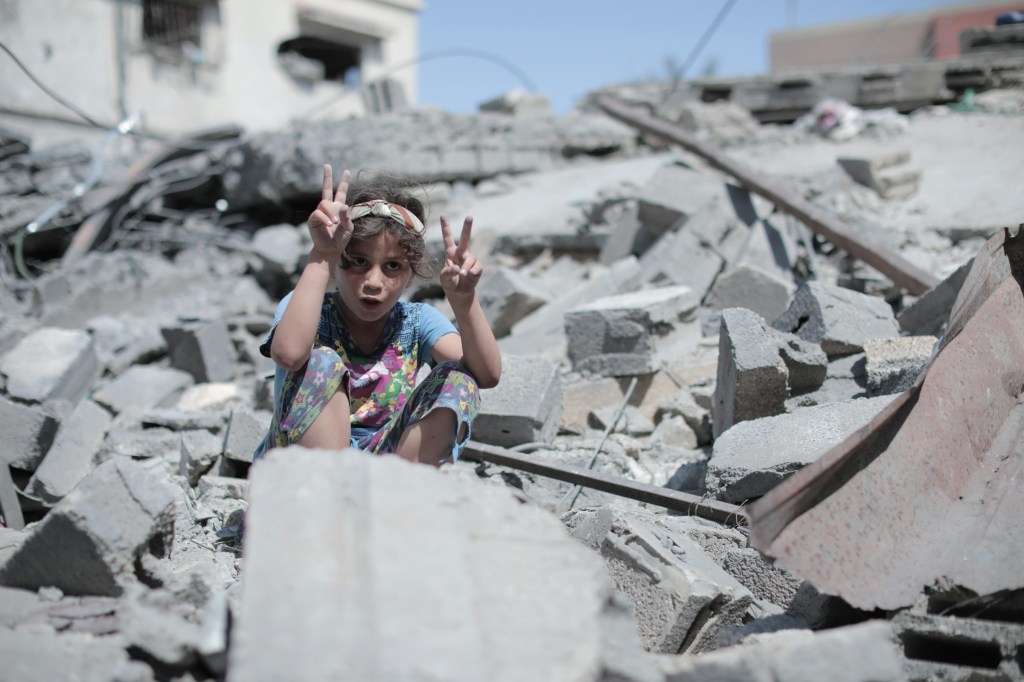
Photo by Mohammed Ibrahim on Unsplash

 Vox Meditantis
Leave a comment