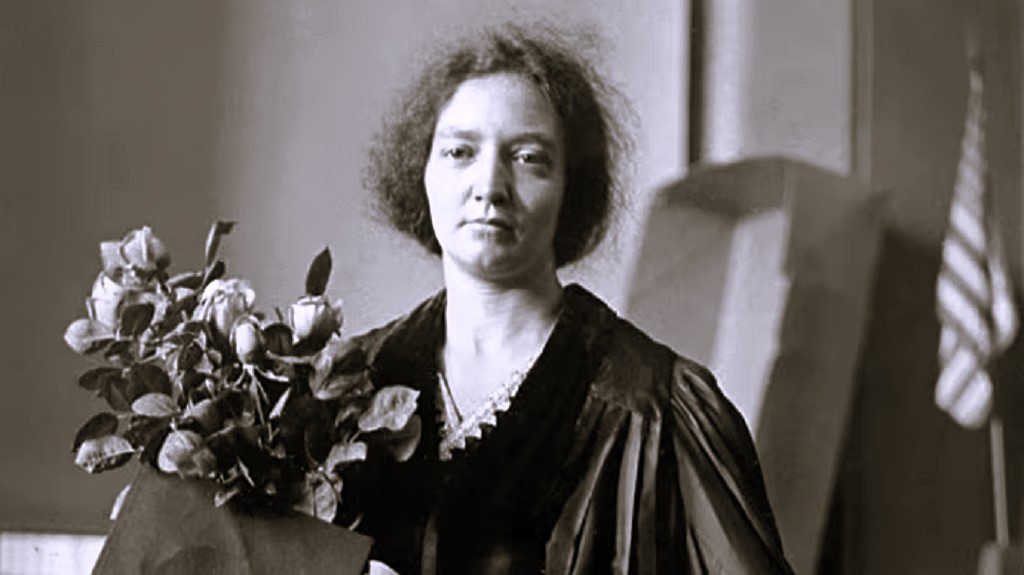
She saved lives on the First World War frontline, cracked open the nucleus in peacetime, served in a left-wing Cabinet, built France’s first atomic pile, and still died eclipsed by a family name. How many more women of science must slip into the footnotes before we call out our collective amnesia?
A Childhood Among Sparks and Struggle
Born in Paris in 1897, Irène Curie’s first playground was her parents’ rudimentary laboratory. When Pierre Curie was killed in 1906, Marie Curie formed a home-schooling “co-operative” so her daughters could tackle mathematics and physics without the stale dogmas of the lycée. The lesson sank in: knowledge is a public good, guarded by no priesthood.
At eighteen Irène swapped textbooks for mobile X-ray vans on the western front. She calibrated the crude machines that located shrapnel in wounded soldiers, a service that cut countless amputations. Radiation exposure was the hidden price. She accepted it.
Partnership of Equals
Back at the new Radium Institute, Irène met engineer-turned-chemist Frédéric Joliot. She tutored him in nuclear techniques; he taught her electronics. They married in 1926 and hyphenated their surnames, a quiet assertion of equality in patriarchal academia.
Their first joint papers mapped alpha-particle tracks and hinted at hitherto unknown particles. Yet the decisive leap came in January 1934. By bombarding aluminium with polonium alpha rays, the Joliot-Curies created phosphorus-30, the first atom ever made radioactive by human hands. The isotope kept emitting positrons even after the source was removed—proof that the aluminium nucleus itself had been transmuted. Rutherford wrote at once to salute a result he had “sought in vain”.
Within twelve frenetic months the couple generated radio-nitrogen, radio-silicon and radio-phosphorus. The Swedish Academy moved swiftly: Nobel Prize in Chemistry, 1935. Irène, then thirty-eight, became the second woman in history—after her mother—to hold that honour.
Why It Mattered Far Beyond Stockholm
Artificial radioactivity was no mere laboratory parlour trick. Until 1934 the world relied on rare natural ores—pitchblende in particular—to obtain radium. Extraction was slow, arduous and hideously expensive. The Joliot-Curie method turned almost any light element into a compact, potent source of beta or gamma rays at the flick of a cyclotron switch.
Radio-phosphorus-32, produced in grams rather than micrograms, entered clinics before the decade ended. John Lawrence used it against leukaemia in 1938, inaugurating nuclear oncology. Radio-iodine-131, itself a product of the same transmutation logic, soon revolutionised thyroid therapy. By 1950 the US Atomic Energy Commission supplied two-thirds of its isotopes to hospitals, not weapons labs. Nuclear medicine, today diagnosing or treating over forty million patients a year, traces its family tree to that Paris breakthrough.
Science and Social Conscience
Irène never walled herself inside the ivory tower. She joined the Socialist Party in 1934 and the Comité de vigilance des intellectuels antifascistes; she lobbied for the Spanish Republic and chaired rallies for women’s suffrage. Léon Blum’s Popular Front appointed her Under-Secretary of State for Scientific Research in 1936—one of the first women ever to hold French ministerial rank.
During the Occupation she secreted her notes on nuclear chain reactions to Switzerland, denying Vichy and the Nazis a roadmap to fission. After liberation General de Gaulle named her to the founding board of the Atomic Energy Commission. She oversaw construction of France’s first reactor, Zoé, in 1948, and sketched plans for the Orsay synchro-cyclotron that her husband completed after her death.
Politically she paid a price. Cold-War McCarthyism blocked her 1953 application to the American Chemical Society—a Nobel laureate blackballed for suspected communism—until public outcry forced an embarrassed reversal. Yet she never renounced the ideal that science should serve peace.
The Invisible Hazard
The medal hid a creeping casualty. Years of unshielded exposure—from trench X-ray tubes to open radium ampoules—seeded leukaemia. Irène’s health faltered in the early 1950s; still she taught, campaigned and experimented. On 17th March 1956 she died in Paris, aged fifty-eight. Her mother had succumbed to aplastic anaemia twenty-two years earlier. The family that unlocked radioactivity also bore its toxic burden.
Overshadowed – but why?
First, the towering silhouette of Marie Curie. Journalists delighted in a dynastic narrative: “Mother wins Nobel, daughter follows”, as though chromosomes, not intellect, explained brilliance. The son-in-law usually escaped the comparison. Irène shouldered it daily.
Second, the mushroom cloud. After 1945 public attention pivoted to Los Alamos, to Enrico Fermi, to the hydrogen bomb. Artificial isotopes sounded quaint beside nuclear fireballs. Yet without Irène’s 1934 paper, no reactor could have produced the medical tracers that calm parents in children’s cancer wards today.
Third, her politics. A woman scientist was tolerated; a woman scientist who quoted Marx tried society’s patience. “Avowed communist!” hissed ACS board members when they struck her name. The smear reduced her visibility in anglophone scholarship for decades.
Finally, the terminus of early death. She left no memoir, no victory lecture tour. Archives record equations, not voice. In a profession where seniority often commands the microphone, being brilliant at fifty-eight is still dying young.
The Human Legacy
Ask Hélène Langevin-Joliot, herself a distinguished nuclear physicist. She recalls hearing her parents announce, with understated glee, that Stockholm had called. She also remembers iodine tracers lighting up thyroid tumours on hospital scanners—machines that would not exist without her mother’s handiwork.
Ask patients with polycythaemia vera whose blood counts normalised after a single injection of cheap phosphorus-32 when newer drugs failed. They owe their respite to a Parisian who refused to separate bench from bedside.
Ask every girl in a physics classroom who fears her surname lacks pedigree. Irène had pedigree in abundance, yet she still had to argue for her own mind. Family fame offered no shield from prejudice; only persistent craftsmanship did.
A Call to Memory and Action
So what now? Museums still devote entire rooms to Marie Curie while Irène lingers in side exhibits. Textbooks summarise artificial radioactivity in a footnote, then gallop to fission. University syllabi name-drop her discovery but test students only on Lise Meitner or Otto Hahn. The erasure is not accidental; it is the sediment of choices.
We can choose differently. Cite her papers. Name laboratories after her. Tell pupils that nuclear medicine is not a male-only chronology but a lineage where a nurse-radiographer dared to remake the atom. Remember that equality is not a footnote to excellence but its pre-condition.
Conclusion: Reclaiming Her Spotlight
Irène Joliot-Curie stood where war wounds met laboratory wonder, where socialist conviction met scientific audacity. She manufactured new elements, democratised radio-isotopes, anticipated nuclear energy, fought fascism, and planned civilian reactors—then paid with her blood. Overshadowed? Only if we allow it.
She once wrote that the purpose of research is “to assure people of better conditions of life”. The beta particles still streaming through cancer lesions worldwide testify that she kept her promise. It’s time we kept ours: to speak her name, to teach her story, and to ensure that no daughter of science is ever again praised only in the shadow of her kin.
Bob Lynn | © 2025 Vox Meditantis. All rights reserved.

 Vox Meditantis
Leave a comment