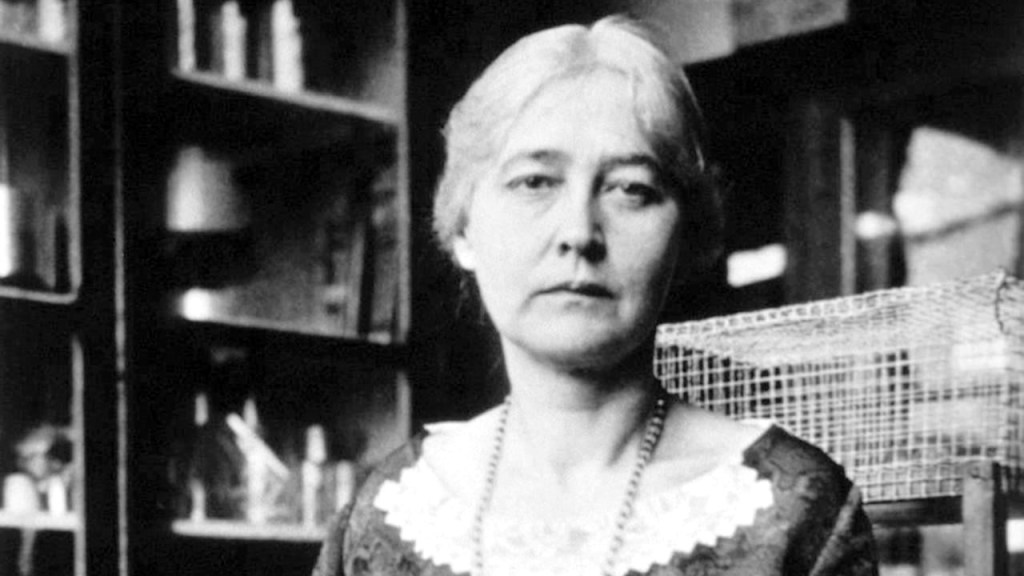
Maud Leonora Menten’s life and career illuminate the extraordinary achievements of a Canadian biochemist whose groundbreaking work fundamentally shaped modern medicine, yet whose recognition was systematically diminished by the gender biases of her era.
Born on 20th March 1879 in Port Lambton, Ontario, Maud Menten emerged from humble beginnings to become one of the most influential biochemists of the early 20th century. Her life story exemplifies both the brilliant potential of women in science and the formidable barriers they faced in pursuit of recognition and professional advancement.
Early Life and Educational Excellence
The Menten family moved from Port Lambton to Harrison Mills, British Columbia, when Maud was approximately ten years old. Her father, Captain William Menten, operated boat services and later built the sternwheeler Minto to ferry passengers across the Fraser River to Chilliwack. Her mother, Emma, demonstrated remarkable entrepreneurial spirit, running the family’s general store and hotel whilst serving as the local postmistress. This environment of hard work and enterprise undoubtedly influenced Maud’s determination and independence.
Maud’s educational journey began with daily canoe and pony trips to the one-room Fairfield Island School in Chilliwack from 1892. She started secondary school in Chilliwack in 1894, graduating with honour roll distinction in 1897. After briefly teaching at a rural school in Camp Slough, she set her sights on higher education, enrolling at University College, University of Toronto, in 1900.
At Toronto, Menten’s academic brilliance became evident. She completed her Bachelor of Arts degree with honours in natural science and English in 1904. Whilst pursuing her master’s degree, she worked as an assistant demonstrator in Professor Archibald Byron Macallum’s physiology laboratory, where she co-authored her first scientific paper on the distribution of chlorides in nerve cells, published in the Proceedings of the Royal Society of London in 1906.
Professional Barriers and Pioneering Achievements
After earning her MB (Bachelor of Medicine) in 1907, Menten faced the harsh reality that Canadian institutions would not grant research positions to women. This exclusion forced her to seek opportunities abroad, demonstrating the systemic discrimination that characterised early 20th-century academia. Her journey to the Rockefeller Institute for Medical Research in New York represented both professional necessity and personal courage.
At the Rockefeller Institute, Menten collaborated with pathologists Simon Flexner and James W. Jobling on groundbreaking research into radium bromide treatments for cancerous tumours in rats. This work produced one of the institute’s first monographs, establishing Menten’s reputation as a serious researcher. Following an internship at the New York Infirmary for Women and Children, she returned to Toronto to complete her medical degree in 1911, becoming one of the first Canadian women to receive an MD.
The Berlin Breakthrough
Menten’s most famous contribution to science emerged from her collaboration with German biochemist Leonor Michaelis in Berlin during 1912-1913. The circumstances of this partnership were remarkable: Menten travelled to Germany at her own expense, within months of the Titanic disaster, demonstrating extraordinary commitment to scientific advancement.
Working in Michaelis’s laboratory at Berlin’s Hospital Am Urban, Menten participated in developing what would become known as the Michaelis-Menten equation. This mathematical formulation describes the relationship between enzyme reaction rates and substrate concentration, providing the foundation for modern enzyme kinetics. The equation transformed biochemistry by enabling scientists to mathematically analyse enzyme behaviour, making it fundamental to all subsequent work in biochemistry and pharmacology.
The collaboration’s significance cannot be overstated. As one authority noted, “It was Leonor Michaelis and Maud Menten who showed that this mechanism could also be deduced on the basis of an experimental approach that paid proper attention to pH and spontaneous changes in the product after formation”. Their methodology, particularly the use of initial reaction rates to avoid complications from substrate depletion and enzyme inactivation, established the standard approach to enzyme kinetics that persists today.
Advancing Histochemistry and Medical Diagnostics
Beyond enzyme kinetics, Menten made crucial contributions to histochemistry—the study of chemical composition in tissues through staining and microscopy. She developed a dye reaction for identifying alkaline phosphatase, an enzyme whose levels indicate liver and kidney function. This histochemical technique remains in use in pathology laboratories worldwide, directly contributing to modern medical diagnostics.
Menten’s work extended to characterising bacterial toxins, including streptococcal toxins associated with scarlet fever. Her research led to improved immunisation programmes, with schools implementing her immunisation protocols becoming “virtually free of scarlet fever”. She also conducted pioneering work on haemoglobin using electrophoretic mobility techniques, research that preceded Linus Pauling’s similar findings by several years, though Pauling typically receives sole credit for this work.
Career at the University of Pittsburgh
In 1918, Menten joined the University of Pittsburgh’s Department of Pathology, where she would spend the remainder of her career. Despite her extraordinary achievements, she faced continued discrimination in promotion and recognition. She worked infamous 18-hour days, delivering one-third of the department’s lectures whilst conducting extensive research. Her colleagues described her as “an inspiring teacher who stimulated medical students, resident physicians and research associates to their best efforts”.
Menten’s Pittsburgh career was remarkably productive. She published approximately 100 research papers, covering topics from cancer treatment to vitamin deficiencies. Her work on the glycaemic effects of bacterial endotoxins earned her promotion to associate professor and appointment as pathologist at Children’s Hospital in 1926. However, her promotion to full professor came only in 1948, at age 69, just two years before her retirement—a clear indication of the institutional barriers she faced throughout her career.
Beyond Science: A Renaissance Mind
Menten’s talents extended far beyond scientific research. She was an accomplished linguist, speaking English, French, German, Italian, Russian, and Halkomelem (the language of various First Nations peoples). Her artistic abilities were equally impressive; she was a skilled painter whose works were exhibited in galleries. She also played the clarinet and was known for her keen interest in music.
These diverse accomplishments illustrate Menten’s extraordinary intellectual capacity and cultural sophistication. Her ability to master multiple languages proved invaluable during her international collaborations, enabling her to work effectively in German hospitals and laboratories. Her artistic pursuits provided a counterbalance to her intensive scientific work, demonstrating the multifaceted nature of her intellect.
The Price of Gender Discrimination
Despite her remarkable contributions, Menten’s work was consistently minimised or overlooked due to gender bias. Even in the foundational paper with Michaelis, she was listed as “Miss Maud L. Menten” rather than “Dr. Menten,” despite having earned her medical degree. This diminishment of her credentials reflected broader patterns of discrimination that affected women throughout the scientific community.
The systemic barriers Menten faced were emblematic of early 20th-century attitudes towards women in science. Research institutions routinely excluded women from faculty positions, forcing talented researchers like Menten to seek opportunities abroad or accept subordinate roles. Even when women made significant discoveries, their contributions were often attributed primarily to male collaborators or overlooked entirely.
Studies of women in science during this period reveal that “women applicants had to score 2.5 times higher on an index of publication impact than male applicants to be judged the same”. This systematic bias meant that even exceptionally qualified women like Menten struggled for recognition commensurate with their achievements.
Legacy and Modern Recognition
The fundamental importance of the Michaelis-Menten equation to modern biochemistry cannot be overstated. Every biochemistry textbook includes discussion of this equation, and its principles underlie much of contemporary pharmaceutical development. The equation’s influence extends from basic research to clinical applications, affecting drug development, enzyme replacement therapies, and metabolic disorder treatments.
Menten’s histochemical techniques continue to be used in pathology laboratories worldwide, directly contributing to medical diagnoses involving liver and kidney function. Her work on bacterial toxins and immunisation contributed to public health advances that saved countless lives.
Recognition of Menten’s contributions has grown significantly since her death in 1960. The University of Toronto, which initially restricted her research opportunities, later established the Dr. Maud L. Menten Memorial Lecture Series. Western University created similar commemorative lectures in her honour. In 1998, she was posthumously inducted into the Canadian Medical Hall of Fame, and various awards and prizes now bear her name.
Continuing Relevance
Maud Menten’s story remains profoundly relevant to contemporary discussions about women in STEM fields. Her experiences of systematic exclusion, credit attribution issues, and delayed recognition mirror challenges that women scientists continue to face today. Research indicates that women in medicine still encounter significant barriers to career advancement, with studies showing that “61.9% of women reporting discrimination vs 19.7% of men” in contemporary medical careers.
The principles embedded in the Michaelis-Menten equation continue to guide pharmaceutical research and development. Modern drug discovery relies heavily on understanding enzyme kinetics, making Menten’s century-old insights central to current medical advances. Her histochemical techniques, refined over decades of use, remain standard tools in pathological diagnosis.
A Legacy of Determination and Discovery
Maud Menten’s life exemplifies the transformative potential of scientific curiosity combined with unwavering determination. Her willingness to cross oceans, master new languages, and work in foreign laboratories demonstrated remarkable courage and commitment to scientific advancement. Her diverse talents—from painting to mountain climbing to linguistic mastery—illustrate the multifaceted nature of scientific genius.
The systematic undervaluation of Menten’s contributions reflects broader patterns of gender discrimination that have obscured women’s achievements throughout scientific history. Her story serves as both an inspiration and a cautionary tale, highlighting both the extraordinary achievements possible when talent meets opportunity and the devastating effects of institutional bias on scientific progress.
Today, as we continue to address issues of gender equity in STEM fields, Maud Menten’s legacy reminds us of the incalculable contributions that dedicated scientists can make when given the opportunity to pursue their passion for discovery. Her work fundamentally transformed our understanding of biological processes, establishing principles that continue to guide medical research and pharmaceutical development more than a century after her pioneering discoveries in that cold Berlin laboratory.
The equation that bears her name—though often attributed primarily to her male collaborator—represents not just a mathematical relationship but an illustration of the power of rigorous scientific inquiry and the importance of recognising all contributors to scientific advancement, regardless of gender. Maud Menten’s story challenges us to examine our own assumptions about scientific achievement and to ensure that future generations of scientists, regardless of background, receive the recognition their contributions deserve.
Bob Lynn | © 2025 Vox Meditantis. All rights reserved.

 Vox Meditantis
Leave a comment