15th October, 1920
The Gramercy Hotel, New York City
The autumn leaves outside my window mirror the golden hues of the dress I wore to the Metropolitan Opera last evening—do you remember it? The one you so admired when we walked through Central Park that crisp morning in March, before everything changed between us. I find myself wondering if you recall such details, or if the distance between Manhattan and your beloved Michigan has already begun to blur the edges of our shared memories.
I attended La Bohème with Eleanor Winthrop and her brother Charles—you remember the Winthrops from the summer soirée at the Vanderbilt estate. Eleanor spoke incessantly of her recent engagement to that railroad magnate from Philadelphia, her diamond catching the gaslight with each animated gesture. Yet throughout Puccini’s tragic melodies, I found myself thinking not of her joy, but of the letters that arrive with such maddening irregularity from Grand Rapids. Your last correspondence, dated three weeks past, mentioned in passing your frequent visits to the Hollingsworth family. I confess, darling, that the mere mention of their eldest daughter Constance—and your description of her as “quite accomplished at the piano”—has left me rather unsettled.
Forgive me this unseemly display of sentiment, but I cannot help but wonder whether the crisp Michigan air has cleared your mind of the promises we made beneath the cherry blossoms in Washington Square. When you wrote of attending the harvest dance at the Hollingsworth estate, describing in such vivid detail the way the moonlight illuminated the gardens, I found myself tormented by visions of you offering your arm to another, sharing those quiet moments of intimacy that once belonged solely to us.
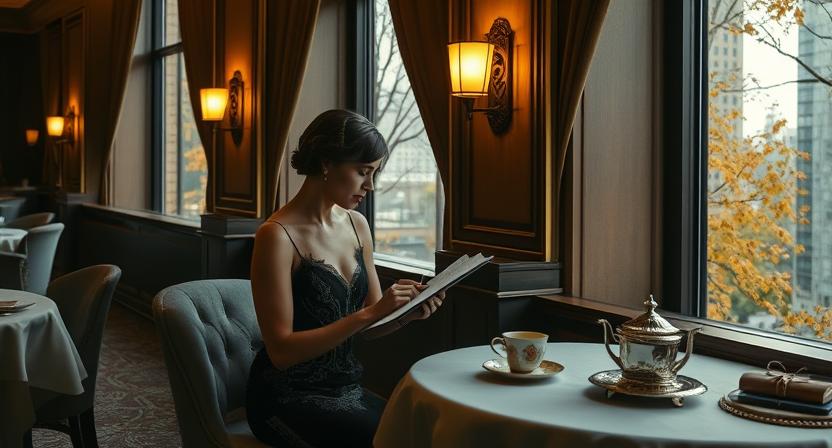
The city has grown so terribly lonely since your departure. Each morning, I take my tea at the same corner table in the hotel’s dining room, watching the fashionable ladies parade past in their dropped-waist frocks and T-bar shoes, their bobbed hair catching the morning sun. They seem so modern, so liberated from the constraints that bind me to this endless waiting. I have taken up watercolour painting—you would laugh to see my clumsy attempts at capturing the Hudson River at sunset—yet even in these moments of supposed tranquillity, my thoughts drift invariably to you.
Mother writes from Boston that Father’s business affairs continue to flourish, and that I might return to Beacon Hill for the Christmas season. The thought both comforts and terrifies me, for I know that distance from New York means distance from the possibility of your sudden return. Yet perhaps it would be wise to surround myself with the familiar rhythms of home, rather than haunting these streets where every corner holds the ghost of our former happiness.
I attended a suffrage celebration last week—imagine, Robert, we women finally possess the vote! The speakers spoke eloquently of our newfound freedoms, of the opportunities that await the modern woman. Yet standing amongst those triumphant faces, I felt only the weight of my own limitations, bound as I am by this fierce attachment to a man who seems increasingly like a beautiful dream from which I have reluctantly awakened.
Do not mistake my words for reproach, my darling. I understand the pull of family obligations, the weight of responsibility that draws you back to your father’s lumber business. Indeed, I admire your dedication to duty, even as it causes me such exquisite anguish. But I cannot pretend that the silence between your letters does not wound me, or that the casual mentions of your new acquaintances do not stir within me emotions I struggle to contain.
The clock on the mantelpiece chimes eleven, and I know I must close this letter soon. Tomorrow brings another day of navigating this strange new world we find ourselves in—one where women march for their rights whilst still waiting by their windows for word from distant lovers. I shall post this letter first thing in the morning, sending it across the great expanse that separates us, hoping that somewhere in the forests of Michigan, you will pause in your new life long enough to remember the girl who loves you still.
Write to me soon, Robert. Tell me of your plans, your dreams, your fears. Tell me whether the autumn maples around your family’s estate burn as brilliantly as they did in the stories you once shared. Tell me, if you can bear it, whether your heart still holds any corner reserved for the memory of what we once were to each other.
Until that blessed day when we might meet again, I remain,
Your devoted and ever-faithful,
Elizabeth
P.S. Do you still have that programme from the Ziegfeld Follies we attended together in June? I discovered mine tucked between the pages of Fitzgerald’s new novel, and seeing your pencilled notes in the margins brought such a rush of bittersweet memories.
Bob Lynn | © 2025 Vox Meditantis. All rights reserved.

 Vox Meditantis
Leave a comment