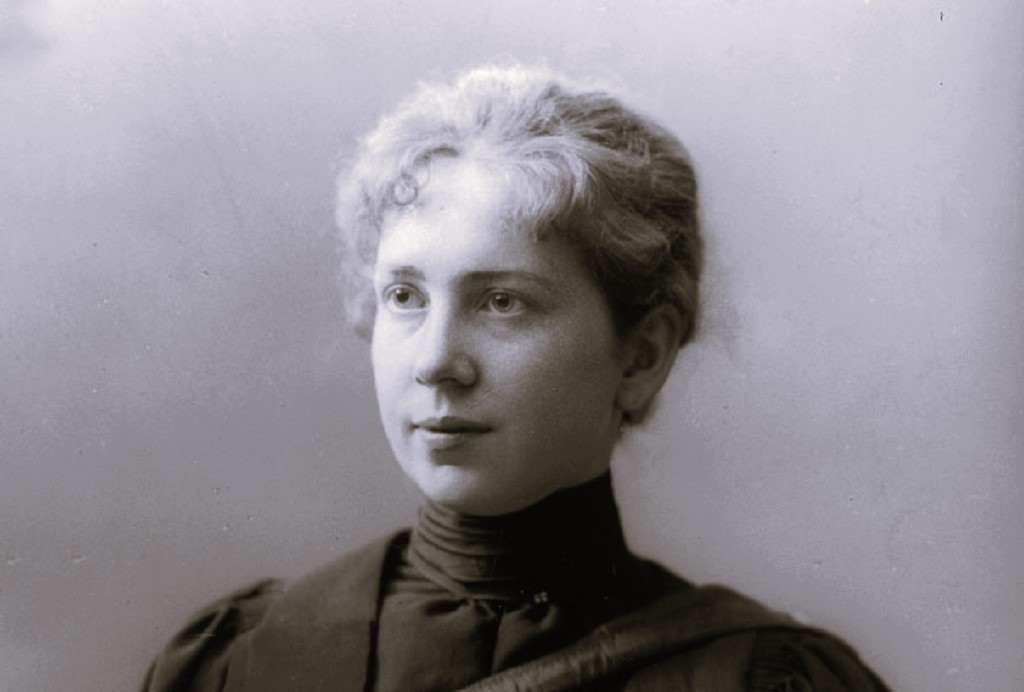
In the grand narrative of scientific discovery, some names shine brightly whilst others fade into the shadows of history. Harriet Brooks belongs decidedly to the latter category—a brilliant mind whose contributions to nuclear physics were as crucial as they were undervalued. Her story is not merely one of scientific achievement, but of a woman whose career was systematically dismantled by institutional discrimination and societal expectations that demanded she choose between professional fulfilment and personal happiness.
A Mind Forged in Modest Circumstances
Born in Exeter, Ontario, on 2nd July 1876, Harriet Brooks emerged from humble beginnings that would have deterred many from pursuing academic excellence. The third of nine children, she watched her family’s fortunes collapse when her father’s flour mill burned down without insurance coverage. The subsequent years saw the Brooks family practising “FHB” (family hold back) when food was scarce, and “MIK” (more in kitchen) when provisions were adequate.
Yet adversity bred determination. Only Harriet and her sister Elizabeth would attend university—a remarkable achievement in an era when higher education for women was still revolutionary. When the family settled in Montreal, Harriet entered McGill University in 1894, a mere six years after the institution had graduated its first female student. The discrimination was immediate and systematic: whilst male students received scholarships from their first year, women were barred from such financial support during their initial two years.
Brooks excelled despite these obstacles. She graduated in 1898 with first-class honours in mathematics and natural philosophy, earning the Anne Molson Gold Medal for outstanding performance in mathematics. This achievement positioned her perfectly for the next phase of her career—one that would place her at the very heart of the emerging field of nuclear physics.
The Rutherford Years: Groundbreaking Discoveries
Brooks’s genius was immediately recognised by Ernest Rutherford, who had just arrived at McGill from Cambridge’s Cavendish Laboratory. She became his first graduate student in Canada, and Rutherford, with characteristic wisdom, initially assigned her work on electrical oscillations rather than the technically challenging field of radioactivity. This decision reflected his belief that young researchers needed early success to build confidence—a principle that would prove prescient.
In 1901, Brooks received the first master’s degree awarded to a woman in physics at McGill. But it was her subsequent work that would truly establish her place in scientific history. Assigned to investigate the mysterious “emanation” from thorium, Brooks confronted one of the most puzzling phenomena in early radioactivity research.
The nature of thorium emanation was hotly debated—was it a gas, a vapour, or fine powder? Through meticulous experiments using diffusion methods, Brooks demonstrated that this emanation was indeed a gas with a molecular weight significantly lower than thorium itself. This discovery was revolutionary, providing the first clear evidence that radioactive decay involved the transmutation of elements—a concept that fundamentally challenged the prevailing understanding of atomic structure.
Brooks’s identification of this gas, now known as radon, was among the first discoveries of the element. Her joint paper with Rutherford, “The New Gas from Radium,” published in 1901, marked a watershed moment in nuclear physics. The apparatus she designed for these experiments can still be seen in the Rutherford Museum at McGill, a tribute to her experimental ingenuity.
The Recoil Discovery and International Recognition
After brief stints at Bryn Mawr College and the Cavendish Laboratory with J.J. Thomson, Brooks returned to McGill in 1903 to continue her collaboration with Rutherford. It was during this period that she made perhaps her most significant discovery: the phenomenon of atomic recoil.
In a letter to Nature published on 21st July 1904, Brooks described observing “a volatile product from radium” that appeared when non-radioactive materials were placed in radioactive environments. This observation, initially termed “volatility,” was later understood to be the recoil of radioactive atoms following the expulsion of alpha particles—a quantum mechanical phenomenon of profound importance.
The significance of this discovery cannot be overstated. Rutherford himself acknowledged Brooks’s priority when Otto Hahn later claimed to have discovered the recoil phenomenon, writing: “I thought I had the idea of the removal of atoms by recoil in my Radioactivity… It is given in explanation of the volatility of Radium B observed by Miss Brooks”.
Brooks also documented successive radioactive decays, findings that formed a crucial part of Rutherford’s 1904 Bakerian Lecture, for which he carefully acknowledged her contributions. Her work laid the foundation for understanding radioactive decay series, a concept that would prove essential to the development of nuclear physics and chemistry.
The Institutional Barriers: A Career Destroyed
Despite her remarkable achievements, Brooks faced systematic discrimination that would ultimately destroy her career. In 1904, she accepted a position as tutor in physics at Barnard College, New York—a promising step that should have secured her professional future. However, when she became engaged to be married in 1906, the institution’s response was swift and unforgiving.
Dean Laura Gill’s position was categorical: “The dignity of women’s place in the home demands that your marriage shall be a resignation”. Brooks’s eloquent protest captured the fundamental injustice of this demand:
“I think it is a duty I owe to my profession and to my sex to show that a woman has a right to the practice of her profession and cannot be condemned to abandon it merely because she marries. I cannot conceive how women’s colleges, inviting and encouraging women to enter professions can be justly founded or maintained denying such a principle”.
The hypocrisy was staggering. Women’s colleges that claimed to champion female education were simultaneously enforcing rules that made such education meaningless. Brooks initially broke off her engagement rather than abandon her career, but the damage was done. Feeling unwelcome at Barnard, she moved to a utopian community in New Hampshire before spending a year working with Marie Curie in Paris.
The End of a Brilliant Career
In 1907, Brooks married Frank Pitcher, a civil engineer and former McGill physics instructor, in London. The ceremony was attended by Rutherford himself, suggesting his continued respect for his former student. However, marriage in the Edwardian era meant the end of Brooks’s scientific career. She settled in Montreal, where she assumed “the occupations of wife and mother”.
The couple had three children: Barbara Anne (1910-1929), Charles Roger (1912-1921), and Paul Brooks (1913-1998). Tragically, two of their children died young, adding personal grief to professional loss. Brooks died on 17th April 1933, likely from complications related to her exposure to radiation during her research years.
The Recognition She Deserved
Rutherford’s assessment of Brooks’s abilities was unequivocal. He regarded her as “the most outstanding woman in the field of radioactivity, after Marie Curie”. In his 1908 Nobel Prize in Chemistry, awarded for his work on radioactive decay, Rutherford built directly upon the foundations that Brooks had helped establish. Yet her contributions were largely absorbed into his work without proper individual recognition.
The contrast with Marie Curie is instructive. Both women worked in radioactivity research, both made fundamental discoveries, and both were praised by their male colleagues. However, Curie’s Nobel Prizes and international fame stood in stark contrast to Brooks’s enforced obscurity. The difference was not in talent or achievement, but in the institutional barriers that Brooks faced and the choices she was forced to make.
A Legacy Reclaimed
Modern scholarship has begun to restore Brooks’s rightful place in scientific history. Her discovery of atomic recoil was “a profoundly significant discovery in physics with far-reaching consequences,” as physicist Walther Gerlach noted. Her work contributed to the development of radioactive dating techniques, our understanding of nuclear transmutation, and the foundations of nuclear physics itself.
In 2002, Brooks was posthumously inducted into the Canadian Science and Engineering Hall of Fame. Canadian Nuclear Laboratories has named a research facility at Chalk River in her honour, and Ontario Power Generation has named a tunnel boring machine “Harriet Brooks” in recognition of her contributions to nuclear science.
The Broader Tragedy
Brooks’s story illuminates a broader tragedy of lost potential. How many other brilliant minds were sacrificed to the rigid gender expectations of the Victorian and Edwardian eras? How much scientific progress was delayed by institutional discrimination that forced women to choose between personal fulfilment and professional achievement?
The barriers Brooks faced were not merely personal obstacles but systematic institutional discrimination. McGill University denied scholarships to women during their first two years of study. Barnard College, supposedly dedicated to women’s education, fired women who married. The scientific community, whilst praising exceptional women like Brooks, consistently failed to create structures that would allow them to thrive.
The Continuing Relevance
Brooks’s experience resonates with contemporary debates about women in science. Her struggle against the “imposter syndrome”—the feeling that her achievements were somehow fraudulent—mirrors challenges faced by women scientists today. Her fight for the right to combine marriage and career presaged battles that continue in modified forms.
Furthermore, her story demonstrates the crucial importance of institutional support for scientific diversity. The loss of Brooks’s contributions represents not merely a personal tragedy but a collective scientific loss. Her unique perspective and brilliant insights were sacrificed to societal expectations that ultimately impoverished the entire scientific enterprise.
Conclusion: A Life That Demanded Better
Harriet Brooks deserved better. She deserved institutions that valued her contributions rather than demanding she choose between personal happiness and professional fulfilment. She deserved recognition commensurate with her achievements, not the historical obscurity that claimed her for decades.
Her story serves as both inspiration and indictment. It celebrates the remarkable achievements of a brilliant scientist who overcame significant obstacles to make fundamental contributions to our understanding of the atomic world. Simultaneously, it exposes the institutional discrimination that cut short a career of enormous promise.
In reclaiming Brooks’s legacy, we honour not only her memory but the countless other women whose contributions to science have been forgotten or diminished. Her life reminds us that scientific progress depends not merely on individual genius but on creating institutions that allow all talent to flourish, regardless of gender, background, or personal circumstances.
The radioactive elements that Brooks studied decay over time, but her scientific contributions remain eternally relevant. Her discoveries helped unlock the secrets of the atom and laid the groundwork for the nuclear age. That such achievements came from a woman working in an era of systematic discrimination makes them all the more remarkable.
Harriet Brooks’s story is, ultimately, one of brilliant promise both fulfilled and thwarted. In celebrating her achievements, we must also acknowledge the institutional failures that prevented her from reaching her full potential. Only by understanding both aspects of her legacy can we work to ensure that future generations of scientists face fewer barriers and greater opportunities to change the world.
Bob Lynn | © 2025 Vox Meditantis. All rights reserved.

 Vox Meditantis
Leave a comment