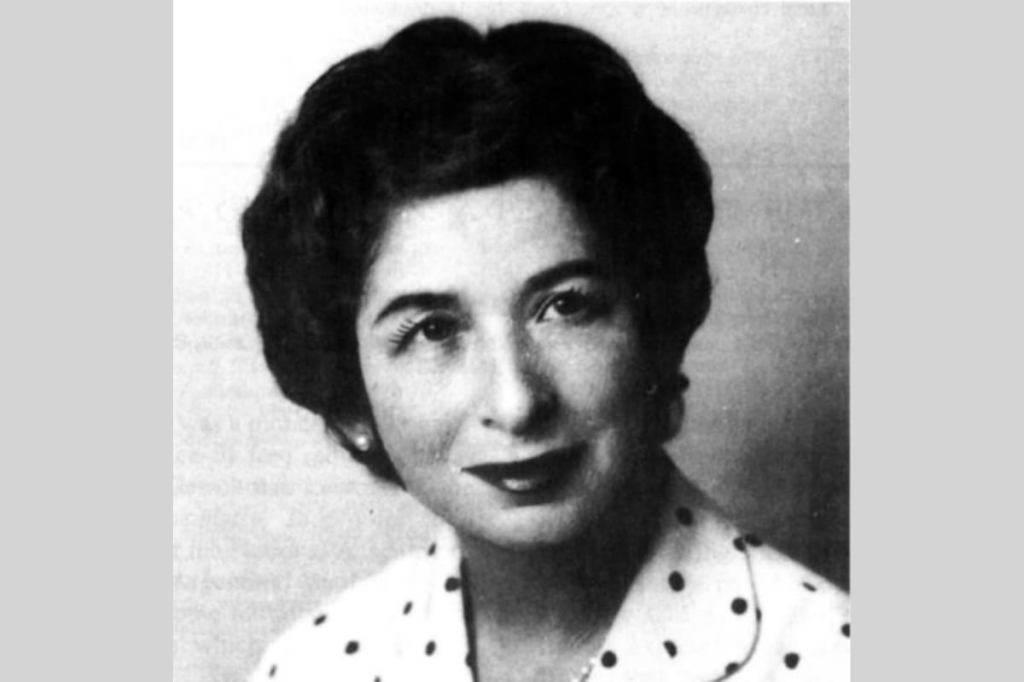
The truth about scientific recognition is seldom comfortable. While the textbooks sing praises of well-known figures, they often overlook the real pioneers—those whose groundbreaking insights came too early, from the wrong place, or worse still, from the wrong gender. Rebeca Gerschman stands as a stark reminder of how scientific history can be rewritten by geography, timing, and institutional bias. In 1954, this brilliant Argentine biochemist first proposed that free radicals contribute to oxygen toxicity, cell ageing, and death—a revolutionary idea that would fundamentally reshape our understanding of human biology and ageing. Yet her name remains largely absent from the pantheon of scientific greats, overshadowed by those who came later and claimed the glory.
From Carlos Casares to Buenos Aires: The Making of a Scientific Mind
Born on 19th0 June 1903 in Carlos Casares, a small town in the Buenos Aires province, Rebeca Gerschman entered the world with advantages that many of her contemporaries lacked. Her family’s wealth allowed her to pursue education at a time when such opportunities were rarely afforded to women, particularly in a region where scientific endeavour was still finding its footing. Argentina in the early 20th century was undergoing rapid social transformation, with the expansion of public education and the gradual opening of universities to women.
Gerschman’s path to scientific excellence began at the University of Buenos Aires, where she pursued dual degrees in Biochemistry and Pharmacy. This was no small achievement—in 1930s Argentina, women comprised a tiny fraction of university students, and those in the sciences were rarer still. The Faculty of Medicine, where her programme was housed, operated from the building at Avenida Córdoba 2122 (now the Faculty of Economic Sciences) in the Balvanera neighbourhood. The very fact that she was there represented a quiet revolution in a society where women’s roles were still rigidly defined.
In 1930, at the age of 27, Gerschman entered the prestigious Houssay Institute of Physiology on Costa Rica Street in Palermo. This marked the beginning of her association with one of the most influential figures in Argentine science: Dr Bernardo Houssay, who would later become the first Latin American to receive a Nobel Prize in Physiology or Medicine in 1947. Under Houssay’s direction and the direct supervision of Dr Agustín D. Marenzi, Gerschman embarked on her doctoral research, demonstrating the same rigorous approach that would characterise her entire career.
The Gerschman-Marenzi Method: First Steps Towards Recognition
Her 1937 doctoral thesis, titled “Plasma potassium in the normal and pathological states,” was far more than an academic exercise. The work described a novel method for determining blood potassium levels and their variations under different physiological and pathological conditions. This technique, which became known as the Gerschman-Marenzi method, represented a significant advance in biochemical analysis at the time.
The importance of this early work cannot be overstated. Accurate measurement of electrolyte levels was crucial for understanding cellular function and disease states. The method that Gerschman developed with Marenzi provided researchers and clinicians with a reliable tool for investigating potassium homeostasis—work that would prove foundational for later advances in physiology and medicine. Two years after completing her doctorate, she received an award for the best doctoral thesis, recognition that seemed to herald a promising future in Argentine academia.
The Rochester Years: Where Revolution Began
The end of World War II brought unexpected opportunities for international scientific collaboration. In this atmosphere of renewal and exchange, Gerschman travelled to the United States to pursue specialised studies at the University of Rochester in New York. This move would prove to be the most crucial decision of her scientific career, setting the stage for discoveries that would fundamentally alter our understanding of cellular biology.
At Rochester, Gerschman found herself working in the Department of Physiology under Wallace O. Fenn, a distinguished researcher who was part of an extraordinarily productive scientific collaboration. Between 1941 and 1956, Fenn worked alongside Hermann Rahn and Arthur Otis to lay the foundations of modern pulmonary physiology and gas exchange. The timing was perfect—post-war medicine had urgent questions about aviation physiology, the effects of pressure breathing, and the physiological challenges faced by pilots in high-altitude flight.
Initially, Gerschman continued her earlier work on blood potassium, extending the research she had begun in Buenos Aires. However, her interests soon shifted to the physiological effects of respiratory gases on experimental animals, particularly rabbits. This change in focus was partly driven by the practical needs of post-war military medicine, where understanding the effects of different gas concentrations had obvious applications.
It was during this period that Gerschman began to notice something peculiar. Aviation pilots subjected to high oxygen pressures often experienced premature ageing of their skin, very similar to that caused by low-intensity ionising radiation. This observation would prove to be the seed of a revolutionary insight.
The Breakthrough: Connecting Oxygen and X-rays
The idea that oxygen might be harmful was nothing short of heretical in the early 1950s. Oxygen was considered life-giving, essential, and entirely benign. The notion that this vital substance could cause cellular damage challenged fundamental assumptions about biology and medicine. Yet Gerschman’s careful observations suggested otherwise.
Working with her colleague Daniel Gilbert and others, Gerschman began to investigate the similarities between oxygen poisoning and X-irradiation. What they discovered was remarkable: both high concentrations of oxygen and ionising radiation appeared to cause similar types of cellular damage. The effects were not merely analogous—they seemed to share a common underlying mechanism.
Their hypothesis was radical: both oxygen poisoning and radiation injury operated through the formation of oxidising free radicals. Free radicals—molecules with unpaired electrons that make them highly reactive—were known to chemists but were not yet recognised as significant players in biological systems. The idea that these unstable molecules could be produced naturally in living tissues and cause cellular damage was revolutionary.
In 1954, Gerschman and her colleagues published their groundbreaking paper “Oxygen poisoning and x-irradiation: a mechanism in common” in the journal Science. This paper proposed that oxygen toxicity resulted from the formation of free radicals, and that these same reactive molecules were responsible for the cellular damage caused by ionising radiation. The work included experimental evidence showing that substances known to protect against radiation damage also provided protection against oxygen poisoning.
The Theory That Was Too Early
The 1954 paper was met with considerable scepticism from the scientific community. The idea that oxygen could be toxic was difficult to accept, and the concept of free radicals in biological systems was still foreign to most researchers. The work challenged established paradigms and required a fundamental rethinking of cellular physiology.
Gerschman’s theory proposed that increased concentrations of oxygen would increase the formation of oxidising free radicals. She suggested that organisms possessed endogenous mechanisms—antioxidants—that protect against both oxygen and ionising radiation. This insight predated by more than a decade the formal recognition of antioxidant defence systems and their role in cellular protection.
The prescience of Gerschman’s work becomes clear when we consider that it took fifteen years for the scientific community to accept her basic premise. In 1969, Joe McCord and Irwin Fridovich published their landmark paper identifying superoxide dismutase, an enzyme that specifically protects cells against superoxide radicals. This discovery provided the molecular proof that Gerschman’s theory required, confirming that cells indeed possessed sophisticated mechanisms for defending against oxidative damage.
Recognition Delayed and Denied
The delayed acceptance of Gerschman’s work reveals troubling patterns in how scientific credit is assigned. Denham Harman’s 1956 paper on the free radical theory of ageing, which built directly on Gerschman’s insights, has been cited more than 12,000 times, while Gerschman’s original 1954 paper has received just over 1,400 citations. This stark disparity in recognition cannot be explained by scientific merit alone.
Several factors contributed to this inequity. Harman worked at a prominent American institution and focused specifically on ageing, a topic that captured widespread interest. Gerschman, working from Argentina and addressing a broader set of biological phenomena, found herself at a disadvantage in the competition for scientific attention. The geography of science mattered enormously in the 1950s, when American and European institutions dominated international scientific discourse.
Gender bias undoubtedly played a role as well. Women scientists of Gerschman’s generation faced systematic barriers to recognition, from exclusion from professional networks to subtle but persistent questioning of their intellectual capabilities. The fact that Gerschman’s work was ahead of its time only compounded these challenges, as she lacked the institutional support network that might have sustained and promoted her ideas during the long period before their acceptance.
Return to Argentina: Teaching and Advocacy
In 1959, Gerschman returned to Argentina to take up a position as Professor of Physiology at the newly established School of Pharmacy and Biochemistry at the University of Buenos Aires. Her return marked the beginning of a new phase in her career, one focused on education and institution-building rather than laboratory research.
At the University of Buenos Aires, Gerschman proved to be an innovative and inspiring teacher. She introduced scientific cinema to show students physiological processes visually, a revolutionary pedagogical approach for the time. She also invited experts from various fields to speak directly to her students, believing that exposure to diverse perspectives was essential for scientific education. These methods, considered unconventional at the time, reflected her commitment to excellence in education and her understanding that science thrived on interdisciplinary exchange.
In 1970, Gerschman was awarded the position of consulting professor, recognition of her outstanding contributions to the university and to Argentine science. She continued in this role until her retirement in 1980 at the age of 77, having devoted five decades to scientific research and education.
The Personal Cost of Being Ahead
Throughout her career, Gerschman became a passionate advocate for women’s rights in the scientific field. Her advocacy was born from personal experience—she had witnessed firsthand how gender bias could limit opportunities and diminish recognition. The parties she hosted at her Buenos Aires home became legendary in academic circles, serving not only as social gatherings but as informal networks where ideas could be exchanged and collaborations formed.
These gatherings were more than mere entertainment; they represented Gerschman’s understanding that science was fundamentally a social enterprise. By creating spaces where researchers could interact across disciplinary boundaries, she was fostering the kind of intellectual environment that had been crucial to her own discoveries at Rochester.
In the 1980s, Gerschman was considered for the Nobel Prize in Physiology or Medicine. The nomination represented long-overdue recognition of her foundational contributions to free radical biology and oxidative stress research. However, she was unable to participate in the required interviews due to her declining health. The Nobel Prize is not awarded posthumously, and when Gerschman died on 4 April 1986, from aplastic anaemia, the opportunity for this ultimate recognition died with her.
Legacy and the Rebeca Gerschman Award
The irony of Gerschman’s career is profound. Her work on free radicals and oxidative stress became central to modern medical research, informing our understanding of ageing, cancer, cardiovascular disease, and neurodegenerative disorders. The field she helped create now employs thousands of researchers and has generated countless therapeutic interventions. Yet her name remains largely unknown outside specialist circles.
In recognition of her contributions, the Rebeca Gerschman Award was established to honour women researchers in Argentina who have made significant contributions to advancing science and training human resources. This award represents not only a tribute to Gerschman’s memory but also a commitment to ensuring that future generations of women scientists receive the recognition they deserve.
The Wider Context: Science and Social Justice
Gerschman’s story illuminates broader questions about how scientific knowledge is created, validated, and disseminated. Her experience demonstrates that good science is not always immediately recognised, and that the best ideas can languish for years or decades before finding acceptance. Geography, institutional affiliation, gender, and timing all play crucial roles in determining which discoveries receive attention and which remain obscure.
The fifteen-year gap between Gerschman’s initial insights and their general acceptance represents more than just scientific conservatism. It reflects systemic biases in how the scientific community evaluates and promotes new ideas. Researchers working outside the established centres of scientific power—whether due to geography, gender, or institutional affiliation—face additional hurdles in gaining recognition for their work.
Modern science has made significant strides in addressing these inequities, but Gerschman’s story serves as a reminder that progress remains incomplete. Women scientists continue to face barriers to advancement and recognition, and researchers in developing countries still struggle to gain international attention for their work. The principles of fairness and justice that guide our broader social relations must also inform how we structure and govern scientific institutions.
Conclusion: Rewriting the Record
Rebeca Gerschman’s life and work represent both triumph and tragedy. Her scientific insights were brilliant, prescient, and fundamentally correct. Her contributions to biochemistry and physiology laid the foundation for entire fields of medical research. Her commitment to education and mentorship helped train a new generation of scientists. Her advocacy for women’s rights in science opened doors for those who followed.
Yet the tragedy lies in how long it took for her contributions to be recognised, and how thoroughly her name was eclipsed by those who came later. The scientific establishment that eventually embraced her ideas was slow to acknowledge their true originator. This pattern—of women scientists making crucial discoveries only to see the credit go to men, of researchers from the periphery being overshadowed by those at the centre—represents a persistent injustice in how we tell the story of scientific progress.
Reclaiming Gerschman’s legacy is not simply a matter of historical accuracy, though that matters enormously. It is also about recognising that science advances through the contributions of diverse voices, and that our understanding of the natural world is enriched when we include perspectives from all quarters. The free radical theory of ageing, oxidative stress research, and modern antioxidant therapy all trace their origins to a woman working in 1950s Argentina who had the courage to challenge conventional wisdom.
Rebeca Gerschman died thirty-nine years ago, but her insights live on in every laboratory studying oxidative stress, every clinical trial testing antioxidant therapies, and every medical intervention aimed at slowing the ageing process. She deserves her place not on the margins of scientific history, but at its very centre—as a pioneer whose vision fundamentally changed how we understand life itself.
Bob Lynn | © 2025 Vox Meditantis. All rights reserved.

 Vox Meditantis
Leave a comment